


EU coil mills cut output to stabilise prices
Several coil mills in northwestern Europe are restricting output, preferring maintenance over production in a market that does not call for large volumes, Kallanish notes.
ArcelorMittal Bremen currently has both blast furnaces taken out of operation for one week, an unusual state for an integrated mill. It shut down blast furnace 2 for the whole of October for repair and maintenance work. In addition, blast furnace 3 was closed for a “block shutdown” of five days with no specific cause given. The two units have a combined production capacity of 3.6 million tonnes/year of pig iron.
In mid-August, Salzgitter started the reline of its blast furnace A. That measure was already planned last year, whereas Bremen’s measures were communicated at short notice and therefore appear to have been triggered by the market situation.
At Tata Ijmuiden, blast furnace 6 is currently undergoing a major repair and modernisation programme. As is the case at Salzgitter, this will in fact be the last time that Ijmuiden undertakes such a large-scale operation on a blast furnace.
The measures will relieve the market at least somewhat, according to one German buyer. “Bremen has stopped offering plain HRC online,” he says, and notes that the stoppages there came unexpectedly for him, too.
A German service centre manager bemoans that “spontaneous” measures like in Bremen have come too late. He also criticises the mills for the recent massive price reductions, because “you do not generate demand with that”.
Christian Koehl Germany


French rebar ticks up
French rebar deal values are increasing slightly compared to the beginning of the month following the price hike move by some European producers.
Buyers confirm that values have hiked by some €20/tonne ($21) and may continue to rise. The contracts implemented however continue to be only for small volumes of one or two truckloads. Consumption from the construction sector remains limited and buyers are refusing to commit to purchases.
One large buyer says the downward market trend in all flat and long products will persist, adding that “we do not see the end of this”. Buyers are facing squeezed margins and no visibility, which is being exacerbated by the weaker German economy.
Rebar market conditions are difficult, with mesh, beams and wire rod also suffering. One source forecasts that 2024 will be no better for the construction and steel sectors. As French rebar remains pricy, some sources say they prefer to buy cheaper Italian and Spanish material.
Earlier this month, some steelmakers in France, Spain, Germany and Italy pushed up rebar prices by an average of €50/t compared to early September, as prices were near cost levels. In Italy, producers are again stopping sales (see separate Kallanish story).
French rebar prices are hovering between €610-630/t delivered on average, sources suggest.
Natalia Capra France

Worldsteel appoints Nucor’s Topalian as chairman
Nucor president and chief executive Leon Topalian has been elected worldsteel chairman for one year. Last year’s chairman, Jeong-Woo Choi, becomes vice chairman, as does Tata Steel ceo TV Narendran.
Iran’s ARFA Iron and Steel Company and India’s Saarloha Advanced Materials Private Limited have meanwhile been welcomed as regular members, Kallanish notes. ResponsibleSteel, represented by Annie Heaton, has become an affiliated member.
Crude steel output in the 63 countries monitored by worldsteel inched up 0.2% on-year in January-August to 1.26 billion tonnes.
Adam Smith Poland

EU, US discuss mitigation of excessive Chinese steel
The United States and European Union on 20 October in Washington will introduce a proposed political agreement to curb excessive Chinese steel products through new tariffs, according to reports.
European steelmakers’ association Eurofer says it anticipates a strong interim agreement to lay the foundation for a comprehensive deal months later (see separate Kallanish story).
According to Bloomberg, the summit in Washington will focus mostly on excessive steel products from China and other countries thought to participate in unfair market practices. Other nations will be invited to adopt the Global Arrangement on Sustainable Steel and Aluminium framework around tariffs and levies. Tariff levels and targets are not finalised, reported the Financial Times.
The EU and US are working toward an agreement before 31 October, to avoid the reimposition of Section 232 tariffs on Europe.
Kristen DiLandro USA

Italian flats sales to improve in November: Assofermet
Activity at flat steel service centres should improve as purchases will resume in the coming weeks for deliveries in the first quarter of next year, Italian steel trade association Assofermet forecasts in a report sent to Kallanish.
Current steel prices appear to have sunk below production costs. “It is implausible to expect further cycles of price declines” considering the resilience of raw materials prices, high energy and financial costs, the rising costs associated with “green” steel production and low capacity utilisation, as well as the strong limitations on imports.
The association notes the unusual “massive utilisation of the hot rolled coil quota” from European buyers last spring, coinciding with production shutdowns at several European steel plants. “By 25 July, the [September-]quarter’s quota was exhausted, and on 1 October, the opening day of the new quarterly quota, the quota was again immediately exhausted. This shows once again that the quota calculation by the EU Commission remains mismatched with the real needs of buyers,” the report states.
The outlook for the flat and long steel distribution sector is “stationary” for the short term. Distributors are continuing to report market weakness across all products. “Medium- and large-scale metal fabricators have some significant orders in their portfolios, but these are likely to be insufficient to properly face the next quarter, given the general uncertainty in macroeconomic trends that is leading large groups to procrastinate on investments,” the association says.
Attempts by steel mills to support prices have often failed due to the lack of downstream demand. Material availability remains at good levels even though some mills will implement shutdowns to tighten supply, Assofermet concludes.
Natalia Capra France

Italian, EU stainless flats market improves, outlook positive
The stainless flat steel market is steadily improving in Italy and other European countries, although service centre, re-roller and mill sources report continued weak demand downstream, Kallanish notes.
Stocks reached their lowest level in August and apparent demand has now returned, coupled with increasing prices of coil and its derivatives. Purchases in Europe are also being sustained by the lack of coil imports, which are hindered by the European Commission’s anti-circumvention review.
Stainless cold rolled coil prices in Italy for December production are increasing to €2,550-2,600/tonne ($2,691-2,743) delivered, while hot rolled coil is at €2,350/t base delivered on average for material with rough edges, Kallanish hears. European mills are said to be late with their deliveries.
After service centres and their clients purchased in September and October, sales activity is now going quiet, and buyers are adopting a wait-and-see attitude. Activity is expected to again become lively in November when buyers will have to purchase for January delivery. Stocks are said to be higher in Italy and Poland compared to other European countries, such as the Czech Republic, Hungary, France and Germany.
The European market outlook for the fourth quarter has improved, particularly if compared to the lows of Q2 and Q3, although activity remains fragile and downstream consumption limited. The lack of coil imports from Asia and increasing scrap prices due to shortages will continue to support stainless flats prices until the end of the year.
The market situation is evolving steadily, and although demand from downstream users is modest, “prices are rebounding after the lows reached before the summer break”, says Italian trade association Assofermet. “Stocks have returned to normal levels after a long period of high stocks. Stainless scrap prices are rising due to low availability.”
Natalia Capra France
Polish domestic rebar prices increase on slight demand improvement, wire rod stable
Rebar
The Polish domestic rebar prices increased amid limited supply and improved demand.
One of the key producers in Poland is closed for maintenance until the beginning of November. They were currently carrying out old orders and selling rebar from their stocks, sources said.
In addition, some market sources were moderately optimistic about rebar demand.
“The construction sector has been definitely doing better since the middle of September, and we can also see a slight uptick in the infrastructural demand,” a distributor source told Fastmarkets. According to the source, the rebar prices will remain stable in October because mills are determined not to lower prices, even for bids for 5,000-8,000 tonnes.
“Final demand is improving,” a buyer source told Fastmarkets, due to the more active construction sector and some restocking.
A producer source was more pessimistic, saying that the construction sector remained weak overall and the pick up in demand was only temporary due to the restart of some projects that had previously been put on hold.
Polish mills maintained rebar offers at 2,800-2,850 zloty ($618-629) per tonne CPT, which nets back to 2,780-2,830 zloty per tonne ex-works. Offers were broadly flat week on week.
The market, however, seemed more likely to accept offers this week, with some pick up in trading reported due to restocking, sources said.
According to another source, the workable market level was slightly lower at 2,800 zloty per tonne CPT, which nets back to 2,780 zloty per tonne ex-works.
Another sources reported sales of limited rebar tonnages at 2,840 zloty per tonne ex-works, but Fastmarkets did not include this price in the final assessment because it was not widely confirmed by sources.
As a result, Fastmarkets’ weekly price assessment for steel reinforcing bar (rebar) domestic, exw Poland was 2,780-2,830 zloty per tonne on October 13, up by 30-80 zloty per tonne from 2,700-2,800 zloty per tonne the week before.
For rebar imports, offers from Germany and Hungary to Poland were heard at €600 ($635) per tonne CPT. Offers from Italy to Poland were reported at slightly higher levels of €610 per tonne CPT.
Wire rod
The Polish mills maintained wire rod offers at 2,900-3,000 zloty per tonne CPT in the week to October 13, unchanged from the previous week.
One distributor source told Fastmarkets that one producer attempted to raise its offer to 3,100 zloty per tonne CPT, but this was not accepted by the market. According to trading sources, the workable level was still about 2,800-2,850 zloty per tonne CPT.
Another source estimated the workable price level a bit higher, at 2,800-2,900 zloty per tonne CPT. They also heard deals at 2,850 zloty per tonne CPT during the assessment week. This estimates of the workable market levels were supported by most sources that spoke to Fastmarkets.
Demand for wire rod in Poland, however, remained moderate.
“The demand now is slightly better than in September, but only slightly,” a distributor source.
Some sources suggested that the recent uptick was due to some restocking, and overall activity would slow down again later in the fourth quarter of 2023.
“The lack of consumption remains the main concern,” a source said.
Fastmarkets’ weekly price assessment for steel wire rod (drawing quality), domestic, delivered Poland was 2,800-2,900 zloty per tonne on Friday, unchanged from the previous week.
For imports, overseas wire rod suppliers to Poland also attempted to push up prices.
Notably, Italian-origin drawing-quality wire rod was offered to Poland at €630-640 per tonne CPT, but limited sales were reported at that levels.
Offers from Ukraine to Poland for mesh-quality wire rod were at €605-610 CPT.
Published by: Julia Bolotova, Darina Kahramanova


Production cuts needed in European HRC market to balance supply, demand – sources
In Northern Europe, conditions remained quiet on Friday, with a slowdown in consumption limiting trading.
Distributors and steel service centers (SSCs) reported reduced orders from the automotive industry and were quite aggressive in downstream sales, with some cut-to-length coil prices reported at around €680-700 ($720-741) per tonne cpt.
“Demand from end-users is slowing down. So why buy more [HRC] when clients need less material and at the same time prices are under pressure. Some people tell me restocking will not start before November,” a source at a steel service center told Fastmarkets.
“What you book today might be too expensive tomorrow and if orders are placed in November the material could arrive in December [and] stockholders and SSCs would like to have their warehouses as empty as possible at the end of the year,” he added.
Another market participant said: “SSCs also have weak orderbooks and lead times for processed coil from some of them are just two or three days after order.”
One integrated mill in Northern Europe reported an offer for November-delivery HRC at €630-640 per tonne ex-works and said “cost wise [that is] a bare minimum level.”
Buyer price ideas for HRC in Northern Europe were still around €600-630 per tonne ex-works.
One transaction was reported by a trading source at €600 per tonne ex-works in Germany on Friday, but this had not been widely confirmed by other sources by the time of publication.
Fastmarkets calculated its daily steel HRC index domestic, exw Northern Europe at €617.08 per tonne on Friday, down by just €1.67 per tonne from €618.75 per tonne on October 12.
The index was up by €0.08 per tonne week on week, but down by €25.00 per tonne month on month.
Sources agreed that due to increasing costs, producers cannot continue to reduce HRC prices.
But because of low consumption, the only consistent way to stop the downtrend would be capacity reductions, they said.
“If mills keep their [full] capacities online, they won’t be able to increase prices. ArcelorMittal has already closed [blast furnaces] in Germany and Belgium. And there are rumors that Salzgitter would like to prolong the shutdown of its Salzgitter blast furnace,” another source said.
Several market participants told Fastmarkets that ArcelorMittal is not going to restart its 2.5 million-tpy blast furnace No1 at Fos-sur-Mer in northern France in early November as planned. The company had not responded to a request for comment before publication.
In Southern Europe, Fastmarkets calculated its corresponding daily steel HRC index domestic, exw Italy at €593.02 per tonne on Friday, down by just €3.61 per tonne from €596.63 per tonne on October 12.
The index was also down by €12.95 per tonne week on week and by €34.31 per tonne month on month.
Buyers in Italy were bidding at €600 per tonne delivered for November-delivery coil, which nets back to about €585 per tonne ex-works.
Some sources told Fastmarkets that €600 per tonne delivered was still an acceptable price for Italian mills, adding that some deals had been already been done at that price.
But one mill source disagreed, saying that €600 per tonne ex-works was the lowest possible acceptable price because of rising costs.
Just like in Northern Europe, slow consumption and falling prices in the downstream market were putting pressure on HRC prices in Italy.
Most sources agreed that rock bottom was close, if not already reached, because of high costs.
Meanwhile, HRC import prices remain uncompetitive in Europe at the moment.
Asia-origin HRC imports for January-February delivery, for instance, were on offer at around €580-600 per tonne CFR to Italy, which was basically in line with domestic prices.
Bids for imports were also heard at €540-550 per tonne CFR from Italian buyers, but overseas suppliers were not ready to accept such low levels.
Published by: Julia Bolotova
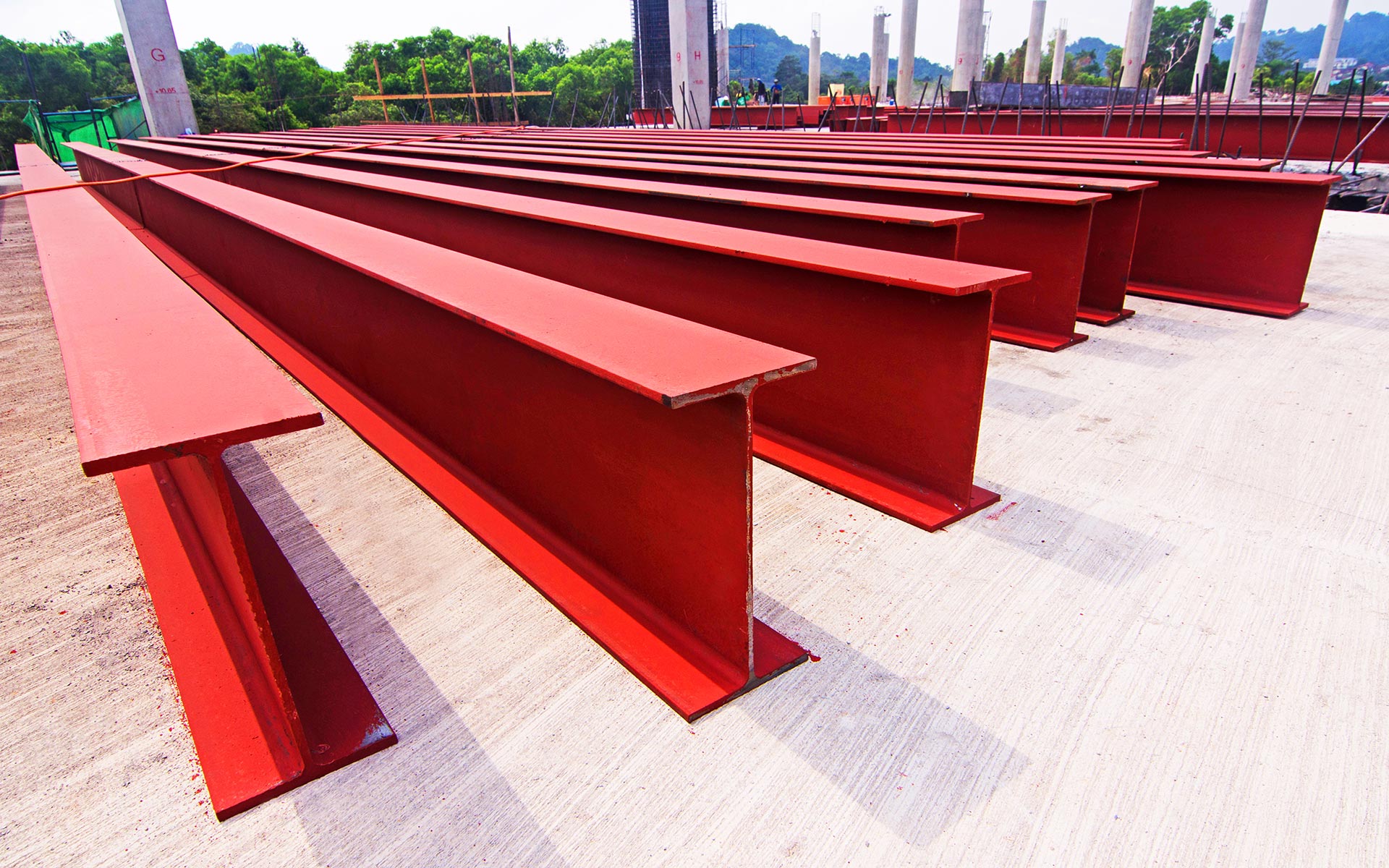
Steel beams producers in Europe target higher prices; market flat
Fastmarkets’ weekly price assessment for steel beams, domestic, delivered Northern Europe was €720-780 ($764-827) per tonne on Wednesday, unchanged from a week earlier.
Fastmarkets’ weekly price assessment for steel beams, domestic, delivered Southern Europe was €720-780 per tonne on Wednesday, flat week on week.
One trader in northern Europe reported offers for the product at €800 per tonne, although bookings at these levels were not confirmed by market participants.
Sources said they did not think prices would fall further, with mills unwilling to sell at lower prices.
Trading remained limited amid ongoing weak demand as a result of slow construction consumption.
Meanwhile, scrap feedstock in Turkey’s bellwether market moved down amid weak finished steel demand in the country’s domestic and export markets.
Fastmarkets’ calculation of its daily index for steel scrap HMS 1&2 (80:20 mix) North Europe origin, cfr Turkey was $359.50 per tonne on Wednesday, down $4.13 per tonne week on week from $363.63 per tonne, and down $10.48 per tonne month on month.
Published by: Holly Chant

Ukraine’s restoration will need 3.5mt of steel: Metinvest
Ukraine will need 3.5 million tonnes of steel for the restoration of housing and social infrastructure due to the war with Russia, estimates Metinvest’s trading arm, Metinvest-SMC.
The company launched its detailed concept at the II Architecture and Construction Business Forum held in Kyiv on 5-6 October. Representatives of government and business, including builders, developers, architects and banks, spent two days discussing how to work together to ensure Ukraine’s rapid recovery.
“The beginning of the country’s large-scale reconstruction depends on victory and, according to our estimates, around 3.5 million tonnes of steel will be needed to restore housing and social infrastructure,” says the company’s construction segment head, Tetyana Skrypka. “We have taken into account the extent of the destruction of buildings, with more than 65,000 affected, and the average metal content of these facilities. The restoration will require time – forecast at between five to ten years – so we also considered average annual steel consumption.”
The country’s Steel Dream restoration concept created by Metinvest-SMC is based on the principle of “build Ukrainian” and unites various domestic producers. In the six months since the presentation of the first concept, around 50 partners have joined the project, including steel plants, designers, furniture producers and building materials manufacturers.
“In addition to Mariupol, authorities in two other Ukrainian cities have expressed their readiness to restore destroyed facilities as part of Steel Dream projects,” Metinvest says. “Negotiations and work on building projects adapted to local conditions are being conducted with several communities. In addition, considering the significant interest in the Steel Dream concept, especially from foreign partners, the project team is undergoing accreditation at international foundations for approval of the project.”
Ukraine decreased crude steel production in September to 558,000 tonnes, down by 3.4% compared to August but up 64% on-year (see Kallanish passim). In January-September, it produced 4.6mt of steel, still down 17% on-year.
Svetoslav Abrossimov Bulgaria