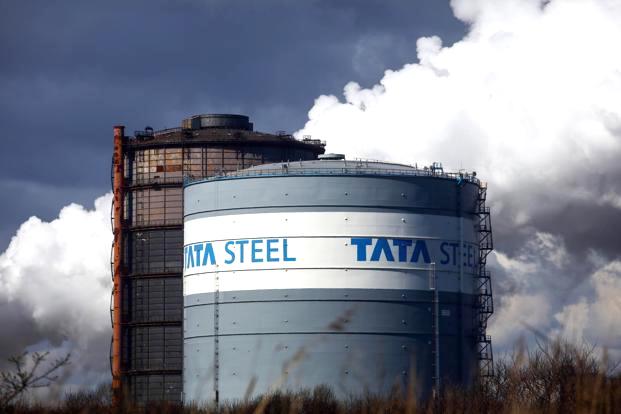
Tata Steel UK, Gestamp sign recycling agreement
Gestamp and Tata Steel UK have signed a recycling agreement that will see the automotive components producer supply the steelmaker with scrap generated from its production process, for re-use in steelmaking. This will raise Tata’s automotive steel grade recycled content from 17% to 30%.
This steel will then be supplied to Gestamp and passed on to automotive manufacturers, reducing the supply chain carbon footprint.
OEMs need low-emission steel to meet their decarbonisation targets with guaranteed quality and safety. This new circularity concept contributes to achieving sustainability goals by using high-quality scrap as a secondary raw material for the production of low-emissions steel. The increased recycled content has no impact on quality, strength or formability of the steel produced, Tata says.
Under the partnership, Gestamp will channel its high-quality scrap – through efficient collection and transport management – to Tata Steel’s steelworks in Port Talbot, so that it can be used again in future steelmaking. By using the mass balance principle, the returned steel will then be accounted for as part of the component’s recycled content.
The traceability and quality of pre-consumer scrap provided by Gestamp will enable the recycled content of new steel to be increased and the quality of the steel to be preserved, the steelmaker adds.
To ensure accountability, Tata Steel will provide evidence to demonstrate the volume of high-quality scrap supplied and the associated CO2 savings by setting up a Gestamp Recycled Content Bank, which will be independently audited, Tata says in a note sent to Kallanish. Any additional revenue earned by Tata Steel UK as a result of this partnership will be reinvested into further decarbonisation projects.
Bringing back steel scrap from customers like Gestamp to the Port Talbot steelworks is “an important step helping to secure raw materials for steel products both now and in the future”, Tata observes. “It also means recycled, reduced carbon steel is available to automotive manufacturers in the short term until EAF steel is in production.”
Adam Smith Poland


Voestalpine breaks ground on Linz EAF
Voestalpine has broken ground on the “greentec steel” electric arc furnace project at its Linz headquarters, a month after doing the same at its Donawitz site.
Construction of the 1.6 million tonnes/year capacity EAF at Linz will begin in 2024, with commissioning scheduled three years later (see Kallanish passim). It will use a mix of scrap, liquid pig iron, and hot-briquetted iron as feedstock.
This will join the 850,000 t/y EAF at Donawitz, together reducing CO2 emissions by around 30% from 2027. This corresponds to an annual saving of almost 4 million tonnes of CO2 or 5% of domestic emissions.
Starting in 2030, the plan is to replace two more blast furnaces in Linz and Donawitz and invest in an additional EAF in Linz. To achieve the net zero target by 2050, the group is researching into several new processes and investing in pilot projects which explore new pathways in steel production.
“The two groundbreaking ceremonies in Linz and Donawitz are more than just a symbolic act and the start of a construction project. They are the visible cornerstone for voestalpine’s green future and an important milestone for climate protection in Austria,” says chief executive Herbert Eibensteiner.
The combined investment for both projects amounts to €1.5 billion ($1.6 billion), of which Linz accounts for around €1 billion.
Adam Smith Poland
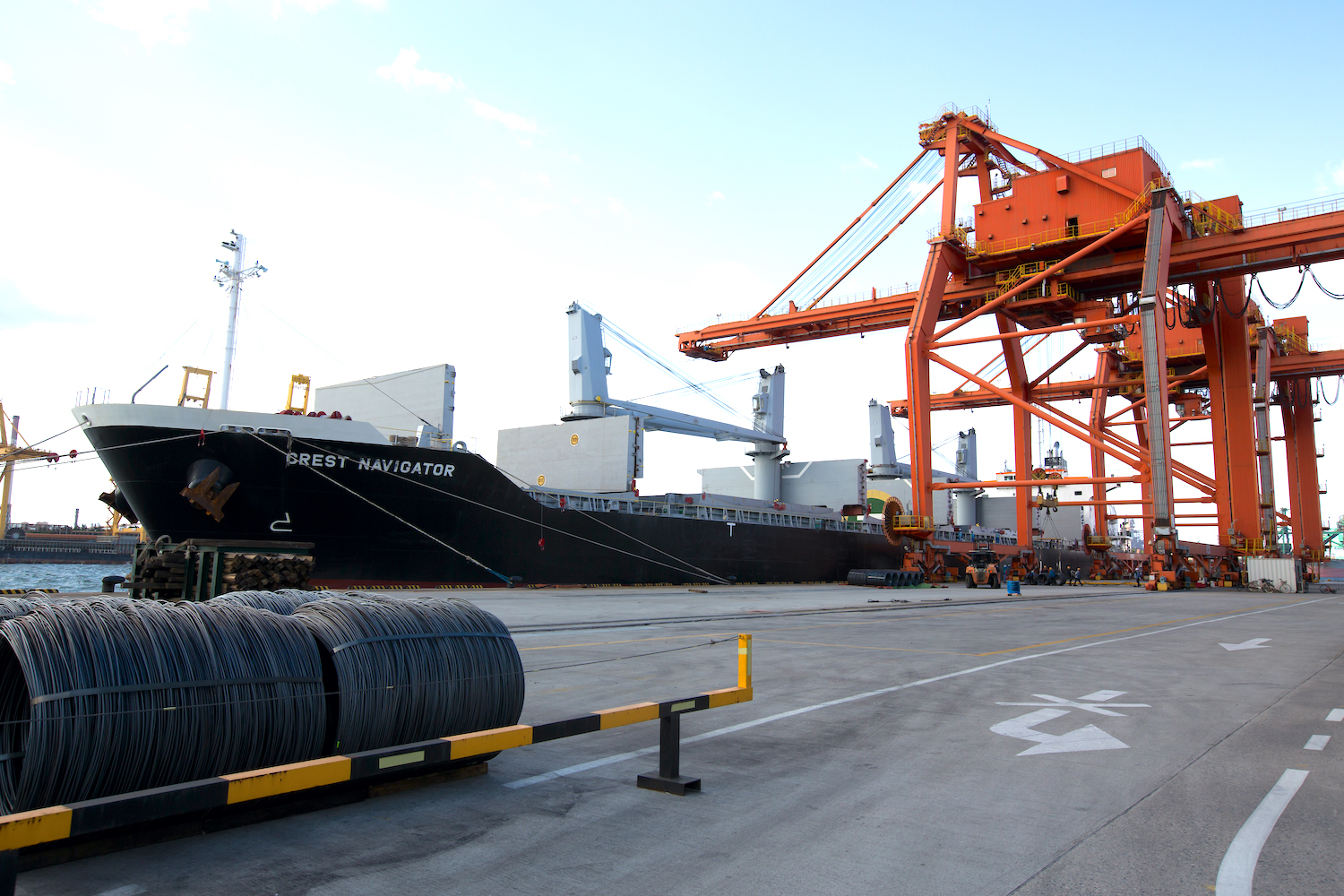
Posco pledges to support Ukraine’s reconstruction
Choi Jeong-woo, chairman of South Korean steelmaker Posco, renewed his commitment to joining and supporting Ukraine’s post-war reconstruction work during a meeting held last Friday, Kallanish learns.
Choi met Ukrainian Ambassador to South Korea Dmytro Ponomarenko, and Ukrainian lawmakers Andriy Nikolayenko and Serhiy Taruta at the steel giant’s headquarters in Seoul, the capital city of South Korea.
“The partnership between our two countries will be further strengthened. Posco Group will consolidate all its capabilities to initiate reconstruction projects as soon as possible,” said Choi.
In March, the enterprise has launched the so-called Ukraine Reconstruction Taskforce and hopes to take aprt in a series of rebuilding projects. The target areas include steel, energy, infrastructure, food, and secondary battery materials. For steel, Posco targets various forms of cooperation such as energy production for steel manufacturing in Ukraine.
In response, Andriy Nikolayenko said, “I think POSCO Group is the best partner for rebuilding Ukraine, which was wounded by war, and further building a new Ukraine.” He added, “I will actively work to ensure that.”
Customs data shows that South Korea exported 9,851 tonnes of iron and steel under HS codes 72 and 73 to Ukraine over January-August, surging 51% from a year earlier. But the value decreased 3% at $11.28 million.
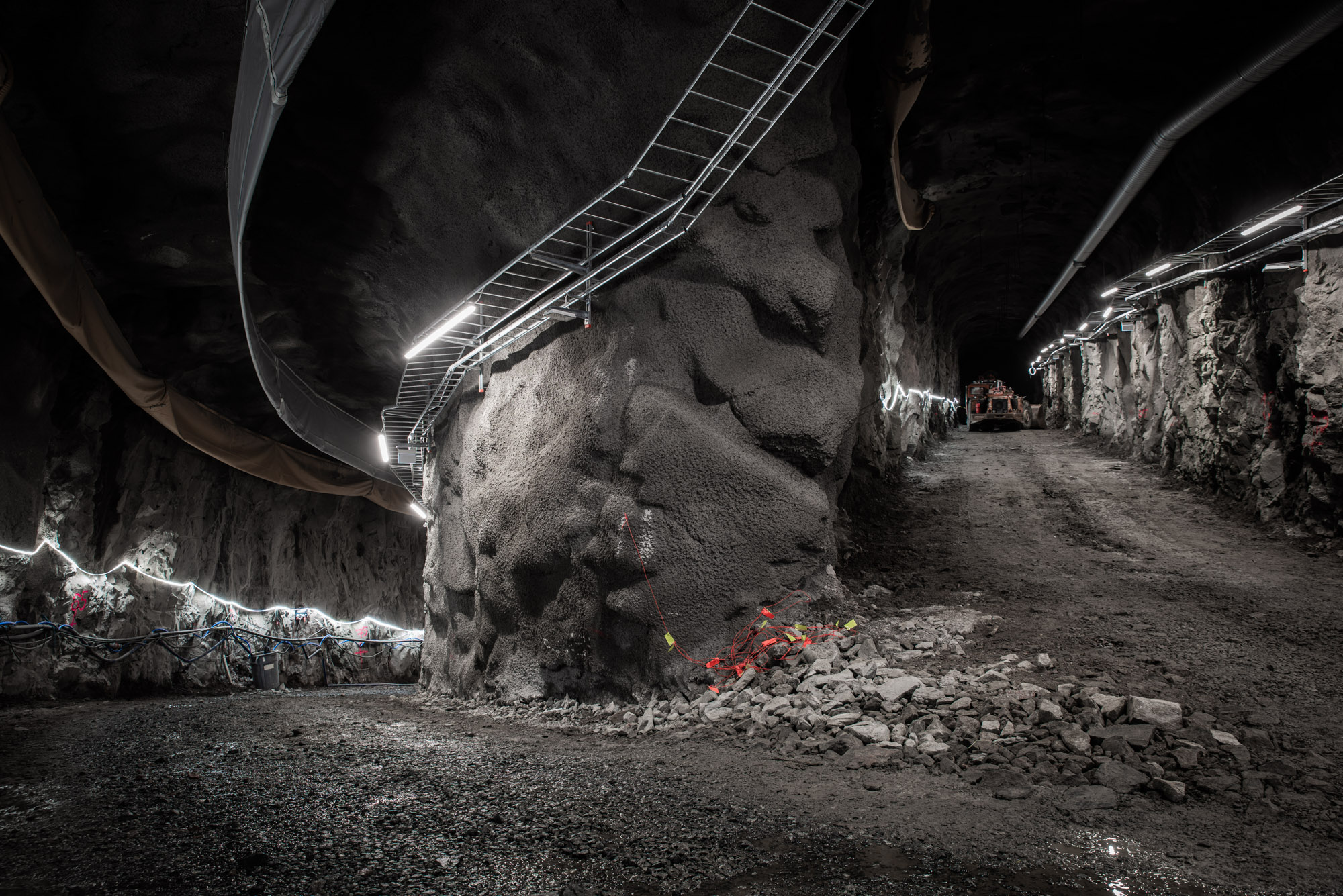
RINA plans hydrogen-based pilot steel plant
Engineering consultancy and certification company RINA plans to build a pilot hydrogen-fuelled steelmaking plant in Italy, to be used for research purposes.
The plant will be located in Castel Romano and involves an investment of €88 million ($93m). The project is supported by Italian authorities and backed as part of the IPCEI (Important Projects of Common European Interest) support mechanism.
The plant will have a 30m-high direct iron ore reduction tower, an electric arc furnace and a reheating furnace that will operate with near zero emissions for the production of steel, Kallanish notes.
“The new plant will make the entire steel production process cleaner. It will further provide a fully open testing facility available to steelmakers worldwide to meet the decarbonisation challenge and prove the quality of steel produced using hydrogen instead of carbon-based energy sources,” explains RINA head Ugo Salerno.
The technology will rely on availability of hydrogen to power the steelmaking process. RINA will also launch a centre of excellence for the dissemination of hydrogen know-how.
Emanuele Norsa Italy
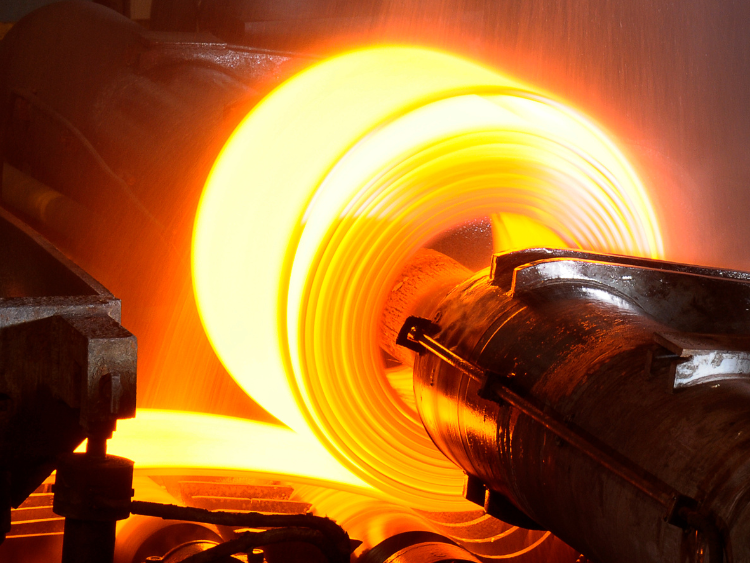
European HRC prices under pressure as demand stays low
- End-users, distributors hold back from purchases
- Effects from production cuts start to be visible
Both distributors and end-users have shown little interest in new bookings.
“Demand is bad, and there is skepticism among buyers regarding outlook,” a German service center source said. “What might help to support the prices — some mills have been delaying deliveries for around a month.”
“Demand is close to zero, and very few deals are made,” an Italian service center source said. “Reducing capacities is the only way to manage the current situation with low prices and weak demand.”
Germany’s ArcelorMittal temporarily idled blast furnaces No. 2 and No. 3 at its Bremen site Oct. 1. ArcelorMittal has temporarily shut blast furnace A at its steel plant in Ghent. Blast furnaces at both the Salzgitter plant in Germany and Tata Steel in the Netherlands also remained idled for maintenance.
“A big traditional buyer of one of the major mills approached us looking for commodity material,” a mill source said.
Market participants believe that it indicated that production cuts and equipment stoppages implemented by the European steelmakers had started to have impact.
Platts assessed domestic prices for hot-rolled coil in Northwest Europe stable day on day at Eur610/mt ex-works Ruhr Oct. 10.
Tradable values have been reported at Eur600-620/mt ex-works Ruhr. No transactions have been heard.
Platts assessed domestic prices for hot-rolled coil in South Europe down by Eur5/mt day on day to Eur595/mt ex-works Italy Oct. 10.
Offers have been reported at the equivalent of Eur600-620/mt ex-works Italy, bids — at the equivalent of Eur550-570/mt ex-works Italy and tradable values — at Eur590-600/mt ex-works Italy.
Platts is part of S&P Global Commodity Insights.
Author Maria Tanatar, maria.tanatar@


European HRC producers try to hold ground despite pressure from buyers
Despite slowing consumption and pressure from buyers, European steelmakers were unwilling to cut prices further due to rising costs for raw materials such as coking coal and iron ore.
In addition, negotiations with automotive companies for contracts for the first half of 2024 are scheduled to begin in November and December, and so steelmakers are reluctant to lower their prices ahead of these talks.
Furthermore, some producers have expressed cautious optimism regarding a rebound in apparent steel at the end of November, when buyers need to make bookings for January-arrival coil.
“Import will become less attractive due to CBAM (Carbon Border Adjustment Mechanism) and safeguards issues. We don’t expect the Q1 2024 quota to be filled a fast as it was with the Q4 2023 quota. Buyers will book more European steel,” a steelmaker source said.
Buyers have been putting off restocking for quite some time already and inventories across the supply chain has also been trending lower, so a pickup in apparent steel demand later in the quarter is likely, sources said.
A strong rebound in HRC prices was seen as unlikely due to slow end-user demand, sources added.
Price ideas for HRC with a lead time of 4-6 weeks from mills in Northern Europe were heard at €620-630 ($654-665) per tonne ex-works while buyers’ price ideas were around €600-630 per tonne ex-works.
Producers avoided giving firm generalized offers to the market due to slow demand and downward pressure from buyers.
Trading in the region has remained low, with mainly hand-to-mouth booking for small tonnage reported recently, Fastmarkets heard.
As a result, Fastmarkets calculated its daily steel hot-rolled coil index domestic, exw Northern Europe at €620 per tonne on Tuesday, unchanged from a day earlier.
The index was also stable week on week, but down by €24.79 per tonne month on month.
Fastmarkets calculated its daily steel hot-rolled coil index domestic, exw Italy at €600 per tonne on October 10, down by €5 per tonne from €605 per tonne on Monday.
The index was down by €5 per tonne week on week and by €33.33 per tonne month on month.
Italian buyers were placing bids for November-delivery HRC at €600 per tonne delivered, which would net back to around €585 per tonne ex-works.
Officially, local producers were quoting such material at no lower than €610 per tonne ex-works.
Because of weaker order intake from end users, the availability of HRC in the spot market has increased, with some steel-service centers “selling material really aggressively and pressuring prices further down,” a trading source in Italy said.
The demand for coil in the nation has remained very low, but similarly to Northern Europe, Italian mills were resisting further price drop due to the cost factor.
Import offers were largely uncompetitive, with most Asian producers offering HRC to Europe at around €600 per tonne CFR.
Only Vietnamese mills were offering HRC at lower levels – at around €580-585 per tonne CFR to Italy, but this was still not considered workable for the European buyers.
Published by: Julia Bolotova


US, EU negotiate steel trade conditions
The US and European Union are working towards a steel trade agreement in the face of carbon regulations and their self-imposed deadline of 31 October, Kallanish learns from monitoring the US Chamber of Commerce (CoC) report.
The EUs carbon border adjustment mechanism (CBAM) went into effect on 1 October. It calls for upholding the carbon price regulations set under the EU’s emissions trading system. The effort seeks to ensure that EU producers are not facing competition from imports that are not subject to the carbon price regulation.
To avoid furthering a trade war between the two entities after imposition of the Trump-era Section 232 measures, the two began what they are calling Global Arrangement on Sustainable Steel and Aluminium (EU-US GSA).
Katherine Tai, US trade representative, says the sides are working “to discourage trade in emissions-intensive steel and aluminum products that contribute to global non-market excess capacity from other countries and to ensure that domestic policies support lowering the GHG emissions intensity of these industries.”
The US lost $3.5 billion in downstream revenue as a result of the Section 232 tariffs, according to a study by the United States International Trade Commission, which also concluded that US importers bore the cost of the steel and aluminium tariffs.
Kristen DiLandro USA

EU buyers utilise safeguard quotas quicker than Q3
According to the latest report published by EUROMETAL, 29% of all quotas for flat carbon steel products have been used and 14% of those for longs. In the corresponding Q3 period, only 18% of the flats quotas were used and 11% of longs.
For flat products, importers have already fully utilised quotas for HRC under the “other countries” sub-category, as well as those for Chinese metal coated coil imports. Half of the quotas for imports of South Korean HRC and Indian organic coated coil have also been used for Q4.
In the longs segment, for the moment, only quotas for imports of wire rod from Malaysia have been exhausted. By the end of Q3, quotas were also exhausted for Chinese merchant bar, as well as sections from “other countries”.
Other quotas that have been fully utilised for Q4 include Indian bars of stainless steel as well as Chinese sheet piling.
Emanuele Norsa Italy

Disaster prevention and restoration using steel solutions – best practice guidebook
This best practice guidebook offers an extensive reference dedicated to the innovative application of steel solutions related to disaster prevention and restoration. This guidebook is presented by constructsteel, the steel construction market development programme of the World Steel Association (worldsteel).
In recognition of the growing frequency of natural and man-made disasters and the importance of disaster prevention and restoration, constructsteel has reacted by issuing its inaugural best practice guidebook for disaster prevention and restoration using steel solutions.
This guidebook showcases and highlights the final steel product solutions of constructsteel’s members, including exceptional strength, resilience, corrosion resistance, durability & rapid assembly and deployment capabilities vis a vis disaster prevention and restoration.
This guidebook will prove useful to those involved in disaster prevention and restoration efforts worldwide, as we showcase steel’s role in enhancing the resilience of our communities and infrastructure against natural and man-made forces.
Guidebook – Disaster prevention and restoration using steel solutions
Source: worldsteel.com

EU steelmakers want more import measures
European steelmakers want more effective tools to challenge low-cost and high-carbon intensity imports, which are gaining an increasing share of overall market supply.
Imports represented over 23pc of total European hot-rolled coil supply in July, according to Argus calculations, and this is set to increase in the coming months as over 1mn t cleared into the EU’s other countries’ quota in October. Utilisation rates at domestic European mills are at around 50-60pc owing to weak demand for domestic product.
In the cold-rolled coil segment, imports make up 35-39pc of total European market supply, steelmaking executives told Argus.
Domestic mills cannot compete with overseas producers’ because they face higher energy costs and have to pay carbon costs that producers in other locations do not incur. European producers are paying around €32/t ($34/t) for carbon, assuming a European carbon price of €80/t and the fact that mills have a deficit of allowances of around 20pc they need to purchase. The marginal cost is €160/t, with average carbon emissions at 2t for each tonne of steel produced.
The EU’s carbon border adjustment mechanism does not require overseas producers to pay for carbon emitted during steel production until 2026, leading European mills to feel unprotected from imports of steel produced in places where there are no carbon costs — despite import quotas and dumping duties on a number of countries. Mills do not expect the current safeguards to be extended, as EU trade commissioner Valdis Dombrovskis has hinted that they will lapse.
“The nonchalance of this flagrant and destructive lack of level playing, and the naivety of politicians and the commission is incredible,” one senior steelmaking executive told Argus.
Director general of European steel association Eurofer Axel Eggert told Argus that he wants the EU and US to deliver on negotiations for a global arrangement on sustainable steel and aluminium (GSSA), which have been under way since early 2021. Only 10 days remain for the sides to agree on a GSSA, if a reimposition of tariffs issued under former president Donald Trump is to be avoided.
“It’s not only China that’s massively pushing outside investment in steel production capacity. Countries like Indonesia also have to be tackled when doing an assessment,” Eggert said. “Traditional trade defence instruments aren’t able to do this. You target one product and one country. But state-driven overcapacity is about everything — all related steel products,” he added, pointing to excess capacity reaching almost 600mn t.
A further 150mn t of carbon-intensive capacity additions are planned between now and 2026, which will emit more carbon than the entire European steel industry, Eggert said. This capacity would wipe out all EU steel industry emission reduction efforts up to 2050 in just three years, Eurofer said.
Eurofer has not been approached about anti-subsidy measures on Chinese steel, which the US has reportedly requested in the GSSA negotiations.
“We don’t know what will be presented. We are simply saying there need to be additional tools,” Eggert said. Anti-subsidy measures are already in place on some Chinese steel products, including hot-rolled coil.