


China seen remaining major exporter, EU safeguard struggling
China will remain a major steel exporter amid the war in Ukraine and sanctions against Russia, says CRU European flat steel analyst Matthew Watkins.
“At the same time, we saw that a lot of Chinese steel is going to Turkey after the devastating earthquake and also to the rest of the world,” he noted at the EUROMETAL regional meeting Nordics in Copenhagen on Thursday attended by Kallanish. “Chinese exports are very high this year.”
According to him, the exports are being driven by three reasons – how attractive a current destination market is, low domestic demand and how price competitive the steel material is. “Chinese mills’ profitability is much better outside China. Previously, it was not the case so much,” he added.
“After the Covid-19 pandemic, due to the Russian-Ukrainian war, Europe has started to buy much more steel from other Asian counties like Japan, Vietnam, Thailand and others,” Watkins observed. “The European quota system was not set up to deal with that new trend.”
It is not a very lucrative business to make steel in Europe at present, and volumes are low, he said. “And the main reason is not the imports from countries outside Europe, but emissions prices for CO2, which have risen and are influencing the market more and more,” he commented.
According to him, in the near future, China will remain a big exporter, not only to Europe. But its production will probably decline because of lower domestic demand and measures by authorities to reduce steel output amid CO2 emissions. “India’s steel exports will grow, on the other hand, because it has a plan to increase production,” he added.
Svetoslav Abrossimov Bulgaria


EUROMETAL met Nordic distributors in Copenhagen
EUROMETAL organized together with the Danish federation Stålforeningen a EUROMETAL Regional Meeting Nordics.
This event aimed at the Scandinavian steel distribution market brought together 77 participants in Copenhagen.
The 2023 edition was marked by the joint organization with Ståltrends, the annual Stålforeningen event.
Stockholding distributors, Service Centers and Traders were able to participate in 2 days of the conference, one focused on the Danish market and the other on the Nordic and global market.
Topics such as the future of steel, premium and zero-emission variants, their acceptance among customers, the role of digital in distribution and the impact of CBAM on European steel distribution were covered.
The event concluded with a panel discussion where Nordic producers and distributors could share their views on the challenges of Nordic Steel Distribution for 2024 and beyond.
This event gave rise to several articles in the specialized press:
- Green steel, decarbonization drive, CBAM: key takeaways from EUROMETAL’s Nordics meeting
- Changing society, geopolitics redefine European steel
- Customers, producers will pay for green steel: SSAB
- Steel industry weighs the costs as CBAM transition period begins
- China seen remaining major exporter, EU safeguard struggling


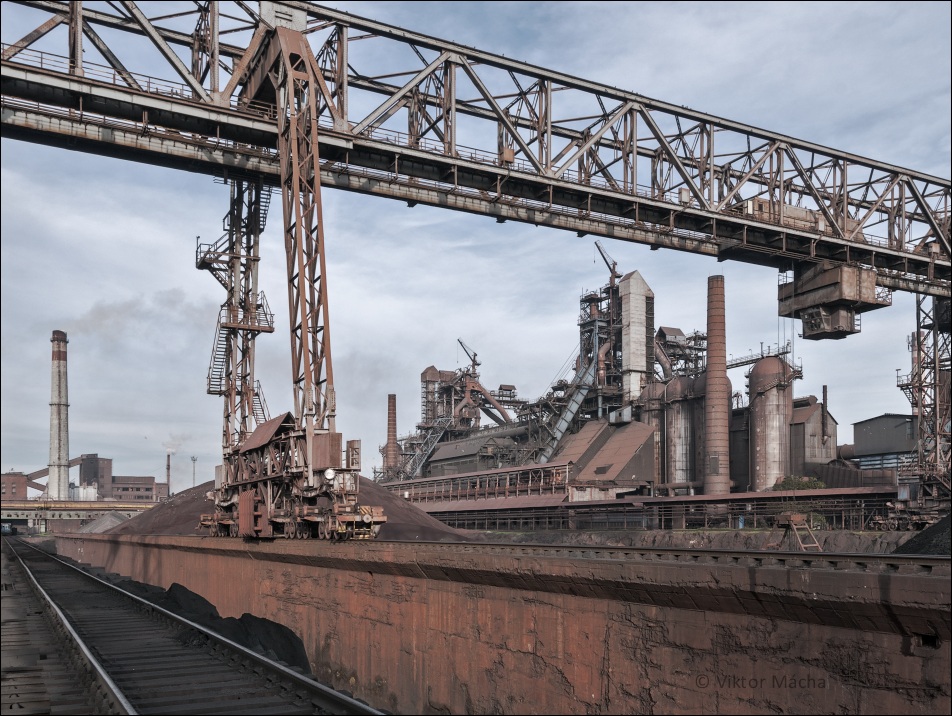
EU approves Liberty Steel buy of Hungary’s Dunaferr steelworks
The EU has approved the sale of Hungary’s Dunaferr iron and steel works to UK-registered Liberty Steel, putting the mill’s rescue on track, the Hungarian Ministry of Economic Development said Oct. 3.
“With the approval, the last obstacle to the successful sale and future of Dunaferr has been removed,” Gergely Fábián, minister of state for industrial policy and technology, said in a statement on the government’s website.
A Liberty Steel spokesperson Oct. 4. separately confirmed the EU gave “regulatory approval” for it to buy the Dunaferr steelworks. “We are now working at pace to complete the transaction as quickly as possible,” the spokesperson told S&P Global Commodity Insights.
The mill is capable of producing 1.2 million mt/year of hot iron and 1.6 million mt/year of crude steel.
The EU approved Liberty Steel’s acquisition of Dunaferr under a “simplified merger control procedure” in which that company submitted a winning Eur55 million bid ($58 million), according to the economic development ministry.
“Dunaferr became insolvent due to the irresponsibility of its previous foreign management and misguided [anti-Russian] sanctions,” Fábián said adding that the operation of the plant became impossible, as a result, endangering jobs of thousands of workers. While Dunaferr “escaped” from last year’s seemingly hopeless situation, there is still a lot to be done to insure its continued operation, and the Ministry of Economic Development will continue to play an active role in the future of the company, a key Hungarian economic player, according to Fábián.
The EU’s approval of the sale of Dunaferr to Libery Steel follows a protest in July from Ukraine’s Metinvest iron ore mining and steel company, which also competed for Dunaferr but was not admitted to the final bidding round, asking EU competition authorities investigate that tender, which, in its opinion, did not meet transparency criteria.
In August, Liberty Steel, Dunaferr’s management and liquidator agreed to stop smelting operations at the mill, taking offline its only operating blast furnace [of the two in total installed there] for at least three months. The weak European market, large volumes of foreign imports, costs in meeting EU carbon emission standards and preparations for a “green” transformation were cited as factors for the pausing steel production at the plant.
In September, Liberty Steel signed a memorandum of understanding with the Hungarian government and Chinese engineering company CISDI to develop a plan to reduce the mill’s scope 1 CO2 emissions by potentially 80%, something that could be achieved by re-equipping the currently met coal-based plant with electric arc furnace technology.
In July 2022, Liberty Steel informed the market of the green transition in the works for its Liberty Galati mill in Romania, the largest in that country and one of the largest in Eastern Europe. The company was then to select a supplier of hybrid electric arc furnace for Galati to produce low-carbon steel, but the tender was never completed. Around the same time, Liberty signed a contract with Italian plant-maker Danieli for the supply of two hybrid EAFs for its other Eastern European steelworks, at Ostrava in the Czech Republic.
“We have made good progress with Ostrava’s GREENSTEEL transformation, with the development of the main energy bridge underway, space freed up for the control center, land acquired for the planned new high speed electricity line and the feasibility study for a new 150-MW solar farm at the plant now complete,” the Liberty Steel spokesperson said.


Northwest EU domestic rebar increase as mills aim higher levels
Northwest European domestic rebar prices jumped week on week Oct. 4 as mills aimed for higher levels.
Platts assessment of Northwest Europe Rebar was up Eur30/mt at Eur605/mt ex-works in the week to Oct. 4.
One distributor source in the Benelux region reported a deal for 250 mt of rebar at Eur625/mt delivered Benelux, however, adding that demand remained weak for long steel products in the domestic market due to slow construction activity.
One European mill source told that German mills were raising rebar offers in the domestic market. “Mills are trying to ask for more but are accepting less [in case of deals], but it is a clear indication that the market trend is changing. We are seeing demand in the market now,” he said.
Another European mill source reported that there was a positive change in the market as customers seemed willing to pay higher prices for long steel products. The sources noted that even though mills had not been successful in achieving transactions levels at announced elevated offers, still transactions were happening at higher levels than earlier. The source indicated a workable level for rebar in the domestic Northwest European market at Eur610-Eur620/mt delivered.
One European trader expected prices around Eur600-Eur610/mt delivered to be workable for rebar deals in the local Northwest European market.
Meanwhile, Platts assessment of European medium sections (category 1, S235 JR) was stable at Eur780/mt delivered on Oct. 4.
Market sources reported workable ranges for beams around Eur745-Eur820/mt delivered, based on location and demand. Some sources reported that customers were only buying as per needed basis and avoiding restocking activity.
Turkish steelmaker Kardemir targeting European Green Deal compliance
Kardemir, Turkey’s largest integrated long steel producer, is to continue its green steel and environmental investments to comply with the European Green Deal.
Highlighting that European and Turkish steel producers have focused on carbon reduction investments in recent years, Kardemir said it has already completed 22 of 34 different environmental investment projects as a part of the third phase of its investment plan.
“We are aiming to complete the remaining 12 other projects gradually in the coming few years in line with our sustainability policy, aiming to comply with the European Green Deal and Carbon Border Adjustment Mechanism,” it said.
The company will also continue its value-added steel investments synchronously to expand its product range, Kardemir said.
“Our new ladle furnace, continuous casting facility and vacuum degassing plant investment will be realized in this regard in the coming year.”
The company is building a 30 MW power plant to reduce its energy costs.
Fluctuations in raw material and energy costs as well as demand conditions have been pressuring Turkish mills’ steel pricing recently.
Energy prices in Turkey increased further with the latest hikes announced last weekend.
Platts assessed Turkish exported rebar at $567.50/mt FOB on Oct. 4, down $2.50/mt day on day, according to S&P Global Commodity Insights data.
Kardemir has 3.5 million mt/year liquid steel capacity and produces billet, rebar, wire rod, sections and angles.

European producers reluctant to cut HRC prices again amid rising costs
Fastmarkets calculated its daily steel HRC index domestic, exw Northern Europe at €618.92 ($648.02) per tonne on Wednesday, down by €1.08 from €620 per tonne on October 3.
The index was down by €6.71 per tonne week on week and by €40.25 per tonne month on month.
Some offers from integrated mills in the region were reported at €630-640 per tonne ex-works for coil with lead times of four-to-six weeks.
And one source reported an offer at €610 per tonne ex-works from an integrated mill in the region – although this could not be widely confirmed by other market participants.
Buyer price ideas were around €600-630 per tonne ex-works, sources said, but trading in the region remained weak, with the lack of end-user demand seen as the main obstacle.
Distributors and steel service centers have no pressure to restock because most already have “sufficient” inventories, Fastmarkets understands.
“Mills are asking for inquiries and orders, so prices [for HRC] remain under pressure. And because we are approaching the end of the year, consumers would like to [keep] their stock levels low. So a major buying recovery is very unlikely,” a trading source in the region told Fastmarkets.
Most market participants expect HRC producers across Europe to maintain their offer prices above €600 per tonne ex-works due to the rising production costs and to trim their output volumes to balance the market.
“[HRC] below €600 per tonne ex-works would be a catastrophe for the steel mills. European producers now face higher costs due to more expensive raw materials, so we expect them to either maintain a base price above €600 [per tonne ex-works] or to bring down capacity, or both,” a steel service center source in Northern Europe said.
Market participants said that instead of switching off blast furnaces, European mills might reduce output at their rolling mills and stockpile slab instead.
“Producers in Europe are not really willing to bring down crude steel output much due to free carbon-dioxide emissions allocations for next year. So they might just trim production at the rolling mills, which would have the same effect on the market in that HRC availability will be reduced,” a trading source in Germany told Fastmarkets.
Fastmarkets’ calculated its daily steel HRC index domestic, exw Italy at €605 per tonne on Wednesday, stable day on day.
Italian mills were reluctant to drop their official offers below €610-620 per tonne ex-works, while bids from some buyers were coming in at €580-600 per tonne ex-works.
Lead times from local mills were reported at four to six weeks.
Sources said that domestic prices were probably close to rock bottom and that they do not expect to see any more big declines in the near future.
“Costs are rising at [the steel] mills so they are reluctant to go below €600 per tonne ex-works,” a distributor said.
Published by: Julia Bolotova


Klöckner appoints new head of German operations
Klöckner & Co says Felix Schmitz has taken over as new chief executive of Kloeckner Metals Germany GmbH, with effect from 1 October.
He succeeds Bernhard Weiss, who has left the company by mutual agreement, it tells Kallanish. The distribution group recently announced a reorganisation of its top management board, where Weiss was in charge of Europe.
His contract as member of the management board since June 2021 and as ceo Europe was terminated by joint agreement as of 30 September. Group ceo Guido Kerkhoff, in addition to his existing responsibilities, has taken over the management of the group’s European operations. The board will now consist of Kerkhoff, Oliver Falk (chief financial officer) and John Ganem (ceo Americas).
Schmitz joined Klöckner six years ago, and was deeply involved in the group’s efforts in creating a “green” steel brand under the Nexigen name. He will spearhead the unit’s development towards a provider of higher value-added solutions, the company says.
Klöckner did not state if the reorganisation includes other appointments at country companies, like in Switzerland, where the group has a strong presence with subsidiary Debrunner Acifer.
Christian Koehl Germany

Italian distributors rule out price collapse despite slowdown
Italian steel distributors and service centres say product values will “inevitably decline” if the current level of demand and small-volume sales continue in the fourth quarter.
“We are lacking volumes. Our clients continue to order the minimum amount each week. All coil derivatives are falling because service centres are chasing clients and discounting material. It will not be long before the market starts seeing financial trouble,” one source in the sector tells Kallanish.
While values are seen declining, distributors and agents who spoke to Kallanish rule out a collapse because of the high cost of production and processing, which will prevent prices across the market from falling below a certain level.
Purchasing groups are beginning to see financial issues and a general pessimism spreading among their members. Demand for both flat and long products is not seen recovering this month and the entire year is forecast to continue seeing the current low level of consumption.
“Prices are in a phase of stabilisation and apart from some mild movement, we do not see many changes happening in the coming months. Re-rollers and distributors will face serious margin issues. Many do not always manage to cover their costs,” another source comments.
Distributors believe that price increases in this market cannot possibly stick due to the weak performance of some key sectors, such as white goods, machinery and construction. Those suppliers who are well stocked and can offer a wide range of products are in a better position compared to the very specialised ones.
The focus throughout the entire value chain is to buy cheap and keep stocks low. With this objective in mind, five European purchasing groups recently created a large pan-European purchasing unit called Astedis, with the intention to create synergies and mutualise buying efforts (see Kallanish 19 September).
Natalia Capra France

EU plate market not seen reviving soon
Northwest European plate market observers believe it will take well into next year for a serious recovery in demand to occur.
“There will be a recession until summer 2024,” one central German buyer predicts to Kallanish. He points to infrastructure project development coming to a halt. “Whatever is not in pre-development now will not be kicked off until March,” he says, referring to offshore pipelines, wind parks, and liquid petroleum gas containers. “Such things need the approval of local authorities and environmental interest groups, before they even get tendered.”
Another example often overlooked is the leasing behaviour of truck fleets. “Many transportation companies give back their leased trucks and do not use the option of buying them,” he says. The parking lots of truck makers are therefore full, because of the returned vehicles, he adds.
High inventory levels at warehouses are also an issue for many distributors. “We could buy cheaply now, to mix it with material from earlier, more expensive, material, to have a better overall price ratio. But then you run into the danger of storing too much material you cannot sell. It’s a dilemma, and every house needs to solve it for itself,” he says.
In fact, he tells of a recent “white week” sell-out, sometimes at intake prices, at those companies whose business year ends in September, to clear their inventory before year-end. This points to one of the biggest European distributors whose fiscal year ends on 30 September.
Another observer concurs that warehouses are selling at the prices they bought at. “Even the big integrated mills are now willing to make concessions, in view of the weak market,” he opines. The price range given by most observers for S355 will be between €800/tonne and €840/t ($842-884) delivered, although some see occasional lows and highs beyond that range.
Christian Koehl Germany

Italian plate sellers see some more demand
Italian plate producers have noticed some return of demand over the past ten days following a long period of quiet and low sales. Distributors and service centres have implemented some purchases, but sales volumes remain limited due to very short visibility.
“We see some more interest from buyers at stable on-week prices on the domestic and export market,” a mill source says. He expects the restocking to intensify in October. Mills and distributors tell Kallanish that stronger demand continues to be reported for S355 grade compared to S275. On average, S275 has slightly declined compared to mid-September and reached €700-730/tonne ($735-767) ex-works, while S355 is being transacted at €740-750/t.
Given the more dynamic market since the last days of September, several sources seem more optimistic for October despite the general uncertainty and low visibility. They forecast values to remain stable this month, with some mild fluctuations.
Imported Asia-origin slab contracts in Italy are rumoured to have been done at $580-600/t cfr, mostly stable compared to mid-September.
Natalia Capra France