


Sentiment in French construction sector improves slightly
Sentiment among French construction companies improved last month after deteriorating significantly earlier this year. The firms surveyed by l’Institut National de la Statistique et des Études Économiques (Insee) reported a slightly more optimistic attitude about their past and future activity.
More companies than in July, however, consider the market and the evolution of their company to be unpredictable due to the current economic uncertainty, Kallanish learns from an Insee report.
In August, slightly more building contractors than in July considered their order books to be higher than normal and reported 8.3 months of work. Production capacity continued to decrease last month and slightly fewer construction firms than in July reported slowing output because of supply difficulties. 24% of construction companies considered themselves unable to increase their production in case of additional orders due to a lack of personnel and supply difficulties.
Fewer companies in August announced they will increase their prices in the upcoming three months, the report states.
Natalia Capra France

Steelmaking electrification to cause EU scrap deficit: conference
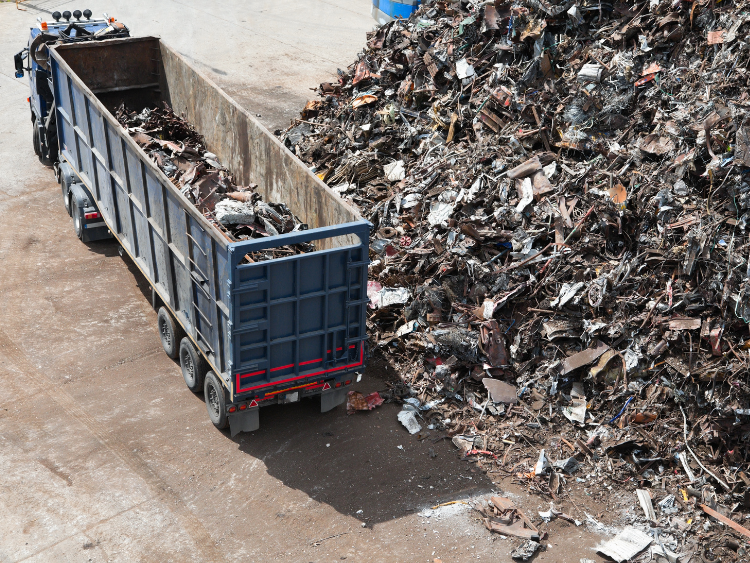
The increased electrification of steelmaking in Europe will lift scrap consumption and result in shortages of the feedstock, ultimately making its import necessary. The region must act to limit exports of this increasingly strategic material, while closed-loop recycling systems, such as established by Outokumpu in Finland, are the future, Kallanish heard at an industry event.
Although hydrogen-based direct reduced iron is widely touted as the basis for a decarbonised steel industry, and the technology is ready, the energy requirement is currently prohibitive, ArcelorMittal Poland (AMP) head of corporate governance & government affairs, head of energy & environment office Tomasz Slezak said at the European Steel Congress in Katowice on Tuesday.
Given the regulatory pressure and decarbonisation course already set, “we don’t have another option” but to transform to EAF-based production using scrap, Slezak observed. Poland now has a huge scrap surplus that it exports, but in the not-so-distant future this will turn into a deficit, with strong competition among mills. Prices will therefore increase, pushing up production costs.
One example of this competition will be that between ArcelorMittal Poland and Weglokoks’ prospective steelworks (see separate story).
Polish Steel Association (HIPH) chief executive Mirosław Motyka pointed out that Poland could utilise more of its scrap resources, over 1.2 million tonnes of which it exported in the first half of 2023, up 13% on-year. Consumption in the period was down 18% to 2.4mt. Exports are going to countries that produce steel, which then gets shipped back to Poland. These countries may adhere to weak or no ESG standards, making them unsuitable business partners for Europe, Motyka explained.
Scrap recycling standards in Poland are very high and suppliers are ready to cater for increased domestic demand, said ArcelorMittal Recykling Polska board member Piotr Gluzniewicz. Besides regular destination markets Germany and Czech Republic, Polish exporters have in recent years started shipping material to Turkey and the Indian subcontinent, he added.
A high level of recycling will be important, in order to remove impurities, as EAF mills become increasingly active in the production of flat products, as is the case in the US, said Motyka. Components such as tin and copper will need to be carefully removed. As for zinc in scrap, this gets converted during EAF steelmaking into dust, which can also be recycled, added Slezak.
Adam Smith Poland

German analyst sees prices dropping further in 2024
The current low steel prices in Germany, and its neighbouring countries, will not rebound so soon going into 2024, according to Peter Fertig, analyst at MBI Infosource.
Speaking at MBI’s Stahltag conference in Frankfurt on Tuesday, Fertig cited an array of economic factors influencing EU prices: from local energy costs and purchasing indices to incentives in Asia and the strikes at Australia’s LNG plants.
For local coil prices, he referred to the forecast he gave at last year’s event, stating that “the worst-case scenario, mercifully, did not come true”. For hot rolled coil, that would have been €375/tonne ($401). But neither did the best-case scenario of €925 match the effective March peak of around €850. In fact, the average value Kallanish heard from him back then – €650/t – is more or less the average at which prices remained throughout summer.
Going forward, however, Fertig recommended preparing for a further dip, although the range of scenarios is less extreme than those he assumed for 2023. For 2024, he predicts an average price of €575/t for HRC in 2024, in between a best case of €750 and worst case of €475.
His preview extended to other steel products. For cold rolled coil, he anticipates an average price of €625 (best €825, worst €525); for rebar €500 (best €725, worst €425); and for wire rod €575 (best €825, worst €450).
In his presentation, he noted that profitability has recovered slightly for makers of flat products, but will remain tense for long products. One aspect here is the weakness of the construction industry, which mostly affects long products, he noted.
Christian Koehl Germany
Slow trading keeps HRC prices flat across Europe
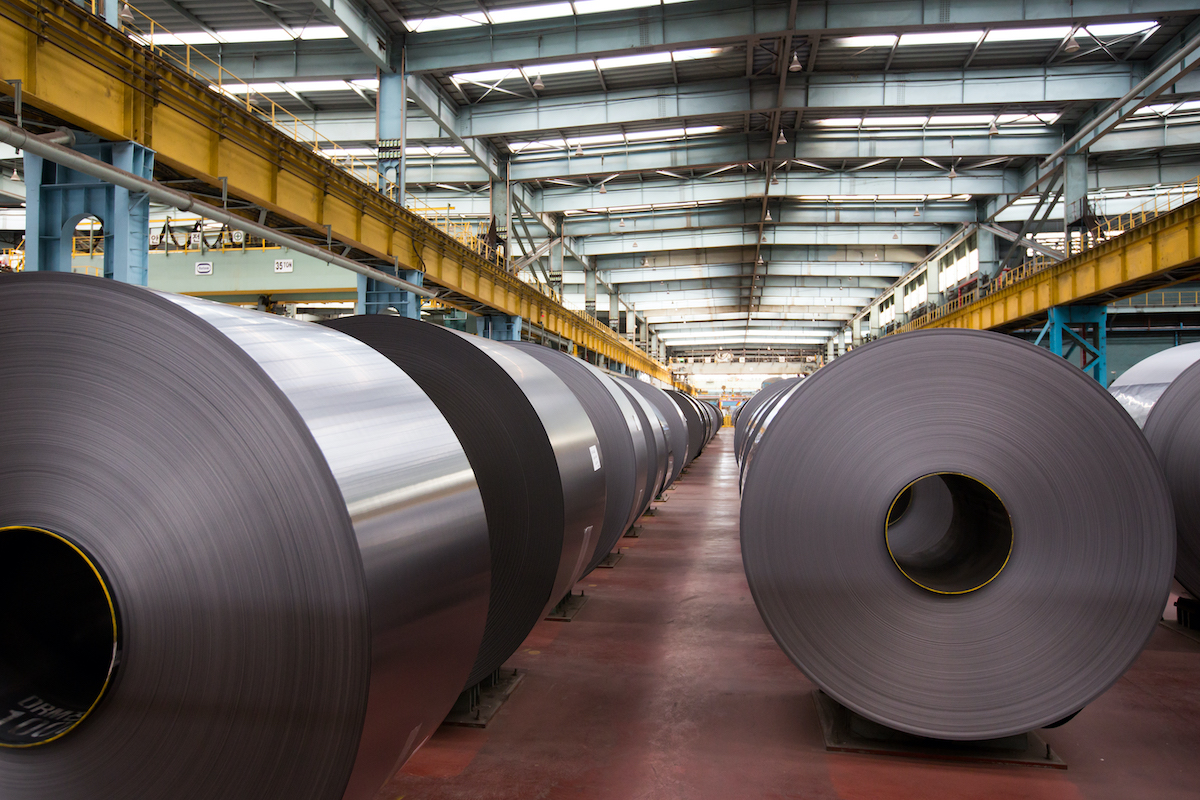
Buyers of HRC across Europe continued to hold back from big purchases, mainly booking what was strictly necessary to fill gaps in stock or for back-to-back business, sources told Fastmarkets.
“It’s very much a buyer’s market,” a trading source in Northern Europe said, adding that they have been receiving calls from producers asking whether there have been any inquiries.
European mills had short orders books, with end-October delivery said to still be available from some producers.
Buyers’ estimates of tradeable values were reported at €630-640 ($672-683) per tonne ex-works on Tuesday, while offers from integrated mills in the region were reported in a wider range of €630-680 per tonne ex-works. The upper end of the offer range, however, was not considered workable by buyers, given the poor demand and low downstream prices .
One of the major concerns for buyers was the weak consumption and poor performance of practically all the key steel end-user sectors, with the exception of the automotive industry, although it was still working below pre-pandemic levels.
Notably, in July 2023, the EU car market grew by 15.2% year on year, to 851,156 registered units. This growth, however, can be attributed to the region’s rebound from a low comparison base in 2022, primarily caused by vehicle component shortages, the European Automotive Manufacturers Association said.
“The consumption [of steel] in general is weak [and] there is no rebound in sight this year, I’m afraid,” a steel service center in Germany told Fastmarkets. “In September, our sales [of processed HRC] to [end users] were about 20% lower [year on year].”
Another factor limiting trading in the spot market was bearish expectations among buyers for October.
The next EU safeguarding import quota period will start on October 1, and market sources expected large tonnages of imported HRC to flood the local market and affect domestic prices in Europe.
Fastmarkets calculated its daily steel hot-rolled coil index domestic, exw Northern Europe at €635.00 per tonne on Tuesday, down by €2.50 per tonne from €637.50 per tonne the previous day.
https://dashboard.fastmarkets.com/p/MB-STE-0028
The index was down by €10.00 per tonne week on week and by €1.25 per tonne month on month.
Fastmarkets’ calculation of its corresponding daily steel hot-rolled coil index domestic, exw Italy, meanwhile, was €623.33 per tonne on Tuesday, down by €2.92 per tonne from €626.25 per tonne on Monday.
The Italian index was down by €9.17 per tonne week on week and by €6.67 per tonne month on month.
Italian producers could offer coil for delivery in late October/early November, which indicated thin order books, market sources said. Offers were reported around €640-650 per tonne delivered (about €625-635 per tonne ex-works) for such material.
Similarly to Northern Europe, Italian buyers preferred to postpone restocking until October.
Import HRC offers, meanwhile, were largely stable compared with last week, although one supplier from Vietnam was reported to have lowered its offer due to a weak domestic market.
Offers from Vietnam for November-shipment coil were heard around €585 per tonne CFR to Italy.
Offers from Japan were reported at €600-610 per tonne CFR for January arrival.
And Indian suppliers were out of the market, with no interest in export sales to Europe because of their strong domestic market, market participants said.
Published by: Julia Bolotova

British Steel production glitch sparks delivery delays
UK longs producer British Steel is delaying deliveries because of a problem with one of its blast furnaces, according to market sources.
The company has moved to one blast furnace, from two, because it is struggling to make pig iron of sufficient quality, the sources said. There are some suggestions that this could be caused by problems with a batch of imported coke. The company recently took its coking ovens off line with a view to reducing its carbon footprint — and the amount of emissions allowances it needs to buy — and has been importing coke since.
“We are taking decisive action to minimise the potential impact on customers’ orders caused by a production issue,” a company spokesperson told Argus. The spokesperson refused to comment further on the nature of the problem or how many blast furnaces are operating.
The company’s sales director has been ringing customers to inform them that deliveries could slip by 3-4 weeks as a result of the issue, multiple large domestic customers of the mill told Argus.
There are also suggestions that the company has insufficient gas for both its sections and wire rod mills, according to workers at the site and sources close to the company. The spokesperson refused to comment.
Senior officials from British Steel recently met with the head of Liberty Steel, Sanjeev Gupta, in Scunthorpe. It is unclear what was discussed, but sources said one topic could have been gas availability for Liberty Merchant Bar, the site previously operated on coke oven offgases from British Steel.
Others said the discussions could have been centred on state aid in light of the government’s £500mn grant to Tata Steel to help it decarbonise its operations. British Steel also has been in talks with the government and is looking to establish electric arc furnaces to reduce the carbon intensity of its production.
Source: argusmedia.com

Pandemic, war show European steelmaking importance: Polish minister
The Covid pandemic and Ukraine war have clearly shown the importance of having a domestic steel industry in Europe and made Brussels aware of the dangers of depending on imports of necessary steel inputs. So said Polish state assets minister Jacek Sasin at the European Steel Congress in Katowice on Monday.
European steel production capacity has declined and been replaced by other regions over recent years, resulting in some steel shortages today and the need for imports. Poland imports over 7 million tonnes/year more steel than it exports. This shows the challenges ahead, Sasin said at the event attended by Kallanish.
State-owned Weglokoks is investing into a PLN 5 billion ($1.1 billion) steelworks in Ruda Slaska that will provide “new life” to Poland’s steel industry, setting it on a low-emission course, Sasin pointed out.
There will be no energy transition, strengthening of defence capability, or development of the construction industry without steel, Sasin commented, adding: “Europe understands today that the path to kicking industry out of the region was not a good one.”
Poland’s environment minister, Anna Moskwa, admitted that government decision-making is probably to biggest barrier to ensuring sufficient energy supply for industry. But the government is implementing measures to support domestic industry competitiveness, such as the state support package for energy-intensive industries. This should receive European Commission approval soon, she said.
In 2040, Poland will need – by conservative estimates – double the energy supply it has today, with zero-emission energy especially in demand. Construction of Poland’s first offshore wind farm is to start this year, with 18GW of offshore production expected by 2040. Construction of the first nuclear plant should meanwhile begin in 2026.
The EU’s Carbon Border Adjustment Mechanism (CBAM), meanwhile, due to begin its transition phase from October, involves a too-rapid phaseout of free emissions allowances, which could hurt industry, Moskwa observed. Poland proposed unsuccessfully to Brussels that free allowances be kept during the transition phase, in case it turns out CBAM does not work.
Adam Smith Poland

Wind power park for voestalpine starts running
A wind power park with nine turbines generating power for voestalpine has officially started operation in the Stanglalm region of the state of Styria (Steiermark) in Austria, Kallanish learns from the Austrian Wind Energy Association (IG Windkraft).
The nine Vestas V 126 turbines will together generate 89 gigawatt hours of electricity, according to the association. They come in addition to another nearby wind park also with nine turbines. The energy will be sold exclusively to voestalpine, to feed the steelmaker’s consumption of renewable power from regional sources.
At the opening ceremony, voestalpine executive board member Franz Kainersdorfer emphasised the importance of the wind park for the group’s “greentec steel” transition programme, which involves a changeover to EAFs through 2027. The group last week announced the groundbreaking for its greentec steel programme, which is projected to secure an investment of €1.5 billion ($1.7 billion).
Styria is currently home of 114 wind turbines with a capacity of 294 megawatts. The association sees the potential for as much as 16 terawatts in the state.
Christian Koehl Germany

Steel needs state energy support, slower transition: panel
Poland needs the government to act now on providing cheaper energy to ensure the domestic steel industry remains competitive and survives, said panellists at the European Steel Congress in Katowice on Monday.
Steelmaking is energy intensive and needs to adapt to a host of new EU regulations. The issue must be tackled because energy-intensive industries account for 5% of Poland’s GDP and generate significant value and employment, Polish senator Gabriela Morawska-Stanecka said at the event attended by Kallanish.
A cure for the crisis is the transition to green energy by investing into renewables, but the state must provide incentives for companies to go green, she opined. Securing European Commission approval to access the currently blocked Recovery and Resilience funds, which include some €9 billion ($9.6 billion) funding for renewables, is also critical and will be a challenge for the next government, Morawska-Stanecka observed, referring to next month’s Polish general election.
Polish Steel Association (HIPH) chief executive Mirosław Motyka also said state support on energy is critical and that industry is pinning its hopes on Brussels approving Poland’s energy-intensive industries support package. However, if Germany implements its proposed €60/MWh energy price cap for energy-intensive companies, this would “kill” Polish industry, he added. “So, we’re hoping the Polish state will respond with a similar measure.”
As for the EU’s Carbon Border Adjustment Mechanism (CBAM), its implementation from October is a positive step, but it still needs a solution to support EU steel exports, which will become uncompetitive amid high production costs, Motyka explained.
Stefan Moritz, secretary general of the European Entrepreneurs “CEA-PME” confederation, meanwhile, said Europe’s main challenge is to maintain a strong industrial base amid high costs, with steel being an important material for many end-users but also small and medium-sized enterprises.
SMEs want to maintain European autonomy, meaning not to become dependent on other areas of the world, such as Germany was until recently on Russian gas, or the EU currently is on batteries and windfarm components from China. The taxpayer needs to share the cost of investing into new, cleaner technology, he added.
Member of the European Parliament and former Polish deputy energy minister Grzegorz Tobiszowski questioned if Europe’s green transition really will be green if the enabling components are imported from polluting countries. With Europe turning its back so quickly on the fossil fuel resources it has at home, countries abroad will eye exploiting this by supplying Europe with strategic resources at elevated prices, he warned.
“Ambitions are not enough – we need to think pragmatically,” he concluded, in reference to the speed of the energy transition being set by EU regulations.
Adam Smith Poland

European HRC market quiet amid depressed end-user consumption
Depressed demand and bearish sentiment continued to drag on buying.
New import quotas on October 1 could prompt a rebound of imported hot-rolled coil into Europe; buyers opted to remain out of the market until gaining greater clarity on import offers, sources told Fastmarkets.
Fastmarkets calculated its daily steel hot-rolled coil index domestic, exw Northern Europe at €637.50 ($679.44) per tonne on September 18, up by €2.62 per tonne from €634.88 per tonne on September 15.
The index was down by €7.50 per tonne week on week, and up by €1.25 per tonne month on month.
Estimations of tradeable values for HRC in Northern Europe were reported by buyers at €630-650 per tonne ex-works on Monday.
Since early September, offers for October- and November-delivery coil in the region have been reported around €640-670 per tonne ex-works. The upper end of the range was considered unfeasible given current market conditions, sources said.
“Restocking continues to be postponed as buyers look to October, when new import quotas begin,” a buyer source said.
Fastmarkets’ calculation of its daily steel hot-rolled coil index domestic, exw Italy was €626.25 per tonne on September 18, up by just €0.25 per tonne from €626 per tonne on September 15.
The Italian index was also down by €11.25 per tonne week on week, and down by €3.75 per tonne month on month.
Demand remained weak in the Italian HRC market on September 18, Fastmarkets heard.
Buyers’ price ideas were around €620-640 per tonne EXW, for October-November delivery.
A deal was reported by a buyer in the region at €620 per tonne EXW.
“The market is dead at the moment,” a second buyer source said.
Offers for imported stock remained scarce on September 18; however, a few offers from Asian-origin exporters were reported at €600-610 per tonne CFR for 2024 arrival, Fastmarkets heard.
Published by: India-Inés Levy

European distributors create large EU purchasing group
Five European purchasing groups have created a large purchasing unit called Astedis covering a European-wide network.
The groups of distributors that signed a joint cooperation agreement include Spain’s Coalsider, Polish purchasing group European Steel Group, Germany’s Nordwest, Sider Center from Italy, and Socoda from France, Kallanish learns from an Astedis spokesperson.
The five associations together represent over 200 mid-sized steel distributors. The aim of the network is to create synergies and become the sales reference for key European producers as well as develop strategic relationships with all of Europe’s largest manufacturers.
“It is important to the newly created network that the corporate groups continue to be fully independent in their national markets, and that the special features of each of the markets are respected… Private trade among mid-sized companies has become more important in recent years. Astedis wants to become a linchpin within Europe for this trade. We are convinced that our strategic network will create new opportunities for all the partners involved… the cooperation wants to take on future challenges and changes within the steel market related to issues such as digitisation, the changing purchasing markets and green steel”, say Astedis’ members in a note. They add that collaboration between Astedis and main European producers will further strengthen and consolidate steel distribution in a time of profound changes in the market.

The five associations are responsible for an annual purchasing volume of approximately 3.5 million tonnes of steel products. Headquartered in Dortmund, Germany, Nordwest Handel AG registered a trading volume of €5.8 billion ($6.1bn) in 2022. “Its core purposes are to combine purchasing volumes and provide central regulation as well as a strong central warehouse and comprehensive services”, Astedis says. Nordwest is active in Austria, Switzerland, France, Poland, and Benelux. Spain’s Coalsider reached a purchasing volume of more than 185,000t in 2022 of several steel products, from corrugated beams and commercial profiles to tubes, sheets and mesh. It boasts 22 shareholders able to ensure distribution throughout Spain thanks to 39 warehouses. Polish European Steel Group consists of 10 shareholders with 35 warehouses, purchasing about 400,000 t/y while Italy’s Sider Center has an annual purchasing volume of 350,000t with 29 distributors and 42 warehouses. France’s Socoda achieves 500,000t of steel purchases annually through a national network of 33 distributors with 3,000 stocked items in steel, stainless and aluminium.
“This network can be seen as a strength element and will start a dialogue on an international level but respecting the differences of each country involved,” a member of the network comments.
Natalia Capra France