


Digital solution replaces Excel files in Ancofer’s sheet metal warehouse
Ancofer Stahlhandel in Mülheim an der Ruhr successfully uses the IT solution from Kaltenbach.Solutions in the sheet metal warehouse in the area of order control. With the help of the “Order Manager” software, the processing status of orders becomes transparent across the entire process chain. This increases efficiency, shortens delivery times, improves delivery reliability and reduces manual effort. Ancofer is also striving to work as paper-free as possible in the future.
For several months now, Ancofer Stahlhandel has been using Kaltenbach.Solutions’ “Order Manager” for the daily planning and control of trade orders in the sheet metal warehouse. The software module displays the processing status of the trade orders in real time and thus facilitates forward-looking processing. The order data from the SAP system is transferred automatically. Employees have access to relevant information via their handhelds and rarely have to ask for it. This results in a daily time saving in work preparation of around 30%.
Ancofer Stahlhandel GmbH is a specialist for heavy plate and flame-cut parts and a subsidiary of the heavy plate producer Dillinger. It covers a wide range of grades and dimensions and, together with its sister companies Jebens GmbH in Stuttgart and AncoferWaldram Steelplates in the Netherlands, has a stock of more than 150,000 tons of heavy plate. Managing Director Joost van Dijk and Shift Manager Philipp Maihorn were convinced by the rapid introduction of Kaltenbach.Solutions’ “Order Manager”, its intuitive operation, and its adaptability to the specific needs of the steel trade.
Source: kaltenbach-solutions.com

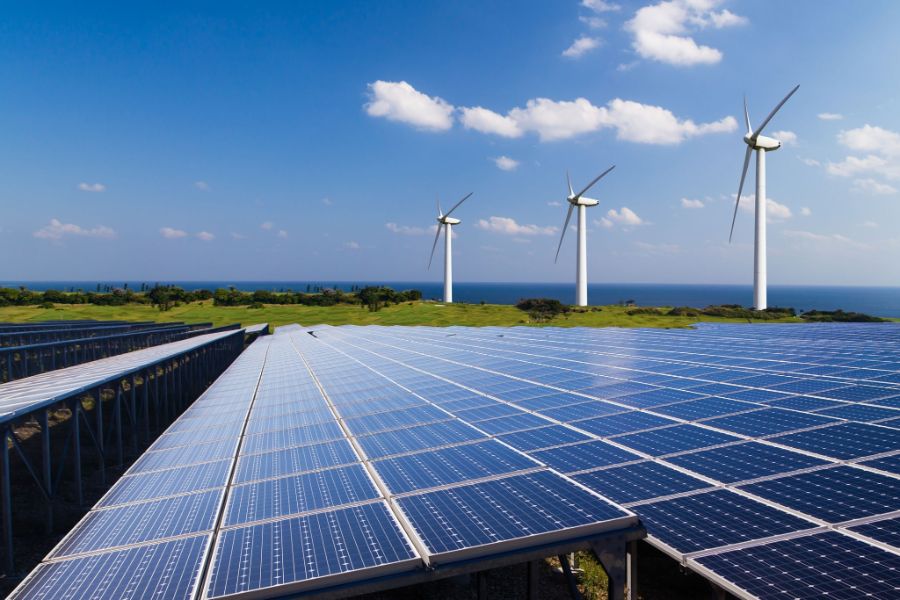
Steel comprises 75% energy transition material requirement: ETC
Cumulative steel demand for the energy transition between 2022 and 2050 will be almost 5 billion tonnes, accounting for 75% of total material requirement. This compares to 8 billion of annual global coal demand today, the Energy Transitions Commission (ETC) points out in a new report seen by Kallanish.
The average annual steel requirement of 170 million tonnes would still account for less than 10% of today’s global steel production of about 1.9 billion t/year. This would correspond to approximately a doubling from current levels of steel demand from the fossil fuel industry of 70-80m t/y, ETC says.
In ETC’s baseline decarbonisation scenario, steel and aluminium demand will grow significantly to 2030, but primarily because of growth in non-energy related demands, with greater urbanisation and industrialisation driving demand for steel in lower-income countries.
Steel and aluminium supply will grow broadly in line with increased demand to 2030, with a large and growing percentage of supply coming from secondary, recycled material – reflecting high existing end-of-life recycling rates for both materials.
Improving technology performance and falling materials intensity could see cumulative energy transition-related steel demand fall 25% to 3.7 billion tonnes, predominantly as a result of reduced requirements in wind and solar installations. Combining efficiency and recycling could see this demand fall to 3.4 billion t.
However, long technology lifetimes – for example, 30 years for a solar or wind farm – mean that volumes of recycled steel supply from clean energy technologies would remain low even in 2050 – but with strong potential in subsequent years.
For wind turbines, over 90% of total material requirements are steel and concrete. Steel requirement is projected to fall from 140 tonnes/MW to 110t/MW by 2050 for gearbox turbines, and from 400 t/MW to 320 t/MW for direct-drive turbines. Nuclear power is meanwhile seen needing 72 t/MW in 2050 versus 90 t/MW today, ETC says.
An important factor for the energy transition will be ensuring financing activities reflect the necessary pathway to a net-zero economy, recognising the critical need for much greater investment in mining for energy transition metals. This entails developing an understanding of what transition pathways for the mining and aluminium/steel sectors should look like and what this means for investment along this transition, ETC concludes.
Adam Smith Poland


ResponsibleSteel certifies ArcelorMittal Zaragoza plant
ResponsibleSteel has awarded ArcelorMittal Spain a certification for developing high-quality standards for steel production at its Zaragoza plant, Kallanish learns from the steelmaker. The unit produces different types of components with special characteristics using high‑quality laser‑welded steel blanks for the automotive sector.
“This achievement has given us great satisfaction since we were selected as the pilot plant among all the European subsidiaries of the Tailored Blanks division, and after all the effort deployed, we have been able to fulfil all the required standards,” says ArcelorMittal Tailored Blanks Zaragoza director of operations Tomás Ramos.
The certification process included an independent audit by Norwegian company Det Norske Veritas (DNV) over a one-year period.
The plant becomes the fifth ArcelorMittal facility in Spain to have ResponsibleSteel certification.
This certification was created in 2019 and relies on 12 environmental, social and governance criteria. It focuses not only on decarbonisation processes but also on respect for human rights, labour rights, and local communities, as well as a larger spectrum of ESG principles.
Todor Kirkov Bulgaria

Governments play key steel transition funding role: forum
Governments must play a critical role in providing financing for the technological transformation of the steel industry, said speakers at the Open Forum-Climate Action conference hosted by worldsteel in Antwerp last week.
“We shied away from heavy industries in the last two decades, but are now coming back to segments like cement or fertilisers because of climate change,” said Alfredo Bano Leal of Asia Development Bank.
“Hopefully, we will find enough banks, or else we would need to rely on governments,” said Gabriel de Laval, head of hydrogen at Credit Agricole. He underlined how green steel is pushing the boundaries, as “there is no bigger object of investment than a greenfield green steel mill”.
In line with other speakers, the moderator of the panel, Soo Jung Kim, worldsteel head of sustainability communications, also cautioned that governments are an essential enabler of major tech investments.
Elizabeth Dykstra-McCarthy of the Climate Investment Funds noted that her organisation’s funds are normally supporting governments. She made the point that “we believe developing countries will be key to the energy transition” given their potential for solar and wind power parks.
That view was challenged by Kwasi Ampofo, head of metals and mining at Bloomberg New Energy Finance (NEF). “Emerging countries do not have the economies of scale as producers and consumers to attract investors,” Kallanish heard him say at the event. They “will be in line later in the next wave of investment,” he added.
He noted the steel industry was an early mover in decarbonisation, but other materials have caught up, like aluminium, cement, or plastics. However, “steel is still expected to decarbonise faster that its peers,” he observed.
In his presentation, Ampofo compared the costs of low-emission steelmaking now with 2050, by which point many mills pledge to be net-zero. According to figures by BloombergNEF, the costs per tonne of hydrogen-based steelmaking are between $658 in China and $889 in Germany and approximately in the USA. By 2050, these could sink to between $432 and $525 respectively.
Christian Koehl Germany

Polish rebar, wire rod prices rise on cautious demand recovery, higher costs
At the beginning of the assessment week, local producers were raising offers to 2,750 zloty ($635) per tonne delivered (about 2,720-2,730 zloty per tonne ex-works), up from 2,700 zloty per tonne delivered sought at the beginning of this month.
Those prices were largely accepted in deals, with transactions heard within the range of 2,700-2,730 zloty per tonne ex-works earlier in the assessment week.
In the second half of the week, prices increased further, with transactions reported at 2,750-2,770 zloty per tonne ex-works, but only for minor quantities.
As a result, Fastmarkets’ weekly price assessment for steel reinforcing bar (rebar), domestic, exw Poland, was 2,700-2,770 zloty per tonne on Friday, up by 80-120 zloty per tonne from 2,620-2,650 per tonne on September 8.
Market sources expected that, in the week to start September 18, steel rebar prices in Poland would increase further, still driven by the improving construction activity. Besides, mills were pushing for higher prices, citing rises in rolling costs.
Notably, increased scrap prices in the monthly contracts for September were driving rebar prices upward, according to mill sources. These, combined with the positive expectations for rising demand by the construction sector in the last quarter of the year, were expected to support higher rebar prices in the near term, market sources said.
End-user demand for rebar was likely to improve in October due to an expected recovery in the residential construction sub-sector in Poland, they added.
In July, the Polish government launched a support program for the nation’s first-time homebuyers, offering housing loans with a fixed 2% interest rate over 10 years, with the difference to the actual interest rate covered by the state.
The program, available to young people for their first house or apartment purchase, was intended to stimulate residential construction, according to market sources.
According to one such source, one Polish mill has pushed rebar offers to 2,920 zloty per tonne delivered, but no deals have been concluded at that level yet.
Currency fluctuations and the strengthening of the euro against the Polish zloty also supported a domestic price rise, making imports from the EU less attractive.
The Polish currency was trading at 4.63 zloty to €1 on September 15 compared with 4.60 zloty to €1 on September 8, according to exchange rate website Oanda.com. At the beginning of the month, on September 1, the rate was 4.47 zloty to €1.
Rebar offers from Hungary and Germany to Poland were heard around €605-610 per tonne delivered.
Wire rod
A similar trend was observed in the wire rod market in Poland, with prices rebounding from the low levels seen a week earlier.
Offers from two local mills were reported in the week to September 15 about 2,850-2,950 zloty per tonne, while transactions were heard at 2,750-2,850 zloty per tonne delivered.
Several sources, however, pointed out that, by the end of the assessment week, a price of 2,750 zloty per tonne delivered was no longer available.
As a result, Fastmarkets’ weekly price assessment for steel wire rod (drawing quality), domestic, delivered Poland, increased to 2,750-2,850 zloty per tonne, up by 100 zloty per tonne from 2,650-2,750 zloty per tonne seven days before.
Apparent demand for wire rod in the country was not booming, but some limited restocking supported price rises.
“Buyers have not been booking [wire rod] for stock for months, and there is a need to restock across some grades and sizes,” an industry source told Fastmarkets.
Meanwhile, import wire rod offers to Poland were also trending higher.
One Italian supplier was offering mesh-quality wire rod at €600-610 ($642-652) per tonne delivered, and drawing-quality wire rod at €620 per tonne delivered, up by about €10-20 per tonne compared with early September. Those prices, however, were considered too high by Polish buyers, given the high euro-zloty exchange rate.
One Ukrainian supplier was offering mesh-quality wire rod to Poland about €590 per tonne ex-stock.


EU HRC market silent ahead of the new import quota period
Persistently slow demand from end-user sectors and a lack of clarity regarding the volumes of HRC imports expected to enter the EU market as of October 1, were limiting trading, Fastmarkets understands.
Buyer estimates of the tradable values for HRC in Northern Europe came in at €630-640 ($674-684) per tonne ex-works on Friday.
Most steel mills in the region could still offer October/November-delivery coil, however, which suggests that orders have been weak.
In general, offers for October/November-delivery coil in the region were reported at €640-670 per tonne ex-works, although buyers said the upper end of the range was “totally unworkable.”
Fastmarkets calculated its daily steel HRC index domestic, exw Northern Europe, at €634.88 per tonne on September 15, down by €6.37 per tonne from €641.25 per tonne on Thursday.
The index was down by €9.91 per tonne week on week and by €9.70 per tonne month on month.
The Italian market, meanwhile, was also quiet, with trading activity at close to non-existent over the past few weeks.
Fastmarkets’ calculation of its daily steel HRC index domestic, exw Italy, meanwhile, was €626.00 per tonne on September 15, down by just €2.33 per tonne from €628.33 per tonne on Thursday.
The Italian index was down by €7.33 per tonne week on week and by €7.68 per tonne month on month.
Market participants told Fastmarkets that local producers had short order books and were ready to provide discounts on big volumes. Buyers, however, were not chasing for tonnages and preferred to postpone bookings for October, awaiting greater clarity on EU import quotas.
“We expect Q4 quotas for HRC [under the ‘other countries’ category] to be filled in just a few days after opening,” a producer in Italy said.
While firm offers were rare in Italy, sources told Fastmarkets that October- and November-delivery HRC was available from domestic producers at €630-640 per tonne EXW.
Buyer price ideas came in at around €620-630 per tonne EXW but, in general, there was little interest in making any bookings.
Asian suppliers have recently started offering January-delivery coil to Europe, Fastmarkets understands, with offers coming in at €610-615 per tonne CFR from Japan and Korea for January arrival – although that level was not considered workable by buyers in Italy.
“[Import offers for HRC] are just €10 [per tonne] lower than those from local mills and some Italian mills can still offer October delivery [for HRC], so imports are not really workable,” a trading source in Italy said.
Lower offers did come in from Taiwan and Vietnam this week, sources said, at around €585-590 per tonne CFR for January arrival. But long lead times, safeguard-related risks and the relatively small gap to domestic prices in Italy were seen as the major stumbling blocks for import bookings at the moment, sources told Fastmarkets.
“We are abstaining from import bookings due to quota problems with [some] ‘other countries’ origins,” a second trader in Italy said.
Published by: Julia Bolotova
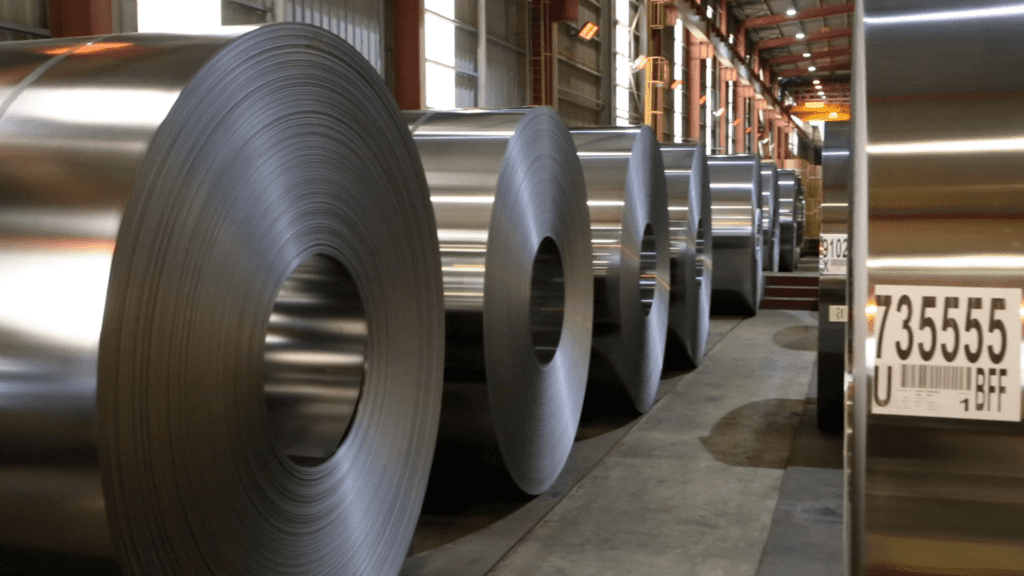
European HRC players worried about the future influx of imports
In Western Europe, the upper price range for hot-rolled sheet, according to the price indicator Kallanish, remains unchanged since the beginning of August – €680/t EXW, the average price at the end of last week (September 1-8) was €660/t.
European market
On the Italian market, HRC quotations on September 1-8 decreased by 1.5% compared to the previous week – to €620-650/t EXW, according to the forecast, they will remain unchanged until the end of the current week. In general, the price of HRC in Italy has been in the upper range of €650-660 since mid-July.
European HRC buyers continue to refrain from buying these products, despite lower offers from some factories, notes Fastmarkets. Distributors are focused on reducing inventory amid negative market trends. Sources in the market say that the issue is not the price, but the lack of demand for these steel products.
Italian HRC producers have taken a wait-and-see attitude in view of the weak market. One of the local integrated mills still has the ability to offer hot-rolled coil for delivery in early October, indicating short order books.
The market believes that September will be a month with very few transactions, and the influx of imports in October will affect European prices.
It is expected that the quotas for the fourth quarter will be filled already in the first days of October, as significant volumes were waiting for customs clearance in European ports. So buyers are looking to sell current stocks before cheaper products will be cleared by customs. There is a possibility that steel mills in Europe will try to extend maintenance to prevent prices from falling.
«We adhere to the position that the demand from the end consumers in the flat rolled segment in the EU is stable. This is confirmed by data on production in the main sectors of consumption. But market players do remain pessimistic and cautious, wary of an influx of imports in October. But the price of imports from Asian countries is increasing amid more expensive raw materials. It is difficult to make assumptions about non-customs-cleared rolled steel in ports, as its volumes are unclear. This may turn out to be a kind of market horror», noted the chief analyst of GMK Center Andriy Tarasenko.

US prices
The US steel market has recently been pressured by a possible strike by the workers of the Big Three car producers (Ford, General Motors and Stellantis) – the companies have not yet agreed with the union (United Auto Workers) on the levels of wage increases and social guarantees. According to Argus Media, HRC prices in the US continued to fall earlier this week amid uncertainty about demand and where it will go.
According to the price agency, there were deep discounts on potential tonnages of 2 to 20,000 tons.The lowest recorded price for larger volumesin question was $610 per short ton, but there was no confirmation of any deals. The lead time for hot-rolled coil orders from American producers was 4-5 weeks.
However, as Kallanish writes, some sources in the market believe that a potential strike by auto workers will have minimal impact on domestic steel production in the US. At the end of last week, the price of steel coils in North America fell by 12.1% compared to the previous week – to $700-720/t EXW.
Demand in India
Indian mills have good demand for hot-rolled coil in the domestic market and better prices, which are forecast to grow further. Therefore, the country’s steel mills set export quotations equal to domestic ones, which foreign buyers consider unacceptable amid the availability of cheaper options. According to SteelMint, at the beginning of the current week, Indian HRC offers to the EU remained stable compared to the previous week at $690-695/t CFR Antwerp.
The situation in China
In China, during the past week, the price of hot-rolled steel continued to fall amid low demand, which is not typical for September. In addition, after several weeks of growth, HRC production also fell. Factories also accelerated deliveries to retailers to relieve pressure on inventories. The decline in domestic prices and the devaluation of the yuan began to affect the export prices of Chinese steel products. On September 8, HRC quotations in China were $555-565/t FOB, which is $5/t less than the previous week.
According to SMM, HRC purchases by Chinese steel companies were cautious at the start of this week as market players were skeptical about further improvement in consumption. Trading sentiment was positively influenced by macroeconomic data for August. Given the prices of raw materials, HRC prices are unlikely to fall significantly, but the imbalance between supply and demand is expected to increase.
Source: GMK Center

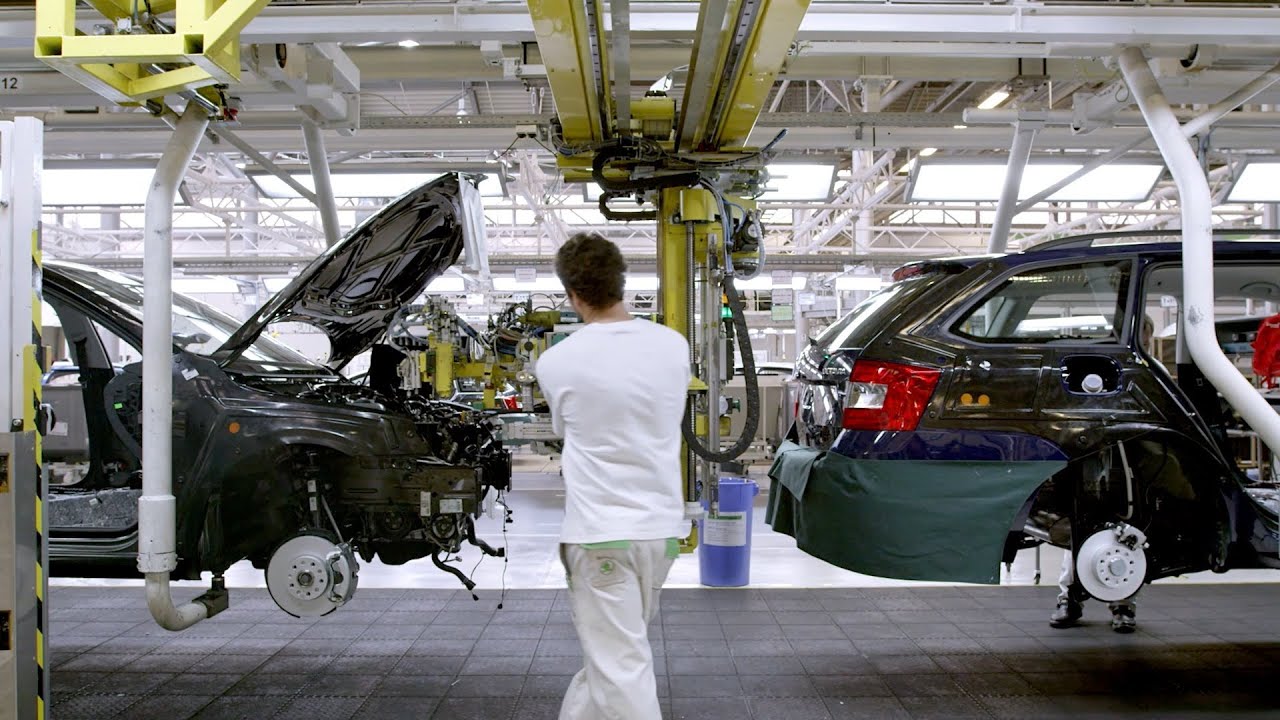
Looming US autoworkers strike rattles steel, scrap markets
A potential strike in the US automotive industry continued to rattle metals markets Sept. 14 as labor contacts between the United Auto Workers union and the Big Three automakers—Ford, General Motors, and Stellantis—were set to expire at 11:59 pm ET.
UAW President Shawn Fain said Sept. 13 the union would start targeted strikes at an undisclosed number of facilities at each company if new tentative agreements are not in place. A coordinated strike would mark the first simultaneous labor stoppage at the Big Three automakers’ production facilities, with the UAW representing roughly 145,000 members.
If the union moves forward with a strike, the plants that have been selected to strike were to be announced at 10 pm ET Sept. 14, while Fain told members that if their plant is not included, they should remain on the job.
The potential US strike comes as Canada’s autoworkers union, Unifor, is also in negotiations with automakers as its contracts expire Sept. 18.
Steel
Steel currently accounts for about 54% of the content of the average vehicle, according to the American Iron and Steel Institute. On average, 900 kg, or just under 1 st, of steel is used per vehicle, according to the World Steel Association.
US mills shipped a net total of 89.5 million st of steel in 2022, with 14% of domestic shipments going to the automotive industry, according to AISI data. The auto sector was the third-largest end market for steel in 2022, behind construction and service centers, which accounted for 30% and 24%, respectively, of total net steel shipments.
Concerns over a potential autoworkers strike already were having an effect on US flat-rolled steel prices and are clouding the demand outlook.
Sentiment for finished steel prices was more bearish for September than August, with market participants expecting prices to either stay flat or face more pressure, an S&P Global Commodity Insights US steel market survey showed Sept. 7.
In the survey of US producers, distributors, traders, and end-users, 100% expected finished steel prices to stay flat or decline further in September, up from 83% in August.
The Platts TSI US hot-rolled coil index, a benchmark for US flat-rolled steel pricing, has fallen $40/st since the start of September and is down $70/st from a month ago. The Platts TSI US HRC index was last assessed at $720/st on an ex-works Indiana basis Sept. 14. This is the lowest US HRC prices have been since early January, according to S&P Global pricing data.
Prices for hot-dipped galvanized sheet, which is used heavily in automotive applications, also have weakened in recent weeks. Platts assessed the TSI US HDG with the hot-rolled substrate at $890/st Sept. 14, down $60/st from the start of September, while the TSI US HDG with the cold-rolled substrate was assessed at $920/st, also $60 lower by the same comparison.
The whole flat-rolled steel market had stepped back from spot buying this week as participants awaited the outcome of the UAW contract negotiations, a trader said. Looking at a potential strike, the source didn’t expect to see any immediate effect on the market, but anticipated impacts on supply if a work stoppage lasted around three weeks or more.
“This is when you will see production being taken out,” the source said based on conversations with a mini-mill.
The source explained that pricing on HRC products was already near the cost of production for the mills, leading him to believe that cuts in supply could add to greater uncertainty in the market.
A separate trader was similarly concerned about potential volatility to flat-rolled finished steel products resulting from work stoppages.
“It really depends on how long it lasts and how mills react,” the source said referring to the potential for production cuts from US producers.
Still, other sources remained bearish, citing the potential for oversupply.
“We could possibly see prices tank with the overabundance of metal that may end up flooding the market,” said one Midwest service center source who was continuing to place spot orders on an as-needed basis.
Other buy-side sources were similarly holding back on placing spot orders, citing uncertainty from the contract negotiations whether directly involved in the automotive sector or not. One source was seeing dampened activity from multiple customers, including those involved in the construction sector.
Scrap
Steelmakers have long been looking toward the end of the autoworkers’ union contract with concern, and with maintenance outages at four key mini-mills in September, some have foreseen a potential supply overhang in finished steel if the negotiations hit an impasse, a scrap dealer in the Midwest said.
“Prime scrap settled lower by $50/lt for September, but some dealers are instead holding onto their busheling supplies rather than selling,” the dealer said. “The general sentiment is that if the strike gets worked out relatively quickly, there could be an uptick for steel as well as scrap. Auto plants are a key source of busheling, so supply could be tighter at least by the time November scrap price discussions get underway.”
A prolonged autoworker strike would be more clearly bearish for obsolete grades of scrap, which were supported at mostly sideways pricing in September buy-week negotiations by a lack of available supply, another Midwest scrap dealer said.
“An auto strike can be very bad for scrap demand. There are a huge number of scrap buyers making products that flow into the auto industry,” the dealer said.
Author Justine Coyne, Alexandra Szczupak, Greg Holt

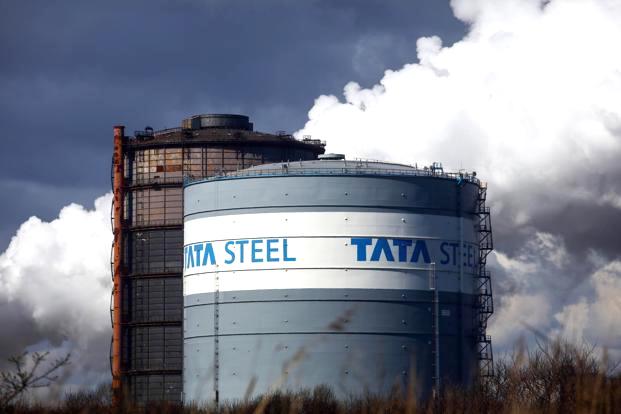
Tata Steel close to agreement with UK government on funds for Port Talbot
While the UK government has declined to comment “on ongoing live negotiations” unions said that not only was the intervention “long overdue, but imposing a program without proper worker consultation is unacceptable.”
Tata UK, part of India’s Tata Steel group, is in talks with the UK government to secure funds to help the mill in its transition towards a much lower carbon intensity production, switching its blast furnace steelworks at Port Talbot in south Wales to electric arc furnace based production.
The switch to EAF based production is expected to cost up to GBP1.2 billion ($1.5 billion) with the company looking to secure around GBP500 million in subsidy. However, the switch would lead to redundancies as EAFs need fewer workers to run.
“GMB has urged ministers and Tata Steel to have a longer-term view on the decarbonization of steel. It is not a just transition if thousands of jobs are sacrificed in the name of decarbonization on the cheap,” the GMB union’s Charlotte Brumpton-Childs said.
“We wholeheartedly support the move to modernize and decarbonize the industry, in fact we have sought this type of investment for years. But ignoring technologies outside of Electric Arc Furnaces will mean tens of thousands of people will lose their livelihoods.”
A Tata Steel spokesperson told S&P Global Commodity Insights that “Tata Steel is continuing to discuss with the UK government a framework for continuity and decarbonization of steel-making.”
He gave no details on the timing on a decision but stressed that “any significant change is only possible with government investment and support, as also seen in other steel-making countries in Europe where governments are actively supporting companies in decarbonizing initiatives.”
The steel industry is responsible for around 5% of CO2 emissions in the EU and 7-8% globally. In Europe several projects have been announced to cut carbon emissions by 55% by 2030 and reach climate neutrality by 2050.
In Europe, Tata Steel is one of the largest steel producers, with two operating steel-manufacturing facilities — Port Talbot in the UK, which has a capacity of 5 million mt/year and the other IJmuiden in Netherlands with a capacity of 7.5 million mt/year. Both facilities produce flat steel products.
In October 2021 Tata Steel separated its UK and Netherlands operations into Tata Steel UK and Tata Steel Netherlands, which operate as two independent companies.
In the UK, steel production accounts for 2.7% of UK emissions. Over 80% of UK steel is made via the blast furnace route at Tata Stee’s Port Talbot and British Steel’s Scunthorpe plant, which together produce 5.9 million mt/year of steel and are responsible for 95% of emissions from steelmaking in the UK, according to a UK government report. The three main technology pathways likely to help UK steel-making reach net zero are: electric arc furnaces using recycled scrap steel; direct reduced iron using green hydrogen; and using carbon capture, utilization and storage (CCUS) technology with existing steelmaking infrastructure.
Author Annalisa Villa
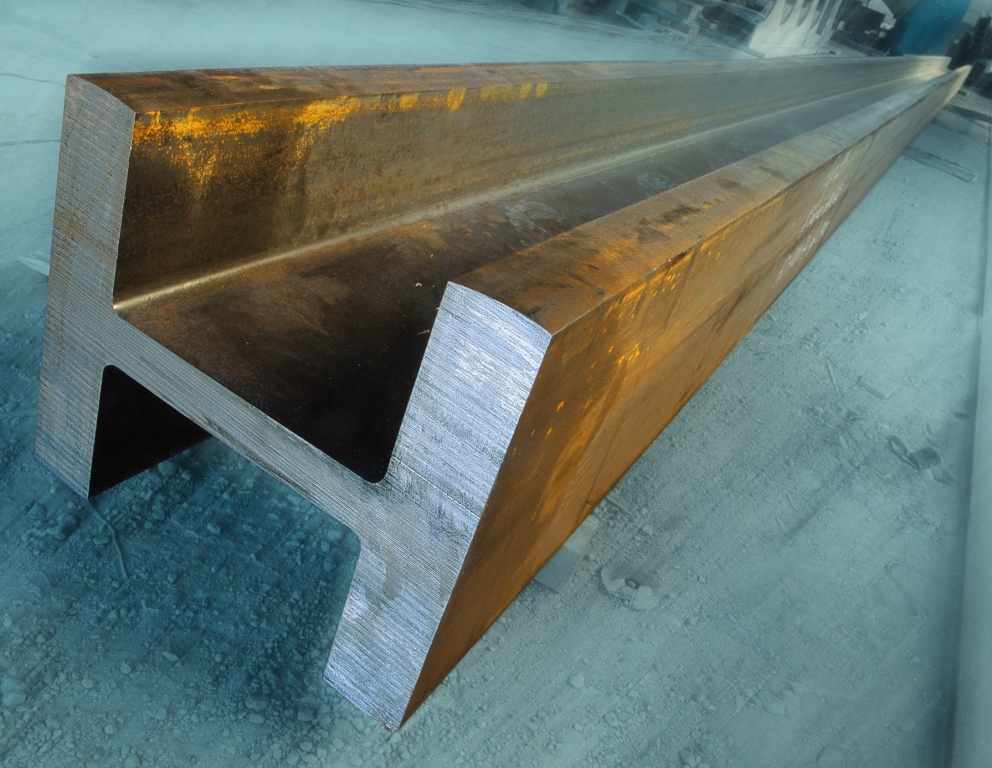
Some post-summer restocking seen in European steel beam market
Fastmarkets’ weekly price assessment for steel beams, domestic, delivered Northern Europe, was €720-780 ($773- 838) per tonne on Wednesday, widening downward by €30 per tonne from €750-780 per tonne on September 6.
One trader in Northern Europe said that despite low construction consumption there were “a lot of orders for stock replenishment” at around the $750-per-tonne level.
But sources said purchasing activity varied from place to place, with a second market participant reporting little need for restocking amid weak demand.
Fastmarkets heard that mills were pushing for higher levels, however sources were skeptical of the tradability of material being sold at increased prices.
Meanwhile, ferrous scrap prices in Turkey’s bellwether market remained rangebound in the week, with the market muted due to weak finished sales and negative economic conditions.
Fastmarkets’ calculation of its daily index for steel scrap heavy melting scrap 1&2 (80:20 mix) North Europe origin, cfr Turkey, was $370.24 per tonne on Wednesday, up $1.23 per tonne from $369.01 per tonne on September 6.
Fastmarkets’ weekly price assessment for steel beams, domestic, delivered Southern Europe, was €720-790 per tonne on Wednesday, widening from €750-780 per tonne on September 6.
Published by: Holly Chant