


European steel hollow sections prices flat, restocking slow
Fastmarkets’ weekly price assessment for steel sections (medium), domestic, delivered Northern Europe, was €770-800 ($827-859) per tonne on Wednesday, stable week on week.
The corresponding weekly price assessment for steel sections (medium) domestic, delivered Southern Europe, was €770-800 per tonne on Wednesday, unchanged from a week earlier.
Market sources said that there was little need for restocking due to weak demand, with one trader in Northern Europe expecting the poor demand for beams to endure throughout 2023 due to the low consumption by the construction industry.
“This year we will take all the losses in one [hit], and probably next year it will be better,” the same trader said.
A source in southeast Europe said that prices in Romania and Poland were stable in the week, around €710 per tonne CPT on a theoretical weight basis. The source added that offers from Turkey had been heard at $750-800 per tonne FOB.
Meanwhile, costs for hot-rolled coil feedstock in Europe have fallen in the past seven days amid low demand and expectations of a large volume of imports being cleared through customs in the fourth quarter.
Fastmarkets’ daily calculation of its steel hot-rolled coil index, domestic, exw Northern Europe, was €642.08 per tonne on Wednesday, down by €6.52 per tonne from €648.60 per tonne a week earlier.
Published by: Holly Chant

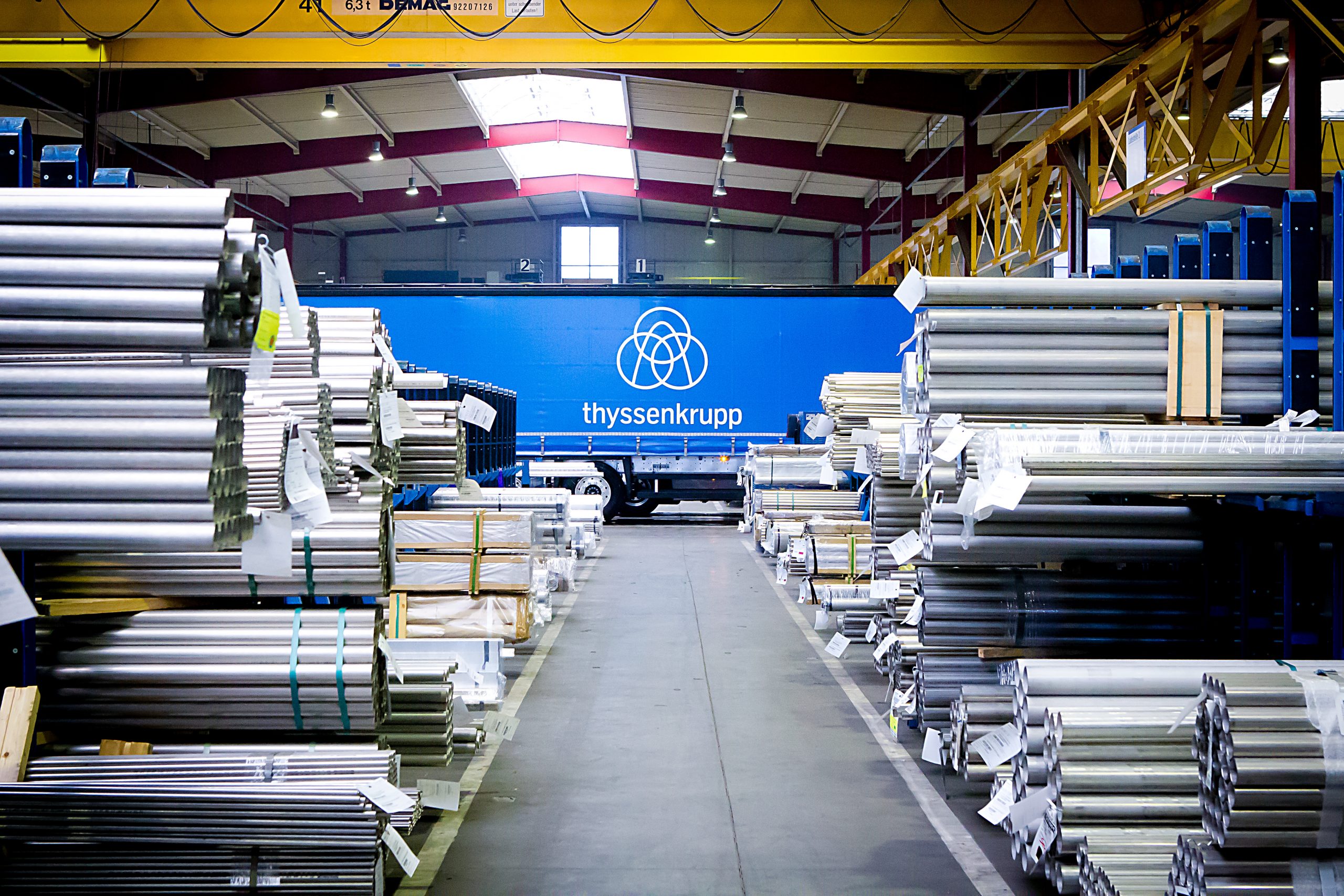
Thyssenkrupp establishes new Decarbon Technologies segment
Thyssenkrupp AG is establishing a new segment called Decarbon Technologies, as part of the reorganisation of its portfolio and launch of a group-wide performance-oriented programme, Kallanish hears from the group.
At the start of the new fiscal year, on 1 October 2023, its units thyssenkrupp rothe erde (Business Unit Bearings), thyssenkrupp nucera, Uhde and Polysius will be combined in the Decarbon Technologies segment. Each of the units in itself possesses key technologies for the decarbonisation of manufacturing industries.
With the creation of the new segment, thyssenkrupp is seeking a position as a technology leader for the energy transition, and giving full visibility to its extensive capabilities for the green transformation, it says.
The new Decarbon Technologies segment will in future have around 15,000 employees and generate annual sales of around €3 billion ($3.3 billion). The segment’s headquarters will be located in Dortmund due to its geographical proximity to the businesses. Further locations in growth regions such as the Middle East are being targeted.
The establishment of corporate and company co-determination in the form of a supervisory board and a works council is planned. The segment will be managed by thyssenkrupp AG chief executive Miguel López.
Christian Koehl Germany

German industries urge Berlin to alleviate power prices
Germany’s steel industry, among other manufacturing industries, has called on the federal government to step up a decision in favour of a temporary “bridge electricity price”, Kallanish notes.
National federations and workers’ unions from the steel, glass, chemicals, construction materials and nonferrous metals sectors issued in August a unanimous call to policymakers for a decision on how to make electricity affordable for industrial users. They joined to form the Allianz pro Brückenstrompreis – Alliance for a Bridge Electricity Price.
They have now issued another urgent appeal, after a recent meeting by the government on industrial matters failed to bring a result. The meeting “missed out on the opportunity to send a clear signal for a climate-neutral industry in Germany,” says Kerstn Rippel, managing director of Wirtschaftsvereinigung (WV) Stahl. Along with the other associations, WV is pleading for an introduction of the bridge price as of January 2024.
The plea was also carried to the European Commission by the minister presidents of the German states. “This strong signal set in Brussels must now also be heard in Berlin, where the budget is currently being negotiated,” says Bernhard Osburg, chief executive of thyssenkrupp Steel and current president of WV Stahl. “Now is the time to set the course for affordable electricity, because enormous future investments in the transformation of our industry must now be pushed forward.”
The joint call was also echoed in Switzerland by Swiss Steel. The firm runs most of its production in Germany through Deutsche Edelstahlwerke, which employs thousands of people, it notes. “This is about nothing less but the future of Germany as a location for industries,” Swiss Steel says in a statement.
Christian Koehl Germany
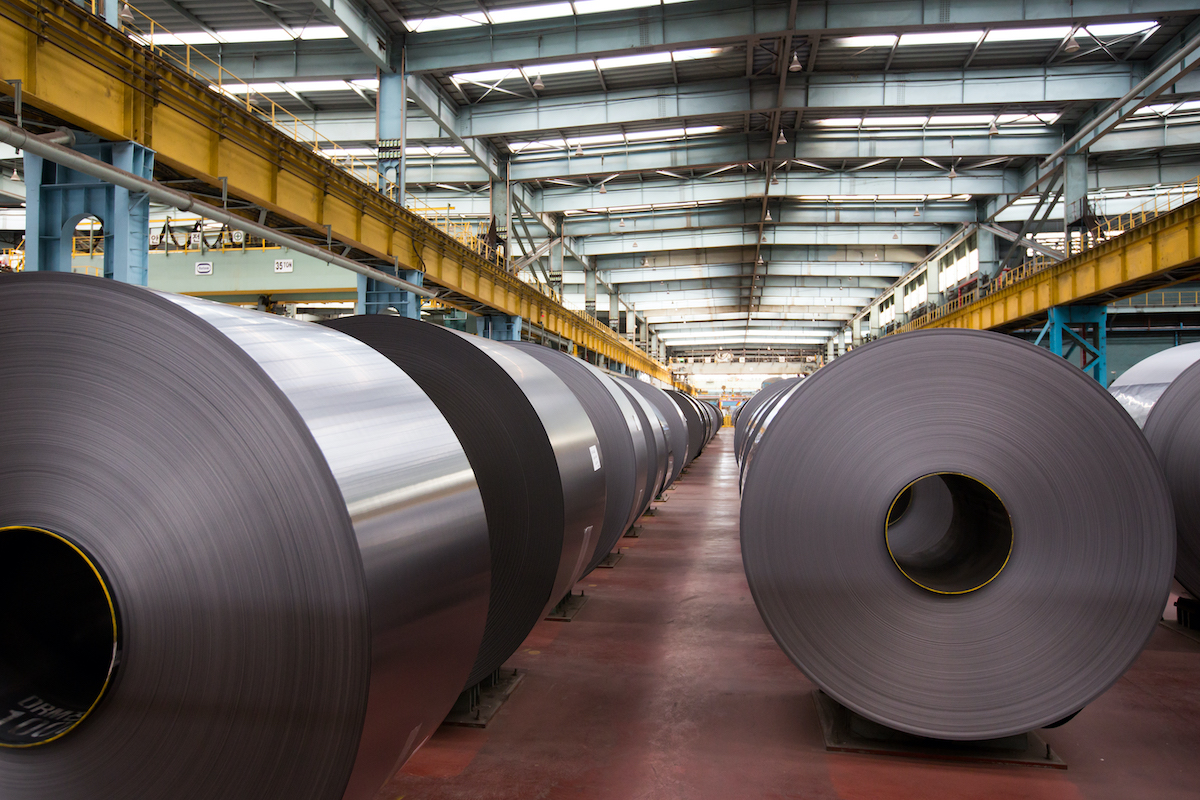
EU steel market tries to estimate 1 Oct import arrivals
EU market participants are trying to estimate import arrivals for the upcoming ‘other countries’ import quota, resetting on 1 October, but this is proving a difficult task, with estimates ranging from 600,000t to 1.2mn t.
Sources are also speculating on 1 January arrivals, as some buyers have and are still concluding purchases for December arrival to guarantee clearance on the first day of next year. But a number of Asian suppliers, which import under the ‘other countries’ allocation, are already offering for delivery beyond the expected beginning-of-January exhaustion date.
The quota uncertainty appears to be lending some support to index-linked trade, as some buyers look to secure tonnages for next year, with arrivals before subsequent new quotas reset, without risking agreeing on the price today.
Looking at export customs data for Japan, Taiwan, Vietnam and Egypt — some of the largest suppliers to the EU under the ‘other countries’ quota — October arrivals could be more than 1mn t, although it is unlikely that all of this material will arrive and be put forward to customs by 1 October.
Japan exported about 185,000t of hot-rolled coil (HRC) to the EU in June and 83,000t in July, the latest month for which data are available. The average volume for this year so far is 118,000 t/month. In comparison, Taiwan has exported an average of 123,000 t/month of HRC to the EU this year so far, with the last data available in June at 157,000t. Vietnam, which supplied June figures last and showed no exports to the EU for that month, has exported an average of 70,000 t/month this year. Egypt has exported an average rate of 75,000 t/month to the EU.
Assuming an average transit time of two months from the Asian suppliers, taking the average 2023 monthly figure for the unavailable export data for the four countries mentioned above, and assuming there was a steady flow of goods, arrivals should be 1.0mn-1.1mn t in October from those four suppliers alone. The previous quota, for July-September, exhausted on 25 July, and there could be some material at port that could not clear in the July-September quota. The October-December quota is 933,743t, the same level as the previous quarter.
Some EU buyers have said they intend to wait until the first week of October to make significant purchasing decisions in order to evaluate what supply in the bloc will be like. It is likely that decisions on potential output reductions at EU mills will be influenced by the quotas’ utilisation, in light of the weakened market demand and rising production costs.


Circularity-focused business models needed for industrial energy transition
While many of the technologies needed to transition heavy industry toward net zero emissions exist today, developing business models that consider circularity and expanding clean energy sources are still hurdles to overcome, according to presenters at Reuters’ Industry Transition conference, held Sept. 12-13 in Pittsburgh.
“The structure of industry has to change to a certain extent as a result of a lot of this circularity,” said John Bissell, CEO of Origin Materials, which turns carbon found in biomass into useful materials. “Often the discussion is around price and cost, which is totally appropriate, but the value that you’re getting may not be perfectly tied to price in the way that it used to be.”
As industries transition toward more sustainable production, the vale chain needs to be built out from the start, Bissell said, otherwise it makes it more challenging economically.
Rich Fruehauf, chief strategy and sustainability officer at US Steel, said when looking at sustainability goals for 30 years down the line, there is not only the assumption that the technology will be available, but also the business models.
“When you think about for example, hydrogen, electrolyzer technology exists today,” he said. “We know how to make hydrogen, it’s the business model of making it cost effectively.”
Cleaning up steel production
For steel, which accounts for roughly 8% of global greenhouse gas emissions, the industry can get to a place close to near-zero emissions steelmaking between electric arc furnaces, non-GHG emitting power sources and direct-reduced iron made using green hydrogen,” Fruehauf said.
“The challenge here for us…will there be enough hydrogen at scale? Will it be cost-effective compared with natural gas?” he said, adding the industry also needs more low-carbon emitting electricity sources.
Michael Ducker, senior vice president and head of hydrogen infrastructure at Mitsubishi Power Americas, said some industries use hydrogen today or are looking at using hydrogen in the future, but they are using traditional forms of producing hydrogen which have a high carbon intensity.
However, layering in the Inflation Reduction Act tax credits, you start to see opportunities for parity or even cheaper green hydrogen compared to traditional production methods, but it requires commitments from end users to drive greater expansion of availability.
“When we’re developing projects, we’re looking at how we make sure that the cost and the carbon intensity is as low as possible,” he said. “When we bring that together, those are the first movers. But still, I think we’re seeing an evolving market where it’s not really taking off together with the demand side.”
H2 Green Steel, which is constructing a 5 million mt/year steel plant in Sweden which will use renewable hydrogen to replace coal in the steel production process, has applied a “founder model,” bringing in investment from customers across the value chain to fund construction, said chief technology officer Maria Persson Gulda.
To date, H2 has sold more than 1 million mt of steel to customers across Europe throughout various industries that will be 95% abated compared with green steel products available today in the market in Europe, Gulda said. The company also is charging a premium of 20%-30% compared with “brown steels.”
“That price tag will only increase due to CO2 carbon prices but also due to circularity because the more circular you are, the more the customers would like to have your product,” she said.
Author: Justine Coyne


HRC buyers in Europe postpone restocking, await greater clarity on Q4 import volumes
Trading in the European HRC market has been very limited in the recent weeks, with most buyers seen to be postponing any restocking until early October while they await more clarity regarding import volumes.
“Everybody is waiting for the start of the fourth quarter to see what will happen when custom clearance [of imported HRC] will start for the new quota period. It’s a bit of a gamble, but on the other side it’s a buyers’ market today,” a trader in the Benelux area said.
“Most buyers postpone making purchases, there is very limited restocking across some grades and dimensions but that’s all,” a trader in Germany said.
Estimations of tradeable values for HRC in Northern Europe were reported at €630-650 ($676-698) per tonne ex-works on Wednesday.
Most mills in the region still could offer October/November-delivery coil, which indicated weak order books.
One producer in Germany was said to be offering December-delivery coil already. But this information was not widely confirmed by buyers.
In general, offers for October/November-delivery coil in the region were reported within the range of €640-685 per tonne ex-works. The upper end, however, was deemed to be totally unworkable by buyers.
As a result, Fastmarkets calculated its daily steel HRC index domestic, exw Northern Europe, at €642.08 per tonne on Wednesday, down by €2.92 per tonne from €645 per tonne on Tuesday.
The index was down by €6.52 per tonne week on week, and down by €2.50 per tonne month on month.
Meanwhile, Fastmarkets’ calculation of its corresponding daily steel HRC index domestic, exw Italy, was €627.33 per tonne on Wednesday, down by €5.17 per tonne from €632.50 per tonne on Tuesday.
The Italian index was down by €7.67 per tonne week on week, and down by €6.35 per tonne month on month.
Market conditions in Italy were similar to those in Northern Europe.
Italian buyers preferred to hold back from trading, struggling to consolidate higher prices downstream.
“HR sheet is being sold in the secondary market barely at €700 per tonne delivered in Italy, so there is no way Italian mills can get €700 per tonne delivered for HRC,” a third trader said, referring to target level voiced by some mills in early September.
A mill source estimated achievable values for HRC in Italy at €630-640 per tonne ex-works.
Buyers’ price idea was around €615-620 per tonne ex-works but trading in Italy was generally very quiet, sources told Fastmarkets.
Mill sources pointed out, however, that such levels were very close to the cost line already.
Sources did not rule out a repeat of the situation in the European HRC market last year when local mills started to gradual take capacity offline to avoid further price declines.
“Reducing [HRC] output might help, but it will have a delayed effect in the market; if mills start idling furnaces in October, the market will see the effect in the first quarter of 2024,” a mill source in Italy said.
Imports HRC offers to Europe were stable on Wednesday from a day earlier but interest for imported coil was also quite low.
Asian suppliers were offering January-delivery HRC at €590-615 per tonne CFR to Italy, with the lowest offers coming from Taiwan.
Italian buyers estimated workable prices for overseas coil to be around €56-565 per tonne CFR, but no such offers were available at present.
Published by: Julia Bolotova
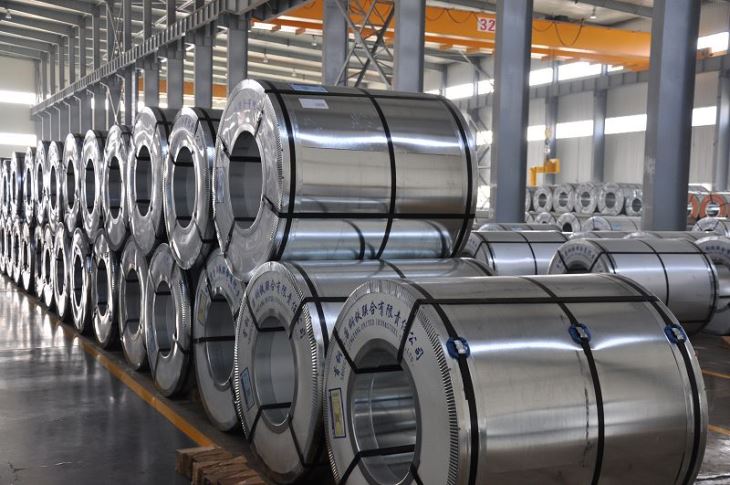
European steel CRC, HDG producers squeezed between low demand, high costs
Slow demand and competitive import offers were the principal factors dragging on European domestic CRC and HDG prices, they said.
European mills were reported to be trying to get “some €20-30 [$21-32] per tonne” more for both products, but buyers were not accepting higher prices.
In Southern Europe, local producers were offering around €750-760 ($805-817) per tonne ex-works for CRC and €770-780 per tonne ex-works for HDG.
Mills in the region could mostly offer coil for November delivery, although some mills still had October delivery available, according to market sources.
Buyers, however, estimated tradable prices to be lower, at €730-740 per tonne ex-works for CRC and €750-760 per tonne ex-works for HDG.
“Demand is quite weak [for CRC and HDG] – trading is almost nil,” a trading source said. “Automotive demand is likely to dip further in the fourth quarter, and prices for HRC [the feedstock for CRC production] will remain under pressure, so I think we will soon see lower prices for CRC and HDG as well.”
European mills pointed out, however, that they could not reduce their prices by much, because the current values were already close to the cost line for them.
“Energy costs have risen again across Europe, and annealing [the heat treatment procedure for CRC production] is very energy-intensive,” a mill source in Southern Europe said.
For example, in Italy, electricity prices were €118.24 per MWh on September 1, but by September 13 they had climbed to €128.17 per MWh, according to Italy’s exchange for electricity and natural gas spot trading, Gestore Mercati Energetici (GME).
Fastmarkets’ weekly price assessment for steel CRC, domestic, exw Southern Europe, was €730-750 per tonne on Wednesday, widening downward by €10 per tonne from €740-750 per tonne the week before.
The corresponding weekly price assessment for steel HDG, domestic, exw Southern Europe, was €750-760 per tonne on Wednesday, down by €10 per tonne week on week from €760-770 per tonne.
Meanwhile, competitive offers from overseas suppliers were also dragging European prices downward. A transaction for South Korea-origin CRC with end-October shipment was reported at €660 per tonne CFR to Southern Europe during the assessment week.
A supplier from Japan was offering CRC for November shipment at $725 per tonne CFR to Italy.
And a Vietnamese supplier was said to be trying to achieve $830-840 per tonne CFR for 0.5mm HDG with Z100-120 coating, for November shipment.
Published by: Julia Bolotova

Presentations shown at Worldsteel Open Forum 2023
This week the Worldsteel Open Forum 2023 was held in Antwerp, Belgium.
The Open Forum aims to be a conversation about climate, involving the entire steel value chain and all its stakeholders to share ideas on how to accelerate the decarbonization of other steel industries:
# Climate Policy Implementation
# Financing the Transition
# Raw Material Requirements
# Energy Availability
# Steel Using Sectors
# Chain of Custody
The presentations delivered at this event can be downloaded using this link: Presentations.
EU launches anti-subsidy investigation on Chinese EV imports
The European Commission will start an anti-subsidy investigation into electric vehicles entering the EU from China, a move cautiously welcomed by the European auto association ACEA.
“Global markets are now flooded with cheaper Chinese electric cars. And their price is kept artificially low by huge state subsidies. This is distorting our market,” EC President Ursula von der Leyen said in her annual State of the European Union address on Wednesday. “We do not accept this from the inside, we do not accept this from the outside.”
The official says Europe is open for competition, “not for a race to the bottom.” The probe seeks to defend the EU against “unfair practices.” Yet, von der Leyen notes it is “vital” to keep an open dialogue with China because there needs to be cooperation on other topics.
The plan is to de-risk, not decouple from China, the official claims.
The announcement is seen as a “positive signal” that the EC is recognising the increasingly asymmetric situation the European auto industry is facing, ACEA says in a note to Kallanish. “We will now study the details [of the investigation] and stand ready to participate in the enquiry as an interested party,” the trade body adds.
The share of Chinese all-electric vehicles in Western Europe rose from 0.5% in 2019 to 3.9% in 2021. So far this year, Chinese manufacturers have won 8.2% of the European electric car market, selling 86,000 BEVs, according to Schmidt Automotive Research.
Last month, ACEA’s director general Sigrid de Vries warned Chinese brands and Chinese-made vehicles are making rapid inroads into the European EV market, propped up by public money and government intent. “China’s comparative advantage and cost-competitive imports could chip away at European automakers’ domestic market share, ultimately impacting local activity,” she said.
The probe is unlikely to be straightforward as many European carmakers are producing EVs in China and exporting to the EU. The Asian giant is the biggest vehicle market in the world and a production and innovation hub for components and vehicles. The country accounts for 75% of the global battery production capacity and has a near monopoly on critical raw material supplies.
German carmakers Volkswagen and BMW Group, which rely on Chinese production and exports, are yet to comment on the matter. The same applies to European-based, Chinese-owned brands Volvo Cars, Polestar and Lotus, among others.
A pragmatic approach to dealing with such an intricate situation is a “solid and comprehensive industrial strategy that will enable us to rival other world regions on an equal footing,” concludes ACEA.

Arvedi shredder scrap plant starts operation in Cremona
The new scrap plant will process almost 1 million mt/year of light-medium iron grades of scrap and sheared light demolition scrap, while cutting Acciaieria Arvedi’s carbon footprint and ensuring up to 20% lower electrical power consumption compared with traditional systems.
The scrap plant automatically detects scrap pieces that cannot be shredded. A ferrous downstream line separates steel from nonferrous material, enabling cleanness levels close to 100%.
An offline nonferrous separation line also allows recovery of grades zorba and zurik for resale. Zorba is predominately shredded aluminium, which may also contain soft lead, zinc, stainless steel, iron, brass, copper or nickel. Like heavies, zurik is a mixture of metals.
Domestic ferrous scrap prices in Europe rose for the first time since April, as increased demand for containerized shredded scrap in other regions drove prices of shredded scrap domestically. Platts, part of S&P Global Commodity Insights, assessed Southern European shredded scrap at Eur345/mt delivered to the mill Sept. 11, up Eur5/mt on the month. Platts assessed domestic shredded scrap in Northern Europe at Eur347.50/mt delivered to the mill Sept. 11, up Eur27.50/mt from Aug. 10.
Author Annalisa Villa
