

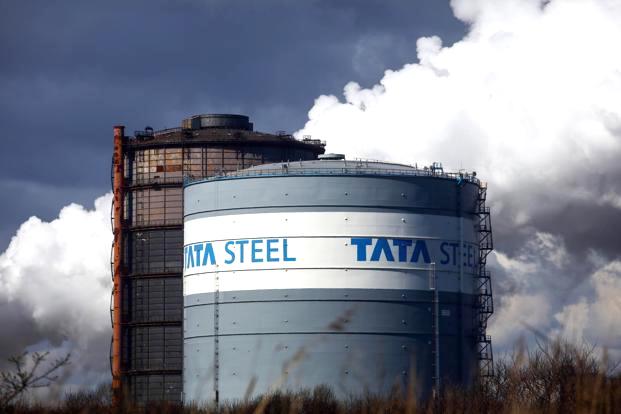
Low-carbon zinc use further reduces Tata Steel footprint
Tata Steel in the Netherlands says it has signed an agreement with Swedish metals supplier Boliden. This is for the procurement of a special quality of zinc with one of the lowest CO2 footprints of any refined zinc in the world.
With this move, the steelmaker is confirming its intention to tackle CO2 footprint by selecting low-carbon input raw materials.
Boliden’s low-carbon zinc is mined in the company’s mine without the use of fossil energy. “According to Boliden, the supplied zinc accounts for an emission of less than 1 tonne of CO2 per tonne of zinc, compared to the industry average of 3.6 tonnes. This gives it one of the lowest CO2 footprints of any refined zinc in the world,” Tata Steel says in a note seen by Kallanish.
The deal covers a significant part of Tata Steel Nederland’s need for zinc. “Our agreement with Boliden reduces our indirect CO2 emissions and marks a new step in our sustainability journey,” says Tata Steel Nederland chief procurement officer Willem Vermeulen.
Tata Steel Nederland uses virgin zinc alongside recycled zinc in its production, thereby increasing the environmental benefits on top of the use of low-CO2-emissions zinc now provided by Boliden.
Emanuele Norsa Italy


Sidenor to restart Reinosa rolling mill in October
Spanish special steelmaker Sidenor says it is resuming production at the rolling mill at its Reinosa plant in northern Spain. The facility, which produces special steel bar for the automotive sector, remained halted for almost a year after the costlier energy prices in Spain impacted the company’s performance, Kallanish notes.
Last Friday, Sidenor’s management held a meeting with representatives of the workers’ council to inform them that the facility will start up in October with two working shifts involving 20-25 employees.
“The restart is possible thanks to the company’s investments in innovation, energy efficiency, decarbonisation, optimization of resources and improvement of competitiveness,” comments the workers union UGT. “This also follows Sidonor’s estimate of growing market demand in 2024.”
In June, Sidenor announced that is building a new 30-kilovolt (Kv) electricity supply line for the Reinosa plant. The project, which is valued at €2 million ($2.14m), should be completed in December.
The company is also advancing a project, in collaboration with the Basque agency EVE, for the development and use of renewable energy sources that involves the construction of eight photovoltaic solar plants in Lleida, Tarragona and Barcelona (see Kallanish passim).
Todor Kirkov Bulgaria

European HRC buyers keep holding back from trading, despite lower offers from some mills
Fastmarkets calculated its daily steel HRC index domestic, exw Northern Europe, at €645.00 ($692) per tonne on Tuesday, unchanged from a day earlier.
The index was down by €10.33 per tonne week on week, but up by €0.42 per tonne month on month.
The market for HRC in Northern Europe was silent. Distributors and steel service centers were mostly uninterested in making new bookings and were focused on reducing their stock levels instead, sources said.
“We don’t need to buy [HRC] now, we need to sell,” a distributor in Germany said.
Offers from one German supplier for October-delivery coil were reported at €640-650 per tonne ex-works, for October-November delivery. Buyers’ estimations of tradeable values were in line with those figures, but even so, traded volumes were extremely low.
In general, offers for October/November-delivery coil in the region were reported within the range of €640-685 per tonne ex-works.
One integrated mill in the region reportedly reduced its offers to €630 per tonne ex-works, but this could not be widely confirmed by the time of publication.
An offer from Benelux-based re-roller to Germany was reported at around €630 per tonne delivered.
“It is not the matter of price now, it is the matter of demand, or rather lack of demand,” a buyer in the Benelux area said.
“There is no such thing as a ‘market price’ for HRC because there is no demand,” a steel-service center source in Germany said.
Meanwhile, Fastmarkets’ calculation of its corresponding daily steel HRC index domestic, exw Italy, was €632.50 per tonne on Tuesday, down by €5 per tonne from €637.50 per tonne on Monday.
The Italian index was down by €2.92 per tonne week on week, and down by €1.18 per tonne month on month.
Italian producers were keeping quiet, avoiding giving firm offers in the weak market, sources said.
Several sources confirmed to Fastmarkets that one integrated mill in the nation could still offer HRC with early October-delivery, which indicated very short order books.
A mill source estimated achievable values for HRC in Italy at €640-650 per tonne delivered (€625-635 per tonne ex-works).
Buyers’ price idea was a bit lower, around €615-620 per tonne EXW, but trading in Italy was generally very quiet, sources told Fastmarkets.
“Nobody’s booking [HRC], September will be a month with a very few transactions. Expectations are that an influx of imports in October will dent European prices,” a trading source in Italy said.
Meanwhile, Asian suppliers started offering January-delivery HRC to Europe, but buying interest was quite low in a volatile market.
The lowest offer for November-shipment (January-delivery) HRC was reported from Taiwan at €590-595 per tonne CFR to Southern Europe.
Sources said that one Japanese mill was offering January-delivery coil to Italy at €610-615 per tonne CFR, but Italian buyers deemed such a price level to be unworkable.
In general, buyers in Italy agreed that workable prices for overseas coil should be “way below €600 per tonne CFR” to spur buying interest.
Published by: Julia Bolotova

Worldsteel forum highlights steel image change
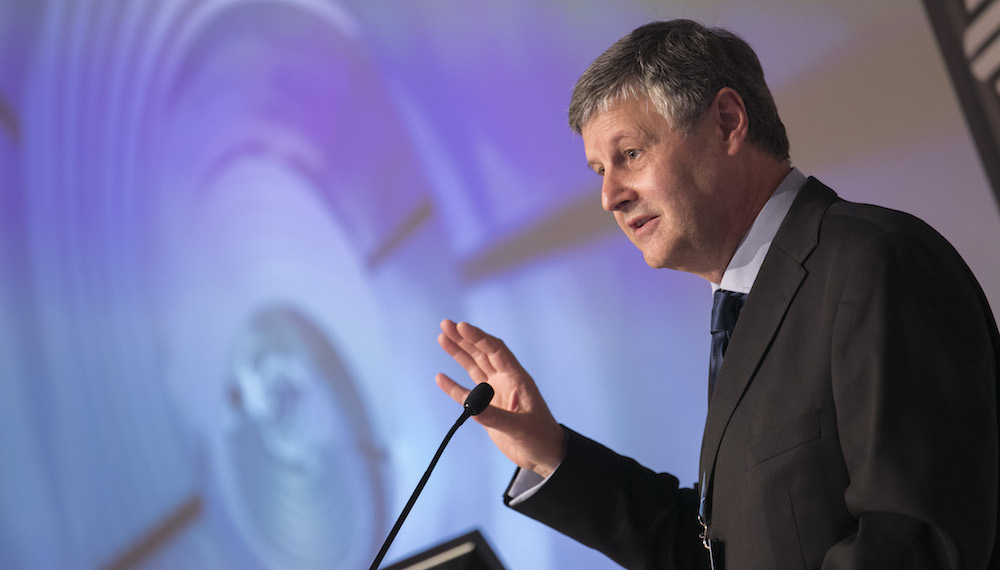
The attitude of the steel industry “has completely changed” in a matter of hardly more than three years, says Edwin Basson, director general of worldsteel.
At the association’s Open Forum – Climate Action conference in Antwerp, Belgium, speakers discussed the changing self-concept within the industry, but also its perception from the outside.
“Steel executives know that decarbonisation needs to be done,” Basson said in the opening keynote of the conference. That target will force change in other industries, too, like raw materials, “so we need to lead the discussion beyond the boundaries of the steel industry”, he said at the event attended by Kallanish.
His point was complemented by this year’s worldsteel chairman, Jeong-Woo Choi, who stated that “the challenge is greater than the sum of the steel industry”. Speaking in a recorded video address, the Posco Holdings chief executive reiterated that “years ago the steel industry was seen as rusty and smoky”.
This image is still prevailing to a large extent, as relatively cleaner steel production stands against growing concern over climate change. In surveys carried out in 2018 and 2022, testing the “familiarity” with and the “favourability” of the steel industry, it turned out that the latter has suffered in the USA and western Europe.
However, this scepticism in developed economies concerns not only steel, but also materials like cement and aluminium, as well as manufacturing industries in general, according to worldsteel spokesman Bradley Forder.
Against that, both familiarity and favourability have risen in India, a region with less than 100kg of steel consumption per capita per year on average. In China, with its consumption of more than 500kg per head, people are more critical. Poll respondents felt very much familiar with, but remarkably less favourable towards the industry, which is an indicator of the proverbial air pollution the country needs to come to terms with.
Christian Koehl Germany

German slowdown threatens EU steel sector: Gozzi
The German economic downturn may have a strong impact on European steel industry and economic performance, Duferco boss Antonio Gozzi says in an interview with Kallanish.
“Italy has always been a fundamental partner of Germany. Last year, Italian exports to Germany reached €80 billion, representing almost 20% of total Italian exports. There are provinces such as Brescia and Bergamo that are extremely connected with Germany (Brescia achieved €4.5 billion in exports to Germany last year, especially in the metallurgical, mechanical and machinery sectors),” Gozzi writes in a letter shared with Kallanish.
Although many believe the German economic crisis is temporary, there is the feeling that a fundamental change in the country’s economic fortunes is underway. This involves a break with the economic model that has seen the country prosper for 20 years. This was based on three pillars: brave labour market reforms which unleashed all of the country’s industrial potential, low-cost energy from Russia, and strong exports of machinery and cars to China.
Today things are profoundly changing and several weaknesses of the German industry are threatening its future growth. These are an ageing population, a serious lack of workforce, high energy costs, ideological extremism in the fight against climate change, which has led to German nuclear plant closures, and a lack of public investment in infrastructure, Gozzi points out.
The automotive crisis is the symbol of this change. Large German car manufacturers have not managed to maintain their world leadership in internal combustion engine cars and have been late in the development of electric vehicles.
Last year, Chinese manufacturers made around 60% of the more than 10 million fully electric cars sold worldwide. With Chinese manufacturers increasing their market share in both China and Europe, European automakers and suppliers could see their profits shrink by tens of billions of euros by 2030.
The German industrial system is also less diversified than in Italy and is less adaptive, Gozzi continues. It is also losing competitiveness due to high and growing labour costs, high taxes, heavy bureaucracy and a significant delay in the digitalisation of production and services. German industrial giants such as BASF, Linde, and Volkswagen are increasingly investing outside of the country, particularly in the USA and China.
Besides having a high carbon footprint compared to France and Italy, Germany’s most important industrial segments, from chemicals to automobiles to machinery, also work with outdated technology, according to Gozzi.
“There is a conservative current of thought that thinks Germany should continue to invest in China defending the old model based on low energy costs … Some people dream of restoring a good relationship with Russia. Another current of thought believes that a model based on exports and low energy costs is broken and different solutions of growth must be sought. At the same time, no feasible alternatives are being mentioned,” Gozzi explains to Kallanish.
In terms of energy, due its dependence on Russian gas, the country has been profoundly touched by the energy crisis. Although wholesale gas prices have recently stabilised, they are still at around more than double what they were before the crisis. Some analysts believe that with the closure of all nuclear and coal power plants by 2030, Germany will be short of 150 gigawatts of installed electrical power.
“Even if these forecasts seem excessive, the energy gap in the future promises to be gigantic and certainly not covered by renewables alone. The German government and the political forces supporting it are divided on everything and light years away from the discipline and sense of responsibility that has characterised the country’s politics for decades,” Gozzi warns.
On 28 and 29 September, Italian, German and French industrial associations Confindustria, BDI and Medef will meet in Berlin to discuss strengthening collaboration between the three countries and refocusing the European dialogue on industry.
Natalia Capra France

European flat steel price trajectory remains uncertain
The trajectory of European flat steel prices remains uncertain as steelmakers are hoping to raise offers from the levels seen since July, but sentiment in the market continues to be weak.
During a webinar held by Siderweb on Tuesday, the direction of the market was debated by the likes of Cesare Viganò, head of ArcelorMittal CLN, and Nicola Cavazzoni, sales manager for plate at Marcegaglia.
The panellists agreed suppliers have the clear intention of lifting flats prices in the market, as a consequence of higher-than-expected raw material and energy prices. At current transaction levels, Viganò sees European steelmakers being very close to their breakeven levels – a maximum of €50/tonne ($54) away. Cavazzoni meanwhile believes the bottom has been reached.
Viganò said that real demand remains too low to support restocking in the coil segment. He also sees increasing international uncertainty limiting the likelihood of price increases. “I don’t see the support of apparent demand at the moment. Even in the automotive sector, we see higher activity compared with the last years, but the market still remains below pre-Covid levels,” Viganò noted.
Cavazzoni was more positive in his view, stressing that current production costs indicate that the floor of the market has already been reached. “We already see some effect on slab prices. The current prices are in many cases unsustainable for steelmakers,” he explained.
“Imagining that prices could drop further for flats in Europe is unrealistic,” Cavazzoni added. “I do not believe they will increase next week, but the trend for the near future points to higher prices for flats due to higher-than-expected input costs for production.”
According to Kallanish indices, hot rolled coil prices in Europe are now close to the bottom reached in the dismal fourth quarter of 2022. Plate prices, on the other hand, are now at the lowest level registered since Q1 2021.
Emanuele Norsa, Italy

Activity in European HRC market subdued amid persistent destocking
And price undercutting among steel service centers in Europe could put pressure on downstream prices, Fastmarkets understands.
Fastmarkets calculated its daily steel HRC index domestic, exw Northern Europe at €645.00 ($690.04) per tonne on Monday, up by €0.21 per tonne from €644.79 per tonne on September 8.
The index was down by €14.17 per tonne week on week, but up by €0.42 per tonne month on month.
Most buyers estimated the tradable values for HRC in Northern Europe at €640-650 per tonne EXW.
Fastmarkets’ calculation of its corresponding daily steel HRC index domestic, exw Italy was €637.50 per tonne on Monday, up by €4.17 per tonne from €633.33 per tonne on September 8.
The Italian index was down by €0.83 per tonne week on week, but up by €3.82 per tonne month on month.
Most buyer estimates put the workable price at about €625-640 per tonne ex-works, with some higher indications reported at €670 per tonne EXW.
Offer prices were reported at closer to €660 per tonne ex-works for October/November delivery and any offers above €640 per tonne EXW were not considered workable given the current market conditions.
Import offers from Asia for shipment in the first quarter of 2024 were reported at €610-620 per tonne CFR to Italy.
Published by: India-Inés Levy

Turkey’s Yukselen Celik to enter European market
Yukselen Celik, a leading Turkish specialty steel producer, aims to enter the German market, following its US entry, to expand its export activities in the European market, the firm says in a bourse filing seen by Kallanish.
In addition to increasing its awareness in international markets and expanding its field of activity, the firm aims to increase its export revenue and exports’ share in total sales. To do this, it has established a fully-owned subsidiary named Rising Stahl GmbH in Düsseldorf, Germany.
The subsidiary will start its operations primarily as a European sales office and will have warehouse/storage areas to be able to stock products over time. If deemed necessary, a steel service centre or metal processing plant will also be established in the future. From the subsidiary in Dusseldorf, Yukselen Celik aims to sell its products across Germany and other EU countries, with a particular focus on North Rhine-Westphalia.
Rising Stahl’s establishment procedures are planned to be completed by the end of 2023, with operations starting in the first half of 2024 at the latest. As of H2 2024, it is expected to have a positive impact on the export and transit trade activities of Yukselen Celik.
Yukselen Celik established a wholly-owned subsidiary named Rising Steel Inc. in Chicago in 2022 in order to increase the share of exports in total sales revenue, which has hitherto been small. The firm increased the share of exports in revenue by approximately 6.5% as of the end of 2022, with the contribution of the export office opened in Istanbul and the subsidiary established in the USA. This is in addition to the capacity increases realised previously. This share rose to over 15% in H1 2023.
Burcak Alpman Turkey

Posco plans 1mty hydrogen steelmaking plant by 2030
South Korean steelmaker Posco plans to see rapid development of its hydrogen reduction steelmaking technology during 2026-2030.
The steelmaker said at the 2023 Korea Environment & Energy Trade Fair last week that it will use green hydrogen through HyREX technology to produce direct reduced iron (DRI) to feed electric arc furnaces. HyREX (Hydrogen Reduction) is a steelmaking method that manufactures molten metal using iron ore fines and hydrogen, based on Posco’s FINEX fluidized reduction technology. The steelmaker will cooperate with Primetals on developing this.
Posco aims to complete a 300,000 tonnes/year hydrogen reduction steelmaking plant by 2026 and introduce a 1 million tonnes/year commercial production plant by 2030, Kallanish notes. The factory was designed in July last year. If HyREX proves successful, it could gradually replace Posco’s blast furnaces after optimisation, and help the steel mill become carbon neutral by 2050.
European Commission invites Jacquet Metals-Swiss Steel deal observations
The European Commission has reserved its final decision on the proposed merger between Swiss Steel and Jacquet Metals. It has invited interested third parties to submit their observations on the transaction.
In February, Swiss Steel signed an agreement for the sale of several distribution subsidiaries to Jacquet Metals, a distributor of specialty metals (see Kallanish passim).
The transaction includes Swiss Steel s.r.o in the Czech Republic, Swiss Steel Baltic OÜ in Estonia, Swiss Steel Magyarorszag Kft in Hungary, Swiss Steel Baltic SIA in Latvia, Swiss Steel Baltic, UAB in Lithuania, Swiss Steel Polska in Poland and Swiss Steel Slovakia, belonging to the Swiss Steel group. Together, these generated a total net revenue of €158 million ($169m) and Ebitda of €12m in 2022, with 267 employees, by selling mostly non-Swiss Steel products.
It is the second significant agreement between Swiss Steel and Jacques Metals, following the sale of distribution entities in Germany, Austria, Belgium and the Netherlands in 2015.
Natalia Capra France