


Bulgarian longs prices rise, but buyers remain selective amid weak sales, competitive offers
Bulgarian sellers have managed to raise their longs quotations over the past week, but the increase has landed in a market where sales are still slow and cash flow remains tight. The higher price trend has encouraged some medium and larger buyers to step in for limited tonnages, mainly to avoid paying more later if the upward movement continues. However, this buying is not seen as a sign of a real demand recovery. Sources say the market is still fragile, as buyers are questioning how much of the new price level can be absorbed while local consumption remains weak. At the same time, competitive offers from both EU and non-EU suppliers are preventing the domestic market from gaining stronger confidence.
In the domestic market, rebar prices in Bulgaria have increased to around €640-650/mt CPT, compared to €625-635/mt CPT last week. Wire rod prices have also moved up, to around €680-700/mt CPT, compared to €670-690/mt CPT in the previous week. According to sources, medium and larger buyers were more active this week than smaller buyers, but purchases were still mostly need-based. Liquidity problems continue to limit trade, while sufficient stocks are also keeping many buyers away from fresh bookings.
In the import segment, no fresh bookings have been reported this week, as local demand remains slow and buyers are still mostly covered. Market players say aggressive suppliers may put pressure on Bulgaria in the coming months if they continue offering at low levels, especially while domestic sales remain weak. Turkish rebar export offers have decreased to around $565-575/mt FOB, compared to $570-580/mt FOB last week, bringing the corresponding CFR Bulgaria level down to approximately €515-525/mt. In addition, a Turkish rebar-in-coil offer has been heard at around $625/mt CFR at Burgas port for September shipment, according to sources. As for Egyptian material, rebar offers are currently heard at around $580-590/mt FOB, compared to $580-600/mt FOB last week, with CFR Bulgaria levels estimated at around €535-550/mt. Egyptian wire rod offers are at around $590-600/mt FOB, compared to $600-620/mt FOB last week, corresponding to approximately €545-560/mt CFR Bulgaria.
For EU origin material, Italian rebar offers have been heard at around €670/mt delivered Bulgaria this week, according to sources. However, lower offers from Italy are expected in the coming days, as Italian suppliers are reported to have high stocks and a more aggressive sales approach. Sources say this may become a pressure point for Bulgarian domestic prices if buyers continue to resist higher levels.

Salzgitter finalises acquisition of Duisburg steelworks HKM
Hüttenwerke Krupp Mannesmann (HKM) will become a wholly owned subsidiary of Salzgitter after the conclusion of “intensive and meticulous negotiations” with the other co-shareholders, thyssenkrupp Steel Europe and Vallourec. The three parties signed contracts on 8 July, Kallanish learns.
Tk Steel and Vallourec had long announced their intention to divest their stakes, while Salzgitter from the outset expressed continued interest in the slab mill in the south of Duisburg. The transaction, and in fact the survival of the mill, is being accompanied by a profound downsizing and job cuts.
Salzgitter plans to invest in an electric arc furnace at HKM to transform the site, make it future-proof, and reduce CO2 emissions from steel production by 90% over the long term. This transition will be accompanied by a significant reduction in the number of employees. The plan is to cut back from the current approximately 3,000 to about 1,000 jobs in the long term. Without these painful job cuts, Salzgitter would not have been able to complete the acquisition on its own, it states.
“We took the time needed to negotiate with the co-shareholders to date regarding the continuation of HKM under our sole responsibility. Given the complexity of these discussions and the great significance of the outcome for the employees in Duisburg, exacting thoroughness clearly took precedence over speed in this process,” says Salzgitter chief executive Gunnar Groebler.
HKM’s existing supply contract with thyssenkrupp Steel will expire at the end of 2028, rather than at the end of 2032 as previously planned. The new arrangement will also mean a shift in slab sales to third parties, which has already been part of HKM’s business since the closure of Vallourec’s German plants.
HKM’s slabs are considered particularly suitable for the production of tubes. Salzgitter executive Andreas Betzler, managing director of Salzgitter’s tubes subsidiaries Mannesmann Precision Tubes, Mannesmann Grossrohr and Mannesmann Line Pipe, will therefore join the management team at HKM.
Author: Christian Koehl Germany


German sections prices seen remaining stable
Prices for sections from German mills have remained relatively sturdy, or softened only to a lesser extent than other steel products. Values are expected to remain at current levels for the remainder of July.
The level of around €820/tonne ($938) delivered, for sections category 1, S235, has largely prevailed, with no significant movement foreseen. In fact, domestic prices have received indirect support from the disappearance of some import offers. In June, offers from Polish and Spanish mills were seen at as low as €800 delivered to Germany. Spanish mills have since lifted their prices, one buyer tells Kallanish.
He notes that northwestern European mills are enjoying relatively strong capacity utilisation, given they have regular customers, in the UK and overseas. “[Sales are taking place] even to Canada and the USA. It’s hard to believe, but they [US buyers] cannot get all they need from local mills,” he says.
In this scenario, mills have little need to attract demand by lowering offers, especially since mills in Germany and the Benelux are taking turns with summer closures, and Italian mills are seen closed for all of August.
Another manager points out that domestic demand is still far from what sellers would like it to be. But, for the moment, the summer effect is providing a stability, and new offers, higher or lower, are not expected before September.

Spanish steel sector enters summer lull, prices mixed
The Spanish steel industry is entering its seasonal slowdown in activity, Kallanish notes.
The summer lull, combined with weak market conditions and the entry into force of the new EU import regulation, is expected to define the trend in July, when most producers plan to bring forward their maintenance programmes.
The Spanish scrap market began July with a new downward price movement. Domestic prices have fallen by nearly €10-15/tonne ($11.43-17.15/t), mainly reflecting recent movement seen in international raw materials markets.
“Most mills are trying to take advantage of current market conditions and growing their stock ahead of the summer stoppage of activities,” one seller comments.
According to another source, domestic scrap market collection activity remains relatively stable. “While sellers are aligning purchases with current demand, they are increasing inventory levels in the expectation that prices will rebound once steelmakers restart operations following the summer shutdowns,” he comments.
The Spanish scrap market will end the week with both new E8 grade scrap and shredded E40 grade generally offered at €325/t. Other qualities, E3 and E1, are respectively at €300-295/t and €280/t delivered.
Suppliers generally expect prices to decline further through the month, as international scrap values do not yet appear to have reached a floor.
Demand in the rebar market remains weak. According to distributors, the introduction of the new EU import tariffs has heightened uncertainty, prompting construction companies to delay purchasing decisions. Relatively high prices are also limiting buying interest.
“We are keeping inventories low. The market remains cautious, with trading activity largely restricted to small volumes required for existing projects,” one distributor comments. Most sellers report the domestic steel industry has marginally reduced production in July and anticipates weaker market conditions during the summer.
Offers for 16mm rebar in Spain are at €508-518/t base. Including €262/t size extras and loading expenses, transaction values are at €770-780/t ex-works. Most suppliers are already selling material at €790-800/t.
Meanwhile, hot-rolled coil sales remain stable. Mills are trying to raise prices, something customers are finding hard to accept, as demand in most consumer sectors remains muted, except for automotive where it is reasonable. “Producers say they have healthy stock levels, whilst the distribution sector is reluctant to build inventory given the uncertain demand outlook,” a market participant observes.
Spanish HRC prices stand at €740-750/t ex-works. Distributors’ levels have surpassed €780/t delivered.
ArcelorMittal pushes up Europe coil prices: sources
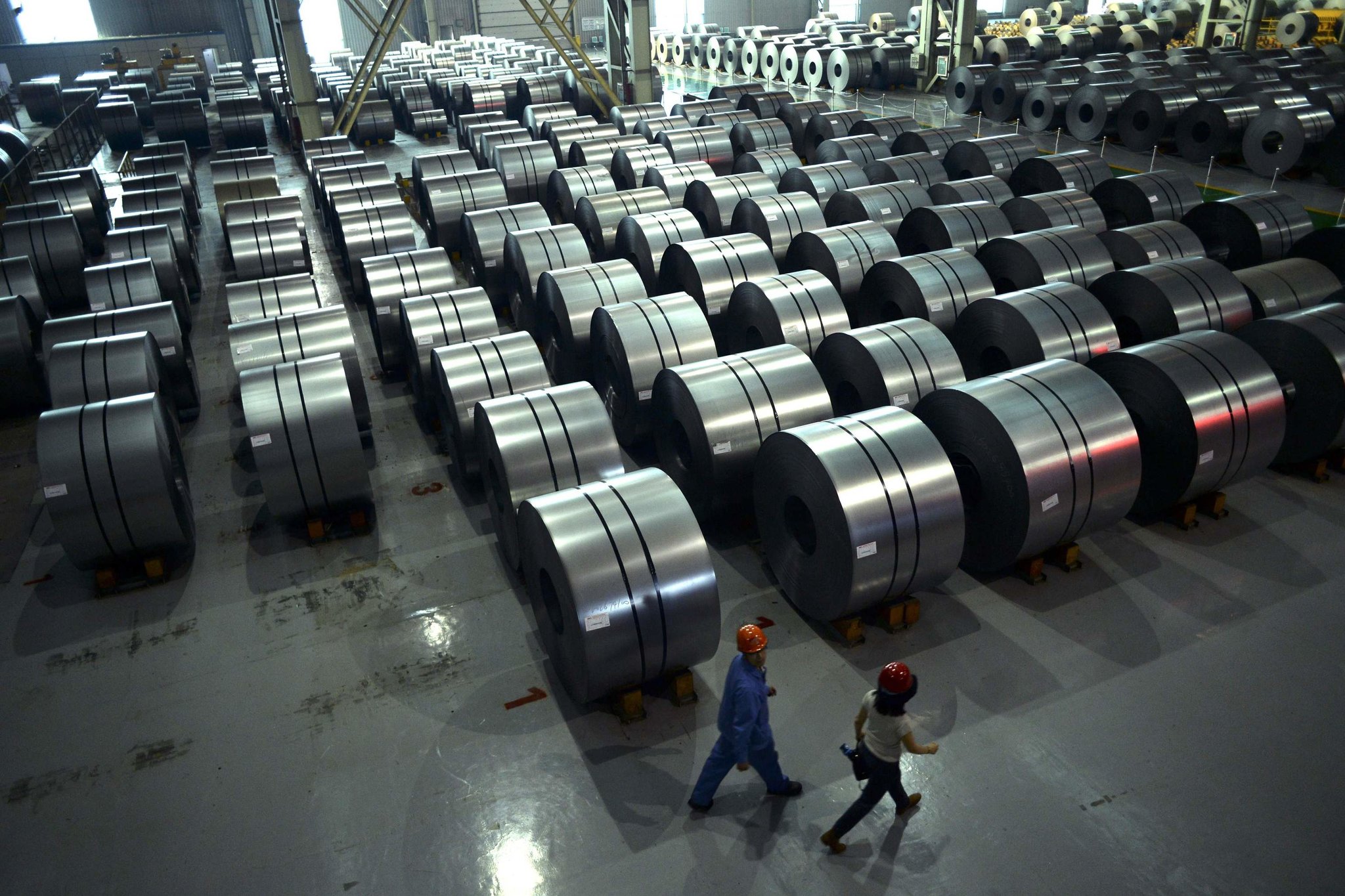
ArcelorMittal is implementing a coil price increase across Europe by €50/tonne ($57.1/t), according to multiple market sources.
The revised base price for hot rolled coil is said to be at €770/t base delivered, versus the previous €720/t, Kallanish notes. Cold rolled coil and hot-dip galvanised coil prices in new contracts are also being increased by €50/t to €880/t.
According to sources, the steelmaker has filled September order books and the new values are for October lead time. ArcelorMittal was not available for comment.
HRC transactions are taking place in the EU market at €700-720/t base delivered on average, amid slow market activity. However, a mill source in southern Europe says that since the new steel trade regime country quota allocations were published, order intake has increased.
The new regime is considered by coil buyers to be harsher than expected, with several million tonnes of duty-free imported coils erased. European buyers of flat steel products will be able to import a combined 9,607,775 tonnes of HRC, cold rolled coil and coated sheet annually.
HRC (categories 1A and 1B) accounts for the largest share at just over 5.2 million t/year, followed by metallic coated sheets at approximately 2.86mt across categories 4A and 4B, and cold rolled coil at 1.54mt. A buyer notes the new system cuts HRC imports by almost 80% (see Kallanish passim).

European domestic rebar prices flat amid weak demand and cautious buying
European domestic rebar prices remained stable in the week to Wednesday July 8, amid unseasonably weak demand. Market participants reported bearish sentiment, limited trading activity and a prevailing wait-and-see approach.
“Customers believe prices could move lower, so no one is buying large volumes,” a trader told Fastmarkets.
In Italy, tradable rebar prices were reported at €710-770 ($811-880) per tonne ex-works, depending on the region, though no significant tonnages were heard at the upper end of the range.
In northern Italy, tradable levels were reported at €710-730 per tonne ex-works, while in southern Italy tradable prices were reported at €750-770 per tonne ex-works.
Fastmarkets’ weekly price assessment for steel reinforcing bar (rebar), domestic, ex-works Italy was €710-750 per tonne on Wednesday, unchanged week on week.
Fastmarkets’ assessment for steel reinforcing bar (rebar), domestic, delivered Spain remained at €750 per tonne.
Meanwhile, domestic rebar prices in Germany were also steady, with tradable levels reported at €710-730 per tonne delivered and little variation across the market.
Fastmarkets’ weekly price assessment for steel reinforcing bar (rebar), domestic, delivered Northern Europe was €710-730 per tonne in the week to Wednesday, unchanged from the previous week.
Wire rod prices followed the broader European long steel trend of weak demand and subdued trading activity.
In Northern Europe, tradable prices were reported at €705-715 per tonne delivered.
Fastmarkets’ weekly price assessment for steel wire rod (mesh quality), domestic, Northern Europe was €705-715 per tonne delivered on Wednesday, narrowing downward from €705-720 per tonne a week earlier.
Fastmarkets’ weekly price assessment for steel wire rod (mesh quality), domestic, delivered Southern Europe was €690-720 per tonne on Wednesday, unchanged week on week.


EU trade regime opens with ample CRC availability
The first allocation data for Category 2 – cold rolled flat steel – point to a relatively subdued start under the EU’s new steel import regime, Kallanish notes. As of 6 July, ample volumes remained available.
South Korea showed the highest utilisation among major country-specific allocations, with 23,511 tonnes awaiting allocation against a third-quarter quota of 63,653t, leaving 40,142t, or 63%, still available.
Türkiye followed, with 17,956t awaiting allocation against a 60,153t quota, leaving 42,197t, or 70%, available.
Taiwan, the UK and Japan remained almost fully available, while India retained 97% of its quota and Ukraine 94%.
The additional FTA Quota-CSQ has the full 33,671t still available. This mechanism only becomes relevant after eligible FTA partners exhaust their country-specific quotas. Since no country-specific CR sheet quota had been exhausted, importers had not yet moved into this second-layer FTA pool.
The “other countries” quota had 1,878t awaiting allocation against 24,934t, leaving 92% available.
The FTA Quota – Other countries pool was virtually untouched, with 21,258t of 21,284t still available.
| Origin | TRQ volume |
Balance | Awaiting allocation |
Avaliable TRQ tonnes |
Available TRQ % |
| Taiwan | 33,587 | 33,587 | 20 | 33,567 | 100 |
| India | 67,494 | 67,494 | 2,176 | 65,317 | 97 |
| Korea | 63,653 | 63,653 | 23,511 | 40,142 | 63 |
| Türkiye | 60,153 | 60,153 | 17,956 | 42,197 | 70 |
| United Kingdom | 19,835 | 19,835 | 23 | 19,812 | 100 |
| Japan | 29,458 | 29,458 | 62 | 29,396 | 100 |
| Ukraine | 26,549 | 26,549 | 1,711 | 24,838 | 94 |
| FTA Quota – CSQ (India, Korea, Türkiye, Ukraine, UK) |
33,671 | 33,671 | – | 33,671 | 100 |
| Other countries | 24,934 | 24,934 | 1,878 | 23,056 | 92 |
| FTA Quota – Other countries | 21,284 | 21,284 | 26 | 21,258 | 100 |
| Egypt | 1,295 | 1,295 | 344 | 951 | 73 |
| Switzerland | 746 | 746 | 1 | 744 | 100 |
| Brazil | 3,534 | 3,534 | – | 3,534 | 100 |
Source: EU TARIC, as of 6 July. Complied by Kallanish

German car production drops 3% in first half
German automakers produced 2.1 million passenger cars from January through June this year, down by 3% versus the first half of 2025, Kallanish learns from automotive association VDA.
June saw a 6% year-on-year increase against the same month one year previous, with 377,700 passenger cars rolling off German assembly lines. However, VDA cautions that this micro-trend must be viewed primarily against the backdrop of two additional working days compared to June 2025.
After six months, production remains 15% below the pre-Covid levels of 2019 and earlier. Germany remains under pressure from challenging conditions like high non-wage labour costs and taxes, high energy and bureaucratic costs, VDSA bemoans.
The federation has reason for its warnings. In the last two weeks, reports of plant closure plans at German carmaker brands have unsettled industries and the economy. Large-scale layoffs could occur at Volkswagen, and, to a lesser extent, at Porsche.
In terms of exports, at 287,700 units, exports in June exceeded the figure for the same month last year by 7%. Since January 1.605 million passenger cars have been exported, a drop of 3% vs the first half 2025.
Despite growing trade barriers with key partner countries, more than three out of four passenger cars from German assembly lines were exported over the course of the year, VDA says.
The federation underlines a relatively strong share increase for electric vehicles. In June, new registrations of electric vehicles rose by 60% y-o-y to a volume of 116,300 units. The EV share of total registrations reached 39%. VDA here gives only the number of registrations, not of production, so the figure will include imports.
Noksel España to expand pipe production capacity
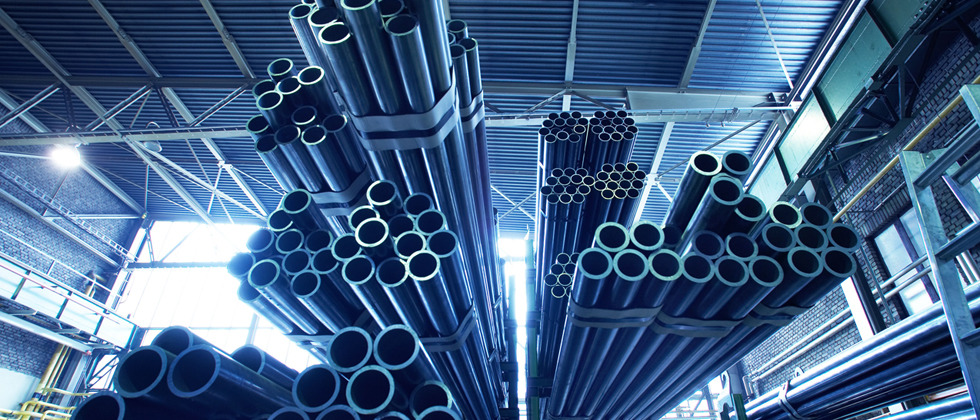
Turkey’s Noksel Celik Boru Sanayi (Noksel) plans to invest €60 million ($68.5m) in expanding its pipe production capacity in Spain, Kallanish learns from the company’s Iberian subsidiary.
“Our project consists of the construction of a new tube production plant, similar to the one we already operate at the Saprelorca industrial hub, as well as a metalworking and coating workshop,” Noksel España chief executive Gürkan Akkoyunlu said during a meeting with Murcia regional government enterprise minister Luis Alberto Marín, and the mayor of Lorca, Fulgencio Gil.
The company is awaiting final approval for the project and expects construction to begin later this year. The new pipe mill is scheduled to become operational in 2028.
Noksel España (NE) has been supplying welded steel pipe to the Iberian and international markets since 2011. Its production facility in Lorca, Murcia, has an annual capacity of 150,000 tonnes of spiral welded pipe for water, oil and gas transmission pipelines, as well as piling applications.

Türkiye’s EU HRC quota utilisation outpaces other origins
Allocation data as of 6 July provide the first indication of how the EU’s new quota architecture functions in practice for hot-rolled sheets and strips (category 1A), Kallanish analyses.
Access is distributed across four quotas: country-specific quotas (CSQ), an additional FTA Quota-CSQ available after eligible FTA partners exhaust their allocations, a residual “other countries” quota for suppliers without country-specific allocations, and an FTA Quota-Other countries reserved for FTA partners without country-specific quotas.
The largest country-specific allocation was granted to Türkiye at 160,574 tonnes. However, by 6 July, HRC volumes awaiting allocation had already reached 374,409t, exceeding the quarterly quota by 213,836t, or 133%. This makes Türkiye the only supplier to have fully exhausted its country-specific allocation within the first week of the new regime.
Most other major suppliers still had most of their quotas available, with only India using 68% of its allocation.
The new FTA Quota-CSQ serves as a second layer of access for FTA partners once their national country-specific quotas have been exhausted. Although Türkiye had already exhausted its own allocation, this shared FTA reserve of 120,921t remained unused as of 6 July.
Outside the main country-specific quotas, utilisation remained mixed. Indonesia had used just over half of its allocation, while Brazil, the United Kingdom, Australia, Saudi Arabia, Switzerland and Kazakhstan had made little or no use of their quotas during the first week.
Among the residual quotas, the “other countries” pool was also heavily oversubscribed. Applications totalled 11,175t against a quota of 5,564t, exceeding the available volume by 5,611t, or 101%.
By contrast, the FTA Quota – Other countries, reserved for FTA partners without country-specific allocations, remained around half available, with 2,100t still unallocated.
EU TRQ allocation (tonnes) for HR sheet, strip (category 1.A) for Q3
| Origin | TRQ volume |
Balance | Awaiting allocation |
Avaliable TRQ tonnes |
Available TRQ % |
| Türkiye | 160,574 | 160,574 | 374,409 | -213,836 | -133 |
| Japan | 137,885 | 137,885 | 1 | 137,884 | 100 |
| India | 149,319 | 149,319 | 101,925 | 47,394 | 32 |
| Taiwan | 69,731 | 69,731 | 1,957 | 67,773 | 97 |
| Ukraine | 120,882 | 120,882 | 13,455 | 107,428 | 89 |
| South Korea | 115,458 | 115,458 | 15,919 | 99,539 | 86 |
| Vietnam | 103,743 | 103,743 | 20,220 | 83,523 | 81 |
| Egypt | 101,232 | 101,232 | 1,828 | 99,404 | 98 |
| Serbia | 64,524 | 64,524 | 1,089 | 63,435 | 98 |
| FTA Quota – CSQ (Egypt, EU, India, Korea, Türkiye, Ukraine) |
120,921 | 120,921 | – | 120,921 | 100 |
| Brazil | 42,513 | 42,513 | 47 | 42,466 | 100 |
| United Kingdom | 38,481 | 38,481 | 226 | 38,255 | 99 |
| Indonesia | 31,834 | 31,834 | 16,319 | 15,516 | 49 |
| Australia | 11,830 | 11,830 | – | 11,830 | 100 |
| Saudi Arabia | 9,545 | 9,545 | – | 9,545 | 100 |
| Switzerland | 5,473 | 5,473 | 6 | 5,466 | 100 |
| Kazakhstan | 2,378 | 2,378 | – | 2,378 | 100 |
| North Macedonia | 3,532 | 3,532 | 178 | 3,354 | 95 |
| Other countries | 5,564 | 5,564 | 11,175 | -5,611 | -101 |
| FTA Quota – Other countries | 4,272 | 4,272 | 2,172 | 2,100 | 49 |
Source: EU TARIC, as of 6 July. Complied by Kallanish