


New PPGI manufacturer emerges in Ukraine
Polysteel, a newly established pre-painted steel manufacturer based in Bila Tserkva, in the Kyiv region of Ukraine, began production in August, after the company was relocated from Kharkiv due to the Russian invasion, Kallanish learns from the firm.
“We were on the verge of commencing production [in Kharkiv] within a few weeks when the full-scale invasion began [on 24 February 2022]. As a result, we had to swiftly relocate under the relocation programme,” a company representative says.
The colour coating line, supplied by Australia’s Bronx Group, has an annual capacity of 100,000 tonnes.
Currently, the company is targeting a monthly production of 5,000t and aims to reach full capacity by the end of next year.
Polysteel primarily sells its pre-painted galvanized coil (PPGI) to domestic markets but also has plans to expand export sales to Europe.
The Ukrainian firm intends to use Turkish-origin galvanized coil as its feedstock. The company points out that despite Russia’s blockade of major ports in Ukraine, the inflow of steel from Turkey has continued uninterrupted.
Elina Virchenko UAE

EU coil price hike attempts falter
Northwest European coil mills’ latest price hike announcements are neither in line with each other, nor very convincing, according to regional buyers.
“We do hear of hikes being announced but they do not play a role in direct negotiations,” a manager at a German distributor tells Kallanish. He says the first signals came from Italian mills, then from a pan-European producer, and then Nordic mills followed up. “I hear that [another player in western Europe] is pondering [a hike],” he adds. “But, indeed, only pondering, not more.” He says the hike attempts were of between €20/tonne and €30/tonne ($21.50-31.25).
A manager at a Benelux fabricator tells of a more ambitious announcement from a big mill group, a €50/t increase, which he calls “bewildering, in view of the obvious meagre activity on the market”.
According to the German manager, the lowest point was reached at around €630/t ($677) for hot rolled coil from northwestern mills, or €20 less for HRC from Italy or eastern Europe. Most buyers still see current HRC prices at around €650/t, give or take €20.
A buyer at a German processor says he hears of “modest upward adjustments, with prices of €650-680, and trending towards €700.” But those figures are making their way mostly indirectly by word of mouth. “I have not heard official announcements from the northwestern European mills so far,” he adds.
Another buyer at a service centre has also not heard of official announcements and dismisses all hearsay. “There are always rumours, but, effectively, there is no move,” he observes.
Christian Koehl Germany


ArcelorMittal reattempts European longs offers hike
Market sources confirm to Kallanish that ArcelorMittal is announcing higher target prices for long products across Europe, in a bid to recover some of the margin loss prompted by increased scrap and energy prices over the summer.
New offer levels are reported to be at €40/tonne above the latest available quotes for all commodity grades, as well as for new monthly and quarterly contracts.
Demand for longs in Europe remains relatively slow, though steelmakers believe that stock levels in the supply chain are depleted and are therefore optimistic that a rebound could be seen soon. “Confidence should come back to the market as we have seen several consecutive quarters characterised by a low demand scenario, something we have not seen since the 2008-2009 crisis,” one source says.
Northern European and Italian rebar prices have remained more or less stable since the beginning of June, according to Kallanish. In late June, ArcelorMittal raised its offers, but this increase was not accepted by the market.
Emanuele Norsa Italy

Turkish steel producers call for govt help to combat massive growth in imports
Steel production in Turkey was up in July for the first time in 14 months, but the share of steel imports also pushed up significantly, the association said.
Turkish crude steel output increased by 7.70% month on month in July, to 2.9 million tonnes, according to TÇÜD data, but over the first seven months of 2023 output was down 13.3% year on year to 18.8 million tonnes.
And Turkey’s wire rod imports increased by 93.30% in the first seven months of the year, TÇÜD said.
Turkey imported 464,862 tonnes of wire rod in January-July under HS code 7213, 87.39% more than the 248,068 tonnes imported in the same period of 2022, according to the Turkish Statistical Institute (TÜIK).
TÇÜD said steel imports from China were up by 84% over the first seven months of the year and said help was need to combat the rise in imports. Hot-rolled flat steel imports under HS code 7208 alone increased by 203.83% to 1,270,983 tonnes in January-July 2023, compared with 418,324 tonnes imported in the same period of 2022, according to TÜIK.
TÇÜD general secretary Veysel Yayan told a local newspaper in Turkey that that steel investments in the Persian Gulf — especially in Saudi Arabia and Iran — would give producers there an energy cost advantage over Turkish steelmakers.
Consequently, he added, the Turkish steel sector needs more competitive energy prices, along with protective measures to limit the amount of cheap imports coming into the country.
Energy costs for steelmakers in Turkey are higher than for steel producers in the Gulf and those in Europe, Yayan said.
The Saudi Arabian steel industry appears to be consolidating under government ownership, with Saudi Basic Industries Corp (SABIC) recently announcing the sale of its steel subsidiary Hadeed SABIC to the country’s Public Investment Fund, which is also purchasing 100% shareholding in AlRajhi Steel Industries from Mohammed Abdulaziz AlRajhi & Sons Investment Company (Rajhi Invest).
Demand for steel in Saudi Arabia is expected to grow significantly due to the country’s Saudi Vision 2030 mega projects.
Published by: Serife Durmus


Slow demand drags on European HRC prices; rebound seen unlikely
Although buyers have gradually come back to the market after their summer holidays and have started to inquire for tonnages, traded volumes of HRC remained low.
“We have an impression that most [steel service centers] are trying to reduce their stocks because there is strong competition between them. So there is not much restocking going on in the market now,” a trader from the Benelux area told Fastmarkets.
Leading European steelmakers kept their official offers for October-delivery HRC at €700 ($752) per tonne ex-works, but this figure was “unachievable,” according to buyer sources.
“It is not possible to consolidate higher prices [for processed HRC] in downstream sales, so €700 [per tonne ex-works for HRC] looks far away from reality,” a source from a steel service center in Germany said.
Buyer sources indicated that the tradable price in Northern Europe was €640-660 per tonne ex-works. One mill from the Benelux area was reported selling small tonnages of HRC at €650 per tonne ex-works.
Most market sources said that slow consumption was the major obstacle to a sustainable HRC price rebound. In general, they put their hopes on price stabilization in the near term.
Fastmarkets calculated its daily steel hot-rolled coil index domestic, exw Northern Europe at €648.60 per tonne on September 6, down by €6.73 per tonne from €655.33 per tonne on September 5.
The index was also down by €1.61 per tonne week on week but up by €2.77 per tonne month on month.
And Fastmarkets’ calculation of its corresponding daily steel hot-rolled coil index domestic, exw Italy was €635.00 per tonne on September 6, down by €0.42 per tonne from €635.42 per tonne on September 5.
The Italian index was down by €0.83 per tonne week on week and by €1.25 per tonne month on month.
Buyers’ estimates of achievable levels were around €625-650 per tonne ex-works.
A mill in Italy was hoping for €700 per tonne delivered (€680-685 per tonne ex-works), but slow consumption and low downstream prices made such prices unrealistic.
Meanwhile, buying interest for imported coil in Europe was low due to long lead times and safeguard-related risks.
“There are significant tonnages of import HRC waiting to be customs-cleared for the fourth quarter, sitting in European ports. The risk of having to pay the 25% import rate, due to [a complete take-up of EU import] quotas, makes buyers hesitate to buy,” a trading source in Europe said.
Import offers from India, South Korea, Japan and Taiwan for October-November shipments were reported at €610-630 per tonne CFR to Italy.
Published by: Julia Bolotova
European CRC, HDG prices under pressure from slow demand
In Southern Europe, local producers were aiming for €750 ($806) per tonne EXW for CRC and €770-780 per tonne EXW for HDG.
Mills in the region could largely offer coil for October delivery.
Buyers, however, estimated tradable values lower at €730-740 per tonne EXW for CRC and €750-760 per tonne EXW for HDG coil.
Continuing demand from end-use sectors, including automotive and construction, was the major stumbling block for a price rise, market sources said.
Restocking mills are hoping for an increase in demand that is likely to happen only in the second half of September and will be limited, sources said.
“Most buyers have sufficient stock and in fact are trying to lower their inventories. My impression is that due to low activity in the construction market and threatening downturn in automotive sector nothing spectacular will happen. Besides high interest rates don’t stimulate investments,” a trading source in Europe said.
Fastmarkets’ weekly price assessment for steel CRC domestic, exw Southern Europe was €740-750 per tonne on Wednesday, down by €10 per tonne from €750-760 per tonne the week before.
The corresponding weekly price assessment for steel HDG domestic, exw Southern Europe was set week at €760-770 per tonne on Wednesday, down by €10-20 per tonne week on week from €770-790 per tonne.
Import offers for CRC and HDG were largely stable during the assessment week, sources said.
Asian suppliers were offering material for shipment in mid-October/early November, which would mean arrival would be in November and December.
One mill from South Korea was offering CRC to Southern Europe at €685 per tonne CFR.
Japan-origin CRC was on offer to Southern Europe at €695-700 per tonne CFR.
A Vietnamese supplier was said to be aiming for $830-840 per tonne CFR for 0.5mm HDG with z100-120 coating, for October shipment.
Published by: Julia Bolotova

UK launches safeguard extension review
The Trade Remedies Authority (TRA) has initiated an extension review of the UK safeguard measure on 15 categories of steel products, Kallanish notes.
The measure is due to expire on 30 June 2024. The review will recommend to the Secretary of State for Business and Trade if the safeguard measure should be extended by up to two further years to 2026.
Interested parties have until 19 September to register their interest on the public case file.
The safeguard measure was transitioned from the EU after the UK left the bloc. Unusually, the UK has pre-empted the EU by launching its extension review first. EU steelmaking representatives have in recent months voiced their concerns over the possibility that the bloc will choose not to extend safeguards beyond mid-2024, while the EU’s Carbon Border Adjustment Mechanism only comes into force in January 2026.
Adam Smith Poland

Swedish fabricator Proplate lifts revenue, prepares investment
Proplate Oxelösund AB, a Swedish manufacturer of complex steel parts and assemblies for industries, lifted 2022/23 fiscal year revenue by 18% on-year to SEK 429 million ($39m). This is double the figure of three years ago and results in a net income of SEK 15.4m, Kallanish hears from the company.
It notes that its performance defied the challenges arising from a shortage of materials following Russia’s invasion of Ukraine, along with general price increases in areas such as electricity, transport, steel and packaging materials.
With a strong presence in the crane manufacturing sector in Europe and the US, the company says it is preparing further investment in its production facility in Sweden. Last year, it carried out several investments, including new office premises, expansion of the painting shop, and new training premises. It also expanded its capacity in the area of high-strength steels especially for the German market, including a blasting machine, welding robot, CNC machine and paint box (see Kallanish passim).
Proplate underlines its focus on long-term partnerships with customers that include Liebherr, Kobelco, Manitowoc, Toyota Material Handling, Epiroc, and Metso Outotec. These partnerships have helped to secure increased sales from existing customers, while also building new customer relations in Europe and the US, Proplate notes.
Proplate’s production facilities are located southwest of Stockholm. They are directly connected to the neighbouring mill of SSAB, one of its steel suppliers and also a customer for its mining equipment.
Christian Koehl Germany
West Midlands signs UK Steel Charter
West Midlands metro mayor Andy Street has signed the UK Steel Charter, making it the first combined authority to commit to using UK-made steel wherever possible in key regional projects.
The West Midlands is home to at least 15 sites manufacturing, processing and handling steel, including Marcegaglia’s Oldbury site, currently under refurbishment, which produces welded steel tubes.
Marcegaglia UK acquired the Oldbury site in 2021 and is currently undertaking a £32 million ($40m) investment programme. This will create up to 70 more jobs in the West Midlands region, on top of the 175 the company employs. The scheme will bring capacity to manufacture steel products in the UK that are not currently produced domestically, allowing for more UK-made steel to be used in projects of all kinds, UK Steel says in a note sent to Kallanish.
The West Midlands Combined Authority (WMCA) is mounting a 860-tonne order for UK-made steel in the expansion of the Metro Rail for the Wednesbury to Brierley Hill scheme.
“This initiative can help to increase the amount of high-quality steel manufactured in Britain and increase the supply of British made steel contributing to key West Midlands projects,” Street says.
“All major construction and engineering projects both here in the West Midlands and throughout the UK will reap benefits from purchasing steel that is made, processed, and delivered here in Britian,” says UK Steel director general Gareth Stace.
“On top of this, Marcegaglia acquired upstream manufacturing facilities in Sheffield this year. This primary stainless steel making asset is worth several hundreds of millions to the UK economy. The investment in this facility means a return to full capacity of 500,000 tonnes of steel,” comments Marcegaglia UK general manager Nick Haycock.
“The UK has now become the second most important country for the Marcegaglia Group. Producing our steel tubular products here means UK-made steel is supplying national projects like HS2. It is now crucial to create a robust UK industrial strategy to support the competitiveness of the UK steel industry, to preserve and develop production and increase employment, also in view of the export flows requirements,” Haycock adds.
Adam Smith Poland
German car production rises, but industry stays wary
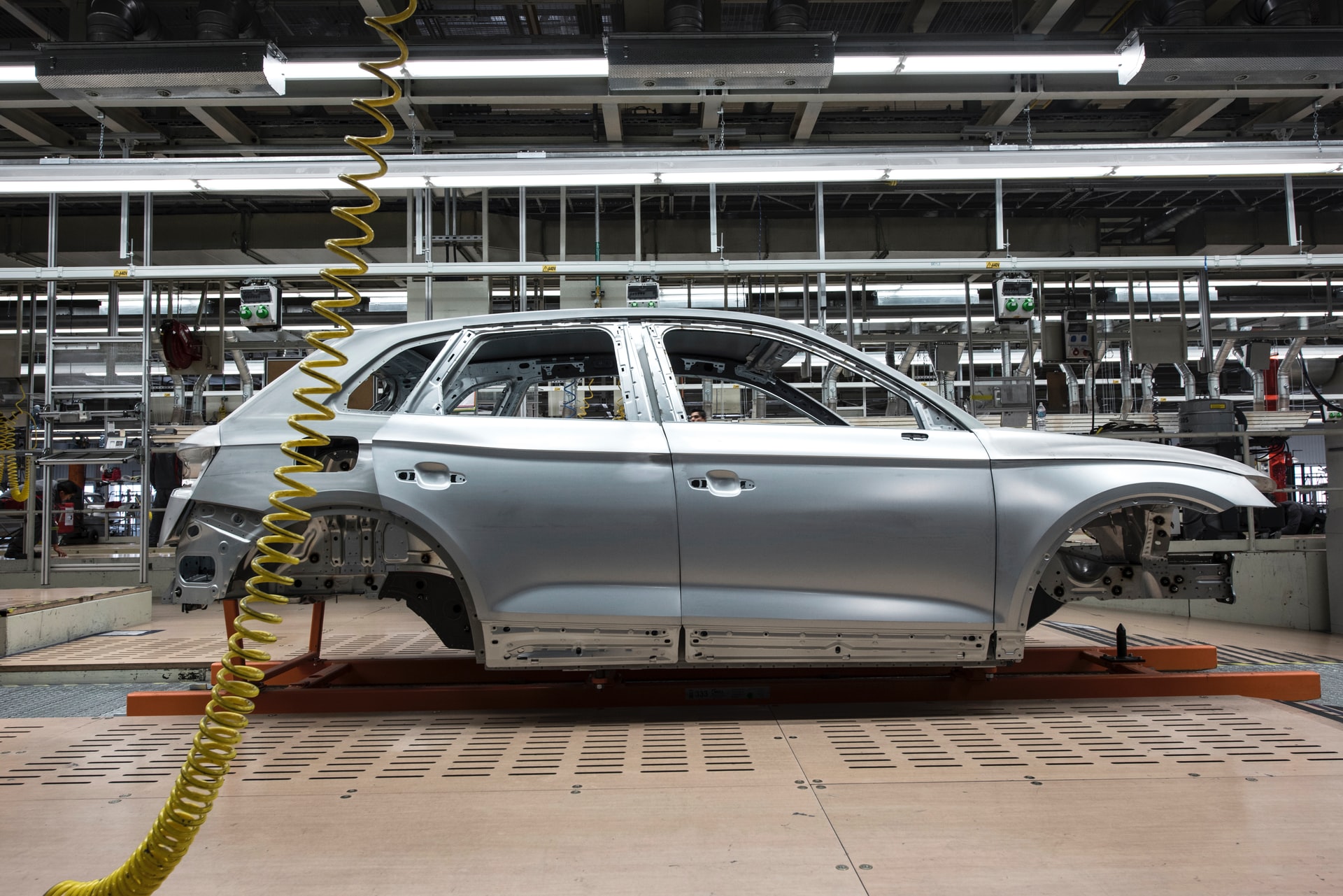
In July, 300,300 passenger cars rolled off production lines in Germany, Kallanish learns from the latest national automotive association VDA figures.
Production was thus 20% higher than in the same month of the previous year. A total of 2.5 million passenger cars were produced in the first seven months. This is an increase of 31% on the same period last year.
Despite the positive trend of the past months, VDA notes that output remains significantly below pre-Covid levels. In the first seven months of the current year, 11% fewer vehicles were produced than in the first half of the pre-Covid year 2019.
Last month, VDA president Hildegard Müller cautioned that figures from the first half-year are a “rear-view mirror view”, as the order backlog has been worked down. She warned that “our expectations for the coming quarters are not positive”.
Data now available for electric vehicles (EVs) for the first half of the year show that production in this segment is growing particularly strongly. In H1, 672,900 electric cars were produced in Germany, up 93% year-on-year. The production of pure battery electric cars (BEV) is growing particularly strongly. A total of 523,900 BEVs came off the production line in the first six months, 142% more than in the corresponding period last year.
VDA claims that Germany has overtaken the USA in the production of e-cars and is now in second place worldwide. For many German steelmakers and fabricators, this is hardly good news. Special bar qualities (SBQs) are to a large extent sold for making combustion engines. SBQ makers are the losers in the transition towards electric vehicles, as the latest quarterly figures of Swiss Steel have shown, for example.
Christian Koehl Germany