


Celsa’s creditors make plans for takeover
The group of investment funds that could soon take over control of Spanish steelmaker Celsa have started attending meetings with authorities and trade unions to plan the future of the company.
This week they met with USOC, one of the largest trade unions in the area of Barcelona. During the meeting they stressed that a swift takeover was envisaged. They also said the person in charge of this transition will be Rafael Vilaseca, chosen by the funds as future president of the board of Celsa. Vilaseca is an executive with long-standing experience in the gas, energy and steel sector.
The Spanish press has also noted that the Rubiralta family, the current owners of Celsa, is still evaluating possible moves to appeal the latest court decision, but the options are very limited.
The next stage would be for the investment funds to present the request to take over the company to the Spanish government. The move needs to be approved by the authorities following a recent law regarding takeovers of strategic national company assets by foreign entities, Kallanish notes.
Emanuele Norsa Italy


H2 Green Steel raises €1.5 billion in equity
H2 Green Steel has raised €1.5 billion ($1.6 billion) in equity from an investor group led by Altor, GIC, Hy24 and Just Climate. The Swedish venture claims this is the largest private placement in Europe this year.
The private placement is co-led by new investor Hy24, together with existing investors Altor, GIC and Just Climate, Kallanish learns. The transaction involves new investors Andra AP-fonden and Temasek, plus a group of existing investors that include AMF, Cristina Stenbeck, Hitachi Energy, IMAS Foundation, Kinnevik, Schaeffler, Vargas and Wallenberg Investments holding company FAM.
The proceeds will finance the construction and development of H2GS’s greenfield steel plant in Boden, Sweden, where groundworks have been ongoing since summer 2022.
“The calibre of investors that are backing us is impressive. Some of the most professional institutions, investors and industrial companies globally are part of this round … and it proves the market demand for green steel,” says Henrik Henriksson, chief executive of H2GS.
Since launching in 2021, H2GS has raised more than €1.8 billion of equity in three financing rounds. The company closed its series A equity round of €86 million in May 2021 and announced the close of its series B1 round of €260m in October 2022.
Christian Koehl Germany
Northern European rod prices increase after quiet summer
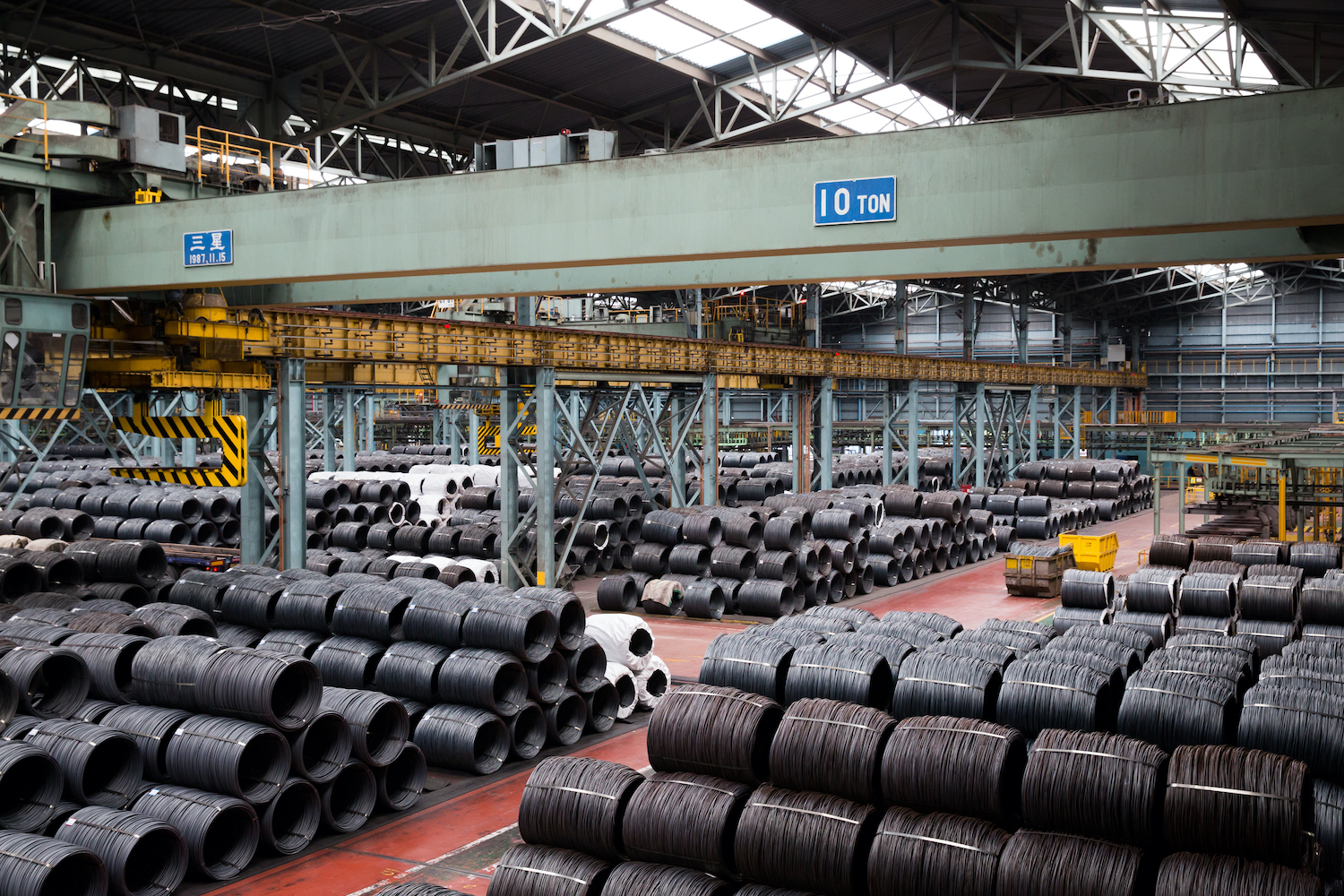
Northern European wire rod prices have increased this week after a sluggish market throughout summer, sources say. Most participants eventually expect new hikes amid a rebound in demand and restocking this month.
“Most customers did not purchase new volumes during the summer, because there was no activity in the market, but now there are some signs that the situation is changing,” one trader from the Netherlands tells Kallanish.
Prices have increased between €15-20/tonne ($16-21).
Domestic transaction prices for drawing-quality wire rod are at €600/t ($641/t) ex-works and mesh-grade wire rod is at €620/t, sources say.
Producers are asking for €620/t ex-works, on average, for mesh-quality rod.
“The mills in Europe are trying to ramp up wire rod prices and we will see if there will be some new demand from customers,” another participant in the market notes. “Maybe there will also be some movement due to the traditional autumn restocking in September, after the summer break.”
Offers are heard from outside the EU at €570-580/t cfr Rotterdam, with small tonnages booked, he adds.
At the same time, European scrap values continued to decrease in August amid low demand. This is influencing the wire rod market, another participant notes.
German scrap prices decreased last month amid low demand. Old thick scrap sort 3 was at €300/t, while new scrap sort 2/8 was at €305/t. E40 shredded scrap was at €310/t. In Austria, prices for old thick scrap sort 3 were down to €310/t and new scrap sort 2/8 was at €320/t.
Italian drawing-quality wire rod remained at €560-580/t delivered at the beginning of September.
Svetoslav Abrossimov Bulgaria

Buyers in wait-and-see mode in EU steel hollow sections market after steel plants resume operations
Fastmarkets’ weekly price assessment for steel sections (medium) domestic, delivered Northern Europe was €770-800 ($859- 892) per tonne on Wednesday, down by €20 per tonne from €790-820 per tonne.
Similarly, Fastmarkets’ weekly price assessment for steel sections (medium) domestic, delivered Southern Europe was €770-800 per tonne on Wednesday, down by €20 per tonne from €790-820 per tonne on August 30.
Despite mills targeting price rises, demand and sentiment remain weak, sources said.
But raw materials costs are expected to rise and that could stimulate trading activity, sources said.
“We expect prices to go up in the coming days, based on higher input costs. Prices are unworkably low at the moment,” a buyer source said.
But other buyers were skeptical that any upward price movements would be achievable given the weak end-user demand.
Fastmarkets’ calculation of its daily index for steel scrap HMS 1&2 (80:20 mix) North Europe origin, cfr Turkey, was $369.01 per tonne on Wednesday, stable week-on-week.
Published by: India-Inés Levy


European steel HRC market quiet as mills fail in push for price rises
The recent attempts by European steel mills to push for higher prices were broadly unsuccessful because there was no support from end-user demand.
In general, tradeable prices for HRC in northern Europe, reported by buyer sources, remained within the range of €630-650 ($676-697) per tonne ex-works, in line with what was seen in the market before the summer stoppages.
This was some way below official offers that were pushing toward €700 per tonne ex-works.
Mills in the region were offering October-November delivery coil, sources said. But buyers were postponing purchases, booking only “what’s strictly necessary” and were assessing the market situation.
Sources said that the wait-and-see stance taken by the market could be partially explained by expectations of large tonnages of cheaper imports, waiting at European ports to be customs-cleared, ready to flood the European market from October 1, when the new EU import safeguard quota period begins.
“According to our estimate, more than half-a-million tonnes [of HRC] is sitting in ports and awaiting the new allocation,” a trading source in Germany told Fastmarkets. “Those volumes were bought at very cheap prices, way below €600 per tonne CFR, so when this material enters the market, domestic prices [for HRC] will be under heavy pressure.”
Fastmarkets calculated its daily steel hot-rolled coil index, domestic, exw Northern Europe, at €648.75 per tonne on September 7, up by €0.15 per tonne from €648.60 per tonne on September 6.
The index was down by €1.25 per tonne week on week but up by €2.92 per tonne month on month.
And Fastmarkets’ calculation of its corresponding daily steel hot-rolled coil index, domestic, exw Italy, was €634.17 per tonne on September 7, down by €0.83 per tonne from €635.00 per tonne on September 6.
The Italian index was also down by €0.83 per tonne week on week and by €2.08 per tonne month on month.
Buyers’ estimates of achievable prices were reported at €640-650 per tonne delivered, which would net back to about €625-635 per tonne ex-works.
Mills were pushing offers closer to €700 per tonne delivered (€685 per tonne ex-works), but such prices were not achieved in deals.
Trading in Italy’s market was also quite dull, and buyers believed that there was no room for a substantial price increase in September.
“There were hopes for restocking, but buyers are postponing purchases to late September-early October. Everyone wants to see the situation with imports – it will be a deal-breaker for the market,” a trader in Italy said.
New import offers from an Indian supplier for December-arrival HRC were heard around €600 per tonne CFR to Italy.
Taiwan-origin material with October-November shipment was on offer to the country at a similar price of €600-610 per tonne CFR.
South Korea-origin HRC for October-November shipment was offered at €620-625 per tonne CFR to Italy.
And finally, several sources said that Ukraine-origin HRC was on offer to Italy at €600 per tonne CFR, for late October-early November shipment.
Published by: Julia Bolotova

Bearish sentiment inhibits trading in Southern European long steel market
But while some were bearish and forecast a short-term decline in prices, others said demand, and therefore prices, would rise steadily through September as restocking activity picks up.
Fastmarkets price assessment for steel reinforcing bar (rebar) domestic, exw Italy was €645 – 655 ($692-703) per tonne on Wednesday, narrowing downwards by €15 per tonne from €645-670 last week.
If demand does not rise, steel mills could intensify output cuts, Fastmarkets understands.
“During the coming week, and the next one, rebar prices may continue to decrease because the market is flat, and exports are very low,” a buyer source said.
And a producer source told Fastmarkets little would be happening in the short term:
“The market is still asleep from the summer holidays,” the source said.
While market conditions may not support immediate price rises, producers remain reluctant to reduce prices further.
“[Prices] cannot move down further,” a second producer source said. “Prices are already heavily below production costs [and] any further decreases would unavoidably push mills to stop production [to avoid further] losses because they are already too big.”
Fastmarkets’ price assessment for steel reinforcing bar (rebar), domestic, delivered, Spain was €640-650 per tonne stable week on week.
In the Southern European wire rod market, meanwhile, prices were also unchanged amid subdued trading activity, sources said.
And Fastmarkets’ weekly price assessment for steel wire rod (mesh quality), domestic, delivered Southern Europe, stayed at €580-600 per tonne on Wednesday.
Published by: India-Inés Levy

New green steel premium to aid decarbonization drive in Asia; steelmakers to target EU
CBAM is a tariff on carbon-intensive products such as steel and extends carbon pricing to imports coming into the European Union.
Japan and South Korea are the prime movers in the decarbonization space in Asia, with numerous steelmakers already offering green steel products to buyers in the region through a mix of green steelmaking techniques and carbon-level calculations – including Fastmarkets’ Asia green steel premium, which is being launched on Friday September 8.
Fastmarkets’ weekly green steel, flat-rolled, regional differential to cfr Vietnam HRC index, Japan/South Korea/Taiwan, will apply to steel produced with maximum Scope 1,2 & 3 emissions of 1.3 tonne of CO2 per tonne of steel.
In Japan, Nippon Steel is using the mass-balancing method to measure its carbon dioxide emissions footprint per tonne of steel produced, while simultaneously using a new electric-arc furnace (EAF) at its Setouchi Works to cut emissions in its “Carbolex” steel.
Nippon Steel is also looking into using hydrogen to produce low-carbon steelmaking raw materials, including direct-reduced iron (DRI), which will have a growing role to play in the production of green steel.
JFE Steel has started marketing its “JGreeX” green steel, which is produced with “highly-advanced steelmaking processes [that] produce significantly less carbon dioxide.” JFE Steel plans to achieve carbon neutrality by 2050, with planned developments including carbon recycling blast furnaces, carbon recycling DRI, hydrogen-based processes and large EAFs. The company is already running trials using ferro-coke as a new raw material.
In South Korea, Hyundai Steel is ramping up the marketing of its low-carbon “HyECOsteel” and is aiming to produce high-quality automotive steel by using ferrous scrap, blast furnace-based molten iron and hydrogen-based DRI. It has successfully produced low-carbon, high-strength steel plate using its “Hy-Cube” EAF technology, in collaboration with downstream automotive partner Hyundai Motors and its subsidiary Kia.
Compatriot steelmaker Posco is banking on its “Greenate” brand of steel products to fulfill downstream buyers’ ESG needs. It plans to use its “HyREX” hydrogen reduction steelmaking technique, which uses iron ore fines and 100% hydrogen in a reduction furnace to produce DRI, which is then fed into an EAF to produce hot metal.
In local media reports, Posco has said that it had already sold low-carbon steel to LG Electronics, has signed an offtake green steel deal with car producer Volvo and named Samsung Electronics as another potential customer.
Elsewhere in Asia, Baosteel is looking to start up a hydrogen/natural-gas based DRI plant at its Zhanjiang facility in southern China, while Hebei Iron & Steel in northern China is to supply automaker BMW with steel made from hydrogen-based DRI. In Thailand, Meranti Steel is looking to produce high-grade HRC with hydrogen-based DRI, and in Singapore, major steel market participants expect to see price differentials for low-carbon rebar.
While Fastmarkets’ new Asian green steel premium aims to make clearer the nascent price differentials for low-carbon steel, this process does not start or end with steelmakers and many others in the steel and ferro-alloys supply chain are also looking at green premiums.
Iron ore producers, for instance, are watching green steel premiums keenly to calculate the capital expenditure needed for new beneficiation plants and are looking at investing in areas such as the Middle East, where abundant natural gas makes it an ideal location for natural gas or hydrogen-based metallics production.
While such metallics output will undoubtedly first be funneled toward the European market, it is also likely that it will find its way to various other destinations – wherever steelmakers find they require low-carbon steelmaking raw materials. And these raw materials will naturally incur their own green premiums if rising demand creates an obvious price differential to non-green steelmaking raw materials.
Even coking coal miners can benefit from green steel premiums if their metallurgical coal is high-strength, low-ash and low-sulfur, Fastmarkets understands. And miners that own Tier-1 premium hard coking coal assets will continue to reap the benefits of decarbonization as steelmakers continue to try to reduce emissions by using higher-strength coke.
Low-carbon steel premiums are a brand new tool in the transition to greener steel, but they will undoubtedly start to take firmer shape in the years to come when raw materials and steel products start to adhere to Scope 1-3 standards and steelmakers fight to stay relevant and retain market share.
Published by: Paul Lim

EU HRC: Macro gloom weighs on north
North European hot-rolled coil (HRC) prices slipped today as some mills acquiesced to lower prices than their competition.
Argus‘ daily northwest EU HRC index slipped by €3.25/t to €641/t ($686/t).
A German producer was selling November delivery HRC at €640/t ex-works, while a Benelux-based seller was transacting at €645/t delivered Ruhr to some customers. Some were still trying to maintain offers around €700/t, but getting very little traction.
Weakness in manufacturing new orders continued to depress sentiment and apparent demand across the north European steel market. German manufacturing new orders fell by 11.7pc on the month and 10.5pc on year in July, according to figures from the Federal Statistics Office of Germany. Domestic new orders for manufacturers were at their lowest in the last eight years, excluding the plunge caused by the Covid-19 pandemic in 2020.
This contraction weighed heavy in the minds of service centres, leading to continued destocking despite comparatively low inventories. This was exacerbated by concern over the strength of automotive demand going forward.
One north European mill executive said automakers were taking 20-30pc less steel than they had budgeted, as they reduced purchases amid potential supply chain disruption caused by floods in eastern Europe. Another mill executive said existing order books were quite deep, and reductions in end demand would be more moderate, around 2-5pc for the fourth quarter.
A number of buy- and sell-side sources suggest a round of cost-cutting is inevitable should the market situation not change soon.
Italian prices nudged slightly higher today, on higher offer. Argus‘ daily Italian HRC index rose by €1/t to €631.50/t.
The lowest mill offer is around €680/t base delivered for October and November delivery. But €650/t would be more realistic given weakness in the sheet market, one source said. “Customers are not willing to buy. Our costs and other mills’ are high, but the new prices — €700/t for HRC, €800/t for HDG — nobody buys,” one sell-side source said.
However, there were some supply-side constraints, he said. “Stocks are full, ports are full. Quotas will be full from 1 October, so maybe there will be a lack of steel. The positive is that people are not buying from import — due to the risk of the safeguards, big confusion on the Russian declaration measures, and the feeling is that EU mills are not willing to go back in prices. Mills will try to reduce production instead of reducing prices.”
Sellers were hoping sheet prices tick up, sparking some restocking. But there was little evidence mills will reduce output, as they did last year, as margins are just about positive, another seller said.
Turkish material was heard at €620-640/t cif Italy inclusive of duties. Material for the first quarter arrival out of Asia was offered at €615-625/t cif Spain. Ukrainian material was heard close to €600/t cfr Italy. There was talk about large buyers able to get under €600/t cfr from Asian suppliers in the “other countries” quota.
Japanese cold-rolled coil (CRC) was offered at $730/t cfr, whereas Korean material remains at €665/t cfr. There were reports for other offers between €680-700/t cfr for earlier shipment, in October.
Futures prices softened today, perhaps reflecting weak German sentiment caused by the macroeconomic picture. September slipped by €11/t on the CME’s north European HRC contract to €652/t, while October, November and December fell back by €10/t — October and November to €655/t and December to €660/t.
Source: Lora Stoyanova, Argus Media


HRC buyers in Europe postpone restocking amid lack of clarity on price trend, slow consumption
A lack of support from end-user demand remained the main obstacle to the HRC price increases announced by some producers at the end of August, sources said.
European mills are aiming for €700 ($755) per tonne ex-works or delivered, depending on the region, for October-delivery HRC.
At the same time, some producers have continued selling HRC at €650-660 per tonne ex-works, sources said, with transactions at this level reported in Germany this week.
Buyer sources indicated that the tradable level in Northern Europe was €640-660 per tonne ex-works.
But trading sources reported HRC offers from Italy to Germany at around €680 per tonne delivered.
Buying activity remained sluggish on September 5, however, with buyers postponing purchases, citing uncertainty over the direction of prices, Fastmarkets understands.
“For a sustainable HRC price rebound we need stronger consumption. Even [the steel] mills are not convinced they are going to see an increase in [the number of] deals. Buyers are very hesitant and are not rushing into bookings,” a trading source in Germany said.
“Basically, the current prices in the [HRC] spot market are practically the same as before the summer closures; maybe we managed to get around €10 higher in some deals, but not more. The market is static despite some bullish attempts [by the EU mills],” a mill source said.
Fastmarkets calculated its daily steel hot-rolled coil index domestic, exw Northern Europe at €655.33 per tonne on September 5, down by €3.84 per tonne from €659.17 per tonne on September 4.
The index was, however, up by €4.94 per tonne week on week and up by €9.50 per tonne month on month.
At the same time, Fastmarkets’ calculation of its corresponding daily steel hot-rolled coil index domestic, exw Italy, was €635.42 per tonne on September 5, down by €2.91 per tonne from €638.33 per tonne on September 4.
The Italian index was stable week on week but down €0.83 per tonne month on month.
Italian buyers were also in no hurry to make any bookings, with several sources suggesting that restocking activity would not start until closer to the end of September.
“Buyers are testing the market. Obviously, the increases some mills are aiming for are unrealistic,” a buyer source said.
An integrated mill in Italy was said to be offering October-delivery HRC at €700 per tonne delivered (€680-685 per tonne ex-works), but no trades were reported at that level.
Buyers said the achievable level was around €625-640 per tonne ex-works.
Import offers from India and South Korea for October-November shipment were reported at €610-630 per tonne CFR to Italy, but those prices levels were not considered competitive by European buyers, especially given the long lead times and high safeguard-related risks for some origins.
Published by: Julia Bolotova

Poland breaks ground on offshore wind tower factory
Poland’s Industrial Development Agency (ARP) has broken ground together with its partners, Spain’s GRI Renewable Industries and Poland-based Baltic Towers, on a new offshore wind tower factory in Gdansk, northern Poland.
The plant will annually produce over 150 towers designed for the largest planned wind turbines with a 15MW capacity and is likely to consume substantial steel tonnages. Its commissioning is scheduled for mid-2025.
“Offshore wind is currently one of the fastest growing energy sectors. The dynamic growth driven by European energy policy, the energy transformation processes being implemented in Poland, and the adopted act on the promotion of electricity generation by offshore wind farms all aim to significantly increase the share of renewable energy in energy generation,” ARP says in note seen by Kallanish. “Such conditions justify the investment decisions, which not only meet market demand, but also contribute to increasing energy security in Poland and Europe.”
Poland’s Supreme Audit Office said last year Polish authorities have taken insufficient action on developing Poland’s offshore wind power sector (see Kallanish passim). Offshore wind power is a new sector in Poland that is touted to see significant investment in the coming years and eventually supply power to the national grid. Construction of the required infrastructure will consume substantial steel tonnages.
A year prior, Polish steelmakers identified onshore wind power as the only viable power source for steelmaking, amid spiralling traditional energy costs. This will also likely extend to offshore power once it is developed.
Wood Mackenzie said last year growth in the offshore wind market is set to explode, with wind tower tonnage getting heavier, meaning more demand for steel. Almost $1 trillion is predicted to flow into the market over the next decade. By 2031, the average tower will be nearly three times heavier in comparison to a decade before. Offshore wind towers will need nearly 500% more steel in 2031 compared to 2022 demand levels.
Adam Smith Poland