


European Commission, Eurofer launch metals Transition Pathway
Representatives of the European metals industry, including ferrous and non-ferrous metals, have initiated the process to discuss and establish their own EU Transition Pathway, in collaboration with the European Commission.
The objective of the plan being put together is to ensure the sustainability and resilience of the metals sector, which is central to the overall green and digital transition of the EU’s economy.
“The Transition Pathway for Metals is a timely opportunity to collectively craft a long-term vision for our industry with a fresh approach that transcends policy silos and encompasses various areas, from decarbonisation to energy and circularity policies,” Axel Eggert, general director of Eurofer, says in a note sent to Kallanish.
Europe aims at ensuring the security and sustainability of its metals supply to deliver on its 2030 clean energy goals. Steel, together with non-ferrous metals, is indispensable to develop electric vehicles as well as wind, solar and hydrogen technologies.
The Pathways will lay out the challenges to be faced in the transition towards 2050, including investments required to overcome the challenges and necessary policy framework to encourage new investments. The process will accelerate over the next semester, with the objective of completing the work by the end of March 2024.
Emanuele Norsa Italy


Assofermet forecasts Italian scrap price increases
Uncertainty persists in the Italian scrap market despite activity restarting after the August break. The continued bad performance of finished product markets is responsible for the current lull, local trade association Assofermet says in its market report monitored by Kallanish.
Some domestic price decreases have been registered so far, but no contracts have been implemented for large scrap volumes. The situation may however change, with price increases possible and clarity foreseen in the second half of the month. “Today’s prices are considered low by sellers. Should the scenario change, they will most likely undergo increases,” Assofermet forecasts, and highlights scrap shortages in Italy.
Meanwhile, the association notes a general weakness in the pig iron market. “Good availability remains, as do price differences depending on origin, with a still important gap between pig iron of Russian origin and other sources,” the note says. Price increases are to be expected in the second part of the month.
Over the past two weeks, ferroalloys prices have increased in India but other markets have not followed the Indian hikes. Better visibility on international prices will also be achieved in the coming weeks. The shutdown of the manganese mine in Gabon could also have an impact on prices, Assofermet concludes.
Natalia Capra France

SteelBuy hits £1m sales milestone as metals sector embraces new trading innovation
SteelBuy, an easy-to-use online marketplace where businesses can buy and sell metals quickly and securely, has recorded over 300 transactions and £1m+ sales revenue since it was launched at the start of the year.
Users from across the UK are leveraging the technology to achieve faster and more efficient deals for their mild steel, stainless steel, and aluminium, with all the logistics and invoicing managed through the encrypted platform.
Sellers can post their material with product specifications, test certificates and price per tonne and these can be found by potential buyers within seconds. With listings taking just one minute to complete, it is estimated that 37 hours can be saved each week in the average purchasing and sales function.
Importantly, all transactions are anonymised so buyers and sellers do not know who the other party is, essential when sensitive data, such as prices and stockholding, must remain confidential.
“This is much more than just a place to buy and sell materials,” explained Terry Sargeant, CEO of SteelBuy.
“We are not just providing an exciting new channel for customers to buy and sell metals, we are selling a vision of the future of the industry.”
He continued: “SteelBuy enables users to effortlessly digitalise their purchasing and sustainably modernise their business and this is just the start – there’s so much unexplored potential in materials trading and distribution, through the power of digitalisation.
“The metals sector is traditional by its very nature, yet just eight months after our launch and we have proven time and time again that we can reduce costs, boosts sales and speed up what can be an extremely time-consuming process.”
SteelBuy was the original idea of Cameron Sargeant, who came up with the idea of selling material online whilst working in sales for thyssenkrupp.
22 people were recruited for the new venture, a mix of software, marketing, sales and engineering experts, who all share a passion for harnessing the power of digitalisation in the metals industry.


Terry, who has been involved in the sector for more than 40 years, went on to add: “We’ve got producing mills, steel service centres, stockholders and even traders using our platform, with the average delivery time of metal, from listing to arriving at the buyer, at just three days.
“This is transformative for both parties. When it comes to buying steel and aluminium, deals often take too long to complete, with lead times traditionally excessive (up to 12 weeks for mill production) – we can reduce this by almost 90% by matching supply and demand.
“For sellers, we deliver greater market visibility and reach for both your surplus metals and commodity products. By using our online platform, they have an opportunity to sell to anyone, from anywhere and not have to worry about relationships, payment terms or credit risks. SteelBuy removes all the hassle.”
Shirley-based SteelBuy has ambitious plans to take its technology into the European marketplace, as well as rolling out new features that reflect user feedback to make the process even easier.
The company will be making its first public exhibition appearance this week, when it looks to showcase the huge benefits of its online platform on Stand F50 at the UK Metals Expo (13-14th September) in Birmingham.
Terry concluded: “We have big plans, and we won’t stop until SteelBuy is the largest global online marketplace for the metals industry.
“Initial feedback has been really encouraging, not to mention the 300% growth in transactions we’ve seen over the last six months.”
Source: steel-buy.com

European Central Carbon Bank to manage the EU ETS?
The EU ETS has been always presented as being central to EU climate policy. While it is part of a toolbox, the change that the act of putting a price on CO2 emissions has brought cannot be denied or minimised. Its continuous good functioning and relevance is of the outmost importance.
Over the years, the functioning of the EU carbon market and its governance have been one of the central preoccupations in the work with have undertaken. At ERCST we have always been intrigued by the discussions of how to manage the carbon market, and the governance that we put in place, which needs to be able to respond to the EU ETS circumstances.
ERCST Reflection Note: EU ETS Post-2030 : a European Central Carbon Bank to manage the EU ETS?
Author(s): Andrei Marcu, Juan Fernando López, Gabriele Romeo

Fachmesse Tube: BDS ist neuer ideeller Träger
Als Fachverband der deutschen Stahldistribution unterstützt der BDS bereits seit mehr als fünf Jahrzehnten deutsche Stahlhandelsunternehmen mit regionaler und internationaler Bedeutung. Als neuer ideeller Träger der in Düsseldorf stattfindenden Fachmesse Tube erweitert sich nun das Aufgabenspektrum.
„Wir sind sehr froh, dass wir mit dem BDS einen sehr wichtigen und namhaften Partner gewinnen konnten. Gemeinsam wollen wir ab jetzt die Tube weiterentwickeln“, freut sich Daniel Ryfisch, Director wire/Tube & Flow Technologies der Messe Düsseldorf. Viele der Tube-Aussteller, die alle zwei Jahre als Leitmesse der Rohrbranche in Düsseldorf stattfindet, sind Mitglieder im Verband. Bereits zur kommenden Tube Düsseldorf 2024 kooperiert der Verband mit der Leitmesse Tube Düsseldorf. Sie gilt als internationale Branchen-Community mit hoher Expertise und Fachmesse Nr.1 für die Rohrherstellung, Rohrverarbeitung und den Rohrhandel. „Durch die Kooperation interagieren wir als Interessenvertretung für unsere Mitgliedsunternehmen direkt mit der für die Rohrdistribution wichtigen Messe Tube“, ergänzt Oliver Ellermann, Vorstand des BDS.
Über den Bundesverband Deutscher Stahlhandel
Seit fast fünf Jahrzehnten ist der Bundesverband Deutscher Stahlhandel ein etablierter Fachverband mit inhabergeführten und börsennotierten Stahlhandelsunternehmen von regionaler bis internationaler Bedeutung. Er versteht sich als schlagkräftige Interessenvertretung, welche die die Konkurrenzfähigkeit des Stahlhandels nachhaltig störken will. Als Fachverband weist der BDS neben den Bereichen Research und Berufsbildung einen verbandstypischen dritten Bereich auf, den der Kommunikation. Hier bündelt der Verband in den Bereichen Mitgliedsunternehmen, Netzwerk und Handelspolitik die Segmente, ohne deren sich auch wechselseitig ergänzende Funktionalität verbandliche Arbeit nicht möglich ist.
Über die Fachmesse Tube
Die Tube ist eine internationale Rohr-Fachmesse in Düsseldorf und wird zusammen mit der Wire durchgeführt. Sie findet seit 1988 im Zweijahres-Rhythmus jeweils meist zweiten Quartal statt. Für die Auflage 2022 meldete die Messe Düsseldorf als Ausrichter 43.000 Besucher sowie 765 Aussteller auf einer Ausstellungsfläche von 39.592 m². Neben der ITA (International Tube Association) ist der BDS der zweite Branchenverband, den sich die Tube an ihre Seite stellt, um sich noch stärker innerhalb der Branche zu vernetzen und wertvolle Synergien für die Aussteller der Tube zu erzielen.


EU mills begin to reduce HRC offers amid slow market
A German steelmaker has been offering HRC at Eur640/mt ex-works Ruhr, down by about Eur30/mt from its previous offers. A Northwest European reroller also decreased its offers to Eur625/mt delivered Germany.
Overall offers from the integrated mills in Northwest Europe have been reported at Eur640-690/mt ex-works.
Market participants have estimated tradable values at Eur630-670/mt ex-works Ruhr, with a majority of prices heard at Eur640-650/mt ex-works Ruhr.
Platts assessed domestic prices for hot-rolled coil in Northwest Europe down by Eur10/mt on day to Eur645/mt ex-works Ruhr Sept. 8.
“Customers are not running for orders even for lower prices,” a German service center said.
Demand from end-consumers has been limited, particularly from construction industry. Outlook for steel demand from automotive manufacturers has also been negative, sources said.
Distributors, in the meantime, have been avoiding bookings as they have been focused on destocking of material, creating competition with steelmakers.
The fourth-quarter safeguard quota was expected to fill within the first couple of days of October because significant volumes were awaiting customs clearance at European ports. And buyers have been trying to sell current stocks before cheaper material will clear customs in the fourth quarter.
“The current situation cannot continue much longer,” a Northwest European service center source said. “I think that the mills will try to extend maintenance to prevent a price fall.”
Platts assessed domestic prices for hot-rolled coil in South Europe down Eur10/mt day on day to Eur630/mt ex-works Italy Sept. 8.
Offers have been heard at Eur650/mt ex-works Italy, and tradable values have been reported at Eur620-640/mt ex-works Italy.
Author Maria Tanatar

French, Benelux scrap prices increase
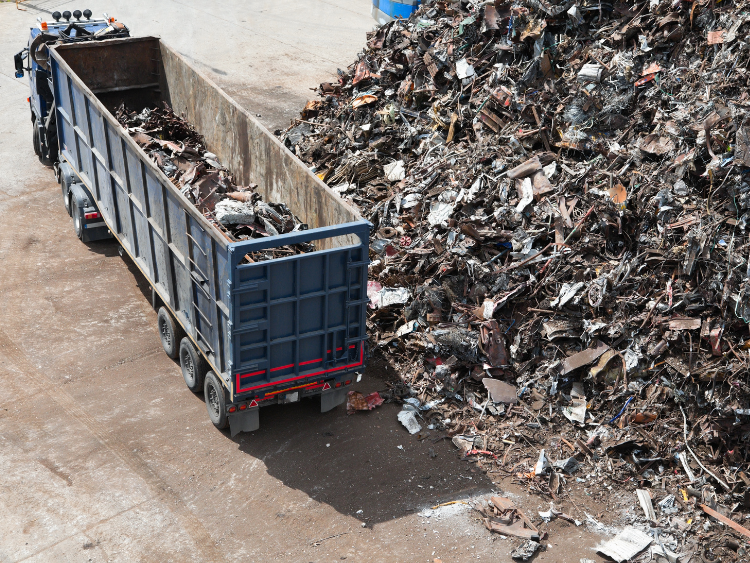
French and Benelux scrap prices are increasing this month, as expected, by €15-30/tonne ($16-32) depending on each mill’s different needs. Values are supported by strong international price levels and good export of containerised scrap towards India and Northern Africa at high prices. This is also supporting German values, sources tell Kallanish.
The European market and the current increases are said to be contradictory, however, and not in line with declining consumption and low sales of the finished long and flat products.
This month in the French and Benelux area, prices are mostly in line across the market with some mild fluctuations. E40 has reached €350-355/t delivered and E8 is at €350-360/t but €330/t for those mills that bought small tonnages of this grade. Demolition E3 is at €330-340/t while the lower E1C quality is fetching between €305-310/t delivered, sources suggest.
Natalia Capra France

Skoda Auto halts production amid components shortage
Czech carmaker Skoda Auto will suspend production at its plant in Kvasiny for at least a week, starting from 11 September, the company tells Kallanish. This is due to disruption in supply from a key parts maker in Slovenia, whose production was hit by recent flooding.
“Skoda Auto can confirm that the flooding in Slovenia has affected a subcontractor that supplies components for combustion engines (ICEs) of Skoda models as well as other brands within the group,” a Skoda spokesperson says. “Efforts are underway to fully restore production at this plant. At the moment, the subcontractor can only supply in limited quantities. The Volkswagen Group is deploying specialised staff to support the cleanup efforts on-site.”
According to the spokesperson, due to the disruption in the provision of components across the Volkswagen Group’s supply chain, shortages will also have a short-term impact on Skoda Auto. “However, production at the Mlada Boleslav plant is currently running without alterations,” she adds.
“Our teams are working diligently to minimise any potential impact and deliver as many cars as possible to our customers,” the spokesperson observes. “We are discussing all steps with our social partner, the KOVO trade union. We cannot comment on the implications for our plants or specific models and numbers due to the dynamic nature of the situation.”
The news of Skoda’s production stoppage comes about two weeks after Toyota’s Kolin plant was also forced to halt production. The company is short of parts from supplier Novares CZ Zebrak, whose warehouses suffered a severe fire. The shutdown at the Kolin plant will last until at least 15 September.
Czech passenger car production grew 14% on-year in June to 142,874 units, taking six-month output up 22% on-year to 738,454 units (see Kallanish passim).
Largest carmaker Skoda saw first-half output rise 32% to 464,353 cars, while Hyundai’s production grew 6% to 177,100 units and Toyota reported a 9% increase to 97,001 cars.
Svetoslav Abrossimov Bulgaria
Galv, CRC imports rise into Europe
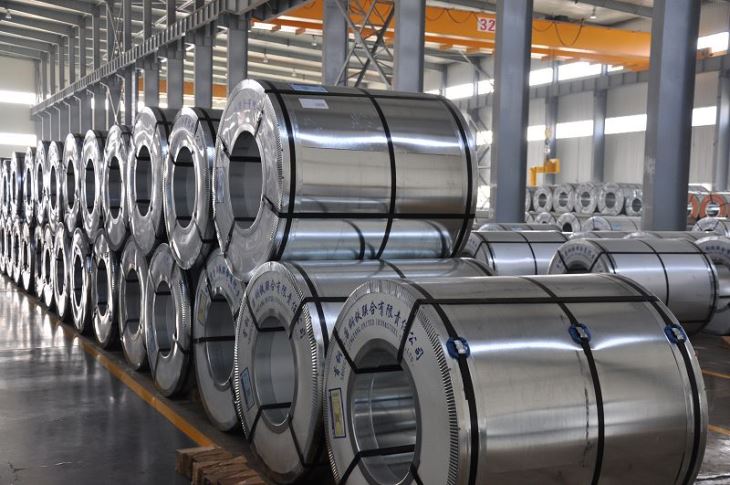
Imports are playing a growing role in northwest Europe, especially for cold rolled and galvanized coil, with the region’s mills troubled by low domestic demand and increased energy costs.
According to statistics provided by a mill manager, imports have more than doubled over ten years. Imports of CRC in 2012 accounted for merely 15% of the EU’s CRC market. By 2022, the share had grown to 30%. For galv, the picture is similar, with a low share of 5-7% still in 2012, and more than 13% in 2021, with a rising trend. “The import share of CRC is now higher than that of plain hot rolled coil, which is at 25%,” he notes.
With a basic price of around €650/tonne ($696) for HRC, which may tick up slightly going forward, domestic mills are trying to keep prices for CRC towards €750, and for galv somewhat above. But this is becoming tougher against increasing imports at low prices, meaning lower offers will be found frequently.
The manager tells of imports of CRC currently available for €700/t cfr Antwerp. This is in line with Kallanish’s earlier findings of Indian mills claiming to sell CRC at $750-760/t cfr Antwerp. Small tonnages of 0.58mm Z140 galvanized coil were sold at $840-845/t cfr Antwerp, he adds.
“India currently has a domestic demand low, too, and they are trying to solve that problem here,” the manager says.
Christian Koehl Germany

French rebar market fails to bounce in September
No change is reported for the French rebar market since it resumed activity after the August holiday break. Sales continue to be sluggish and visibility poor, Kallanish hears from market participants.
Prices remain stable compared to last month, and large buyers remain on the fence.
Scrap prices in the country are on the verge of increasing, potentially helping to keep the price of rebar and other long products stable this month. However, rebar volumes are scant, and buyers lack commitment and confidence. Last month some orders came from infrastructure projects throughout the country. The private residential construction sector’s activity remains slow.
At the market reopening, both producers and distributors have low order books even though stocks at distributors and their clients continue to be thin. Like in July before the sector shut down for holiday, construction companies continue to buy only to cover immediate needs each day and there is no visibility for the month.
One distributor says that July was “an OK month” and August sales were slow both on the domestic and on the export market. Nearby European countries such as Germany were on holiday and very slow.
Natalia Capra France