


Court decision could spell Celsa ownership change
Spanish-headquartered, major European long steelmaker Celsa could be taken over by the investment funds representing its main creditors after the latest court ruling.
The firm has for a long time been at the centre of a court battle in Spain with its main creditors. This week’s verdict from the judge paves the way for the company to be taken over by creditors including Deutsche Bank, SVP, Cross Ocean, Anchorage, Golden Tree, Attestor, Goldman Sachs, Sculptor and Capital Group.
In September 2022, Celsa’s creditors submitted their restructuring plan to the court for the company’s debt of €2.8 billion ($3 billion). The creditors – representing almost the entire jumbo and convertible debt – proposed a new financial scheme which includes investment funds taking over almost the full ownership of the Rubiralta family-owned steelmaker, to extinguish the jumbo debt.
After a year of hearings and debates, the judge sided this week with the restructuring plan proposed by the creditors, confirming that Celsa’s overall value was not greater than the existing debt. In his decision, the judge stipulated that the investment funds will have to work towards preserving and boosting the value of the company as well as preserving jobs.
This court decision cannot be appealed, due to a new law issued last year by the Spanish government, Kallanish notes. It remains unclear, nevertheless, when the decision of the court will be implemented.
The investment funds have already issued statements to the Spanish press pre-announcing changes to the company’s board of directors.
Celsa, on the other hand, has issued an official statement to explain it is studying the sentence of the judge in detail. The company notes that the decision of the judge would give control of a strategic Spanish company to foreign entities, which would need to be approved by the Spanish government. The company also stresses that it maintains the support of all strategic partners – including suppliers, trade unions and local authorities. All these entities, including the Spanish government, expressed their support during the trial towards Celsa’s business continuity, the producer adds.
Celsa was founded in the 1960s as a rolling mill near Barcelona by Francesc Rubiralta Vilaseca. The original site was equipped with an EAF in the 1970s to become a steelmaker. It then started expanding through acquisitions, first in Spain and then abroad, in France, Poland, Norway and the UK. Francesc Rubiralta Rubio, the son of the founder, became chief executive of Celsa Group in 2010 and has been Eurofer president since November 2022.
Emanuele Norsa Italy


EU HRC: Picture mixed, demand low
The picture remained unclear in the European hot-rolled coil (HRC) market today, with steelmakers still pushing higher offers but buyers reticent given low demand.
Argus’ daily northwest EU HRC index rose by €3.75/t to €644.25/t ex-works, while the daily Italian HRC index nudged up by €1/t to €630.50/t. The twice-weekly cif Italy HRC assessment was unchanged at €600/t, while the weekly Italian cold-rolled coil (CRC) assessment slipped by €7.50/t to €722.50/t ex-works. The daily northwest EU CRC assessment was static at €730/t.
An Italian mill offered at €680-690/t base delivered Italy for HRC, and €790/t base delivered for CRC. Availability was reportedly for October, although some said September was still available. A price of €670/t ex-works was also mentioned, but a source said traders were offering custom-cleared port material at a significantly lower price, in some cases for thinner gauge material.
Service centres continued to compete for sheet sales as end buyers were reluctant to replenish, and with the end of the financial year approaching for some. One north European service centre said it was selling hot-dip galvanised sheet around €760/t base, coil equivalent, which is below replacement cost based on new production offers.
“When interest rates stay high, investment will stay low. That will have an impact on the economy and might lead to a longer recession period,” one service centre executive said. Another said it was very difficult to make sales given the competition. “We are checking if the requests of the European mills will be accepted. I am personally not confident due to the actual market demand,” an Italian SSC said, while another said it would be “almost impossible” to see price increases without demand rising.
“End-users are slow and even distribution is not buying much, as they want to stay as lean as possible. There are not much negotiations, [end-users] have limited consumption — everybody is in a wait-and-see mood and they buy in the last minute and then they have the negotiation power,” a seller said.
Automotive demand was still a concern, after flooding in Slovenia disrupted supply from one important supplier.
At the same time, import offers were uncompetitive, at least from origins without quota issues. One trader said demand for non-safeguard material — likely Saudi Arabian — was very strong, with a mill receiving hundreds of thousands of inquiries from European buyers.
There is a fairly broad consensus that the other countries quota will fill immediately upon resetting in October, and may well do the same in January because of the amount of material on order. Offers from quota-blocked countries, such as Taiwan, are still close to €600-610/t cfr Antwerp, but are not interesting for buyers. A buyer said it had $640/t cfr Italy available, but again for material under the “other countries” quota. Another one said €590-620/t cfr Italy was on offer.
Some Italian buyers have booked import material for arrival in December at $650/t cfr south Europe to be cleared under the other countries quota from 1 January, saying the price is worth the risk, which they assess anyway as not that high — if the quota does exhaust on day one, all of the material will be subject to a pro-rata duty according to the tonnage volume, meaning that only a few euros per tonne extra might be applicable.
Prices rose on fairly brisk trade in the futures market, with the strongest increases on the front month. September traded €13/t higher on screen to €663/t, while October rose by €5/t to €665/t and November by €9/t to the same level. December increased by €10/t to €670/t.
Source: Lora Stoyanova, Argus Media

Saarland mills join Responsible Steel
The major mills in Germany’s Saarland region have joined the global Responsible Steel initiative, Kallanish hears from their parent holding, Stahl-Holding Saar (SHS).
SHS encompasses platemaker Dillinger Hütte and special bar qualities maker Saarstahl. It recently launched a label for low-emission steels under the name Pure Steel+.
“Our membership in ResponsibleSteel shows what motivates us: responsibility for sustainable steel production entirely in line with Pure Steel+,” says SHS chief executive Stefan Rauber. “The initiative’s multi-stakeholder concept emphasises that to achieve a sustainable value creation process, all levels of the steel supply chain must contribute.” The two mills together account for 5 million tonnes/year of steel production.
ResponsibleSteel has over 130 members worldwide, including steel producers and buyers as well as mining companies and civil society organisations. Among other things, the non-profit organisation has developed an independent certification programme for the steel value chain that can be used to certify companies. Its German members so far include thyssenkrupp Steel, the mills of ArcelorMittal, but also distributors like Stahlo.
Christian Koehl Germany

OEM bureaucracy impairs German automotive suppliers: ArGeZ
Germany’s automotive suppliers do not anticipate a boost for business this autumn, according to their interest group, ArGeZ, a subgroup of steel and metals fabricators association WSM. In a statement issued this week, the group addresses some burdens that have aggravated its members.
The current sentiment is not a consequence of shock effects like the Covid pandemic or the Russian invasion of Ukraine, but reflects a structural crisis in Germany as an industrial location, ArGeZ says. Small and medium-sized enterprises, in particular, do not have the flexibility to avert the unfavourable regulatory conditions of the government, but also of the OEMs, ArGeZ notes.
The interest group points to the high prices for gas and power, which it says are a multiple of those paid in France or the USA, for example. As steel federation WV Stahl did previously, ArGeZ has called on the government to provide a capped electricity price for manufacturing industries for a limited period of time, Kallanish notes.
Another main issue it addresses is bureaucracy, which needs to be trimmed to size, says its spokesman Christian Vietmeyer, who is also managing director of WSM. Apart from governmental bureaucracy, he attacks the bureaucracy formed by companies misusing the idea of sustainability. “The ‘sustainability’ label is used to flood smaller suppliers with ever new requests for declarations and documentation. Medium-sized companies drown in excessive questionnaires with repetitive and often absurd questions,” he observes.
This has grown to a painful degree that was not intended by the legislator, and has gone beyond reason and common sense, he notes on behalf of the interest group.
Christian Koehl Germany
Tata UK funding deal nears: reports
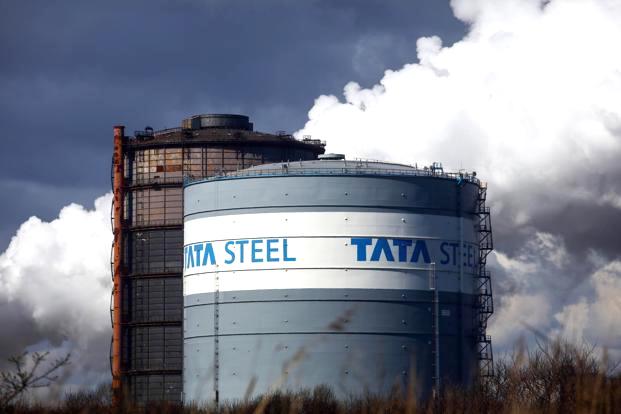
Tata Steel remains in talks with the UK government over support for the decarbonisation of its Port Talbot plant, the firm has said in response to media reports over the weekend.
According to Sky News, the UK government will offer Tata Steel £500 million ($631m) in funding, while Tata itself will commit £700m in capital expenditure. The news agency cites sources saying the terms of an agreement were subject to change, but that there were hopes of finalising it as early as this month.
However, the plan could come at a cost – the loss of 3,000 jobs over the long term, Kallanish notes.
“Tata Steel is continuing to discuss with the UK government a framework for continuity and decarbonisation of steelmaking in the UK amidst very challenging underlying business conditions given that several of its heavy end assets are approaching end of life,” the steelmaker says.
“Given the financially constrained position of our UK business, any significant change is only possible with government investment and support, as also seen in other steelmaking countries in Europe where governments are actively supporting companies in de-carbonisation initiatives,” it adds.
Unite the Union general secretary Sharon Graham observes: “This government could make us the green steel capital of Europe – instead they are choosing to follow a job cuts agenda. Unite will leave no stone unturned in the fight for jobs. We will now be mounting a significant campaign on this issue and we fully expect the Labour Party to make a serious commitment to a better future for UK Steel.”
Adam Smith Poland

ArcelorMittal leads technology hub for decarbonisation in Spain
ArcelorMittal has agreed to partner with energy company Repsol, carrier Iberia, and cement giant Holcim Group to create a large industrial technological and innovation hub.
The so-called All4Zero joint venture will manage the development of decarbonisation and circular economy projects in Spain, Kallanish reports. This is a strategic alliance for the four companies to find common ground on the path to reduce emissions and encourage the reuse of waste and by-products in the steel, energy, aviation, and cement sectors.
“At All4Zero we contribute to the development of those technologies that offer promising solutions to the challenge of the energy transition and climate change,” the founders say. “In the evolution towards a circular production economy, the reuse and optimization of resources are the paths to follow to reinforce the sustainability of the industry. But this change will require the development of technologies that allow the recovery of waste or the efficiency of the processes.”
All4Zero project will be presented officially on 6 September.
ArcelorMittal’s plan in Spain includes constructing a 2.3 million tonnes/year green hydrogen-based direct reduced iron unit, complemented by a 1.1m t/y hybrid EAF, which will substitute the current blast furnace (see Kallanish passim). The company gave a green light for the EAF investment in early August. The facility is expected to be operational in the second half of 2025.
Todor Kirkov Bulgaria

EUROMETAL Regional Meeting Nordics: get ready for the steel industry’s challenges in 2024
Stålforeningen and EUROMETAL have joined forces around the biggest Danish congress for the steel trade in 2023, with twice as many speakers, a two-day program and a networking dinner.
For the 15th time, Stålforeningen brings together the Danish steel trade, and to celebrate we have teamed up to organize 2 exciting days with high professional content about the steel market in Denmark, in the Nordics and in Europe, in the heart of Copenhagen.
We bring together everyone, from steelworks to steel-consuming companies, with an interest in market assessments, expectations about needs, demand and price developments. You gain insight into which factors are expected to affect steel’s path to Denmark, the Nordics and Europe the most, so you can make your own decisions about how you want to react if or when the factors occur. We look at new well-documented customer requirements as a result of e-commerce and how it affects the wholesaler’s role. You will hear the latest status on political regulation via CBAM, ETS, anti-dumping and Safeguards.
You will learn more about the upcoming harmonized standards for steel and aluminum constructions, and when and how it affects your everyday life.And of course you get the latest status on the Danish economy, because it doesn’t help much to have the products ready if customers only think about rising interest rates.
The points are some of the topics that we try to illuminate via presentations at a high professional level from the best presenters.
Attend both days, or just the one that is most relevant to you, and be better equipped to understand expectations for the steel market in 2024.
In addition, you have the opportunity of the unique professional network with the rest of the industry from Denmark, the Nordics and the rest of Europe.

Decarbonisation will widen future price spreads: Stahlmarkt-Consult
Germany’s biggest mills have unanimously set their course on a future of making iron and steel in a cleaner way using direct-reduced iron (DRI) and hydrogen. One consultant, however, warns against too much optimism in this regard, given that the fundamentals of such a transition are far from understood,” Kallanish learns from his blog.
“We must be cautious with defining a future price premiums for ‘green steel’,” Andreas Schneider of Stahlmarkt-Consult warns in his monthly blog. For one thing, the pace of reducing CO2 emissions, and the degree to which it is achieved, will differ widely among mills, Schneider points out. The span of prices/price premiums will open much wider than is the case today. “A definition of fixed price premiums should not come about before the conditions for the production of ‘green steel’ are defined,” he adds.
Plus, the steel itself needs a definition. “When is steel ‘green’?” Schneider asks provokingly. He observes that quite a variety of CO2-reduced steels are being promoted as “green.”
“The term ‘green steel’ covers a smorgasbord of technologies, interpretations and, unfortunately, also of promises that are not very reliable and more likely to serve marketing purposes,” Schneider states.
He points out that hydrogen itself is not necessarily the saving grace as it often sounds in the public discussion in Germany and the European Union. “Neither the use of direct reduction technology nor the use of hydrogen can be equated per se with being CO2-free,” he says.
Christian Koehl Germany
Seasonal lull inhibits trading in Southern European long steel market
Fastmarkets’ weekly price assessment for steel reinforcing bar (rebar) domestic, exw Italy, was €645-670 ($703-730) per tonne on Wednesday, down by €5-15 per tonne from €660-675 on August 23.
Prices fell in the Italian rebar market as a result of weak demand and bearish sentiment ahead of the mills officially reopening.
While some market participants have already returned, steel mills are expected to officially reopen at the beginning of September, Fastmarkets understands.
“The market is still flat, and the construction sites will only return to full working capacity this week,” a buyer source said on Wednesday.
“Demand across Europe is still… dead as the market waits for mills and customers to return from the summer holidays,” a producer source said.
Fastmarkets’ price assessment for steel reinforcing bar (rebar), domestic, delivered, Spain, was €640-650 per tonne on Wednesday, unchanged since July 12.
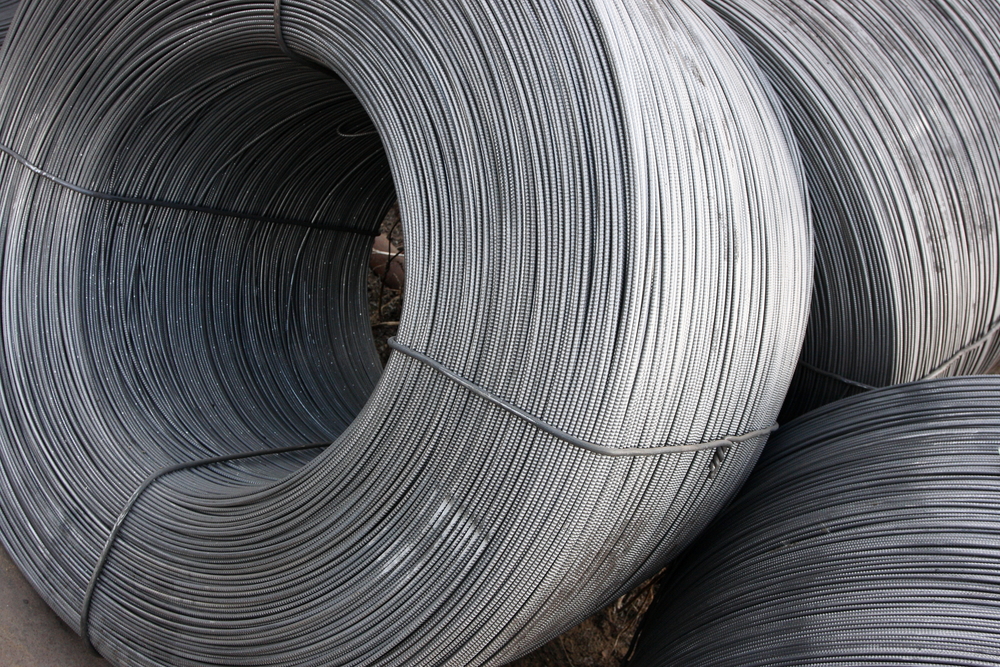
Prices remained unchanged in the Southern European wire rod market because of seasonality and continuing weak demand, sources said.
Fastmarkets’ weekly price assessment for steel wire rod (mesh quality), domestic, delivered Southern Europe, was €580-600 per tonne on Wednesday, unchanged since July 26.
Published by: India-Inés Levy


HRC prices in Europe tick up on higher offers; strength of rebound questionable
Even though European steelmakers have been gradually pushing for higher prices, with some claiming to have achieved slight increases in recent deals, the sustainability of the uptrend remains in doubt.
“It’s hard to get higher prices for HR sheet and sections; customers are pressuring us for a decrease actually,” a trading source told Fastmarkets. “The [HRC] price rise the European mills are seeking has no support [in terms of] demand.”
European mills are targeting €700 ($761) per tonne EXW in Northern Europe for October-delivery HRC, but no trades have been reported at that level so far and most buyers consider it “unrealistic” due to insufficient real steel demand.
Transactions for limited tonnages of HRC in Northern Europe were reported at €650-660 per tonne EXW. And one integrated mill claimed to have achieved €670-680 per tonne EXW for prompt-delivery coil – although this was not widely confirmed by other market participants.
Buyer estimates of the tradable price in Northern Europe, meanwhile, remained at €640-660 per tonne ex-works.
Fastmarkets calculated its daily steel HRC index domestic, exw Northern Europe at €656.25 per tonne on Friday, up by just €6.25 per tonne from the previous calculation of €650.00 per tonne on August 31.
The index was up by €12.50 per tonne week on week and up by €6.25 per tonne month on month.
Fastmarkets’ calculation of its corresponding daily steel HRC index domestic, exw Italy was €637.50 per tonne on Friday, up by €2.50 per tonne from €635.00 per tonne on August 31.
The Italian index was up by €2.50 per tonne week on week, but unchanged month on month.
Italian producers were also targeting higher prices, sources said, notably €700 per tonne delivered (about €680-685 per tonne ex-works) for October-delivery HRC.
But local buyers were maintaining a wait-and-see stance, with restocking expected to begin in the first 10 days of September.
Even though trading sources were not ruling out some HRC price increases in September, the target level voiced by Italian mills was not considered to be realistic.
Buyer ideas for the tradable level came in at €630-650 per tonne ex-works.
Sources told Fastmarkets they expect more clarity regarding the direction of Southern European HRC prices in the coming week when all the buyers and sellers have returned after the summer break.
Published by: Julia Bolotova