


High carbon FeCr prices tick up in Europe; buyers gradually return
Fastmarkets’ weekly price assessment for ferro-chrome high carbon 6-8.5% C, basis 65-70% Cr, max 1.5% Si, delivered Europe climbed to $1.75-1.94 per lb Cr on Tuesday, up 6.32% from the week before.
“Looking at the past week, [we only sold a small amount] but there are many enquiries coming in these days for delivery in September,” a ferro-chrome supplier said. “I guess starting from next week, we will see more movement.”
“With China being [firmer] and prices going up, as well as [Europe] returning to the market, we’re seeing an increase in [high carbon] transactions,” a seller added.
A source on the buy side added that offers had risen in recent days, with sellers increasingly unwilling to accept lower levels.
Prices were also up in the lower grade market, with reports of support from high input costs in India, which is a key supplier of the material.
Fastmarkets’ weekly price assessment for ferro-chrome high carbon 6-8.5% C, basis 60-64.9% Cr, max 3% Si, cif Europe rose to $1.13-1.20 per lb Cr, up 7.34% week on week.
Chrome ore prices have been rising in the country in recent weeks, with mining reportedly affected by the monsoon season there.
“Chrome ore prices in India have increased a lot, causing higher ferro-chrome prices,” a sell-side source in India told Fastmarkets. “It’s monsoon season now, and the rain has caused mining problems for chrome ore.”
Meanwhile, low carbon ferro-chrome prices moved into a wider range, amid reports from the buy side of strong supply and weak liquidity, versus the sell side’s reluctance to accept lower prices.
On Tuesday, Fastmarkets’ fortnightly price assessment for ferro-chrome 0.10% C, average 65-70% Cr, delivered Europe stood at $2.30-3.15 per lb Cr, compared with $2.35-3.00 per lb Cr as of the previous assessment. This marked an overall increase of 1.87%.
“Stocks are big and there’s low liquidity,” the buy-side source said. “There are lots of stocks in Rotterdam.”
“[We’ve had] no low carbon deals — we’re struggling in that market,” the seller added.
However, a second seller told Fastmarkets that it was still possible to achieve the higher levels seen in recent weeks, with reasonable liquidity over the course of August, and that he had not accepted lower bids.
“I’ve heard offers at [lower levels] but we haven’t lowered our prices,” he said. “If we do this, we’ll start to lose money. We’re still at our level of [a few] weeks ago.”
Meanwhile, there were also reports during the latest pricing session that the supply of lower-priced Chinese and possibly Indian low carbon ferro-chrome may be receding in Europe, with suggestions that access to the required grade of chrome ore may have decreased and that the opportunity to make a profit by selling into Europe had also faded.
“The ore supply is poor. They don’t have enough material coming and there’s not enough material [there] at the moment,” the buy-side source said.
“These cheaper imports… are much lower than what they used to be,” a distributor added. “If you look at the Chinese price [on a CIF basis] and add the duties and so on, it’s close to the current low and that’s a zero-profit price.”
According to the distributor, this could lead to reduced interest in exporting, which may provide some price support in Europe in the short term.
Published by: Claire Patel-Campbell

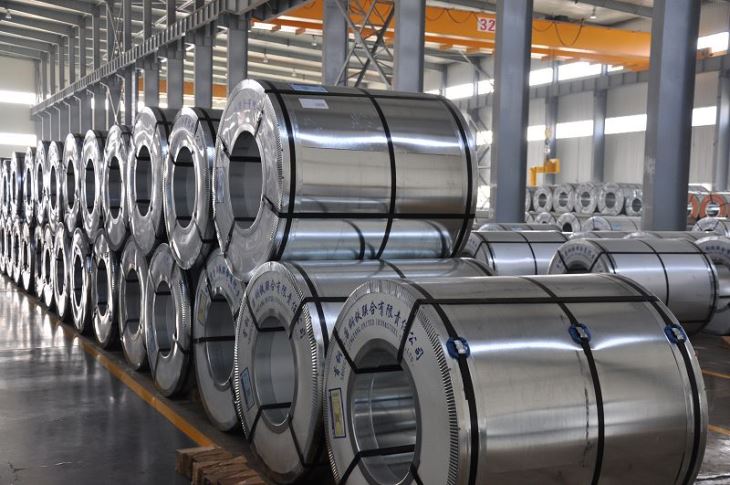
European CRC, HDG producers mull higher prices
Firm offers for cold-rolled and hot-dip galvanized coil were still rare in Europe, because the market has not fully restarted after the summer holidays.
But mills were reportedly aiming for price rises, expecting restocking activity to support a rebound.
“The level of inventories is low across the entire supply chain; buyers will come back for volumes in September,” a mill source told Fastmarkets.
Buyer estimates of tradable values were between €750 ($811) and €770 per tonne ex-works for CRC and around €780-790 per tonne ex-works for HDG in Northern Europe.
One mill indicated a price idea for CRC at €800 per tonne EXW and around €800-810 per tonne for HDG.
But still-weak demand from end-use sectors, including automotive and construction, was the major stumbling block for a sustainable price rise, market sources said.
At the same time, European mills are said to be experiencing delays with their deliveries, especially for HDG, with delays reportedly at a minimum of 1-2 weeks from “practically all mills,” several trading sources told Fastmarkets.
European producers were also said to be trimming output, running “production campaigns for coated coils,” sources said.
“Mills run their HDG mills on demand, fulfilling the order, and then stop for 1-2 weeks. That means availability is reduced,” a trader in Germany said.
This was also due to a change in buying attitude because nowadays buyers prefer to book “strictly what they need and maintain stocks at low levels due to high market volatility,” another trader noted.
Fastmarkets’ weekly price assessment for steel cold-rolled coil domestic, exw Northern Europe, was €750-770 per tonne on Wednesday, widening up by €10 per tonne from €750-760 per tonne on August 23.
Fastmarkets’ corresponding weekly price assessment for steel hot-dipped galvanized coil domestic, exw Northern Europe, was €780-800 per tonne on Wednesday, unchanged since July 26.
Import offers for CRC and HDG to Europe were rather limited in the assessment week, sources said.
Most overseas suppliers were offering material for shipment in mid-October/early November, which would mean arrival would be in November and December.
One mill from South Korea was offering CRC to Southern Europe at €685 per tonne CFR, with a transaction reported at this level about 10 days ago.
Japan-origin CRC was on offer to Southern Europe at €700-710 per tonne CFR.
A Vietnamese supplier was said to be aiming for $830-840 per tonne CFR for 0.5mm HDG with z100-120 coating, for October shipment.
Published by: Julia Bolotova

Lack of end-user demand remains major concern for European HRC market
European mills were making attempts to consolidate prices for HRC around €700 ($759) per tonne ex-works, but no such price was achieved in deals because the majority of buyers considered it to be unworkable.
“Demand is still very low, from practically all [end-user] sectors, so major price rises are unrealistic,” a trading source in Germany said.
“From the customer side, the demand is not there,” a second trader said, “so we do not believe that €700 [per tonne ex-works for HRC] is realistic.”
But at the same time, stock levels were quite low among distributors and steel service centers, so restocking could prompt some price upticks for HRC during September.
“Maybe restocking will allow a price increase [for HRC] of as much as €15-20 per tonne to be achieved during September, but the question is whether the increase will be sustainable in the fourth quarter – we will see,” a trading source in the Benelux area told Fastmarkets.
Most mills in Europe could still offer October-delivery coil, which indicated weak order books, sources said.
One German mill was reported to be hoping to get €700 per tonne ex-works for November-rolling coil, while another German mill was reported to be out of the market.
A major integrated producer in Northern Europe was selling limited tonnages of HRC for October delivery at €650-670 per tonne ex-works, but was hoping to increase offers for November-December, because otherwise sales would be loss-making, Fastmarkets heard.
As a result, Fastmarkets calculated its daily steel hot-rolled coil index, domestic, exw Northern Europe, at €650.21 ($704.69) per tonne on August 30, down by just €0.18 per tonne from the previous calculation of €650.39 per tonne on August 29.
The index was up by €7.50 per tonne week on week but down by €5.79 per tonne month on month.
Fastmarkets’ calculation of its corresponding daily steel hot-rolled coil index, domestic, exw Italy, was €635.83 per tonne on Wednesday, up by €0.41 per tonne from €635.42 per tonne on August 29.
The Italy index was up by €2.50 per tonne week on week, but down by €8.75 per tonne month on month.
Italian steelmakers also had bullish intentions, with price ideas still reported at €700 per tonne delivered (about €680-685 per tonne ex-works).
The market in Italy was expected to fully restart in the week beginning September 4, when market sources expected to see a clearer price direction.
Buyers were still estimating tradeable values no higher than €630-650 per tonne ex-works, citing insufficient demand from end-users.
“The market [for HRC] is still silent this week [starting August 28]. We will see more activity from buyers at the beginning of September,” a trading source in Italy said.
Import HRC options remained limited for European buyers due to inconvenient lead times (late November or early December), safeguarding risks and high prices.
“I heard that a lot of traders have problems with the [EU quarterly import] quotas, so a lot of them are trying to move to January [delivery],” a trader in Europe said.
A supplier from Taiwan was offering December-delivery HRC at €620 per tonne CFR to Antwerp, while a Turkish mill was offering October- or November-delivery HRC at €640 per tonne CFR to Antwerp.
A mill in South Korea was offering December-delivery HRC to Italy at €625 per tonne CFR.
And one Indian supplier was offering limited volumes of base-grade HRC with November-December delivery at €600 per tonne CFR to Italy.
Published by: Julia Bolotova

Vogten Staal became a member of EUROMETAL
We are pleased to inform that Vogten Staal BV joined as member of EUROMETAL.
Situated in Maastricht, Netherlands, Vogten Staal BV was established in 1967 and has evolved into a renowned Steel Service Center with a specialization in HRC.

- Founded in 1967
- Domiciled in the Netherlands, Maastricht
- Owners and directors: Dennis H.M. Vogten ( 3rd generation) and Jack C. Papen
- FTE: 90
- Classic Steel Service Center, specialized in HRC, with 4 different production processes:
- Cut to length (2 – 20 mm)
- Push Pull Pickling line (1,85 – 15 mm)
- Slitting line (1,5 – 12 mm)
- Shearing (1,85 – 15 mm)
- Current production capacity: about 550.000 mt
- Means of transportation: water, rail (nearby) and road
- Direct sales as well as tolling.
- ISO 9001 certificate as off 2012
- IATF 16949 certificate as off 2020
- ISO 14001 in preparation
- In 2021: purchase of a new plot in Maastricht, to expand our current business with a new facility, very close (less than 1 km) to the current facility.
- Investment in a greenfield, state of the art, highly automated, sustainable facility of 38.000 square meters with:
- 2 new cut to length lines (2 – 25 mm)
- 1 new push – pull pickling line (up to 16 mm)
- New CTL lines in serial production as off Q1 2024
- New PP pickling line in serial production as off H1 2025
- Due to the investment and overlapping functionality, very high delivery reliance in case of major technical issues.
- New production capacity of both facilities: about 1.100.000 mt
More information: vogtenstaal.com

Bernhard Weiß has been appointed Interim CEO of Becker Stahl-Service
With immediate effect, Bernhard Weiß has been appointed as Interim CEO of Becker Stahl-Service GmbH. By taking this position, Bernhard Weiß will jointly form the management board of Becker Stahl-Service GmbH together with Christina Kolbeck as CFO.
Berhard Weiß will take over this position until further notice and in addition to his positions as Member of the Management Board of Klöckner & Co SE (CEO Europe) as well as CEO of Kloeckner Metals Germany GmbH.
Source: becker-metals.com

China may see less stringent steel output controls in 2023 even as cuts widen
However, despite widening cuts, overall government-mandated production curbs are expected to be less stringent in 2023 than in 2022, limiting any major upside for Chinese steel prices for the rest of the year, they said.
Central China’s Hunan and northern China’s Shanxi plan to reduce their crude steel output in 2023 by around 1.9 million mt and 3 million-4 million mt, respectively, from 2022 levels, sources said.
Hunan and Shanxi produced 13.21 million mt and 34.51 million mt of crude steel output over January-June, both down by 3% on the year, respectively, according to the National Bureau of Statistics.
As of Aug. 29, the NBS is yet to release provincial output data for July.
In order to achieve their annual output cut goals, Hunan and Shanxi will have to reduce their daily crude steel output over July-December to around 60,000 mt and 140,000 mt, respectively, down by 13,000 mt and 50,000 mt from levels in the first half of 2023, S&P Global calculations based on NBS data showed.
Some Hebei-based mill sources said they are yet to receive government output cut orders as of Aug. 29, but they said as the biggest steelmaking hub, the province will sooner or later carry out government-mandated output cuts.
Hebei produced 116.24 million mt of crude steel output in the first half of 2023, up 4.5% on the year, NBS data showed.
The province’s daily crude steel output in the second half needs to fall by 19%, or 120,000 mt, from the first half average, to keep 2023 output on par with 2022, according to S&P Global calculations.
“But even if Hebei and more regions announce output cut plans in September, it remains unclear whether mills will implement output cuts strictly … currently the market consensus is that China’s steel output cut will be carried out loosely this year, and there is not enough time for any ambitious steel output reduction for the rest of 2023,” a Shanghai-based market participant said.
Some market sources said the domestic steel market had been trending downward since late July on market expectation that China’s crude steel output might stay comparatively high in the coming months.
Platts assessed Chinese domestic rebar prices in Beijing at Yuan 3,711/mt ($510/mt) on Aug. 28, down by Yuan 155/mt from late July, S&P Global data showed.
Other output control plans
On July 24, China’s largest steelmaker Baowu Steel Group received a government order to keep its 2023 crude steel output within 2022 levels, according to company sources.
Also, state-owned Shandong Iron & Steel plans to carry out maintenance on a major blast furnace at its subsidiary Laiwu Iron & Steel in September-October, which will reduce pig iron output by around 5,000-6,000 mt/day, company sources said this month.
Author Jing Zhang, Market Specialist – Metals


German EAF production continues slide
Crude steel output at German mills in July was virtually on par with the corresponding month of 2022, but the divergence between the oxygen and electric arc furnace routes accelerated, Kallanish notes.
With a total of 2.958 million tonnes, July production was only 0.5% lower year-on-year, according to the monthly statistics of steel federation WV Stahl. However, while oxygen-route production rose by 6% to 2.264mt, that of EAF mills dropped by 17% to 694,000t. WV Stahl speaks of a “dangerous downtrend” for EAF mills, especially, involving lower emissions but relatively higher costs amid high national electricity prices.
On top of this, EAF mills serve industries that have come most under pressure. For one thing, the slowdown in construction is challenging the country’s five rebar mills, which are allegedly extending their production breaks this summer, sources say.
Although business was thought to be better for those EAF mills serving sophisticated bar qualities, the most recent half-year figures have proved otherwise. Production at Swiss Steel, with its four mills in Germany at subsidiary Deutsche Edelstahlwerke (DEW), plunged by 20% in H1, largely due to lower sales in the automotive industry.
This is in contrast to the automotive business of oxygen-route mills, supplying strip products, which has somewhat recovered lately, hence their y-on-y increase in output. Against that, business for special bar qualities for combustion engines is suffering, caused by the rise of electric car production, which requires fewer steel components like those made by Swiss Steel/DEW.
In the first seven months of the year, German crude steel output totalled 21.485mt, a drop of around 5% from the corresponding 2022 period.
Christian Koehl Germany


Spanish scrap, rebar markets expect September price hike
The Spanish scrap and rebar markets have started the last week of August with sluggish activity. Prices remain unchanged, while demand is practically non-existent during the last days of the country’s summer holiday period, sources tell Kallanish.
“The market has begun very calmly the week, although both scrap collectors and rebar sellers expect prices to start moving,” one source observes. “The recovery in activity expected in September should lead prices up. These have remained flat since July.”
However, the positive perspective on the recovery of the Spanish scrap market is not unanimous. “Domestic prices will follow the logic of the international market, not because an improvement is expected to be confirmed in Spanish demand,” a market participant comments. He confirms that most of the large mills have finished their maintenance periods, but they have no intention of starting September at high production rates.
“Scrap purchases are slightly down compared to last year at this time. Levels for lower grades are expected to rise between €10-20/tonne in the next few days,” a collector says. “However, lower output from steel mills due to disappointing industrial activity and poor performance in the construction sector could undermine the expected recovery.”
New arisings grade E8 scrap is offered at €360/t delivered. Both E40 and demolition-quality grade E3 stand at €345-350/t, while E1 is at €300/t on the same basis.
Meanwhile, rebar suppliers in southern Spain confirm they have registered very low sales in August, with demand mainly for small domestic activities. Since mid-July, they are offering 16mm material at €320-325/t ($346.05-351.46) base. Including €262/t size extras and €23/t loading expenses, transaction values are at €605-610/t ex-works. Some offers have also been heard at €600/t delivered for 16mm rebar.
Todor Kirkov Bulgaria

Credit insurer Atradius expresses concern for German steel
Atradius, the world’s second-largest credit insurer, has observed a weakening of the German steel industry this year and sees continued trouble in connection with the overall industrial transformation.
Atradius’ German branch observes that results and forecasts of mills and downstream customers have become cloudier, after relatively good results in the two previous years. The prior period was buoyed by a catch-up effect following the Covid-19 interruption. While this observation is not all new, Atradius adds the perspective of the credit insurer. It states that payment failures of borrowers in the first half have gone up notably, in numbers as well as in volume.

“Our underwriters report that companies keep stretching their due dates for payment in their purchasing activities,” Kallanish hears from Atradius country director Frank Liebold. “Companies are obviously worried about their liquidity, and try to get more leeway,” he adds.
Due to the transition from combustion to electric engines, many automotive suppliers are facing troubles for which they cannot compensate with other sales. “Especially small and medium-sized steel and metals users are troubled by lower demand, because they often serve defined customer groups, and cannot easily divert into other sectors,” Liebold says (see related story).
Christian Koehl Germany

German fabricators bemoan weak first half of year
Production activity at Germany’s steel and metals fabricating companies suffered in the first half of 2023, and the outlook is not optimistic either, according to their federation WSM.
In comparison with the first half of 2022, production has waned by 1.9%, Kallanish learns from WSM, which represents some 5,000 companies, mostly small and medium-sized enterprises (SME). WSM notes that SMEs are especially hard-hit by the economic slowdown. “The automotive industry is slowly recovering, but its suppliers are falling behind,” says WSM’s economist Holger Ade.
Ade refers to a poll held by the federation in which 47% say they are looking ahead with concern. Only 8% have expressed optimism. WSM indirectly blames the political pressure on industries to accelerate the technical transition towards net-zero steelmaking. “It is a cocktail of challenges that is toxic for industries,” Ade says.
Managing director Christian Vietmeyer emphasises the responsibility of policymakers to rejuvenate confidence among SMEs, which he says are the drivers of German wealth. He reiterates the call for controlled electricity prices, which is a main cause of concern for the country’s manufacturing industries.
Christian Koehl Germany