


Majority of EU HRC mills inactive in the market, offer rise likely
Majority of the European steelmakers have withdrawn offers of hot-rolled coil on Aug. 22 and they are expected to return to the market in early September, seeking higher prices.
Only one German steelmaker has been offering HRC at Eur650/mt ex-works Ruhr or delivered Ruhr, depending on the buyers’ location. Other German and Northwest European mills have withdrawn offers from the market or remained inactive.
Some sources said that the big steelmaker has already increased offers by Eur50/mt, but the information has not been widely confirmed in the market. Majority of market participants expect the EU mills to increase prices by at least Eur50/mt and the new target price would be Eur700/mt ex-works Ruhr.
“The mills will increase offers after September holidays,” a German service center source said. “They hope that the seasonal demand recovery would give an impulse that would increase the prices.”
Market participants estimated tradable values at Eur630-650/mt ex-works Ruhr.
Platts assessed domestic prices for hot-rolled coil in Northwest Europe up Eur10/mt on the day at Eur645/mt ex-works Ruhr on Aug. 22.
Buyers, however, have been skeptical about bullish mood of the mills due to largely negative demand outlook for the second half of the year.
“I do not see buyers accepting higher prices, as demand outlook remains rather gloomy,” a trader said.
Platts is part of S&P Global Commodity Insights.
Author Maria Tanatar


European HRC market awaits higher offers after summer break
Fastmarkets calculated its daily steel hot-rolled coil index, domestic, exw Northern Europe, at €635.00 ($691.48) per tonne on Tuesday, up by €0.42 per tonne from €634.58 per tonne the previous day.
But the index was down by €9.58 per tonne week on week and down by €21.25 per tonne month on month.
Firm offers were rare in the market, while buyers’ estimates of tradeable prices were reported between €630 and €650 per tonne ex-works.
European producers were mulling price increases from September, according to several sources, amid expectations of increased trading and tighter supply, due to maintenance work at some mills.
Some mills gave price ideas of €700 per tonne ex-works for October-November rolling HRC. But other market sources pointed out that some mills still have September-rolling HRC available.
“Steel-service centers form their pricing policy based on expectations of [HRC] offer prices starting with a ‘7’ [meaning €700 per tonne or more]. However, it is still debatable whether such prices could be achieved,” a trading source said.
Buyers were skeptical that such massive rises would actually be accepted, considering the gloomy prospects for consumption.
“End-user demand is likely to remain low,” a second trader said. “We do expect some restocking, because distributors and steel service centers will need to close gaps in [their] stocks, but restocking is likely to be limited.”
Fastmarkets’ calculation of its daily steel hot-rolled coil index, domestic, exw Italy, was €627.50 per tonne on Tuesday, down by €2.50 per tonne from €630.00 per tonne the previous day.
The Italian index was also down by €6.18 per tonne week on week, and down by €10.83 per tonne month on month.
There was no trading in the Italian market due to seasonal absences. Local mills and buyers were expected to come back to the market in the week starting August 28.
Market sources suggested that Italian mills were likely to push offers to €700 per tonne ex-works, but doubted that such prices would be accepted by buyers, given the slow demand and the availability of import tonnages bought at competitive prices, expected to arrive into the market during September.
Currently, buyers’ estimates of tradeable prices for HRC were no higher than €620-640 per tonne ex-works.
Offers of November-December delivery HRC from Asian mills to Italy were reported at €600-630 per tonne CFR.
Published by: Julia Bolotova


Chinese surge lifts global steel output in July
Global crude steel output increased 6.6% on-year in July to 158.5 million tonnes, as Chinese output surged and US production remained stable, Kallanish notes from worldsteel data. It was however down 0.5% on June.
Chinese steel output was up 11.5% on-year in July to 90.8mt, while Indian output grew 14% to 11.48mt. Japanese output was up 1% to 7.39mt but South Korean production fell 9% to 5.7mt. Compared to June, however, Chinese output was slightly down.
EU27 output dropped 7% on-year in July to 10.3mt, with German output down 0.5% to 2.96mt but Italian production estimated up 2.8% to 1.65mt. Spanish and French output were both estimated to have fallen. EU output also fell 2% versus June.
Turkish production rose 6% to 2.89mt.
US production inched up 0.5% to 6.95mt, but Brazilian output fell 4.7% to 2.7mt.
Russian output is estimated to have risen 5.8% in July to 6.3mt.
Crude steel output in the 63 countries monitored by worldsteel was thus flat on-year in January-July at 1.103 billion tonnes.
Adam Smith Poland


Polish housing construction downtrend could accelerate: ING
Polish housing construction is unlikely to improve this year and the downtrend could even accelerate till year-end, while positive industrial and commercial construction will not be sufficient to offset this, says ING Bank.
Polish construction output rose by 1.1% year-on-year in July, significantly below expectations of 2.5%. EU-backed infrastructure projects continue to be the main growth driver, while housing remains a major drag, the bank says in a note sent to Kallanish.
Civil engineering, which rose by 11.8% year-on-year, remains construction’s biggest growth driver. “This is most likely because there are still incomplete infrastructure projects planned under the last settlement year of the ‘old’ EU budget. The experience of previous EU budget perspectives allows us to assume that dynamic growth in this category will be maintained (or even accelerated) until the end of this year,” ING observes.
The construction of buildings, primarily residential, remains the weak spot, falling by 7.8% in July. The number of housing units under construction remains on a strong downward trend from record levels in the first half of 2022 but is still at a fairly high historical level.
“Combined with weak demand at the turn of the year, the result is a very high number of apartments on offer, enough to cover demand for many months. Therefore, even a significant increase in interest in housing related to the government’s ‘2% Safe Credit’ programme will not be enough to substantially improve housing construction this year,” ING says.
Major Polish rebar producer CMC Poland said last month that May-quarter performance was impacted by Polish construction activity decelerating and industrial production across Central Europe remaining muted.
Adam Smith Poland

EU coil demand, mills’ backlogs appear blurry
The EU coil market remains quiet amid the typical summer season and September is not seen bringing a major change, with observers keeping their expectations modest.
“I feel like demand will slightly pick up, but there will not be a big jump – the main reasons [as previously] for demand weakness remain valid,” one Swiss-based source tells Kallanish. Concurring, a Scandinavian buyer considers demand from the automotive industry to be fairly okay, but sentiment in other sectors to remain weak. Both see prices from northwest European mills still hovering at around €650/tonne ($707) for hot rolled coil, with an €80+ premium for cold rolled and around €100+ for galvanized coil.
One mill source claims price levels are some €50/t above that. He also sees “relatively stable demand in most segments and very strong demand in the automotive and heavy truck industry.” However, those mills not primarily serving those sectors will be more prone to making price concessions.
One Dutch buyer notes that several EU steelmakers claim their order books are full, partly due to the holiday period and maintenance work. But he also observes that some mills are looking for new orders and wonders to what extent mills can be trusted regarding what they say about their utilisation and order backlogs. He sees current delivery times of October to November, “which does not make most buyers too nervous at the moment”.
A Belgian buyer tells of lead times into December at one mill group. But he is critical as to whether this translates to real demand. “I can’t imagine they have that many orders, so that points to deliberately reduced capacity,” he says.
Christian Koehl Germany

German steel product sales and stocks dip amid manufacturing slowdown
Steel product sales in the German distribution and stockholding system totaled 776,079 mt in July, down 0.7% from a year earlier, German steel stockholders’ association BDS reported Aug. 22
The July total was down 6.5% from the 829,612 mt sold in June, as the slowdown in German industrial production and weak demand weighed on the market.
Germany’s industrial output fell for a second consecutive month in June, with a drop of 1.5% on a monthly basis, worsening from the previous month’s dip of 0.1%.
Within the overall sales figures, monthly sales of long products totaled 244,917 mt, down 6.4% year on year and little changed from the prior month. Monthly sales of flat products were reported at 476,850 mt, up 3.9% on the year but down 9.1% on the month.
Weaker demand from stockists was also evident in the monthly steel inventories which fell 11.8% on the year to 2 million mt. Stocks of long products were reported at 684,005 mt, down 14.3% on the year and 2.1% lower on the month, while those of flat products were reported at 1.29 million mt, down 10.7% on the year but up 5.9% on the month.
Platts, part of S&P Global Commodity Insights, assessed domestic hot-rolled coil prices in Northern Europe at Eur635/mt ex-works Ruhr Aug. 21, down 35% since March 30.
Author: Euan Sadden
European carbon prices retreat after reaching three-week high
Author Eklavya Gupte, eklavya.gupte@spglobal.com
Carbon prices under the EU Emissions Trading System fell slightly in midafternoon trading Aug. 18 after rallying earlier in the week aided by resilient demand amid strong technical signals and tighter auction volumes.
EUAs for December were trading at Eur88.02/mtCO2e ($95.71/mtCO2e) as of 3:53 pm BST (0753 GMT) on Aug. 18, down Eur0.92/mtCO2e from the previous day’s settlement, but up 1.5% from Aug. 11, Intercontinental Exchange data showed.
Platts, part of S&P Global Commodity Insights, assessed EUA contracts for December delivery at Eur88.69/mtCO2e on Aug. 17, compared with Eur84.90/mtCO2e on Aug. 10. This was the highest price since July 28, Platts data showed.
After a slow start in August, EUAs rose steadily midmonth as investment funds continued to increase their net shorts.
Halved auctions and warmer weather forecast for Europe have pushed prices higher, said carbon trader Belektron in a recent note.
“A strong clearing price was aligned with increased net short position of investment funds, which sparked the buying activity,” the note said.
High electricity prices supported by warmer weather along with elevated gas and LNG prices due to the threat of an LNG workers strike in Australia were also contributing to a bullish sentiment.
Some traders and analysts expected prices to reach Eur90/mt next week, but they also warned that the strength could be temporary due to bearish economic indicators.
“I now personally expect the carbon price to reach Eur91-92/mtCO2e within the next few days, before consolidating in this region and progressively retract itself by responding to fundamental bearish signals,” a Brussels-based carbon trader said.
He added that fragile industrial data from the EU, high interest rates, and weak macroeconomic data from China were also contributing to “a medium-term significant bearish potential for the price of carbon emissions.”
Q1 emissions fall, CBAM details issued
Recent Eurostat data showed that EU greenhouse gas emissions totaled 941 million mtCO2e in the first quarter of 2023, down almost 3% from the same quarter the previous year.
“This decrease took place simultaneously with a 1.2% increase in the EU’s GDP in the first quarter of 2023, compared with the same quarter of 2022,” the bloc’s statistical agency said in a statement Aug. 16.
Emissions in Q1 2023 decreased in almost all EU countries, compared with the same quarter of 2022, except for Ireland, Latvia, Slovakia, Denmark, Sweden and Finland. The largest declines in GHG emissions were observed in Bulgaria, Estonia and Slovenia. Emissions in Q4 2022 were 938 million mtC02e, down 4% from Q4 2021, the data showed.
The European Commission has issued much-awaited details on the reporting obligations and methodology governing its Carbon Border Adjustment Mechanism.
In the transitional phase of CBAM, to run from Oct. 1, 2023, to Dec. 31, 2025, traders will only have to report on the emissions embedded in their imports without paying any financial adjustment.
Under the regulation, importers will need to report on the quantity of imported goods, direct and indirect emissions embedded in them, and any carbon price due for those emissions, including carbon prices due for emissions embedded in relevant precursor materials.
For electricity, for instance, the reporting entity must provide an emission factor used for exported electricity, expressed as mtCO2e per MWh.
For steel goods, the identification number of the specific steel mill where a particular batch of raw materials was produced must be provided.
Member states can apply financial penalties ranging from Eur10/mtCO2 to Eur50/mtCO2 of unreported emissions if the reporting entity has not taken the necessary steps or provided incorrect or incomplete information.
Meanwhile a CBAM Transitional Registry, an electronic database, is to ensure the efficient implementation of reporting obligations.
The goods covered by CBAM are iron, steel, cement, aluminum, fertilizers, electricity and hydrogen, as well as indirect emissions under certain conditions. The mechanism is to be phased in from 2026 to 2034, in step with the phaseout of free allowances in the EU ETS.
The purpose of the tax is to reduce the risk of carbon leakage, and to encourage importer nations to apply their own carbon markets and so limit CBAM impacts on their traded goods.
German July crude steel output dips 0.5% on year
Author Euan Sadden, euan.sadden@spglobal.com
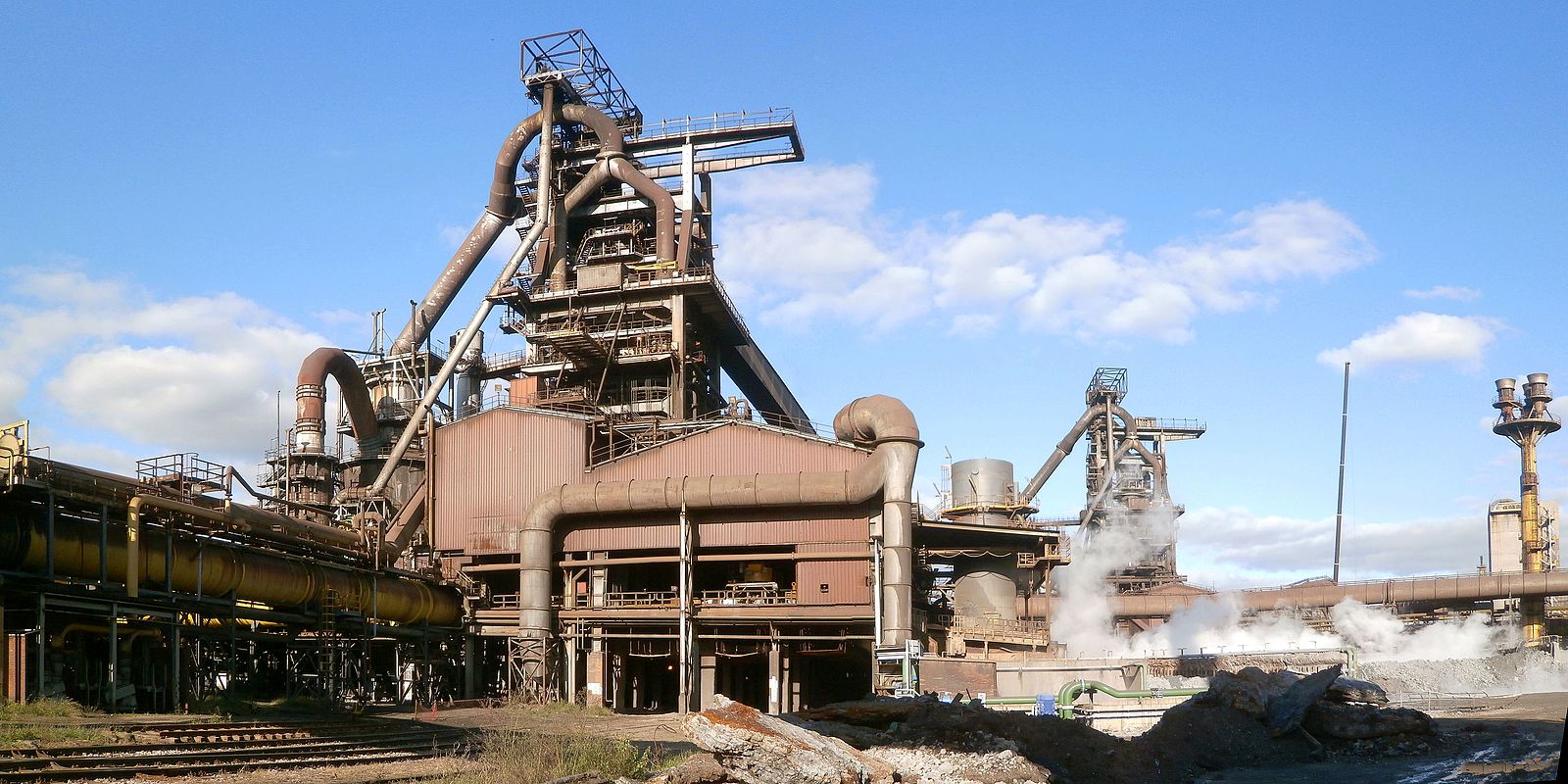
German monthly crude steel production was approximately 2.96 million mt in July, down 0.5% year on year and marking a second consecutive month of weakening production, the country’s steel association Wirtschaftsvereinigung, or WV Stahl, reported Aug. 21.
The July total was 1.1% lower than June owing to a slowdown in industrial production and subdued market demand.
Crude steel output produced in July using blast furnaces (BF) increased 6.1% year on year to 2.26 million mt, while output from electric arc furnaces (EAF) dropped 17% to 694,000 mt.
From January to July, crude steel production produced by EAF fell 11% on the year to 6.31 million mt, while production using BFs decreased 1.1% to 15.24 million mt.
Pig iron production saw an increase of 4.8% year on year to 2.08 million mt, with the year to end-July up 0.1% to 14.25 million mt.
Hot rolled coil production in the month of July fell 6.3% year on year to 2.54 million mt. From January to July coil output dropped 5.7% to 18.77 million mt.
In July demand for coil decreased due to subdued market demand and the presence of significant volumes of imported products awaiting custom clearance.
Platts, part of S&P Global Commodity Insights, assessed domestic hot-rolled coil prices in Northern Europe at Eur625/mt ex-works Ruhr Aug. 18, down 27% since March 30.
EU mills expected to increase HRC offers despite limited demand
Author Maria Tanatar, maria.tanatar@spglobal.com
European steelmakers are expected to increase hot-rolled coil prices in September despite slow demand, sources said Aug. 21.
Trading activity remained limited on the day due to a seasonal slowdown, but the demand was unlikely to increase significantly in September, when both buyers and sellers will resume trading, sources said. As a result, the anticipated rise in offers is unlikely to be successful.
“The mills will try to increase prices, as they usual do when market starts to recover,” a Northwest Europe-based service center said. “But the demand is not strong enough to drive prices up.”
In addition, a large volume of imported HRC — around 500,000 mt, according to estimations of the sources — on the way to the EU and awaiting customs clearance at European ports also put pressure on domestic prices. As a result, the fourth-quarter safeguard quota was expected to be exhausted in a few days after Oct. 1.
Domestic prices were partially supported by production cuts caused by scheduled maintenance at some of the European plants.
Platts assessed domestic prices for hot-rolled coil in Northwest Europe up Eur10 on the day at Eur635/mt ex-works Ruhr on Aug. 21.
Tradable values and deals have been reported at Eur630-650/mt ex-works Northwest Europe.
Platts is part of S&P Global Commodity Insights.
German industries seek ‘bridge’ electricity price
Several associations and trade unions in Germany’s energy-intensive industries have issued a unanimous call to policymakers for a decision on how to make electricity affordable for industrial users, Kallanish notes.
Along with Wirtschaftsvereinigung Stahl, the federations and unions of glass, chemicals, construction materials and nonferrous metals have formed the Allianz pro Brückenstrompreis – Alliance for a Bridge Electricity Price.
“The transformation to climate neutrality requires massive amounts of green electricity – and it must be affordable,” says WV Stahl manging director Kerstin Maria Rippel. She notes that Germany’s electricity costs are two to three times higher than those of European and international competitors. “This hits the companies in the steel industry hard, which are currently taking giant steps towards decarbonisation. That is why we need a bridge electricity price – not permanently, but for the transition,” she maintains.
The members of the alliance represent a total of more than 1.1 million employees in over eight thousand companies. According to a recent brief study, a total of up to 2.4 million jobs and some €240 billion ($261 billion) in added value depend on the companies in energy-intensive sectors.
The members of the alliance are pleading for a quick solution to the current debate on a bridge electricity price. They point to the looming risk of site closures, job losses and relocations to other countries.
Christian Koehl Germany