


Austria’s steel production falls in April
Austria’s steelmakers decreased crude steel production in April, according to worldsteel data.
Output amounted to 651,477 tonnes, down by 6.5% compared to the previous month and less by 0.8% on-year, Kallanish notes.
In January-April, the country produced 2.48 million tonnes of steel, down 6.3% on-year.
In 2022, Austria had reduced steel production by 4.7% on-year to 7.51mt.
Overall EU output in April fell by 11% on-month to 11mt. In January-April, European steelmakers produced 44.4mt, down 10.2% on-year.
This year, EU steelmakers have begun restarting capacities that were shut down in last year’s fourth quarter, as apparent demand for steel and product prices began to rise, while energy costs declined and stabilised. However, the market has turned down again in the second quarter. Prices are falling amid severely subdued buying activity and declining import values.
In May, Voestalpine Tubulars said it will acquire section tubes production facilities from Vallourec Germany. Voestalpine Tubulars is active in the production of seamless round tubes and, in future, will thus be able to produce square and rectangular hollow sections up to large formats and wall thicknesses seamlessly hot-rolled.
Earlier, voestalpine approved an investment of around €1.5 billion ($1.6 billion) for the construction of one electric arc furnace at each of its two sites in Austria – Linz and Donawitz. These will ultimately replace two blast furnaces by 2027.
Svetoslav Abrossimov Bulgaria

UK extends Ukraine HR flats tariff exemption
The UK government has decided to extend the suspension of trade remedy measures on hot rolled flat and coil steel imports from Ukraine, according to the UK Trade Remedies Authority (TRA).
The suspension of anti-dumping measures on certain Ukraine-origin hot-rolled flat products is now valid for a further 12 months until 30 May 2024, Kallanish notes.
The suspension has been in place since August 2022. The anti-dumping duty before suspension was GBP 50.631/tonne ($63) applied on Metinvest Group and other Ukrainian producers.
The TRA has also conducted a review of anti-dumping measures on imports of these steel products from several countries, including Russia, Ukraine, Brazil, and Iran. In its preliminary findings, the TRA suggested extending the measures on imports from China, Russia, Brazil, and Iran, but removing them for Ukraine (see Kallanish passim).
The TRA concluded that the dumping of steel products from Ukraine was unlikely to recur due to the country’s reduced production capacity and limited export capabilities resulting from the ongoing war with Russia. Additionally, the TRA considered Ukraine’s need to rebuild its steel production facilities and the domestic demand for steel to reconstruct the country’s infrastructure.
Ukraine’s production of crude steel in 2022 decreased by 70.7% compared to pre-war levels, with two major steel mills destroyed and two others operating at reduced capacity.
Damage to Ukraine’s energy infrastructure, caused by Russia’s invasion, has resulted in power cuts and further reduction in steel production.
In terms of export capacity, Ukraine faces challenges due to the blockade by Russia of its deepwater ports in the Black Sea. Rail freight is considered an alternative for exports, but there are issues with railway gauges in Ukraine. There are plans for an intermodal transport corridor, potentially facilitated by the Italian government, which could help unblock the export of goods, including steel, and improve Ukraine’s export potential.
At the same time, Ukraine’s export of HR flat steel to the UK has been traditionally minimal and has not significantly impacted the UK’s market in the past.
Namely, from 2018 to 2022, the UK’s HR flat steel imports from Ukraine ranged from 30 to 2,121 tonnes, representing less than 0.01% of the total imports from both the EU and non-EU countries. In 2020, it accounted for 0.16%, while in 2021, there were no HR flat steel imports from Ukraine.
Elina Virchenko UAE
Italian exports fall, China-origin imports surge in 2022
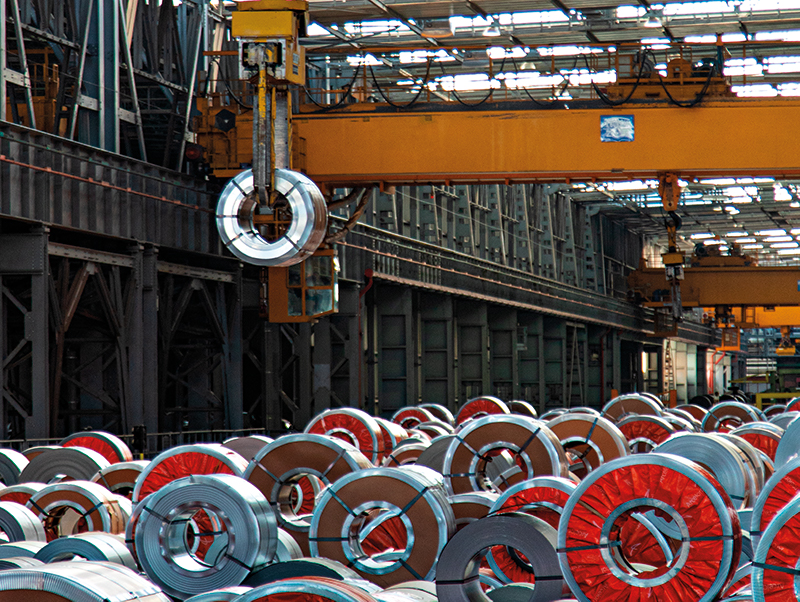
Italian apparent steel consumption decreased by 4.5% year-on-year in 2022 to 29 million tonnes, Italian steelmakers association Federacciai says in its annual report obtained by Kallanish.
Shipments on the domestic market reached 25.3mt, down 10.1% y-o-y. “The slowdown of activity at domestic producers was partly affected by the sluggish trend in exports to 10.4mt, down overall by 10.8% (-1.3mt),” the report states.
Italian exports to EU27 countries last year decreased by 8.4% to 10.3mt after the peak registered in 2021. Exports to non-EU countries stood at almost 1.7mt, marking an on-year drop of 21.7%.
Last year, Germany was the largest market, buying 2.4mt of Italian steel, down 13.9% y-o-y. Romania also bought 21.5% less compared to the previous year and Austrian purchases decreased 9.5%. Italian exports to Canada fell remarkably, from 158,000t in 2021 to 14,000t in 2022, and declined to Turkey by 29.5% to 262,000t. Sales to the US however increased by 22.4% to 179,000t.
In 2022, the country’s total imports stood at 18.7mt, falling by only 2.5% on 2021. Imports from the EU27 decreased by 2.1% to 8.6mt. From third countries they fell by 2.8% to 10.2mt. Intake from France increased by 6.7% to 1.9mt last year. France was where Italy procured most of its steel, followed by Germany that shipped 1.8mt to Italy last year, a remarkable 18.2% decline.
Among third countries, Ukraine showed the biggest decline in steel shipments to Italy, supplying 459,000t, down from 2.2mt in 2021. In 2021, Italy bought from China 597,000t. The figure increased three-fold last year to 1.5mt.
Natalia Capra France
German construction outlook deteriorates after already weak quarter
Orders at German construction companies in the first quarter were 18% lower than in the corresponding 2022 period, according to their association, Hauptverband der Deutschen Bauindustrie (Bauindustrie).
The year-on-year dip was especially pronounced for residential construction, at nearly 40%, which could not be balanced by commercial or public projects, says Bauindustrie managing director Tim-Oliver Müller. The drop in orders foreshadows a drop in revenue, which in the first quarter was already 8% down year-on-year.
Although the high order backlogs built up in previous years had a stabilising effect, these are melting down rapidly. “The traditional spring revival in construction has failed to materialise this year,” Müller says.
Companies were correspondingly pessimistic about the coming 12 months: 35% of the construction companies surveyed in a recent poll expected their business situation to deteriorate. House construction companies were especially pessimistic, at 43%. Only 8% of companies polled expected an improvement.
The lull in construction was an issue debated at Kallanish’s recent European Steel Markets conference in Amsterdam. “Our German customers in the construction market are very worried, and the Netherlands as well,” said Friso de Vries, managing director of Vogel Stahl, a distributor on the German-Dutch border.
A buyer at a rebar bending shop puts it more drastically: “I am not getting ‘few’ orders, I am getting none.” Consequently, he has suspended purchases of rebar for many weeks.
Christian Koehl Germany
Sarralle supplies metal recovery plant to Acerinox
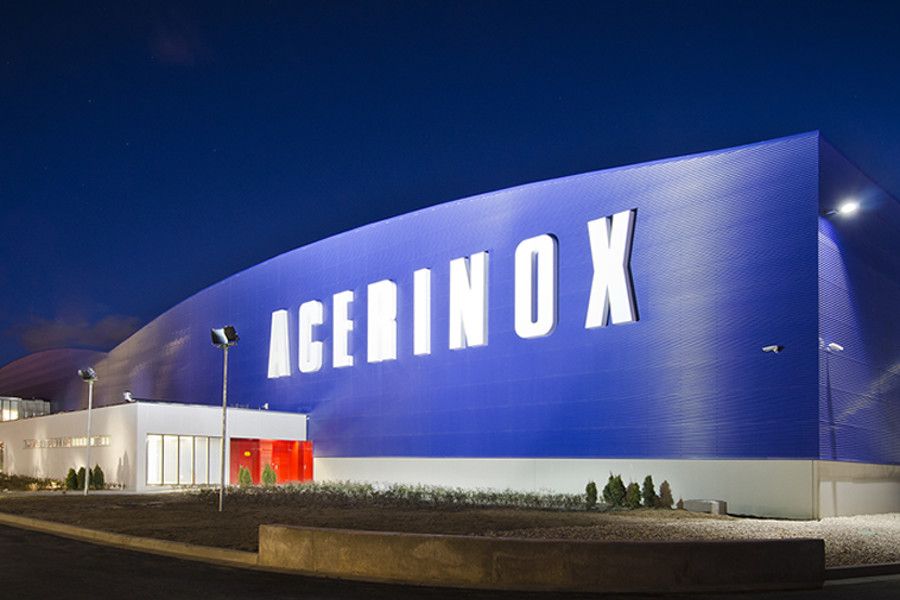
Steel industry technology and engineering supplier Sarralle Group tells Kallanish it has won a new order from Acerinox for the upgrade of its Palmones unit in Spain.
After having successfully built and commissioned a crushing slag plant in June 2022, Sarralle will now execute the second phase of the project by supplying new treatment and recovery equipment.
The investment includes design, engineering, automation and control technology.
“The treatment and recovery of slag is still one of the most challenging operational processes since stainless steel contains chromium and iron and consequently these valuable components have potential environmental and economical profit,” Sarralle says.
With the new metal recovery plant, Acerinox will be able to treat 70 tonnes/hour of stainless steel slag, according to the company.
Todor Kirkov Bulgaria
Stahl-Holding-Saar sees ‘toughest time’ ahead for its German steel mills
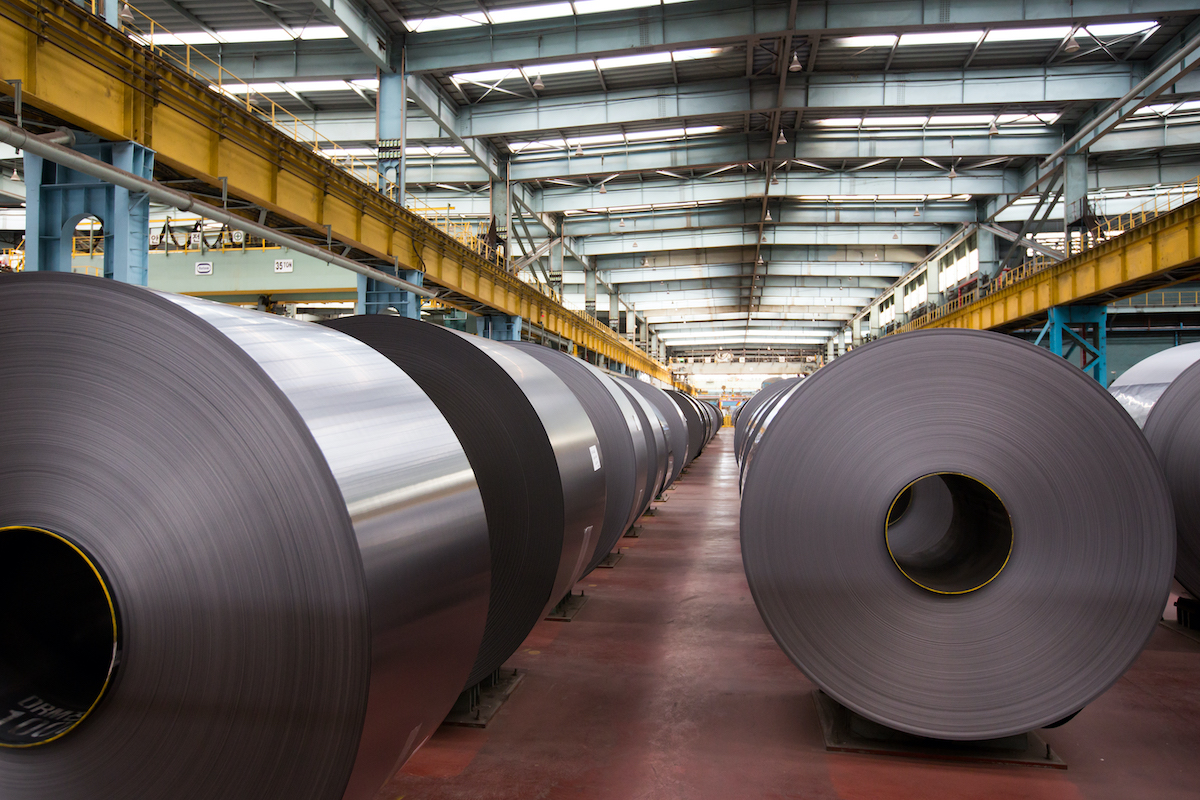
Stahl-Holding-Saar, the German parent of steel mills Dillinger and Saarstahl, was expecting the “toughest time” in the company’s history, driven by rising scrap shortages and expected higher production costs, CEO-elect Stefan Rauber said May 26. Rauber will take over as CEO from Karl-Ulrich Kohler on July 7.
On a call to announce the change in leadership of the supervisory board, the company said the energy transition and move towards lower carbon intensive steel will be an unprecedented 10-year challenge.
Asked by S&P Global Commodity Insights whether the company was expecting a shortage in scrap to come as increasingly more European steel mills are moving toward the more-scrap-intensive electric arc furnace production route, Rauber said it was already facing a material tightness and the scrap shortage will be even more intense in the future.
Asked whether he would also expect a shortage of green, or lower carbon emission steel, he said the market was very small in terms of tonnage.
The company is still waiting to receive funds from the government to start implementing the technical changes they have planned to receive lower carbon emissions in steel production with an estimated cost of Eur3.5 billion ($3.8 billion).
The plans include the commissioning of a direct-reduced iron plant, closure of one blast furnace and two new electric arc furnaces by 2030 and the commissioning of a third EAF by 2045.
Salzgitter, another German steelmaker, received government of Eur1 billion in April for lower CO2 steelmaking.
Rauber was optimistic Dillinger and Saarstahl will receive funding despite an open letter issued this week by trade union IG Metall that Germany’s biggest steelmaker Thyssenkrupp could face cuts to its funding for a DRI plant.
Current market for green steel small amid ramp-up
While the spot market for carbon-accounted steel remains small, European mills are in the market and testing offers currently asking for a premium of certified hot-rolled coil up to Eur300-350/mt but buy-side sources reporting workable levels at Eur100/mt.
Platts, part of S&P Global Commodity Insights, assessed carbon-accounted hot-rolled coil at Eur100/mt on May 25 for material with CO2 content at max 2.1 mt and below.
Outgoing CEO Kohler said the long steel mill Saarstahl and platemaker Dillinger combined will be offering 3.5 million mt of green steel from 2027 with a target to achieve the tonnages by 2030.
Around 1.6 million-1.7 million mt/year of long steel was expected to be produced while the plate arm at Dillinger was expected to produce 1.8 million-1.9 million mt/year of plate.
Author, Laura Varriale


French rebar activity weakens in May
May has been a month of poor orders for French rebar. Quiet activity persists, with material only being bought back-to-back, while export sales to other European markets have reduced considerably.
Distribution sources say last week was slightly livelier in terms of rebar orders but new construction projects in France are being postponed. Buyers’ stocks are said to be relatively low as is the market’s appetite for material. Demand in May has been for one or two truckloads each week. Local mills are implementing production cuts but, given the deadlock in the European construction industry, this does not seem to be having a positive effect on consumption.
After falling in the first half of the month, domestic rebar prices are now keeping mostly stable. Values are at between €650-680/tonne ($697-729) delivered, depending on volume and customer, Kallanish notes.
French private residential construction permits have been falling this year together with the number of new building sites. French construction federation Fédération Française du Bâtiment (FFB) reported earlier this month that in the first quarter construction permits fell by 31% year-on-year.
Natalia Capra France

Southeast Europe steel output rebounds in April
Southeast Europe (SEE) crude steel production increased in April, according to the latest worldsteel data monitored by Kallanish. Regional output amounted to 317,861 tonnes, compared to 296,394t in March.
In the first four months of the year, regional production decreased to 1.07 million tonnes from 1.44mt in January-April 2022.
However, worldsteel did not provide data for April steel production in Bosnia or Moldova.
Serbia was again the largest steel producer among the seven countries of SEE, which also include Bulgaria, Croatia, Slovenia, Bosnia, North Macedonia and Moldova.
Serbia’s production of crude steel totalled 515,800t in January-April, down by 12.3%.
Second-largest producer in the region Slovenia saw production in the first four months of the year at 206,213t, down by 5.4%.
However, third-largest steel producer Bulgaria saw its crude steel output up by 2.8% to 198,100t.
Fourth-largest steel producer North Macedonia produced 91,181t, up 13.2% on-year.
Fifth-largest Croatia produced 63,375t, down 7.8%.
HBIS Group Serbia Iron & Steel restarted blast furnace No.1 in March at its Smederevo works. The enterprise will operate both blast furnaces, but will suspend one BF in summer for maintenance (see Kallanish passim).
Special steelmaker Slovenian Steel Group (SIJ) reported a 35.3% on-year increase in revenue in 2022 to €1.303 billion ($1.44 billion), of which 84.6% was generated by exports. According to the company, even though production volumes were lower compared to 2021, the group was still able to generate higher sales revenue and improve other financial indicators.
The Bulgarian Association of Metallurgical Industries (BAMI) meanwhile warned earlier this year of increased imports into the EU of rebar and light sections of non-alloy and other alloy steels from Egypt and Algeria.
Svetoslav Abrossimov Bulgaria
EU seen needing increased energy spend despite reluctance
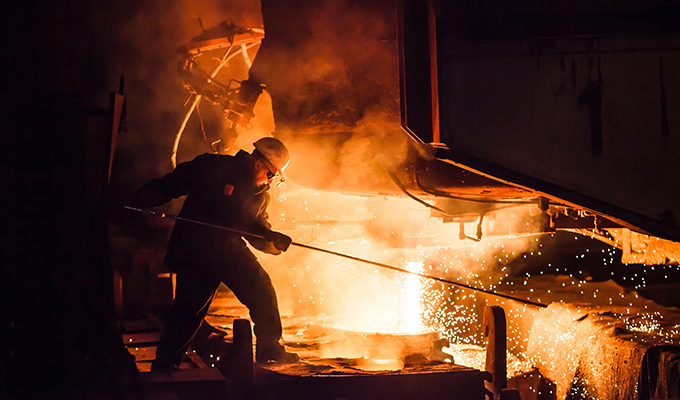
Europe’s spend on oil, gas and coal increased from 4% to 10% of GDP last year and this expenditure will remain elevated for the foreseeable future, guest speaker Ole Rolser from McKinsey & Co. said at last week’s Bureau of International Recycling (BIR) Ferrous Division meeting in Amsterdam.
Attributing “record-high” global gas prices last year directly to the conflict in Ukraine, Rolser noted that for energy-intensive industries, many of which form part of the recycling industry’s customer base, these huge energy costs had led to production cuts or even shutdowns. Aided by a notable shift in householder behaviour, Europe’s power demand declined by 3-4% last year when compared to 2021 and by 6-8% in the period from September.
Crude oil prices had now returned to levels seen before the Ukraine conflict, Rolser said, predicting a continuing decline before settling at around $50-60 per barrel, Kallanish notes.
Following a question from outgoing BIR president Tom Bird about the extent of energy company profit-taking now that prices had returned to lower levels, Rolser explained that these businesses were in a high-investment industry that had to contend with substantial volatility. He also noted a greater reluctance to invest owing to the push towards decarbonisation.
In response to a question from George Adams of SA Recycling in the USA, Rolser expressed the view that, with the necessary investment, the EU could become energy-independent of Russia within just a few years. In his presentation, Rolser indicated that the EU has historically relied on Russia to meet around a third of its gas supply, with Germany, Italy and Poland the most exposed.
Burcak Alpman Turkey
EUROMETAL at Kallanish Europe Steel Markets 2023


EUROMETAL participated the 16-17 May in the Kallanish Europe Steel Markets 2023 conference in Amsterdam.
The conference was preceded by a visit to Tata Steel Ijmuiden plant located on the North Sea Coast of the Netherlands.
Alexander Julius, member of the EUROMETAL board and CEO of Macrometal, joined the opening panel entitled “European steel – debating the big issues” together with Heather Wijdekop, Director Commercial at Tata Steel Europe and François-David Martino, CEO at Becker Stahl-Service.
Here you can read some of the articles published by Kallanish:
- Sustainability elevates prices, China cuts coming May 19, 2023
- Automotive semiconductor shortages ease, China leads May 19, 2023
- Ukrainian steel can help balance EU supply: Zinchenko May 19, 2023
- Low-priced HRC imports hit European market May 18, 2023
- Europe decarbonisation needs energy investment May 18, 2023
- Higher volatility becomes ‘new normal’ in EU May 18, 2023
- Chinese demand ticks up, UK production collapse May 17, 2023
- European apparent steel demand trends below real consumption May 16, 2023