

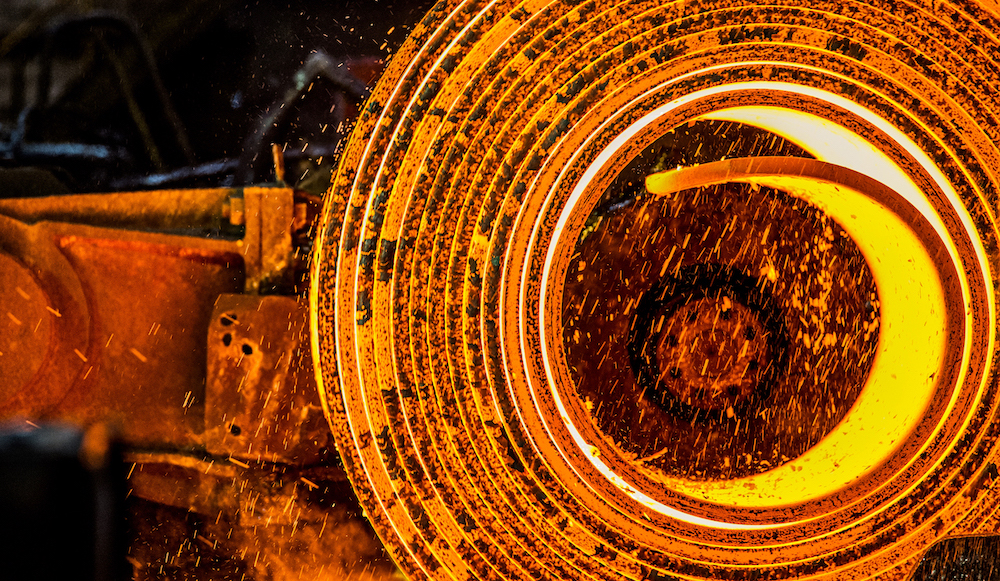
Quiet start to week in European HRC market, slow trading continues
Trading remained slow in the European steel hot-rolled coil market on Monday June 26 amid persistently depressed end-user consumption, sources told Fastmarkets.Buyers opted to book material on a hand-to-mouth basis, resulting in limited restocking demand, sources said.
Despite current weak market conditions, sources were optimistic that demand would begin to improve during July.
Fastmarkets’ daily steel HRC index, domestic, exw Northern Europe was calculated at €672.50 ($732.70) per tonne on June 26, down by €0.80 per tonne from €673.30 per tonne on June 23.
The latest calculation of the Northern European index was down by €12.25 per tonne week on week, and by €78.33 per tonne month on month.
Buying activity remained quiet on Monday in the Northern European HRC market. Further significant future price drops remain unlikely however, sources told Fastmarkets.
“Demand remains slow, and customers prefer to maintain medium-to-low levels of stocks,” a trader source in the region said.
“Negotiations for contracts for the second half of 2023 are still pending, so the market remains in wait-and-see mode,” he added.
Buyers’ estimates of tradeable values were in the range of €670-680 per tonne ex-works.
Fastmarkets calculated its daily steel HRC index, domestic, exw Italy at €646.25 per tonne on Monday, down by €7.50 per tonne from €653.75 per tonne from June 23.
The Italian index was down by €10 per tonne week on week and by €42.50 per tonne month on month.
In Italy, official offers of August- and September-delivery HRC from integrated mills and re-rollers were heard around €630-670 per tonne ex-works, sources told Fastmarkets. Buyers’ estimates of tradeable values were still being reported at €650 per tonne ex-works.
A deal was reported by a buyer at €640-650 per tonne ex-works.
Meanwhile, HRC offers from Asian mills to Italy were heard at around €610-620 per tonne CFR on Monday.
Published by: India-Inés Levy


EU’s new sanctions package against Russia focused on anti-circumvention measures
The European Commission finally introduced its long-awaited 11th sanctions package against Russia for its invasion of Ukraine, in an announcement on June 23.The new package was expected to be imposed back in May, but it was delayed because of disagreements between member states, with notable opposition from Hungary and Greece, sources told Fastmarkets.
Among other things, the new package includes a new anti-circumvention tool that is supposed to allow the EU “to restrict the sale, supply, transfer or export of specified sanctioned goods and technology to certain third countries whose jurisdictions are considered to be at continued and particularly high risk of circumvention,” according to the release on the Commission’s website.
In particular, the anti-circumvention tool will affect imports of iron and steel products processed in a third country that incorporate iron and steel products originating in Russia.
“At the moment of importation, importers shall provide evidence of the country of origin of the iron and steel inputs used for the processing of the product in a third country,” according to the document published on the EU Official Journal.
Thus, the new clause would affect semi-finished steel product exports from Russia, Fastmarkets understands.
Russian semi-finished imports have been specifically targeted before, in the eighth sanctions package introduced in October 2022, but with a long transition period and generous quotas, Fastmarkets reported previously.
Notably, between October 7, 2022, and September 30, 2023, 3.75 million tonnes of semi-finished steel products falling under CN code 7207 12 10 (steel slab) would be allowed to enter the EU market without restrictions. A similar amount — also approximately 3.75 million tonnes — of steel slab would be allowed to enter the EU between October 1, 2023, and September 30, 2024.
For products falling under CN code 7207 11 (steel billet), 487,202 tonnes will be allowed to enter the EU between October 7, 2022, and September 30, 2023; 85,260 tonnes will be allowed between October 1 and December 31, 2023, and 48,720 tonnes allowed January 1-March 31, 2024, according to the EU Official Journal.
Despite the intention of the sanctions — to restrict trade — some market sources have said that the generous quotas granted by EU authorities actually encourage slab imports from Russia. Material of this origin comes at a slight discount compared with Asian slab.
Russia’s slab imports to the EU amounted to 3.37 million tonnes in 2022, compared with 3.98 million tonnes in 2021. During 2023 to date, Russian mills have continued to sell slab to the bloc, with volumes in January-February 2023 of around 536,000 tonnes.
The new regulation would prevent non-EU suppliers from selling finished steel products manufactured from Russian semis to the EU market.
“This [new sanctions package] would, in theory, limit export of Turkish HRC to Europe because Turkey continues buying Russian slab. However, in reality it is unlikely to have a major impact on the market, since Turkish HRC suppliers have not really been active in the EU market recently, since they cannot compete with much cheaper Asian material,” an EU-based trader told Fastmarkets.
The new sanctions package also includes transport measures; notably, a prohibition of trucks with Russian trailers and semi-trailers from transporting goods to the EU. Marine transport will be targeted as well: vessels that engage in ship-to-ship transfers suspected to be in breach of the Russian oil import ban or G7 Coalition price cap will be banned from EU ports.
Published by: Julia Bolotova

European steel distributors met in Krakow
Last Wednesday and Thursday the main event for steel distributors in Central Europe took place in Kraków, Poland.
160 participants came together in a co-organisation of EUROMETAL and the Polish Association of Steel Stockholders (PUDS).
This event, which took place at The Manggha Museum of Japanese Art and Technology, especially geared towards the Visegrad region, also welcomed steel stakeholders from the rest of Europe and Turkey.
After an introduction by PUDS President Iwona Dybał and the EUROMETAL Vice President Robert Kay, the event featured key note speakers such as Anthony de Carvalho from the OECD, Geoff Gottlieb from the International Monetary Fund, Wojciech Zalewski from EY, Alexander Siryk from Metals Consulting International, Stanislav Zinchenko from the GMK Center and Adam Szewczyk from World Steel Association.
During the day we also had the opportunity to listen to steel professionals such as Jan Moravec from Ferona, Frederik Leus from ArcelorMittal Europe and Andreas du Plessis from the Reibus sales platform.
The event concluded with a panel discussion moderated by Adam Smith from Kallanish, which was attended by Roland Fazekas from Carboferr and MAFE (Association of Hungarian Steel and Metal Traders), Virinder Garg from Liberty Steel Group, Zenon Jędrocha from Stalprofil and the president of EUROMETAL, Fernando Espada.
EUROMETAL congratulates the PUDS for this EUROMETAL Central Europe Regional Meeting which exceeded all expectations.
We thank all the speakers, panelists, sponsors, technicians and all the people involved who made this event a success.


EUROMETAL met its National Federations in Krakow
Last Wednesday EUROMETAL organized a meeting with the national federations. This meeting on the eve of the EUROMETAL Regional Meeting Central Europe in Krakow was attended by 9 delegates in person and 11 participants online via Zoom from the following federations:
Açomefer (PT), Ardimet (RO), ARGE SMD – WKOÖ (AT), Assofermet (IT), Belmetal (BE), Branchehuset (DK), FFDM (FR), MAFE (HU), PUDS (PL), SSHV (CH), Stål og Metallgrossistenes Forening (NO), Stål- och Metallföreningen (SE), UAHE (SP) and YISAD (TK).
At the opening of the event, Roberto Gonzalez, EUROMETAL Chairman of National Federations Working Group and President of UAHE (SP) thanked all those present online and onsite for their participation. He praised the interest of meetings and close collaborations between national federations. He also suggested the creation of a mailing group among all the federations to discuss important issues such as updating the survey carried out in 2014 on the services provided by each federation.
The meeting continued with a message from Fernando Espada, EUROMETAL President, on the position of EUROMETAL and the discussions and reflections that have been made within the presidency and that will be submitted at the end of the year for approval by the General Assembly.
During the meeting Piotr Sikorski, PUDS Head Manager, delivered a PUDS approach to income diversification and how to introduce paid content web service without losing members.
Helge Runer – Norsk Stål CEO and Norsk Stålforbund Chairman also presented on the difficult future of steel and its distribution, highlighting the need to attract young professionals, the counter-production of a volume-oriented business, the fact that mills sell directly to customers, the need to promote and communicate our steel but also the regulatory constraints like the transparency act and the CBAM taxation issues.


Key takeaways from EUROMETAL’s Central Europe meeting – prices, decarbonization, green steel

Flat steel price drops triggered by cheap imports
The prices for flat steel in Europe started to go down in May this year, despite reduced availability resulting from accident stoppages at ArcelorMittal plants in Spain and in France, as well as a declaration of force majeure at Tata Steel in the Netherlands.
“The recent price drop [in the flat steel market] was ‘imported’ from China – it is not a European factor,” Stanislav Zinchenko, head of Ukrainian commodities think-tank GMK Center, said.
In May, the gap between domestic and import HRC prices in Europe exceeded €100 ($109) per tonne, while lead times were similar, Fastmarkets reported at the time.
The lack of flat steel that follwed the ArcelorMittal accidents resulted in increased demand for imports, and that prompted the domestic price reduction, because of the huge gap between European and overseas coil prices, Fernando Espada, president of Eurometal, said.
“We were losing 6,000 tonnes per day [of flat steel production] in Aviles and an additional 10,000 tpd in Dunkirk,” he added.
Flat steel prices at bottom, likely to stabilize
The price downtrend that has dominated the European flat steel market in recent weeks seems to have come to an end, with prices seen recently to be stabilizing.
One commentator said that the risk of further price reductions in flat steel was limited to about €50 per tonne, because current prices were close to the bottom of the market.
Fastmarkets’ most recent calculation of the daily steel HRC index, domestic, exw Northern Europe, was €670.00 ($733.03) per tonne on June 22, down by €10.00 per tonne from €680.00 per tonne on June 21.
The latest calculation of the Northern European index was down by €21.25 per tonne week on week, and by €105.42 per tonne month on month.
Other meeting delegates tended to support the idea that flat steel prices would stabilize at their current levels, with further downtrends unlikely, Fastmarkets heard.
“We think we are at the bottom [of the market] but, of course, no one knows. We assume that, in the autumn, we will see some stability [in HRC prices] and [clearer] prospects for the future,” Jan Moravec, chief executive officer of distributor Ferona, said.
“Regarding demand [in Central Europe], the machinery and automotive industries are still doing okay, and have quite a stable outlook for the next 2-3 months. We have a problem with the construction sector, due to a lack of projects, but that is mainly a problem for [the long-steel business],” he added.
“All mills in Europe are losing money [on current flat steel prices],” Espada said. “We should see stability for 2-3 months, but that will be because of vacations.”
Possible price rebound in September
Delegates were careful about making predictions for the fourth quarter of 2023, given the volatility in the market, but they agreed that output reductions at European flat steel producers could be the major influencing factor driving flat steel price rises.
“We’ve already seen [blast-furnaces going offline] several times in the past two years,” Espada said.
The level of stock across supply chains was rather low at the moment, with buyers tending to destock and maintain inventories at minimum levels, market sources said.
Indeed, apparent steel demand has been trending below real steel demand recently, with buyers reluctant to build up stocks because of the highly volatile market environment.
“[Flat steel] inventories in the EU are at record low levels now,” Zinchenko said.
But at the same time, import opportunities will also be limited because of the restrictions of lead times, or unattractive prices, or the filling of import quotas.
This could create a market opportunity, however. “If European mills decide to reduce supply, and there [is no push] for imports either – because of lead times or prices or quotas – there will be a chance [to look for a price rise],” Espada said.
Decarbonization challenges
European Carbon Border Adjustment Mechanism (CBAM) rules will be applied from October 1, 2023, but with a transition period during which EU authorities will test the CBAM without imposing any duties. Full implementation will start in 2026.
“[From] October 2023, overseas steel suppliers to the EU will [be required to report] their emissions to the EU authorities, but no tariffs will be applied,” a trading source said. “The test period will help the market to understand how the system is going to function.”
The CBAM will be gradually phased-in from 2026 to 2034, alongside the phasing-out of the free carbon allowances applicable under the European Emissions Trading Scheme (ETS).
The phasing-out of free allocations to industries under the ETS will start with a 2.50% cut in 2026. By 2030, the free allocations will be almost halved (down by 48.50%), before being completely eliminated in 2034.
“[A total of] 94% of ETS carbon allowances is distributed [and] only 6% is paid for. From 2026, the mills will have to start paying for it,” Roland Fazekas, CEO of Carboferr, said.
“And [this will affect] not only [the] steel industry. Cement, chemical transportation – the EU will be bringing together all these industries [under CBAM] regulations, and all these industries will be competing for allocations [for CO2 emissions],” he said.
“And you can bet that the correlation between demand increase and price increase will not be linear,” he warned. “It will be exponential.”
Fazekas estimated that CO2 allowance prices would jump to €200-250 per tonne when free allocations are phased-out.
“Purchasing green energy is necessary for distributors as well, to offset our own emissions, because the prices of green energy will be much higher 3-5 years from now… If we have to pay the full CO2 price for a product, we will not be competitive any more,” he said.
“By the time CBAM is fully effective [and free CO2 allowances are phased-out] our costs will be much higher, and the price of steel will not be covering our costs,” he added.
Another problem relating to CBAM, delegates heard, was that it did not take into account steel exports, compromising European steel mills’ competitiveness.
In the original version of CBAM, proposed in 2020, the European Commission offered to return the fee for CO2 emission to EU mills for exports outside the Union, because overseas suppliers were not burdened with such costs.
But that would have been against the rules of the World Trade Organization, because “it might be considered subsidizing,” one source said. So returning CO2 emission fees to EU exporters would not be possible.
“This means that only electric-arc furnace-based mills can be competitive in exports after 2026 [when the free ETS allocations begin to be phased-out and with CBAM being phased-in],” Espada said.
“Blast-furnace-based EU mills will have huge problems [when trying] to compete outside the EU,” he added.
“The market will adjust,” Virinder Garg, commercial director of Liberty Steel Group, said. “High-value-added steel products will probably continue be exported, but commodity grades will face challenges.”
Green steel market not mature yet, but demand will grow
Current demand for green steel in the spot market in Europe was quite low, with mainly hand-to-mouth sales to end-users reported. In the next 3-5 years, however, it was expected to rise gradually.
“We must have green steel in our stock eventually,” Zenon Jedrocha, vice-president of the management board and commercial director of Stalprofil, said.
“Currently, there is no demand at all [for green steel in the Czech Republic],” Ferona’s Moravec said. “But the pressure to go green will come shortly. I see it coming via banks [which will prioritize financing deals using green steel] and the public sector [via regulations obliging buyers to use green steel in construction].”
On June 8 this year, Fastmarkets launched a new suite of green steel prices, intended to capture the differential between traditional flat-rolled steel prices and prices for steel produced with emissions (including Scopes 1, 2 and 3) of no more than 1 tonne of CO2 per tonne of steel.
Fastmarkets’ most recent calculation of the green steel, domestic, flat-rolled, differential to HRC index, exw Northern Europe, was €200-300 per tonne on June 22, stable week-on-week.
The wide range reflected the relatively low liquidity and the “case by case” approach to trading green steel products, sources said.
“Premiums of €200-300 per tonne are not really affordable for steel service centers, because it’s too risky to buy a position, so all transactions are back-to-back,” a service center source told Fastmarkets.
Demand for green steel was expected to increase gradually in the coming years, however, driven by industry regulations. Some industries, such as carmaking, have already been showing more interest in green steel purchases, looking to secure long-term contracts with mills, with deliveries to commence in 2025-26.
“The number of customers who are willing to pay a premium will increase day by day,” Liberty’s Garg said.
“There are some buyers who are willing to pay [the premium], and there are some markets that are more mature, such as Sweden, Norway and Finland. Slowly, we see this [demand for green steel] arriving,” Espada concluded. “Eventually, green steel will become a commodity. Everything we sell will be green.”
Published by: Julia Bolotova

Polish steel rebar prices keep falling on low demand, oversupply
Steel rebar prices in Poland went down in the week to Friday June 16 because of oversupply but were expected to stabilize soon because they were approaching the cost line for mills, and demand was expected to pick up, sources told Fastmarkets.Official offer prices from two local producers during the assessment week were heard at 2,650 zloty ($646) per tonne CPT. This was roughly equivalent to 2,620-2,630 zloty per tonne ex-works, and compared with 2,800-2,850 zloty per tonne CPT early this month.
Another mill was reported to be selling rebar at slightly lower prices around 2,600 zloty per tonne ex-works.
One source reported a sale of a sizeable tonnage of rebar to a distributor at 2,600 zloty per tonne CPT (around 2,570 zloty per tonne ex-works) during the week, but this was not confirmed by other market participants.
Sources told Fastmarkets that end-user demand for rebar in the country has started to pick up recently from the low levels seen in the past few weeks. But local producers still had plenty of unsold rebar in stock, so rebar prices were unlikely to rebound in the near future.
“Demand [for rebar] is picking up a bit. But mills have full stocks, so the [rebar] price will not go up any time soon. But we are very close to the bottom [of the market],” a distributor said.
Fastmarkets’ weekly price assessment for steel reinforcing bar (rebar), domestic, exw Poland, was 2,600-2,630 zloty per tonne on Friday, down by 80-120 zloty per tonne from 2,680-2,750 zloty per tonne on June 9.
In the secondary market, rebar prices declined to 2,680-2,700 zloty per tonne CPT, compared with 2,760-2,800 zloty per tonne CPT last week.
Producers believed that domestic rebar prices in Poland were close to rock-bottom, and were hoping for a stabilization or even a rebound in early July.
Import rebar offers to Poland were scarce.
“Overseas suppliers have not been very interested in selling to Poland recently, because prices have been falling non-stop,” a trading source said.
A rebar offer from a Hungarian mill for July delivery was heard at €600 ($653) per tonne CPT Poland during the assessment week.
Published by: Julia Bolotova
Weak demand and bearish sentiment plagues Northern European long steel market
A pessimistic outlook and minimal market activity resulted in few trades being reported in the Northern European rebar and wire rod markets in the week to Wednesday June 14.Rumors that mills will target higher prices for the materials in the coming weeks could prompt buyers to restock, Fastmarkets heard.
Mills have become resistant to dropping prices any further amid already unworkable tight margins, sources said.
Fastmarkets’ weekly price assessment for steel reinforcing bar (rebar) domestic, delivered Northern Europe was €620-640 ($669-691) per tonne on Wednesday, down by €10 per tonne from €630-650 per tonne last week.
Market fundamentals were largely unchanged in the rebar market. Ongoing economic uncertainty, high interest rates and high inflation have resulted in construction projects being stalled or cancelled, sources said.
Many end-user industries have opted to postpone construction projects until economic conditions improve, Fastmarkets heard.
While some sources believe the price floor has been reached, other sources do not rule out rebar prices dropping further.
As a result, consumption has remained weak and market confidence depressed.
“Everybody is looking for when the price floor will be hit. There have been minimal bookings and very few inquiries. It is hard to work out where the price level is for domestic rebar because of so little volume being traded,” a buyer told Fastmarkets.
Other sources, however, were more optimistic.
“The situation is unchanged. Mills are projecting that prices will increase very soon. This has prompted buyers to book small amounts. It remains to be seen whether prices will rise or be accepted by the market,” a trader in the region said.
Wire rod prices were stable in the week to June 14 due to unchanged market fundamentals.
Fastmarkets’ weekly price assessment for steel wire rod (mesh quality), domestic, delivered Northern Europe was flat at €610-630 per tonne on Wednesday.
“Demand is stable and prices are unchanged at the moment,” a wire rod producer in the region said.
“The market is very quiet and I don’t see much movement at the moment,” a trader told Fastmarkets.
A major wire rod producer in Portugal announced production cuts for the entire month of July. Output cuts could pressure demand and prices upward throughout Europe because of the supply reduction, sources said.
Uncertainty around quotas for imports from countries outside the UE combined with long lead times for imports resulted in minimal appetite for imported wire rod.
Reduced supply of domestic products in Europe and low appetite for imports could result in demand rebounding, sources said.
Published by: India-Inés Levy
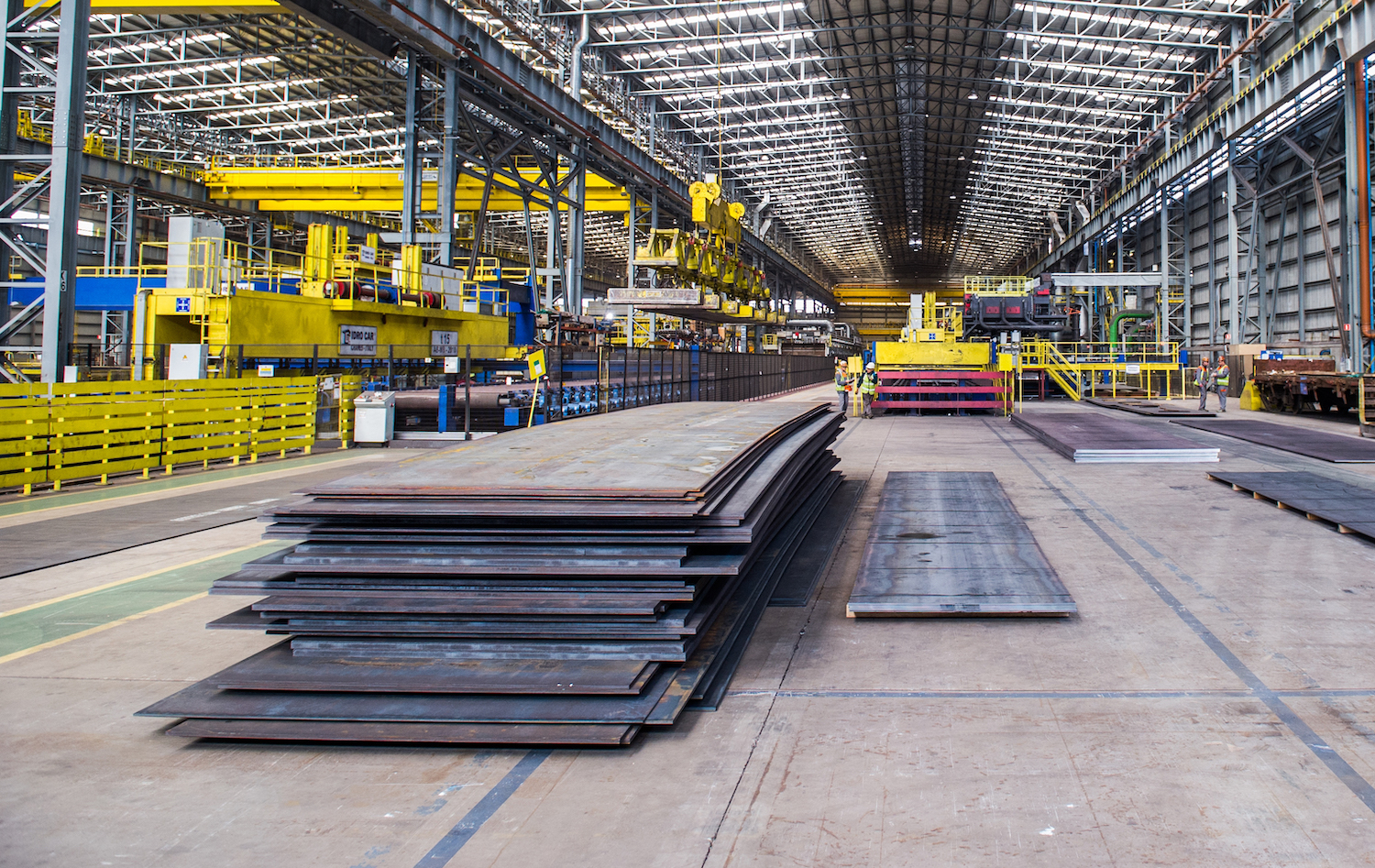
European heavy plate prices slide lower, but bottom said near
Prices for steel heavy plate across Europe inched down in the week to Wednesday June 14, but mill sources said the bottom is close, with costs starting to bite.Quiet market conditions persisted in Italy during the week to Wednesday, but sources said stockholders have started to send inquiries and are assessing the situation.
The most aggressive bids for commodity-grade heavy plate from stockholders were coming in at €710-720 ($766-777) per tonne EXW, but producers have not accepted these levels so far.
Re-rollers maintained offers at around €780-810 per tonne EXW, while for bigger tonnages it was possible to get €750-760 per tonne EXW, sources said.
As a result, Fastmarkets’ weekly price assessment for steel domestic plate, 8-40mm, exw Southern Europe was €750-790 per tonne on Wednesday, down by €10 per tonne from €760-800 per tonne EXW on June 7.
Sources were not ruling out further downward corrections in June, but agreed the bottom was close, considering the approaching cost line for producers.
“The cost line [for plate] is now around €780-800 [per tonne EXW], given the price of slab purchased in previous rounds, with the new slab arriving, the cost line would move to around €750-760 [per tonne EXW],” a producer source said.
Import offers from Asia were reported at €700-730 per tonne CFR, but for October delivery.
Meanwhile, Fastmarkets’ weekly price assessment for steel domestic plate, 8-40mm, exw Northern Europe was €870-900 per tonne on Wednesday, widening down by €20 per tonne from €890-900 per tonne on June 7.
Offers from one German integrated mill for commodity grade heavy plate with July delivery were heard at around €880-900 per tonne EXW.
A producer from Scandinavia was able to offer August-delivery plate at €900 per tonne EXW.
Buyers’ estimations of tradeable values varied at €850-870 per tonne EXW.
The trading activity in the region has remained subdued, with buyers having maintained a wait-and-see stance for several weeks now.
Limited tonnages of plate from Central Europe and Italy were offered to Germany at around €820-850 per tonne CPT, sources said.
Published by: Julia Bolotova

Europe’s decarbonization focus sets region’s steel sector in motion
Sir Isaac Newton famously theorized in his laws of motion that objects react when force is applied.
And just as an inert object remains at rest if not acted upon, the European steel industry – without government regulation and end-user demand – might not have acted to reduce carbon emissions as quickly as it had in recent years.
Against the backdrop of the European Union’s impending Carbon Border Adjustment Mechanism scheme and decarbonization efforts accelerating around the globe, many steelmakers in the region have invested in new equipment and less carbon-intensive production routes to cut emissions. Now, many are looking for a return on their investments in the form of premiums for certified carbon-accounted steel over standard material.
Low volumes ‘will change soon’
The CO2 emissions reduction targets set by the European Union triggered a massive change in the region’s steel industry. Legacy producers have increased their use of low-carbon steelmaking raw materials and metallics, and new hydrogen-based producers, such as H2 Green Steel in Sweden, have emerged to begin production in the coming years.
In addition to regulation like CBAM, which will require steel importers to declare – and pay for – CO2 emissions from 2026, large end-users, such as automotive and white goods manufacturers, have increasingly demanded low-CO2 steel as their customers seek out cars, washing machines and refrigerators made with more sustainable materials. In 2023, low-CO2 steel demand has extended to service centers and distributors, as well.
As the market develops, demand is expected to rise faster than supply, boosting premiums for carbon-accounted steel, market sources contend.
“Right now, the volumes of low-CO2 coil traded are low, but this will change soon,” a source from a German service center said. “End-users and distributors will need material soon, and the mills would not finalize their upgrades fast enough.”
As interest has increased in carbon-accounted steel, the need for clarity regarding how it is defined has increased as well, particularly around maximum CO2 emissions and the routes various European mills are taking to reduce them.
The European Commission has been developing unified standards around certification for carbon-accounted steel, market sources said, but until the EU adopts firm regulations, some buyers will remain reluctant to take full part in the sector.
“We are all waiting for the Commission to make an announcement that would, hopefully, clarify requirements and standards for green steel,” a source from another service center said. “Until it would be adopted, buyers would not rush to book volumes, as there is no clarity what standards for emissions and other restrictions could be included.”
Looking for a ‘permanent solution’
European steelmakers offering carbon-accounted hot-rolled coils have mainly pursued routes that include electric-arc furnace production, hydrogen and fossil-free fuel production, mass balance calculations or the application of voluntary carbon credits and offsets.
“Some mills use carbon credits to reduce emissions on paper, but this is not a permanent solution to the problem,” a Northwest European steelmaker said. “A buyer can get such products with shorter lead time as it does not require actual technological changes, but a lot of buyers are not ready to pay extra for the material that does not actually have lower emissions. And such material does not have certifications.”
Some steelmakers have been seeking carbon-accounted HRC premiums in the range of Eur100-300/mt for material with CO2 emissions below 2.1 mt per metric ton of steel produced.
“Mills say that currently a premium of Eur200/mt would cover the additional costs,” a source from an Italian service center said. “But it seems that mills are ready to accept [a] really low premium, in some cases close to zero, from new buyers just to get more people involved in the new products.”
Many buyers have been holding back from such purchases until the European Commission provides firm guidance. Those that have already booked carbon-accounted HRC deals have paid premiums in the range of Eur50-100/mt, sources said.
Steelmakers including Arvedi in Italy and ArcelorMittal Spain have been actively offering certified carbon-accounted HRC via the EAF route. SSAB in Sweden as well as Salzgitter in Germany have been offering limited volumes from their fossil-free pilot projects.
Platts, part of S&P Global Commodity Insights, launched new daily carbon-accounted hot-rolled coil steel assessments in early May, including a European HRC Carbon-Accounted Steel Premium, or CASP, and a Northwest Europe HRC Carbon-Accounted Steel Price to provide relevant price assessments and data to help bring transparency to the process.
Based on industry feedback, the CASP reflects any differential or premium achieved for the spot sale of HRC on an ex-works basis, with total accounted carbon emissions of 2.1 mt of CO2 or less for every metric ton of steel produced.
The assessments reflect trade in HRC with carbon emissions certified by an internationally accepted, independent organization, and exclude material that has had offsets or voluntary carbon credits applied to lower overall emissions profiles.
The CASP total includes emissions from direct, indirect and associated upstream and downstream activities such as mining and processing of steelmaking raw materials, hot metal production, steel rolling and associated transportation and logistics, so-called Scopes 1, 2 and 3.
The Northwest Europe HRC CASP assessment represents an all-in price for carbon-accounted steel in that region.
While different production routes generate a wide range of CO2 emissions, the majority of European market participants agree that the 2.1 mt of CO2 per mt of HRC that’s reflected in the new Platts assessments is reflective of the current “low-carbon” threshold for blast furnace production in the region. That number will only decrease as EAF production increases and hydrogen and fossil-free production scales up, they said.
Author Christopher Davis, Maria Tanatar


EU coil mills seek hike in long-term contracts
For long-term contracts for the upcoming second half of 2023, European coil producers are heard seeking big premiums, in comparison to both half a year ago and to current spot prices.
Several buyers tell Kallanish that mills are striving for €100/tonne ($107) on top of the contracts signed around the turn of the year. From December on, spot prices had been gaining momentum, reaching around €700/t for hot rolled coil at the end of last year. The higher level of contracts started at €800/t, maybe at slightly less for those who signed very early, and more for those who came later.
“Right, half a year ago, contracted prices were slightly above €800/t, and now they [mills] are asking for something nearing €900/t,” a manager at a processor company says. He calls the offer “irrationally bold”, noting that “we [mills and buyers] are worlds apart”. In his opinion, prices should actually be lower than those from December, “which would still be above the current spot prices”. These are currently softening towards the mark of €700/t.
The wording of another buyer is similarly sharp. “They [mills] have totally lost their sense of reality. At the moment, people would not even accept a €50 reduction if it was offered,” he says. He expresses some understanding for the mills’ sales staff, who need to spur optimism, and aim high in order to possibly end up with a much lower compromise.
Apparently, not many negotiations have led to signatures yet. “Neither side has an idea where the price should be,” the buyer notes. “We are still lacking some pilot agreements to lead the way. Everyone is remaining wary, watching the other one’s moves.”
Christian Koehl Germany
