

Acciaierie d’Italia restarts BF
Italian steelmaker Acciaierie d’Italia (ADI), the joint venture between state company Invitalia and ArcelorMittal, has restarted blast furnace No. 2 which has been idled since July at its Taranto steelworks, informed sources confirm to Kallanish.
At the moment the equipment is casting pig iron. Some temporarily laid off workers are also resuming work. Production is expected to increase at the plant but the company has not revealed any figures and did not offer comment when contacted by Kallanish. The official number of laid off workers remains at 1,800 for the moment.
The group produced 3.5 million tonnes of crude steel in 2022 and 3.3mt of pig iron generating revenue of €3.9 billion ($4.2 billion) and a positive Ebitda of €327 million. In 2021, it posted a turnover of €3.3 billion, up from €1.6 billion in 2020. In 2021, it produced 4.1mt of crude steel, an increase from 3.4mt in 2020.
This year, the steelmaker has vowed to produce about 11,000 tonnes/day of pig iron, or 4 million tonnes/year, using two to three blast furnaces. This compares to an average of 20,000 t/d that could be produced without layoffs.
Acciaierie d’Italia employs over 10,000 workers. It is currently operating with BFs Nos.1, 2 and 4. In the second half of 2023, it will start the refurbishment of blast furnace no.5, which has been idle for several years, and begin construction of an electric arc furnace.
Natalia Capra France


European apparent steel demand trends below real consumption
European apparent steel demand is set to continue remaining below real consumption this year, exacerbating challenges for the European domestic industry, Heather Wijdekop, director commercial Ijmuiden at Tata Steel Europe, said at Tuesday’s Kallanish Europe Steel Markets conference in Amsterdam.
Wijdekop noted that until the Covid outbreak in 2020, apparent and real demand patterns for steel were following strictly seasonal movement, giving the opportunity for the industry to plan and strategise accordingly. Since 2020, the seasonality has been lost and volatility in demand patterns has increased.
During the second half of last year, strong destocking activity started in the European steel sector. This has pushed apparent demand below real steel consumption. This trend is ongoing and expected to continue further this year and the next, forcing suppliers to change their attitude towards the market, Wijdekop added.
According to Eurofer, apparent steel consumption in Europe this year is set to move down 1% year-on-year after a 7.2% y-o-y contraction in 2022. Real consumption, on the other hand, will rise 0.3% y-o-y after 0.2% y-o-y growth last year.
Other speakers at the conference concurred, pointing out there are some bright spots for steel demand, such as automotive, but low stocks in the supply chain and slow recovery of apparent demand are creating issues.
Francois-David Martino, chief executive of Becker Stahl-Service, confirmed that automotive demand has recovered faster than expected since the end of last year, creating disruptions in the supply chain. “Last year, the service centres and distributors reduced stock levels, but now we find ourselves in a difficult spot due to the recovery of demand in the automotive sector,” he explained.
Further challenges could come from European domestic supply of steel products, currently facing delays due to ongoing issues at blast furnaces as well as finishing lines on the continent. “From our side, we have turned the corner on the supply constraints and our situation is improving,” Wjidekop noted, referring to the cold rolled coil supply disruption that triggered a force majeure declaration at Ijmuiden in February. “There will nevertheless continue to be some supply constraints for sure in Europe.”
On the conference sidelines, an executive from another European steelmaker noted that if a sudden improvement in sentiment in Europe would trigger better-than-expected demand, this could push the continent back into a scenario similar to the one seen during the 2021 recovery following Covid production disruption.
Emanuele Norsa Italy
EUROMETAL President at Made in Steel 2023


Fernando Espada, President of EUROMETAL, participated in the session “The Europe of new markets” at the Made in Steel conference, Tuesday the 9th of May 2023.
Barbara Beltrame (Confindustria), Gianpietro Benedetti (Gruppo Danieli), Mario Arvedi Caldonazzo (Eurofer and Arvedi), Augusto Cosulich (Fratelli Cosulich) and Fernando Espada (EUROMETAL), interviewed by Stefano Ferrari (Head of siderweb Research Office), debated on the future of the steel sector in Italy and the EU, a future that will be shaped by the green revolution, Next Generations EU investments and the political and economic choices that will be made in these complicated years.
Assofermet’s president, Riccardo Benso and Paolo Sangoi, Assofermet’s president of steel products were also part of the speakers at the event.
Read more: Assofermet: Steel demand weakens in April, but fundamentals positive
Voestalpine Tubulars acquires facilities from Vallourec Germany
Voestalpine Tubulars says it will take over section tubes production facilities from Vallourec Germany, to be able to cover an enlarged portfolio.
In the future, the product range of welded hollow sections at voestalpine Krems, Austria, will be supplemented by seamless hollow sections from voestalpine Tubulars at the site in Kindberg, also Austria. To that purpose, voestalpine Tubulars has purchased the related equipment, including all rights, from Vallourec Germany, Kallanish learns from the Austrian company.
Voestalpine Tubulars is active in the production of seamless round tubes and, in future, will thus be able to produce square and rectangular hollow sections up to large formats and wall thicknesses seamlessly hot-rolled. The firm adds it will give further information at a later stage.
Christian Koehl Germany

EUROMETAL SSC working group discussed CBAM, energy and safety
EUROMETAL Regional Meeting of SSC from the region Austria + BENELUX + Germany was convened in Mudersbach (DE) on 4 May 2023. This event took place at the facilities of Knauf Interfer Stahl Service Center “Werk Walter Patz”.
The meeting started with a presentation of Knauf Interfer delivered by chairman Matthias Kessel-Knauf and plant manager Heiko Klös.
Kessel-Knauf explained the production and distribution network for steel and aluminum oriented and focused on the European market specialized in processing and storage of coils, stamping of blanks for the automotive, cold rolling electrolytically galvanized and tinned and profiles and assemblies made of aluminum.


The working group proceeded with a presentation on short and medium term perspectives of the German flat steel market by Andreas Schneider from Stahlmarkt Consult and another on CBAM and its impact on the German steel market by Deloitte partner, Michael Schäfer.
Both presentations provoked a lot of interaction between the participants who highlighted a lot of doubts regarding the CBAM application process.
Following discussions on reducing emissions and energy consumption, Kim Henrich presented KÜBLER energy-saving hall heating system.
Thomas Niederhofer, Head of Business Unit Steel at Knauf Interfer and EUROMETAL Chairman for the German-speaking SSCs presented the Survey results on absenteeism and accidents in the SSC industry prepared by EUROMETAL. He also advocated the creation of a working group for load securing of vertically loaded slit strips and ideas for possible solutions.
Those present showed interest in continuing both actions highlighting the interest in having more participants to increase the representativeness of the branch.
The event concluded with a visit to the Knauf Intefer Steel Service Center. The working group meeting in Mudersbach was attended by 23 participants including a lawyer in charge of monitoring and enforcing EUROMETAL’s compliance rules.
It was also announced the intention to organize the next SSC Arbeitskreis in mid-May 2024 at the Stahlo Stahlservice premises in Gera.
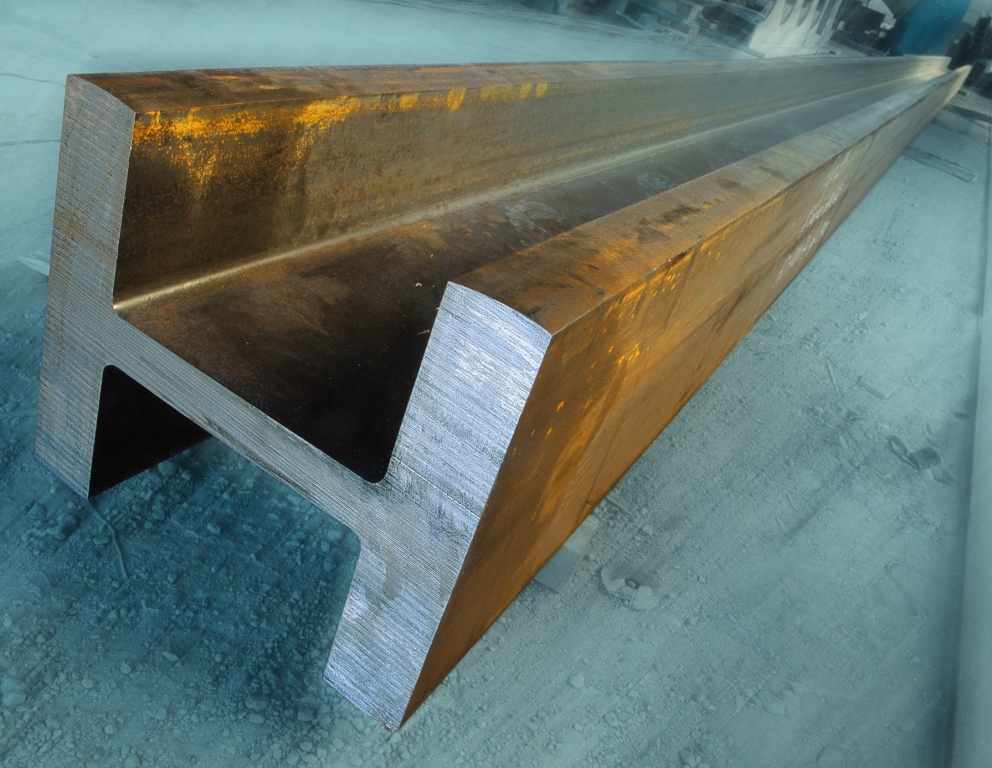
EU steel section prices soften amid slow market
European domestic steel sections prices softened week on week on May 3, as sources continued to report low demand.
Platts assessed European medium sections (category 1, S235 JR) down Eur5/mt on week at Eur925/mt delivered.
“Prices still seem to be under downward pressure [due to weak demand]. Because of climatic and economic conditions that are not supporting construction activities, projects are on hold,” one Benelux-based distributor source said. The source put a workable level for beams at around Eur920/mt delivered.
Another distributor source in the Benelux region put a workable level for category 1 medium sections around Eur920-Eur930/mt delivered.
“Demand is good for beams… weather is much better now. It was raining during April but it is sunny now so I think projects will restart,” he said, adding that inventory levels at end-consumers seemed low so if projects started again demand might pick up which might support prices.
Meanwhile, Platts assessed Northwest Europe Rebar flat on the week at Eur680/mt ex-works on May 3.
One distributor source in the Benelux region put a workable level for rebar in the domestic market at around Eur705/mt delivered.
“Demand is still weak,” one seller source said, and indicated a possible workable level for rebar in the domestic Northwest European market at around Eur695-Eur705/mt delivered, but noted that workable levels could have been clearer if buyers were placing any orders. “I heard that prices from Spain [for rebar] were already lower. But only a few would accept the [lower] quality material,” he said.
One European trader indicated a workable level for rebar in the domestic Northwest European market to be around Eur685-Eur695/mt delivered.
Platts is part of S&P Global Commodity Insights.
Author Rabia Arif

Turkey’s 1Q steel capacity utilisation plummets

Turkish steelmaking capacity utilisation dropped dramatically to 54pc in the first quarter, compared to 70pc in the same period of 2022, according to Turkish steel producers association TCUD.
The decrease was mainly as a result of the earthquakes that hit southern Turkey in early February, which saw producer Isdemir, several rerollers and longs mills stop operations, said Veysel Yayan, secretary general of TCUD at the EUROMETAL and YISAD steel conference this week. Capacity utilisation has been on the decline since last year, with Turkish steel producers uncompetitive in export markets. Crude steel production in January-March was 7.4mn t, down by 22pc on the year.
Capacity utilisation and output will likely continue to be low in April, with Isdemir only this week announcing it has reached pre-earthquake levels.
But steel consumption is dropping this year in Turkey too, down by 7.7pc to 5.5mn t in January-February, TCUD said. Finished steel consumption of flat products fell by 21pc on the year in the first two months to 2.7mn t. The import share of flat products consumed increased to 52pc, up from 49pc on the same time last year, amid a 28pc drop in Turkish flats production.
By Lora Stoyanova

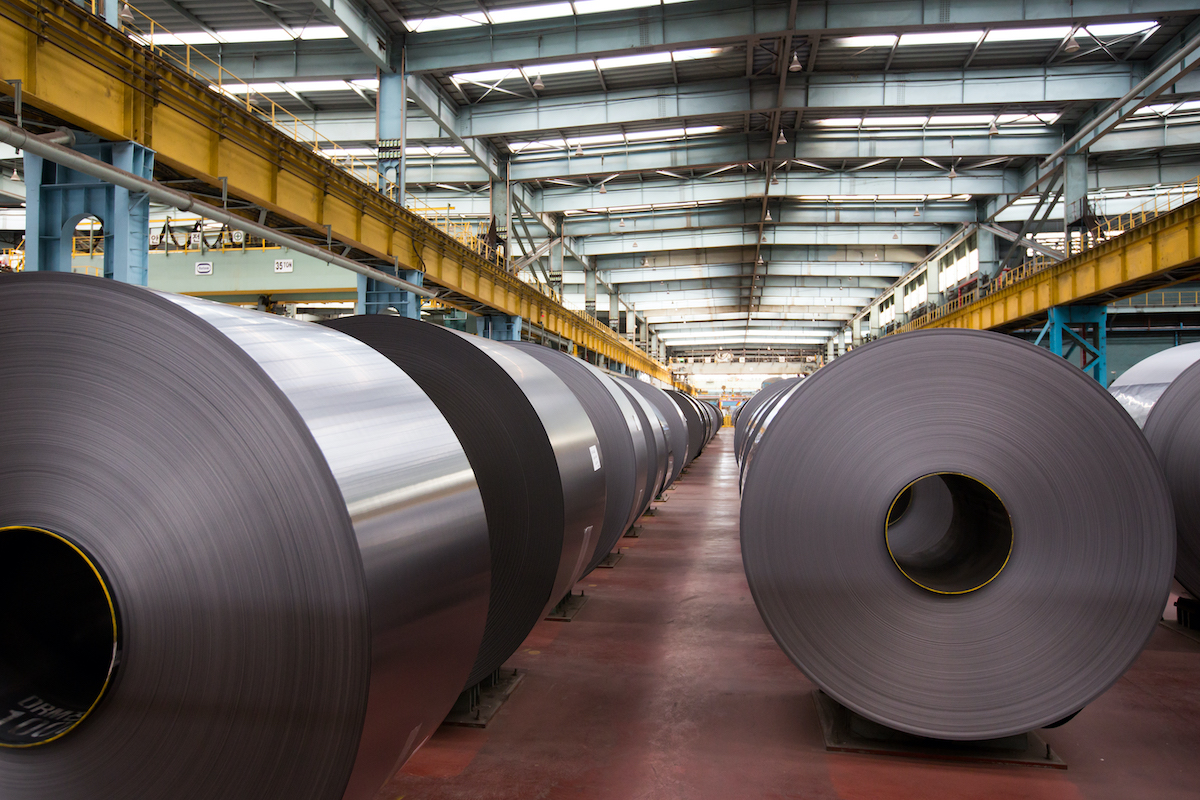
EU HRC market activity sluggish as buyers anticipate further price decline
Sentiment in the European hot-rolled coil market remained downward on April 27 and, as a result, buyers have been avoiding bookings.
The majority of European mills have not been offering coil due to the effects of technical issues, scheduled maintenances and full order books. Only a few producers have been able to offer June rolling coil, and the majority have been booked until late August-September delivery, sources said.
As a result, lead times from European mills have been comparable to those from the overseas suppliers. And the downtrend in the Asian coil market had a direct impact on the European prices with competitive import offers.
“There are no real movements in the market,” a South European service-center source said. “Domestic mills are not really offering and the gap between domestic and import prices widens.”
“Main EU mills are not offering, and buyers do not hurry to make deals for import as they believe prices will continue to drop,” a Benelux-based service-center source said.
“Some mills try to offer higher prices, but in reality there is no chance that they would be able to sell above Eur800/mt ex-works Italy,” a trader said. “Demand is not there; customers are skeptical and they will not accept high prices.”
Platts assessed prices for imported hot-rolled coil in Northwest Europe at Eur690/mt CIF Antwerp on April 27, unchanged on day. Offers have been heard at Eur680-700/mt CIF Antwerp for Asian-origin coil.
Platts assessed domestic prices for hot-rolled coil in the region down by Eur20/mt on day to Eur820/mt ex-works Ruhr on April 27.
The assessment was based on tradable values estimated by both buyers and sellers at Eur800-840/mt ex-works Ruhr.
Platts assessed prices for imported material in South Europe at Eur670/mt CIF Italy, stable on day.
Offers of HRC from Asia have been reported at Eur670-700/mt CIF Italy. One source also said that the non-EU mills would accept firm bids at about Eur20/mt below the offer prices.
Platts assessed domestic prices for hot-rolled coil in the region at Eur810/mt ex-works Italy on April 27, down by Eur15/mt on day. The assessment reflected tradable values reported at Eur800-820/mt ex-works Italy.
Author, Maria Tanatar
Uncertainty impacts French construction sector
Sentiment among French construction companies is now stable after deteriorating in recent months but the firms surveyed see a negative performance in their future and past activity.
Fewer companies than last month can predict the future evolution of the market due to the current uncertainty, Kallanish learns from a l’Institut National de la Statistique et des Études Économiques (Insee) report.
This month, fewer contractors than last month consider their order books to be higher than average and have orders for over eight months of work. Production capacity has been stable in April. More construction firms than last month reported slowing output because of supply difficulties.
More companies report being at the limit of their production capacity (production bottlenecks), meaning they could not produce more with their current means if they were to receive more orders. Fewer companies than in March will increase their prices over the next three months.
The French rebar market is going through a weak patch and is extremely quiet, with prices stable but sales volumes low in April. Uncertainty is causing construction companies to purchase small quantities and adopt a wait-and-see attitude. This is impacting production as local output has been reducing significantly this month, sources tell Kallanish.
Natalia Capra France
EUROMETAL at Europe-Ukraine Steel & Raw Materials Conference in Warsaw


On Monday and Tuesday EUROMETAL participated in the Europe-Ukraine Steel & Raw Materials Conference organized by Metal Expert in Warsaw.
The event allowed us to meet again some of our members, partners and colleagues.
In addition to collaborating in preparing the event’s agenda, EUROMETAL collaborated as a media-partner.