

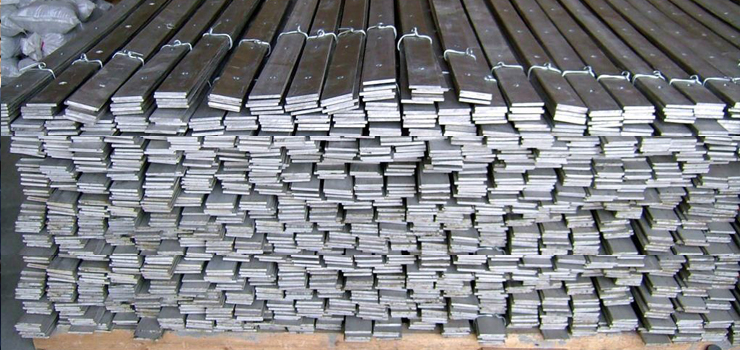
Two Italian flat steel producers to temporarily cut production
The two integrated flat producers in Italy are expected to halt part of their production in the coming weeks for maintenance works, market sources told S&P Global Commodity Insight July 7.
Electric arc furnace base steelmaker Arvedi will stop production at its plant, including its melt shop and rolling mills, for five weeks in August for summer maintenance.
Another integrated steelmaker, Acciaierie d’Italia, will temporarily halt production at its blast furnace No. 2 from the week starting July 11 for about a month and a half, trade union sources said.
Press officers for both companies declined to comment when contacted by S&P Global July 7.
A majority of European coil producers have been operating with reduced capacity over the past month and were planning longer summer maintenances in an attempt to balance supply with reduced demand. Automotive manufacturers consumed less steel because of lower car production rates caused by a shortage of components. Other end-users, including in the white goods segment, were also reported to show lower demand for steel.
European distributors have sufficient inventories and, as a result, they have been avoiding restocking. A negative price trend in the EU flat steel market contributed to a wait-and-see approach among buyers.
In the first half of July, however, domestic hot-rolled coil prices appear to be reaching a bottom. Reduced steel output combined with the reluctance of the steelmakers to lower prices to secure deals have triggered the change.
HRC in Southern Europe was assessed at Eur770/mt ex-works Italy July 7, unchanged day on day, and down by Eur630/mt from the peak reached March 24.
Arvedi, now the largest Italian flat producer, operates two EAFs in Cremona, in northern Italy, that feed 75% of the finishing operations there. EAF No. 1 has a capacity of 1.4 million mt/year of crude steel, and furnace No. 2’s capacity was expanded to 2.6 million mt/year in 2021.
Acciairie d’Italia BF No. 2’s production capacity is about 2 million mt/year of pig iron, and it was originally supposed to be temporarily closed for maintenance in April.
In the week that began March 21, the company restarted its BF No. 4 after it was shut at the beginning of December because of what it called a technical problem in the blast furnace’s crucible. Three weeks ago, BF No. 1 was stopped due to technical problems, but at the beginning of the week beginning July 7 it restarted production. After the BF No. 2 stoppage, the mills will continue to run BF No. 4 and BF No. 1.
— Maria Tanatar, Annalisa Villa


Northern Europe rebar prices stagnate amid low demand and weak trading activity
Rebar prices in the Northern European domestic market remained depressed in the week ending Wednesday July 6, with market activity negligible due to weak demand and customers’ continued wait-and-see approach, market sources told Fastmarkets.
Fastmarkets’ weekly price assessment for steel reinforcing bar (rebar), domestic, delivered Northern Europe was €950-1,100 ($970-1,124) per tonne on Wednesday, unchanged week on week.
Given the ongoing low demand, customers continued to hold off on significant movements, a variety of sources said. With activity so sluggish and few deals taking place, little had changed during the week, several market sources said.
An abnormally wide €150 range for the second consecutive week is the result of the gap between actual offers and market sources’ estimates of achievable prices, as well as the overall lack of trading activity.
“No one is sure in what direction we are moving. New projects are on hold and delayed, and there is not much demand for existing orders,” one source said. “There is a lot of uncertainty – to buy or not to buy, to wait or not to wait.”
Energy costs also remain a concern for mills, the same source said. This is especially the case in terms of accepting large-volume orders for the fourth quarter, in the event the orders cannot be realized due to energy shortages, the source said.
Decreasing international scrap costs since mid-April have also been a major factor in the falling rebar market. Scrap prices have, however, begun to surge during the week. Rising international scrap prices, alongside other soaring input costs, may be another critical catalyst pushing rebar prices up in the coming months.
Fastmarkets’ daily calculation of the index for steel scrap, HMS 1&2 (80:20 mix), North Europe origin, cfr Turkey was $403.75 per tonne on Wednesday, up significantly from $325.58 week on week.
Published by: India-Inés Levy


European HRC prices stabilize ahead of expected restocking drive
European hot-rolled coil prices were said to be near a bottom in Northern Europe and Italy on Thursday July 7, although some buyers said there was still room for a further decline, while producers were resisting any more price falls, sources told Fastmarkets.
But there were signs of a pick-up in buying activity since Monday July 4, Fastmarkets understands.
Market participants said they expect to see some restocking activity in the second half of July, but agreed that it is too early to talk about a rebound.
“The [restocking] activity will be limited because buyers are overstocked and will only book the tonnages they absolutely need,” a trading source in Germany said.
Fastmarkets calculated its daily steel HRC index, domestic, ex-works Northern Europe at €841.25 ($859.24) per tonne on Thursday, down by just €5 per tonne from €846.25 per tonne on Wednesday.
The index was down by €8.75 per tonne week on week and by €108.75 per tonne month on month.
Indications of achievable prices from buyers in the region were heard between €800 and €850 per tonne exw.
Some bids were reported at €830 per tonne exw and sources said that producers were “likely to accept” that price “for tonnages above 1,000 tonnes.”
Offers from mills in the region were between €850 and €900 per tonne exw, with €850 per tonne exw considered to be the price floor by producers due to their high costs.
HRC offers from Central European mills were heard at €770-790 per tonne delivered, but for smaller volumes.
Buyers remain convinced, however, that there is still room for prices to fall further.
“I still believe that, until the end of July, [HRC] prices could drop by another €20 per tonne,” a buyer in Germany said. “But the days of prices falling by €100 per week are done, for sure. We are near the floor.”
Mill sources again said there has been some improvement in demand from automotive original equipment manufacturers (OEMs) over the past week, with more inquiries for August-September material coming in.
But some market participants were more skeptical about the automotive industry recovery, pointing to the fact that the industry currently consumes about 20% less flat steel than it did in 2021 – and in the second-half of 2021, automotive production had already begun to contract across Europe.
“I think we can say there is likely to be some normalization [of automotive production] in the fourth quarter of 2022, but all forecasts are very unreliable because, let’s not forget, we have a war going on the middle of Europe [in Russia’s invasion of Ukraine],” a trading source in Belgium said.
Market participants said they were counting on HRC prices to stabilize in July-August, with a potential rebound in September-October.
“There is market chatter that the German government has asked energy-intensive industries, such as the steel industry, to reduce production to save energy (gas). If that is true, [HRC] availability will be reduced and that could give prices a boost,” another trading source in the region said.
The energy market in Europe has been highly volatile in recent months due to international sanctions applied since the Russian invasion of Ukraine. Electricity prices were said to be five times higher than at the same time last year in some nations.
And if Russia cuts off gas supplies to Europe in the final quarter of 2022, energy prices will jump even higher.
Fastmarkets’ calculation of the daily steel HRC index, domestic, exw Italy, meanwhile, was €755.00 per tonne on Thursday, down by €4.89 per tonne from €759.89 per tonne on Wednesday.
The Italian index was down by €13.75 per tonne week on week and by €160.22 per tonne month on month.
Offers in Italy were heard at €750-800 per tonne exw, with buyers looking to pay closer to €750 per tonne exw, sources told Fastmarkets.
Published by: Julia Bolotova
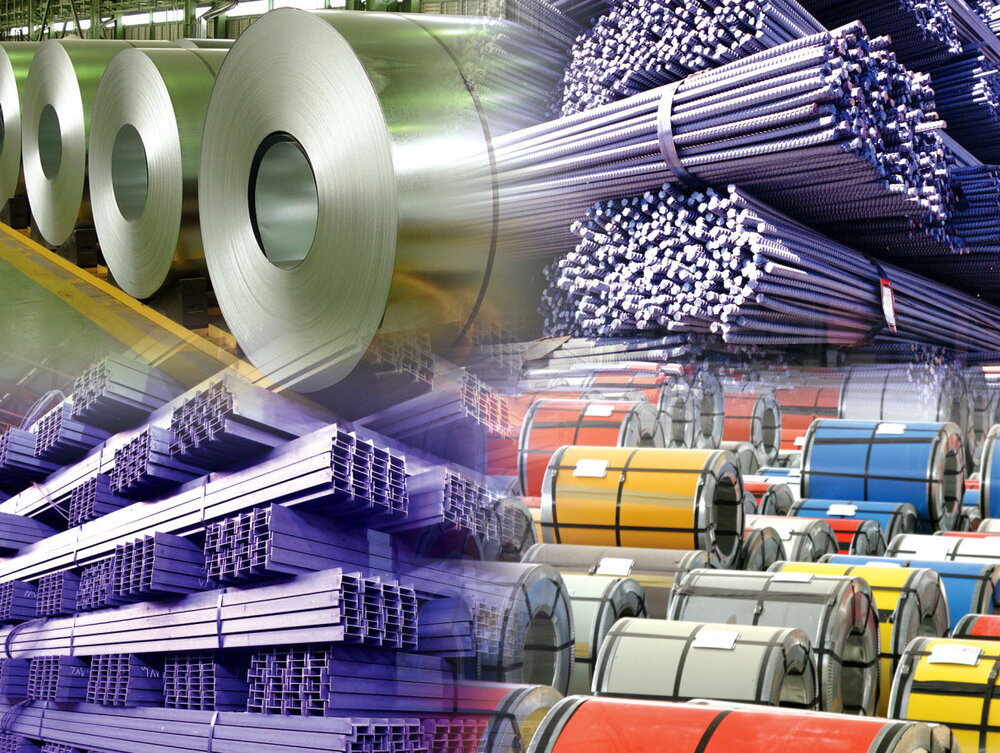
Interpipe ships new railway wheels to EU market
Ukrainian pipe and railway products manufacturer Interpipe has developed a new type of railway wheels for the European Union market for the first time since Russia invaded Ukraine, the company tells Kallanish.
The company has already shipped the debut, trial batch to the customer, it says. Interpipe started product development before the Russian-Ukrainian war and the main customer’s request was a special shape of the 840mm wheel. This is a category 2 wheel made of ER7 steel according to the European standard.
This product is designed for 1,435mm electric railway rolling stock. It can be installed on electric trains for ordinary long-distance transportation.
Ukrainian wheels will shortly be in use on the cars of the national railway network in one of the largest EU countries, the steelmaker says.
Interpipe decreased production in the first quarter due to the Russian invasion of Ukraine (see Kallanish passim). The company reduced steel production by 16% on-year to 163,000 tonnes. Pipe output declined by 12% to 97,000t and railway products by 43% to 23,000t. Product sales in Q1 fell by 10% to 140,000t.
Interpipe nevertheless saw revenue increase in Q1 by 19% on-year to $239 million. However, Ebitda declined by 63% to $15m. Net profit grew 6% to $21.8m.
On top of the loss of sales volumes and extra logistics costs due to the Russian invasion, financial performance was additionally affected by costlier raw materials and production inputs – scrap, electricity, and natural gas. These skyrocketed in Q1 by more than six times on-year, Interpipe said.
Earlier, Interpipe said its main strategic objectives are to increase production, to diversify its geographical presence and to expand presence of its products in the global market (see Kallanish passim). It also aims to supply its American customers again shortly, after the US suspended the 25% Section 232 duty on Ukrainian steel for one year.
Svetoslav Abrossimov Bulgaria


Beltrame revamps French, Swiss plants
French merchant bar mill Laminés Marchands Européens (LME) and Stahl Gerlafingen (SG) in Switzerland, both part of Italian merchant bar producer Beltrame, are to revamp their facilities with two new heating plants for blooms. These will be provided by equipment maker GF-ELTI.
The new equipment will enhance quality, and lower energy consumption and emissions. The start-up of both plants is planned for the beginning of 2023. LME will install a Walking Beam Furnace, bilateral heating type, and 13 pairs of GF-ELTI Regenerative Burners of 4.0 megawatts each, with digital on-off control and a productivity of 90 tonnes/hour. The new SG plant will consist of a pusher furnace with bilateral heating type, and 23 pairs of GF-ELTI Regenerative Burners of 3.2MW each, with digital on-off control, capable of reaching a 124 t/h production.
The new furnaces can use hydrogen thanks to the experience gained by GF-ELTI’s H2BURN – High Efficiency Burners fuelled with a hydro-methane blend.
“The two new reheating furnaces at the French and Swiss plants will … guarantee high productivity and reliability. This will allow us to be even more competitive in an increasingly demanding steel market,” Beltrame chief executive Alain Creteur says in a joint note seen by Kallanish.
Meanwhile in Romania, Beltrame restarted producing rebar at the recently acquired steel plant COS Targoviste. The steelmaker intends to invest €100 million ($103m) over the next five years to update Targoviste’s outdated equipment, boosting its competitiveness at a European level (see Kallanish 24 June).
Natalia Capra France

Eusider acquires Italian distributor
Distributor and service centre Eusider has acquired distribution company Metall Steel and is integrating it into its subsidiary, Metaltubi, president Eufrasio Anghileri announced during a webinar organised by Siderweb.
The integration between Eusider’s Metaltubi and the newly acquired company has created the Metall Steel Metaltubi subsidiary, which is 70% owned by Eusider.
The acquisition will enhance the distributor’s product range as the new company plans to sell an annual volume of about 100,000 tonnes of merchant bars, pipes and rebar, for a turnover of €150 million ($154m), Kallanish notes.
Eusider is building a large new warehouse in Ostiglia that should be commissioned by December. It aims to optimise and improve logistics besides creating a prominent sales hub. The company also intends to boost its river transport by using the nearby Canalbianco River.
Natalia Capra France
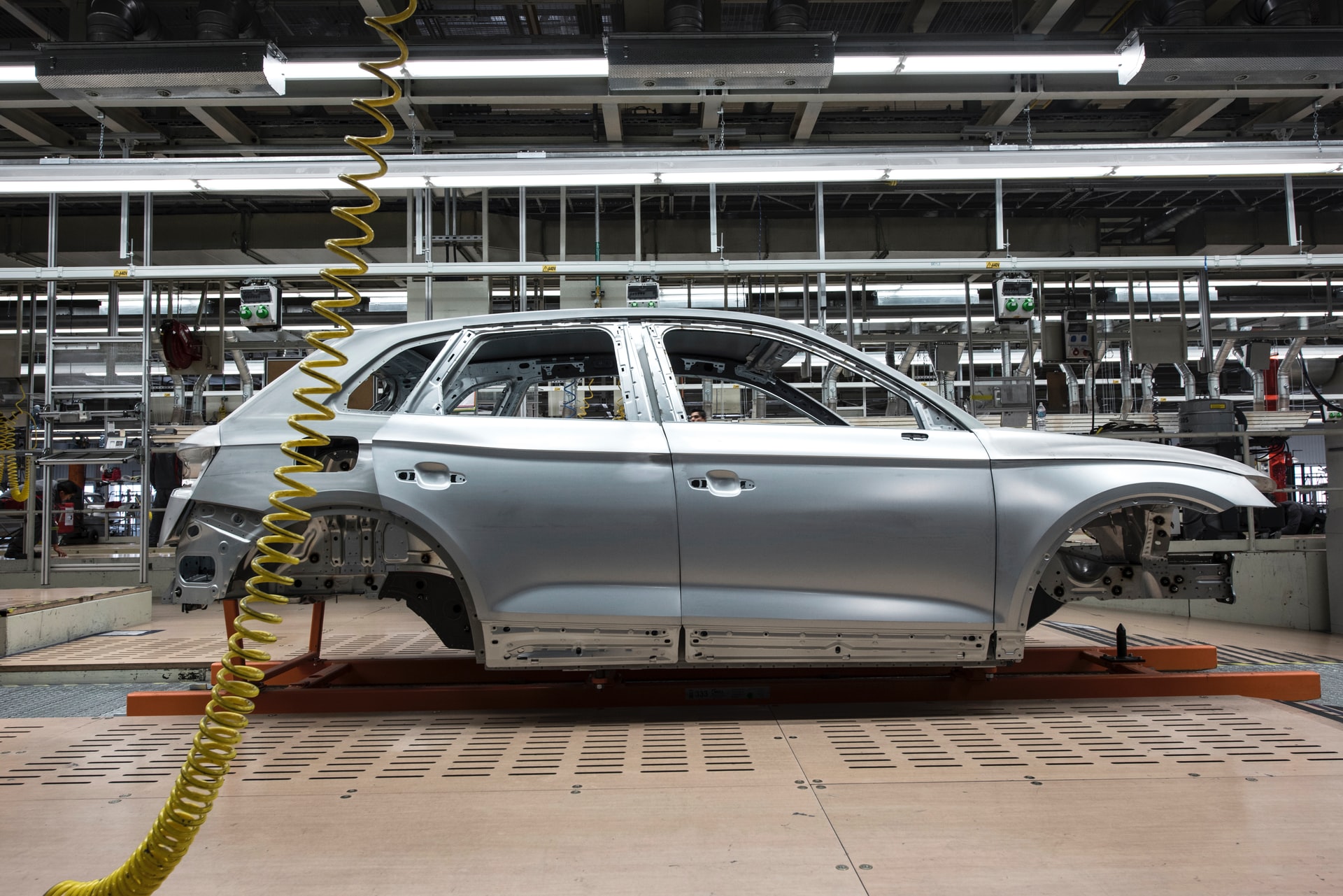
Volkswagen to liquidate production in Russia: reports
Volkswagen will announce the liquidation of its production site in Russia this week, according to Russian media reports.
“Today or tomorrow, the Volkswagen concern will announce the liquidation of the site in Nizhny Novgorod,” Gazeta.Ru reported on Wednesday, quoting two informed sources, one of them in the Russian office of the German concern. “The official reason is the reduction in the supply of auto components to Russia, as well as the blocking of logistics supplies, but this is such a wording to avoid potential criminal cases due to the support of anti-Russian sanctions.”
Neither Volkswagen nor Volkswagen Rus responded to Kallanish request for comment before deadline on Wednesday.
Earlier, Russian media reported that Volkswagen management offered workers of the plant in Nizhny Novgorod to resign of their own free will.
The Nizhny Novgorod site produced Skoda Kodiaq, Karoq, Octavia and Volkswagen Taos. The design capacity of the plant is 132,000 vehicles per year. In February 2021, the 400,000th car was assembled on the assembly line in Nizhny Novgorod using the full cycle method.
The Volkswagen concern ceased its activities in Russia in April after the Russian invasion of Ukraine and sanctions against Moscow (see Kallanish passim).
More than 20 foreign carmakers have suspended production or left the Russian market since Russian forces invaded Ukraine on 24 February.
Carmakers in Russia decreased output significantly in January-May to 268,000 passenger cars, down by 56.4% on-year. In May alone, only 4,000 units were produced, down 96.7% on-year.
Svetoslav Abrossimov Bulgaria
Swiss Steel banks on hydropower
For its unit Steeltec, located in Emmenbrücke, Switzerland, Swiss Steel is now relying exclusively on regional hydropower to produce its special steels, Kallanish learns from the group.
A strategic partnership to this purpose was signed with Axpo Holding, the largest producer of electricity from hydropower in Switzerland. Under the terms of the contract, Axpo will supply the steel mill in Emmenbrücke until 2024, with electricity certifiably generated at hydropower stations from Axpo’s fleet of power plants and at a contractually agreed price. With this contract, Swiss Steel claims it is betting not only on sustainability and green electricity, but is also securing long-term planning for electricity costs.
The ecological footprint of the Emmenbrücke plant in 2020 was 63kg of CO2 per tonne of crude steel produced in Scopes 1 and 2 at its EAF furnaces. In switching to electricity provided by Swiss hydropower, Steeltec is using not just local energy, but also lowering its values further, the group says.
Apart from the Switzerland locations, Swiss Steel’s mill in Canada and bright steel production in Düsseldorf, Germany, are also producing steel entirely using electricity from renewable sources. Production in France is also being switched to renewable energy to meet customer demands, Swiss Steel notes.
Christian Koehl Germany
Trinecke Zelezarny sales surge despite reduced production
Blast furnace-based Czech steelmaker Trinecke Zelezarny (TZ) reported a 24% on-year surge in 2021 sales to CZK 43.7 billion ($1.82 billion), despite the 7% drop in crude steel production to 2.4 million tonnes. Profit was registered at CZK 1.31 billion.
Performance last year was impacted by the Covid-19 pandemic, surge in input material costs and continuing problems in the automotive industry, mainly due to components shortages. “All of this culminated in a sharp rise in energy prices at the end of the year due to the steep rise in the price of emission allowances, which was one of the impetuses for kick-starting inflation,” TZ supervisory board chairman Tomáš Chrenek says in a note seen by Kallanish.
The drop in steel production was caused by a 60-day shutdown of one of the two blast furnaces, which the company reconstructed after more than 20 years of continuous operation. The loss of pig iron production associated with the blast furnace shutdown was reflected in the sales of semi-finished products and other products, TZ points out.
Wire rod was again the main product sold, registering deliveries of 962,000t in 2021. Nearly 72% of these deliveries went to foreign markets, mainly in the EU. Bar and sections sales hit 536,000t, of which 63% was exported. Rail and railway accessories sales were 235,000t, of which 194,000t was exported to the EU, US, Canada, Egypt and Israel, among others.
Adam Smith Poland
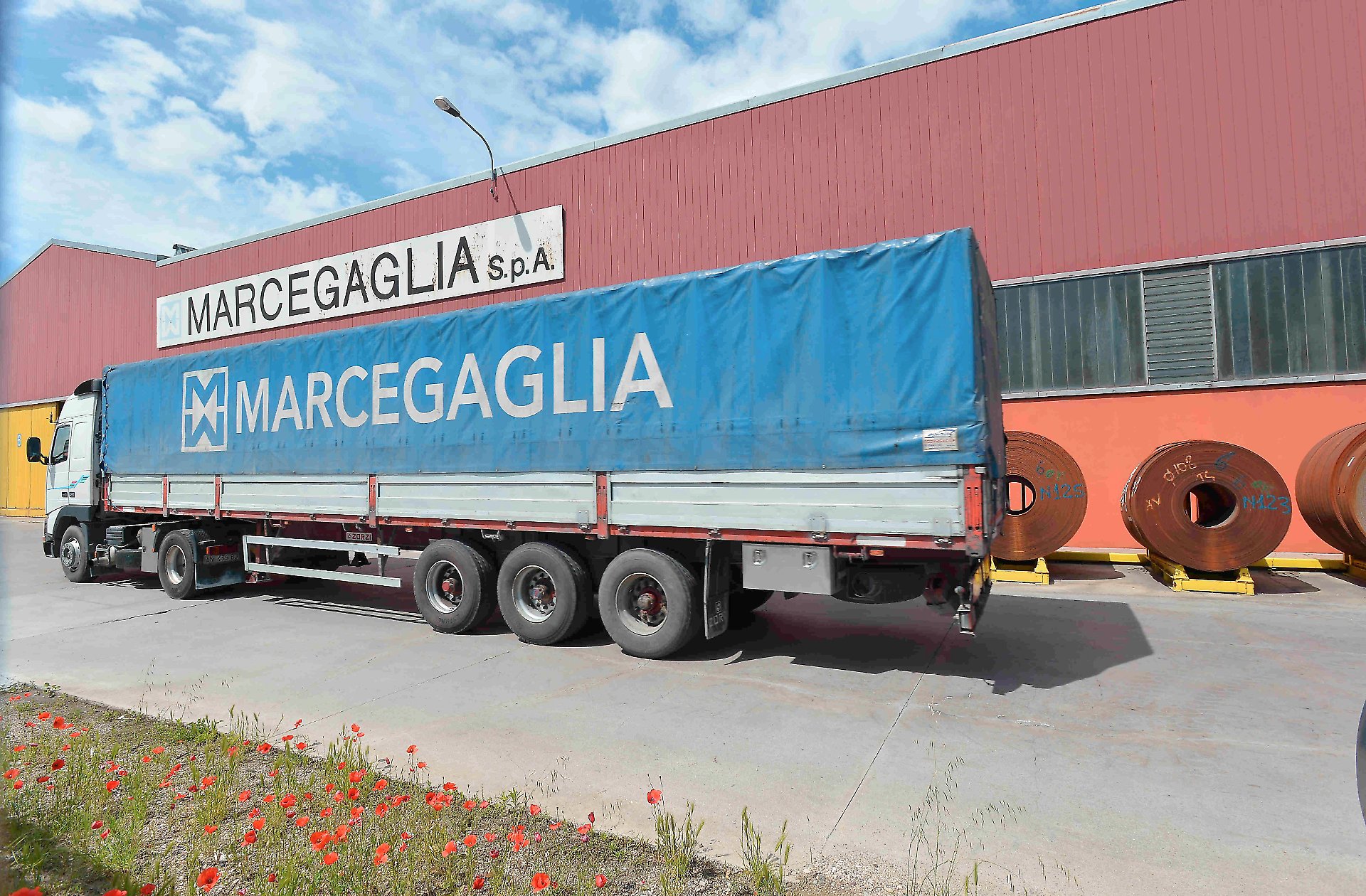
Marcegaglia acquires Italian mill
Italian re-roller Marcegaglia has completed the acquisition of local drawing mill Trafital S.p.A., Kallanish learns from the company.
Trafital, located near Varese, northern Italy, has an annual re-rolling capacity of about 22,000 tonnes of steel, a €35 million ($36m) turnover and a capillary presence throughout Italy.
“With this acquisition, the Marcegaglia Group expands its already vast production offer, adding a range of drawn products complementary to those currently processed in the Contino di Volta Mantovana plant,” Marcegaglia says. “The acquisition of Trafital is part of a more complex investment policy that the Group is implementing through diversified strategies that also includes niche operations such as this one and aims to create both commercial and technical-production synergies.”
Marcegaglia obtained this year a six-year credit facility of €1 billion from a pool of Italian and foreign banks. The credit facility includes €700m that will be used to refinance medium-term lines maturing between 2024 and 2026, €200m to support the company’s future investments and €100m in revolving credit. “The loan will support the new development plan of the Mantuan industrial group … promoting growth programmes and projects in the steel sector, including possible new acquisitions and alliances,” the company said in May (see Kallanish passim).
Marcegaglia is one of Europe’s largest re-rollers. Last year, it achieved a turnover of €7.7 billion and employs 6,600 workers. It re-rolls about 6.2 million tonnes/year of steel and has 29 re-rolling mills.
Natalia Capra France