


Kaltenbach.Solutions: substantial increase in growth thanks to 4th generation IoT solution
As a market-leading provider of web-based applications for performance management in the manufacturing industry, Kaltenbach.Solutions GmbH has now brought the fourth generation of the BoosterBOX digital measuring device to market maturity. The further development of the innovative hardware and software solution reliably creates transparency at machine and manual workstations and will be available from July 2022.
Interrupted supply chains for hardware components provided the impetus to consistently develop Kaltenbach.Solutions’ innovative solution further in order to remain a reliable supply partner for companies in the manufacturing industry in the future. Another critical factor were the often unstable local networks at the customers’ sites. In addition, the new BoosterBOX was to become usable as an embedded system for the manufacturers of machines and plants.
The basis for the BoosterBOX 4.0 is a milled aluminum housing that can accommodate 60 different variants. Thanks to the modular design, IoT hardware and software are almost infinitely scalable. The digital traceability of all installed components ensures maximum product transparency; fully automated test routines ensure the achievement of high process and product quality. Network stability has also been optimized: For data transfer without interruptions, the boxes are designed with LTE and WiFi network communication. The continuous power supply with the help of a UPS allows a controlled shutdown of the devices at any time in the event of a power failure.
The BoosterBOX 4.0 is only half the size of its predecessor and finds space in the control cabinet even under tight conditions. To simplify the entry into IoT-based performance management for the manufacturing industry, the company is switching to a rental model. Starting in 2023, Kaltenbach.Solutions expects to sell 160 units per month. Complementary, ready-to-install solutions for machine and plant manufacturers, including the MQTT raw and production data servers required for operation, will be available for purchase. The global market launch of the BoosterBOX 4.0 will take place in July 2022.

UK steel import safeguard extension reallocates former Russia, Belarus quotas: TRA
Quotas formerly allocated to Russia and Belarus under the UK’s steel import safeguards system have been reallocated to other countries in the extended safeguards system effective July 1, the UK’s Trade Remedies Authority, or TRA, announced.
The reallocation has been made in light of current UK sanctions on imports from Russia and Belarus following Russia’s Feb. 24 invasion of Ukraine.
Beneficiaries of the reallocation include Ukraine, the EU, Turkey and Taiwan, the independent body said in a July 1 document. Russia and Belarus previously accounted for around 22% of the UK’s imports of rebar, and the reallocation of those quotas has been made “to avoid a potential shortage of steel in the UK,” the TRA confirmed.
The UK extended steel import safeguards on 15 key product categories on July 1 for two years until June 30, 2024, mirroring the EU’s two-year extension of its own steel import safeguards. The EU also recently announced it had reallocated Russia and Belarus’ shares of the EU import quotas among other nations.
Under the safeguards system, the UK has set quotas for different countries or regions to send a certain amount of steel tariff-free to the UK. Once those quotas are exhausted, the countries have to pay a higher tariff rate.
“We have responded to changes in the international steel market following the Russian invasion of Ukraine,” TRA chief executive Oliver Griffiths said. “Reallocating quotas currently held by Russia and Belarus will provide UK firms in the construction, engineering and automotive sectors with access to higher volumes of duty-free steel.”
Two product categories are affected by the re-allocation, the TRA said. These include Category 1 (non-alloy and other alloy hot rolled sheets and strips), used in yellow goods, construction, tube-making and the production of downstream steel products, and Category 13 (rebars), used in construction, the automotive industry, engineering and white goods manufacture. New tariff rates may apply to imports of steel in these categories, depending on the country of origin, the TRA said.
The TRA describes itself as the UK body that investigates whether trade remedies measures are needed on imports.
— Diana Kinch


UK extends steel import safeguards, risking WTO friction
UK government June 29 announced extension of the nation’s steel import safeguard controls for a further two years “in the national interest,” despite possibly breaching World Trade Organization rules. Safeguards using quotas and tariffs (TRQs) have been extended on imports of products from 15 categories from July 1 until June 30, 2024, after which they can no longer be extended.
Extensions to five of these categories are controversial, following original recommendations from the UK’s independent Trade Remedies Authority (TRA) to phase out these controls June 30: this may target products from certain developing nations and particularly China.
The five are: category
6 — tin mill products;
7 — non-alloy and other alloy quarto plates;
12 — merchant bars and light sections;
16 — non-alloy and other alloy wire rod and
17 — angles, shapes, and sections of iron or non-alloy steel.
The 10 categories on which the safeguards extension had already been expected are:
1 — non-alloy and other alloy hot-rolled sheet and strip;
2 — non-alloy and other alloy cold-rolled sheet;
4 — metallic coated sheet;
5 — organic coated sheet;
13 — rebar;
19 — railway material;
20 — gas pipe;
21 — hollow section;
25 — large welded tube and
26 — other welded tube.
Infrastructure
— UK industry is partly dependent on imported steel. The domestic industry in the UK has been in historic decline raising concerns over the security of supply chains.
- UK steelmakers, including major producers Tata Steel UK, British Steel and Liberty Steel UK, currently produce about 7.2 million mt of crude steel annually, 70% of the country’s annual demand of around 10.5 million mt crude steel, according to producers’ body UK Steel. Products include long, flat and specialty steels.
- The UK steel industry directly contributes GBP2.4 billion ($2.89 billion) annually to UK GDP.
- 96% of steel used in construction and infrastructure in the UK is recovered and recycled.
— Policy makers fear excess global capacity may see cheap product flood the UK market.
- UK International Trade Secretary Anne-Marie Trevelyan in a June 29 speech cited global world excess steel capacity as a factor supporting the steel imports safeguard extension.
- The Brussels-based World Steel Association and OECD estimated global excess steel capacity in 2021 at 504 million mt, down from a 754 million mt peak in 2015.
Trade Flows
–Europe remains a key partner for UK steel trade despite the UK leaving the EU.
- The EU is by far the UK’s biggest steel trading partner, with rights to export 181,526 mt of Category 1 and 305,241 mt of Category 4 products to the UK in 3Q 2022 under the safeguards system. This compares to 23,203 mt and 23,242 mt respectively for Turkey, another of the biggest exporters to the UK under the scheme.
- South Korea, UAE and India have substantial quotas in the extended safeguards scheme, according to a trade department list. China and Japan have gained small quotas relative to the size of their steel production.
- China was the 20th largest exporter of both iron and steel products to the UK in 2021, supplying just 69,188 mt of a total UK import of these products of 6.37 million mt, according to HMRC tax authority data compiled by S&P Global’s – Global Trade Analytics Suite (GTAS). Spain and Germany were the top two suppliers, with Ukraine in fifth place.
— Russia’s war on Ukraine and sanctions have led to changes in trade flows.
- The government has suspended the safeguard measure for steel goods coming from Ukraine for the next two years due to Russia’s invasion of that country.
- Quotas formerly allocated to Russia and Belarus under the previous safeguards system have been reallocated to other countries including Ukraine, the EU, Turkey and Taiwan “to avoid a potential shortage of steel in the UK,” TRA confirmed July 1. Russia and Belarus previously accounted for 22% of the UK’s imports of rebar.
- Developing countries become subject to the safeguard when their supply exceeds 3% of the total UK imports.
- Trade department data shows UK import levels in the major product categories subject to safeguards have fallen since the EU introduced safeguards in 2018 (see graph), following a “sharp and significant relative increase in the 2013-2017 period.”
- The UK steel safeguards system mirrors the EU safeguards system, put in place mid-2018 to curb trade deviation following the US’s imposition of Section 232 import tariffs of 25% on steel imports in March 2018.
- The EU recently renewed its steel safeguards until mid-2024.
— US and UK moving closer on steel trade terms.
- In June 2022 the UK and US established a new tariff quota trade accord to replace Section 232 controls between the two nations. “The tariff-free volumes we have secured mean that UK steel and aluminum exports to the US can return to levels not seen since before 2018,” Trevelyan said June 29.
- The UK safeguards announcement came as new steel protectionist measures are being introduced in various nations in a falling market.
- Turkey July 1 imposed customs duties of between 9% and 16.5% on flat and long steel products from Organization of the Islamic Conference, or OIC, member countries, including Bahrain, Bangladesh, UAE, Morocco, Iran, Qatar, Kuwait, Malaysia, Pakistan, Saudi Arabia, Oman and Jordan.
- China’s ministry of commerce June 29 extended anti-dumping taxes ranging from 5.5% to 26% to imports of steel fasteners from the EU and the UK for a five-year period.
Prices
— EU, US and Asian steel markets continued downward movements following the UK announcement.
- EU HRC prices were reportedly “near bottom” June 30, assessed by Platts at Eur840/mt ex-works Ruhr according to S&P Commodity Insights following a recent decline on poor demand. US HRC prices stood at a four-year low on reports of increasing availability below $1,000/st with a bearish outlook.
- Chinese mill sources saw HRC prices “at bottom” June 30. Platts assessed SS400 HRC 3 mm thick at $672/mt FOB China. Low-priced Indian-origin HRC weighed on SAE1006 prices in Vietnam.
- In long products, Asian rebar prices fell June 30 on bearish seaborne market sentiment with Platts’ 16-32 mm BS4449 Grade 500 rebar price dropping $7/mt to $667/mt CFR Southeast Asia. Asia wire rod extended its fall to a 17-month low June 29. Platts assessed SAE1008 6.5 mm diameter mesh-quality rod down $5/mt on week at $678/mt FOB China.
- EU buyers held back from booking steel sections, expecting further prices falls, with medium sections prices assessed at Eur1,240/mt delivered June 29, down Eur60/mt on week.
- June monthly contracts in the UK domestic ferrous scrap market fell sharply for the second consecutive month across the grades, on relatively low UK mill appetite. Platts’ assessment of 3B shredded scrap was GBP 315/mt delivered to mill June 10, down GBP 32.50/mt on month.
— Diana Kinch, Jacqueline Holman, Staff

French rebar prices stay high but demand low
Prices remain mostly stable this week for French rebar, despite the downturn in the European steel sector. Like in June, however, buyers are withholding their purchases, with consumer confidence very low.
Small tonnages are being bought on a weekly basis amid a quiet market that is forecast to continue through August, Kallanish notes.
Domestic rebar contracts are hovering at €780-800/tonne ($815-800/t) base ex-works. Depending on volume and order, this can vary slightly. Considering a €260-270/t average for size extras, effective values are at €1,040-1,060/t ex-works, sources suggest.
In France, like in all other European countries, scrap is set to lose again significantly this month as the international market is waiting for prices to reach bottom.
In Italy, Spain and Germany, a similar situation of low orders and sluggish rebar sales is reported but with lower prices in southern Europe – about €800/t ex-works including size extras.
On a brighter note, Turkish producers increased their rebar quotes in both domestic and export markets last week due to improved demand and rebounded scrap prices. Quotes, at $690-710/t fob Turkey, however, are yet to return to mid-June levels.
Natalia Capra France

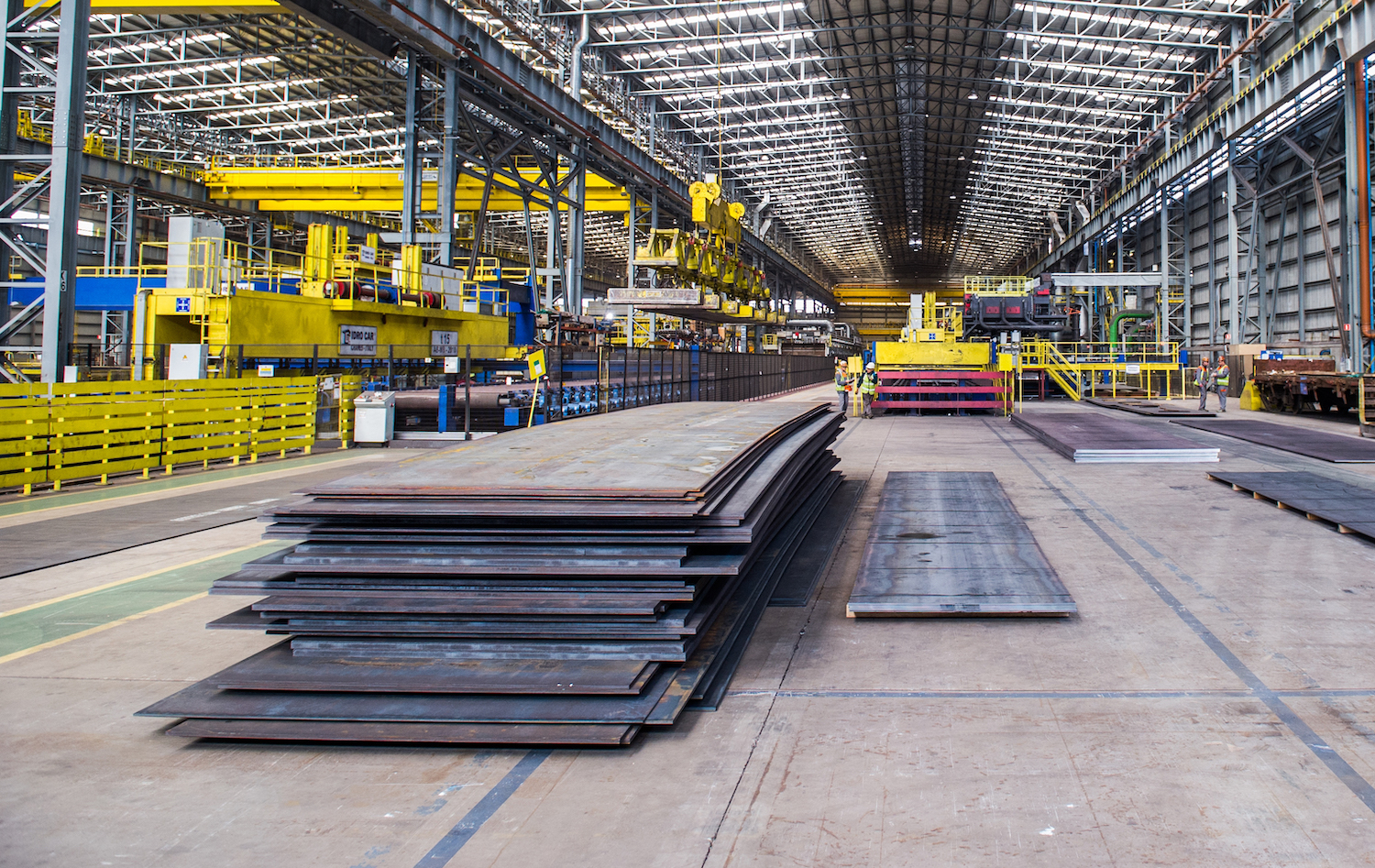
Northwest Europe plate availability expands, high grades scarce
The spectre of a plate shortage that hit the market north as well as south of the Alps after Russia’s attack on Ukraine seems a thing of the past.
For commodity grades, availability is given, and prices keep softening. Over the course of June, northwest European integrated mills have brought down their offers for S355 to €1,500/tonne ($1,568) delivered, a drop of easily €200-300 since May. “The range is now between €1,500 and €1,600, with very little differentiation for S235,” which has become a minority choice over the years, one buyer tells Kallanish.
The picture is quite different for grades that need to be quenched and tempered, reheated, or processed in any other way. For such services, “the number of players is limited”, and the lead times relatively long, he adds. Lead times at one of the two main German mills already stretch until the fourth quarter, and the other supplier will not be much quicker, the buyer notes.
“Quarto plate mills north of the Alps seem to have well-filled order books,” a Dutch observer concurs. “One mill recently booked a mega-order for the supply of plate to be used in the manufacture of wind turbines in the North Sea.”
According to the German buyer, qualities used offshore require much more processing than commodity grades, “where you are done after some rolling and edge cutting”.
Christian Koehl Germany
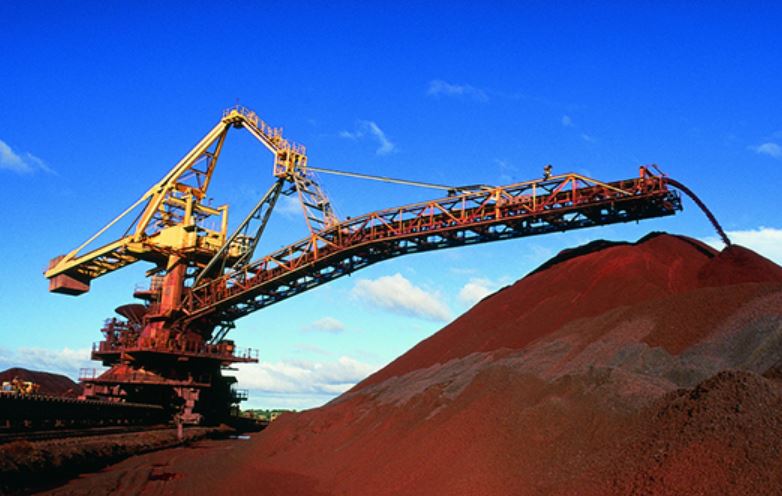
Iron ore slumps, China’s PMI rebounds Seaborne iron ore prices extended their losses on
Thursday, as the rebound momentum faltered with gradually retreating import transactions.
The Kallanish KORE 62% Fe index lost $1.07/t to $125.17/dry metric tonne cfr Qingdao. The Kallanish KORE 65% Fe index was down $1.1/t to $142.84/dmt cfr, and the KORE 58% Fe index declined $1.42/t to $116.03/dmt cfr.
On the Dalian Commodity Exchange, September iron ore settled down CNY 6.5/t at CNY 802.5/t ($119.81/t), while on the Singapore Exchange July 62% Fe futures settled down $3.31/t at $119.44/t. The same contract for 65% Fe and 58% Fe futures settled down $2.94/t at $135.0/t, and lost $3.78/t at $109.45/t respectively.
Scrap and billet prices remained stable. 6mm+ heavy scrap delivered to mills in the Yangtze River Delta gained CNY 4/t to CNY 3,291/t. Tangshan billet was unchanged at CNY 4,040/t.
China’s Purchasing Managers’ Index (PMI) recovered in June by 5.7 percentage points to 54.1%, and the PMI for manufacturing returned to expansion after three straight months of decline. China is trying to soften the economic impact of the Covid-19 outbreak, and with the recent relaxation of quarantine policies, logistics have returned to normal.
Steel demand from major projects is expected to improve. The Ministry of Finance and the Ministry of Housing and Urban-Rural Development jointly issued a document requesting to increase the proportion of progress payment for construction projects from 1 August. The progress payment for construction projects by state-owned enterprises should not be less than 80% of the price of completed projects, the document states. This is expected to reduce the burden on construction companies and boost real estate activity.
Kallanish Asia

Swiss, German companies form green steel alliance
Five Swiss and German companies have formed a partnership that aims to significantly reduce carbon footprint for an electromagnetic actuator used in the automotive/truck sector.
The partners are Swiss Steel with its Steeltec subsidiary, bright steel manufacturer Andernach & Bleck, steel distributor Heine + Beisswenger, electromagnet manufacturer Magnet-Schultz and technology group ZF Friedrichshafen. It is the first time that five partners have agreed to reduce their CO2 emissions as part of a pilot project along the entire value chain, the alliance claims in a statement.
The chain involves CO2-optimised steel production at Swiss Steel, improved material and energy use in the drawing process at Andernach & Bleck, low-CO2 pre-processing by Heine + Beisswenger, and adapted turning and assembly processes at Magnet-Schultz and ZF.
On the basis of this holistic approach across all parts, including the assembly of the actuator, the end customer can obtain reliable information on the CO2 content of the components used, Kallanish understands.
According to the partners, a saving of 35% or 710kg of CO2/tonne of steel used could be achieved in the total value added in 2022 compared with 2019. In terms of the annual volume of 300,000 dial actuators and the associated core, which is made of steel, it accounts for around 35 tonnes of CO2 savings per year.
Christian Koehl Germany

Italian wire rod prices, demand continue to weaken
Italian wire rod prices continue to decline amid a market lull that is not expected to end in July. Distributors’ and drawing mills’ order books are considered thin, and stocks remain high throughout the country. The deadlock is particularly being felt in southern Italy where economic growth seems to have frozen.
After the high level of purchases of March, demand from both distributors and end-users has declined substantially since April. This, coupled with competitive import offers from Turkey and North Africa, is causing buyers to adopt a wait-and-see mood, as they forecast domestic values to continue to fall, market participants tell Kallanish.
Sales from local steelmakers have now gone below the level of €900/tonne ($939/t) ex-works for drawing-quality material and are hovering at €870-920/t. This is down from €1,200/t ex-works at the beginning of May. Purchases continue to happen only back-to-back and competitive import offers at €710-740/t cfr Italy are contributing to slow domestic sales, sources suggest.
Meanwhile, northern European wire rod prices are also decreasing due to low demand and further scrap price reductions. Most sources expect further rod price falls in July.
On Thursday, however, hints of hope emerged in the market following the latest large sales by Turkish longs producers in the US and Asia.
Natalia Capra France
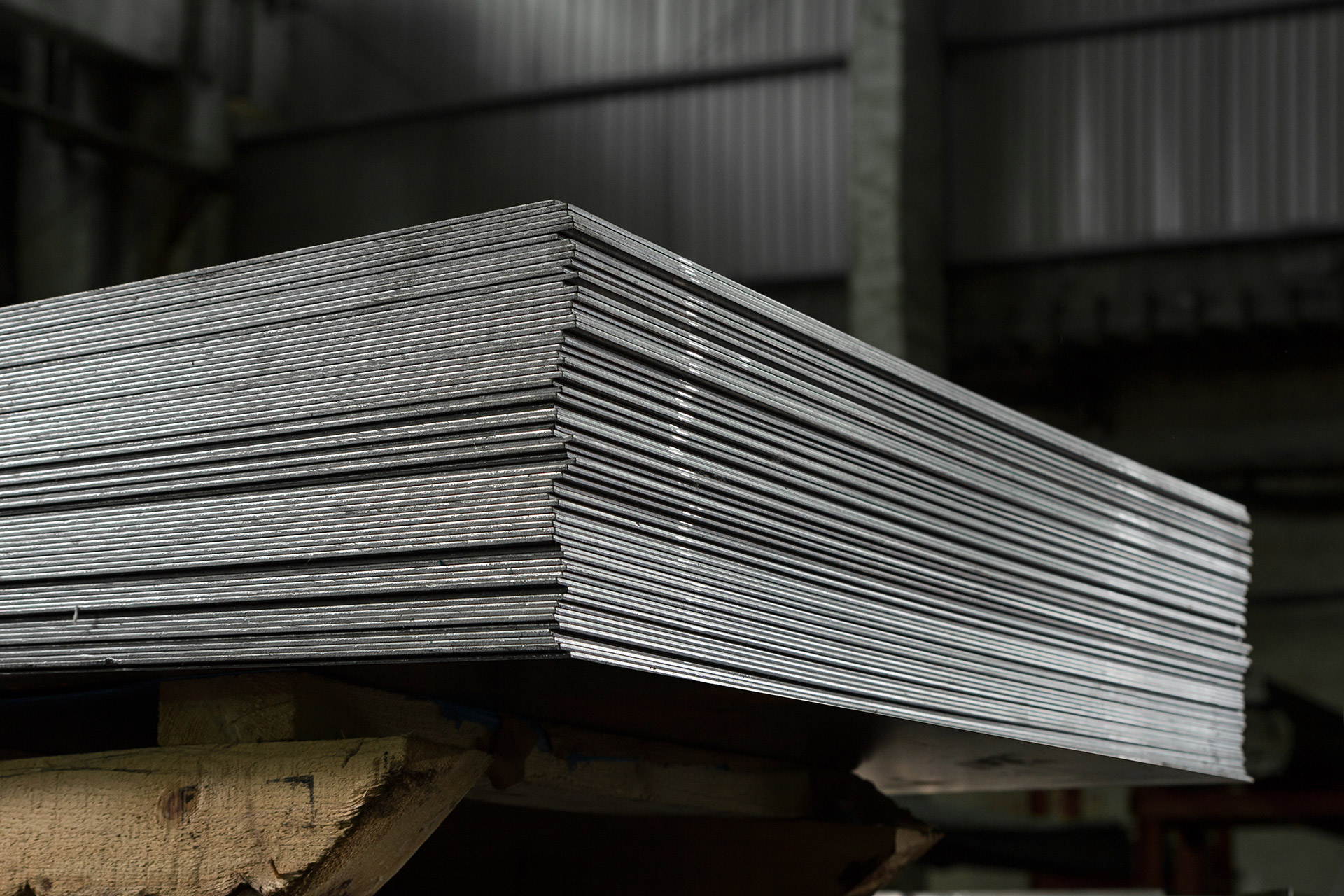
Northwest European plate prices not bottoming out yet
It could still be a bit of a way before plate prices from northwest European mills reach the floor, observers believe.
In Italy, many see a return of demand in the third quarter, and consequently a stabilisation of prices from the much lower level there. North of the Alps, however, demand has been somewhat more reliable, the shock of ceased CIS-origin slab imports in March was less harsh, and the influence of overseas plate imports rather minimal.
Therefore, northern prices are still on the downward correction curve, with probably some more concessions ahead. According to one buyer, “there will be a standstill at some point, but at the moment they are still falling, and it remains to be seen where the bottom line is.
In Italy, mills could be inclined to look for buyers beyond borders. Local prices for S275 grade now stand at around €1,200/tonne ($1,255), but one German source says he has heard of prices lower than that, notably delivered to Germany. This is not commonly understood; another buyer sees Italian material still at above €1,400/t delivered Germany.
Once the floor level becomes tangible in Italy, this could be a signal northwards, too, a German manager believes. “If prices there reach bottom, they would soon stabilise here, too,” he says, but refrains from making a judgement on when that will occur. “At present, the arrow is pointing clearly down,” he tells Kallanish. But for the mid-term, “I do not think anybody can make a sensible prediction. For both directions, there are good arguments – or no arguments at all,” he quips.
Christian Koehl Germany

Salzgitter Group invests in new hydrogen-steel lab in Duisburg, Germany
Salzigitter Group has started construction of a new laboratory in Duisburg, Germany, to test steel samples to transport hydrogen-natural gas mixtures in pressures of up to 400 bars, with the commissioning scheduled for summer 2023, the steelmaker said June 29.
Salzgitter Mannesmann Forschung, or SZMF, a subsidiary of the Group, runs the research sites on the premises of Hüttenwerke Krupp Mannesmann steel plant in Duisburg-Huckingen.
Products and processes focused on the material of steel are developed and tested at this site. Work is concentrated on producing tubes and pipes and heavy plate within the Salzgitter Group.
“Technologically speaking, testing under compressed hydrogen is particularly challenging,” said Juliane Mentz who is responsible for SZMF’s materials technology in Duisburg. “This applies not only to the testing facilities, but also to the explosion-proof laboratory as a whole. Only a handful of laboratories across Europe and worldwide offer such testing possibilities.”
Benedikt Ritterback, SZMF’s general manager, said that substituting coking coal to make steel production more sustainable requires hydrogen.
“Conversely, hydrogen needs suitable steel pipes and plate in order to transport and store hydrogen. We can do both and will make our contribution to this process,” Ritterback said.
Mannesmann H2ready steel pipes are already being used in the hydrogen economy in a wide range of applications, the company said.
Platts assessed HRC in Northern Europe at Eur840/mt ex-works Ruhr, unchanged day on day on June 29, according to data from S&P Global Commodity Insights.
— Annalisa Villa