

European stainless alloy surcharges to fall again in July
Monthly alloy surcharges on nickel-bearing stainless steel flat-rolled products in Europe are set to move lower for the second successive month in July, the first mill announcement indicated this week.
Finland’s Outokumpu, the continent’s largest stainless steel producer, set its alloy adjustment factor for type 304 (4301) flat products at Eur3,143/mt ($3,300/mt) for July, down Eur76/mt from June.
Three-month nickel prices on the London Metal Exchange have moved steadily lower this month, beginning June at above $28,000/mt and heading down to test the $25,000/mt level as of June 22.
Outokumpu’s surcharge for molybdenum-bearing type 316 (4401) flat products was set at Eur4,613/mt for July, down Eur128 from the previous month.
Molybdenum oxide prices have come under pressure in recent weeks, with the Platts daily oxide assessment falling from around $19/lb in mid-May to just above $17/lb a month later — the market’s lowest level in 12 months.
Outokumpu’s surcharge for nickel-free type 430 flat products is down Eur104 for July to Eur1,254/mt.
Following a sharp run-up in high-carbon ferrochrome prices from below $2/lb at the start of the year to $3.00-$3.20/lb by late March, basis Platts weekly European assessments, prices have stabilized and currently hover just below $3.00/lb.
— Andy Blamey

Global steel production down 3.5% on year in May: worldsteel
Global crude steel production totaled 169.5 million mt in May, down 3.5% from May 2021, according to World Steel Association data published June 22.
However, May global production was 3.7% higher than the previous month.
Output from January through May totaled 791.8 million mt, down 6.3% from a year ago, the data showed.
Largest steelmaker China produced 96.6 million mt in May, down by 3.5% from a year ago, but up 4.1% month on month to the highest since last May, making up 57% of total global crude steel output.
Total steel produced in China from January through May was 435 million mt, down 8.7% year on year.
China’s manufacturing production index for steel consumption produced by S&P Global Commodity Insights stood at 110 points in May, 9 points higher than in April but still down 5 points from the same period of 2021.
Despite further improvement seen in China’s manufacturing activity in June, the strength of the recovery has remained sluggish, leading to the recent sharp drop in steel prices, industry sources said.
The world’s second-largest steel producer India was the only top 10 producer that saw its production grow year on year in May, rising 17.3% to 10.6 million mt in May, which was also up 4.7% month on month.
For the January-May period, India’s output rose 6.5% to 53.2 million.
All other top 10 steel producing countries saw output decrease.
Japan’s May production totaled 8.1 million mt, down 4.2% on the year, but up 8% from April to a seven-month high, with the January-May output down 3.5% on the year to 38.5 million mt, the data showed.
May output from the US fell 2.6% year on year to 7.2 million mt, but climbed 4.7% on the month to a seven-month high. The US’ January-May output was down 3.4% to 16.4 million mt.
Russia was estimated to have recorded a year-on-year decline of 1.4% to 6.4 million mt in May, although this was 0.5% higher than April’s volume to also a seven-month high.
The country’s production was also down 2.3% during the first five months of the year to 31 million mt.
South Korea produced 5.8 million mt of crude steel in May, down 1.4% year on year, but up 5.1% month on month to a four-month high, with the Jan-May volume down 3.4% on the year to 28.2 million mt.
High energy costs dent demand in Europe
Germany, the largest steel producer in Europe, saw its crude steel production fall 11.5% in May to 3.2 million mt and 2.5% month on month as high energy costs dented demand, while there was also a lack of demand from the auto sector due to the ongoing semiconductor chip shortage.
From January to May German steel production dropped 4.8% to 16.4 million mt year on year, the data showed.
In the whole of Europe, including the UK, crude steel production fell 5.5% in May to 17.1 million mt, although this was up 1.3% from April and at a six-month high. The Jan-May volume was 82.5 million mt, dropping 4.1% on the year.
Turkey also produced 3.2 million mt in May, down 1.4% on the year and 4.6% lower than April’s volume. Production for the first five months of the year was down 2.8% on the year to 16 million mt.
Brazil produced 3 million mt in May, down 4.9% year on year, but up 1.7% from April, while Iran saw the biggest year on year fall of 17.6% to 2.3 million mt, although this was also up 3.4% from the previous month.
Production of pig iron from 38 countries was 116.6 million mt in May, down 1.3% year on year, but up from 111.9 million mt in April at a 12-month high, the data showed.
Direct reduced iron produced worldwide in May amounted to 9.7 million mt, rising 5.2% year on year and up 1.9% from April to the highest level since March 2021, according to worldsteel.
Asian hot-rolled coil prices were mixed June 21 as offers improved slightly in tandem with Chinese futures and domestic prices, while fundamental demand improvement remained absent.
The SS400 HRC 3 mm thick grade of coil was assessed down $2/mt day on day at $675/mt FOB China, and down $7/mt over the same period at $648/mt CFR Southeast Asia.
Crude steel data covers the 64 countries that report to worldsteel, accounting for about 98% of the world’s crude steel production.
— Annalisa Villa, Jacqueline Holman

Fimi reports full order books despite crisis
Italian equipment maker Fimi Machinery tells Kallanish it has full order books until 2025 and the current economic and geopolitical crisis is not affecting mills’ investments for the moment. This year started with significant technology supply requests from large international steel producers.
The company says it is investing to gain market share in the US where it is partnering with US-based Janus Automation. It is also eyeing India, where it opened new offices in Mumbai, with the aim to strengthen its presence in Asian countries where the company has several clients (see Kallanish passim).
In Europe, the company is pursuing its strategy to reach markets such as Germany and Switzerland, as well as the CIS region. After an extended ramp-up phase, Fimi says voestalpine’s new slitting line for hot strip steel has been commissioned, following delays on account of the Covid-19 pandemic. The line is designed for hot-rolled steel, pickled and not pickled, dry and oiled coil. Thanks to this investment, voestalpine has improved efficiency and widened product range.
Natalia Capra France

RWE, ArcelorMittal to cooperate for wind farms, hydrogen
ArcelorMittal and German energy company RWE have signed a memorandum of understanding to advance the production of CO2-neutral steel by means of wind farms and hydrogen plants.
They will collaborate in the construction and operation of offshore wind farms and hydrogen plants for the renewable energy and green hydrogen needed to produce low-emission steel in Germany, Kallanish hears from the steelmaker.
In order to decarbonise its production sites in Bremen, Hamburg, Eisenhüttenstadt and Duisburg as planned, ArcelorMittal Germany needs renewable energies on a large scale, the company states. Therefore, RWE and ArcelorMittal are examining options for joint participation in tenders for offshore wind farm sites in the North Sea.
The companies also want to work together on the development of green hydrogen, and will look for places where electrolysis plants can be built to supply the steel production sites in Bremen and Eisenhüttenstadt. Initially, a 70MW pilot plant is to be built by 2026. In the long term, the companies intend to expand their cooperation to projects up to the gigawatt range, subject to the approval of public funding.
With ArcelorMittal as a guaranteed buyer of the green electricity and hydrogen, the two companies see excellent opportunities for a viable partnership. RWE and ArcelorMittal intend to conclude long-term purchase agreements for wind power as well as for green hydrogen.
Christian Koehl Germany

Iron ore rebounds but nerves frayed Seaborne iron ore prices picked up slightly on
Tuesday as futures prices rebounded from their dramatic fall on Monday. Market confidence remains weak, however, with little hope for Chinese steel demand in the immediate future.
The Kallanish KORE 62% Fe index rebounded $1/t to $17.23/dry metric tonne cfr Qingdao. The Kallanish KORE 65% Fe index regained $1.05/t to $136.88/dmt cfr, and the KORE 58% Fe index fell $2.94/t to $115.32/dmt cfr. 170,000 tonnes of PB Fines sold at $114.10/t with a laycan in 26 July-4 August.
On the Dalian Commodity Exchange, September iron ore settled down CNY 24/t at CNY 754.5/t ($112.67/t), while on the Singapore Exchange July 62% Fe futures settled up $3.97/t at $114.91/t. The same contract for 65% Fe and 58% Fe futures settled up $4.09/t at $131.95/t, and down $8.93/t at $115.14/t respectively.
Chinese scrap prices have continued to decline sharply as mills cut purchasing prices. 6mm+ heavy scrap delivered to mills in the Yangtze River Delta slumped another CNY 84/t to CNY 3,221/t. In Tangshan, billet prices however recovered CNY 70/t to CNY 3,900/t.
After their collapse on Monday, futures prices rebounded on Tuesday. It was unclear however how much this was driven by the closure of short positions. There are rumours that officials are now asking steelmakers to avoid further production cuts in order to stabilise markets, although with weak demand this would only lead to rising inventories.
Confidence in the Chinese economy remains in crisis and this will continue to weigh on steel and iron ore prices. Local governments are increasingly drawing on desperate ideas to stabilise the real estate sector, while a local government banking crisis in Henan province could be the first of many.
Evergrande, the developer whose debts symbolised the first waves of the current crisis last year, is due to announce details of its restructuring by the end of July. The state is expected to become the largest shareholder and former chairman Xu Jiayan is expected to at least reduce his holdings drastically. The restructuring was meant to prevent the company from triggering a wider economic crisis, but Beijing has not needed its help to do just that.
Tomas Gutierrez UK

Eramet signs purchase agreement for Aubert & Duval
French miner Eramet has signed a Share Purchase Agreement with the consortium ready to buy its lossmaking subsidiary Aubert & Duval (A&D), taking it a step closer to the completion of the sale. Together with high-speed steel producer Erasteel, A&D is part of Eramet’s high-performance alloys division, Kallanish notes.
Earlier this week, the employee representative bodies agreed to the sale to a consortium that includes Airbus, Safran and Tikehau Ace Capital. The process should be completed by the end of 2022, Eramet says in a note.
In February, Eramet announced this divestment is in line with the company’s strategic roadmap, which aims to refocus on its upstream activities and develop in metals for the energy transition. The miner has been looking for a buyer for its troubled French subsidiary since last year (see Kallanish passim).
A&D’s value is estimated by the seller at €95 million ($100.2m).
Natalia Capra France
CCIA calls on coking companies to suspend production
The slump in Chinese steel prices has prompted mills to lower their coke purchase prices, but the coking industry is opposing this and instead proposing production cuts.
On Monday, China’s steel market collapsed and some mills lowered their coke buying prices by CNY 300/tonne ($45/t). The China Coking Industry Association (CCIA) thus held an industry meeting late on Monday, calling on coke companies to respond to current market conditions by cutting production rather than prices, Kallanish notes.
CCIA hopes companies participating in the meeting will adhere to the principle of “not producing at a loss and not selling if there is no profit”, by suspending coal purchases, it says. It adds that most companies will suffer serious losses of up to CNY 450/t if they accept the price reduction request from steel mills.
The proposal is mainly designed to support current coke demand. CCIA says coke stocks are currently low, high-quality coke is still very popular, and there are customers urging shipments. Coking firms should focus on only the highest paying customers as a result, it argues.
A steel mill source told Kallanish on Tuesday they will increase coking coal and coke purchases, and this could boost prices in the short term. Coke futures on the Dalian Commodity Exchange for September 2022 settled at CNY 2,953.5/t on Tuesday, down CNY 93/t from Monday.
Kallanish Asia
SSAB partners with autopart maker for use of fossil-free steel
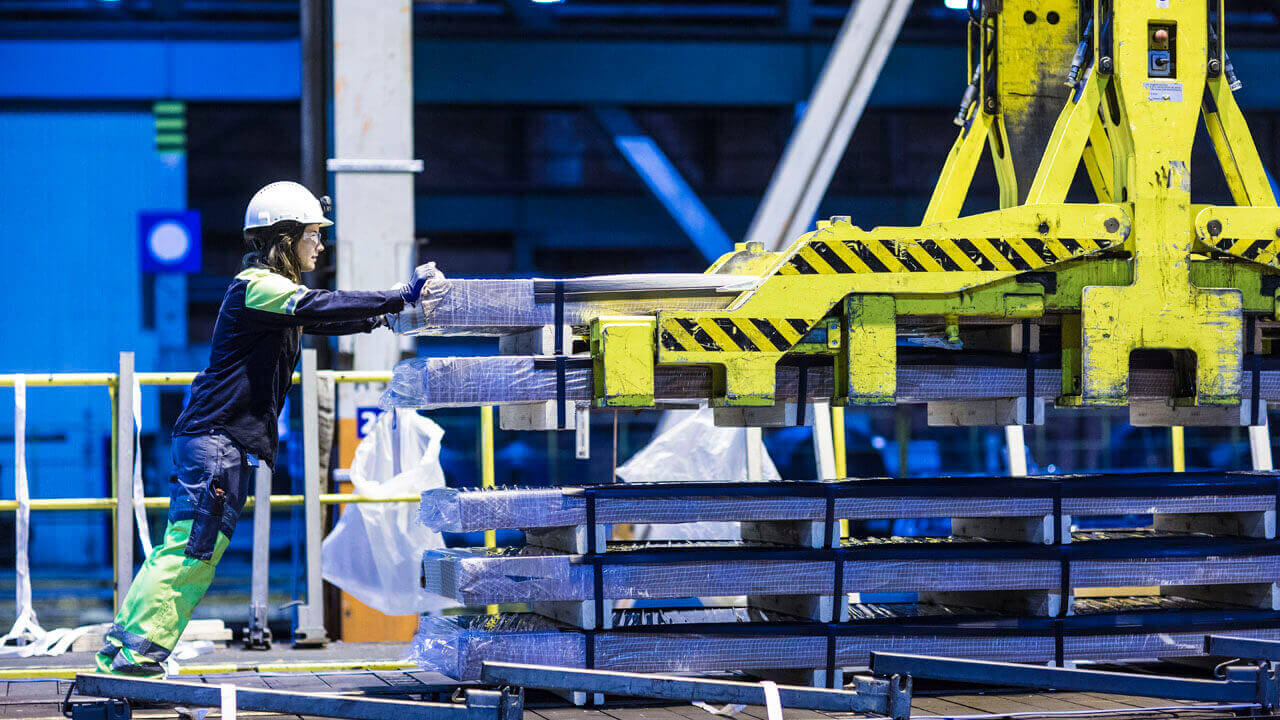
SSAB has entered an agreement with US autopart maker Shape Corp. for the use of its fossil-free steel in automotive applications.
Shape will be testing SSAB’s HYBRIT-produced steel in the manufacture of crash management and body structure systems, SSAB said June 21. This marks the steelmaker’s first partnership for fossil-free steel in the US.
HYBRIT, or Hydrogen Breakthrough Ironmaking Technology, was created in 2016 with the goal of developing a technology for fossil-free iron and steelmaking. The project produced its first steel in late 2021 and aims to be supplying the market with zero-carbon emissions steel at a commercial scale by 2026. SSAB plans to largely eliminate carbon dioxide emissions from its own operations by 2030-45.
“Demand for fossil-free steel is increasing, which is one of the reasons for SSAB to bring forward its green transition with the ambition to largely eliminate carbon dioxide emissions around 2030,” SSAB CEO Martin Lindqvist said in a statement.
Shape has committed to reducing its global carbon emissions 30% by 2030 and to be fully carbon free by 2035.
— Justine Coyne
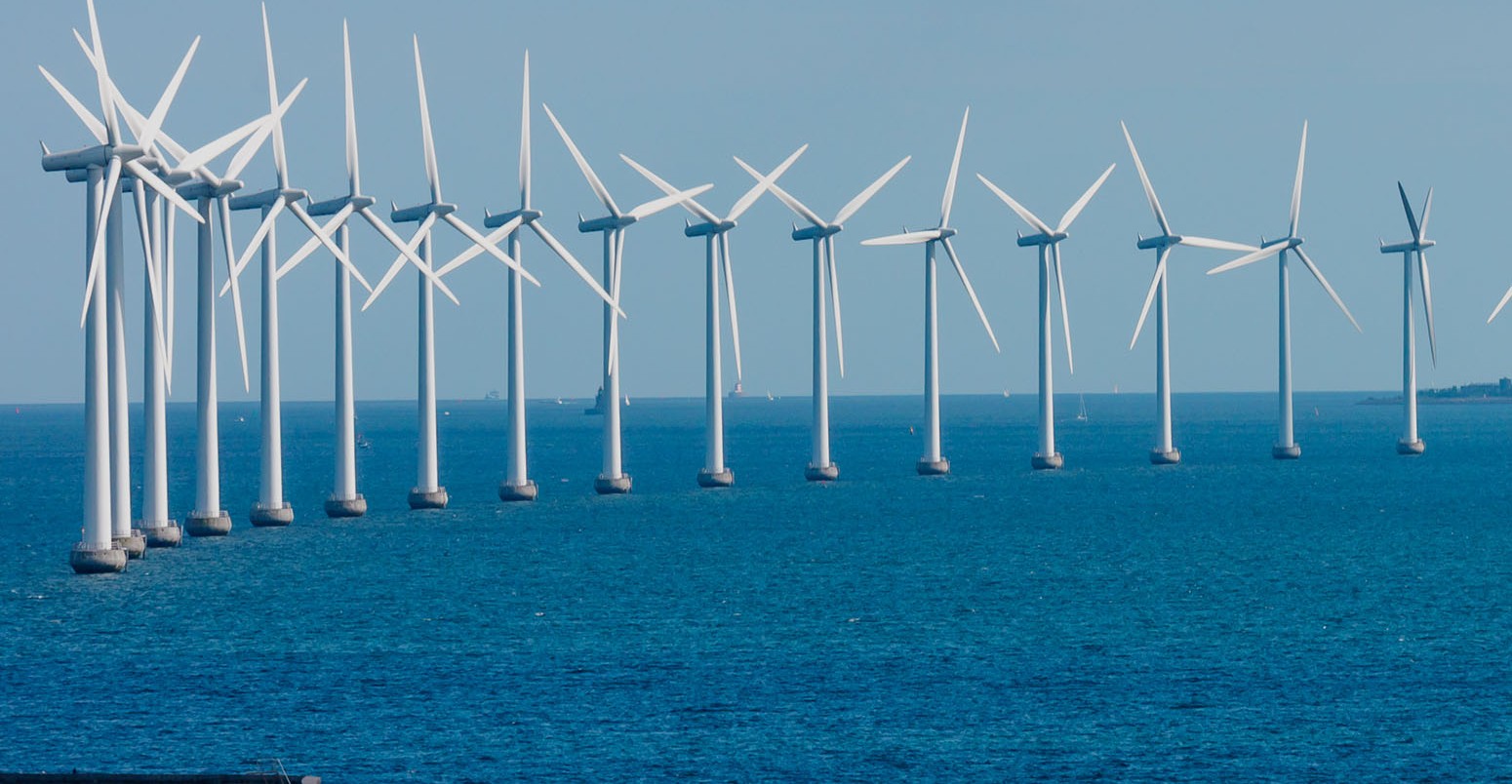
Wind, steel bodies call on EU to speed up on renewables to secure industrial energy supply
The EU must put at the top of its agenda renewables and hydrogen projects to secure industry energy supplies to reach climate neutrality and accelerate Europe’s independence from Russian fossil fuel supplies, WindEurope and the European Steel Association (EUROFER) said in a joint statement June 21.
There are now 60 low carbon steel projects ready across Europe to be scaled up to industrial level, but in order to deliver them a large supply of renewable electricity and renewable hydrogen are needed, the industry associations said.
“Today, capital investment is set at €31billion, operational costs at €54billion (pre-Russian war in Ukraine data), while clean electricity needs amount to 150 TWh, half of which is for hydrogen production, by 2030,” the statement said.
The projects’ CO2 emissions abatement potential is equivalent to a cut of 55% on 1990 levels.
“REPowerEU set a 510 GW target for wind by 2030, that’s 39 GW of new wind per year, more than double what we’re installing now,” said Giles Dickson, CEO of WindEurope. “The wind supply chain can deliver, the finance is there. The bottleneck is permitting. It’s too slow and complex. Council and Parliament need to adopt the REPowerEU plan for permitting as a matter of urgency.”
REPowerEU is a European Commission proposal to end reliance on Russian fossil fuels before 2030 in response to the 2022 Russian invasion of Ukraine.
“Usually, industry adapts to energy supply and not vice-versa. There is no business case for investment in green steel if green energy carriers are not available,” said Axel Eggert, Director General of EUROFER. “The steel industry has developed breakthrough technologies for producing low carbon steel that rely on non-fossil energy sources, but we don’t have enough renewables production nor the related infrastructure to transport it where it has the highest impact. Not to talk about hydrogen: there is no developed infrastructure at all.”
“We call on the EU institutions and the Member States to double down on their actions for guaranteeing security of supplies, strengthening critical supply chains necessary for the energy transition, and investing in the green technologies we need to the benefit of citizens and industry alike,” Eggert and Dickson said concluded.
Platts, part of S&P Global Commodity Insights, assessed Northwest European hot-rolled coil, the main steel product produced in the continent, at Eur875/mt ex-works Ruhr June 20, down from a peak of Eur1,460/mt March 18.
Demand from end-users has been low as steel consumption by automotive industry dropped due to a shortage of various components and elevated stocks at distributors.
— Annalisa Villa
German steel distributors’ sales rise in May, stocks jump 12% on year: BDS
German steel sales by distributors rose 3.53% on the month in May to 867,869 mt and were also slightly higher than the 862,807 mt sold in May 2021, German steel stockholders’ association BDS reported June 20.
The May 2022 sales were nonetheless below the first-quarter average monthly sales recorded at 934,772 mt.
Of the May sales, 282,651 mt were long products and 514,044 mt flat products, the association said.
Steel products stocks held by German distributors also rose in May, BDS reported.
May’s stocks at 2.24 million mt of products were 1.05% higher on the month and notably 12.05% higher than the 1.97 million mt held in May 2021, according to BDS’ data.
“In early 2021 we had particularly low stocks. Stocks now are higher than last year, but still lower compared to other years like 2018 or 2019,“ BDS noted.
The May 2022 stocks also showed an increase on this year’s Q1 average monthly stocks of 2.23 million mt.
Of the May stocks, 799,871 mt were long products and 1.39 million mt were flat products, BDS said.
— Diana Kinch