


Ukraine, Moldova, Georgia could be granted EU ‘candidate status’ as early as June 23-24, EC says
The European Commission has recommended to EU heads of state that Ukraine, Moldova and Georgia be considered for full membership of the European Union.
Announcing its recommendation to EU leaders – collectively known as the European Council – on Friday June 17, the EC said the three countries should be accepted as having a “European perspective” and that Ukraine and Moldova be “granted candidate status once a number of priorities have been addressed.” Georgia, meanwhile, should be reassessed “to ensure meets a number of conditions” before being granted candidate status.
The European Council could agree to the EC recommendations in a unanimous vote on June 23 and 24.
Having “candidate status” does not give a nation the right to join the EU automatically, but it is the first step in the process and means accession negotiations can begin.
On 28 February 2022, four days after Russia’s unprovoked invasion, Ukraine presented its application for EU membership. And on 3 March 2022, Georgia and the Republic of Moldova followed suit.
If the membership applications are successful, imports from three countries would no longer be subject to EU import restrictions.
“Ukrainian exports of steel already benefit from unrestricted access to the EU market as of early June 2022, albeit temporarily for an initial period of one year,” according to Yuriy Rudyuk, a partner at independent law firm Van Bael & Bellis. He was referring to EU regulations temporarily suspending import, anti-dumping and safeguard duties on Ukraine-origin products, which formally came into force early on June 4, 2022, to support the country in the face of Russian aggression.
Rudyuk said it was highly likely the special regime for Ukraine would be extended beyond one year should the war continue.
Ukraine is a significant trade partner of the EU, supplying the substantial volumes of semi-finished and finished steel products along with raw materials for steelmaking.
Ukraine’s exports to the EU have been significantly reduced, however, due to the constant attacks on steel plants and essential infrastructure by the Russian aggressors. For instance, Metinvest – the owner and operator of the Azovstal Iron & Steel Works in Mariupol – saw its first-quarter steelmaking capacity reduced by 25% due to the war.
For 2022 as a whole, various forecasts predict that Ukraine’s gross domestic product (GDP) will fall by 30-45% and, according to the head of strategy and business development at Metinvest, Roman Perepelytsia, in a best-case scenario, the Ukrainian economy will not attain the level reached in 2021 until 2026.
Published by: Elina Virchenko
Paolo Frediani and Ross Yeo in London contributed to this article.


CMC Poland profits from Russia/Belarus steel ban
CMC Poland grew steel shipments 18% on-year in the third fiscal quarter through May (FQ3) to 476,000 short tons. Merchant and other deliveries were up 16% to 306,000st and rebar shipments up 21% to 170,000st, Kallanish notes.
Average selling price was up 46% to $967/short ton. Cost of ferrous scrap utilised was up 41% to $530/st and steel products margin was up 52% to $437/st. Net sales surged 71% to $484.6 million and adjusted Ebitda was up 142% to another record $121m, supported by higher magins.
Underlying demand for steel products remained robust. Volumes of rebar, merchant bar, and wire rod increased on a year-over-year basis, assisted by the addition of a third rolling line, which improved production flexibility and the mill’s ability to capitalise on favourable market conditions, says US parent CMC. During the first 12 months of operating the new rolling line, quarterly shipment volumes of finished products have increased 35% compared to the average of the preceding five years.
Energy costs in the Europe segment increased on-year in FQ3, but were more than offset by strong market dynamics.
Europe volumes should remain supported in the August quarter by a robust construction market, CMC adds.
In the nine months through May, steel shipments rose 12% on-year to 1.29 million st, with merchant and other products up 5% to 846,000st and rebar up 28% to 445,000st. Net sales surged 78% to $1.21 billion and Ebitda rose 3.5-fold to $281.96m.
Geopolitical events have caused a significant shift in steel trade flows into Europe, CMC points out. Sanctions have resulted in an absence of Russian and Belarussian steel in the EU market, while Turkey, as the natural alternative, is not geographically well-situated to supply Eastern Europe, it adds. CMC Poland has capitalised on this situation using its new rolling mill.
Adam Smith Poland


EU initiates Belarus rebar anti-dumping duty review
The European Commission has initiated an expiry review into the EU anti-dumping duties on rebar from Belarus, following a request from Eurofer.
The product in question comes under HS codes 7214 10 00 10, 7214 20 00 20, 7214 30 00 10, 7214 91 10 10, 7214 91 90 10, 7214 99 10 10 and 7214 99 95 10. Definitive duties of 10.6% have been in place since 2017. Eurofer alleges the continuation of dumping and recurrence of injury would occur if the existing measure is allowed to expire.
The need for a duty extension nevertheless seems less critical since the EU banned imports of steel from Belarus in March and redistributed safeguard quotas assigned to the country to other exporting countries (see Kallanish passim).
Despite the AD duty being in place, Belarus supplied the EU with almost 700,000 tonnes of finished steel products in 2021, most of which were rebar and wire rod, according to Eurofer data.
Adam Smith Poland
Russia to subsidise steel exports amid sanctions
Russian authorities will subsidise steel exports, Russian Deputy Minister of Industry and Trade Viktor Evtukhov said during his speech at the St. Petersburg International Economic Forum (SPIEF) on Friday.
“We are revisiting the decision to subsidise the export of metallurgical products,” Evtukhov said. “Last year, there was no point in this: the products were exported, there were high prices, and our products flew off the wheels. Today there is a problem, so we will revisit this subsidy.”
According to the official, another important measure is subsidising the import of critical raw materials.
In 2020, a mechanism was launched to support Russian industrial exports, with RUB 2 billion ($35 million) allocated from the budget to exporters for corporate programmes to improve competitiveness, which involved subsidising bank loans.
Evtukhov conceded domestic demand for steel has fallen, and the “overly strong rouble” clearly does not benefit steel exporters, so some products sometimes have to be delivered at zero margin, and in some cases even at a loss.
“Restricting exports from Russia in favour of the exchange rate would be a strategic mistake,” Russia’s First Deputy Prime Minister Andrei Belousov noted during the forum. “The government, on the contrary, intends to expand the geography of export supplies in every possible way without harming the domestic market.”
Earlier during SPIEF, the chairman of the Bank of Russia, Elvira Nabiullina, said amid current conditions the value of exports should be re-evaluated, with production reoriented to the domestic market and the degree of product processing increased.
Last week, Russian steelmaker NLMK said that steel exports will fall further due to sanctions against the country following its invasion of Ukraine (see Kallanish passim). It expects exports of steel products from Russia to decline by 23% in 2022, with rolled products accounting for the bulk of the decline, at 40-45%.
More than 10,000 sanctions have been imposed against Russia, and it is already clear that steelmakers are losing sales markets, says the Russian Steel Association.
Svetoslav Abrossimov Bulgaria

Italian coil downturn continues
The deadlock continues in Italy’s cold rolled and hot-dipped galvanised coil markets, with demand remaining sluggish and prices on a downward trajectory, Kallanish notes.
Service centres are refusing to buy, apart from very low volumes from stocks. Some sales are being done with end-users but still for low volumes. Customers are delaying receipt of material and many are asking to review old orders agreed at higher prices. Stocks at service centres are said to be particularly high. At present, they are receiving material paid at much higher prices but are selling at today’s reduced values, which is causing negative market sentiment and low consumer confidence.
Some end-users and large service centres are using temporary layoff schemes to try and contain the financial damage of the current coil price collapse. Producers are quoting August and September lead times but their customers have very low visibility into their future orders and virtually no orders for September. Meanwhile, Italian hot rolled coil values are reported to have fallen to the level of €800/tonne ($842/t) base ex-works.
HDG is reported at €1,020-1,050/t base ex-works, with CRC starting at €1,000/t. Some producers are still asking for €1,100/t base ex-works, sources suggest.
This deadlock is forecast to continue through the summer, given the high stocks at service centres and end-users. Some sources are less pessimistic and see a little demand coming back to the market before the August maintenance stoppages.
Natalia Capra France

Italian longs destocking takes toll on prices
The May market lull for long products in Italy is continuing into June with no sign of recovery. The distribution sector remains to be in a wait-and-see mood. Distributors tell Kallanish they continue to buy as little as possible as demand downstream does not signal any recovery.
However, despite uncertainty, some long products’ prices, such as for merchant bar and sections, are holding better than rebar and wire rod for which prices are declining sharply.
On average, merchant bar and sections have lost some €40-50/tonne ($42-52) versus the beginning of May. Merchant bar contracts stand at €780-820/t base ex-works. Including size extras, domestic contracts are hovering at €1,200-1,240/t ex-works, sources suggest.
Meanwhile, demand is also slowing for beams. The first category of sections remains at €1,380-1,390/t ex-works, including size extras.
On a more optimistic note, one source says that activity downstream is not so weak, and the recent standoff is a result of widespread destocking of the large volumes bought when prices were increasing in March. This significant destocking is forecast to last until the end of next month and some demand should hopefully resume in July.
Natalia Capra France
EU passenger car registrations fall 11.2% on year in May: ACEA
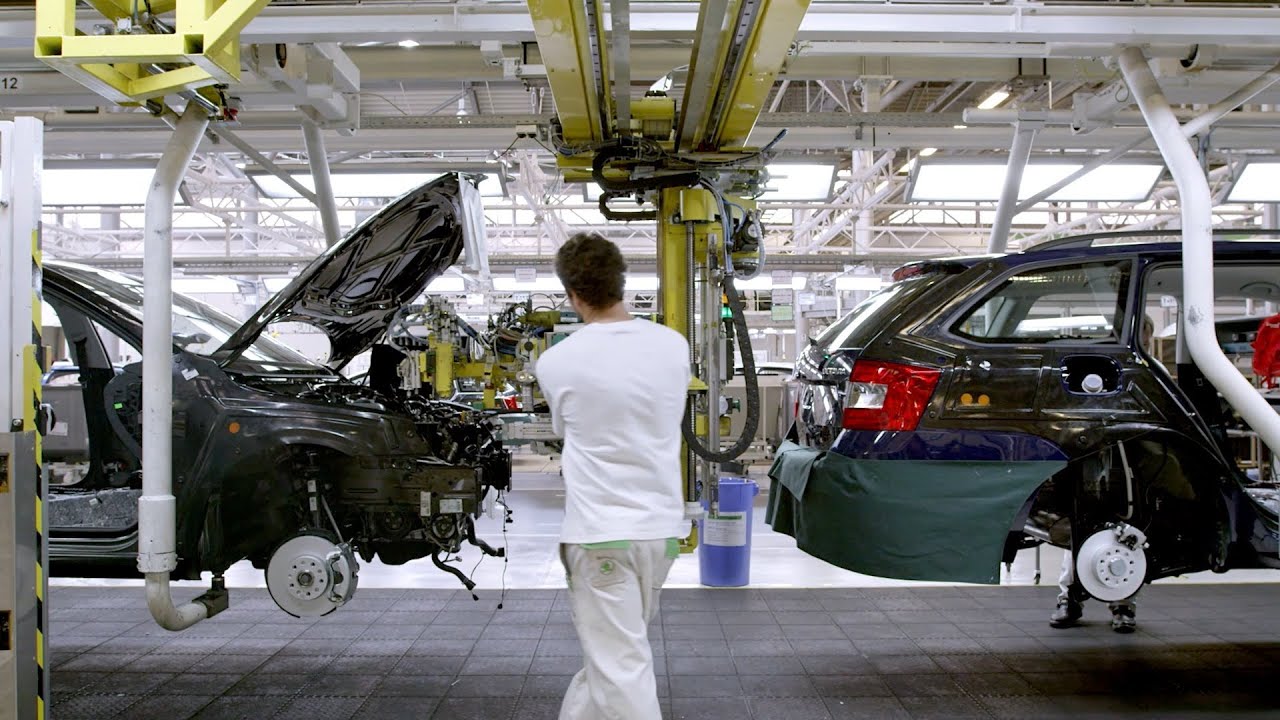
New passenger car registrations in the European Union fell 11.2% year on year in May to 791,546 units, bringing the total sales for the January-May period to 3.7 million units, down 13.7% year on year, data from the European Automobile Manufacturers’ Association showed June 16.
This was the tenth consecutive month of decline, with all four largest markets, Germany, France, Italy and Spain, seeing double-digit losses. However, the May volume was up 15.6% from April’s three-month low, the data showed.
In May, the largest EU car market Germany saw new car registrations dropping 10.2% year on year to 207,199 units, although 14.9% higher than the previous month.
In the second-largest market France, sales for the month dropped 10.1% on the year, but rose 16.6% on the month to 126,809 units.
Similarly, car sales in Italy dropped 15% on the year to 121,299 units, but rose 24.6% from April to the highest level since June 2021.
In Spain, 84,977 units were sold in May, falling 10.9% on the year, but up 23% on the month.
The auto sector is a key industry for steel producers but has been facing supply issues due to the ongoing semiconductor shortage, which in turn has affected production. On average, 900 kg of steel is used per vehicle.
S&P Global Insight Commodity assessed hot-rolled coil in Northern Europe at Eur900/mt ex-works Ruhr June 15, $22/mt lower than at the start of 2022.
For the first five months of the year, Germany topped the top four countries with 1 million units sold, down 9.3% on the year. In France, 600,893 units were sold, down 16.9% on the year, while registrations in Italy and Spain were 556,818 and 318,488, down 24.2% and 11.5%, respectively.
— Jacqueline Holman


Turkey set to announce AD duty decision on EU HRC imports
The Turkish Trade Ministry is expected to announce the final decision on its antidumping investigation into hot-rolled coil imports from the EU and South Korea in late-June or early-July, industry sources told S&P Global Commodity Insights June 16.
After the investigation, which was launched in early 2021, the ministry’s preliminary decision released March 11 determined rates of 14.08%-49.84%.
The investigation report with the final determinations would be submitted to the Board of Evaluation of Unfair Competition after receiving opinions and claims from relevant parties for a final decision, the ministry said at that time.
The final decision was expected at the end of June, although no exact information about the result had been given yet, Turkish Steel Exporters’ Association Vice President and Colakoglu CEO Ugur Dalbeler told S&P Global June 16.
“We are expecting to see that a required answer to the EU’s unfair attitudes against Turkey in the last four years will be given by the ministry,” he said.
Turkey exported only 700,000 mt HRC in the January-April period, but imported 2.2 million mt, with Dalbeler saying the preliminary decision meant it had been officially registered that EU mills were dumping sales into Turkey.
“Although Turkish mills have been pausing their output in recent weeks due to lack of orders, Turkey has been paying millions of dollars to dumped imports also from India, Japan and China,” he said, adding that protection measures should be imposed on these countries as well, not only on imports from the EU and South Korea.
Turkish mills’ HRC prices exceeded $1,200/mt in mid-March amid the war in Ukraine, but have declined since then due to pressure from lower import offers and scrap pricing in a sluggish market.
Turkish domestic HRC was assessed at $815/mt ex-works on June 10, according to S&P Global data.
Another industry source also expected the ministry to announce its final decision soon, probably in the first weeks of July at the latest.
According to the preliminary decision, ArcelorMittal will be subject to a dumping margin of 39.83%, Tata Steel 30.64%, ThyssenKrupp and Liberty Steel 23.30%, and all other EU producers 49.84%. South Korean producer POSCO will be subject to 14.62%, Hyundai Steel 14.08%, and other South Korean producers 18.59%.
These rates could be changed in the final decision.
— Cenk Can
European HRC market pessimistic on negative fundamentals
Negative sentiments settled in the EU HRC market June 16 with fundamentals unlikely to change in the near term, sources reported.
The Platts Northwest European hot-rolled coil assessment fell from Eur900/mt ex-works Ruhr to Eur875/mt ex-works Ruhr on the day, according to data from S&P Global Commodity Insights.
Although no deals for German material could be confirmed at the sub-900/mt level June 16, buyers expected further decline in prices going forward, reinforced by transactions reported into the Ruhr region ex-Central Europe.
Trader and service center sources reported separate deals at Eur870/mt and Eur860/mt delivered Northern Europe ex-Central Europe, respectively.
Different trader and service center source reported prices of Eur850-900/mt as achievable on the day, compared with deals heard earlier in week beginning June 13 at Eur900/mt ex-works Ruhr.
A mill source reported bids at Eur850/mt ex-works Ruhr, considering this level as workable on sufficient volumes. The source expected prices to continue on a slower decline into mid-July when prices would stabilize into the summer shutdown period.
Amid low demand, sources reported near-term revival as unlikely owing to subdued demand from the automotive sector and risk-averse buyers not restocking against pricing downtrends. However, mills were still offering short lead times — with order books for July rolling unfilled — due to constrained demand and resultant oversupply in the European market.
Against market expectations, mills are yet to announce cuts to production capacities, preferring to reduce shifts and extend traditional maintenance periods.
Mills were accepting buyers’ bids in an attempt to secure volumes, with settled prices much lower than initial offers.
“End-users are kings of the market now — they control the prices,” said a mill source. “Demand is very weak; buyers prefer not to book beyond minimum volumes, as prices are decreasing daily with nobody wanting to commit to purchasing.”
In South Europe, hot-rolled coil prices also moved down on the day, assessed down Eur15/mt at Eur835/mt ex-works Italy.
A trader source reported deals at Eur830-850/mt ex-works Italy. Another trader saw offers at Eur850/mt ex-works Italy, expecting workable price levels to fall to Eur800/mt ex-works Italy in the near term.
— Benjamin Steven, Maria Tanatar
EU starts expiry review of anti-dumping measures on rebar from Belarus
The European Commission (the Commission) has initiated an expiry review of its anti-dumping measures on rebar imported from Belarus, it said on Tuesday June 14.
The definitive anti-dumping duties, set at 10.6%, were imposed by the Commission on June 16, 2017 and were scheduled to expire on June 17, 2022.
The Commission started the expiry review at the request of regional steel association Eurofer, on March 16 of this year on behalf of the EU steel rebar industry, a notice in the EU Official Journal said.
The investigation will be conducted within the next 12-15 months to determine whether the expiry of the measures will lead to a continuation or recurrence of trade subsidies or to injury to the European steel industry.
If the measures were allowed to lapse, the Official Journal said, the import volumes of rebar products from Belarus would be likely to increase because there is substantial unused capacity in the nation.
The import tariff under expiry review applies to iron and non-alloy steel from Belarus not further worked than forged, hot-rolled, hot-drawn or hot-extruded, but including those twisted after rolling and also those containing indentations, ribs, grooves or other deformations produced during the rolling process, currently falling within CN codes ex 7214 10 00, ex 7214 20 00, ex 7214 30 00, ex 7214 91 10, ex 7214 91 90, ex 7214 99 10, ex 7214 99 71, ex 7214 99 79 and ex 7214 99 95.
Rebar exports to Europe from the country’s sole rebar exporter, Belarus Steel Works (BMZ), fell by 24.86% year on year to 54,279 tonnes in the first four months of 2022, down from 72,238 tonnes in the first four months of 2021, data from the European steel association, Eurofer, showed.
The decrease was related to the European Union’s sanctions against Belarus for its cooperation with the Russian invasion of Ukraine, sources said.
Published by: Julia Bolotova