

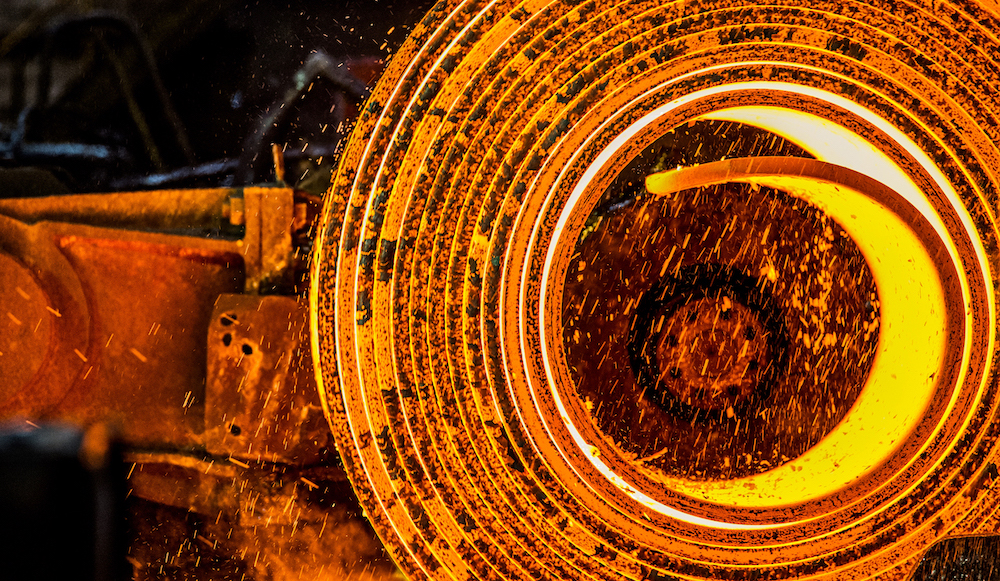
Weak demand drives EU HRC prices down
Domestic prices for hot-rolled coil in Europe declined June 10 due to weak demand from both end-consumers and distributors.
Platts assessed HRC in Northern Europe at Eur940/mt ex-works Ruhr, down Eur10/mt day on day, according to data from S&P Global Commodity Insights.
A trader reported deals at Eur940-950/mt ex-works Ruhr, and a buyer confirmed deals at Eur940/mt ex-works Ruhr.
Two buyers estimated tradable value at Eur950/mt ex-works Ruhr. Another distributor and a producer, however, reported achievable prices at Eur900-950/mt ex-works Ruhr.
Despite high energy costs, Northern European steelmakers were expected to accept prices for HRC at Eur900/mt ex-works or even lower, according to estimates of market participants.
Hot-rolled coil in Southern Europe was assessed at Eur875/mt ex-works Italy June 10, down Eur15/mt day on day.
Offers were heard at Eur900/mt ex-works, and buyers and sellers estimated achievable prices at Eur860-900/mt ex-works. For big tonnages, steelmakers were expected to settle deals at Eur850/mt ex-works.
Low steel consumption by automotive industry has been one of the main reasons behind the downward trend settled in the European market. Production rates of car manufacturers and, as a result, steel consumption has been limited because of shortages of semiconductors and other components. And although some market participants believe that automotive segment might start to recover in the third quarter, a majority of sources agrees that steel consumption rates would reman below average.
“Automotive is dead,” a German trader said. “They did not book as much steel as they intended to earlier this year, and they will not require regular volumes in the third or fourth quarter this year. And even if they had all the components, what would be the demand for cars in current economy and with upcoming changes in emission regulation?”
Distributors have also been showing limited interest in making deals. Due to sufficient stocks and declining prices, they preferred to remain in wait-and-see mode.
“There is a lot of material in the pipeline,” a Northern European distributor said. “Mills have volumes due to disastrous demand from automotive, distributors have volumes due to panic buying and logistics issues that did not allow them to bring material from ports earlier this year. So, market is moving, but it is not moving fast enough to absorb all steel available in stocks.”
Import offers, in the meantime, have stabilized, removing some pressure from the market. This might indicate that domestic prices have moved close to bottom, some market sources suggested.
Import offers of HRC from Asia were heard at Eur870-880/mt CFR Antwerp to Northern Europe.
Turkish mills were heard offering the material to Italy at Eur820-830/mt CFR Italian ports, including anti-dumping duty. Offers of HRC from Asia have been reported at Eur800-820/mt CFR Southern European ports.
HRC from India has been available at Eur780/mt CFR. Despite the competitive price, buyers have been avoiding Indian coil, as the steelmakers had to add boron to avoid export duties, making the material not suitable for welding.
— Maria Tanatar


Sanctions cut Belarus tinplate mill off from European market it was built for
EU sanctions on steel imports from Belarus are strangling the modern steel coil tinning plant in Miory, north of Belarus, built in 2020 with a view of supplying extra thin tinplate to the European market, an official at the mill told S&P Global Commodity Insights.
Miory Metal Rolling Mill, Belarus’s new and first tinplate producer, is currently in a ramp-up stage after a restart in late March-early April.
The plant initially launched in December 2020 and in the first half of 2021 made trial lots for customers in Italy, Spain, Poland and the Czech Republic, but was subsequently idled between August 2021 and April 2022 as its founder was prosecuted and the mill experienced financial difficulties, according to the official.
Miory was initially designed to supply the European market, but its emergence coincided with sanctions being placed on the country’s steel industry; in March, the EU banned the imports of steel products from Belarus and this nixed the mill’s prospects of developing sales in the market it was originally built for.
To survive, it will need to quickly develop ties with Africa, Saudi Arabia and Asia, but also mainly switch to serving Russian clients, whose recent acceptance of products from the Miory mill is due to the same package of sanctions.
When the Miory plant was at the commissioning stage, many Russian tin packaging producers that the mill’s management had contacted declined to place orders as they already had contractual relations with other foreign suppliers.
During its short period of activity in 2021, the mill developed the production of extra thin 0.1-0.12 mm tinplate most popular with can manufacturers, especially for the food and beverage industry.
In the spring, Russian can manufacturers changed their stance after Russia was hit with a range of sanctions following its invasion of Ukraine on Feb. 24 and were left without European tinplate.
S&P Global Commodity Insights estimates the Russian tinplate market at 266,400 mt/year and customs data shows its high dependence on imports from the EU, which in 2021 covered nearly half of domestic demand.
In 2021, Russia’s sole tinplate maker MMK produced 169,000 mt, according to the company, 100% of the country’s output.
Of this, 29,540 mt was exported entirely to the Commonwealth of Independent States and to Ukraine, according to Russia’s federal customs service.
Russia’s tinplate imports in 2021, at 127,000 mt, were nearly 100,000 mt greater than its exports, and all comprised less than 0.5mm thick strip. Almost 45%, or 56,130 mt, of this total came from the EU, specifically from Germany, Slovakia and the Netherlands. China supplied 26%, or 32,970 mt. Kazakhstan’s ArcelorMittal Temirtau steelworks was the third-largest source of imports at 28,000 mt, a 22% share.
“We have recently received interest from a buyer in Russia’s Far East, who was after a large quantity,” the official said, adding that certain logistical issues, including inflated rates for container shipments, make substituting European tinplate with Chinese product problematic for Russian buyers.
Originally meant to distribute up to 90% of its output in Europe, the 140,000-150,000 mt/year Miory tinning mill now envisages its sales to Russia at 9,000 mt/month, with the remainder distributed within Belarus or elsewhere.
However, the mill will soon have to deal with another sanctions-related headache: at the bare minimum it might soon need to top up process liquids in its equipment, which normally comes from Germany, but it is likely to have to source them from somewhere else.
— Ekaterina Bouckley

Steel prices will move off peaks: Moody’s
Moody’s Investors Service says steel prices globally likely peaked in 2021 but will remain high in 2022 relative to historical averages.
According to Moody’s, steel prices decreased at the start of this year because replenished inventories boosted supply, and supply-chain disruptions reduced demand. The prices then surged in late March on Russia’s invasion of Ukraine because both countries are sizable exporters of steel inputs such as pig iron, metallurgical coal, iron ore and steel scrap, as well as semi-finished and finished steel products, oil, and natural gas.
The countries are now unreliable sources of these materials, which caused their prices to surge, Kallanish understands.
It adds that higher energy costs and the two countries’ lower exports of semi-finished steel products led to steel-production curtailments and lower finished steel supplies in other markets.
It also says steel and raw material prices have begun to soften as panic buying recedes, supply-chain issues reduce global demand, COVID-related lockdowns reduce consumption in China, and inflationary cost pressures and higher interest rates weigh on sentiment and economic growth.
“Steel prices are likely to soften further but remain historically strong in most regions this year,” it says.
According to Moody’s, prices could also remain above historical levels in the longer term for two reasons: increased demand for steel scrap and metallics as steel producers focus on reducing carbon emissions; and less competitive steel sector dynamics from consolidation in some regions.
Siew Mung Tan Malaysia


Spain’s steel production, scrap consumption rise in April
The Spanish steel sector saw steel production and scrap melting increase on-month in April, Kallanish notes. Both activities, however, remained weak compared to the same month a year ago.
According to the Spanish steelmakers association Unesid, the local steel industry produced around 1.11 million tonnes of crude steel in March. This was 10.1% more than March’s output of 1.01mt, but down by 14.3% year-on-year. April’s output was the highest so far though this year, Unesid data show.
Spanish four-month output totalled 4.10mt, a fall of 14.1% or 676,000t lower in comparison with January-April 2021 volume of 4.78mt.
Spain used 921,000t of ferrous scrap for steelmaking in April, up 23.3% month-on-month. This volume, however, was 97,000t or 9.5% less over the same month in 2021. Cumulative scrap usage was 3.16mt, representing 77% of total crude steel production in January-April 2022.
Todor Kirkov Bulgaria

Voestalpine pushes processing activities
At voestalpine’s annual press conference, executives highlighted the company’s set-up as a materials producer with a share of processing that makes up more than half of its activities.
“We keep focusing on premium products and solutions,“ Kallanish heard ceo Herbert Eibensteiner say at the conference. “We are banking on growth in processing activities, and will keep developing innovative solutions in cooperation with our customers,” he said. Despite the difficult global environment overall, the company says its order books are filled through the summer at least, and longer for some product and customer segments.
The automotive industry should see some improvement over the course of the year – from a modest status quo, however. According to Peter Schwab, head of the Metal Forming Division, the original forecast of a 20-25% gain in the automotive industry turned into a drop of 4% so far.
“We are still running on two-thirds of the pre-Covid level,” he said. Especially German carmakers have fallen back “on the level of 1974,” the year of the oil crisis, when the weekend driving ban left the motorways empty and quiet on Sundays.
Executives highlighted especially voestalpine’s railway infrastructure segment as a reliably stabilising factor on the whole throughout the year, as has been the case in the past.
“The unit performed better than we anticipated in our original planning,” said Franz Kainersdorfer, head of the Metal Engineering Division.
The same applied to the division’s Industrial Systems unit, following the takeover of a Swiss welding company.
“We can now cover the entire range of welding services,” Kainersdorfer said. With wire welding solutions, voestalpine has since gained orders in automotive, and tubular solutions profited from the immensely risen oil prices and the abolition of Section 232, he added.
Christian Koehl Germany

Vale to invest globally in sustainable startups
Brazil’s Vale says it has created Vale Ventures (VV) to support start-ups globally whose innovative technologies will be implemented in their operations, Kallanish learns from the miner.
The venture capital initiative’s $100 million fund will support the transition to a more sustainable world, the company explains.
“By building a portfolio of disruptive solutions, we are able to generate financial and strategic return and bring new business opportunities, insights and insights to our company, customers and society,” says VV ceo Viktor Moszkowicz.
The new company will acquire minority stakes in startups focused on decarbonisation and zero-waste in the mining value chain. VV will also support companies engaged with the supply of essential metals to power the energy transition, and also invest in disruptive technologies that will change how miners operate.
Todor Kirkov Bulgaria
Assofermet sees further raw material price declines
The scrap declining trend seen in May is continuing in June, following a significant fall in Italy last month between €100-130/tonne ($107-139/t), says Italian trade association Assofermet in its monthly market note monitored by Kallanish.
The drastic reduction of orders for the finished product has pushed Italian mills to delay and in some cases suspend scrap reception last month. The Russian-Ukrainian conflict and the Chinese pandemic revival continue to negatively impact international scrap prices and demand. In Turkey, the weak transaction volumes and lower prices are continuing after the $100/t May price fall that dragged down European prices.
Meanwhile, pig iron prices in Turkey and Europe are following the scrap falls this month.
“The prices of Russian pig iron, which are falling further, are not receiving any noticeable interest from buyers, who prefer to wait having good stocks and little visibility on finished products’ sale,” Assofermet says. It adds that the hot-briquetted iron (HBI) production cuts, as well as the arrival of some volumes purchased in the previous months, confirm a stand-off in HBI sales in Italy, despite the further price reduction.
Italian mills continue to withhold their ferroalloys purchases, limiting their procurement to small volumes, convinced that prices will continue to fall in June.
“The Italian steel mills have a static and wait-and-see attitude, while the European mills have proved and are proving to be more dynamic with more sustained purchases,” the note concludes.
Natalia Capra France

EU starts expiry review on anti-subsidy measures on HR flat steel from China
The European Commission has initiated an expiry review of its anti-subsidy measures on hot-rolled flat steel products imported from China, it said on Wednesday June 8.The definitive anti-subsidy duties were imposed on June 8, 2017, and were scheduled to expire on June 9, 2022.
The Commission settled definitive anti-subsidy duties at 4.60% for Zhangjiagang Hongchang Plate and Zhangjiagang GTA Plate; at 7.80% for Handan Iron & Steel Group Han-Bao, Hesteel Tangshan and Hesteel Chengde; at 28.10% for Bengang Steel Plates; and at 31.50% for Shougang Jingtang United Iron & Steel and Beijing Shougang Qian’an Iron & Steel.
The duties were set at 17.10% for other co-operating companies and at 35.90% for all other companies.
The Commission started the expiry review at the request of regional steel association Eurofer, submitted to the Commission on March 9 this year on behalf of the EU hot-rolled flat steel industry, a notice in the EU Official Journal said.
The investigation will be conducted within the next 12-15 months to determine whether the expiry of the measures would lead to a continuation or recurrence of trade subsidies, or injury to the European steel industry.
The Official Journal said that, if the measures were allowed to lapse, the import volumes of such products from China were likely to increase because there was substantial unused capacity in the East Asian country.
It added that the EU market was attractive in terms of size and prices, because the export prices for hot-rolled flat steel from China undercut the prices available from within the EU.
It was therefore considered likely that a continuation or recurrence of trade subsidies on such products would result in injury to the EU sector should the anti-subsidy measures be removed, Fastmarkets understood.
The Commission invited all interested parties to make their views known within the next 15 days.
The products concerned fall under CN codes 7208 10 00, 7208 25 00, 7208 26 00, 7208 27 00, 7208 36 00, 7208 37 00, 7208 38 00, 7208 39 00, 7208 40 00, 7208 52 10, 7208 52 99, 7208 53 10, 7208 53 90, 7208 54 00, 7211 13 00, 7211 14 00, 7211 19 00, ex 7225 19 10, 7225 30 90, ex 7225 40 60, 7225 40 90, ex 7226 19 10, 7226 91 91 and 7226 91 99.
Published by: Julia Bolotova


European HRC prices seek bottom
European hot-rolled coil prices inched downward on Thursday June 9, but were getting close to the market bottom, Fastmarkets heard.Fastmarkets calculated its daily steel HRC index, domestic, ex-works Northern Europe at €944.29 ($1,011.26) per tonne on Thursday, down by €5.71 per tonne from €950.00 per tonne the previous day.
The index was down by €54.71 per tonne week on week and by €234.04 per tonne month on month.
Offers from mills in the region were heard at €950 per tonne exw, with one transaction for a small tonnage reported at €940-950 per tonne exw. Some estimates from buyers were heard at €900-950 per tonne exw.
Trading in the region continued to be slow, with very few transactions reported.
“Trading remains quiet, and not every mill is even in the market,” a trading source in Germany said.
Producers in the region could still offer coil for July shipment.
Most sources believed that the HRC price in the region would not sink below €900 per tonne exw, because sales would then be loss-making for the mills.
Market participants suggested that distributors in the region may need to restock toward the end of June or early in July and that this restocking activity would help to stabilize HRC prices.
There was market chatter that producers in Northern Europe will reduce output to balance demand and supply, but nothing has been announced officially.
“Everyone keeps talking about a reduction [in output], but it is not clear whether the mills are actually doing it or just talking about it,” another source said. “Maybe [mills] will just take an extra maintenance week during the summer.”
Offers from Central European mills were reported by multiple sources at €900-910 per tonne ex-works, while at least two producers in the region were heard offering HRC at even cheaper prices of around €850-870 per tonne ex-works.
Fastmarkets’ calculation of the daily steel HRC index, domestic, exw Italy was €876.67 per tonne on Thursday, down by €13.33 per tonne from €890.00 per tonne on Wednesday.
The Italian index was down by €61.33 per tonne week on week and by €281.66 per tonne month on month.
Offers from local mills were reported at €900 per tonne ex-works, but buyers said that it was possible to negotiate a lower selling price of around €860-880 per tonne ex-works.
Domestic producers were able to offer material for July delivery.
Imports
Stabilization in import prices could also signal an end to the downtrend in HRC prices, sources said.
August-shipment HRC from Turkish mills was offered to Southern Europe at €820 per tonne cfr, including anti-dumping duty. HRC from Japan and South Korea was available at slightly higher prices of €840-850 per tonne cfr Southern ports.
Indian producers were the most aggressive, with August-shipment HRC offers of €800 per tonne cfr Southern ports. But these were offers of boron-alloyed material, sources said, and buying interest for boron-added HRC was limited because such material was not suitable for welding and “not good for load-bearing structures.”
Indian mills add boron to their HRC so that it does not become subject to the country’s recently-imposed 15% export duty.
Published by: Julia Bolotova
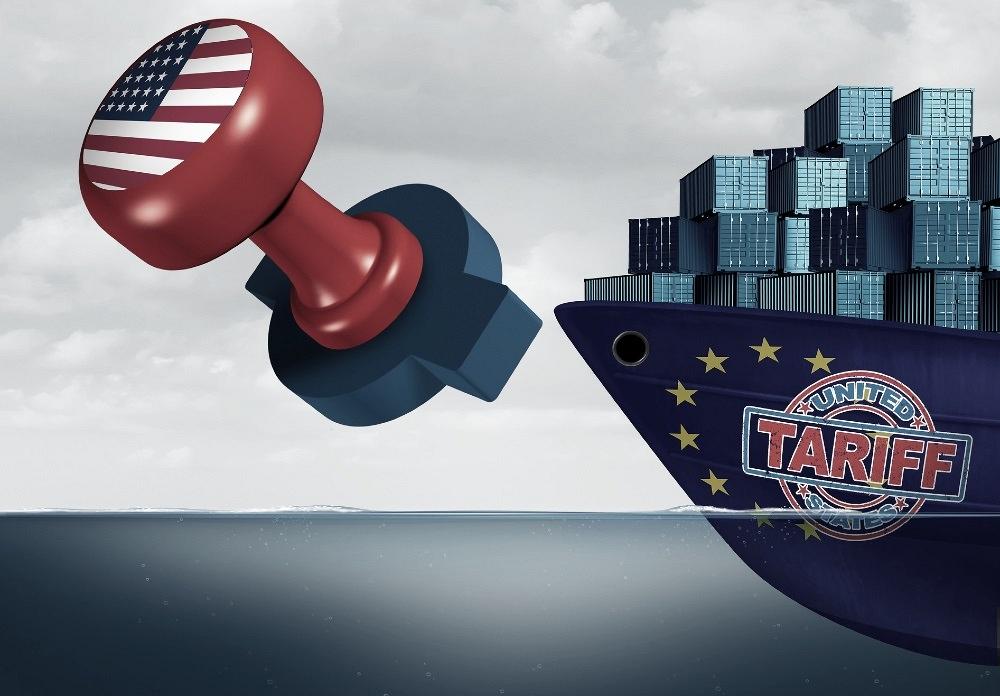
US appeals court upholds Section 232 steel tariffs
The US Court of Appeals for the Federal Circuit issued a ruling June 9 against a challenge to the Section 232 tariffs brought by a group of steel importers.
USP Holdings, as a consolidated plaintiff for Universal Steel Products, PSK Steel, Dayton Parts, Borusan Mannesmann Pipe and Jordan International, appealed an earlier decision from the US Court of International Trade dismissing their challenge to the Trump-era tariffs in February 2021.
The plaintiffs argued that the actions of both the president and Commerce secretary, which found that steel imports were a threat to national security and imposed tariffs for an indefinite period of time, conflicted with the Section 232 statute of the Trade Expansion Act of 1962.
The Federal Circuit said it found no violation of the statute.
Former President Donald Trump used the Cold War-era law to set import tariffs of 25% on steel and 10% on aluminum in March 2018.
— Justine Coyne