

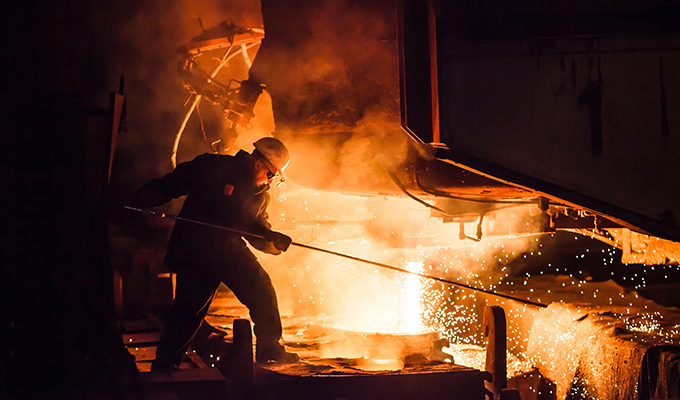
Surprise EU Parliament vote delays CBAM, ETS reform
This week, the European Parliament issued a surprise vote against the proposed reform of the ETS system. The vote triggered a domino effect, delaying approvals for other key measures such as the Carbon Border Adjustment Mechanism (CBAM).
Eurofer, the European steelmakers association, issued a statement to voice its disappointment at the delays.
“The rejection of the report is neither good for the climate nor for the industry’s green transition,” Eurofer says.
Following the vote, the ETS reform and CBAM will go back to the relevant commissions to be discussed again, Kallanish understands.
“We hope that the negotiations will soon be resumed among MEPs and that a solution addressing our concerns will be found, helping us to decarbonise in a sustainable manner and secure that the Carbon Border Adjustment Measure prevents effectively carbon leakage, including for exports,” says Axel Eggert, director general of Eurofer.
Emanuele Norsa Italy

Continued EU steel safeguards is pledge of stability, but quotas now exceed demand, Eurofer says
European steel industry association Eurofer welcomed the adoption by the European Commission of a proposal to continue the region’s import safeguard measures, because these would “support the stability of the EU steel market while ensuring smooth supply flows,” it said in press release on Wednesday June 8.“This decision brings stability to the EU steel market while avoiding excessive, market-disrupting steel imports from third countries,” Eurofer director-general Axel Eggert said.
Following the most recent yearly review of the safeguards, the EC proposed to the World Trade Organization (WTO) that it would keep the steel safeguard measures in place for two more years, with certain adjustments to global quotas, attributed to the effects of the war in Ukraine.
Eurofer supported that decision by the Commission.
But consecutive yearly liberalization of the quota volumes, particularly the most recent increase to 4% from 3%, pushed up the quota volumes to above the current demand level, Eurofer said, adding that steel demand has not yet recovered from the Covid-19 crisis.
There was “no economic need or legal obligation for such an increase,” Eurofer said.
The association noted that the Commission believed that there was little or no effect on the EU safeguard measures resulting from the recent move by the United States to switch its Section 232 import tariff of 25% on EU-origin imports to a tariff-rate quota (TRQ) system.
The EU safeguard measures were introduced in July 2018 to protect the steel market from diversion of trading flows, and in reaction to the US decision to impose duties on imports of steel under its Section 232 regulations.
The EU safeguard measures took the form of TRQs, reflecting traditional trade flows from third countries into the EU, with imports exceeding the quotas being subject to 25% duty.
Published by: Elina Virchenko

Carbon capture part of solution to decarbonize European steel industry: webinar
Carbon capture utilization and storage can provide a transitional solution to European steelmakers as the industry looks to cut carbon dioxide emissions. However, a final solution for achieving net-zero steel production will depend on how the steel is produced and the location of the mill, analysts with S&P Global Commodity Insights said June 8.
In a webinar discussing the potential use of CCUS to decarbonize the steel and cement industries, analysts from S&P Global’s Clean Energy Technology Group said that while these sectors are among the top emitters of industrial CO2, they also are core pillars of today’s society, being two of the most important engineering and construction materials. Combined, global steel and cement production contributes to 13% of global CO2 emissions, representing a major challenge for global net-zero emissions targets, with major steelmakers targeting net-zero emissions by 2050.
To achieve emissions reductions above 80% in Europe’s steel industry, currently three options are the most attractive: hydrogen, natural gas with CCUS in DRI-EAF steelmaking, or utilizing steel scrap, said Paola Perez Pena, principal research analyst at S&P Global. However, she noted that scrap has some limitations, depending on the region.
CCUS only part of solution
The top three steel producers in Europe are considering CCUS to reduce emissions but are also exploring hydrogen-based technologies as part of the solution, Perez Pena said.
In Europe, carbon emissions trading system allowances will make multiple decarbonization routes economical to replace blast furnace and basic oxygen furnace production by 2030, but only hydrogen will provide deep decarbonization, she said.
“Although CCUS is one of the technologies that the steel industry is evaluating, the complexity of the capture process for this industry is one of the big challenges since the most common steel production process has multiple CO2 sources,” Perez Pena said.
Steel production via blast furnace is the most carbon intensive method and is the most widely utilized method of production in Europe currently.
“As the predominant production method of this industry is the conventional coal-dependent blast furnace process, the need to assess alternative breakthrough technologies to reduce CO2 emissions is high,” Perez Pena said.
However, the decarbonization pathway of individual steelmakers will depend on which production process is being utilized. As a result, it is important that flexibility in the choice of decarbonization technologies is maintained to account for the differences in regional characteristics, including natural resources and infrastructure, she said.
Government support key to decarbonization
The EU steel industry has collectively committed to reduce emissions by 30% by 2030 versus 2021 but is seeking ways for this to be achieved as cost efficiently as possible.
Eurofer, the European Steel Association, is advocating for greenhouse gas emissions benchmark-based free allocation of CO2 allowances, compensation of indirect costs and complementary carbon adjustment as the elements that will help through the transition; the EU parliament is expected to vote on its proposals soon.
Currently, the steel and cement industries account for 5% of the current CCUS pipeline of large-scale projects, mainly in Europe.
“Although these numbers seem small in the overall pipeline of projects, this is a significant step ahead,” Perez Pena said.
While China accounts for more than 55% of all global steel production, Europe is one of the first regions facing the decarbonization challenge as carbon regulations increase in the region, Perez Pena said. Changing customer demand and growing investor and public interest in sustainability are further driving the need to decarbonize.
An analysis by the Clean Energy Technology Group found that steel can decarbonize at a lower premium than cement, but the right conditions need to exist for steelmakers.
The production premium for steel could go up to 15% for the European steel sector. However, when factoring in paying for the cost of carbon emitted, producing steel with some decarbonization solutions could be cheaper in some cases, based on 2030 estimates assuming an ETS price above $100/mt, Perez Pena said.
“Given how competitive the market is and the thin industry margins, decarbonization is not easy for business and governments will need to provide the right conditions in place to make sure the domestic industry is not destroyed,” she said.
— Justine Coyne


German steel market expects price drop on weak demand: survey
German steel producers, traders and buyers are bearish on pricing over June and are almost unanimous in their expectation that production levels will fall, according to data from S&P Global Commodity Insights monthly steel sentiment survey.
The survey saw traders and producers equally bearish on pricing, with the June index at around 20 points, down from around 42 points in May.
The market was experiencing slow demand for long steel products as buyers held back in expectation of further price falls. Most mill sources said demand was recovering but still below average.
“Customers are in wait-and-see mode,” one long steel producer told S&P Global Commodity Insights. “They will have to come back to the market. That is a matter of one week or two and then we can have a better idea about prices but for now they are holding back.”
Platts, part of S&P Global Commodity Insights, assessed TSI Northwest Europe Rebar Eur142.50/mt lower over May at Eur1,185/mt ex-works on June 1.
On the flat steel side, demand for coil products remained weak across Europe in May and the situation was unlikely to see any visible changes in June. Some market sources said buying interest had slightly improved, but was still slower than normal.
Steel demand from automotive industry had been undercut by continuing shortage of components. And other industries had also been less interested in flat steel.
Platts assessed TSI North European HRC Eur290/mt lower over May at Eur975/mt ex-works Ruhr on June 1.
German output lower
The production outlook edged lower from May with the index sliding 14 points to 26 for June, suggesting mills were in no hurry to produce. Steelmakers continued to operate at a low level of capacity utilization, amid high energy costs and low demand.
“Mills are planning on cutting production because of high electricity costs but I don’t think there will be a big change from April or May,” one long steel producer said.
On the flat steel side, however, against the expectation of market participants, steelmakers did not announce any production cuts. It was expected that the steel output reduction could have helped to balance weaker demand and supply. However, it is likely that the mills will make longer summer maintenances instead.
As a result, the rolled and semi-finished steel stocks of the steelmakers were expected to remain relatively high in summer.
Distributors, in the meantime, had sufficient stocks of coil and were holding back from making deals due to negative sentiment prevailing in the EU coil market, according to sources. Buyers’ stocks were on the higher side due to panic buying earlier this year, they said.
“For our customers, inventory levels are around normal levels, but if they are not going to buy they will end up depleting those inventory levels and they will have to come back to the market, it’s just a matter of when,” one long steel producer said.
The index for inventory sentiment stood at 35, suggesting that market participants expected stored steel volumes for June to be low, compared to an index of around 46 points in May. Traders agreed that inventory levels were expected to be significantly lower during June, with an index of 37.5 points, down from 60 in May. However, steel producers were largely firm on their stance on inventory levels for June with an index of 33, compared to 31 points. in May.
— Rabia Arif, Maria Tanatar

Tata Steel to invest in new slitting line at Hartlepool tube mill
Tata Steel will invest GBP7 million ($8.79 million) in a new slitting line at its Hartlepool tube mill, the UK’s largest steel producer said on June 8.
The new slitter will allow the site to process coils of steel delivered from its Port Talbot steelmaking site. At the moment, wide steel slabs are slit in Port Talbot before being rolled and sent to Hartlepool to be turned into steel tubes.
The tubes are used for agricultural machinery, sports stadiums, steel-framed buildings and the energy sector.
The investment at the Hartlepool site, where almost 300 people work producing up to 200,000 mt of steel tubes a year, is expected to pay for itself in less than three years, with the project expected to take more than a year to be completed. The new slitter will allow the Hartlepool site to improve capacity, cut CO2 emissions and reduce costs.
Tata Steel aims to produce net-zero steel by 2050 in the UK at the latest and to have reduced CO2 emissions by 30% by 2030.
The vast majority of that work will happen at Port Talbot. Tata Steel UK has a designed steelmaking capacity of 5 million mt/year, and it produces around 3.5 million mt/year. It employs around 8,000 people in the UK, half of which are at Port Talbot.
Platts assessed HRC in Northern Europe at Eur950/mt ex-works Ruhr on June 7, stable day on day.
— Annalisa Villa
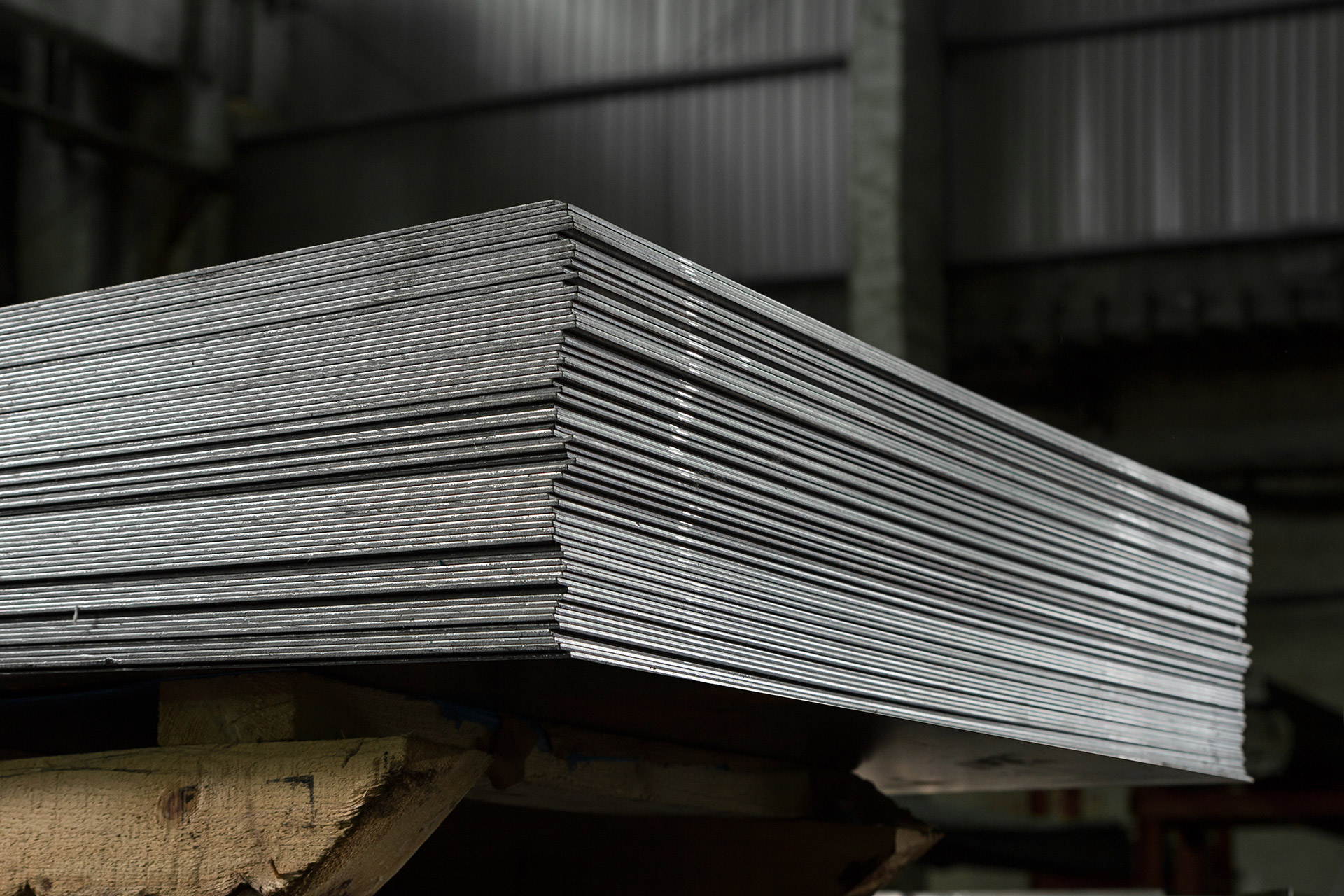
Italian plates demand resumes in June
The Italian heavy plate market continues to stagnate this month with declining prices and virtually no sales, sources tell Kallanish. Despite the lull, however, northern European producers are said to have full order books, in some cases through the end of the year. Their sales are driven by strong demand from infrastructure and renewable energy projects such as on and offshore wind farms.
In Italy, uncertainty and low visibility are causing a wave of price falls for all steel products. Smaller and larger distributors are focusing on getting rid of their stocks of plates bought at high prices in March and April. While sales to distributors are currently “frozen,” some end-users such as shipbuilders predict that their purchasing volumes will not lower this year (see Kallanish 31 May). Despite the low Asian import offers for plates, there is no appetite for material and no desire to commit to the import’s long delivery time. Several distributors say their usual high-volume customers, in May and June, are not requesting any material.
Domestic prices for the basic grade S275 from domestic players are at €1,350-1,400/tonne ($1,445-1,499/t) base ex-works, but “there is no market at the moment,” a re-roller confirms.
Metinvest’s Italian plate subsidiary, Trametal, is currently implementing maintenance works and should resume output in the next days after having received a vessel of slabs. Other re-rollers are reducing output to adapt to a low level of demand.
Demand from the large Italian buyers is seen resuming by the end of June and beginning of July.
Natalia Capra France

Eurofer welcomes adoption of EU steel safeguards proposal
European steel federation Eurofer has welcomed the adoption by EU member states of the European Commission’s proposal to continue steel safeguard measures, saying it supported the stability of the EU steel market and ensured smooth supply flows.
In a statement June 8, Eurofer Director General Axel Eggert said member states’ “massive support” for the continuation of the safeguard action would bring “stability to the EU steel market while avoiding excessive, market-disrupting steel imports from third countries.”
However, European importers of hot-rolled coil told S&P Global Commodity Insights previously that the proposed amendments in EU steel safeguard measures for finished steel imports were unlikely to bring changes to the market and to reflect trade flow concerns.
Domestic prices for HRC have been declining in Europe since the second half of March due to weak demand. Platts daily assessments for HRC in Northern Europe declined to Eur950/mt ex-works Ruhr on June 8 and in Italy to Eur890/mt ex-works, down 3% and 6% since the start of 2022, respectively, according to S&P Global Commodity Insights data.
After an annual safeguard review, the EC sent a draft of proposed reviewed safeguard measures to the World Trade Organization on May 30, which said it planned to introduce global quotas for some products and prolong steel safeguard measures to 2024.
The document indicated that county-specific quotas will remain in place, but global quotas will be introduced for some other products, including heavy plate, in light of the impact of the Russian invasion on the Ukrainian steel producing and exporting industry.
Eurofer added that the EC had also confirmed that the recent change of the US section 232 import tariff of 25% into a tariff-rate quota for the EU had little to no impact on the functioning and rationale of the safeguard measure.
In the proposal, the yearly quota volumes were increased to 4% from 3%.
“Over the lifetime of the safeguard action, consecutive yearly liberalization has pushed up quota levels way above the demand situation, which has not recovered yet from the COVID-crisis,” Eurofer said
“This gap will now be further increased,” Eggert said, adding that there was no economic need or legal obligation for such an increase.
The EC is scheduled to officially release the safeguard details by June 30, effective for one year starting July 1.
— Jacqueline Holman
Swedish plate processor increases capacities for German market
Proplate Oxelösund AB, a Swedish manufacturer of complex steel parts and assemblies for industries, has expanded its capacity in the area of high-strength steels especially for the German market, Kallanish learns from the company.
In the last two years, the number of high-strength steel components supplied to Germany has risen from 16,000 to 26,000, while revenue increased from nearly doubled to €13.3 million ($14.2m), the company says.
Proplate’s production facilities are located southwest of Stockholm. They are directly connected to the neighbouring mill of SSAB, which is a supplier of steel and also a customer for its mining equipment.
Capacities were increased with additional machinery and equipment – including a blasting machine, welding robot, CNC machine and paint box. In addition, two additional halls and a further office were built, and the workforce was expanded from 90 to 140 employees.
In addition to tension bars for crawler cranes, there is currently strong demand for purposes like construction equipment, heavy lifting and mining, the company notes. This includes components for concrete pumps, boom arms, foundations for wind turbines and power line pylons, among other things, as well as pylons.
The company’s customers include Liebherr, Kobelco, Manitowoc, Toyota Material Handling, Epiroc, Metso Outotec, Nordex and Corpower Ocean.
Christian Koehl Germany

EU imposes sanctions on UAZ, Kamaz
The European Union has imposed sanctions against Russian carmaker Ulyanovsk Automobile Plant (UAZ) and truck-maker Kamaz.
The move is due to the possible use of their automotive equipment by the Russian armed forces in Ukraine. The document states that UAZ refers to the UAZ Patriot car, while Kamaz refers to the KAMAZ-5350 truck, the 6350 flatbed tractor and the 6560 heavy SUV.
Due to the sanctions, both Kamaz and UAZ will not be able to export their vehicles to the European market as “dual-use products.”
Kamaz was already on the EU sanctions list. On 26 February – two days after the Russian military invasion in Ukraine – the company came under restrictions due to “control by the Russian government.”
After that, the German Daimler suspended the work of the joint venture with Kamaz in Russia. Sanctions from the United Kingdom, Australia and Poland also apply to the truck-maker.
UAZ says they do not see significant risks for business due to being included in the EU sanctions list.
“Since the company has been working for a long time in conditions of refusing to supply components from European manufacturers and is consistently implementing a program to replace the component base,” it said to Russian newspaper Kommersant.
The company did not respond to Kallanish’s request for comments until deadline.
Carmakers in Russia decreased output significantly in January-April to only 264,000 passenger cars, down by 47.4% (see Kallanish passim). In April alone, only 20,000 units were produced, down 85.4% on-year, the steepest fall since Covid-19 lockdowns slashed output to 30,000 cars in April 2020, Rosstat says. Kamaz reduced production by 15% to 3,803 vehicles.
The vast majority of Russian car factories were still idle in April due to a shortage of components amid disrupted supply chains after Russia invaded Ukraine and was levied with sanctions.
Production of cars and trucks in the country is currently being carried out only by Haveil Motor Rus, UAZ and Kamaz.
Svetoslav Abrossimov Bulgaria
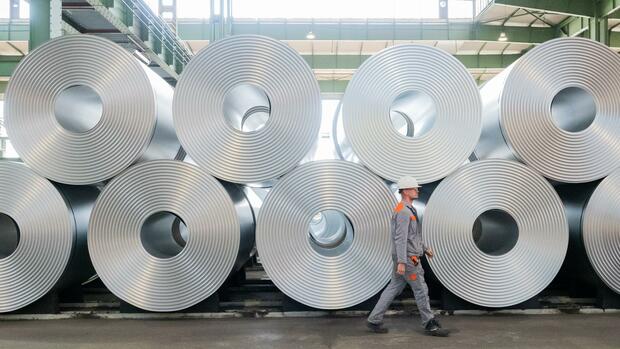
Rio Tinto to develop carbon-free steelmaking with Salzgitter
Rio Tinto and Salzgitter Group will jointly study using the miner’s Canadian and Australian iron ore for Salzgitter’s SALCOS green steel smelting project in Germany.
The two companies signed a Memorandum of Understanding (MOU) on exploring optimisation of iron ore pellets, lump and fines for use in hydrogen direct reduction steelmaking projects, Kallanish learns from Rio Tinto’s announcement. They will also explore the potential for greenhouse gas emission certification across the steel value chain.
The partnership will focus on the potential use of these products in the SALCOS-Salzgitter Low CO2 Steelmaking programme, which is targeting virtually carbon-free steel production, starting step-by-step in 2025 using hydrogen direct reduction. Under the SALCOS program, Salzgitter’s carbon-based blast furnace route will gradually be replaced from the middle of this decade by direct reduction plants, initially operated by natural gas and then with a steadily increasing proportion of hydrogen.
Rio Tinto targets reaching net zero emissions by 2050 and is targeting a 15% reduction in Scope 1 & 2 emissions by 2025 on the basis of 2018 and a 50% reduction by 2030. Its approach to addressing Scope 3 emissions is to engage with its customers on climate change and work with them to develop the technologies to decarbonise.
Only last week, Salzgitter signed up with Swedish miner LKAB for a similar cooperation. LKAB provides both blast furnace and direct reduction-based steel companies with low-carbon iron ore pellets and fines. It has already started to transition its production of iron ore to carbon-free sponge iron (HBI/DRI). Salzgitter notes that very high-quality iron ore pellets are required for its SALCOS process. The planned technical cooperation entails the companies examining which prerequisites need to be created to achieve this and evaluating the potential development of iron-ore-based raw materials for the future steelmaking process route.
Kallanish Asia