


Hybrit inaugurates cavern to store fossil-free hydrogen
Hybrit, the carbon-free ironmaking joint venture between SSAB, LKAB and Vattenfall, has announced the inauguration of a rock cavern storage facility for fossil-free hydrogen, Kallanish notes.
The storage facility is the first of its kind in the world and marks the start of the two-year test period of the site, the partners say.
“Producing fossil-free hydrogen gas when there is a lot of electricity, for example when it is very windy, and using stored hydrogen gas when the electricity system is under strain, will ensure a steady production of sponge iron, the raw material behind fossil-free steel,” a Hybrit reelease explains.
The pilot plant has a size of 100 cubic metres. At a later stage, a full-scale hydrogen gas storage facility measuring 100,000 to 120,000 cubic metres may be required, in which case it will be able to store up to 100 GWh of electricity converted to hydrogen gas, which is sufficient to supply a full-sized sponge iron factory for three to four days.
Emanuele Norsa Italy

Lotter group adds processor, keeps investing
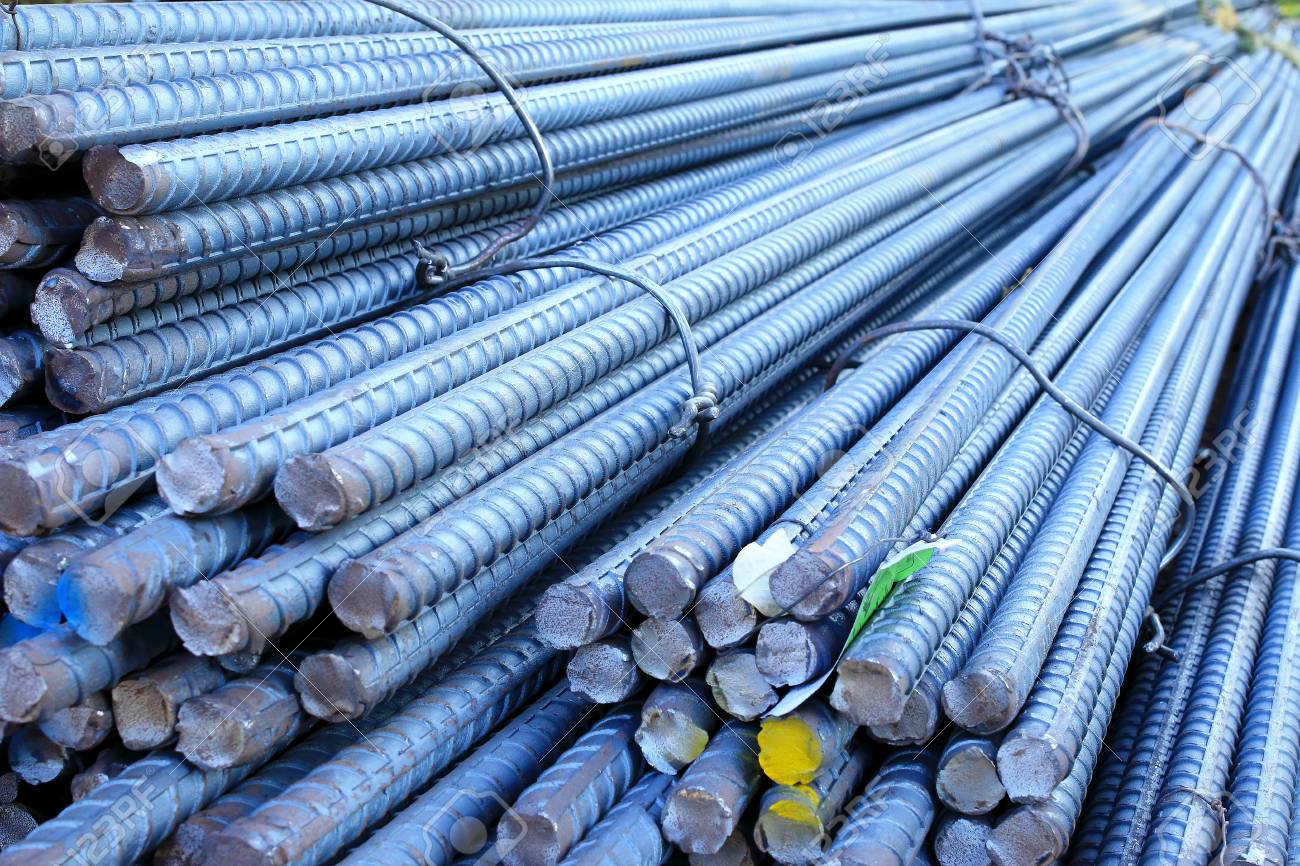
Germany’s Lotter group, which is mainly active in rebar bending and distribution. has taken over Hochberger Stahl-Service Center Gmbh (HSS), a steel processing shop offering flame-cutting, milling, sand-blasting, and related services.
HSS is located in Pleidelsheim, part of Ludwigsburg in southwestern Germany, where Lotter is headquartered. It employs 20 people and supplies the mechanical engineering industry, among others. Its takeover will be effective 30 June, Kallanish learns from Lotter.
Another subsidiary also located in Pleidelsheim, Hagelauer Dewald, started operating a new sawing centre with high-bay warehouse at the beginning of the year. The group also reports the commissioning of a new automatic sawing/drilling machine at its headquarters, supplied by Kaltenbach.
In the latest edition of its customer magazine, the company warns of potential shortages of reinforcing steels due to the war between Ukraine and Russia. The two countries have now dropped out as suppliers of scrap and wire rod, while energy costs keep surging for EAF mills, Lotter notes.
Lotter encompasses ten sites with steel operations plus several shops for tools, ironware, fittings, construction elements, and liquid gas.
Christian Koehl Germany

EU HRC producers deliberate discounts on demand woes
A few German mills prepared to give substantial discounts June 14 alongside sliding offers in the Italian HRC market, with sources hearing mixed prospects from core industries.
HRC in Northern Europe was down Eur5/mt June 14 to be assessed at Eur930/mt ex-works Ruhr. In South Europe, prices were also on a slide, down Eur20/mt at Eur850/mt EXW Italy.
Offers were heard on the day at sub-Eur900/mt, with prices in the market cited in a broad range of Eur880-950/mt EXW Northern Europe. Offers from one Northern mill at Eur880/mt EXW were allegedly driven lower by higher exposure to the automotive decline, with most mills continuing to resist pricing below Eur900/mt.
Deals in the Italian market were heard at Eur850/mt EXW Italy, though buyers were heard already targeting Eur800/mt EXW for the next round of negotiations.
Sources talked about minimal demand across the market — citing high inventory levels and logistical issues in depleting stocks.
“There’s too much material in the market at the moment for any real purchasing activity,” said a distributor source. “Panic buying post war, as well as logistical issues with imports, are making it harder to reduce stocks — we still have material arriving through July to September.”
While market participants agreed distributor restocking activity was scarce, there were mixed expectations for demand from core industries — the automotive and construction sectors.
One distributor source said prices from one mill had actually increased, in opposition to the downtrend seen across flat steel products in recent weeks. The source said the mill had cited “strong development” from the automotive and construction industries as a core factor, but disagreed due to its own perception of relevant demand.
“Automotive is canceling orders and we’re seeing similar decline in the construction industry,” said the source. “Some projects have been pushed into next year, and they aren’t engaging new projects upon concluding old ones as they traditionally would.”
Another distributor source saw the same decline from the construction sector, though said automotive held strong prospects for the post summer period.
“Construction is dropping dramatically, but automotive does seem to be quite strong given heavy vehicle demand and a relaxation in semiconductor shortages.”
Automotive negotiations for Q3 and H2 were yet to conclude, with mills attempting to keep prices at H1 levels — around Eur1,050/mt EXW — according to a mill source. Mills were said to be in a stronger position than in previous negotiations, with OEMs setting a pattern of declining to take reserved volumes on real consumption.
Multiple sources said mills were “desperate” for orders — or at least needing to fill near-term orderbooks — with German mills apparently ready to accept substantial discounts on firm bids.
As current production levels contrast with muted demand, sources expected mills to announce production cuts — a service center source gave insight into the potential absence of announcements.
“Demand isn’t really dead, it’s just that everyone has too much stock,” said the source. “Mills won’t shut down facilities as when stocks do deplete, they could be caught out and miss opportunities if production doesn’t restart smoothly.”
— Benjamin Steven, Maria Tanatar


British Steel gets planning approval for ‘special profiles’ business upgrade
British Steel has been given planning approval for a £26 million ($32 million) upgrade to its ‘special profiles’ business, the second largest UK steel producer said on June 13.
The plans for a new service centre at Skinningrove, which include cut-to-length lines, product milling, machining and warehousing operations, have been approved by Redcar and Cleveland Borough Council, with the company aiming to start building work later this year and commissioning expected to start in August 2023.
“…This development will ensure we remain a leading global manufacturer and represents the biggest single investment in our special profiles business for more than 30 years,” David Hogg, Special Profiles Plant Manager, said.
David Waine, British Steel’s Commercial Director for Special Profiles, said, “It will enable us to manufacture world-class products to the tightest of tolerances.” “We will also be able to explore new growth opportunities for although our primary product offering will be for forklift mast production, we expect to be able to expand this to include other product applications too,” he added.
The new Skinningrove facility is designed to replace the services currently offered at the company’s site in Darlington, which stores and cuts profiles to customer requirements. As reported in the company statement, this latest scheme builds on previous investments, including the installation of a $2.4 million surface descaling system, a high-tech product processing center and a robotic identification tracking control system. In May, the company also announced the commissioning of a $1.2 million state-of-the art laser measurement system.
British Steel has a steel products capacity of about 3 million mt/year in the UK and Europe.
Platts assessed the Turkish exported rebar down $15/mt on the day at $720/mt FOB June 10.
— Annalisa Villa
Steel deliveries from EU service centers down in Jan-April: Eurometal
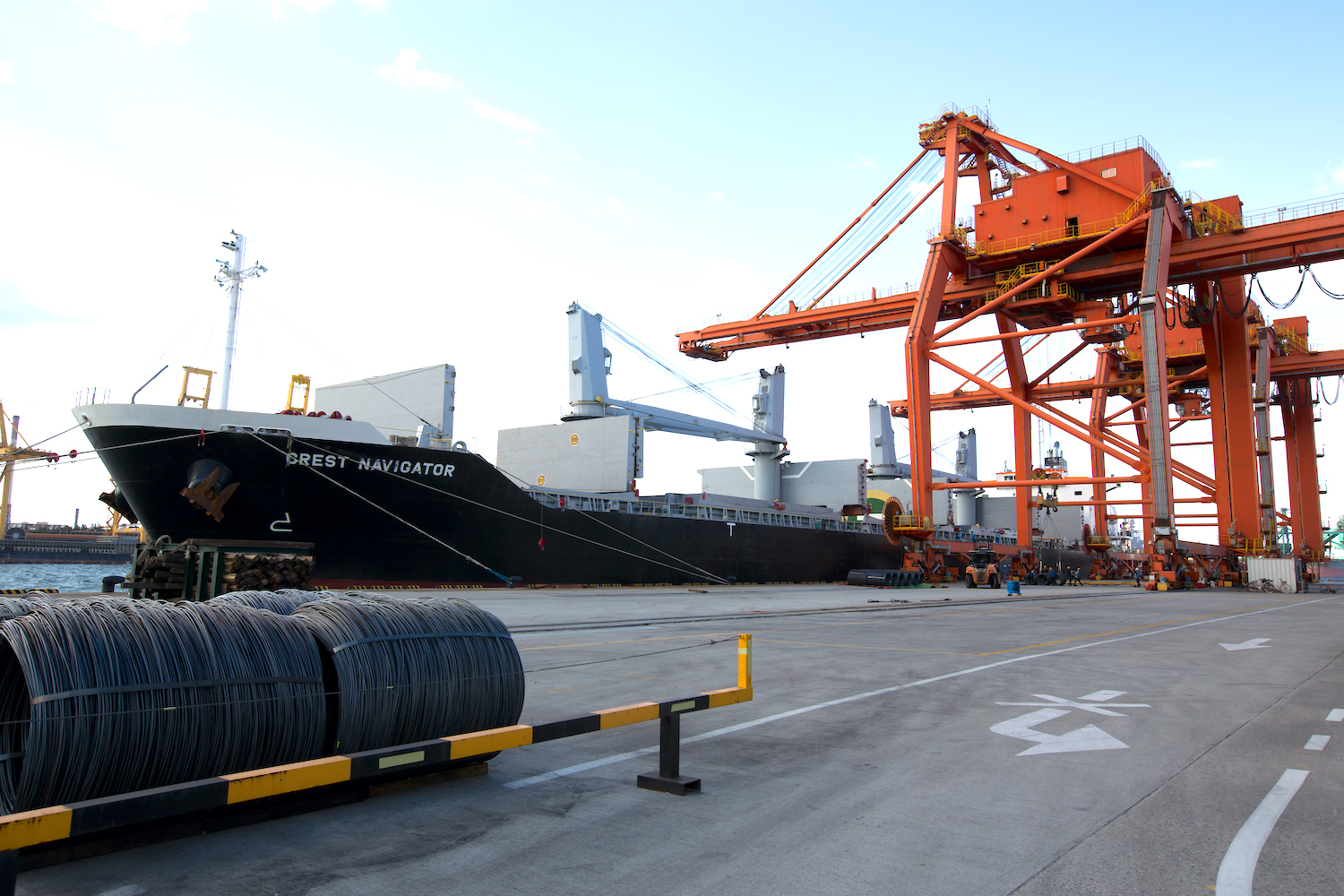
Shipments of flat steel products from service centers in the EU27 and the UK in the first four months of 2022 decreased by 0.4% year on year while shipments of long steel products tumbled 10.5%, according data released June 13 by Eurometal, the industry body for European steel distributors.
At the end of April, overall stocks stood 5.7% higher year on year, with all product categories apart from Profiles and Plates up. Month on month stocks were 0.5% lower, with all categories falling apart from Long Steel Products.
Stocks at service centers were the equivalent of 79 days of shipments at the end of April, up from 59 days a year earlier.
The 62% Fe Iron Ore Index was at $141.55/dry mt CFR North China on June 10, down $2.30/dmt from June 9, according to Platts assessments by S&P Global Commodity Insights.
— Annalisa Villa

Czech service centre gets cutting line from Georg
Alfun Metal Service Center, located in Bruntál, Czech Republic, has received a new cut-to-length line from German machinery maker Georg.
The new device, a hybrid line for cutting carbon steel, stainless steel and aluminium, includes a high-precision side trimming unit, Kallanish learns from the supplier company. Since 2015, Alfun has been operating a cut-to-length line, also by Georg, for 0.3-3mm thick and up to 2,000mm wide strip. This machine can cut sheets of up to 6,000mm in length. With the number of incoming orders increasing, it became necessary to boost production capacity with a new machine.
The new line side-trims and cuts to length stainless steel strip up to 2,050mm wide at processing speeds of up to 60m/min. A key criterion for the new line was the quality of the cut edges because customers often use laser welding to join the cut sheets, Georg points out.
Alfun Metal Service Center was founded in 1999 and supplies a wide range of flat and long products.
Automotive sheets account for a significant part of its services. Furthermore, the company produces stainless steel sheets for the white goods industry, which require high-precision cut edges and exact rectangularity.
Christian Koehl Germany
Voestalpine delivers first ‘Greentec’ steel coils
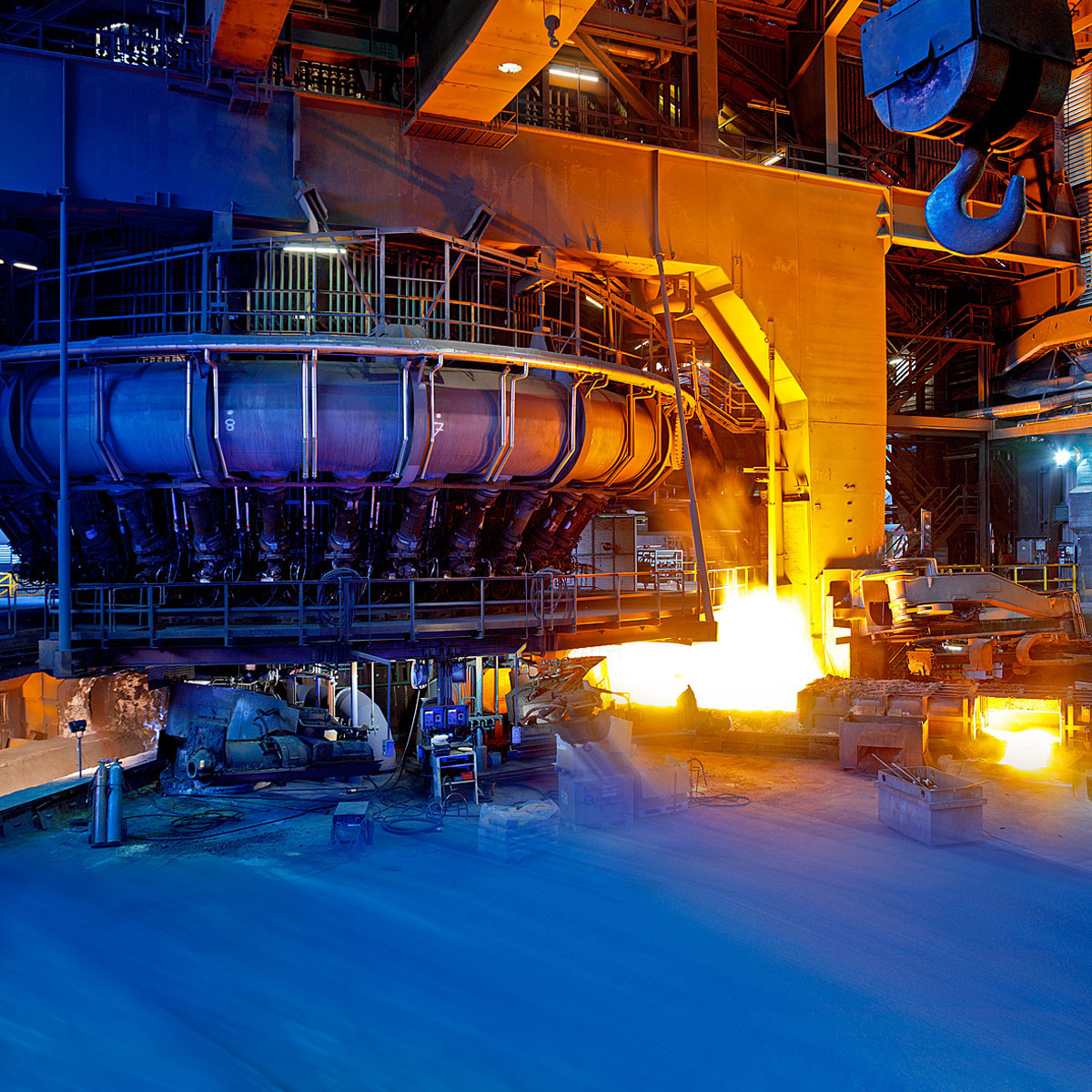
The first coil made from CO2-reduced steel has left voestalpine’s plant in Linz, Austria, Kallanish hears from the company.
Since the end of last year, voestalpine has offered all flat steel products with a reduced carbon footprint under the “Greentec” label. Examples include electrical steel which is used in wind turbines, and high-tensile steels for lightweight automotive construction.
Carbon emissions are reduced through adjustments to the manufacturing process such as partially replacing coke with a hydrogen-based reducing agent. The CO2 savings are calculated according to the international standard ISO 14064-2. A balance model is applied to distribute the actual CO2 savings across a specific quantity of product. LQRA, a global assurance provider, examines and certifies both the CO2 reduction and the status of the balancing account.
Voestalpine’s plan for decarbonising steel production involves an incremental shift from the blast furnace route to a hybrid-electric steel pathway from 2027.
Christian Koehl Germany
Worldsteel freezes Russian steelmakers’ membership amid sanctions
The World Steel Association (worldsteel) and Russian steelmakers have mutually agreed to freeze the latter’s full membership of the association amid sanctions on Russia, worldsteel tells Kallanish.
In response to media reports that worldsteel has suspended Russian steelmakers, an association spokesperson says: “Worldsteel is constitutionally politically neutral, but as it is based in Belgium it has to comply with EU law. EU sanctions that will come into force this week oblige us to restrict access to our platforms, such as our membership extranet, for our Russian members.”
“However, it is important to stress that we have not expelled or suspended our Russian members, rather we have come to a mutually satisfactory arrangement with them in which they are voluntarily and temporarily becoming ‘passive members’. All access to our platforms will be reinstated when EU law allows for this,” the spokesperson adds.
In April, Ukrainian steel association Ukrmetallurgprom said it was suspending its worldsteel membership until the association “says goodbye to associations and companies from Russia” (see Kallanish passim). Earlier, Ukrmetallurgprom appealed to worldsteel on behalf of all steelmakers and miners in Ukraine to throw all Russian companies out of the organisation.
Evraz, MMK, Metalloinvest, NLMK Group, TMK, Severstal and the Russian Steel Association are worldsteel members.
Ukrmetallurgprom pointed out that following Russia’s invasion of Ukraine, many international organisations decided to suspend Russian participation. “However, unfortunately, representatives of the aggressor country are still taking part in the events of worldtseel,” it added.
Svetoslav Abrossimov Bulgaria
EU HRC buyers hold mixed expectations on potential price floors
The EU HRC market remained in a wait-and-see mode June 13 with demand muted as buyers gauged approaching price floors against relaxing downtrends in the import market.
S&P Global Commodity Insights assessed hot-rolled coil in Northwest Europe at Eur935/mt ex-works Ruhr June 13, down Eur5/mt on the day.
Trader sources talked about prices in a range of Eur900-950/mt EXW as workable in the quiet market, with latest deals heard at Eur940-950/mt EXW in the week ended June 11.
Conflicting opinions were heard on the price direction and the potential depth of pricing floors, with some expecting prices to slide further before threatening the sustainability of current production costs.
“Everyone is trying to figure out if prices are close to the bottom or not — market opinion is evenly split,” said a trader source. “Some believe there is still room to decline, while others see the bottom since import offers are stabilizing and buyers need to restock. Demand isn’t strong enough to give the market any real stability.”
Import offers to the Northern market were heard stable on the day from trader and service center sources, at Eur870-880/mt CFR Antwerp ex-Asia.
A second trader agreed on the wait-and-see sentiment across the market.
“The market is still waiting. We need production cuts, or at least announcements to that effect,” said the trader. “The future is gloomy what with the automotive situation and risks present in the current market.”
Despite broad expectations to the contrary, mills are yet to announce any cuts to production beyond regular maintenance periods.
In the Southern market, HRC was down Eur5/mt on the day, assessed at Eur870/mt EXW Italy on source indications of Eur860-880/mt as a workable range.
Competitive import offers were heard below Eur800/mt CFR Italian ports ex-India for boron-added material, with commodity-grade import offers heard slightly higher at Eur800-830/mt CFR.
— Benjamin Steven, Maria Tanatar
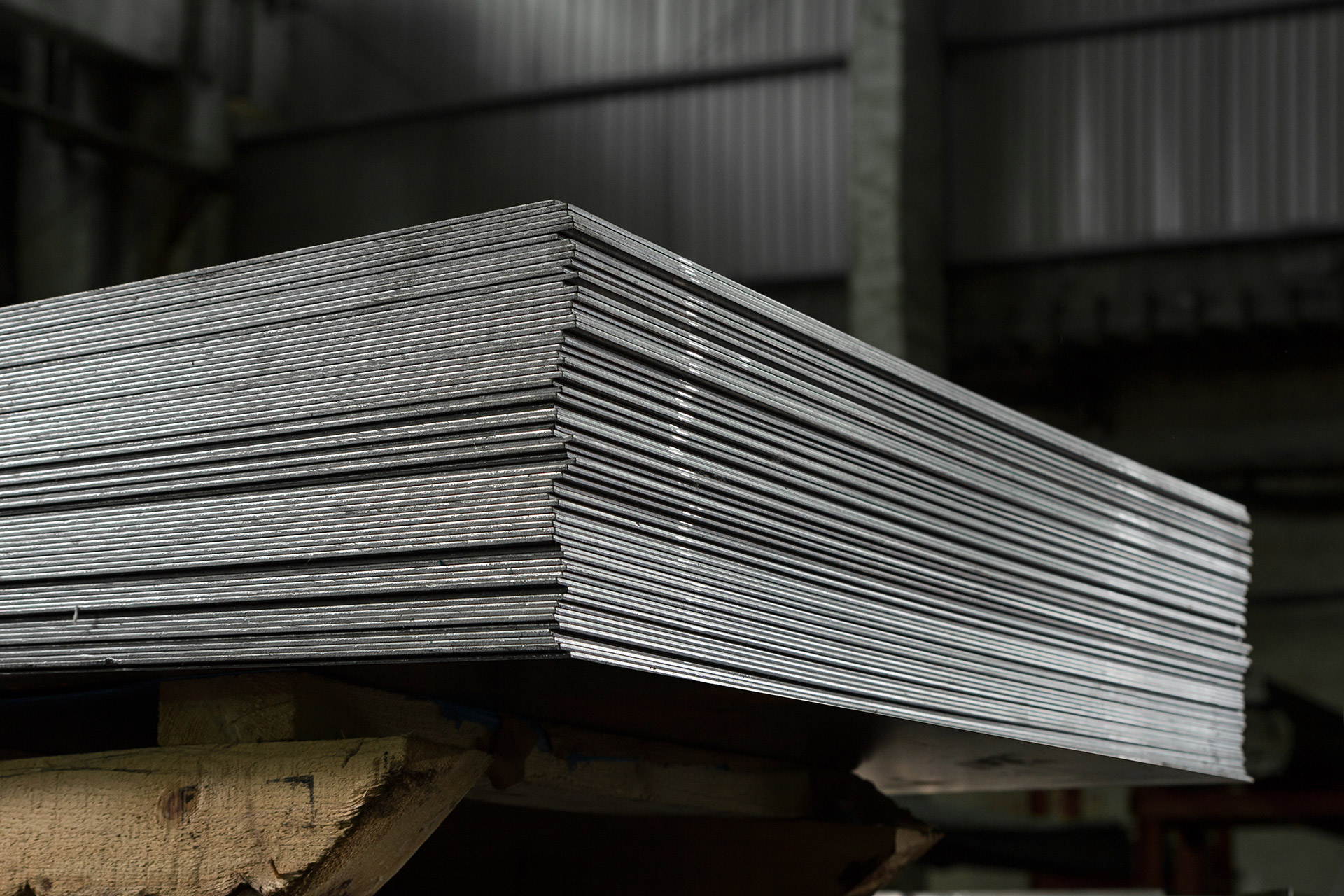
EU steel plate prices soften in slow market
Domestic prices for heavy plate in the EU have decreased on week to June 10 due to slow trading activity.
The situation, however, is likely to change soon as big spot buyers will need to restock and project that would require plate are expected to launch after summer, sources said.
Offers of heavy plate in Italy have been reported at Eur1,400-1,500/my ex-works. But tradable value was estimated by both buyers and sellers at Eur1,300-1,350/mt ex-works. One producer source also said that prices are likely to slide to Eur1,200/mt ex-works in the short term.
Platts assessed plate in Southern Europe at Eur1,350/mt ex-works Ruhr June 10, down Eur100 on the week.
In Northern Europe, Platts assessed plate down by Eur150/mt on week to Eur1,550/mt ex-works Ruhr June 10.
Achievable prices have been reported at Eur1,400-1,650/mt ex-works Ruhr.
German mills have been focused on sales under long-term agreements or to project, directing limited plate volumes to spot buyers.
As a result, Italian re-rollers have been offering July rolling plate, while German mills are booked until September-October.
“Whoever needs material sooner can get it from Italy, if they need specific plate that re-rollers cannot make, they would have to wait for it longer,” a German source said.
Demand is expected to recover due to combination of restocking and restart of some projects, sources said.
“Big stockists and service centers have been holding back from making any substantial deals for over a month now,” an Italian source said. “And end user demand was not bad, so they will return to restock soon – as soon as they realize that prices have stabilized.”
— Maria Tanatar