


EU imposes anti-dumping duty on China steel fasteners
The European Commission has imposed a definitive anti-dumping duty of 22.1-86.5% on iron and steel fasteners originating in China. This follows its investigation launched in December 2020 after a complaint lodged by the European Industrial Fasteners Institute (EIFI).
The duty rates are applicable to the net, free-at-Union-frontier price, before duty. Product affected falls under HS codes 7318 12 90, 7318 14 91, 7318 14 99, 7318 15 58, 7318 15 68, 7318 15 82, 7318 15 88, ex 7318 15 95 (TARIC codes 7318 15 95 19 and 7318 15 95 89), ex 7318 21 00 (TARIC codes 7318 21 00 31, 7318 21 00 39, 7318 21 00 95 and 7318 21 00 98) and ex 7318 22 00 (TARIC codes 7318 22 00 31, 7318 22 00 39, 7318 22 00 95 and 7318 22 00 98). The broader categories are screws, washers and bolts.
The products are made from HS code 7213 91 90, 7213 99 90, 7227 90 00 and 7228 30 90 steel, meaning wire rod and hot rolled bar/flats of tool steel.
The Commission previously made imports of fasteners originating in China subject to registration by Commission Implementing Regulation (EU) 2021/970. “The Commission noted that, since no provisional measures were adopted, the Commission decided that retroactive collection of duties was not legally possible,” the Commission says in a note seen by Kallanish. “Therefore, all claims concerning the registration Regulation became moot and the registration Regulation is hereby repealed in full.”
The Commission’s investigation period was 1 July 2019 to 30 June 2020. In this time, EU consumption of the product under investigation was 1.75 million tonnes. Imports from China were 209,033t, taking a 12% share of the EU market. Domestic production was 1.06mt, with capacity at 2.31mt, meaning a 46% capacity utilisation. Domestic sales were 1.04mt, taking a 59% market share. Imports from Taiwan were meanwhile actually larger, at 236,636t.
Adam Smith Germany


Pickled HRC benefits most from northwest Europe hike
Prospects are improving for integrated mills in northwest Europe to secure the price increases they are trying to implement for hot rolled coil. However, higher prices may be more likely accepted for pickled rather than unpickled HRC.
Both varieties used to be treated fairly equal in price lists, but a gap has recently opened, as a collateral effect of last year’s enormous price surge. “We have been observing this for more than half a year now,” a manager of a German service centre tells Kallanish. Pickled HRC is not as readily available as unpickled material, which may have to do with high utilisation of capacities for the treatment, he believes.
This could be a valid explanation for the wide range of prices recently given by market participants for HRC, with some citing quotes well below €900/tonne ($1,022) ex-works but others staying well above that mark. “We had lows of €860-870, but only for unpickled coil,” the manager says, and adds that this product may still be available for a little under €900/t now.
Against that, he sees pickled material starting at €930/t, and reaching €980/t. This is in line with other observers in Germany and the Benelux who do not make the pickled/unpickled differentiation, but believe the market is opening up to higher prices in general. As one Dutch buyer puts it, “some offers with relatively low base prices are still appearing here and there, but those opportunities are decreasing”.
Christian Koehl Germany

European stainless coils may increase, June negotiations start
European stainless steel hot and cold rolled coil prices continue to be elevated this month and are forecast to remain strong until June, Kallanish hears from market sources.
European stainless CRC levels start from €4,200/tonne ($4,521) and can go up to over €4,400/t delivered depending on the month of delivery. All mills are quoting end-April and May lead times. Mills and large buyers are now beginning to discuss values for June delivery. Supply shortages and high alloy surcharges may push up prices again for June delivery, sources say.
The Asian price decline for stainless coils seen in the past weeks has generated significant import purchases from countries such as China and Taiwan. Including 25% duty, European buyers purchased stainless CRC from China at €3,500-3,550/t cfr on average in January. The issue with Chinese material, however, is the long lead times of mid-July onwards.
Stainless HRC prices in Europe have stopped increasing thanks to competitive import offers from Asia. HRC is being transacted at €3,400-3,500/t delivered in Italy and €3,750-3,800/t delivered in northern Europe, depending on volumes and customer. Imported HRC can be found at €3,100/t cfr from Asia. Italy is a net importer of stainless HRC and Italian prices are usually lower compared to northern European values, Kallanish notes.
Natalia Capra France
Asian stainless CRC prices rally, pressure Asian demand lower
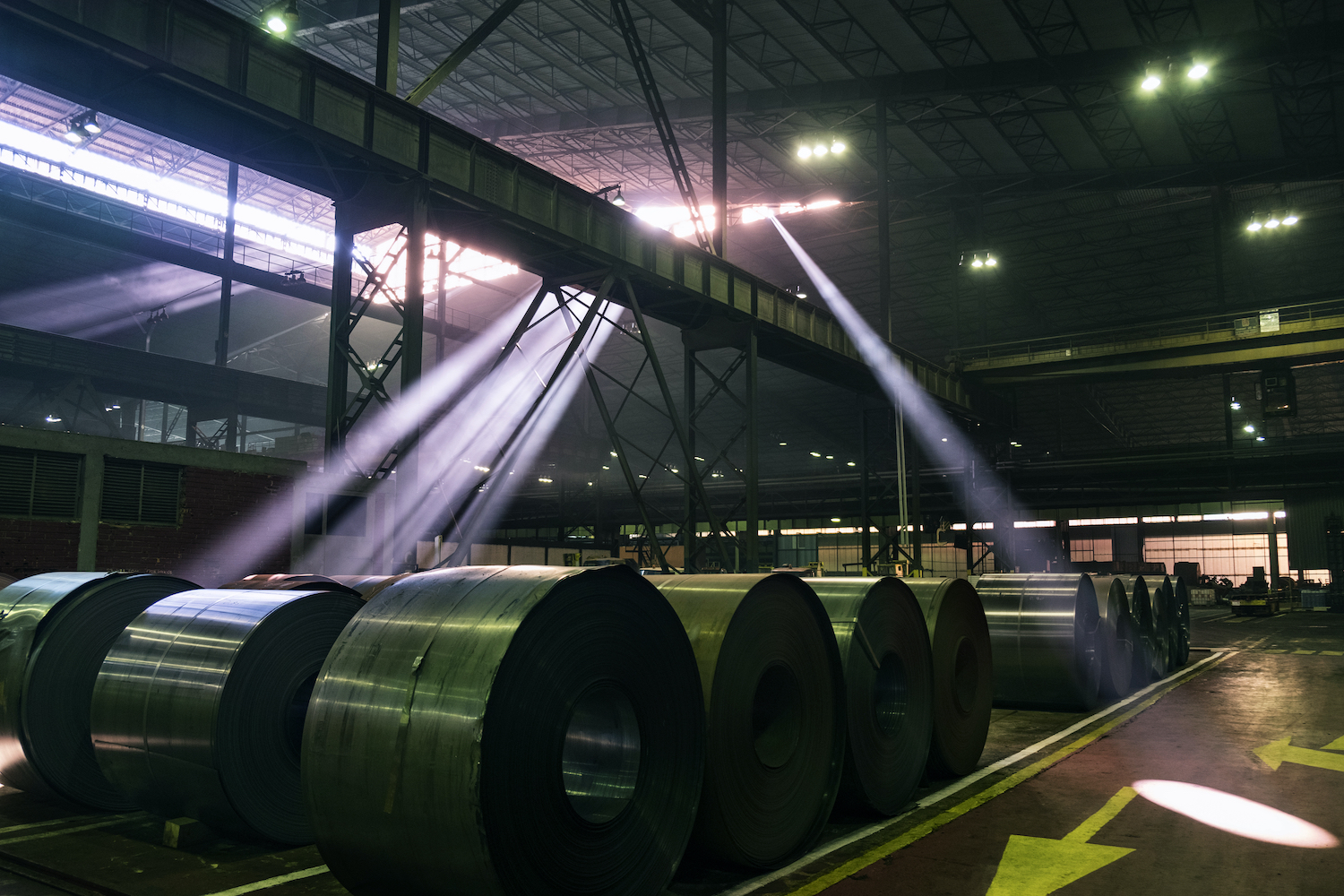
Asian stainless cold-rolled coil prices increased in the week to Feb. 18, with persistent expectations of limited supply pushing prices higher and deterring buyers in Asia.
S&P Global Platts assessed 304 grade 2 mm 2B stainless CRC at $3,220/mt CFR East and Southeast Asian ports Feb. 18, up $15/mt on the week.
The official nickel cash price on the London Metal Exchange settled at $24,147.50/mt on Feb. 17, up $95/mt on the week. In addition to the Indonesian nickel export tax, the supply of nickel from Russia was heard affected by the recent tensions over Ukraine, further weighing on supply concerns.
“Nickel output from Nornickel, Vale and Glencore in 2021 decreased by 7%-18% from 2020 levels,” said a Hong Kong-based trader source. “Production cost for stainless steel is likely to go up since there is so much competition for a limited supply of nickel.”
In the Chinese market, domestic demand was weak as current price levels were too high for buyers. Buyers from Europe were more active and there were more bookings heard into Europe as buyers were heard to be more willing to take up the high freight cost on top of already high prices.
Meanwhile, Taiwanese buyers were also heard to be generally inactive and import volumes were low. Offer levels from Taiwan were heard to be above $3,400/mt on a CFR basis.
“Domestic prices have risen fast, which is usually the pattern seen after long holidays. But the issue is that the rise is too fast that overseas buyers in the Middle East and Turkey are not ready to accept that, so export businesses are still very few,” said a China-based trader.
The most actively-traded April 2022 stainless steel contract on the Shanghai Futures Exchange closed at Yuan 18,540/mt on Feb. 18, up Yuan 240/mt, or 1.3%, from Feb. 11.
— Grace Chiang, Joanne Ju

EU HRC stable, prices expected to rise in Q2
The EU hot-rolled coil market was unchanged Feb. 18 as buyers reported sufficient inventories and costs remained high. The market expects prices to rise in Q2.
The daily Platts TSI index for HRC for Northern Europe was stable on the day at Eur960/mt EXW Ruhr, with the daily Platts TSI index for HRC Italy also stable at Eur915/mt EXW Italy.
A service center source reported full order books largely tied to contract allocation, forecast to last until midyear. According to a mill source, the market is dealing with low end-user demand and long lead times.
Domestic mills stayed firm on higher price levels. A service center source reported an offer heard at Eur1,000/mt, Eur80 higher than a confirmed deal heard on the day.
“The difference between contract and spot prices now is a huge problem … we’re dealing with contract prices Eur60-80/mt higher than on spot,” a mill source told S&P Global Platts.
A service center source also said that the newly added CO2 surcharge to offer levels played a considerable part in the price increase. It was added to offer buyers more transparency. Imports remain unpopular in the European market, with high freight costs and transport delays encouraging a domestic focus.
The impact of geopolitical tensions on steel global supply continues to add to existing near term pricing uncertainty, as if Ukraine’s 4 million mt/year of exports to Europe are affected, then some upward pressure on steel prices is inevitable, sources said.
— Benjamin Steven
Steel decarbonization strategies shake up coking coal, pellet trade outlook
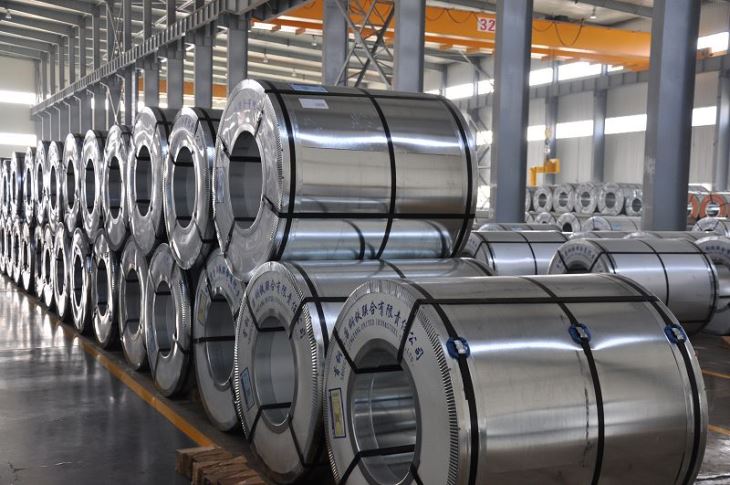
Steel decarbonization is increasingly shaping iron ore, coking coal and scrap trade and pricing in the US and Atlantic markets, as companies act to cut carbon emissions.
High demand for iron ore pellets, growing interest in using and trialing hot-briquetted iron, and adapting ferrous scrap feed is pushing out some met coal at the margin. Pellets minimize emissions at blast furnaces.
Carbon accounting and benchmarking is now a focal point for procurement executives.
By adapting feedstocks, steel products and processes vie for emissions cuts ahead of larger plant changes on the planning board at ArcelorMittal, ThyssenKrupp, Salzgitter and British Steel, among many other steel producers.
The largest integrated steelmaker in the US, Cleveland-Cliffs, said it decided to shut the Mountain State Carbon met coke plant during the second quarter, as it maximizes scrap and HBI in its blast furnace-BOF based steel operations.
The closure will follow a fourth-quarter halt at coke facilities at Cliffs’ Middletown, Ohio steel works. It may lead several northern Appalachian and CAPP met coals used in coke blends at the West Virginia plant to find other buyers, according to a mining source. This could potentially increase export supply of high-vol, low-vol and mid-vol coals, as US flat steel pricing falls from unprecedented highs.
Lower North American domestic annual contract met coal prices for 2022 led to a bigger spread with seaborne market spot prices. Platts Premium Low Vol FOB Australia recently hit a record high of $445/mt on Feb. 7.
Coal markets have seen high prices after disruptions to supply and declines to investments in mines and railroads, with supply struggling to adapt to spot demand as steel market recovered.
Suppliers may continue to opt for marketing more volume into export markets, while mining cash margins remain attractive. US export prices are already lower than Australian prices, with Platts PLV FOB Australia at $439/mt and US high-vol A at $380/mt FOB Hampton Roads on Feb. 16.
There is weaker Atlantic spot demand for non premium-grade coals.
A larger price spread between Australian and other premium hard coking coals, against lower quality and higher impurity coals, continues to reflect weak spot demand in the Atlantic, especially for non benchmark coals.
Mills with constraints on sulfur and coking capacity may evaluate high ash and sulfur coals with feedstocks such as petcoke along with limits on usage.
This could widen discounts and price adjustments for higher sulfur, higher ash and lower CSR coals.
Pellets
Cliffs also decided to idle its flagship direct reduction, or DR, pellet plant at Northshore’s Silver Bay in Minnesota, after achieving DR-grade pellet production at the Minorca pellet plant in Virginia, Minnesota. Cliffs had recently spent $100 million on Northshore to produce low silica pellets using flotation technology.
Cliffs temporarily idled the Northshore mining operation until at least Q4 in response to royalty payment structures linked to production, which the company described as relatively onerous, and on weaker group demand for iron ore pellets. Northshore mainly supplied Cliffs’s Toledo HBI plant in Ohio, and has shipped pellets to Nucor’s DRI plant in Trinidad.
Northshore produced 3.8 million long tons in 2020, with higher rated capacity, and Minorca produced 2.8 million long tons in 2020, according to the company website.
Surplus US pellets have seen stronger demand in the Atlantic over the past two years, and reported spot trade in Asia. Idling Northshore may add to the frustration of DRI markets such as in the Middle East and North Africa region unable to fully cover requirements and restart modules or boost capacity utilization.
Cliffs is seeking to maximize benefits from the acquisition of a new scrap metal processing unit, which may contribute to a lower carbon footprint for its steel.
A higher overall iron content in steel feedstocks reduces fossil fuel-based consumption.
Steel produced in the US with local HBI supply using natural gas has lower Scope 1,2,3 emissions compared with steel produced using merchant pig iron from Brazil, Ukraine and Russia, according to Cliffs.
Cliffs only uses pellets and HBI in blast furnaces and is “stretching” its hot metal by use of more scrap in the basic oxygen furnace, enabling the company “to establish the new world benchmark in low coke rates and low emissions,” Cliffs CEO Lourenco Goncalves told analysts on Feb. 11.
Several producers have described strong second-quarter demand in Europe for pellets, with DR pellet markets expecting to see several trials and new shipments continue. Trials are being negotiated with discounts to usual indices, a buyer said.
Miners Rio Tinto and LKAB have reported stronger demand for DR-grade pellets over the past year.
Demand picked up in Europe for Q1 on concerns about any spillover to supply from Russia and Ukraine tensions, and restocking is expected to continue in Q2 orders, a miner said.
Russian and Ukrainian pellet producers are targeting the DR pellet market. They are producing lower impurity pellets attractive to some DR pellet buyers – largely dependent on very low silica and low alumina high iron content pellets from Vale, Rio Tinto, LKAB, Bahrain Steel and Samarco optimized for DR shaft furnaces, preventing sticking during reduction.
Depending on the pellets marketed, higher silica pellets compared with usual standard DR pellets may see limited demand at DRI plants, a buyer said.
— Hector Forster
Toyota halts production again on semiconductor shortages
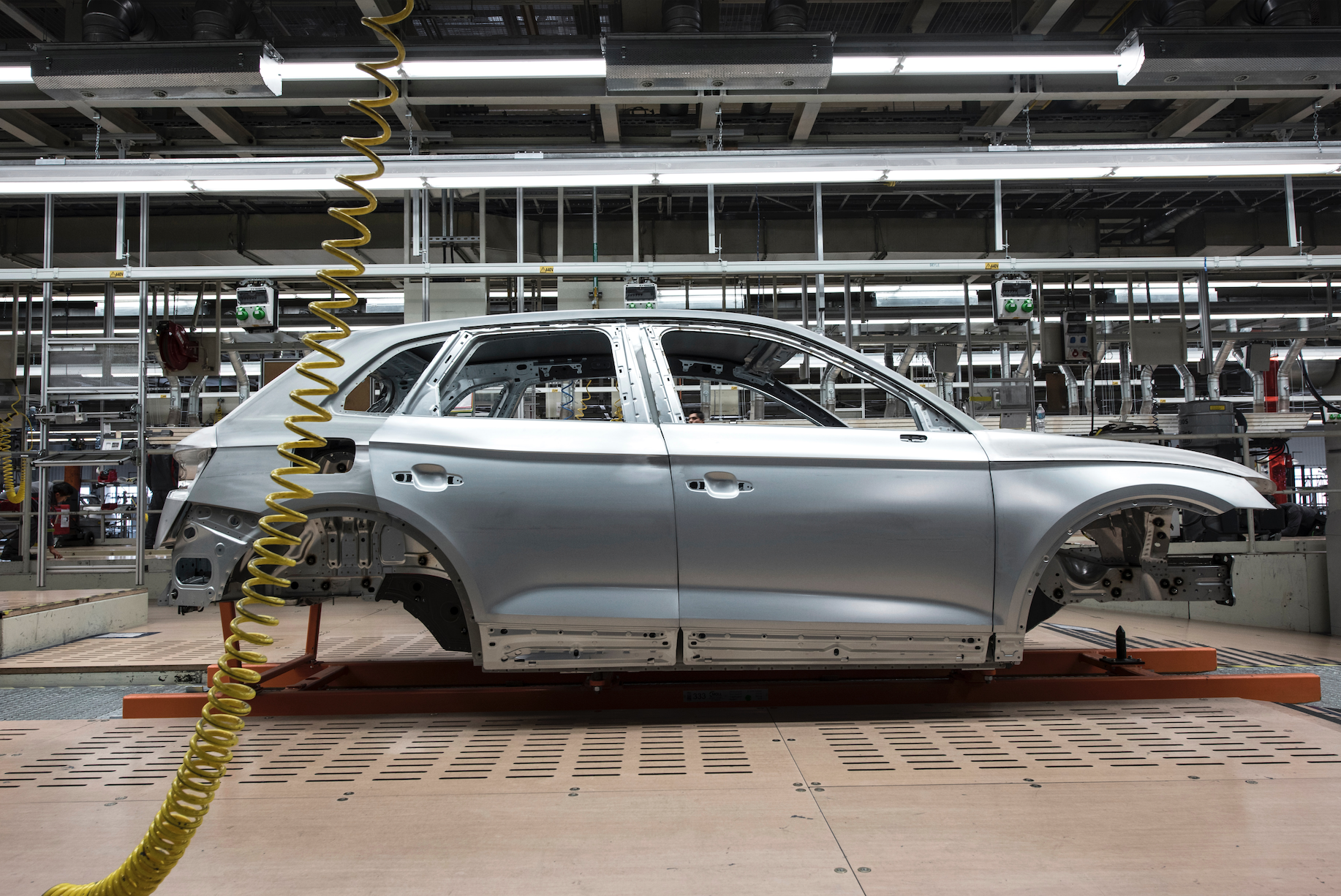
Japanese carmaker Toyota says two of its plants in Japan will be temporarily closed in March due to semiconductor shortages, Kallanish notes.
In February, downtime has affected eight of the firm’s enterprises and the shortage of cars has intensified, meaning the volume of unreleased cars is in the hundreds of thousands.
In March, production of cars will be suspended at Toyota Motor Kyushu and Toyota Motor East Japan.
The company will thus produce 950,000 cars next month, which is 100,000 units less than planned. In February, planned output had to be reduced by 150,000 vehicles.
A significant reduction in Toyota’s production began last year. The total volume of unreleased vehicles will reach 500,000 units by the end of next month.
“With regards to the shortage of semiconductor related parts, we will continue to examine the situation and consult with all companies involved in considering the use of substitutes where possible in anticipation of a continuing shortage,” Toyota says.
Earlier this month, the EU announced a €43 billion ($49 billion) plan to become a major chip producer, to ease dependency on Asian manufacturers of the components (see Kallanish passim).
Volkswagen Group expects the short-term supply of semiconductors to the automotive industry to continue to be very volatile and strained in first half of 2022. The carmaker says there will probably only be a real upward trend in 2023.
In 2021, global production of 9.5 million vehicles was delayed due to a lack of chips, the European Association of Automotive Suppliers (CLEPA) said. Although this year could show a modest recovery in global light vehicle production, supplier and market estimates still forecast, on average, production losses of 4-6m vehicles, CLEPA added.
Svetoslav Abrossimov Bulgaria

EU passenger car registrations fall 6% on year in January, record low for month
New passenger car registrations in the European Union fell 6% year on year to 682,596 units in January, the lowest January on record and the seventh consecutive month to see year-on-year falls, the European Automobile Manufacturers Association (ACEA) said Feb. 17.
The volume was also 14.2% lower month on month, the data showed.
The falls were attributed to ongoing semiconductor shortages still negatively affecting car sales across the region, ACEA said.
Germany, the largest EU car market, saw new car registrations rise 8.5% year on year to 184,112 units in January, which was 19.1% lower than the previous month.
However, this was an outlier in Western Europe, with sales in the second largest market France falling 18.6% on the year and 34.9% on the month to 102,899 units, a five-month low.
Similarly, car sales in Italy dropped 19.5% on the year to 107,814 units, but climbed 24.4% month on month.
In Spain, 42,377 units were sold in January, up 1% on the year, but down 50.8% from December.
Some markets in Central Europe saw noticeable gains in January though, with ACEA saying that sales in Slovakia rose 72.6% year on year and 4.2% on the month to 5,739 units and sales in Romania climbed 55.5% on the year to 9,337 units, although sales dropped 21.3% from December.
Sales in Poland dropped 10.2% on the year and 19.9% on the month to 28,975 units in January.
— Jacqueline Holman
Klöckner surpasses expectations, emphasises future for green steel
Klöckner & Co expects first-quarter-of-2022 Ebitda to be significantly above the current market expectation, it says in an ad-hoc release.
The German-based distribution group now expects an operating income – Ebitda before material special effects – of €130-180 million ($148-205m) for Q1, versus €130m in Q1 2021. In 2021 it achieved its best full-year operating income since its IPO in 2006, according to preliminary figures, amounting to €848m. The final figures will be announced on 9 March.
Speaking at this week’s “Zukunft Stahl” conference organised by business daily Handelsblatt, Klöckner chief executive Guido Kerkhoff emphasised that industry players need to be active in promoting carbon-free steels. Customers keep asking for it, and want to know about the progress being made, Kallanish heard him say at the conference. Klöckner was recently one of the first major groups to sign a purchasing agreement with Swedish start-up H2 Green Steel for products expected to come out of a new mill starting in the mid-2020s.
He underlined that the distributor has a role of a mediator or go-between for the customers. The complexity of steel products is a “jungle” of grades and of labels, of which the customer is not aware. Many customers know about their needs and applications “but do not understand the definitions of the suppliers”, Kerkhoff said. “We must manage that complexity on behalf of the customer.”
This complexity will increasingly include green steels, “and what ‘green’ actually means, and we need to create transparency here”, he continued. According to Kerkhoff, industrial customers will want to know about the share of CO2, but care little if the steel comes from the oxygen-route, from a DRI mill, or from an electric arc furnace.
Christian Koehl Germany
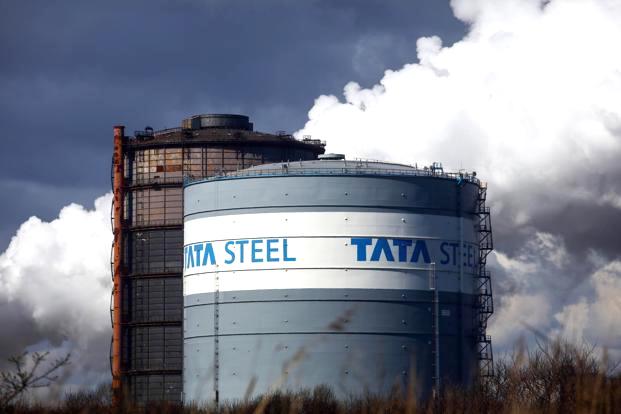
Europe’s steel production depends on decarbonisation: Tata Steel
Decarbonisation, high energy costs and the challenge of improving existing supply chains are the major obstacles for the steel industry today, Tata Steel Europe chief executive Henrik Adam said during the annual “Zukunft Stahl” conference at Thursday.
The event, organised by business daily Handelsblatt in Düsseldorf, was monitored by Kallanish.
“Europe’s steel production will more and more depend on the decarbonisation process at mills,” Adam noted. “We feel a strong sense of responsibility to decarbonise our operations and we need to do this right now and not in ten years’ time. The future is being shaped today.”
Tata Steel’s goal is to reduce its CO2 emissions in Europe by 30-40% by 2030 and to produce CO2-neutral steel by 2050, Adam said. “Our other task is to produce steel which is stronger, lasts longer and needs fewer raw materials. However, global CO2 emissions have more than doubled in the last 50 years and we as the steel industry are responsible for 7% of these emissions,” he added.
Steelmaking decarbonisation will require hydrogen and electricity. “However, hydrogen technology is still very expensive and has not yet gone beyond the level of small pilot plants. And high energy prices right now make production unprofitable,” the executive observed. “Due to these reasons, we are also regarding the options to increase the amount of scrap we use in steel production.”
Another technology that will take effect in the coming years is carbon capture, utilisation and storage. “We see this as a transition solution until we have other technologies we can use, like hydrogen and direct reduction,” Adam said.
The steel industry must also improve the supply chain and cooperate better with other industries, such as automotive, he concluded.
Svetoslav Abrossimov Bulgaria