


Ukraine rail transport suspension following invasion hits steelmakers, miners
Ukraine’s railway operator Ukrzaliznytsia’s suspension Feb. 24 of some railway transport services following Russia’s invasion of Ukraine has impacted some of the country’s major steelmakers and iron ore miners, industry sources reported.
Production is reportedly impacted at steelmakers and iron ore miners Metinvest and ArcelorMittal Kryvyi Rih, while iron ore miner and pelletizer Ferrexpo said its facilities continue to operate.
According to an official statement, Ukrzaliznytsia’s railway capacity is needed as a priority for evacuating citizens from a number of towns and regions.
Ukrzaliznytsia informed that for the safety of citizens, it has temporarily stopped the movement of trains to Kharkiv, changed the movement of individual trains and is ready to evacuate city residents near the demarcation line.
As of 10:00 on Feb. 24, most passenger trains, all trains to Kyiv and the capital, as well as western trains run on schedule, it reported. Eastern trains continue to run at a safe speed, with slowdowns and stops possible for safety reasons near sheltered stations, it said.
A Metinvest source cited rail blockages as paralyzing its raw materials procurement and steel trade. The source said the group will continue to operate its steel and coke plants, on extended coking times, to keep them hot and given low steel demand, but that steel output will fall drastically. The group plans to take already purchased seaborne coking coal cargoes for now to keep coke plants running, according to the source.
Metinvest, which accounted for 45% of Ukraine’s crude steel output in 2021, or 9.5 million mt, said Feb. 23, before the invasion, that it had a contingency plan in place to cover any potential disruption to operations, with priority to be given to the safety of its personnel working in vulnerable sites.
Metinvest’s Ilyich and Azovsteel iron and steel works, and its Avdeevka coke plant, are all located close to the disputed Donetsk and Luhansk regions in eastern Ukraine.
Ferrexpo, the world’s third largest exporter of high grade iron ore pellets to the global steel industry, confirmed that the government of Ukraine has suspended rail transportation. “The Group is continuing to assess developments locally and will prioritise the safety of its workforce. At the present time, the Group’s mining and processing facilities are operating, which are located adjacent to the city of Horishni Plavni, in central Ukraine, where the situation remains stable,” it said in an operational update.
AM to stop underground mining
ArcelorMittal Kryvyi Rih, Ukraine’s largest integrated steel company located in Kryvyi Rih city, “is working to slow down production to a technical minimum” and production will be stopped at its underground mines, according to a statement issued by ArcelorMittal from London.
A source noted that the underground mines account for around 10% of the company’s Ukrainian mining operations, and that all open pit mining continues for now.
“We all hope for a swift resolution,” the ArcelorMittal statement said. The steelmaker “is deeply concerned about the developments in Ukraine and the potential impact this will have on our colleagues in the country. Our priority is our people and we had developed plans to help them stay safe should the situation escalate in this way,” it said.
ArcelorMittal Kryvyi Rih produces about 20% of the national steel output. In Ukraine it is also the largest steel manufacturer of both rebar and wire rod and also produces sections, angles, strips and billets. The steel plant produces over 6 million mt of crude steel a year, 5 million mt of rolled products and 5.5 million mt of hot metal. The company’s iron ore mines typically produce 24.5 million mt/year.
— Katya Bouckley, Hector Forster, Annalisa Villa

Invasion halts Ukraine steel shipments; appetite wanes for Russian steel
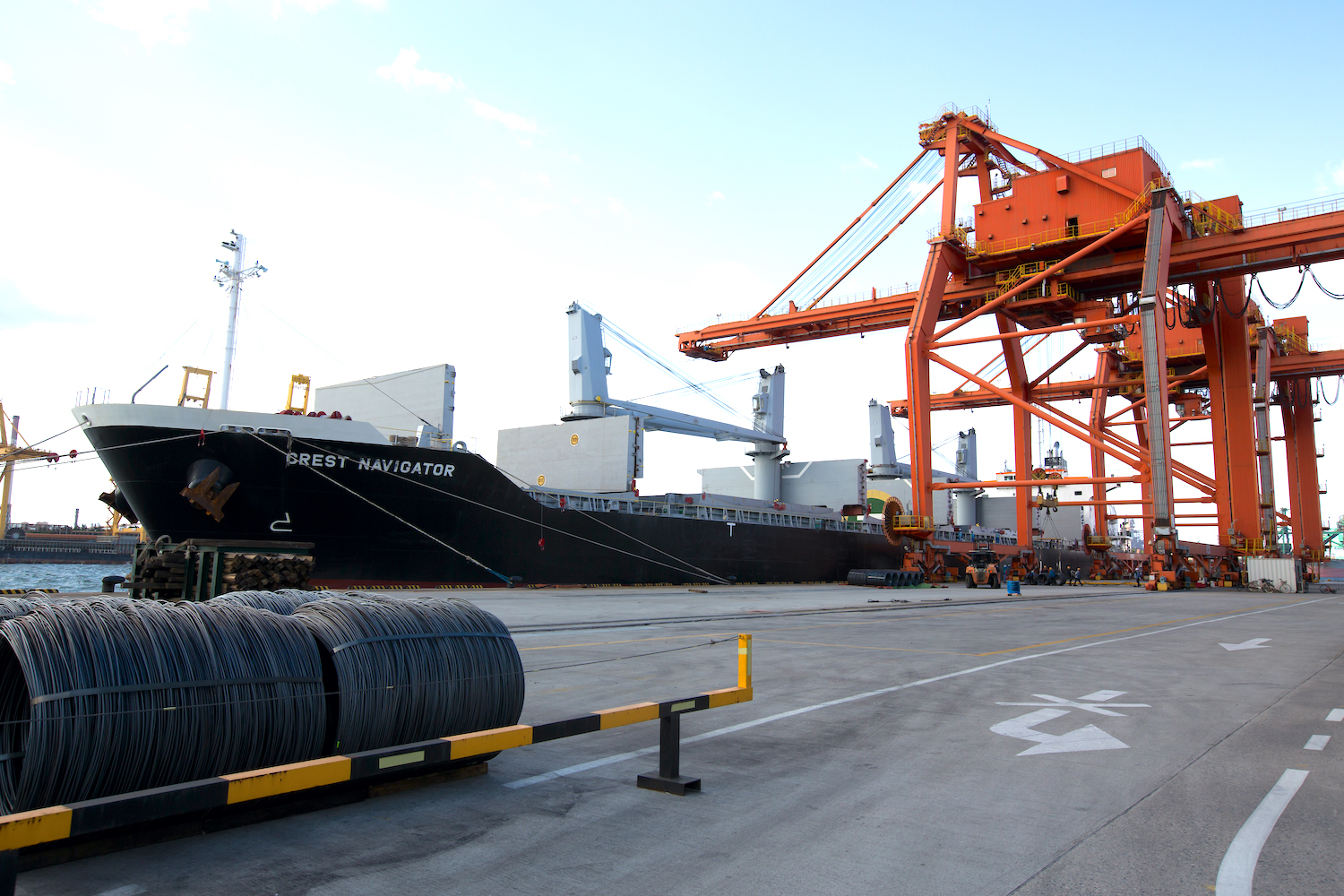
Steel shipments from key exporter Ukraine have been halted following Russia’s invasion of its neighbor early-Feb. 24, according to market sources. The conflict has resulted in major disruptions to logistics routes required for steel and iron ore transport.
“Deliveries from Ukraine have definitely stopped,” a Russian mill source told S&P Global Platts.
Several steel plants in Ukraine, including those of pipemaking group Interpipe and the Azovstal and Ilyich mills in Mariupol, both part of Metinvest, have stopped producing and shipping, trade sources said.
Interpipe confirmed to Platts that it stopped production and shipping in early-Feb. 24 as soon as the strikes began.
Metinvest and ArcelorMittal said they were significantly reducing their steel production, hampered by the suspension of rail freight services and closure of several ports. ArcelorMittal Kryvyi Rih, Ukraine’s largest integrated steel company located in Kryvyi Rih city, “is working to slow down production to a technical minimum” and production will be stopped at its underground mines, according to a statement issued by ArcelorMittal from London.
“We do not understand how supply chains are now operating in the country,” said a source at a steel mill. “At the moment, we perceive it as a risk to ship products by road. Consignments may get stuck or abandoned,” said the source, adding that transportation contractors are calling off truck drivers.
Traders said a missile attack from Russia took place on military facilities in the Sea of Azov area and that an increase in freight rates is expected from the Black Sea — where shipping was said to be still operational — due to risk insurance.
The Odessa port was declared closed by port authorities.
According to a Turkish government spokesperson, no decision has been taken on closing Russia’s access to the Bosphorus and that possible scenarios around the Montreux Convention, which gives Turkey control over ships passing through the straits, are under consideration.
Ukraine is the world’s 13th largest producer of steel and fifth largest exporter of iron ore by volume. It produced 21.4 million mt of crude steel in 2021. About 80% of its steel output is exported.
The country exported 44.4 million mt of iron ore products in 2021 and imported 9.85 million mt of metallurgical coal and coke products. It raised 3.9 million mt of steel scrap, of which 616,000 mt were exported.
Ukraine sends steel to the Middle East, Turkey, the EU, Africa and the Americas.
Sanctions can stall Russian purchases
The appetite has already waned for Russian steel with tougher sanctions announced or expected from the EU, the US and other countries. The Russian mill source saw as a real possibility customer refusal of deliveries from the country.
“We are operating in a zone of uncertainty,” the source said. “The port of Novorossiysk — the ships are loading — but I don’t know what to do next, the situation is difficult.”
In 2021, Russia made 76 million mt of steel, exporting around 40 million mt. In addition to numerous Atlantic buyers, China has recently become one of the biggest customers of Russian steel.
To Asia, Russian steel exports have mainly taken the form of billet in recent weeks.
News of the latest developments has dampened Asian demand, with a trader in Manila saying that rerollers in the Philippines would stop buying Russian and Ukrainian billet to avoid any potential risks.
Russia was the top non-Asian supplier of billet to the continent in 2021 by deal count, after Vietnam and Indonesia, having concluded 56 deals, compared with 72 and 63 by Vietnamese and Indonesian suppliers, respectively, according to spot data compiled by Platts.
Russian billet was sold mostly to the Philippines. While shipments via the Black Sea port of Novorossiisk appear to be unimpeded for now, and would likely be unscathed logistically out of the Russian Far East ports, sanctions on Russian banks involved in financing trades could scupper deals.
One Russian mill has stopped making offers to Asia “due to the impact of the bank issue,” an eastern China-based trader said.
Offers for Russian 5SP 130 mm billet were unchanged on the day at $715/mt CFR Manila for April shipment, two traders said, although higher offers at $720/mt on Feb. 22 were no longer available Feb. 24.
The Platts Feb. 24 assessment for billet of the specifications above slid $2/mt on the day to $708/mt CFR Manila.
Other market participants said China-based buyers could import more semi-finished steel from Russia if sanctions are widened, also as Chinese steelmakers seek to adhere to more stringent regulations concerning carbon emissions.
In the hot-rolled coil market, Russian mill MMK has been a key supplier to Asia, but has been absent from the spot market since mid-October 2021, when its last deal for early-February shipment was tracked, Platts data showed. Those cargoes would have already arrived in Vietnam.
MMK would return to offering in the middle of March for May-shipment cargoes, customers of the mill in Asia said.
Financing issues
International banking sanctions announced prior to the invasion had not impacted those that finance metallurgists, the Russia mill source said. “The main settlements are with other banks … we are reassuring customers,” the source said.
“There is already a recommendation from our risk management to convert all contracts into other currencies. Some companies are already starting to do it. I think this will be the first step for Russian companies if the US decides to restrict access to US dollars,” the source said. “Swiss franc or euro are considered and even others, shekels, Emirati dirhams.”
Russian news portal RBC reported that VTB, the second largest bank in Russia, has sent a letter to corporate clients recommending that they temporarily do not conduct any transactions in dollars and euros.
VTB was among banks targeted by new sanctions announced by US President Joe Biden late-Feb. 24.
— Staff
European steelmakers likely to raise prices on surging energy costs
European producers are preparing to increase steel prices amid a surge in energy prices in light of the Russian conflict with Ukraine; buyers are avoiding imports from both countries and some have withdrawn offers, Fastmarkets heard on Thursday February 24.
Even though the full impact of the recent escalation of the military conflict between Russia and Ukraine has yet be seen, a majority of sources expect it to push energy prices up.
“Gas prices are out of control now,” a source in Italy told Fastmarkets.
A Central European integrated mill said that their costs for gas jumped by about 55% overnight and they have withdrawn offers from the market.
Some long steel producers in Italy have withdrawn offers, while all flat steelmakers in Italy and a majority of coils producers in Northern and Central Europe have done the same. They prefer to halt and assess what the production costs will be and to review prices accordingly.
“We [will be able to] see a clearer picture in 3-5 days,” a source in Germany said.
“Nord Steam 2 is stopped, but Nord Stream 1 is still pumping gas. When it stops, and it should stop, prices [for gas may] see new highs,” a trading source in Europe told Fastmarkets.
Italian and some German producers tried to increase rebar prices recently, but demand was not strong enough to back the rise.
Sources involved in flat steel have a mixed outlook on the possibility of closure of Nord Stream 1, but they agree that energy costs will see new highs.
As a result, flat steel producers are planning to announce price increases, according to market participants, and buyers are likely to accept the new prices.
European coil producers – particularly in central Europe – traditionally rely on raw material imports from Russia and Ukraine and so will have to look for alternatives, which are likely to cost more.
Slab from both countries, which is used as feedstock by coil re-rollers in Italy and Benelux as well as by plate producers in Italy and Czech Republic, is also unlikely to continue, sources said. EU slab consumers will not be able to secure needed volumes from Brazil and other alternative sources, they said.
An Italian coil and plate re-roller was reported to have slab stocks for a few months.
Imports
European buyers could not rely on imports as an alternative to the EU-origin material because of safeguards, busy ports and the conflict between Russia and Ukraine.
“Navigation is stopped in Black Sea, ports [are] shut down. Steel that was ready to be shipped stays in ports,” a buyer in the EU said.
Exporters of coil to the EU also reportedly withdrew offers, preparing to increase offers.
Most Ukrainian ports have been closed since the Russian invasion of the country on Thursday February 24 and navigation in the Black Sea has been “paralyzed,” sources said.
Published by: Julia Bolotova, Maria Tanatar
24 Feb 2022 @ 18:29 UTC

Beltrame, Acerinox join ResponsibleSteel
Italian long steel supplier Beltrame and Spanish stainless steelmaker Acerinox have joined the not-for-profit association ResponsibleSteel, dedicated to defining and promoting responsible practices in the steel sector.
They follow the announcement earlier this week by Germany’s thyssenkrupp that it will also become member of the association, joining a long list of large steel companies and miners such as ArcelorMittal, vostalpine, US Steel, Tata Steel, BHP and POSCO.
“In line with Beltrame’s industrial business plan, we are very pleased to start a useful and proactive membership with ResponsibleSteel,” Beltrame EHS & sustainability director Giovan Battista Landra says in a note seen by Kallanish. “This is an additional sign to stress our determination in responding to the worldwide challenge for a sustainable management of production processes. It is a project which underlines our clear intention of being frontrunners in the industrial future, based on green transition, innovation and stakeholder engagement.”
Acerinox chief executive Bernardo Velázquez says: “Our product is an example of the circular economy, as it can be recycled infinitely as many times as necessary and without losing its properties in the process, becoming a resource once more for multiple applications.”
Emanuele Norsa Italy


INTERVIEW: Mexican steel service centers, distributors expect challenging 2022
Mexican steel service centers and distributors are concerned about experiencing another year of “plague of uncertainty,” with industrial and commercial operations notably lower compared with the previous year, Conadiac President Roberto Gutiérrez told S&P Global Platts.
“We are concerned about our economy,” Gutiérrez said in an interview with Platts.
Sales volumes in the distribution network to end-users declined around 30%-40% annually at the beginning of 2022. This has strengthened the wait-and-see approach across the sector, with steel buyers now looking to keep inventories in a balanced level relative to demand, according to Conadiac, the association representing Mexican steel service centers and distributors.
“Nobody is thinking in having large inventories because there is greater availability of product in both long and flat steel markets,” said Conadiac Vice President Roberto Pérez. He said turnovers of two to three months for flats products and less than a month for longs would be an ideal scenario. However, “we have not been able to destock as much as we would like and we continue buying only specific needs,” Pérez added.
Low inventory levels became a new reality for buyers after prices for long and flat steel began a downhill in August 2021.
Besides the three main ongoing construction works in Mexico — the Felipe Ángeles International Airport, the Dos Bocas Refinery and the Tren Maya line — there are no other major projects in sight to spur the national economy and steel demand growth.
Gutiérrez added that in the last quarter of 2021, the market showed a slight increase in steel purchases as some projects resumed activities. However, he stressed that such increases only reflected the activity of covering holes in inventories, which did not mean a real improvement in demand.
Still, despite the lack of demand, “the ongoing downward trend in steel prices in Mexico should slow the pace,” Pérez said, noting that the spread between rebar and HRC has returned to historical levels.
The monthly spread between Mexican rebar and hot-rolled coil prices ranged Peso 1,610-2,735/mt in 2019. After the spread peaked Peso 16,463/mt in September 2021, it was now returning to levels below Peso 3,000/mt in February, Platts data showed.
Flat steel to face new price dynamics
The Mexican steel market is expected to see a significant surplus in 2022 for hot-rolled coils, following the new capacities coming on stream for the domestic market. This might mean that pressure on prices would remain throughout the year, although in a moderate way.
Conadiac’s executives did not see Mexican HRC prices going below $1,000/mt, “at least in the first quarter.”
In the past three months, the price fall in finished steels and fabricated steel products has been faster than expected in a well-supplied market with domestic offers combined with imports.
According to Pérez, rectangular hollow sections was the most affected product, where offers have been seen below HRC prices. “It is a very pulverized market that although it seeks exports, it has faced limitations, not everybody can ship all they want,” he said.
Nevertheless, the scenario is opposite for cold-rolled coils with distributors seeking to import more material in the face of still high prices in the domestic market, where the spread between both products has already exceeded Peso 3,000/mt.
However, both HRC and CRC could see imports in general reducing pace, as Mexican ports remain saturated and international prices and associated risks turned the activity less attractive.
Mexican HRC prices have fallen 40% since the peak of Peso 38,000/mt in August 2021 while CRC prices have fallen 35% since the peak of Peso 41,000/mt in the same month.
“It is not only the new capacity of ArcelorMittal and Ternium, but also the new capacity of Steel Dynamics in Corpus Christi, who is considering 40% of its production for the Mexican market,” said Pérez.
Ternium announced the beginning of operations in its new hot-rolling mill in Pesquería in the middle of 2021 with a capacity of 4.4 million mt/year, while ArcelorMittal started operations of its new rolling mill in 2022 with a capacity of 2.5 million mt/year.
Exports key factor for rebar
Although limited demand has driven the pressure on steel prices, efforts by rebar makers to export to the US have detained further falls. Moreover, “scrap costs are rising,” Gutiérrez said.
Mexican rebar prices have risen 7% since December 2021 when mills started to target higher prices.
“Nowadays it is a relief that not all the rebar is staying in Mexico, otherwise, we would be struggling with ample supply,” said Pérez.
In addition, Gutiérrez said self-built construction is likely to remain a strong support for demand in the rebar market on the back of remittances from the US that might spur spending for the second quarter while private construction works pick up slowly.
Speaking on the distribution side of the business, Conadiac sees a period of consolidation and maturity across the chain. It said several companies left the business since the breakout of the pandemic, while others emerged as big players and intensified the competition.
Conadiac is integrated by 170 associate members with offices in Monterrey, Guadalajara, Puebla, Mexico City and Tijuana.
— Claudia Cardenas

Thyssenkrupp to join ResponsibleSteel
Thyssenkrupp Steel will join the ResponsibleSteel initiative, which promotes a global standard and certification programme to ensure steel is responsibly sourced and manufactured.
“We want to give our customers the certainty that we are shaping our transformation to climate-neutral steel production,” says Arnd Köfler, thyssenkrupp Steel’s chief technology officer. This will apply to the entire value chain, also taking into account social and ecological criteria, Kallanish understands.
“It is of particular importance to us to pursue these goals jointly with our downstream users and customers,” Köfler adds. For the German steelmaker, the commitment to the Responsible Steel standard is another important element of its technological transformation process.
“We are rolling out the ResponsibleSteel standard across the globe and we are proud that our positive impact is already making a change,” says Ali Lucas, acting chief executive of ResponsibleSteel. “Thyssenkrupp Steel membership will be a fundamental part of this.”
Major mill groups that recently became members of the initiative include Posco and Severstal.
Christian Koehl Germany
Construction growth moderates, auto bottlenecks continue: Fitch Solutions
Global construction industry growth will moderate in 2022 as base effects normalise, but will average annually at 3.4% in the coming years, above pre-Covid growth, thanks to support from government stimulus measures, according to Fitch Solutions.
There will however be increasing divergence between developed and emerging markets, with the latter being less able to pump funds into infrastructure investment. Most central banks in developed markets will not hike rates as aggressively as the market expects, but emerging markets will face tightening monetary policy, with rate hikes likely to be aggressive, says Fitch Solutions infrastructure analyst Daine Loh.
Public investment will also boost green infrastructure development in the EU and US, with a considerable portion of funds aimed at catalysing private investment. Western Europe’s favourable environment for hydrogen infrastructure investment will see this region emerge as a “hotspot” for this type of technology, Loh observed during a webinar on Tuesday attended by Kallanish.
Construction material input prices will remain elevated in 2022, which could see further construction project delays, but values will moderate from record 2021 highs. The tight market should ease in the second half of 2022 as supply and demand rebalances. The slowdown in Chinese construction growth will be a major factor in easing market pressures.
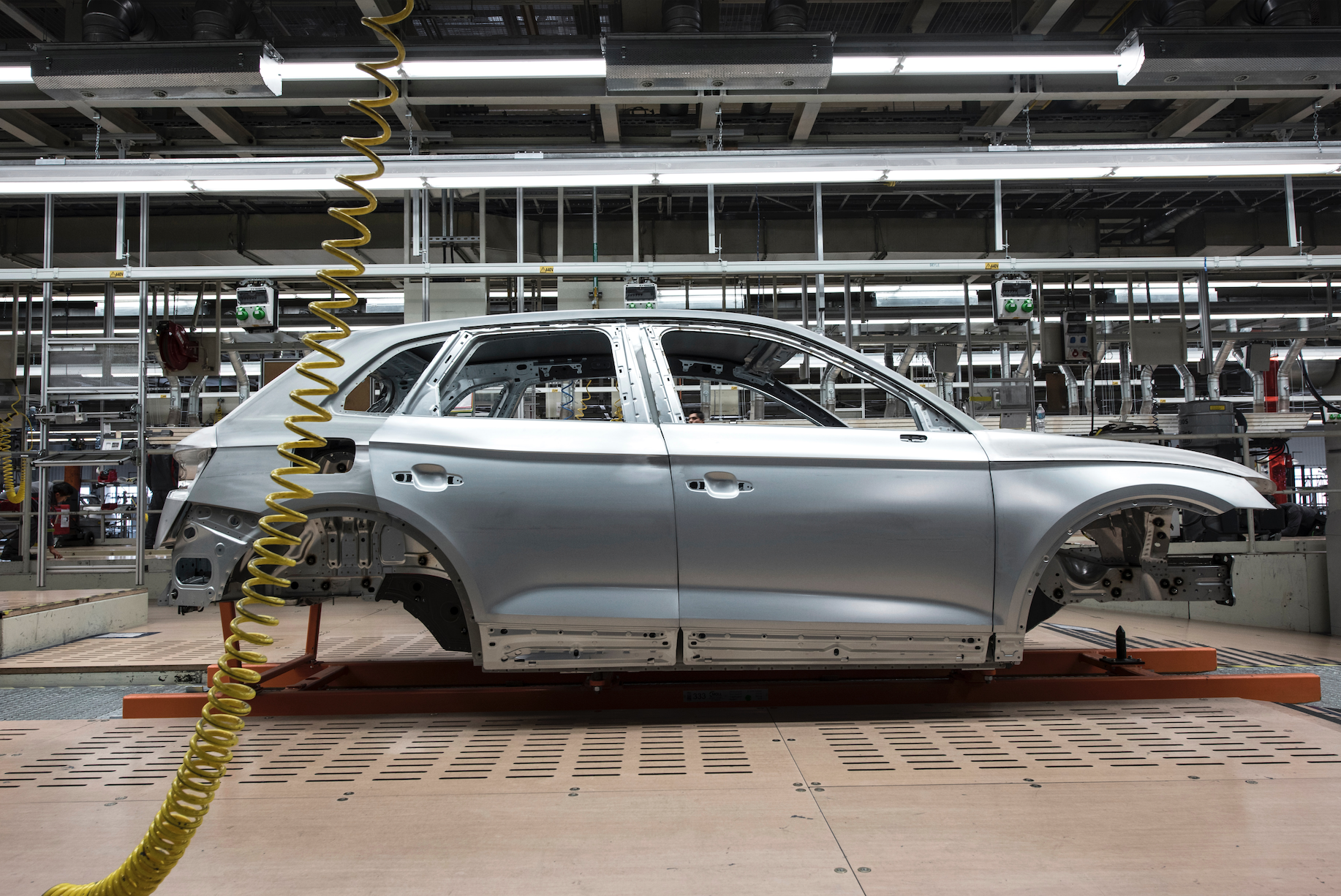
On automotive, global vehicle demand will remain robust but production to meet this demand will continue to be restricted by semiconductor shortages and shipping delays. Global vehicle sales growth will slow to 5.3% in 2022 versus 12.8% in 2021, but Middle East and North Africa sales should record the largest growth of 12.4%, surpassing 2019 volumes amid accelerating economic recovery, said Fitch Solutions principal autos analyst Joshua Cobb.
The transition to electric vehicles will see pressure from persistently high battery prices in 2022 due to costly metals. Automakers’ shift to more cost-effective lithium iron phosphate (LFP) battery chemistries should tame rising costs associated with nickel-rich chemistries.
In order to limit the supply chain disruptions seen in 2021, automakers will shorten and strengthen their supply chains. They will employ additive manufacturing, meaning onshoring 3D printing of components to eliminate the need to source across larger distances. They are also establishing micro-factories to improve lead times and using artificial intelligence to improve inventory management.
Adam Smith Germany
Brazil flat steel distributors’ shipments fall 8.1% on year in January: Inda
Shipments by Brazilian independent flat steel distributors and service centers dropped 8.1% on the year, to 298,500 mt in January, according to data from the national flat products distributors association Inda on Jan. 22.
On month, shipments increased 14.2%
“Sales picked up in the last week of January,” said Carlos Loureiro, executive president of Inda.
On the other hand, purchases fell 10% on the year, to 302,400 mt in January. Compared with the previous month, purchases increased 21.7%.
“Since by late January, market commented about a possible price increase, so it is normal to anticipate buys,” said Loureiro.
Flat product inventories in the Brazilian distribution network totaled 827,100 mt, up 0.5% from December. The average inventory-turnover was 2.7 months of supply.
Finished flat steel imports rose 5.3% on the year in January to 169,880 mt, excluding slab, mostly from China (59.1%), followed by Russia (14.7%)
“If there are sanctions on Russia, it may affect exports to Brazil and impact prices, mostly on slab,” he said.
Imports of slabs were 578,200 mt, Inda said. “It is a low volume, market is very tight, which reflects on prices. When there was need, domestic mills purchased internally.”
— Jose Guerra

January global crude steel production down 6.1% : Worldsteel
World crude steel production in January decreased 6.1% to 155.0 million mt from January 2021, the World Steel Association said Feb 22.
The world’s largest steelmaker, China, produced an estimated 81.7 million mt, down 11.2% year on year on low demand, worldsteel said in a statement. European production decreased 6.8% to 11.5 million mt year on year, with production in Germany, the Continent’s largest producer, down1.2% to 3.3 million mt, as the sharp rise in energy costs weighed on volumes.
Turkey produced 3.2 million mt, down 7.8% year on year, while Brazil produced 2.9 million mt, down 4.8%. Japan produced 7.8 million mt, down 2.1%. South Korea is estimated to have produced 6 million mt, down 1.0%.
The second-largest top producer, India, increased production in January by 4.7% to 10.8 million mt. Iran is estimated to have produced 2.8 million mt, marking the largest increase, up 20.3% year on year.
The US produced 7.3million mt, up 4.2%, while Russia is estimated to have produced 6.6 million mt, up 3.3% year on year.
— Annalisa Villa

China’s steel industry eyes major HRC capacity expansion in 2022-2023
China’s hot-rolled coil capacity expansion is set to gain pace in 2022-2023 as the country marks a slow but gradual transition from property-driven to manufacturing-driven economic growth, a development that is expected to diminish demand for long steel from the property and infrastructure sectors in the long term.
As China moves to high-end manufacturing and long steel demand plateaus, it will help grow flat steel demand, industry sources told S&P Global Platts.
China has about 14 new hot strip mills that are scheduled to be commissioned in 2022, with a combined HRC production capacity of around 41.4 million mt/year, according to Platts calculations based on official reports and market sources.
In 2023, another 10 hot strip mills will come onstream with a combined production capacity of 26.6 million mt/year.
Currently, China has about 350 million mt/year of HRC production capacity, according to some market sources. That means if the new mills are commissioned on a timely basis, China’s HRC production capacity will increase by around 11.8% in 2022 and 6.8% in 2023.
The new hot strip mills width ranges from 1,450 mm to 2,250 mm. Most of them will aim to produce high-end flat steel products used in industries such as vehicle and engineering machinery manufacturing, high strength containers, oil and gas transmission pipelines, steel structure housing and prefabricated construction.
Expansion motive
Some steelmakers building the hot strip mills are long steel producers aiming to extend their market from long steel to flat steel. Some other already produce flat steel and are looking to expand their product range to be more competitive.
Flat steel products are usually more value-added than long steel products, market sources said.
The demand for long steel in China’s property and infrastructure sectors may have plateaued, while high-end manufacturing, which mainly consumes flat steel, may gradually become the major driver of China’s economic growth, the sources said.
China has also been pushing for steel structure housing and prefabricated construction, which will lower the overall steel and cement consumption and thus help reduce China’s carbon emissions.
“In the near future, we may see that even in the construction sector, the consumption of HRC will gradually increase while that of rebar and wire rod will decline,” one mill source said.
However, HRC production capacity might be expanding too fast, making fierce competition or oversupply inevitable in the near future despite the potential demand growth for flat steel, some sources said.
One source said his company was aware of the fast-growing HRC capacity and eventually gave up on plans to build their own hot strip mill.
Production still under control
Most of the steelmakers planning the new mills have been also building new iron and crude steel-making facilities, with capacity quotas purchased from other mills through China’s capacity swap mechanism.
China started capping its crude steel output since 2021 in order to meet its decarbonization goals.
“Government’s direct interventions in steel production may ease in 2022, but China’s crude steel production this year is still likely to decline further from 2021, mainly due to poor steel demand in property and its related sectors,” one mill source said.
“China will continue to cap its steel production in the future, but more through raising environmental protection costs and industry consolidation,” the source said.
As a result, the trend of rising HRC production and falling long steel production may continue over the upcoming years.
In 2021, China’s output of medium-wide HRC, a major HRC, increased 4.3% on the year to 179.33 million mt, after a 12.2% year-on-year growth in 2020, according to the National Bureau of Statistics.
The combined output of rebar and wire rod, also indicators of long steel output, decreased 5.7% on the year to 407.91 million mt in 2021.
| China’s upcoming hot strip mills – 2022-23 | ||
| Number of new mills | Capacity (in million mt/year) | |
| Provinces/Region | ||
| Hebei | 5 | 13.2 |
| Guangxi | 2 | 8.5 |
| Inner Mongolia | 1 | 2 |
| Henan | 1 | 1.8 |
| Jiangsu | 1 | 3.5 |
| Shandong | 1 | 4 |
| Hunan | 1 | 2 |
| Fujian | 1 | 2.8 |
| Guangdong | 1 | 3.6 |
| 2022 total | 14 | 41.4 |
| Hebei | 7 | 18.5 |
| Guangdong | 1 | 2.6 |
| Chongqing | 1 | 3 |
| Yunnan | 1 | 2.5 |
| 2023 total | 10 | 26.6 |
| Source: official reports, market sources | ||
— Staff