


ArcelorMittal Europe assesses new flats orders amid war
ArcelorMittal Europe – Flat Products says new orders and contracts will be assessed in the coming days after markets were thrown into turmoil following Russia’s invasion of Ukraine last Thursday.
Kallanish learned from informed market sources on Friday that the division of ArcelorMittal Europe has told customers it has stopped offering product as a result of the war in Ukraine.
“Given the current market volatility caused by the crisis in Ukraine, ArcelorMittal Europe – Flat Products is focussing on fulfilling existing orders,” the company told Kallanish on Friday, before adding new orders will be assessed once there is more clarity.
Following the suspension of ferrous trade in the CIS region precipitated by Russia’s invasion, questions have arisen over the impact of steelmaking raw materials and flat steel supply into Europe. Many of Europe’s blast furnace-based producers depend on Ukrainian iron ore and coking coal, while Russian and Ukrainian flat steel has a significant share in the EU import market. Potential shortages will likely drive up prices and lead to EU buyers scrambling to find alternative suppliers.
The Kallanish northern European hot rolled coil price index jumped for a third consecutive week to €920-980/tonne ($1,024-1,091) ex-works on Friday, after diving throughout January.
Adam Smith Germany

Slab procurement disruption paralyses Italian plate activity
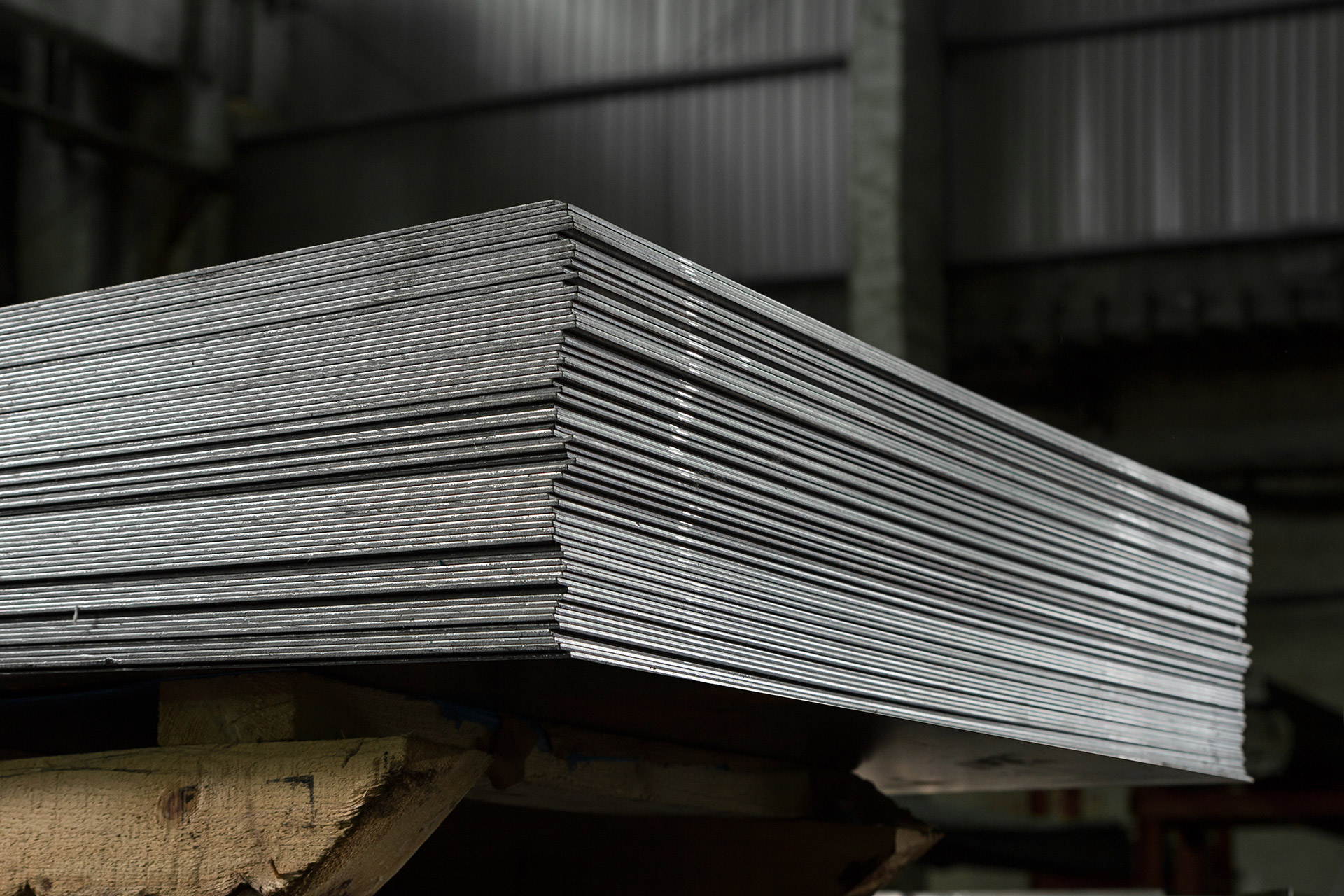
Italian plate producers have either stopped sales completely or are deliberating longer over quotes amid the market uncertainty caused by the situation in Ukraine.
Given slab feedstock deliveries from Ukraine may not be completed, plate producers tell Kallanish they do not know what price to quote at present. This is all the more so considering the continuing escalation in gas prices and uncertainty over how much non-CIS slab alternatives will cost in the coming weeks. Italy is a net slab importer and local plate processing is fed in large part by Ukrainian slab.
As a consequence of the Russian-Ukrainian conflict, on 24 February the Dutch TTF Natural Gas Index showed an increase of 50.18% on the previous day, after rising by 11% on 23 January. From a level 70, the gas price index ballooned to 134 on 24 February.
This, combined with the uncertainty over slab procurement, is causing companies to freeze their sales activity and rush to replace slab usually bought in Ukraine with other supply sources. A similar situation is evident in Italy for other products, such as coil (see separate article) and raw materials like HBI and pig iron.
Before the war started, Italian heavy plate contract prices were steadily climbing following the latest hikes announced by mills in February. Demand for S235, the very basic grade, and premium 355 grade throughout Europe is sustained and plate mills are quoting lead times for the second quarter, in April and May.
Domestic plate contracts have attained the level of €1,000/tonne ($1,117/t) for S235, with €50/t extras for the premium 355 grade.
Distributors have expressed concern regarding plate procurement and lead times, which are expected to lengthen further as end-user demand remains robust. Some are concerned they will not be able to procure plate in Italy because of the conflict, as import offers are few and not always competitive.
Natalia Capra France

Italy braces for coil hikes amid CIS disruption
Italian hot rolled coil producers have stopped sales due to uncertainty related to the Russian-Ukrainian crisis. They are expected to return to quoting in the first March week at considerably increased prices compared to February levels, sources tell Kallanish.
The war in Ukraine and future sanctions on Russian steel will cause slab and coil shortages in Italy. Availability of both heavy plate and HRC is expected to shrink as producers are grappling with procurement issues. Some buyers in Italy are rushing to find alternative sources of supply in other European and non-European countries.
This is also touching raw materials such as pig iron, for which prices are seen increasing in the short term on shortages (see Kallanish 25 February). Meanwhile, producers of cold rolled and hot-dip galvanized coil are also suspending quoting due to uncertainty, and preparing significant increases.
HRC contracts in Italy currently remain at €880-920/tonne ($983-1,028/t) base ex-works, amid a few uncompetitive import offers starting at €880/t cfr Italy.
Demand for domestic HRC is expected to be strong when producers return to quoting, Kallanish hears. Italian steelmakers were asking for €920-930/t base ex-works for HRC before they stopped sales.
ArcelorMittal in Italy is also said to have halted sales, together with most Italian service centres who are expected to go back to selling on Monday or Tuesday.
Meanwhile, some Italian end-users that sell truck and tractor components in the CIS region are expected to experience deliveries and sales difficulties as a consequence of the war.
Elsewhere in Europe, other coil makers are either stopping sales or increasing quotes. Liberty Galati has pushed up HRC prices for April delivery to €1,000/t ex-works. The company says prices of CRC and HDG, as well as organic coated sheet will also be amended upwards (see separate article).
Natalia Capra France

130 participants at the 1st AMSCI & EUROMETAL Steel Trade Webinar

EUROMETAL organized together with AMSCI (American Metals Supply Chain Institute) a Steel Trade Webinar on the 24th of February.
Our webinar generated some lively questions and insights especially thanks to the high level presenters.
For this first EUROMETAL & AMSCI Steel Trade Webinar, we decided to focus on:
- The implications of Safeguards in the US and the EU
- The latest trade agreement between the US and EU offering a tariff-rate quota (TRQ) for imports from the EU
- The further perspective of Section 232 under the Biden administration.
- Invasion of Ukraine: how safeguard quotas and steel supplies will be affected?
We had a total of 185 registrations and 140 participants.

Russian sanctions seen altering EU trading patterns
Steel trade could be restricted by the raft of sanctions announced on Thursday by EU officials aimed at directly hitting Russia’s economic base following its invasion of Ukraine.
European Commission President Ursula von der Leyen confirmed on Thursday that sanctions will “target strategic sectors of the Russian economy by blocking their access to technologies and markets that are key to Russia”.
During a webinar organised by Eurometal and AMSCI, Fabrizio di Gianni from law firm Van Bael & Bellis confirmed that expectations are for sanctions to be different from the past. He explained that the target will not solely be on freezing assets, but measures will directly hit Russian economic sectors, including steel exports.
Di Gianni added that in the medium term, supply shortages from Ukraine and Russia could have an effect on future decisions on safeguard measures in Europe. Changes could be made to the system to secure the possibility of alternative supplies from other parts of the world.
An important disruption to steel trade flow from Russia and Ukraine towards the West is therefore expected, impacting global trade flow and supply of steel. The impact will come from both production and shipment stoppages in Ukraine and trade sanctions directed at Russia, Kallanish understands.
According to Eurofer numbers, in 2021 Russia exported over 3.7 million tonnes of finished steel products to Europe, while Ukraine exported over 2.5mt. These figures do not include semi-finished products, for which Europe is one of the most exposed global markets, being a large importer of slab and billet from both Russia and Ukraine.
“For the European market, the shortage of supply of iron ore from Ukraine would also be an important issue,” Metals Consulting International chief executive Alexander Siryk commented during the webinar held on Thursday. “The shortage of key supplies out of the Black Sea is going to create direct domino effects on the global steel markets.”
Emanuele Norsa Italy
EU traders highlight further port congestion issues
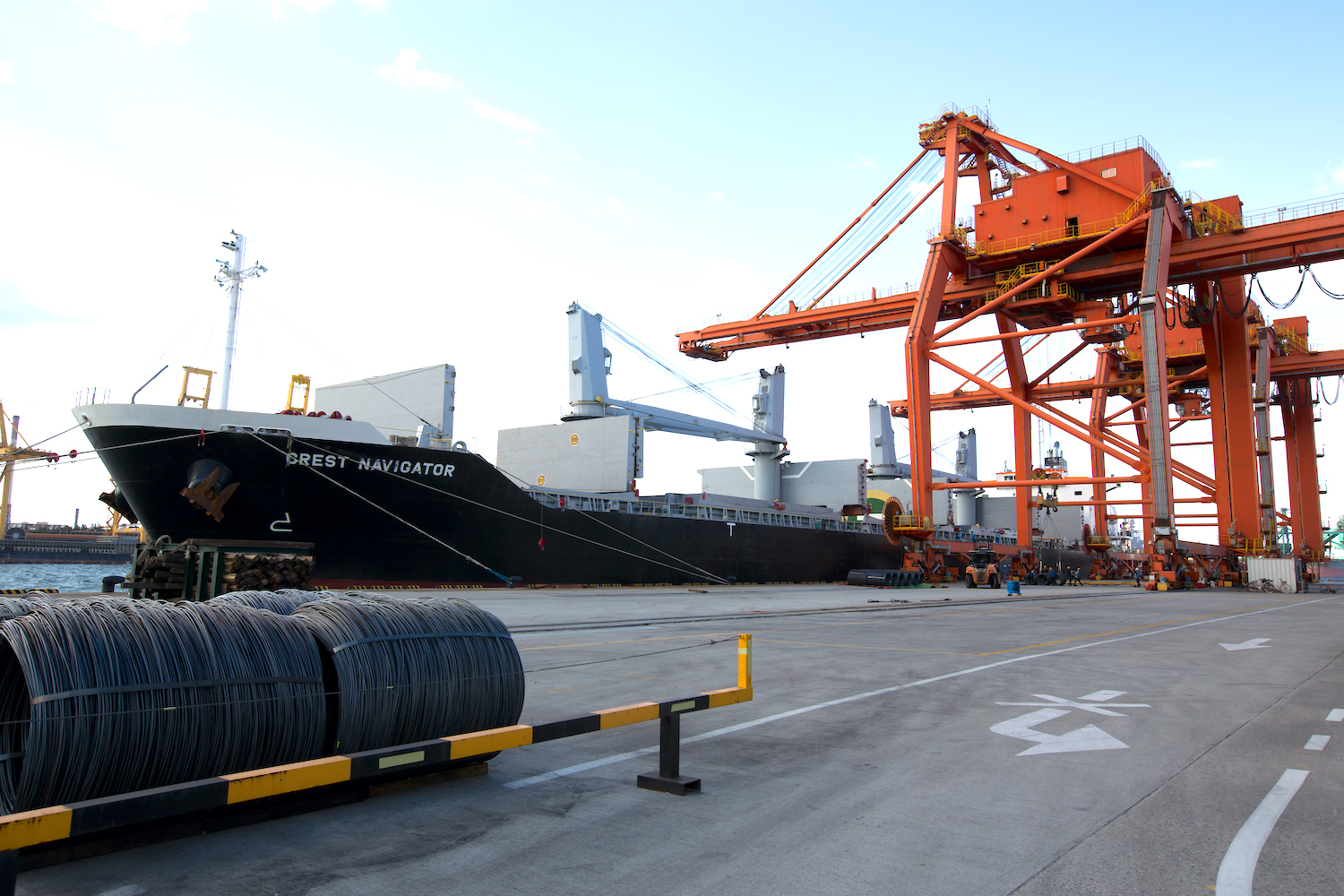
European steel traders continue being concerned by the increasing congestion at European ports, adding to the many uncertainties surrounding the steel market in 2022 so far.
A Swiss-based trader tells Kallanish that ships arriving at Italian ports can wait up to 50 days before being able to dock. This in addition to the increasing costs applied to all tariffs related to handling, stocking and transporting materials.
“Part of the issues are created by the need to store material at ports for longer than usual due to the [EU] safeguard system. Even worse however is the problem created by the skyrocketing costs of transportation and services,” the trader observes.
According to analysis provider Sea-Intelligence’s latest report in January, the European terminals congestion index doubled in 2021, reaching a new record level by the end of December. The outlook for 2022 in Europe is that the situation will continue to get worse.
A number of traders also confirm that in Antwerp, for example, some operators at the port cut to two weeks – from the previous four weeks – the period for which steel products can be stocked free of charge at the port. This decision is set to weigh further on the costs of importing steel products and on the competitiveness of such activity against domestic steel supplies.
“The cargo rotation time is presently extremely low at the port and something needs to be done about it. The congestion is a real problem,” an Antwerp port executive says.
In Spain, the situation seems to be under control at ports, while in Italy congestion at the Ravenna port is further exacerbated by a strike by lorry drivers demanding support for petrol costs.
Emanuele Norsa Italy

Metinvest halts production in Mariupol, AMKR reduces output
Metinvest has suspended some equipment at its Mariupol-based Ilyich and Azovstal plants after the Russian invasion of Ukraine on Thursday, Kallanish notes.
This decision was made by company’s crisis response centre to ensure the safety of its employees and preserve the equipment. The plants will use up hot metal and steel available on 24 February, following which operations will be put on hold.
Azovstal will suspend its operations at the coke shop, recovery and desulphurisation shop, blast furnace shop, BOF shop, plate mill, rail and structural mill, lime shop, and slag processing shop. Ilyich will suspend operations at the sinter plant, blast furnace and BOF shops, 1700 HSM and plate mill 3000, and the cold rolling mill.
The production suspension will continue for seven days. The decision on further operation of the enterprises will be made based on how the situation develops.
If Metinvest loses its assets in the Donetsk region – Azovstal, Ilyich, Pokrovskugol and Avdiivka Coke Plant – but retains the GOKs in Kryvyi Rih, the company will lose up to 40-50% of its annual profit, Ukrainian analysts said earlier this week.
ArcelorMittal Kryvyi Rih (AMKR) has meanwhile announced the suspension of steel production in Ukraine following the invasion, the company tells Kallanish.
“Regarding our plant, our team is working to slow down production to a technical minimum, but production will be stopped at our underground mines,” the firm says.
Earlier, the steelmaker reported that the plant continues to operate and its heads of departments have an emergency action plan (see Kallanish passim).
Other large Ukrainian steel enterprises, like DMZ, Ferrexpo and Interpipe, said on Thursday they were operating as usual. There were reports that Interpipe had suspended work, but the company denied this and told Kallanish it continues production as usual.
Ferrexpo’s mining and processing facilities located adjacent to the city of Horishni Plavni, in central Ukraine, where the situation remained stable on Thursday, are meanwhile operating. However, the government of Ukraine has now suspended rail transportation, the company adds.
Svetoslav Abrossimov Bulgaria

Italy braces for coil hikes amid CIS disruption
Italian hot rolled coil producers have stopped sales due to uncertainty related to the Russian-Ukrainian crisis. They are expected to return to quoting in the first March week at considerably increased prices compared to February levels, sources tell Kallanish.
The war in Ukraine and future sanctions on Russian steel will cause slab and coil shortages in Italy. Availability of both heavy plate and HRC is expected to shrink as producers are grappling with procurement issues. Some buyers in Italy are rushing to find alternative sources of supply in other European and non-European countries.
This is also touching raw materials such as pig iron, for which prices are seen increasing in the short term on shortages (see Kallanish 25 February). Meanwhile, producers of cold rolled and hot-dip galvanized coil are also suspending quoting due to uncertainty, and preparing significant increases.
HRC contracts in Italy currently remain at €880-920/tonne ($983-1,028/t) base ex-works, amid a few uncompetitive import offers starting at €880/t cfr Italy.
Demand for domestic HRC is expected to be strong when producers return to quoting, Kallanish hears. Italian steelmakers were asking for €920-930/t base ex-works for HRC before they stopped sales.
ArcelorMittal in Italy is also said to have halted sales, together with most Italian service centres who are expected to go back to selling on Monday or Tuesday.
Meanwhile, some Italian end-users that sell truck and tractor components in the CIS region are expected to experience deliveries and sales difficulties as a consequence of the war.
Elsewhere in Europe, other coil makers are either stopping sales or increasing quotes. Liberty Galati has pushed up HRC prices for April delivery to €1,000/t ex-works. The company says prices of CRC and HDG, as well as organic coated sheet will also be amended upwards (see separate article).
Steel, iron ore supply chains ‘already distorted’ by Russia-Ukraine conflict: webinar
The Russia-Ukraine conflict has already distorted iron ore and steel supply chains because of both countries’ heavy involvement in these markets, Alexander Siryk, the CEO of MCI Metals Consulting International (Düsseldorf) said on a Feb. 24 webinar that the European steel distributors’ association Eurometal and the American Metals Supply Chain Institute organized.
Russia produces around 6.5 million mt/month of steel, while Ukraine produces 1.8 million mt/month, Siryk said. Both nations are also major exporters of semi-finished steel — slabs and billet. Slabs are supplied to Europe — which would be very exposed by any major disruption — and billets to the Middle East as well as Asia.
A shortage of billets could also lead to a shortage of scrap, he said.
Some of Russia’s iron ore shipments are shipped through Ukraine, where Odessa, in the Black Sea, is the only Capesize port, with shipments often destined for China, he noted.
The European market could feel any tightness in Ukrainian iron ore supplies resulting from the conflict, Siryk said.
Alexander Julius, a member of Eurometal’s presidency, said that markets for iron and steel products are likely to get tighter as a result of the conflict and the European Commission should take this into account when imposing sanctions.
“Ukraine is not in a position to supply and Russia will most likely not be permitted to supply and this will result in a lack of material in the countries of destination, affecting end-users and steel processors, and there needs to be a substitute to make material available,” he said.
S&P Global Platts assessed Commonwealth of Independent States export billet at $663.50/mt FOB Black Sea Feb. 24, down $1.50 from Feb. 23.
Due to market disruptions resulting from the escalation of the Russia-Ukraine conflict, no bids, offers, trades, or indicative market values for the Black Sea billet assessment were reported on the day.
The Black Sea flat steel market was already reported to have “frozen” Feb. 23, prior to Russia’s Feb. 24 invasion of Ukraine, with no price changes. Turkey’s long and flat steel markets were described as being in a wait-and-see mode Feb. 24 amid trade and currency uncertainties.
Platts assessed the 62% Fe Iron Ore Index at $136.95/dry mt CFR North China Feb. 24, down $1.10 from Feb. 23 on muted procurement activities.
International trade lawyer Lawrence Hanson said on the webinar that the Ukraine situation will heighten global trade tensions.
Speakers on the webinar noted that questions may be raised over the future of Russian steelmakers’ operations in the US and the EU with new sanctions. Russia’s Evraz and NLMK Group have production assets in the US and NLMK also has operations in the EU.
— Diana Kinch

EU HRC supplies at risk from sanctions
Hot-rolled coil in the European domestic market was flat Feb. 24 as steel buyers avoided imports and anxiousness related to Russia’s military invasion of Ukraine put pressure on supplies.
The daily Platts TSI index for HRC for Northern Europe was stable on the day at Eur960/mt EXW Italy, while the daily Platts TSI index for HRC for Italy also remained stable at Eur920/mt.
With uncertainty rampant in the market due to Russia’s military invasion of Ukraine, market participants expressed concerned over potential sanctions.
Sources reported some mills holding orders due to doubts that important raw and semi-finished materials could reach the EU market from the CIS area.
Market participants in the south largely agreed that supply concerns would drive domestic prices upward.
“The market is in standby, waiting for further decisions in the coming days, probably focused on much higher asking prices,” one distributor source said.
An Italian trader source confirmed expectations of an upward price effect.
“I think prices might skyrocket,” another service center source said.
In northern Europe, sentiments on price effects were less united, with the market unsure on price direction, according to one distributor.
The distributor said mills “could afford to wait,” demonstrating less urgency in a market bearing comparative oversupply.
A distributor source said this new wave of panic has accelerated automotive recovery, with steel buyers all at once returning to the market to pick up reserved volumes.
— Benjamin Steven