


Beltrame closes in on Romanian longs mill acquisition
Beltrame has received Romanian competition authority approval to take over bankrupt long products mill COS Targoviste for €38.3 million ($43.5m).
The Italian firm tells Kallanish it plans to invest some €100m into modernising the Romanian long products mill’s equipment.
Liberty Steel had also been in the running to acquire the plant, according to stock exchange filings.
The Romanian government had initially planned to take over COS Targoviste in exchange for the mill’s state debt. However, this plan fell through after government ministerial changes and the state’s loss of will to nationalise a steel plant.
In 2020 COS Targoviste stopped production indefinitely and dismissed around 1,200 workers after working capital was depleted and debts increased. The firm had been on the verge of an acquisition by Laminorul Danube Metallurgical Enterprise, a recently-established company that is 90% owned by Polish industrial investor Sunningwell International Polska. However, this transaction was scuppered by the Covid-19 pandemic.
COS Targoviste reported no production in January-September 2021. Sales fell 76% on-year to 1,744 tonnes, with exports accounting for 1,548t. Revenue slumped 57% to RON 13.06 million ($3m) but net loss halved to RON 22.4m.
The firm produces mainly rebar and a range of special steels.
Beltrame already owns a plant in Romania, Donalam, which produces 8-320mm diameter round bar and reported sales of 106,000t in 2019. The firm estimates a 50-60% on-year increase in revenue for the plant in 2021 to RON 630m.
The Italian group said last year it also plans to build a 600,000 t/year eco-friendly rebar and wire rod mill in Romania for an investment of €300m.
Adam Smith Germany


Italian sections producers seek increases
Italian sections producers are pushing up their prices by €50/tonne ($56), as other long products makers in the country are mulling similar increases, Kallanish hears.
The largest sections mill in the market was quoting at €670-680/t for the first category of beams until a few days ago. Prices increase by €20/t for each subsequence category. New quotes should push asking prices up to €720/t base ex-works.
Contract prices for the first category of sections remain stable on last week at €670-680/t ex-works. Values for the first category of beam were at €570-580/t base ex-works last month. Including €380-390/t average size extras, domestic beams contracts are hovering at €1,050-1,070/t ex-works, sources suggest.
The current hike is due to strong raw material price increases. It may be followed by another increase in the coming weeks as energy costs and domestic scrap prices are forecast to continue climbing in March, Kallanish hears.
Natalia Capra France

India steelmakers welcome government green hydrogen policy
India’s steel industry has welcomed the power ministry’s announcement of a Green Hydrogen Policy to facilitate production of green hydrogen green ammonia using renewable sources of energy.
The move is part of India’s National Hydrogen Mission, announced on 15 August 2021 and aimed at making India a green hydrogen hub with 5 million tonnes/year green hydrogen production by 2030.
Hydrogen and ammonia are envisaged as future fuels to replace fossil fuels in steel production, Kallanish notes. Under the policy, green hydrogen/ammonia manufacturers can purchase renewable power from the power exchange or set up renewable energy capacity themselves or through a developer, anywhere. Also, the manufacturer can bank his unconsumed renewable power with the distribution company for up to 30 days, and take it back when required.
“We welcome the Green Hydrogen Policy, which demonstrates the Government’s firm commitment towards decarbonisation efforts and making India a green hydrogen hub,” says India Steel Association president and AMNS India chief executive Dilip Oommen.
“This policy will give further impetus to promote cleaner and greener energy, bridge the gap between demand and supply to improve availability, and is a step in the right direction to ensure availability at a competitive price. I am confident that the steel sector will benefit from this policy and will contribute significantly to our climate change efforts,” Oommen adds.
The policy will also grant incentives for renewable purchase obligation (RPO) to manufacturers and distribution licensees for the consumption of renewable power.
To promote green energy production, the ministry will waive inter-state transmission charges for 25 years to manufacturers in projects commissioned before 30 June 2025. The manufacturers will be given connection to the grid on a priority basis to avoid any procedural delays.
Manufacturers of green hydrogen/green ammonia will be allowed to set up bunkers near ports for storage of green ammonia for export. The land for storage will be provided by the respective port authorities at applicable charges.
The ministry will also grant open access to the applicant within 15 days of the receipt of the application. The policy will enable a single portal for carrying out all the activities, including statutory clearances set up by the new and renewable energy ministry.
Sayed Aameer India

Benelux scrap market stands still, eyes Turkey
Benelux scrap prices, which recorded sharp rises in previous weeks, softened last week amid absent activity.
Most scrap exporters stopped procuring material last week due to lack of demand in major export destinations. There were only a few exporters needing to fill a vessel in the market.
Although a few exporters are still paying €400/tonne ($453) to procure scrap, most are seen to have decreased their buying prices to €395/t ($448) delivered for HMS 1&2 80:20. Even €390/t is available from a few exporters in Belgium.
One Benelux exporter tells Kallanish: “Demand has stopped in the export markets. We have stopped buying as we initially want to see what our customers will do. We have clearly seen that HMS 1&2 80:20 prices at above $503/t cfr Turkey did not work.”
Following the latest EU-origin scrap deal at $503/t cfr Turkey in the week before last, European suppliers offered HMS 1&2 80:20 at $505-509/t cfr Turkey last week but buyers showed no interest.
Another Dutch exporter says: “Despite a sharp decrease in demand, collectors are still targeting high prices and are not pushing or rushing to sell. They are also waiting. Flow into our yards is very weak, even at €395/t.”
A Benelux supplier describes the local market as being in a complete standstill.
“If Turkey continues to halt scrap purchases this week, dock prices in the Benelux will definitely fall,” says another exporter.
Most market participants, however, expect Turkish mills’ scrap demand to recover this week as Turkey has not yet started booking April-shipment cargoes. Given that a large amount of April-shipment scrap is yet to be booked, most market participants seem bullish over near-term pricing.
In India, meanwhile, mills’ buying interest remains weak. While containerised shredded scrap offer prices are at $540/t cfr Nhava Sheva, mills are showing no interest, even in lower-priced offers.
Burcak Alpman Turkey
ASSOFERMET press release about End of Waste recognition
Proposal for Revision of Regulations for Cross-border Waste Shipping – Press Release
Spain’s steel demand rebounds 12% in 2021 to 13.1 million mt
Spain’s steel consumption rebounded close to pre-pandemic levels in 2021 as apparent demand increased 12% year on year to 13.1 million mt, Spanish steel association Unesid said Feb. 21.
The 2021 demand level was just 1% below the 2019 volume of 13.2 million mt, the group said. Spanish demand is typically broken down into around 63% flat products, 33% longs and 4% others, according to Unesid data.
The group said the outlook for 2022 remains positive but only if energy prices, which are now impacting production, fall from their current levels.
Steel production in Spain slowed 2% year on year in November and 4% year on year in December amid soaring power and gas prices, it reported.
Nonetheless, overall production in 2021 was 14.2 million mt, up 27% year on year and up 4% from pre-COVID-19 levels, Unesid said.
Spain has 22 steel production sites with a total capacity to produce 17 million mt/year from electric arc furnaces and 6.6 million mt/year via the blast furnace and basic oxygen furnace route. Usually around 85% of annual production is non-alloy steel. The country’s highest production to date was of 19 million mt in 2008.
With global economies recovering from pandemic restrictions, both imports and export volumes rebounded in 2021.
Spain imported 10.1 million mt of steel in the year, up 12% year on year and a two-year high, with import volume from within the EU rising 30% year on year, Unesid said. Around 70% of imports are usually flat products.
Exports increased 19% year on year to a three-year high of 9.5 million mt, with the volume going to other EU nations rising 29% year on year, leading to a trade surplus in financial terms of Eur658 million ($745 million), up 36% from 2020. Spanish steel exports usually comprise about 55% long products, with around 30% flat products and the remainder semi-finished goods, according to Unesid data.
The group noted that the volume of scrap recycled increased 22% in 2021 to 11.1 million mt. The total was also 6% higher than the 2019 total, Unesid said.
— Gianluca Baratti


Liberty Steel Liège proche de la liquidation
Le dossier Liberty Steel à Liège continue d’inquiéter les ouvriers de l’usine de Dudelange. Cette dernière a en effet besoin de Liège pour s’approvisionner. (Photo: Guy Wolff/Maison Moderne)https://spkt.io/a/3601716
Le tribunal des entreprises de Liège a annulé sa réunion avec Liberty Steel, prévue vendredi dernier, en raison d’un manque de documents comptables. Le dossier, qui s’envenime, est désormais entre les mains du procureur du Roi.
La liquidation pure et simple des sites de production de Liberty Steel à Liège semble se rapprocher. Vendredi dernier, le tribunal des entreprises de Liège a renoncé à faire le point sur les engagements conclus avec le sidérurgiste en fin d’année dernière lors de la procédure de réorganisation judiciaire. La raison: un défaut de documents comptables qui devaient être fournis par Liberty Steel. Le tribunal a donc transmis le dossier au procureur du Roi. Ce dernier devrait se prononcer dans les prochaines semaines.
Du côté syndical, l’idée d’une liquidation judiciaire se rapproche. D’un côté, elle est redoutée, mais de l’autre, la liquidation puis la reprise des sites par un autre acteur industriel seraient, d’une certaine façon, un soulagement.
«Le dossier va évoluer et il va peut-être se diriger vers une liquidation. Si c’est une bonne nouvelle? Tout dépend du prolongement du dossier. Nous savons qu’il y a eu des intérêts manifestes de la part d’autres opérateurs industriels pour lesquels Liberty Steel n’a jamais répondu. Ce sera peut-être l’occasion de continuer l’aventure avec un autre opérateur avec un projet industriel et un support financier. Dans le cas d’une liquidation et d’une reprise, il faut qu’elle se fasse rapidement, mais avec une solution globale pour l’ensemble du site. C’est ce que l’on souhaite en tout cas», a commenté Jordan Atanasov, secrétaire régional CSC Météa.
En attendant la décision du procureur du Roi, les 690 ouvriers restent dans l’expectative, jonglant avec des périodes de chômage et des périodes d’activité assez courtes. «Le problème reste le même malgré les nombreuses promesses de Liberty Steel. Il y a un manque de liquidité pour les approvisionnements en matière première», termine Jordan Atanasov.
Des nouvelles qui ne vont pas rassurer les ouvriers de Liberty Steel Dudelange. Pour rappel, le site dudelangeois dépend fortement de Liège en ce qui concerne ses approvisionnements et le maintien de sa propre production.

Reduced interest in steel imports in Europe supported by high volumes at ports
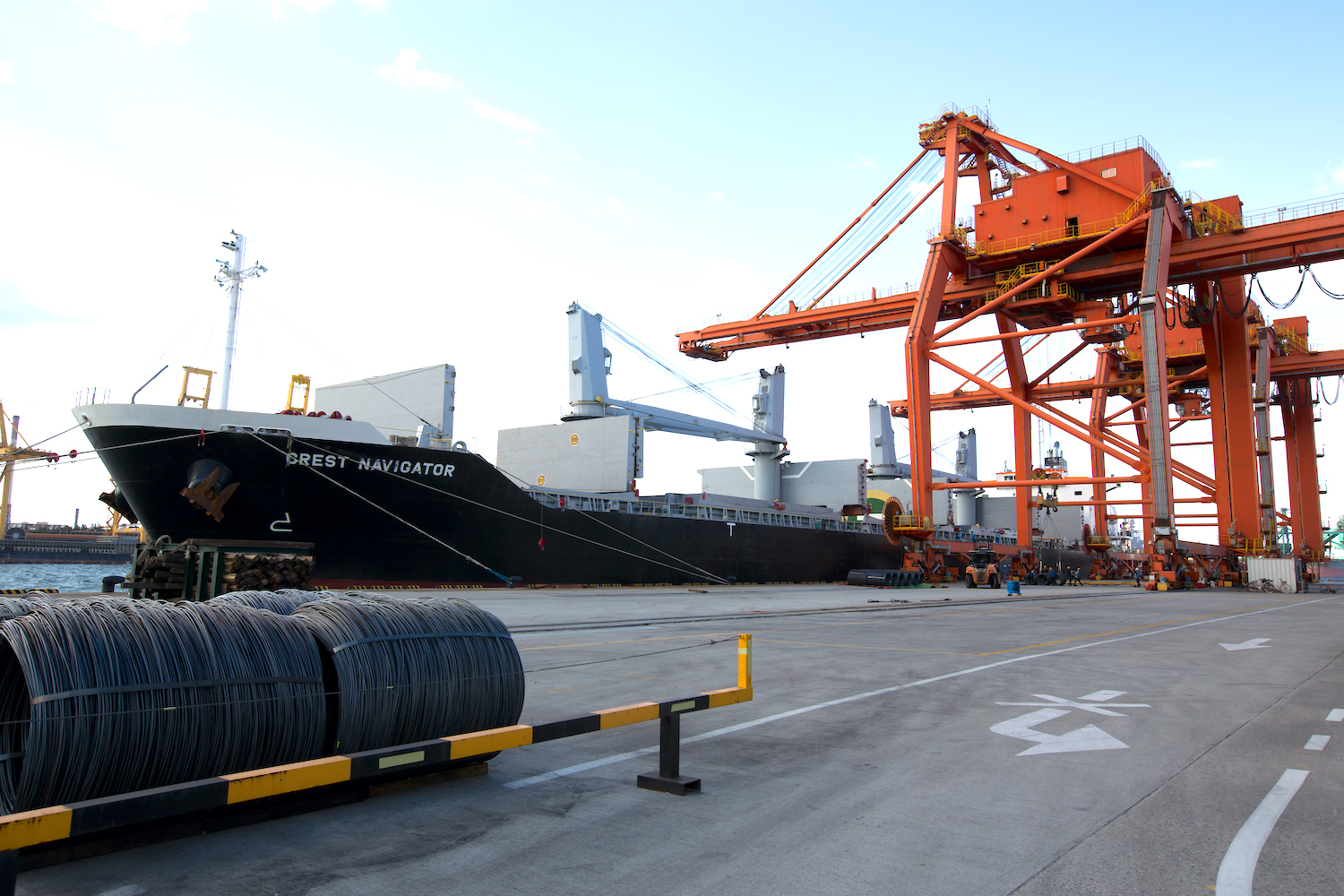
Congestion at European ports is disrupting steel trade flows and making imported material less competitive compared with domestic material, market sources told Fastmarkets.Alongside higher prices, importers have cited risks related to safeguard duties being imposed on volumes exceeding quotas and long lead times as reasons for the lower interest in overseas materials.
Several market participants also complained about the rising costs related to stocking material at ports. The port of Antwerp, for example, has halved the amount of time material can be stocked at the port free of charge, a German trader told Fastmarkets.
“Antwerp has cut the time steel could be stocked for free. It used to be one month; now it is two weeks,” the trader said.
Other European ports have made similar changes, according to market sources.
In addition, ports have increased the cost of stocking material. As a result, some buyers are choosing to custom clear steel before the start of the next quarter because the risks of paying safeguard duties of up to 25% would be cheaper than dealing with the sharp rise in port storage costs.
Since the introduction of safeguard measures in the European Union, importers have preferred to keep their acquired steel in ports and custom clear it when the new quota period opens and fresh allocations become available. But some market participants suggest it might be cheaper to clear the steel stored in ports through customs and pay a safeguard duty, rather than pay increased storage costs.
EU safeguard quotas have been used up quickly across some categories, such as hot-rolled coil, rebar and wire rod. For example, Turkey and Russia used their wire rod allocations for the first quarter 2021 just days after it opened on January 1, and a similar scenario is repeated each time a new quota period opens.
Around 100,000 tonnes of Turkish wire rod is expected to arrive at EU ports by April 1, according to market sources’ estimations. This compares with a second-quarter quota allowance (from April 1 to June 30) for Turkey of around 80,000 tonnes, meaning at least 20,000 tonnes of Turkish material will be a subject to a 25% duty.
According to several sources, ports in northern Europe are now charging as much as €4-5 per tonne of steel per day for storage, pushing up costs for buyers.
Also contributing to the problems are a lack of truck drivers and continuing logistics difficulties within Europe because buyers are struggling to get their material from ports.
“We have faced problems with truck deliveries in Europe for several months now and this problem has contributed to the material piling in ports, and for the same reason, stocks at ports continue to rise. And now buyers face both higher port costs and higher delivery costs,” an Italian distributor said.
On average, it can take three to five weeks to offload a vessel and large EU ports have already increased prices for steel storage, sources said.
“The situation at EU ports is a disaster; you never know when you can actually discharge a vessel,” a European buyer told Fastmarkets.
“One cannot see a horizon in the port of Antwerp because of all the containers built up there,” a trader said.
Fastmarkets calculated its daily steel HRC index, domestic, exw Northern Europe at €961.25 ($1,088.13) per tonne on Friday February 18. This was down €0.54 week on week from €961.79 per tonne, but up €41.03 month on month from €920.22 per tonne.
The calculation was based on achievable prices indicated by market sources and transactions reported at €960-980 per tonne ex-works, and a bid reported at €940-950 per tonne ex-works.
The corresponding price assessment for steel HRC, import, cfr main port Northern Europe was €860-900 per tonne on Wednesday, compared with €860-880 per tonne on February 9.
The assessment was based on achievable prices estimated by market participants and offers from Russia and Asia.
Fastmarkets last assessed steel wire rod (mesh quality), domestic, delivered Northern Europe at €840-870 per tonne on February 16, unchanged week on week.
The assessment for steel wire rod (mesh quality) import, cfr main port Northern Europe was at €780-810 per tonne on the same day, widening upward by €10 per tonne from €780-800 per tonne last week.
But even the substantial gap between domestic and import prices is not enough to spur interest from buyers in overseas steel because of the risks related to the ports situation and safeguard duties, sources said.
Published by: Julia Bolotova, Maria Tanatar
21 Feb 2022 @ 17:28 UTC


Digitalisierung im Stahlservice-Center
16.02.2022 von Dagmar Dieterle
Die Stahlo Stahlservice GmbH & Co. KG mit ihrem Sitz in Dillenburg bietet leistungsstarken Stahl-Service von einem der größten werksunabhängigen Stahl-Service-Center in Deutschland. An den Standorten Dillenburg und Gera werden Spaltband, Zuschnitte, Standardformate, Formzuschnitte und Konturen in allen gängigen Güten gefertigt. Am Standort Nordhausen (Südharz / Thüringen) befindet sich die 100% Stahlo-Tochter Blechservice Nordhausen (BSN).
 Das Unternehmen gehört zur international erfolgreichen Friedhelm Loh Group, die in 12 Produktionsstätten und 94 Tochtergesellschaften weltweit etwa 11.600 Mitarbeiter beschäftigt.
marketSTEEL sprach mit dem CEO des Unternehmens, Oliver Sonst, über die Digitalisierung im Stahlservice-Center.
marketSTEEL: Wer ist in Ihrem Unternehmen für die Digitalisierung zuständig?
Als CEO habe ich die Digitalisierung bei Stahlo selbst in die Hand genommen. Das liegt nicht nur an der Größe des Unternehmens mit rund 250 Mitarbeitern, sondern auch an der hohen strategischen Bedeutung des Themas. Bei der praktischen Umsetzung im Unternehmen kann ich aber auf auf die Expertise und den CDO der Friedhelm Loh Group zurückgreifen. Meine Kernaufgabe besteht darin, die Ideen und den Nutzen im Ergebnis zusammenzuführen.

marketSTEEL: Wo ist die Transformation bei Stahlo heute schon sichtbar?
Intern ist das natürlich am besten in unserem neuesten Werk in Gera zu sehen. Dort haben wir ein voll vernetztes Materialflusskonzept umgesetzt. Das LVS (Lagerverwaltungssystem) interagiert mit unserem ERP-System. Dabei sortieren programmierte Routinen das Lager vollautomatisch und optimieren permanent Wege und Zugriffszeiten. Dadurch erreichen wir eine enorme Effizienz bei sehr hohen Tonnagekapazitäten.
Aber für Außenstehende sind vielleicht unsere digitalen Dienstleistungsangebote sichtbarer. Werfen Sie einfach einen Blick auf unsere Services auf www.stahlo.de Dort sieht man die Vielzahl von Kommunikationskanälen, die den Kunden offenstehen. Beispiel Omnichannel: Hier entscheidet der Kunde, ob er persönlich und vor Ort von einem Außendienstmitarbeiter oder von einem zentralen Key Account Manager betreut werden möchte, der für alle alle Standorte des Konzerns verantwortlich ist. Dem Kunden wird aber auch die Möglichkeit geboten, rein digital mit uns zu arbeiten, ob am Desktop über Teams oder online über Partnerplattformen von jungen Start-ups.
marketSTEEL: Setzen Sie nicht mehr auf den Menschen als Geschäftspartner?
Doch, absolut! Unsere Vision ist ganz bewusst formuliert: “Wir vernetzen Menschen, Ressourcen und Technologien”. Der Mensch steht klar im Vordergrund und wir arbeiten am liebsten von Angesicht zu Angesicht und live. In den letzten Monaten mussten wir aber schnell Wege finden, um den bestmöglichen Ersatz dafür zu bieten. Die häufigste Wahl war natürlich die Zusammenarbeit über Teams, Zoom oder Webex. Aber wir konnten die Geschäfte für Handel und 2A auch sehr gut komplett online über unsere Partner auf Handelsplattformen abwickeln. In Zukunft wird der Kunde entscheiden, auf welche Weise er mit wem zusammenarbeiten möchte. Auf die junge, digital affine Generation sind wir jedenfalls genauso vorbereitet wie auf persönliche Kundenbesuche, Betriebsbesichtigungen und Gespräche beim gemeinsamen Abendessen.
marketSTEEL: Welche weiteren digitalen Projekte sind geplant?
 Wir sind derzeit an Pilotprojekten zur digitalen Übertragung von Materialeigenschaften und Zertifikatsdaten beteiligt. Dies ist der erste Schritt zur Schaffung eines digitalen Zwillings im Stahl. Das wird DAS Thema der Zukunft sein. Wir müssen in der Lage sein, alle Parameter, die während der Produktion entstanden sind, dem Produkt zuzuordnen. Darüber hinaus müssen wir alle Parameter aus unserem eigenen Prozess automatisch einspeisen und an den Kunden bzw. dessen Datencloud weitergeben.
Ich denke dabei nicht nur an Festigkeit und Dehnung, die sich in jeder Phase ändern, sondern vor allem an Energieverbrauch und Treibhausgasemissionen. Damit “echter” grüner Stahl Wirklichkeit wird, bedarf es der Transparenz in der gesamten Herstellungskette, eines klaren politischen Rahmens, digitaler Validierungsmechanismen und der Glaubwürdigkeit bei der Präsentation dieser Informationen. Hier engagieren wir uns aktiv und vernetzen gezielt Menschen, Ressourcen und Technologien auch zu diesem Thema.
Herr Sonst, wir danken Ihnen für das Gespräch.
Mehr Informationen: www.stahlo.de
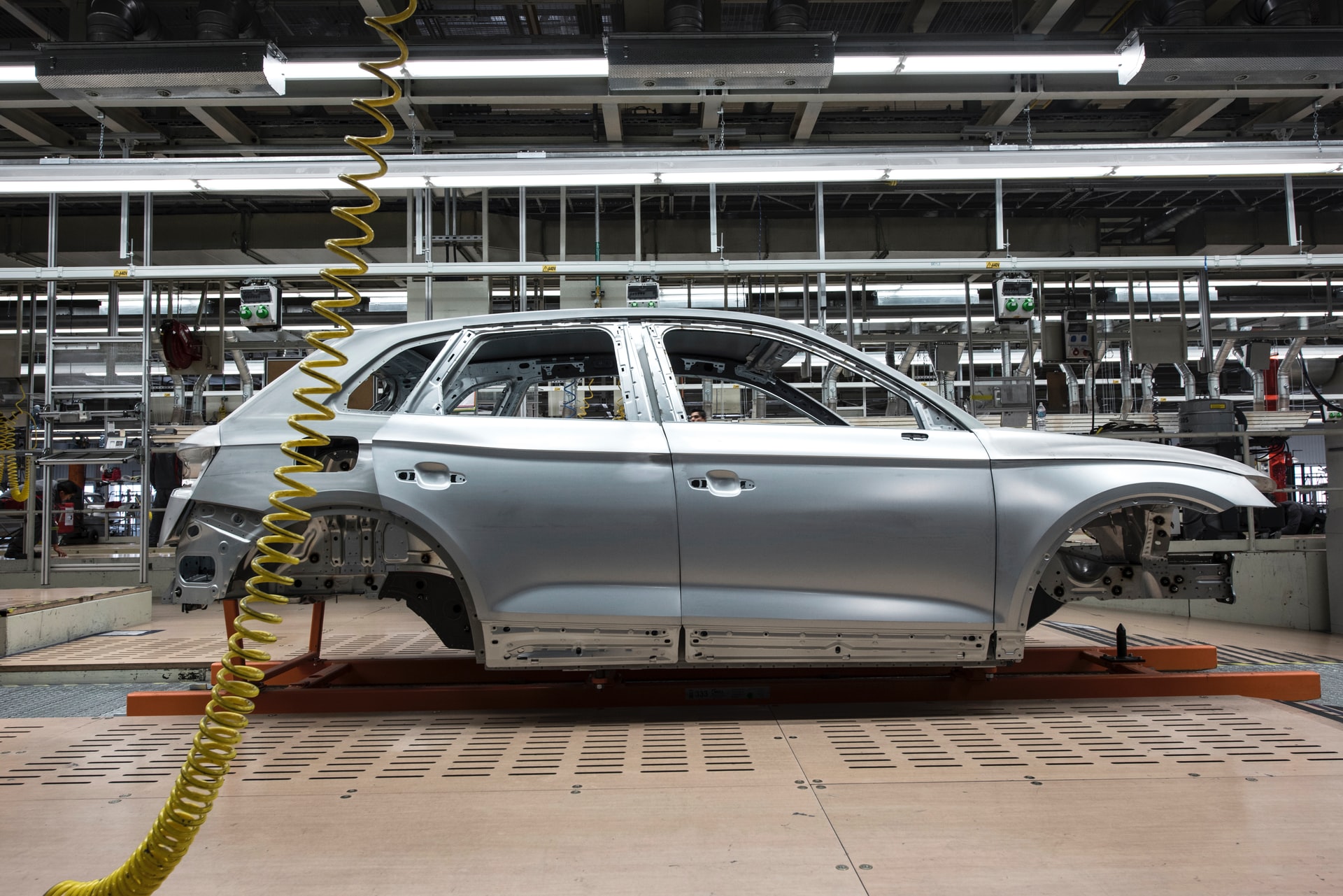
Italian car output falls in 2021
Italian passenger car output decreased by 2.1% year-on-year in 2021. In December alone, production fell 8.5% compared to December 2020, Kallanish notes from local carmakers’ association Associazione Nazionale Filiera Industria Automobilistica (Anfia) preliminary data.
Passenger car production stood at 40,314 units in December and 442,432 units in 2021. Italy’s passenger car production stood at 451,718 units in 2020, the year of the pandemic, versus 542,472 units in 2019, Anfia says.
Italy has 23 production plants. By comparison, Spain has 17 plants, France 31 and Germany 42.
In 2021 output of light commercial vehicles (LCV) was 290,021 units, up by 4.7% on 2020. Truck production increased notably last year to 63,167 units, a y-o-y hike of 31.8%.
Overall automotive production in 2021 stood at 795,856 units. This reflects an uptick of 2.4% compared to the previous year and a significant fall compared to 2019 when production reached 915,291 units, Kallanish notes.
Natalia Capra France