Duferco accelerates renewables-powered sections mill construction
Italian sections producer Duferco Travi e Profilati has broken ground for the new Smart Beam Manufacturing (SMB) rolling mill at its San Zeno Naviglio site, near Brescia.
The mill supplied by SMS will become operational in 2023, a company source confirms to Kallanish. With a yearly output of 1.5 million tonnes of long products, it will increase Duferco’s current capacity by 650,000t. Powered by renewable energy, the new mill will have a low carbon footprint, thanks also to the use of green hydrogen.
“The construction of the new rolling mill is making progress day by day according to the schedule: the roof of the buildings is now in place and the assembly of the re-heating furnace by Forni Industriali Bendotti has started,” the Italian company says in a note. The reheating furnace’s burners will also be powered by hydrogen, it adds.
The overall investment is €180 million ($205m). Duferco was awarded last year a loan of €72m for the construction of the mill, provided by UniCredit and DZ Bank over 11 years. The German Export Credit Agency (ECA), Euler Hermes, will support the transaction.
In December, the company and former American partner Nucor signed the financial closing that ended their partnership in the joint venture for Duferco’s Italian operations. The Covid-19 pandemic and consequent cut in Nucor’s overall investment budget were at odds with Duferco’s intention to proceed with the investment in San Zeno (see Kallanish passim).
Natalia Capra France


EU proposes $43 billion microchip investment programme
The EU announced on Tuesday a €43 billion ($49 billion) plan to become a major chip producer, to ease dependency on Asian manufacturers of the components, Kallanish notes.
“Chips are at the centre of the global technological race,” says European Commission (EC) President Ursula von der Leyen. “The Covid-19 pandemic has painfully exposed the vulnerability of its supply chains. While demand was increasing, we could not deliver as needed because of the lack of semiconductors.”
The new Europe Chips Act will link research and coordinate EU and national investment. The plan will combine public and private funds to allow for state aid to provide for massive investments to boost chip production.
The EC aims to more than double the EU’s global market share in semiconductor production to 20% by 2030. Now, European nations only have 9% of the global market share of semiconductors.
To this end, the EC is providing subsidies of €11 billion for research in the field of chips, which will come from EU funding instruments as well as member states’ finances. The EU hopes to secure the remainder of funding from private investments.
The funds are also intended to encourage investment by foreign companies. American chipmaker Intel, for example, has announced its intention to invest in Europe.
The proposed regulation will now be discussed by the European Parliament and the Council. The Commission will assist the co-legislators to reach an agreement as soon as possible.
German carmaker Volkswagen Group expects the short-term supply of semiconductors to the automotive industry to continue to be very volatile and strained, the company tells Kallanish.
“At least the first half of 2022 will remain very volatile and challenging due to ongoing supply bottlenecks,” the enterprise claims. “However, there will probably only be a real upward trend in 2023, when the capacities that the semiconductor manufacturers are now building arrive on the market. It should then be possible to make more reliable predictions.”
In 2021, global production of 9.5 million vehicles was delayed due to a lack of chips, the European Association of Automotive Suppliers (CLEPA) said last week. Although this year could show a modest recovery in global light vehicle production, supplier and market estimates still forecast, on average, production losses of 4-6m vehicles, CLEPA claims.
Svetoslav Abrossimov Bulgaria
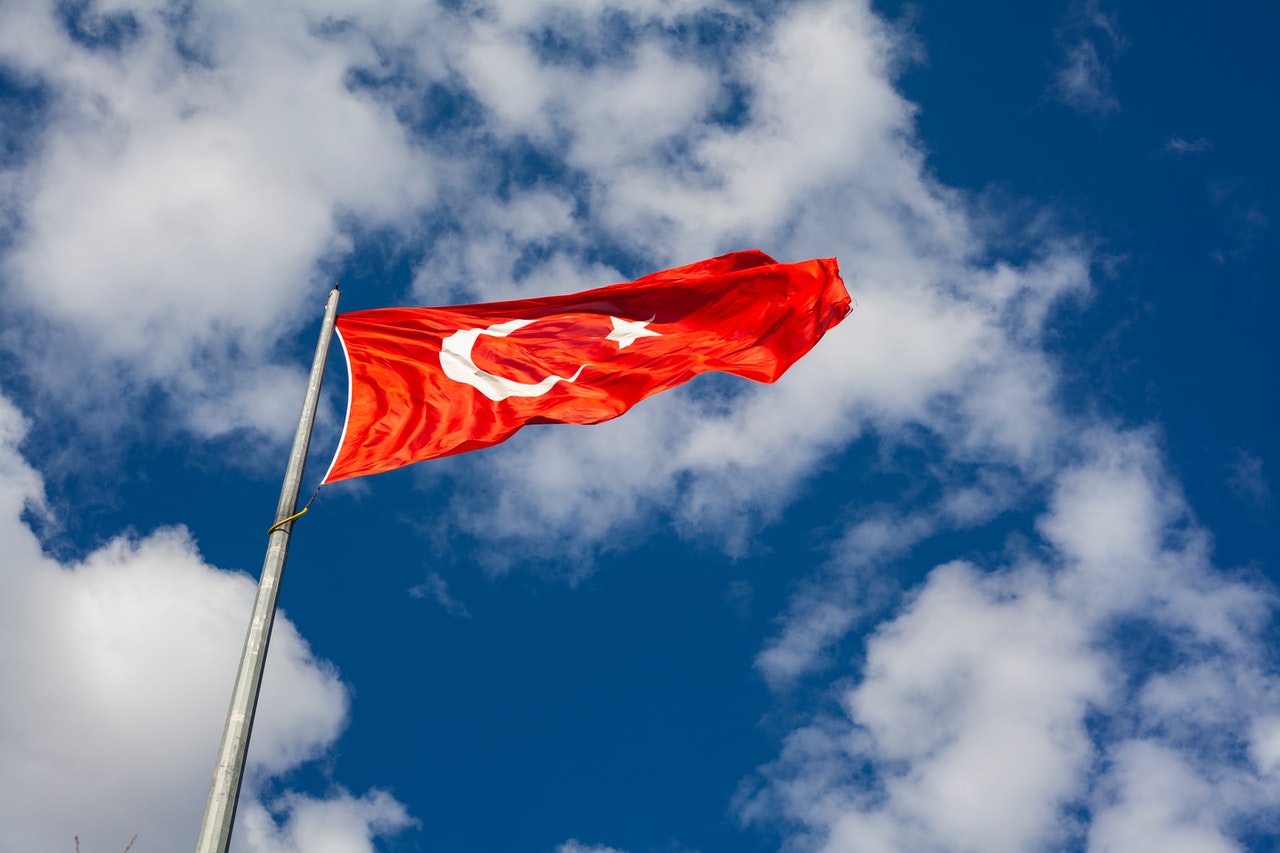
Turkish steel output could rise 10% in 2022 on new capacity, energy relief: TCUD.
Turkey’s steel output is expected to reach a historic high in 2022 due to new capacity and as state gas distributor Botas called an end to recent gas and power cuts which had hit production, the Turkish Steel Producers’ Association (TCUD) said. Botas said in a statement natural gas flow cuts to industrial plants in Turkey ended as of 8 am local time Feb. 8, as gas flow to Turkey from Iran returned to normal.
Turkish steel output, which was hit by energy cuts in December and January, is expected to continue 2021’s upward trend in 2022.
“With the start of the new capacities Turkish steel output which reached 40.4 million mt in 2021 is expected to rise at least a further 10% in 2022. This is also expected to reduce the rise in steel imports, and increase the export/import coverage ratio to 120% this year,” industry body TCUD said in a statement sent to S&P Global Platts.
Turkey became Europe’s largest and the world’s seventh biggest steel producer in 2021 after a 12.7% rise in output, despite the negative effects of December’s power cuts, it added.
Steel production capacity in Turkey, especially in flat steel, is expected to rise notably in the coming years due to new investment.
Turkish coated coil producer Yildiz Demir Celik is planning to start hot-rolled coil production within three years by building a melt shop with a liquid steel capacity of 4 million mt and a hot-rolling mill with a finished product capacity of 3.5 million mt, according to a document submitted to the Ministry of Environment and Urbanization Jan. 24.
Another coated coil producer, MMK Metalurji, the Turkey-based subsidiary of Russian steelmaker Magnitogorsk Iron & Steel Works, already started hot rolled coil production at its electric arc furnace facility with a casting and rolling module in July 2021. The company is expected to reach 2 million mt production capacity in 2022.
Tosyali Demir Celik, one of Turkey’s largest steel producers, is also currently building a new flat steel mill with a liquid steel capacity of 4.55 million mt.
With other Turkish producers starting work to raise their HRC output, including big producer Colakoglu, the country’s total HRC production capacity is expected to rise more than 9 million mt/year in the coming few years, while some new coated coil and long steel capacities are also on the way.
— Cenk Can


Europe steel margin recovery in 2021 offset by current cost concerns
European steel markets currently face prolonged higher coking coal, ferrous scrap and iron ore costs hitting margins, as steel profitability and demand recovered last year following the initial pandemic shutdowns in 2020. High steel prices in 2021 supported margins, peaking in August, while supply chain volatility elevated steelmaking costs.
Cost increases followed record high iron ore and coking coal prices at different phases through the year, while higher iron ore and coking coal costs have persisted. This is partly due to seasonally weaker supply and disruptions, including pandemic-related restrictions in supply basins such as the US Appalachians and Australia.
The Northwest European hot-rolled coil steel to raw materials price spread averaged just above Eur635/mt ($725/mt) in 2021, more than double the Eur253/mt average in 2020, according to S&P Global Platts calculations.
The difference in 2021 of Eur382/mt could contribute into profits, as indicative margins factor in typical and one-time running costs and weaker operational performance by European steel mills in 2020.
Steel to raw materials spreads have seen pressure, after January’s spike in global iron ore and coking coal costs. The Northwest Europe HRC-steel raw materials spot spread fell to Eur532/mt in January, from Eur591/mt in December.
Investment bank Jefferies analysts recently cited sustained high energy prices in Europe, coking coal prices greater than $400/mt and iron ore’s recent rebound to greater than $130/mt as contributing factors for mills seeking higher flat steel prices. EU carbon prices have risen further, boosting compliance costs.
Platts Northwest Europe HRC prices averaged Eur927.18/mt ex-works Ruhr in January, down 0.66% from December.
Steel spreads have fallen gradually from a record of over Eur795/mt in August as coking coal costs climbed on supply disruption and a turn up in global demand to restore met coke supplies.
The cost of pig iron’s main iron ore and coking coal raw materials inputs, climbed in 2021 to average at $398/mt on a CFR Rotterdam basis, up from $245/mt in 2020, based on Platts calculations using a basket of iron ore grades including pellets and representing a mix of solid fuels.
North European shredded scrap prices averaged at Eur396.25/mt delivered basis in 2021, up from Eur237/mt in 2020.
Platts tracked costs using major steel feedstock cost references, including a basket of iron ores with high-grade fines, lump and pellets typically consumed by Northwest European blast furnaces.
In Turkey, the outright spread between steel rebar export prices and imported HMS 80:20 scrap has strengthened to $219/mt in 2021, from $158/mt in 2020. However, the impact of scrap yields available and the greater loss on yield at higher scrap prices limited the additional margin available to mini mills melting scrap.
Platts Europe HRC to raw material price spreads are indicative operating margins that do not account for inland logistical costs, power, natural gas or other blast furnace and steel-making inputs such as ferroalloys, anodes and refractories. Costs to operate sintering and coke plants are not included.
There may be further upward pressure on typical operating break-even levels at regional blast furnace mills due to higher energy, carbon permit and logistics costs.
Platts European HRC spreads are based on commodity-grade flat steel specifications. Contract steel sales may have additional grade and specification-based premiums, and terms may lag spot indexes.
Producers with higher grade steel portfolios may be less exposed to commodity-grade steel margins against underlying steel raw materials costs.
— Hector Forster
Port of Antwerp expects strong steel traffic
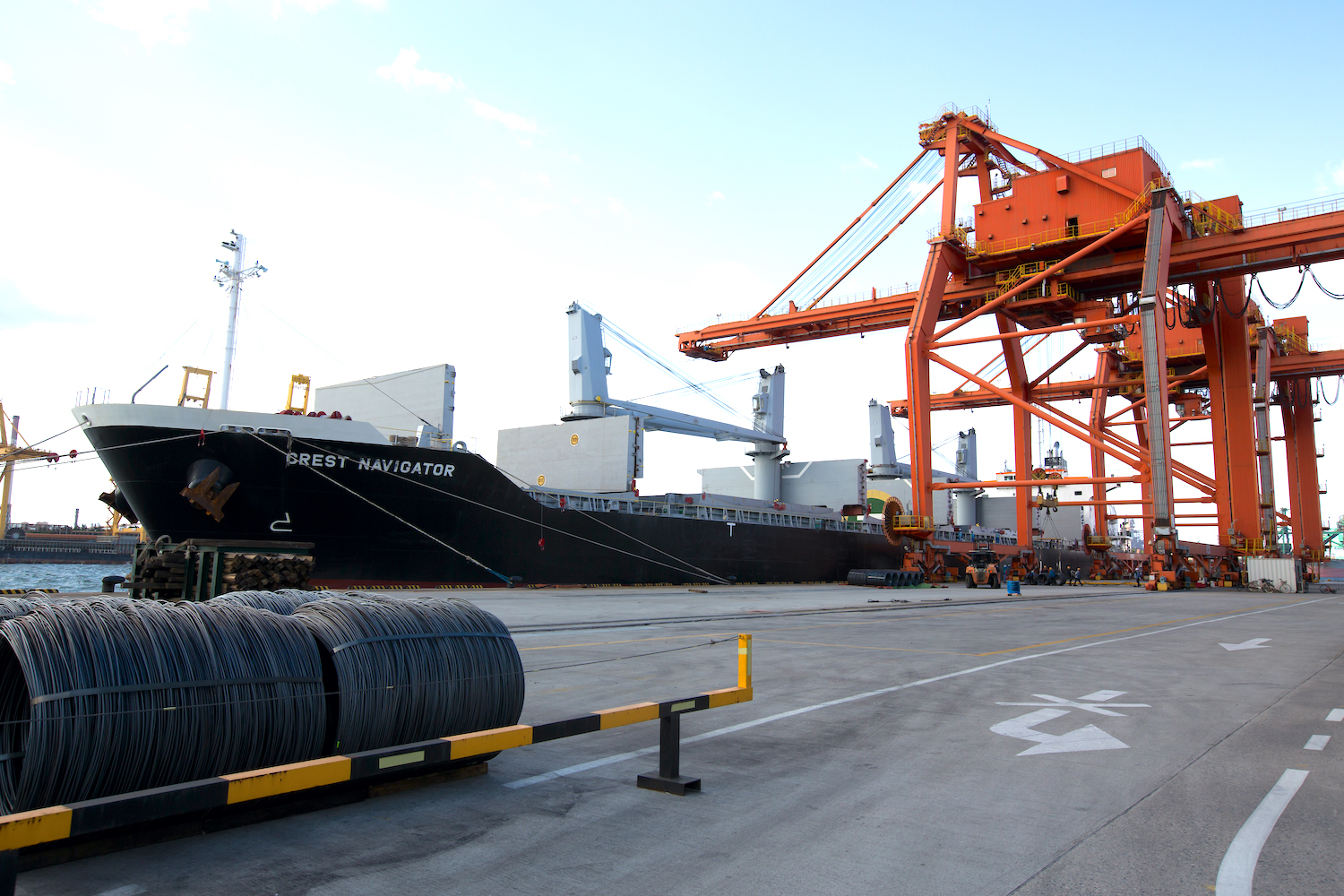
The Port of Antwerp expects steel traffic to remain strong for at least the first half of 2022, a port spokesman tells Kallanish.
In 2021, steel throughput rose by a massive 81% year-on-year, totalling 9.38 million tonnes. Steel is the most important product group within conventional break bulk, which totalled 11.5mt, up 74%. Steel was also the product that saw the strongest y-on-y growth in 2021, following the low in 2020.
According to the spokesman, incoming steel volumes rose significantly more – by 128% to 5.85mt – than outgoing volumes – by 36% to 3.53mt. In 2020, the volume of imports was nearly identical to that of exports, with both around 2.58mt.
For this year, growth is expected due to adjustments to the USA’s Section 232 tariffs. This means that 3.3mt of steel melted and forged in the EU could be imported tariff-free. Also, the exemptions that had been in place for certain steel products will be in force for another two years.
He also refers to other indirect factors which will affect future throughput. These are the recovery of the automotive sector, investment regarding the CO2 footprint, higher energy costs, the EU’s safeguard review in June, magnesium shortages, and higher export duties on Chinese steel.
Christian Koehl Germany
Logistics hub opens in Duisburg port
Haeger & Schmidt Logistics (HSL) started operating its new steel warehouse on 1 February, located on the “Stahlinsel” (Steel Island) in the Port of Duisburg.
The company invested €12 million ($14m) in the multifunctional warehouse with a heated 9,000m² hall that has a capacity for about 60,000 tonnes of steel products. The new building will be connected to the large existing hall with a covered water connection via a coil ferry.
The new hub complements HSL’s terminal with covered and heated space suited for storage of high-quality products in particular, HSL steel manager Jörg Thielen tells Kallanish. “The new warehouse will bring a shift towards higher-quality products, and to some extent also add volume,” he says.
The company handles around 1 million tonnes/year of steel at its Duisburg terminal. HSL is a subsidiary of Austria’s Felbermayr Group and also owns storage capacity in the Port of Antwerp. Its additional facilities in Duisburg will be largely dedicated to coils.
According to HSL managing director, Heiko Brückner, the response on the market has been very good. “More than half of the storage space has already been booked,” he says.
In addition to classic handling and storage, HSL’s activities also include seaworthy stowage of containers and expert unloading of coils and sheets from boxes.
Christian Koehl Germany
Benelux scrap prices jump on strong demand
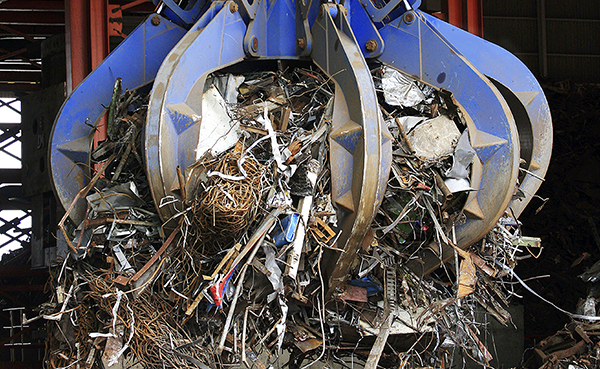
Scrap prices in the Benelux recorded another sharp increase last week amid strong Turkish demand.
With the dollar at 1.1432 per euro, dock prices on Monday were mostly at €390-395/tonne ($446-452) delivered, up from €365-370/t a week ago.
Despite prices approaching €400/t levels, scrap flow is not strong in the EU, as bullish suppliers are targeting higher prices and thus withholding material. On the other hand, increasing Covid-19 cases are causing them to follow a cautious stance.
Turkish mills’ demand for imported scrap remained strong last week. As a result, EU-origin HMS 1&2 80:20, which stood at $461/t cfr the previous week, climbed to $484-485/t cfr in the first half of last week. It then reached $490/t cfr Turkey on a booking concluded on Friday.
Netherlands-origin material was offered at $494/t cfr on Friday. This level, however, was not accepted by Turkish mills.
One Turkish mill tells Kallanish: “A $29/t rise in a week is a lot. Besides higher prices here, Benelux exporters are benefiting from lower freight prices.”
A Benelux exporter points to the strengthening euro, adding: “The exchange rate has climbed from 1.11 to 1.14 in a very short period. This, coupled with the sharp rise in dock prices, is increasing our costs.”
In the Indian subcontinent, Indian scrap demand is seen to have slowed following the sharp rise seen in prices, while Indian mills have sufficient inventory. Offers for containerised shredded were unchanged on-week at $540-545/t cfr Nhava Sheva. Dubai-origin HMS 1&2 80:20 prices, however, have reached $495/t cfr on the latest bookings.
This week, scrap prices are likely to increase further following China’s strong return to the market after the Lunar New Year holiday, as well as its plans to boost the use of steel scrap. China, the world’s top steel producer, said on Monday it aims to boost utilisation of steel scrap, as part of a plan to develop a higher-quality, greener ferrous industry.
Burcak Alpman Turkey
Iron ore jumps on return from holiday
Seaborne iron ore prices jumped again on the return of China from its New Year holiday. Prices have spiked on strong expectations for domestic steel markets, despite continuing issues surrounding real estate.
The Kallanish KORE 62% Fe index gained another $2.93/t on Monday to $147.33/dry metric tonne cfr Qingdao, after increasing $5.08/t over the week of the holiday. The Kallanish KORE 65% Fe index was up $2.77/t to $176.75/dmt cfr, and the KORE 58% Fe index appreciated $0.47/t to $123.36/dmt cfr.
On the Dalian Commodity Exchange May iron ore settled up CNY 15/t at CNY 812.5/t ($127.82/t) on the first trading day of the new year. On the Singapore Exchange, meanwhile, March 62% Fe futures settled up $2.40/t at $147.45/t. The same contract for 65% Fe and 58% Fe futures settled up $2.43/t at $176.75/t, and up $0.23/t at $124.66/t respectively.
While Chinese scrap prices continue to be capped by weak demand, billet prices are rising on improved steel market optimism. 6mm+ heavy scrap delivered to mills in the Yangtze River Delta was flat from before the holiday at CNY 3,627/t. Tangshan billet prices however jumped CNY 100/t to CNY 4,600/t, the highest since November.
Cold weather and weak real estate sales over the holiday have done little to stop steel futures prices from increasing (see separate article). Spot markets however remain quiet. Construction workers typically do not return to work on a large scale for another week, so it is too early to tell for sure how strong steel demand will be in the coming weeks.
Both central and local governments are however encouraging financing for projects to be put in place and economic stability has become a core focus for policy in the short term. If this money flows into buying steel through the rest of the first and second quarters, then prices for both steel and iron ore could be driven even higher.

US steel groups welcome TRQ deal with Japan
US steel industry organizations welcomed an agreement between the US and Japan Feb. 7 to replace the US 232 tariffs with a tariff-rate quota on imports of Japanese steel, set to take effect April 1.
Under the terms of the deal, 1.25 million mt of Japanese steel across 54 product categories will be allowed into the US duty-free, with the 25% Section 232 tariff to take effect for any imports above that level. While similar to the deal the US reached with the EU in October, under the agreement struck with Japan, steel products that are granted a specific product exclusion will still count toward the overall quota.
“[This] shows that the US government is committed to negotiating alternative schemes to the 232 tariffs on a case-by-case, country-by-country basis,” Philip Bell, president of the Steel Manufacturers Association, said in a statement. “We are particularly glad to see that that exclusion-based imports of Japanese steel products will count against the quota volumes.”
In 2021, 58% of Japanese steel imports came to the US as exclusions, representing about 550,000 mt of steel products, according to Bell.
The establishment of a TRQ will help to prevent an import surge that would undermine the domestic industry as the US and Japan look to expand their cooperation on addressing global steel excess capacity, Kevin Dempsey, CEO of the American Iron and Steel Institute said in a statement.
“Proper implementation and enforcement of the TRQ will be essential to the ongoing success of the Section 232 program, as will continued vigorous enforcement of our laws to prevent circumvention and evasion of US trade remedy measures on steel,” Dempsey said.
In order to establish more market-oriented conditions for steel, Japan has agreed to implement “appropriate domestic measures, such as antidumping, countervailing duty, and safeguard measures or other measures of at least equivalent effect, with a view to initiating formal processes for such measures within six months,” according to a joint US-Japan statement.
Additionally, the inclusion of a melted and poured requirement will help to prevent circumvention and transshipment, Bell said.
“Overall, this is a strong deal for American steelmakers, and it shows that we should not take a one-size-fits-all approach when it comes to our jobs, environment and economic growth,” he said.
Following the agreement with the EU in October, countries have been petitioning the US to negotiate alternate arrangements to the Section 232 duties, first put in place by former President Donald Trump in March 2018. The US officially entered bilateral negotiations with the UK Jan. 19 concerning the Section 232 tariffs.
— Justine Coyne

Stahl aus recyceltem und erneuerbarem Material bald online
02.02.2022 von Hubert Hunscheidt
ArcelorMittal Downstream Solutions wickelt in der Regel Großaufträge für deutsche Großprojekte von einem Zentrallager in Essen aus ab. Ab sofort wird auch die Nachfrage nach XCarb®-Trägern bedient. Oliver Menrath, Geschäftsführer von Downstream Solutions Deutschland, freut sich über den ersten Verkauf von XCarb®-Produkten : „Als wichtiger Marktteilnehmer ist es unsere Pflicht, den Vertriebskunden unsere neuesten Innovationen anzubieten. Das gilt sowohl für den Bereich der Nachhaltigkeit als auch bei jeder anderen Produktentwicklung. Die Menge, die wir jetzt auf Lager haben, wird uns helfen, gemeinsam mit unseren Kunden einen weiteren entscheidenden Schritt in Richtung Nachhaltigkeit zu gehen.“
Im Laufe des Jahres werden die CO2-armen Stahlträger der Marke XCarb® auch in das Angebot der Online-Plattform e-steel aufgenommen. ArcelorMittal wird damit der erste Anbieter auf dem Markt sein, der emissionsarmen Stahl online anbietet.
ArcelorMittal leistet Beitrag für emissionsfreie Stahlerzeugung
In Deutschland wächst die Nachfrage nach CO2-armen Produkten, da die Bekämpfung des Klimawandels die wichtigste Herausforderung des 21. Jahrhunderts ist. Downstream Solutions beliefert vor allem Stahlbaukunden, Händler sowie baunahe Partner und bietet über sein Vertriebsnetz fast alle Stahlprodukte auf Lager an. Das gewährleistet eine “just-in-time”-Lieferung. Mit nur 333 Kilogramm CO2-Emissionen pro Tonne sind die recycelten und erneuerbar hergestellten XCarb®-Träger die ersten mit einer Garantie für 100 Prozent recycelten Stahlschrott und 100 Prozent erneuerbaren Strom aus Solar- und Windprojekten. Durch den Verkauf von XCarb® recycelten und erneuerbar produzierten Trägern, die bei ArcelorMittal Differdange in Luxemburg hergestellt werden, leistet ArcelorMittal Downstream Solutions Essen einen Beitrag zum Engagement der Gruppe für eine Netto-Null-Stahlerzeugung. Gleichzeitig hilft ArcelorMittal seinen Kunden so, ihre eigenen Dekarbonisierungsziele zu erreichen.
Quelle und Foto: ArcelorMittal Deutschland