


TURKEY DATA: Steel exports up 20% to record 19.9 million mt in 2021: TCUD
Turkey steel exports rose 20% to a record 19.9 million mt in 2021, the Turkish Steel Producers’ Association (TCUD) said Feb. 3, with higher prices meaning revenue was up 93% to to $16.5 billion in 2021.
Overall finished steel consumption in Turkey increased 13% in 2021 to 33.4 million mt.
Steel imports, meanwhile, rose 23% in 2021 to 15.4 million mt, with the cost of imports up 86% to $14.4 billion, TCUD said.
Highlighting the share of imports in domestic steel consumption in 2021, TCUD general secretary Veysel Yayan said the EU and US’s combined share of Turkey’s overall exports declined to 34% in 2021 from 40% in 2020 due to protection measures in those regions.
“As the Turkish steel sector focused on new markets in 2021 in this sentiment, mills’ export volumes to Latin America and South East Asia markets showed considerable increases,” Yayan said, adding that China’s absence in Southeast Asian markets also supported Turkish exports in 2021.
— Cenk Can


Home appliances association warns of CBAM risks
APPLiA, the European association grouping home appliance producers, has voiced concerns over the proposed Carbon Border Adjustment Mechanism (CBAM) and its potential effects on production delocalisation, Kallanish notes.
Paolo Falcioni, APPLiA director general, says that if CBAM is introduced the way it is proposed now, it will lift raw materials costs and impact the competitiveness of the European downstream manufacturing industry.
“Let’s take the case of a washing machine manufactured in Europe. Its production requires on average 25kg of steel, 4kg cement (as part of concrete) and 3kg aluminium. All materials that will be subject to the CBAM proposal. Under the current ETS system in place, the CO2 price for these materials amounts to €90/tonne of CO2,” Falcioni explains. “EU-based home appliance manufacturers will face an increase in the cost of raw materials for the production of one washing machine ranging between 5-10%.”
As a consequence, “the EU’s proposed CBAM seems not to bring any added value in addressing the issue”, he adds. On the contrary, “products that are manufactured abroad and imported into the EU will be more competitive than EU-made ones on the home market of many European companies.”
According to Eurofer calculations, domestic appliances account for some 3% of the total European consumption of steel.
“There is no quick or easy solution here. CBAM alone, even extensively revised, cannot fix the problems it creates. The European Commission should present a legislative proposal two years ahead of the removal of free allowances in ETS, foreseen as from 2026,” Falcioni observes. “This would secure the funding pillars of the EU including the competitiveness of all European industries, EU jobs, global sustainability leadership and resilience among others, while also satisfying WTO trade requirements.”
Emanuele Norsa Italy


Electric vehicle sales in EU increase market share in 2021 to 18%: ACEA
Electric vehicles made up 18% of overall new car registrations in the European Union in 2021, up from a 10.5% share in 2020, according to new data released Feb. 2 by the European Automobile Manufacturers’ Association.
The total of 1.7 million units was also up 66.8% from 2020.
Sales of new battery EVs rose 63.1% on the year to 878,432 units in 2021, a 9.1% share, which compared with a 5.4% share in 2020, the data showed.
Plug-in hybrid EV sales also rose 70.7% from 2020 to 867,092 units, which was an 8.9% share, up from 5.1% the previous year.
The EU country with the largest volume of EV sales was Germany, which more than tripled BEV sales year on year to 356,425 units sold, while PHEV sales rose 62.3% to 325,449 units.
Meanwhile, hybrid EVs at 1.9 million units accounted for 19.6% of all new passenger cars registered in in 2021, up from 11.9% in 2020. The total of HEVs was up 60.5% year on year.
In mid-January, the ACEA reported that passenger vehicle registrations in the EU had fallen 2.4% in 2021 to 9.7 million units.
The overall contraction of the EU car market affected both diesel- and petrol-powered vehicles negatively, the ACEA said in a Feb. 2 statement.
However, the data showed that petrol and diesel vehicles continued to dominate new passenger vehicle sales in 2021, accounting for 59.6% of all new registrations, although this was down from 75.5% in 2020.
Sales of petrol vehicles in 2021 totaled 3.9 million units, down 17.8% year on year and making up 40% of total sales, down from a 47.5% share the previous year.
Diesel passenger vehicle sales also dropped 31.5% year on year to 1.9 million units, with the market share falling from 27.9% in 2020 to 19.6%.
— Jacqueline Holman
Arvedi eyeing JSW Italia to expand its steel coil output: sources
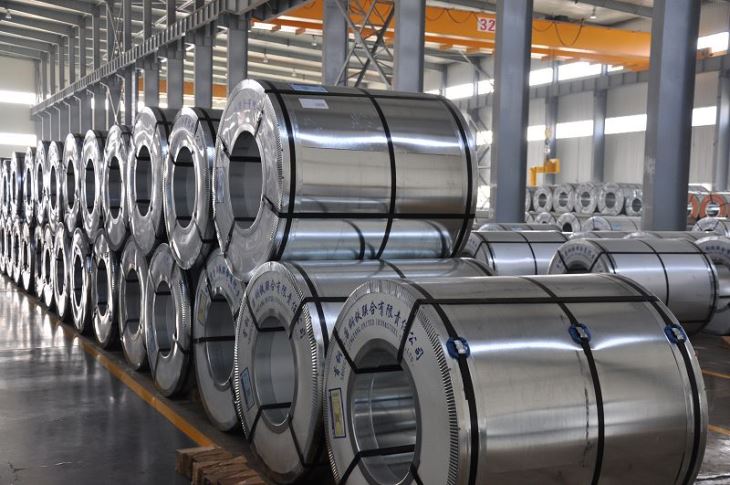
The Arvedi group is eyeing Piombino-based steelmaker JSW Italia after Arvedi’s recent acquisition of Terni AST, multiple sources confirmed to S&P Global Platts on Feb. 2.
Arvedi became the largest Italian flat steel producer after the Terni acquisition with a total of 5.5-6.0 million mt of steel produced annually, as Acciaierie d’Italia, the former Ilva, with installed capacity to make 8-9 million mt/year of crude steel, now produces around 4.5 million mt/year.
Industry sources confirmed to Platts that there is real interest in the acquisition, although it is still very much in a preliminary phase. The JSW Italia plant is attractive to Arvedi as it needs an additional 1.5-2.0 million mt/year of coils via a new electric arc furnace (EAF) to feed the cold-rolling units it is building at the Trieste site of Servola.
Arvedi currently runs a pickling line at Trieste with a capacity of 600-800,000 mt/year, an 800,000 mt/year CR line and a slitting line with a capacity of up to 200,000 mt of coils, sources close to the mill told Platts. The working lines are not running at their full capacity and are fed by coils made by Arvedi’s main mill in Cremona.
The JSW Italia site also has a lot of land and is close to the large port of Piombino. In the past, there have been talks of mills wanting to create a consortium to build a direct reduced iron (DRI) facility in Piombino and sources told Platts that Arvedi could be interested in leading such a joint venture, allowing it to source some of the output for what could be its new EAF in Piombino.
Mill working at around 40% of design capacity
JSW Italia is currently owned by Indian Group JSW, which bought the Italian mill, previously named Aferpi, in 2019 from Algeria’s Cevit.
According to sources, JSW bought it for around Eur70 million ($79 million) and it has invested Eur70 million since without finishing the industrial plan set out when it made the purchase.
Under the plan JSW intended to install two new EAFs with a combined capacity of 3 million mt/year to produce semis for long and flat steel production.
The EAFs were never built, with JSW feeding the rolling lines with blooms and billets from its mills in India.
The mill has a design capacity to produce 600,000 mt/year of wire rod, 300,000 mt/year of rebar and a rail unit with a total design capacity of 350,000 mt/year. According to sources close to the mill, it was working at only around 40% of its design capacity.
Platts contacted JSW, but received no reply by the time of publication.
The unions and the Italian government are likely to support any acquisition because the JSW Italia mill temporarily laid off most of its 1,400 workers, which according to the unions cost the Italian government around Eur23 million/year.
As a result, Italy’s national agency for investment and economic development, Invitalia, has been called to study the dossier of JSW Italia to eventually take a stake in the long steel producer, as already reported by Platts.
New galvanizing line and coating line
Arvedi also needs additional coils as it is building a 250,000 mt/year hot-dip galvanizing line and a 200,000 mt/year coating line, which are both expected to be commissioned by the end of 2022. In 2023 a second galvanizing line is expected to be built with a capacity of 300,000 mt/year, a source closed to the mill told Platts.
In Cremona, Arvedi has two EAFs that feed 75% of the finishing operations there. The No. 1 furnace has 1.4 million mt/year of crude steel production capacity and the No. 2 furnace was upgraded and expanded in 2021 to 2.6 million mt/year.
Although the company has worked to increase its production and just bought AST Terni to add 1.5 million mt/year of production capacity it still needs another 1.5-2.0 million mt/year of hot-rolled coil production by 2023-2024 due to the cold mill investments.
Arvedi uses around 2.4 million mt/year of scrap, mostly sourced from Italy and the rest of Europe, along with 600,000-700,000 mt/year of pig iron and 400,000-500,000 mt/year of hot-briquetted iron (HBI). Italy is a major scrap-based steel producer, accounting for 17-19 million mt of scrap demand. It imports around 4-5 million mt/year of scrap, about 1 million mt/year of pig iron and around 700,000 mt/year of HBI, according to Platts’ archive.
There are expectations that scrap demand – as well as HBI and pig iron demand – will increase in Europe where mills that are trying to cut emissions will migrate to the EAF route.
Arvedi and JSW worked together in the past as the two companies teamed up to buy the former Ilva, now Acciaierie d’Italia, in 2018 when ArcelorMittal in the end managed to purchase it.
Platts reached an Arvedi spokesperson for comment, but the company declined.
— Annalisa Villa

ArcelorMittal issues 2021 analyst Ebitda consensus figures
ArcelorMittal has announced the publication of sell-side analysts’ Ebitda consensus figures for the company for the fourth quarter of 2021. The average estimate for Q4 is $4.95 billion and for full-year 2021 is $19.36 billion.
This compares with the analysts’ estimated Ebitda for Q4 2020 of $1.47 billion and actual Ebitda of $1.7 billion, as well as confirmed full-year 2020 Ebitda of $4.3 billion, Kallanish notes.
The consensus figures are based on analysts’ estimates recorded on an external web-based tool, and is managed by Vuma Financial Services Limited, the steelmaker says. To arrive at the consensus figures below, Vuma Consensus has aggregated the expectations of sell-side analysts who, to the best of the company’s knowledge, cover ArcelorMittal on a continuous basis. This is currently a group of 15-20 brokers.
The listed analysts follow ArcelorMittal on their own initiative and ArcelorMittal is not responsible for their views. ArcelorMittal is neither involved in the collection of the information nor in the compilation of the estimates, the steelmaker confirms.
Adam Smith Germany
Celsa invests further into French plant
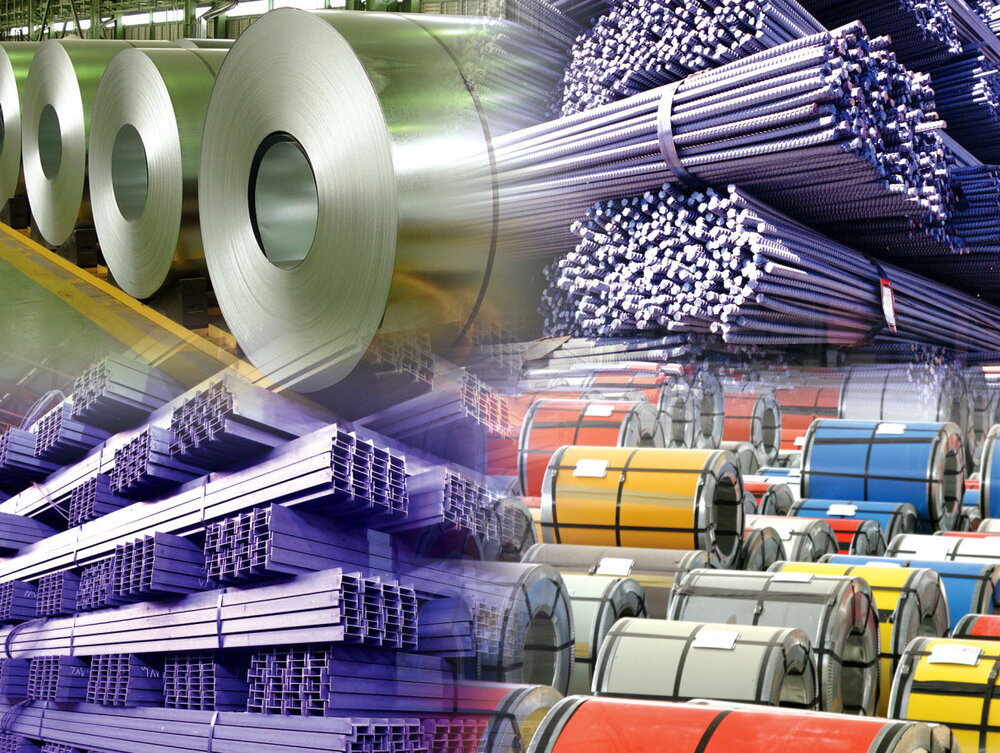
Spanish steelmaker Celsa is investing in technology at its French mill in Boucau, near Bayonne. The Celsa France subsidiary placed an order with equipment maker Tenova for the supply of one iEAF technology platform using the NextGen System for the company’s 150-tonne scrap AC top charge furnace.
Tenova will supply NextGen hardware for upstream off-gas measurement that is expected to bring added value to the plant. This “is the first critical step that enables all software solutions, including Mass & Energy balance that is needed for achieving Net Energy and Melting-percent Control with iEAF technology,” Tenova says. “Also included is optical temperature and velocity measurement, HMI for process data, and optimisation support.”
The equipment will become operational in the spring, Kallanish notes.
Celsa France is an electric arc furnace-based plant that produces billet to be re-rolled mostly into finished construction steel products.
In December, the steelmaker started a new bar rolling mill at Boucau. The new mill, into which Celsa invested €65 million ($73m), will diversify its business and produce up to 550,000 tonnes/year of long steel (see Kallanish 30 December 2021).
Natalia Capra France
ArcelorMittal Warszawa sees record SBQ steel production
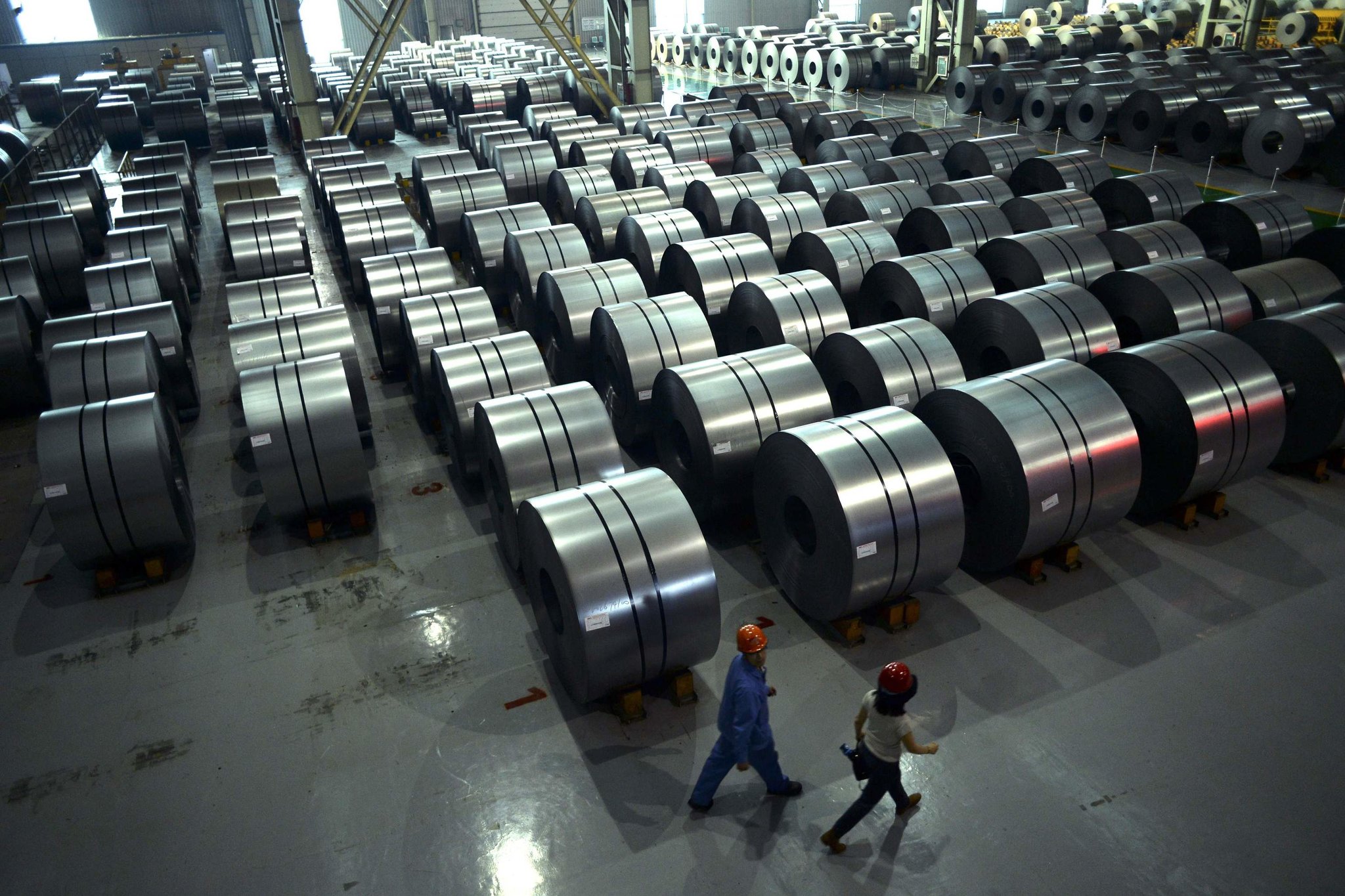
ArcelorMittal Warszawa produced 200,000 tonnes of special and merchant bar quality (SBQ and MBQ) steel at its P20 rolling mill in 2021, a record since its establishment in 2008.
The H6 heat-treatment line also processed a monthly record 1,263t in December.
The Warsaw-based mini-mill previously said strong demand from the automotive industry lifted the share of SBQ bars in overall sales by 13 percentage points on-year in 2021, resulting in a multi-year record profit.
Last summer the firm announced it had posted record SBQ bar shipments in the first quarter, amounting to 46,881t. This was thanks to increased demand but also to the ramping up to full capacity of finishing line C that was commissioned at the end of 2019 (see Kallanish passim). Earlier in the year it said it would start offering 50mm diameter rebar to the market, with a particular focus on supplying this product for the High Speed 2 (HS2) rail construction in the UK.
According to ArcelorMittal group results, ArcelorMittal Warszawa produced 500,000t of crude steel in 2020, down from 600,000t in 2019.
Adam Smith Germany
Duferco Travi e Profilati’s new beam rolling mill to start production in 2023
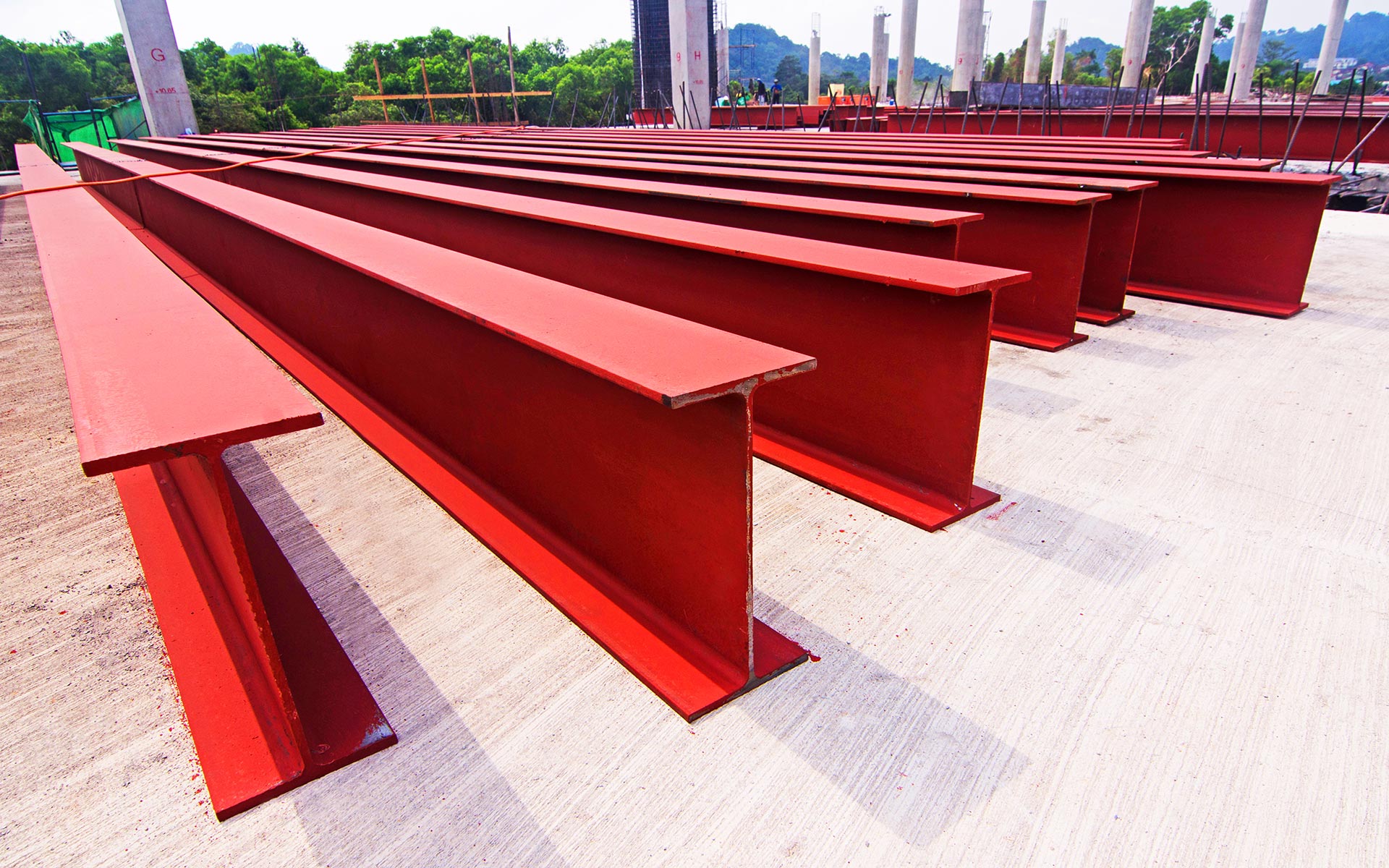
Duferco Travi e Profilati’s new 900.000-mt beam rolling mill at its headquarters in San Zeno Naviglio, northern Italy will become operative in January 2023, Antonio Gozzi, president and CEO Duferco Italia Holding, said in a web seminar covered by S&P Global Platts Feb. 1.
“We are in the phase of installing the reheating furnace. Our new rolling mill will be endowed with the most modern technologies also in terms of environmental impacts and it will be the European best cost producer,” Gozzi said.
In November 2020, the company announced the total investment on the new mill, facility and infrastructure included, amounting to Eur180 million ($202 million). With the opening of the new facility, the total rolling mill capacity of the group will reach 1.5 million mt of long products and make the company more efficient.
“We ended with an investment [that was] a bit higher [than anticipated]… Eur200 million as costs went up, but we are very excited as it will greatly increase our competitiveness and it will also be the first rolling mill to be fed with green energy,” Gozzi told Platts in a follow up call Feb. 1.
The power supply of the new rolling mill will be completely covered by renewable energy thanks to the company’s green power purchase agreement, a first by a steel company in Italy. The mill will have cutting edge technologies, focused on digitization, artificial intelligence and automation both for production and logistics.
During the webinar and the call with Platts, Gozzi said that he was optimistic about the current year, though he expected it to not be as “amazing” as 2021. “The demand for steel will still be very strong, thanks to the rebound of the automotive industry, but also to all the investments… into the infrastructure in Europe and in Italy. As a group, I can say that we had a strong first quarter and although the margins can still be a problem due to the high energy costs, with the correction in [the prices of] the raw materials, [they] are still good,” he told Platts.
Gozzi told Platts that Duferco Travi e Profilati closed 2021 with a net profit of Eur46 million after tax and 800.000 mt of crude steel output. In 2020, the COVID-19 pandemic weighted on the company — the operations of which are largely located in what became the epicenter of the pandemic in Italy — and it closed the year with a profit of Eur4 million.
Duferco Travi e Profilati is part of Duferco Group and owns fours production plants in San Zeno Naviglio, Giammoro, Pallanzeno and San Giovanni Valdarno. Duferco TP is one of the main producers of steel beams and long products in Italy, Europe and North Africa. The steel plant in San Zeno Naviglio, where the new rolling beam will be installed, is the main plant of the group with a production capacity of about 950,000 mt of steel per year.
Duferco Group is an international holding company that has historically operated mainly in the steel industry. Over the years, it developed highly differentiated businesses in energy, industrial and shipping sectors. Headquartered in Luxembourg, the group has 100 operative offices and industrial sites across the world.
In December 2020, Duferco and America-based Nucor ended their 12-year old joint venture, after which Duferco owned 100% of Duferco Travi e Profilati.
— Annalisa Villa

Italy’s Liberty Magona to increase capacity by more than 20%
Liberty Magona, the Italian producer of galvanized and pre-painted flat-rolled coil products, expects to achieve a capacity increase of more than 20% in 2022, a Liberty Steel Group spokesperson said Feb 1.
“A number of challenges (the pandemic, Greensill situation and HRC supply disruptions) impacted Liberty Magona’s ability to operate at full capacity in 2020 and 2021, even though its market and demand from customers was strong,” the spokesman told S&P Global Platts in an email. “We look forward to the business delivering on its strategy this year and so far the La Magona is on track to do so.”
The plant’s significant expansion is expected to come from the addition of new capacity for painting production and a new range of galvanized and pre-painted products, the company said in an earlier statement on Feb. 1.
Sources closed to the mill confirmed that Liberty was investing in La Magona and most of the lines had increased their production, with the pre-painted line moving to 21 shifts from 15 from February, including the hiring of a further 10 workers.
“Liberty is trying to take advantage of the strong steel market and is trying to show that it is still a credible player after all its financial problems,” a source close to the mill told Platts. The company had a cash squeeze after the collapse of principal financer Greensill Capital in March 2021.
According to a source familiar with the company, the La Magona pickling line, which has a design capacity of 870,000 mt/year, is now producing 700,000 mt. The organic coated line, which has a design capacity of 100,000 mt/year and was idled in 2009, was also now producing at full capacity.
The company now has two coated lines and produced 150,000 mt of pre-painted coils in 2021.
La Magona has two galvanized lines that are working at 320,000 mt and has a rolling line that run at 600,000 mt against the 750,000 mt/year installed capacity.
The company buys coils on the open market, mainly from ArcelorMittal’s Fos site in France, and from Liberty Galati in Romania.
— Annalisa Villa

Nucor to add galvanizing, prepaint lines at Indiana sheet mill
Nucor’s board of directors has approved a $290 million investment to modernize its sheet mill in Crawfordsville, Indiana, through the installation of a construction-grade continuous galvanizing line and pre-paint line, the US-based steelmaker said Feb. 1.
The continuous galvanizing line will have a capacity of 300,000 st/year while the pre-paint line will have an annual capacity of 250,000 st/year, Nucor said. The Crawfordsville mill has an annual rated production capacity of 1.9 million st/year, according to data from the Association for Iron and Steel Technology.
The modernization project is expected to take two years to complete pending permitting, regulatory approvals, the award of state and local incentives and other tax considerations, the company said.
The investment in the Crawfordsville facility, Nucor’s first electric arc furnace sheet mill, is part of the company’s strategy to grow its core steel business and expand its portfolio of value-add product, Rex Query, Nucor’s executive vice president for sheet and tubular products, said in a statement. The mill has been in operation since 1989.
Nucor recently added continuous galvanizing lines at its sheet mills in Arkansas and Kentucky and acquired Precoat Metals’ paint line facility in Armorel, Arkansas, in October 2020.
Spot prices for US domestic hot-dip galvanized sheet have weakened since the third quarter of 2021 alongside falling hot-rolled coil prices, but continue to sit above historic norms, according to S&P Global Platts pricing data.
The daily Platts TSI US cold-rolled HDG index was at $1,700/st Jan. 31, while the Platts TSI US hot-rolled substrate assessment was at $1,690/st. Both prices are on an ex-works Midwest basis.
— Justine Coyne