


Knauf Interfer selects tk Materials for digitalisation
Knauf Interfer has linked up with thyssenkrupp Materials Services for the digitalisation of its services. This means a cooperation between Germany’s third largest and largest steel distributors, Kallanish notes. Klöckner & Co is number two.
Knauf Interfer will use the “toii” Industrial Internet of Things platform developed and marketed by thyssenkrupp Materials IoT. The latter is a spin-off from thyssenkrupp Materials Services. As part of its “Materials as a Service” strategy, the materials distributor and service provider is systematically expanding its supply chain service business. This includes the development of innovative, data-driven business models such as toii. The platform also provides real-time transparency on productivity, quality as well as order progress.
The processing centres of tk Materials Processing Europe have been using toii for six years. “Thanks to toii we have so far been able to achieve productivity increases of between 10-15% at our sites,” says Wilhelm Budéus, head of the Krefeld branch and member of the management board of thyssenkrupp Materials Processing Europe.
Knauf Interfer has an annual turnover of around 1 million tonnes of material.
Christian Koehl Germany

BMW taps Salzgitter for low-carbon steels
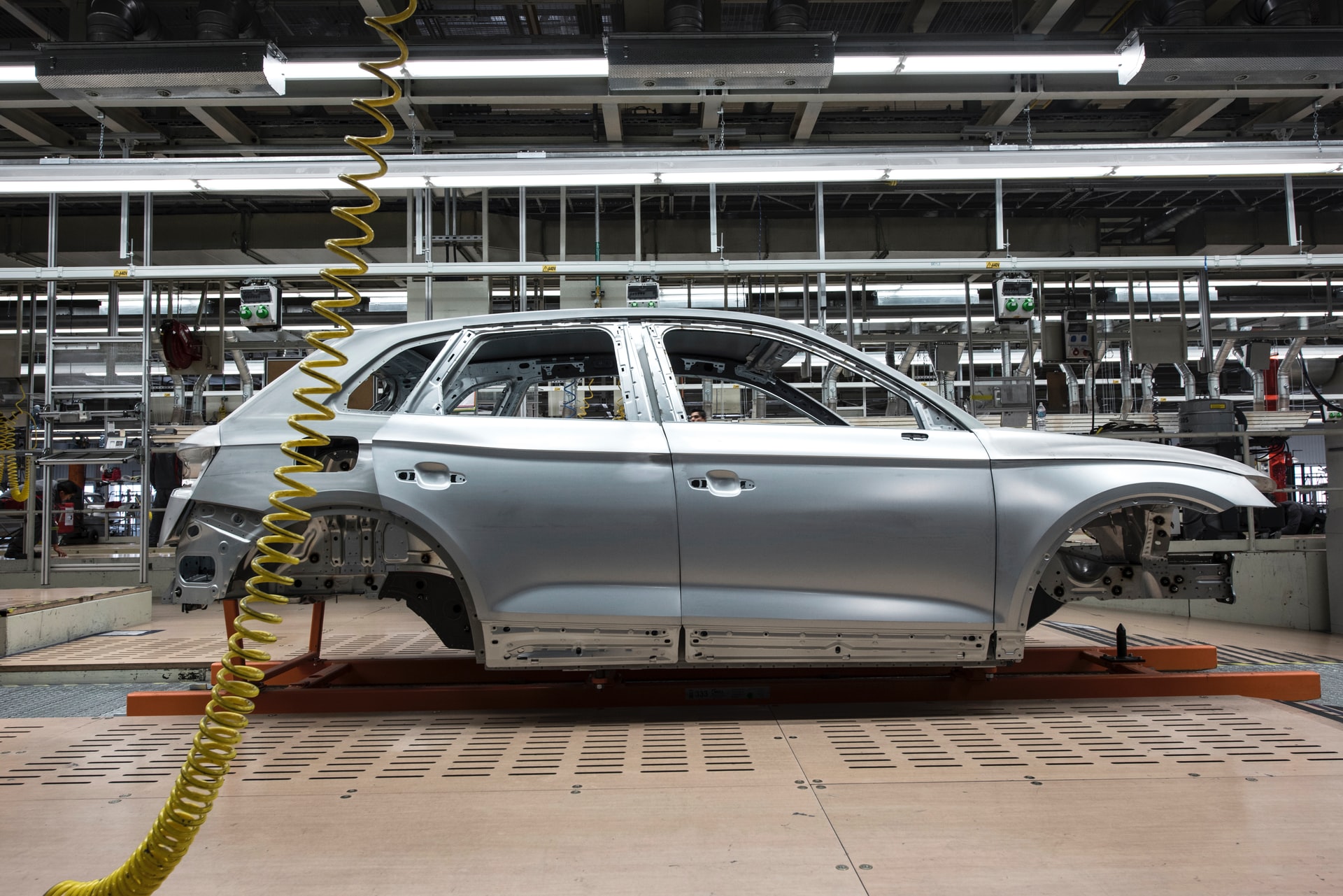
Salzgitter will from 2026 supply all the European plants of the BMW Group with low-CO2 steel, Kallanish learns from the German steelmaker.
The companies have concluded an agreement for serial delivery from the low-CO2 process route. According to Salzgitter, this makes BMW Group the world’s first automotive manufacturer to have concluded an agreement of this kind. Based on the established electrified steel route at the Peine mill, preparations for the transformation to green steel serial production are already under way at Salzgitter.
Five years ago, BMW and Salzgitter already established a closed-loop materials flow for reusable steel from BMW’s Leipzig plant. When supplying the plant with steel coil, Salzgitter takes away steel to be recycled from the stamping plants, for instance from punching out doors, and feeds it into the production of new steel. The partners have now set about expanding this cooperation.
Last autumn, BMW signed an agreement with Swedish start-up H2 Green Steel to procure steel produced exclusively using hydrogen and renewable energies from 2025 onwards. Together, the two agreements will supply over 40% of the steel required by the company’s European plants and save around 400,000 tonnes/year of CO2 emissions, BMW says. Its press plants in Europe process more than half a million tonnes of steel annually.
In addition to sourcing low-carbon steel, the group has also invested in an innovative method for carbon-free steel production developed by American start-up Boston Metal.
Christian Koehl Germany

European steel to enjoy good 2022: Duferco’s Gozzi
Antonio Gozzi, president of Duferco Italia Holding and former Federacciai head, expects the European steel sector to enjoy a positive 2022 despite a number of global uncertainties.
“2022 will be a good year,” Gozzi said during a Siderweb webinar on Tuesday attended by Kallanish. “Not extraordinary like 2021, but still positive. Demand is still strong for the steel sector and I expect raw material prices to move down slightly from 2021 levels. The automotive sector is also starting to send some recovery signals after the negative trend of 2020 and 2021. Finally, the positive effects of the Next Generation EU investments should start being seen during this year.”
Energy prices are expected to remain one of the main issues going forward. Gozzi believes energy prices are close to peaking in Europe, but in the medium term these will move in a new higher range compared with pre-2020 levels.
Answering a question directly on safeguard measures, Gozzi highlighted that the European economy needs to always take into consideration that the EU has decided to be on the frontline of the climatic transition. “At this stage, it is not possible to be completely open on the market front if domestic European producers face high costs linked to decarbonisation,” he explained. It is therefore not possible to consider the cancellation of safeguard measures at present, he added.
Emanuele Norsa Italy

Skyrocketing stainless coil plunges EU market into lull
The European stainless steel coil shortage has persisted this month despite the increased volume of purchases from the import market. European mills’ coil price hikes are said to have become unsustainable, Kallanish learns from market sources.
While service centres consider final demand lively and reliable in both southern and northern European countries, European coil sales activity has reached a standoff due to high hot and cold rolled coil prices from the four European mills. Large buyers are now refusing to purchase European material priced based on the formula comprising base price plus the ever-rising alloy surcharges.
Using the traditional base plus alloy formula, CRC in Europe is now being offered and sometimes sold at the “exorbitant” price of over €4,400/tonne ($4,962) delivered, sources say. This level has decimated coil sales activity. Most buyers are now purchasing Chinese, Taiwanese, or other Asian-origin material. Even including duty, import offers are more competitive than European prices. All EU mills are quoting long delivery times of between April and May.
To wake up the sleepy market, some mills are said to be considering a fixed price for both CRC and HRC, to finally free buyers from the current formula. With a fixed price, CRC may reach approximately €4,000/t delivered, which may be a more acceptable value for buyers and still elevated enough for producers to keep their margins.
European stainless HRC prices have stopped increasing and remain at a more reasonable value of €3,800-3,900/t delivered, due to lower-priced import offers, particularly from China.
Including duty, Chinese CRC was transacted in recent days at €3,650-3,700/t cfr southern Europe, while HRC was at €3,200/t cfr last month, meaning a significant gap between European and Chinese values. Last month, CRC was also sold by Indian steelmakers into Europe at €3,700-3,750/t cfr including import duty, sources suggest. This material will however also be delivered in April and will not help the current coil shortage.
Meanwhile in Europe, nickel prices skyrocketed to $24,400/t on 20 January, only to decline to $22,800 on 31 January, Kallanish notes.
Natalia Capra France

SDI closes on acquisition of New Process Steel
US steelmaker Steel Dynamics Inc now holds a minority equity interest in its largest flat rolled steel customer, New Process Steel.
The companies closed on the previously-announced acquisition this week. Terms of the deal were not disclosed. New Process ceo Richard Fant will remain the majority 55% equity holder, Kallanish understands.
New Process Steel is a processor and distributor based in Houston, Texas. It operates two manufacturing facilities in Mexico and four in the US. Two of the facilities are located on-site at SDI’s mills in Butler, Indiana, and Columbus, Mississippi.
“This minority equity interest enables us to expand our exposure to value-added manufacturing opportunities, while continuing to serve our other long-standing flat roll steel customer needs.” says SDI ceo Mark Millett.
SDI says it is committed to “creating innovative supply-chain solutions” and believes New Process will offer a variety of opportunities for growth in value-added manufacturing for the companies.
Laura Miller USA

Thyssenkrupp completes sale of AST stainless mill to Arvedi
Thyssenkrupp has successfully completed the sale of its Italian stainless steel mill unit Acciai Speciali Terni, or AST, to Italy’s Arvedi, the German steelmaker said Jan. 31.
The sale, which includes the company’s associated sales organization in Germany, Italy and Turkey, was first announced in mid-September 2021 and the European Commission green lit the acquisition in mid-December.
Thyssenkrupp, in a statement, said both parties had agreed not to disclose the financial details of the transaction, although thyssenkrupp would retain 15% in AST “to strengthen the already existing operating cooperation with Arvedi through such a minority shareholding.”
Thyssenkrupp added that the sale would improve its net financial position to more than Eur600 million ($672.9 million).
AST is the only integrated stainless mill in Italy and has a production capacity of around 1.3 million mt/year of crude steel, of which 70% is stainless and the rest carbon steel.
In the past Arvedi, which is Italy’s second-largest steelmaker, with a capacity of around 4 million mt/year of crude steel, bought part of its stainless hot and cold rolled coils requirement from AST.
— Jacqueline Holman

JAPAN DATA: 2021 iron, steel exports rise 7% on hikes to Thailand, US
Japan’s iron and steel product exports rose 7% year on year to 34.4 million mt in 2021, data from the Japan Iron and Steel Federation showed Jan. 31, led by hikes in shipments to Thailand and the US.
Exports to main buyer Thailand rose 55.4% year on year to 5.93 million mt and to the US rose 32.5% over the same period to 1.18 million mt.
Hot rolled wide strips accounted for 2.04 million mt of the products shipped to Thailand, non-stainless specialty steel 1.76 million mt and semi-finished steel products 0.6 million mt.
Exports to second-highest recipient China fell 12.6% year on year to 5.12 million mt, and to third-highest recipient South Korea rose 1.8% to 4.9 million mt.
China’s overall finished steel imports fell 29.5% year on year to 14.268 million mt in 2021, Chinese customs data showed, due mainly to a higher base in 2020, when China was a net steel importer over June-September while overseas markets were in lockdown.
Japan’s largest iron and steel product export category in 2021 was hot-rolled wide strips, which accounted for nearly a third of the exports at 10.65 million mt, down 1.9% year on year, followed by specialty steel products at 7.68 million mt, up 31.6% over the same period.
Hot-rolled wide strips accounted for a large proportion of the exports to Thailand and the US, with shipments to Thailand surging 80.4% year on year to 2.04 million mt and to the US surging 78.9% to 266.796 mt. Exports of the strips to China fell 24% to 920,796 mt.
Japan’s iron and steel product exports in the first quarter of 2022 were expected to remain relatively stable with Q4 2021, the Ministry of Economy, Trade and Industry said Dec. 23, citing weaker overseas demand and potential downside pressure from coronavirus variants.
— Clement Choo, Samuel Chin

Spanish automotive industry dips in 2021
The Spanish carmaking sector ended 2021 on a down note. The industry says that its performance was impacted by persisting global semiconductor shortages. The continuous fall in demand in its main exporting markets is also weighing on the recovery to pre-pandemic levels, Kallanish notes. The microchip crisis is likely to persist at least until mid-2022, according to the national automotive association Anfac.
“The severe shortage of microchips is conditioning the rate of production,” the association observes. “Although the situation should improve this year, we will not see a complete solution until the beginning of 2023. According to Anfac, the sector is facing an industrial and social transformation towards new mobility.
“It is necessary to immediately find appropriate measures and apply for governmental support after Brussels has given the green light to the funds for the industry,” the association adds.
Output in December reached 147,404 vehicles, a decrease of 25.1% on-year. Full-year production amounted to 2.098 million units, down by 7.5% on-year.
Exports were 127,785 units in December, a decrease of 26% compared to the same month in 2020. Full-year shipments abroad fell by 6.7% y-o-y to 1.82m vehicles, Anfac data shows.
Todor Kirkov Bulgaria
Italian car output downward trend persists
Italian passenger car output significantly decreased again on-year in November by 37%, confirming the downward trend seen in previous months. Output also went down compared to the same month in 2019, Kallanish notes from preliminary data from local carmakers’ association Associazione Nazionale Filiera Industria Automobilistica (Anfia).
Passenger car production stood at 41,621 units in November. Production in November 2020 was 66,047 units, while 46,403 units were assembled in November 2019, Anfia says.
Over the first 11 months of 2021, the country’s passenger car output remained mostly stable to the same period in 2020. It stood at 401,424 units versus 407,669 units last year.
In full-year 2020, Italy’s passenger car production stood at 451,718 unit versus 542,472 units in 2019.
Italy has 23 production plants. By comparison, Spain has 17 plants, France 31 and Germany 42.
Natalia Capra France
Indian Steel Association seeks government support on decarbonisation
The Indian Steel Association (ISA) is urging the government to stipulate public projects must source at least a portion of their steel from low-carbon emitting steel producers.
It aims to achieve a CO2 emission intensity reduction in India to 2.4 tonnes of CO2/tonne of crude steel by the fiscal year ending 31 March 2030, Kallanish notes.
“Central to a successful journey towards decarbonisation of the steel industry is the availability of sufficient green hydrogen and renewable energy at competitive pricing,” says ISA president Dilip Oommen, also chief executive of AMNS India.
“The technologies required to adapt these with the existing infrastructure will be a real challenge. Therefore, the transition towards greening steel will incur high initial capital costs, and also operating low carbon steel plants will be considerably expensive in the short to medium term at least. The government needs to lay strong emphasis on R&D support, long-term finance availability at competitive rates, cross-sector collaboration, incentives along with a well-designed policy to accelerate this transition,” Oommen adds.
ISA has proposed authorities provide subsidies for technology investment or tax incentives to incentivise steelmakers to reduce their CO2 emission intensity below a set baseline/sectoral target. It is also seeking the implementation of a carbon credit mechanism for the transfer of technology to green steelmaking, and financing for breakthrough technologies. Also proposed to support decarbonisation are carbon capture and storage (CCS) and carbon capture utilisation (CCU).
“Some policy in line with Solar Power or National Bio-Fuel Policy may be introduced to promote carbon capturing and converting the same into sustainable fuel,” says ISA. “Direct incentives may be provided to the industry to make these technologies economically viable.”
ISA is also asking the government to implement a renewable power transmission charges waiver, to encourage investment into new hydrogen and carbon capture plants, and the use of renewable energy for new electric arc furnaces.
The association also suggests introducing standards for green steel to encourage its use in projects. Another suggestion includes funding demonstration projects for hydrogen, R&D on developing a hydrogen ecosystem in the industry and focusing on a carbon border adjustment mechanism (CBAM).
Sayed Aameer India