

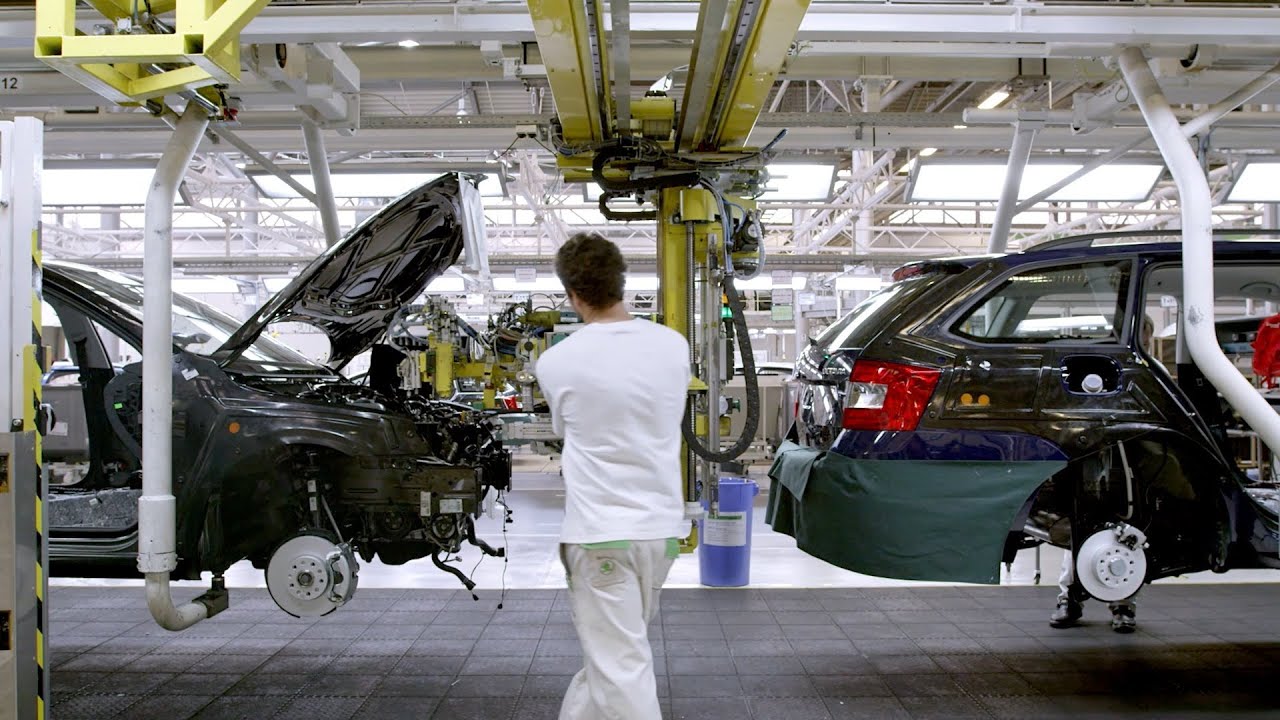
Semiconductors force Nissan, Volvo to halt some production
Japan’s carmaker Nissan site in the US state Tennessee and Swedish carmaker Volvo Cars in Gothenburg are temporarily halting production due to the global semiconductor shortages, Kallanish notes.
Downtime will depend on the supply situation, the companies said. Volvo plans to return to work in a week, and the Nissan plant will most likely be idle from Monday for two weeks, until 30 August.
Nissan said that it has ran short of chips due to a COVID-19 outbreak at a chip factory in Malaysia.
Production lines at Torslanda in Gothenburg will be paused from this evening due to a material shortage linked with the semiconductor issue, a spokesperson said in an emailed statement on Wednesday.
“Production will restart as soon as possible, at the latest before next week,” he adds.
As many of its peers, Volvo Cars has been adjusting production in most of its manufacturing sites to adapt output to the limited supply of semiconductors. The ongoing crisis negatively affected the company’s sales in July, and is also impacting feature availability for the cars it sells.
Volvo Cars is warning customers that, due to the shortage, some features may not be available and local retailers should be contacted to find out which car models are affected.
“The demand for semiconductors is at record levels due to a boost in demand for computer gear and other electronics in combination with trade barriers and high demand for new cars with many electronic features,” the carmaker states on its website.
The carmaker didn’t comment on the potential impact on volumes but told Kallanish “the aim is to make up for any lost volumes at a later stage.”
Earlier this month, major Japan-based semiconductor manufacturer Renesas said it expects semiconductor shortages for the automotive industry will continue until the middle of next year (see Kallanish passim).
Global automotive production could rebound 7-9% on-year in 2021 but will be hampered by supply chain frictions, mainly the lack of semiconductors for OEMs, ING Bank said.
The global semiconductor shortage has even affected next year’s production already, with 5 million vehicles estimated not produced in 2021 and 3m units in 2022.
Bosch recently opened a €1 billion ($1.21 billion) semiconductor manufacturing facility in Dresden, Germany. This is expected to significantly ease automotive chip supply shortages, but only from September.
Svetoslav Abrossimov Bulgaria

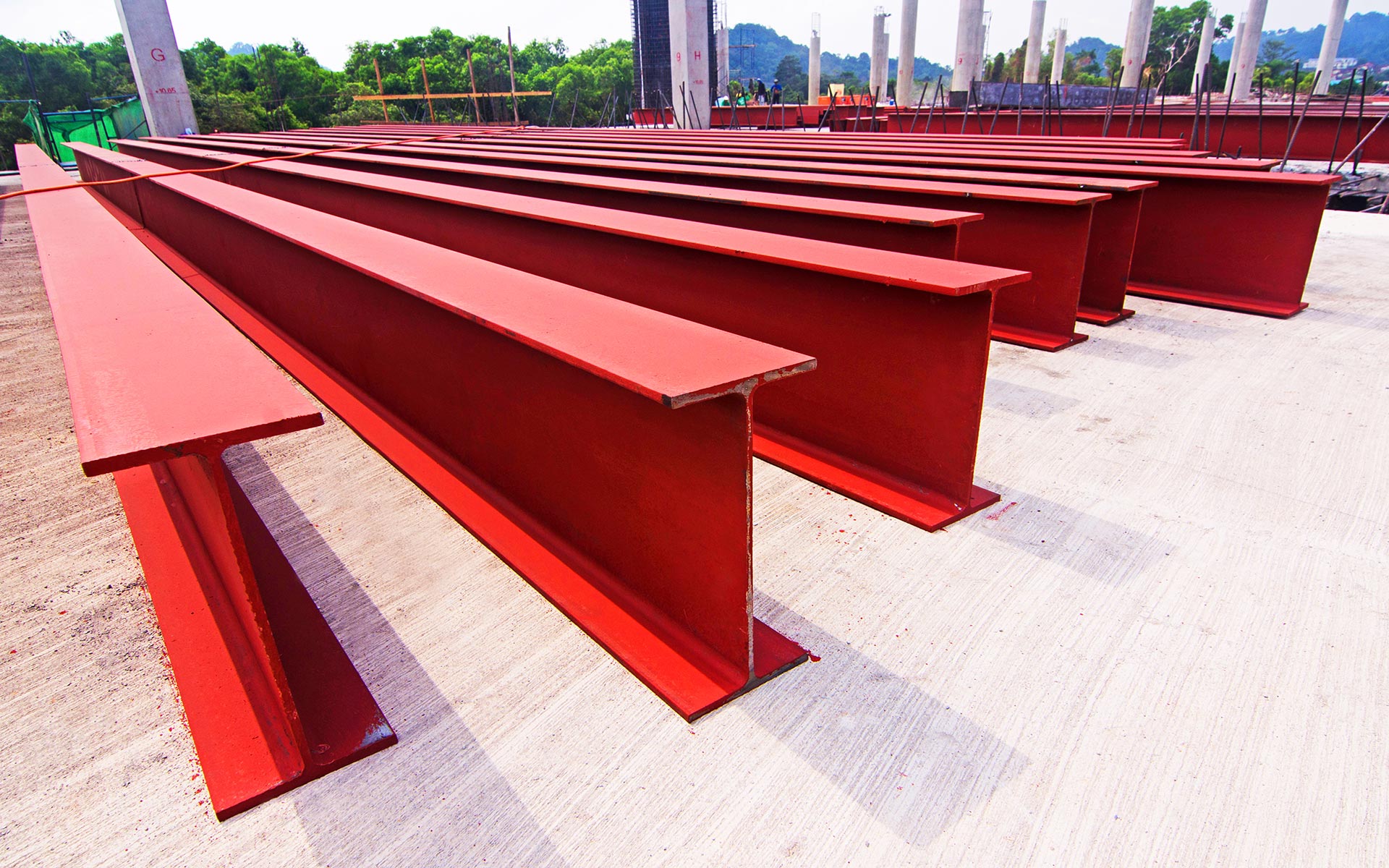
Mechel-Service supplies beams for Russian construction sites
Mechel’s trading arm, Mechel-Service, delivered beams that were produced by its Chelyabinsk Metallurgical Plant for several construction sites in Russia this month, the company says.
It shipped more than 40,000 tonnes for the construction of large-scale offshore structures in the Murmansk region, Kallanish notes. The customer for the construction of a specialised shipyard near the village of Belokamenka in the Murmansk Region is Novatek’s subsidiary Novatek-Murmansk.
The shipyard will build and equip floating reinforced concrete structures for the creation of offshore structures of the gravity type. The purpose of the platforms is natural gas liquefaction and transshipment plants. The modules of the gas liquefaction plant itself are also planned to be manufactured at the shipyard.
Mechel-Service also supplied more than 3,000t of beams for the manufacture of metal structures for a large shopping and entertainment center Zolotoy, with a combined bus station, in the city of Yekaterinburg
The facility is planned to be commissioned in 2023 for 300th anniversary of Yekaterinburg.
Mechel-Service posted a 10% on-year increase in shipments in the first half of 2021 to 797,000t (see Kallanish passim). Sales of hardware products grew by 135%, structural shapes by 44%, beams by 36%, and reinforcement and wire by 4% and 27%, respectively.
This year the company wants to increase its presence in the hardware, wire rope and beam markets.
Mechel-Service posted a 4% on-year increase in shipments in 2020 to 1.52 million tonnes despite the impact of the Covid-19 pandemic.
Parent company Mechel saw first-quarter sales of long products fall 7% on-quarter and 13% on-year to 564,000t. Despite lower sales and output, revenue rose 10% on-quarter and 13% on-year to RUB 76.1 billion ($1.04 billion), while profitability rose to 24%.
Svetoslav Abrossimov Bulgaria
Distribution business boosts thyssenkrupp’s profits
thyssenkrupp recorded an order intake of €8.8 billion ($10.3 billion) in its third fiscal quarter – almost double the figure for the prior-year period of €4.8 billion. Revenue increased by 51% to €8.7 billion.
The adjusted Ebit amounted to €266 million, up significantly from the prior-year loss of €693 million and also from the prior quarter that still saw a loss of €220m. Almost all segments of the conglomerate contributed to this performance. In particular, its distribution unit Materials Services posted record earnings, Kallanish hears.
Here, the continuing strong rise in material prices and the tangible recovery in warehousing and distribution resulted in a substantial increase in order intake by €1.6 billion and sales by €1.4 billion, to €3.6 billion and €3.3 billion, respectively. Adjusted Ebit also reached a new record of €232m, a significant increase on the prior-year loss of €75m. This is attributable, on the one hand, to the increased prices for steel caused by the materials shortage and, on the other hand, to the effects innovations and optimisation, it notes.
The steelmaking unit, Steel Europe, increased order intake by €1.6 billion to €2.5 billion, and revenue by €1 billion to €2.4 billion. With significantly higher selling prices, business grew strongly, especially in the automotive and component supply industries. Orders from industrial customers and steel service centres also rose significantly. Ebit here came to €55m, after a loss €317m last year. The figure is smaller than that achieved with distribution, as the effects from the unit with its mainly long-term contracts will come with a delay (see related story).
Christian Koehl Germany
Swiss Steel expects future scrap market volatility
Swiss Steel Group expects the supply situation in the raw material markets to remain volatile in the second half of the year.
“In particular on the scrap market we see a continuing trend of price increases combined with supply shortages,” says the company’s new ceo Frank Koch during a teleconference attended by Kallanish. “Among the raw materials important to Swiss Steel Group, the clear upward trend in average monthly prices for grade 2/8 German scrap continued. Overall, the average scrap price in the second quarter was 17% higher than in the first quarter of 2021.”
Another problem is steel products delivery delays due to the recent floods in Germany and other parts of Europe.
“We are trying to reduce the impact from the floods on our logistic with help of the company’s production sites in Switzerland and France,” Koch says. “However, we do not expect major disruptions due to the traditional summer holidays in Europe this month.”
“With regard to positioning for future success, in Q2 we have completed the legal merger of the two Swiss business units and are now working on optimsing and harmonising the operational and organisational structure,” he adds. “Also, we have launched an innovative sustainability project in one of our French operations to extract alloys from waste materials which will significantly reduce our usage of natural resources and at the same time improve our carbon footprint. This project emphasises our ambition to address the demand for sustainable, climate-neutral production of specialty long steel products in Europe.”
Swiss Steel also warned that the new Covid-19 infection rates are currently rising in most parts of the world and potentially could lead to a new wave of restrictions and shutdown measures.
Svetoslav Abrossimov Bulgaria
thyssenkrupp to implement spot prices in coming contracts
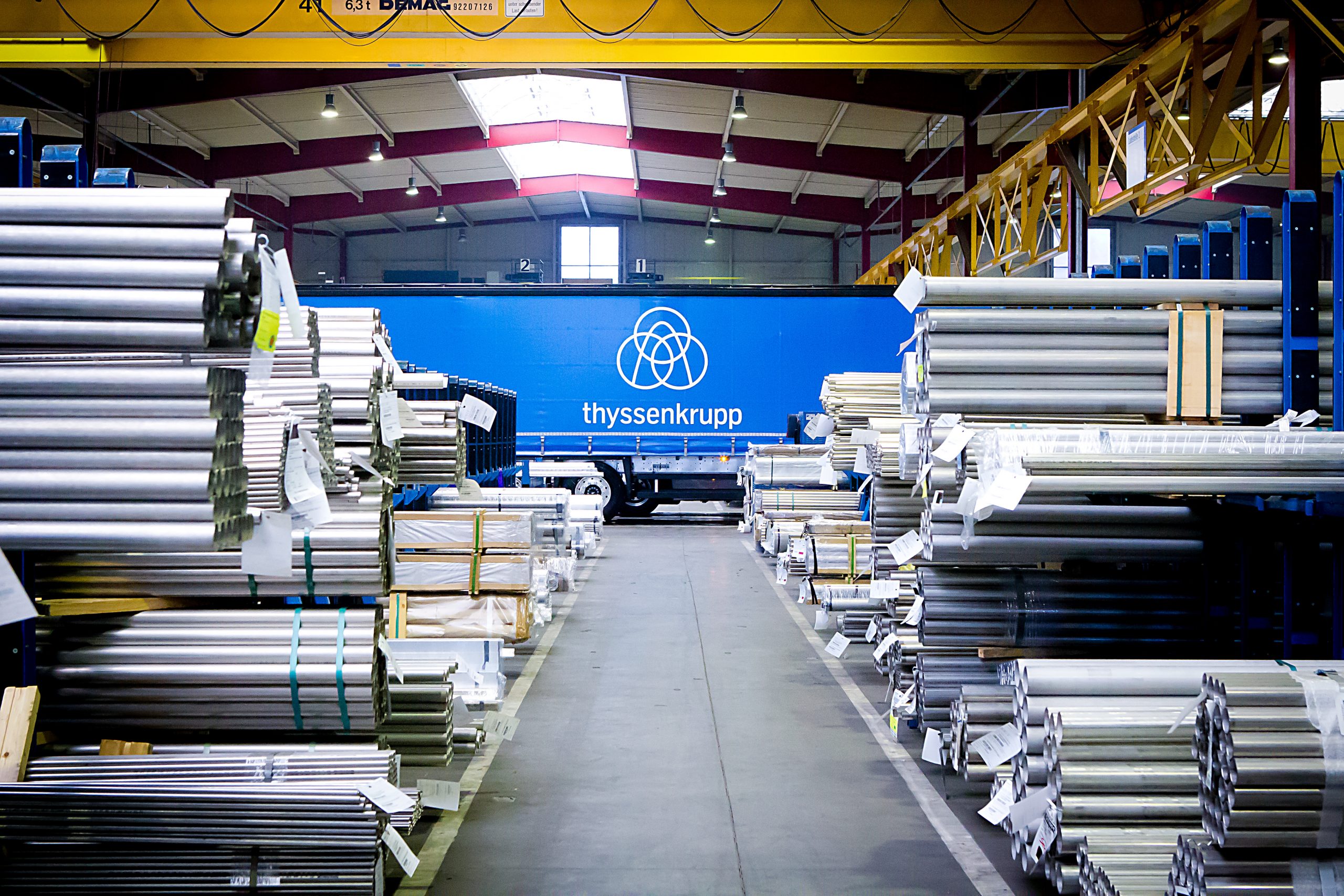
thyssenkrupp group is optimistic that it will translate the steel market’s peaking spot prices into its long-term contracts with its major customer industries.
The steel unit of the German group does business mainly on annual and other long-term contracts, as its high-grade strip products address the automotive and white goods industries.
“We operate on a different rhythm than our competitors. Spot business accounts only for 10% of our total,” group cfo Klaus Keyberg said during a conference call attended by Kallanish. “The positive effect on earnings will come. We’ll just see it later than our competitors.”
“This is a good thing, but our long-term contract structures mean there is a delay in increased raw material and steel prices feeding through to our revenues and earnings,” he explained. The delay of spot prices tracing through is between 6-12 months, he detailed.
Carmakers lately reported extraordinary profits, which makes Keysberg “intuitively” optimistic that the higher prices can be adequately implemented in the ongoing negotiations.
“We have the dynamics of the market, as we have the demand – carmakers could sell more cars than they are able to produce,” he said. He did not comment on the question of a call participant, if the outcome figure could include an extra “cushion” that goes beyond the spot prices.
The group’s steelworks has temporary production restrictions due to the relining of blast furnace 1 initiated in Duisburg in the third quarter and planned to be completed in mid-September. This measure was due at this time and could not be postponed, Keysberg reiterated. He conceded that the measure brings a production loss, which he assessed with “a low six-digit figure,” leaving unclear whether he meant revenue or tonnage.
Christian Koehl Germany
Salzgitter restarting BF, sees HRC prices at high levels through 2021
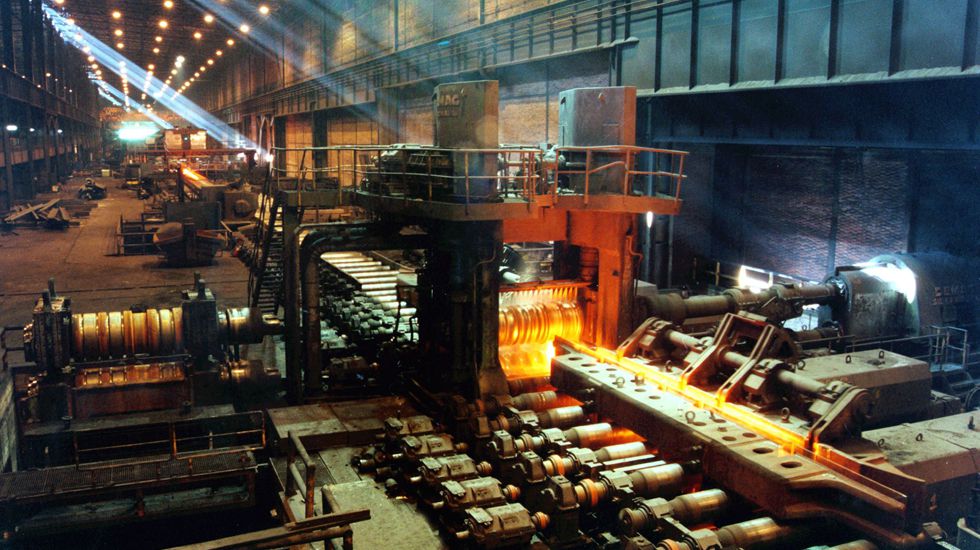
German steelmaker Salzgitter expects European hot-rolled coil prices to continue “sideways at a high level” of around Eur1100/mt ($1,293/mt) for the rest of this year and into Q1 2022 with some fluctuations in coming months, on a continuing shortage of material in the market, company executives said Aug. 11. The company will restart blast furnace C amid strong demand, it said.
The company is confident it will be able to place volumes in the market from its 600,000 mt/year capacity blast furnace C, which will restart in November, Gunnar Groebler, CEO since July 1, told analysts on a call to discuss the company’s H1 results, described as the best since 2008. He noted that volumes lost in early June during a lightning strike will be recouped during the year, with market prospects for the rest of the year looking excellent.
Salzgitter’s main Flachstahl site typically produces almost 5 million mt/year of crude steel and around 3.5 million mt/year of rolled steel.
“We see a strong Q3,” Salzgitter CFO Burkhard Becker told analysts on the call. While in Q4 some seasonal impact is foreseen, during holiday seasons, the executive indicated that there could be an improvement as regards the semiconductor shortage issue. “We don’t see a significant negative impact,” in this area, he said. “We see the Eur1100/mt level continuing quite normal,” he said.
Around 65% of Salzgitter’s sales are typically to the automotive sector, where production has been impacted this year due to a shortage of semiconductor computer chips.
Results rebound
Salzgitter reported a “significant” on-year improvement in H1 earnings before tax of Eur305.7 million, compared to a pre-tax loss of Eur127.8 million in the same 2020 period, when COVID-19-related factors had led to a “tremendous” slump in end-markets including the German automotive sector in April 2020, Becker noted. The steelmaker’s participation in German copper products producer Aurubis contributed Eur91 million to the positive result.
For the whole of 2021, the company foresees a pre-tax profit of between Eur400 million and Eur600 million, and a return on capital employed “tangibly above” the previous year’s level, Becker said.
H1 sales of Eur4.43 billion outstripped the Eur3.63 billion of H1 2020 and are seen increasing to more than Eur9 billion for the whole year.
Guidance seen ‘conservative’
The company’s results were better than expected in Q2 in a “robust pricing environment,” said Alan Spence, analyst at Jefferies International. The analyst believes “group guidance looks conservative,” as Salzgitter “highlighted positive market conditions with a lack of material forcing customers to continue to buy material at current prevailing prices. SZG noted the current supply shortage will continue to persist well into the end of the year, with prices slated to remain ‘around’ the Eur1100/mt mark.”
S&P Global Platts assessed Northwest European hot-rolled coil stable at Eur1150/mt Aug. 11 ($1,349.76/mt) ex-works Ruhr, around multi-year highs. Sources said there was no significant spot availability left in the Ruhr region for the fourth quarter.
Becker noted the company’s H1 earnings had been driven by its Trading division which had been able to buy at lower prices and from inventories and then resell at higher prices due to the dynamic increase in prices throughout the period. Now that prices have stabilized “we don’t expect the Q2 profit level to be repeated,” he said.
With hot strip prices having reached record levels towards the end of H1, the flat steel business segment will contribute much more to H2 earnings than Trading, although steel plate prices haven’t yet shown such a significant improvement, he said.
The Mannesmann tubes division reported “an improved business situation [in H1] at the precision tubes group, with medium diameter line pipes and stainless steel tubes also registering an increase in bookings,” Becker said.
Blast furnace
Blast furnace C, to be restarted in November, has been off stream since around autumn 2019, originally due to maintenance but then the halt was prolonged due to low demand, a Salzgitter spokesman said.
“In the meantime slabs were supplied by our JV Huettenwerke KruppMannesmann (HKM) due to their surplus of slabs caused by very low large diameter pipeline tube demand. In normal times the related plate production consumes a significant volume of slabs from HKM,” the spokesman said.
— Diana Kinch

China’s steel output cuts still small despite sharp Tangshan reductions
China’s steel output cuts remain at a smaller scale so far in 2021 even as the country’s largest steelmaking city Tangshan continues to target aggressive reductions for the rest of the year, a development that will likely result in oversupply and pressure prices in the near term.
China has been looking to curb steel output expansion in 2021 as part of its broader plans to meet its carbon goals. The country has been exercising tighter environmental controls aimed at the steel industry in recent times, including nationwide output cuts.
Tangshan, located in northern China’s Hebei province, is expected to reduce its crude steel output more than the required target in 2021.
However, most Chinese steel mills were still planning or were in wait-and-see mode as regards steel output cuts, according to the China Iron & Steel Association, or CISA.
If steel output cuts outside Tangshan remain on a smaller scale in August and September, soaring steel inventories are likely to cause oversupply and weigh on steel prices even as seasonal demand is seen making a comeback in September, some sources said.
According to CISA, nationwide steel output cuts were necessary as the move could help cap iron ore prices, reduce emissions and avoid oversupply at a time when overall steel demand is expected to decline in the second half of 2021.
Dilemma for mills
However, the association admitted it will be very challenging for the steel industry to strike a balance between meeting tough output cut targets and guaranteeing sufficient steel supply for downstream users in the second half of 2021.
Some market sources said keeping production at normal levels in Q3 and reducing production all at once in Q4 has remained the best strategy for most steel mills.
As a result, China’s steel output cuts might be limited in the third quarter, especially with a likely easing off of power shortages in Guangxi, Guangdong and Sichuan provinces in mid- or late August, they added.
So far in August, besides power shortages reducing steel production in the three provinces by around 27,000 mt/day, steel output cuts outside Tangshan city have been mainly implemented by only some major state-owned companies.
According to market sources, steel inventories were currently the second highest in history after the level seen in 2020. “The hot-rolled coil inventories at some warehouses in Guangdong are already [at] a record high,” one source said.
Steel mills are looking to produce flat steel more than long steel due to higher profit margins, while some traders were aiming to bump up their stocks in anticipation of larger steel output cuts later this year that would boost steel prices.
“But all these moves could instead undermine flat steel prices in the upcoming strong season,” the source added.
Tangshan cuts may exceed target
Tangshan is planning to cut its annual crude steel production in 2021 by 12.37 million mt on the year, according to sources.
However, the city already ordered its steel mills for huge production reductions in March, which could eventually lead to an annual steel output reduction of 14.2 million mt in 2021, according to S&P Global Platts calculations based on data of Tangshan city bureau of statistics.
Some Tangshan-based mill sources said local mills would unlikely ramp up production from current levels during the second half of 2021 and through early 2022, as the city is aiming to improve its air quality for the Winter Olympics. This event will be held in Beijing and Zhangjiakou in February 2022.
Meanwhile, Tangshan has also restrained local mills for commissioning new iron- and steel-making and coking facilities until March 13, 2022.
According to capacity swap schedules, Tangshan-based steel mills plan to commission a combined crude steel making capacity of 9.4 million mt/year in the second half of 2021, based on closures of old facilities of 10.8 million mt/year capacity.
Due to improved technology, new facilities could usually produce more than their designed capacity, thus leading to net capacity expansions, some sources said.
— Staff

Annika Roos to head Swedish Steel Association
Jernkontoret, the association of Swedish steelmakers, has announced that Annika Roos of Sandvik will take over as new managing director of the association at the beginning of 2022.
The current director, Bo-Erik Pers, will retire as planned, and the transition will begin this autumn, Kallanish learns from Jernkontoret.
Roos is currently global head of the Powder business within Sandvik Manufacturing and Machining Solutions. She has worked within the Sandvik Group for 35 years in a number of different management positions, most recently with a focus on developing the business for metal powders used in 3D printing and other applications. She holds a degree in Engineering Physics from the Royal Institute of Technology.
Annika Roos takes over the leadership of Sweden’s oldest industry organisation. Jernkontoret works in close collaboration with iron and steel companies in Sweden and all the industry’s stakeholders, including academia, politics and government agencies.
Christian Koehl Germany
Klöckner sees climate change spurring industry consolidation
Steel distribution group Klöckner & Co believes the economic climate in favour of “clean” steels will be an accelerator of consolidation within the industry.
So far, green steel is hardly visible in the company’s portfolio, chief executive Guido Klöckner admitted during a conference call attended by Kallanish. But the group intends to be active in this respect. “We want to play a role in green steel, and therefore we are looking for partners, to make sure we get volumes,” he said. “It will be important to see who makes the first steps”, with hydrogen, with EAF technology and other prerequisite factors, he noted.
Such a climate of change is a ground for partnership and potential consolidation, “but it is always a question of opportunity”, he said, adding that the company primarily aims at growing organically.
A new partnership was recently struck in the USA with Nucor, “a company that needs a big partner for reliable relations”, Kerkhoff said. That partnership through strategic investment coincides perfectly with projected investments in the US infrastructure, Klöckner says in its quarterly report.
Regarding the marketing of green steel, Kerkhoff said it will be more expensive, and this needs to be tested especially with smaller customers than the big OEMs which have signalled they are in favour.
Christian Koehl Germany
NLMK Clabecq supplies abrasion-resistant plate for Mercedes-Benz trucks
NLMK says its Clabecq plant in Belgium has supplied abrasion-resistant Quard 450 steel plate to Becema to build, in partnership with Mercedes-Benz, a new series of dump trucks.
Becema is set to use NLMK steel to produce the truck bodies. The Quard 450 steel will ensure high resistance to abrasion and impact loads, NLMK says.
“Quard steel is used in harsh conditions and is recommended for construction and mining equipment, among other applications. The unique wear-resistant properties of this grade more than triple the durability of individual special-purpose equipment components,” NLMK tells Kallanish.
Emanuele Norsa Italy