


Klöckner sees price dynamic, demand growth continuation
After excellent sales in the first half, German-based steel distribution group Klöckner & Co is extremely optimistic regarding the remainder of the year.
In the second quarter, higher prices and increased demand led to “a very considerable growth” in revenue, by 58% on-year to €1.8 billion ($2.1 billion). To a large part, this is attributable to steel prices, given that the tonnage sold grew more slowly, but also considerably, by 21% to 1.295 million tonnes, chief executive Guide Kerkhoff said during a conference call.
He noted that two pricing effects worked in parallel, pushing up profits. On the one hand, “we have had a return from an extremely low level” of prices and margins that prevailed last year, he observed. On the other, the company cashed in on windfall profits from the appreciation of inventories purchased at low prices, he told Kallanish. This effect alone accounted for €190 million, he detailed. Thirdly, the company also shifted further towards high-value products.
Ebitda improved from €11m in the prior-year period to €271m. Net income was extremely strong at €215m, against a net loss of €111m seen a year earlier.
Klöckner believes the rally is not over yet, and in the current quarter expects further rising revenue due to continued price dynamics, which will compensate for a seasonal drop in shipments.
Christian Koehl Germany
Iron ore, scrap hold after readjustment
Seaborne iron ore prices held their ground on Tuesday. Although steel futures regained some lost ground, iron ore markets were taking a breather to assess whether prices need to fall further.
The Kallanish KORE 62% Fe index inched $0.04/t higher to $165.39/dry metric tonne cfr Qingdao. The Kallanish KORE 65% Fe index gained $0.37/t to $196.14/dmt cfr, and the KORE 58% Fe index increased $0.06/t to $138.90/dmt cfr.
On the Dalian Commodity Exchange January 2022 iron ore settled down CNY 24/t at CNY 840.5/t ($129.69/t), while on the Singapore Exchange September 62% Fe futures settled down $0.67/t at $159.91/t. The same contract for 65% Fe and 58% Fe futures meanwhile settled down $1.31/t at $187.91/t, and down $4.43/t at $136.23/t respectively.
Scrap and billet prices were also mostly steady, apart from some scrap prices in Jiangsu. 6mm heavy scrap delivered to mills in the Yangtze River Delta dropped CNY 10/t to CNY 3,746/t. The decline was led by mills in Jiangsu which were cutting their purchasing prices. In Tangshan, billet prices were steady at CNY 5,080/t.
News of a new production restriction in Tangshan for the Winter Olympics in 2022 continued to fuel expectations of lower output through the rest of the year. As the policy will only ramp up in several months’ time, however, its immediate impact was only on sentiment.
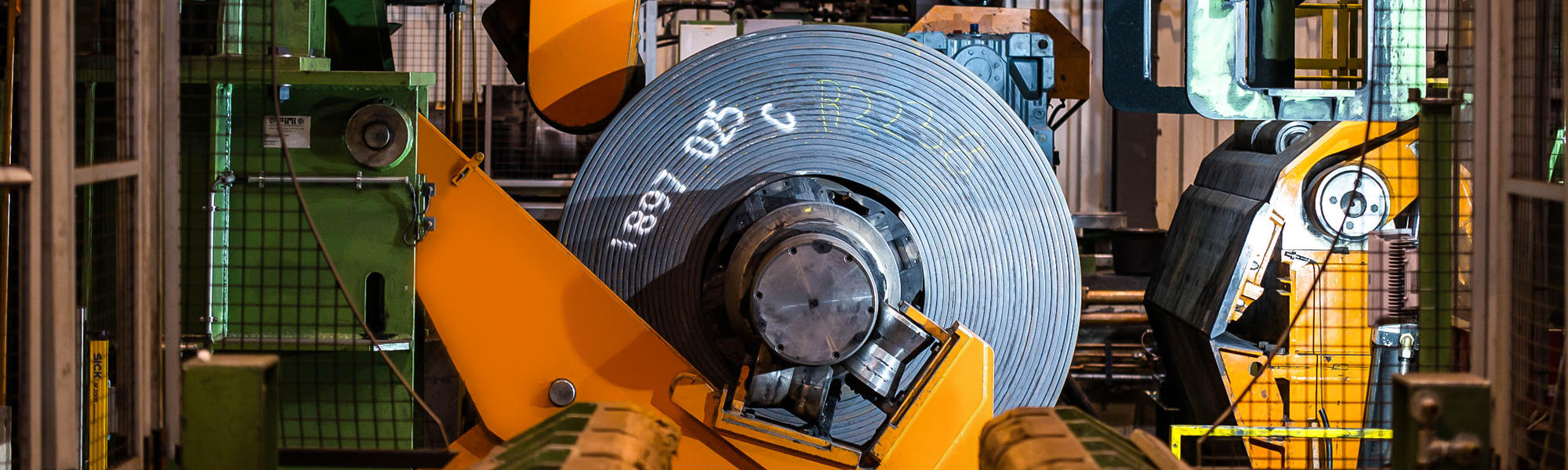
ArcelorMittal Brazil to start rolling mill No. 3 at Monlevade
ArcelorMittal Brazil announced that rolling mill No. 3 at Monlevade in Minas Gerais will start operating in January 2022 motivated by market demand and economic growth prospects, the company said Aug. 10.
The company allocated around Real 580 million to the new rolling mill, with capacity to produce 1 million mt/year of long steel.
“However, production will take place gradually and in line with market demand,” it said.
The rolling mill was built in 2015, but the company was waiting for better market conditions to begin operations.
The unit’s rolling mills Nos. 1 and 2 will continue the development of special steels, with an installed capacity of 1.2 million mt/year.
“The strong demand for steel especially in the civil construction and the economic indicators enabled the rolling mill to operate,” the company said.
ArcelorMittal Monlevade is an integrated plant in the long products segment and operates mainly in the wire rod market for special applications.
— Priscilla Antunes

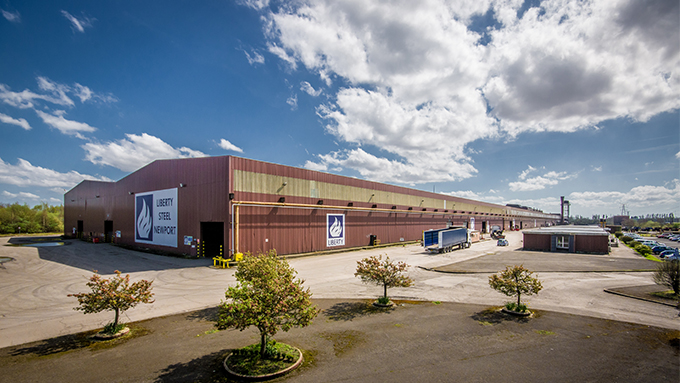
Liberty Galati in Romania to raise steel output 50% this year
Liberty Steel Group’s Galati integrated steelworks in Romania is to boost crude steel production by 50% this year to 3 million mt, up from around 2 million mt in 2020, the group said Aug.10.
As well as selling hot-rolled coil to the group’s Magona cold-rolling and galvanizing mill in Italy, which recently restarted, Galati supplies Liberty’s Liege-Dudelange works and a wide range of construction, marine, oil, gas and renewable energy customers across Romania, the Balkans and elsewhere in Europe, a Liberty Steel Group spokesperson said in an emailed statement.
Full crude steel capacity at Galati is 4 million mt/year although it was not announced when this production level will be reached. The works is progressing on a longer-term transformation plan involving improvements to existing infrastructure and product portfolio quality as well as initiatives to support its transformation into a carbon neutral supplier by 2030, the group said. The works was previously owned by ArcelorMittal until it was acquired by Liberty Steel Group in 2019.
Hydrogen-based plan
Galati will install a direct reduced iron (DRI) plant and two electric arc furnaces, the group announced last year. The DRI plant, with 2.5 million mt/year capacity, will initially use natural gas, later transitioning to hydrogen when this becomes more cost effective.
One of the EAFs will cast slabs for Galati’s plate mill and the other will be used for direct casting of hot-rolled coil. The EAFs will reduce CO2 emissions per metric ton of steel produced by up to 80% and emissions should fall close to zero once hydrogen is used in the DRI plant, it said.
Liberty Steel Group added that Galati’s progress towards the 2030 carbon neutrality target will be enhanced by a memorandum of understanding signed in July to create a Technical and Research Collaboration Framework based around use of hydrogen with partners including the Romanian Energy Centre and international engineering group MTAG Switzerland.
In an Aug. 10 results statement, Liberty Steel Group said that the Galati works had made “further commercial and financial progress” during Q2, as the group stabilizes after the collapse in March of Greensill Capital, the major financier of its parent company GFG Alliance.
Galati, the largest integrated steelmaker in Romania, “expects positive progress to continue into the second half,” according to the statement.
Galati’s Q2 EBITDA at RON 412 million ($98.2 million) was up 61% on the previous quarter and the best result since 2008, it said. Turnover in the quarter grew 37% to RON 2.4 billion, with shipments up 7% to around 566,000 mt in Q2, it said.
The financial performance has been boosted by multi-year highs in prices for HRC, due to strong demand as markets have recovered from COVID-19, amid product tightness.
S&P Global Platts assessed Northwest European hot-rolled coil down Eur6/mt to Eur1150/mt Aug. 9 ($1,351.36/mt) ex-works Ruhr. Mills were heard fully booked and hindered by operational issues because of flooding, maintenance and repairs, which are likely to extend lead times to later in 2022.
Ostrava increases output, UK reorganization
Also in Q2, the Liberty Ostrava steel business in the Czech Republic had its best production quarter since 2017, Liberty Steel Group said. Ostrava shipped more than 600,000 mt of steel products in the quarter, on a production almost 80% higher than in Q2 2020, when the sector was impacted by COVID-19.
Liberty Steel Group spokespersons did not immediately respond to questions Aug. 10 as to whether the plan to sell the UK’s Stocksbridge Specialty Steel works has been changed in the light of a recent reorganization. On Aug. 5 the group announced that following the introduction of a new Liberty Steel UK (LSUK) management team, LSUK is to become a 2 million mt/year producer of “green” steel with operations-focused units. The new management will oversee the separation of the Stocksbridge, Brinsworth Narrow Strip, and Performance Steel assets where production will be resumed in the short term, in a move to create a more sustainable long-term future for the assets, it said.
“Plans are being shared with unions and creditors for their input, including working with a leading strategic consultancy to validate plans,” the group said.
— Diana Kinch
German steel stockholder Kloeckner sees strong market persisting
German steel stockholder Kloeckner is expecting the current steel shortage and high steel prices across the sector to linger and will continue focusing on a “margins over volume” approach, Kloeckner said Aug. 10.
At the Q2 2021 financial results press call, CEO Guido Kerkhoff said that because of the approach of focusing on achieving higher margins and be strict with inventory control, the company was able to have a better supply and delivery situation than its peers. “We did not sell the complete stock just because the price environment was good,” Kerkhoff said.
Kerkhoff also said that there is a trend of more customers moving away from spot purchasing to long-term contracts during the current environment.
Shipments of steel were up 21% year on year at 1.3 million mt in Q2. Sales increased 57.8% year on year to Eur1.8 million.
Kloeckner experienced some windfalls as well by purchasing material when prices were lower and selling when prices went up, which accumulated to a windfall effect in Europe and the US particularly of Eur190 million. It was countered by higher operational and shipping costs as well as some negative forex effects. There Eur12m directly price-linked expenses.
The daily Platts hot-rolled coil assessment stood at Eur1,150/mt EXW Ruhr Aug. 10, having experienced some decrease over the last weeks due to low spot volume trading, but was nevertheless up Eur465/mt since the beginning of the year.
The company is seeing investments in the US infrastructure as big growth opportunity and has strengthened its partnership with the US producer Nucor.
The mechanical engineering industry, is expected to grow heavily in both the US and Europe, while the construction and auto industries also expected to grow in both regions. The energy industry is forecast to move sideways in Europe with some slight upward movement in the US. Shipbuilding is projected to go down on the back of fewer cruise liner demand in Europe while in the US, military demand will boost growth in the shipping industry.
For Q3, Kloeckner expects a significant increase in sales due to pricing dynamics and a slight decrease in shipments due to seasonality as the summer months are usually quieter.
For the full year sales are expected to go up “significantly” with shipments slightly above prior-year level.
— Laura Varriale
Spain’s crude steel production remains firm in June
Spanish steel sector activity has continued its post-Covid-19 recovery, registering in June the second-highest monthly production of the last 12 months.
According to Spanish steelmakers’ association Unesid, the local steel industry produced around 1.31 million tonnes of crude steel in the month. This was 2.4% down on the record output of 1.35mt in May, but 58% higher on-year.
Between January and June, Spanish monthly output ranged from 1.05mt to 1.35mt, data show.
January-June cumulative crude steel production reached 7.45mt. Unesid did not disclose an on-year comparison in its latest report, but taking worldsteel figures into account, the growth is estimated at 35%, Kallanish notes.
Spain used 1.08mt of ferrous scrap for steelmaking in June, the highest monthly volume over the last 12 months, Unesid confirms. Six-month scrap usage was 5.91mt, representing 79.4% of total crude steel production in the period.
Todor Kirkov Bulgaria
Oxygen supply disruption halts NLMK BOF shop No.2
NLMK was forced to halt production at the recently modernised BOF shop No.2 at its flagship Russian Lipetsk works after the pipework supplying oxygen to the shop was damaged in an incident on Monday morning.
The incident has not affected main production equipment or transportation structure, and repairs will take around 48 hours, with an output loss expected accordingly, an NLMK representative says.
With a nameplate capacity of 8.5 million tonnes/year of crude steel based on 2020 output numbers, the production losses during the repair time are currently estimated at 4,657 tonnes, Kallanish calculates based on information supplied by NLMK.
The incident has not affected other production facilities, which continue to operate at capacity levels, NLMK adds.
The firm has recently completed a series of environmental upgrades at the Lipetsk site, reducing dust emissions at BOFshop No.2 by 2.5 times. The shop produces over 60% of Lipetsk’s steel output. BOF shop NO.2 nameplate capacity will have increased by around 15% by the end of 2021 to around 10m t/y, thanks to these upgrades, NLMK says.
EU opens Korea rope anti-dumping exemption review
The European Commission (EC) has initiated a review of existing anti-dumping measures on steel ropes and cables originating from China and South Korea.
The review, launched on the own initiative of the EC, will determine whether South Korean supplier Young Heung can still benefit from an exemption from the existing duties, which were last confirmed in April 2018.
The original duties were levied on China and later extended to product from Korea and Morocco as a result of anti-circumvention investigations. A number of Moroccan and South Korean companies, though, were granted exemptions. Among these was Young Heung, but “there is sufficient evidence that the circumstances on the basis of which the exemption was granted to Young Heung have significantly changed and that these changes are of a lasting nature”, the EC says in a note read by Kallanish.
“On 6 May 2020 Young Heung requested a change of name to Youngwire. However, the documentation provided showed that Young Heung has undergone an important reorganisation, including through the acquisition of the assets of another Korean exporter benefitting from the exemption, Dae Heung Industrial Co. Ltd,” the official document explains.
“It is considered that these significant changes, which have come to light in the context of the name change request, could have affected the company’s entitlement to an exemption from the anti-circumvention measures in force on imports of the product under review from the Republic of Korea,” it adds.
The review will be concluded by next summer.
Emanuele Norsa Italy
MMK Metalurji starts rolling HRC, sets HDG record
Russia’s MMK has completed testing of the entire production cycle, including casting and rolling modules, at its Turkey-based Metalurji works. The EAF, casting and rolling modules have resumed operations and are now ramping up production, the company says.
The firm is planning to produce 200,000-260,000 tonnes of hot rolled coil this year, lifting output to the nameplate 2 million tonnes/year in 2022. So far, 5,800t of HRC was produced, which was used in the downstream production of galvanised coils, contributing to Metalurji achieving a new record-high output of hot-dip galvanized coil.
Output at the two hot-dip galvanising units at Metalurji’s sites in Iskenderun and Istanbul reached 45,219t and 41,221t, respectively, totalling 86,440t in July.
This trumped the previous, January 2021 record of 78,613t, achieved amid difficulties in securing feedstock from the Russian parent company on the back of logistical difficulties, which reflected in lower-than-expected first-quarter HDG output (see Kallanish passim). Output in 2020 increased by 2.8% on-year to 741,000t, with Ebitda at $34 million and profitability at 6.6% after years of negative margins.
Metalurji’s EAF was idled in 2012, on the back of unfavourable market conditions, after a 2009 launch. The complex in Iskenderun also includes a modern seaport capable of receiving vessels of up to 100,000 light displacement tonnage.
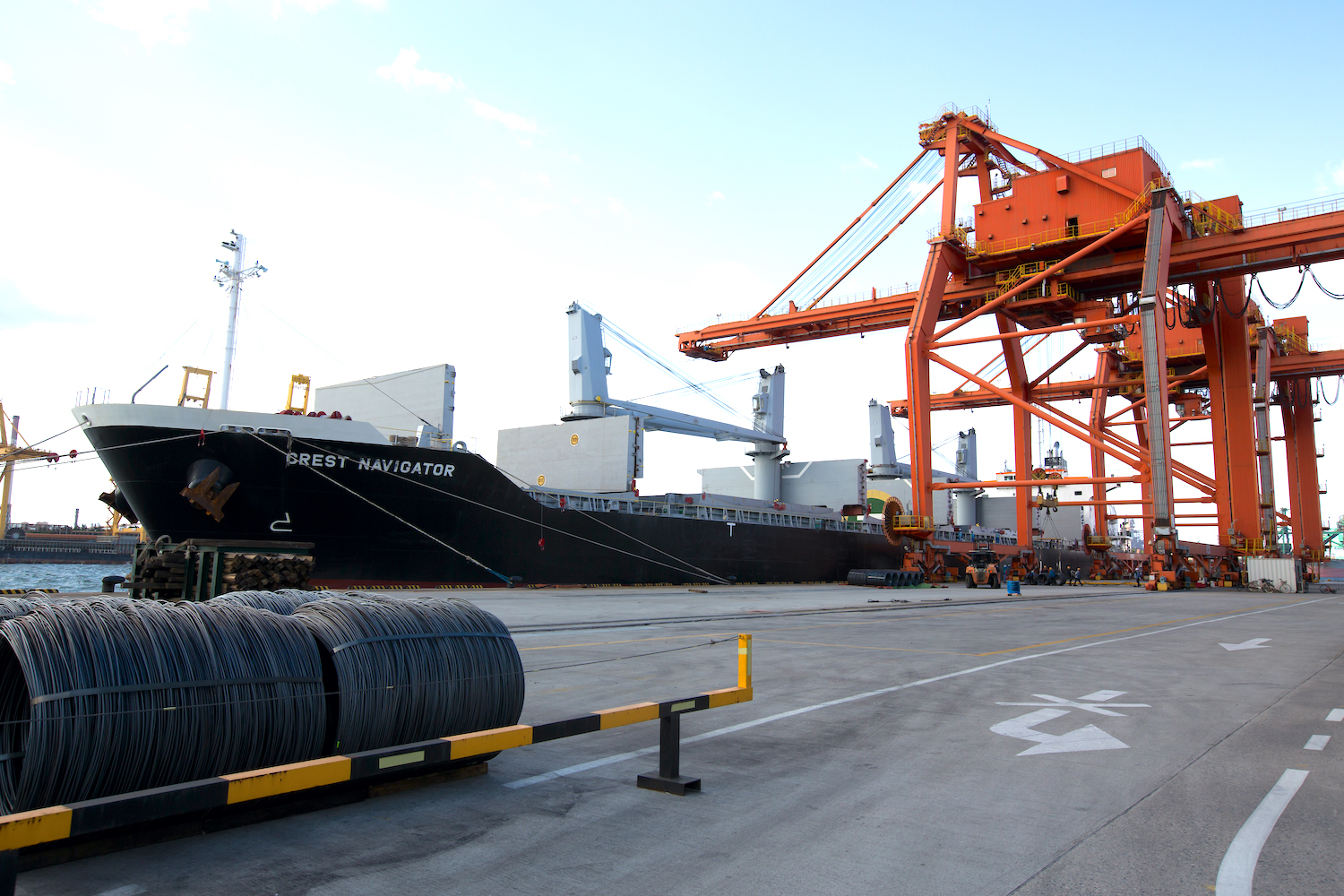
TK, SSAB scale up steel shipments; long wait for tariff leniency ahead
The US and EU remain in close negotiations regarding the future of Section 232 steel and aluminum duties placed by the US on imports from the EU and elsewhere. Both sides have “confirmed readiness to find a solution by Nov. 1” after a July 29 meeting between US Commerce Secretary Gina Raimondo and European Commission Trade Commissioner Valdis Dombrovskis, Politico reported.
Other tariff packages imposed by the Trump administration have either been abandoned – as in the case of four Section 232 tariff packages, discussed in Panjiva’s research of Aug. 5 – or under negotiation with US allies.
Matters will be complicated by the EU’s rollout of its “Fit for 55” program and its associated Carbon Border Adjustment Mechanism, which will target the steel and aluminum sectors in its first phase. Similar legislation in the US seems unlikely to get underway in the near term.
The EU may be keen to increase shipments, given EU steel exporters have been losing ground to suppliers in Mexico and Canada following the latter’s exemption from tariffs as part of the United States-Mexico-Canada Agreement. Panjiva data shows total U.S. imports of steel and aluminum covered by the tariffs increased 15.3% in the second quarter of 2021 versus the second quarter of 2019. Shipments from the USMCA member countries surged 84.7%, while those from the EU fell 17.0%.
Panjiva data shows US seaborne imports of steel and aluminum products from the EU increased 28.3% year over year in July, led by a 113.3% surge in shipments linked to thyssenkrupp AG and a 48.3% rise in shipments associated with SSAB AB. While potentially reflecting a preparedness for reduced tariffs, it is also worth noting that both total shipments and those linked to most companies are still below their 2019 levels.
— Eric Oak, Panjiva Research, S&P Global Market Intelligence