


Tata Steel ratings hike on firm steel prices
Standard and Poor’s (S&P) has upgraded Tata Steel and its subsidiary ABJA Investment Company’s long-term issuer rating from BB- to BB. Continued strength in steel prices has accelerated the company’s ratings, says S&P.
S&P observes that management’s commitment to deleveraging, supported by above-average strength in steel prices has helped Tata Steel to accelerate debt reduction as well.
“In the base case scenario, Tata Steel’s adjusted debt is expected to decline by over 30% by March 2023 from its March 2021 levels,” says the rating agency. “Tata Steel’s adjusted debt (including customer advances and securitised receivables, etc) will fall to about INR 60,000 crore ($8.09 billion) by March 2023 from about INR 91,500 crore as of March 2021.”
This would significantly outperform the company’s stated intention to reduce debt by at least $1 billion/year, and continue the trend of declining debt from March 2020, when the company reported INR 1.1 trillion in debt, Kallanish notes.
The company’s credit profile is further expected to rise over the next 3-4 years on the back of the ongoing 5 million tonnes/year capacity expansion at its Kalinganagar facility. The expansion will directly impact the rating as the facility accompanied with cold-rolled mill and pellet plant setup will be added without material debt and will raise the company’s profitability.
Sayed Aameer India
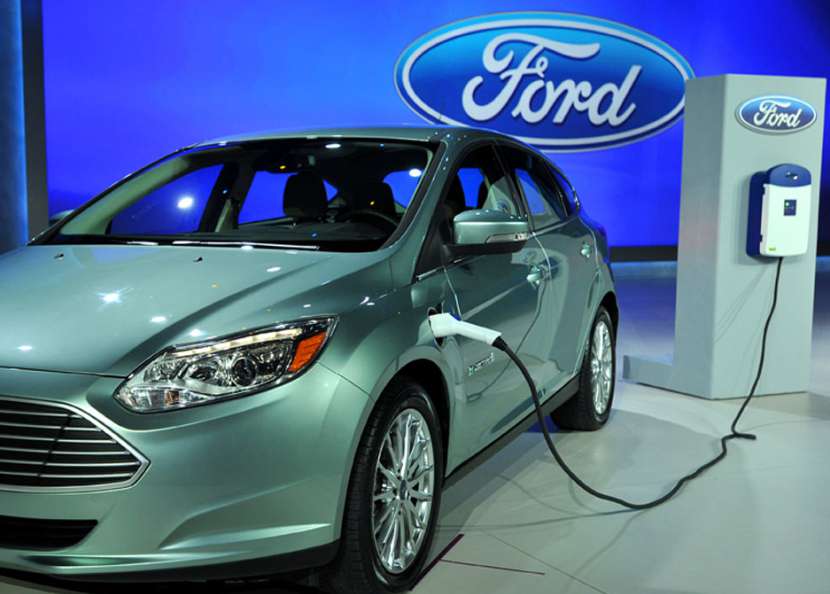
United US auto industry pledges 50% EV penetration
The US auto industry is making a concerted push – with the Biden administration’s support – to reach 40-50% EV penetration by 2030, Kallanish reports.
On the back of an executive order supporting the industry-wide push, a truckload of US auto figures pledged their support to creating a robust EV industry in the US.
“Today, Ford, GM and Stellantis announce their shared aspiration to achieve sales of 40-50% of annual US volumes of electric vehicles (battery electric, fuel cell and plug-in hybrid vehicles) by 2030 in order to move the nation closer to a zero-emissions future consistent with Paris climate goals,” according to a rare joint statement from the Detroit Big Three. “This represents a dramatic shift from the US market today that can be achieved only with the timely deployment of the full suite of electrification policies committed to by the administration in the Build Back Better Plan, including purchase incentives, a comprehensive charging network of sufficient density to support the millions of vehicles these targets represent, investments in R&D, and incentives to expand the electric vehicle manufacturing and supply chains in the United States.”
United Auto Workers president Ray Curry says the US is slipping behind its competitors in the EV race; it’s now-or-never time for the industry.
“We are falling behind China and Europe as manufacturers pour billions into growing their markets and expanding their manufacturing. We need to make investments here in the United States,” he says. “Fortunately, President [Joe] Biden recognizes the importance of this moment, and his Build Back Better Plan makes the bold investments in manufacturing, consumer incentives, and infrastructure needed to ensure vehicles of the future are made in our country. Investments alone are not enough.”
BMW, Ford, Honda, Volkswagen, and Volvo also issued a joint statement, praising California for providing the base for President Biden’s climate initiatives.
“While the California framework companies are driving towards 40-50% of our sales being EVs in the next nine years, bold action from our partners in the federal government is crucial to build consumer demand for electric vehicles and put us on track to achieve the global commitments of the Paris Climate Agreement,” the companies say.
Voestalpine navigates through delivery obstacles after floods
Austria and Germany are seeing steel delivery delays due to the recent floods, says voestalpine chief executive Herbert Eibensteiner.
“There were short-term problems with shipping, but we are logistically well positioned and can switch to rail,” he told Kallanish during a conference call on Wednesday. “It is a difficult time, but we’ve survived everything well … We essentially supplied the plants.”
The steelmaker does not at present expect future disruptions resulting from the flooding, he added.
“A general topic in the industry is the replenishment of stocks at customers and customer segments, because orders cannot be fully fulfilled because supply chains are incomplete,” Eibensteiner said. “The demand was so great that it was not possible to build up the intermediate storage facilities very much, but this extreme tightness in the market will perhaps stabilise in the course of the financial year.”
The floods in some parts of Europe not only caused great damage, but also increasingly impaired logistics (see Kallanish passim). For example, shipping on the Rhine and some railway lines are blocked, which is now leading to bottlenecks in the supply of wagons.
The German and Austrian scrap markets have so far seen no effects from the flooding.
Svetoslav Abrossimov Bulgaria

Voestalpine expects lower steel volumes for auto industry until end-year
Austrian steelmaker Voestalpine is expecting lower steel shipments to the automotive industry until the end of 2021 as the car industry is being hampered by components issues, the company said Aug. 4.
On a call for the company’s April-June results, CEO Herbert Eibensteiner said stoppages to car production were more prevalent in Europe than other regions such as China or the US.
“We will prepare for the case that volumes will go to other customers and supply less than initially thought to the automotive industry,” Eibensteiner said.
Demand in the European steel market remained strong overall during the quarter, the first of the company’s financial year, with steel production at maximum capacity, according to Voestalpine.
Apart from the aerospace industry and “hiccups” in the automotive industry, all customer groups showed continuous growth. Consumer goods, white goods and mechanical engineering industries continued to benefit from the market momentum that carried over from the end of the previous quarter. This also applied to the construction industry, which returned to high capacity utilization after the seasonally weaker Northern winter months.
Voestalpine said that supply chain inventories remained at record low levels while steel prices rose in the European spot market.
S&P Global Platts’ assessment for hot-rolled coil on an EXW Ruhr basis rose from Eur860/mt on April 1 to Eur1,177.5/mt on June 30. The daily assessment stood at Eur1,165/mt EXW Ruhr Aug. 4.
The heavy plate industry continued to lag behind the positive developments for other flat steel products, only improving due to higher crude oil prices.
The seamless tubes segment however was able to benefit from the improving oil and gas industry.
Higher prices for raw materials led to substantial cost increases in steel production but the steel division “more than just offset the higher raw materials prices through higher steel prices”, according to Voestalpine.
The steel division’s EBITDA soared to Eur263 million in the reporting period, up from last year’s Q1 at Eur68.2 million, which was then heavily impacted by pandemic-related demand drops.
For the business year 2021/2022, Voestalpine expects an EBITDA between Eur1.9 billion and Eur 2.2 billion, up from Eur1.1 billion in the business year 2020/2021.
— Laura Varriale
US automakers see semiconductor shortage persisting through 2021
US automakers expect supply issues due to the global shortage of semiconductor chips to persist throughout 2021 and are putting in long-term solutions to de-risk their supply chain, executives say.
The issue of semiconductor supply remains fluid, General Motors CEO Mary Barra said Aug. 4 during the company’s Q2 earnings call. Barra’s comments come a day after GM said it would be taking a one-week outage at three of its North American full-size pickup truck assembly plants due to the chip shortage.
Growing coronavirus cases in Malaysia have caused further disruption to the company’s ability to source semiconductors, Barra said.
“While we informed our employees yesterday that some truck production will be impacted next week, even as we resume production at some crossover plants, we remain confident in our team’s ability to continue to find creative solutions that minimize the impact on our highest-demand and capacity-constrained vehicles, including full-size trucks and SUVs,” she said.
GM is putting in place long-term solutions to avoid such issues in the future and is collaborating with semiconductor manufacturers to enhance transparency in the supply chain, she said.
GM CFO Paul Jacobson said the company was able to pull forward some chip availability into Q2 from Q3, helping to offset production disruptions.
“We have continued to believe that as we get into the fourth quarter, some of the underlying semiconductor challenges are going to start to abate,” Jacobson said. “We don’t know that it will be fully resolved then, but we’re being cautious and we’re seeing signs for improvement.”
During its Q2 conference call in late July, Ford executives said the chip constraints have led to permanent changes in the company’s go-to-market strategy.
“We’re placing greater emphasis on build-to-order sales bank, not just low stocks,” Ford CEO Jim Farley said during the company’s Q2 call on July 28. “We have learned that, yes, operating with fewer vehicles on lots is not only possible, but it’s better for customers, dealers, and Ford.”
Ford is seeing some signs of improvement in the flow of chips at the start of Q3, however the situation remains fluid, Farley said.
“We do see that the chip issue running through this year, and we could see it bleeding into the first part of next year,” Ford CFO John Lawler said. “But I think we won’t really have a good feel for that, until later in this year.”
Chip suppliers have indicated in discussions that they are reallocating capital and increasing supply to the automotive market, he said, however these investments will take time.
“I think this is one of those things where we need to see the release coming through before we can really feel comfortable that we’re out of the woods here,” Lawler said.
— Justine Coyne
German railways take stock of flood damage
German railway company Deutsche Bahn (DB) says heavy rains in mid-July have caused “historic damage” in two German states, most prominently along the Ruhr river, where many steel companies are located.
Slope and embankment slides as well as track undercutting and overtopping have led to massive destruction. “Our infrastructure has never been destroyed on this scale in one fell swoop. We are facing an enormous feat of strength,” says board member Volker Hentschel of the company’s grid operator subsidiary DB Netz.
The damage to over 50 bridges is particularly serious, Kallanish learns from DB. In addition, the flooding severely hit stations and stops as well as technology. 180 level crossings, almost 40 signal boxes, more than 1,000 overhead line and signal masts, power systems as well as lifts and lighting systems in the stations have been affected. “According to initial estimates, the water masses have caused damage of around €1.3 billion ($1.54 billion) in the network and at stations,” DB states.
Thyssenkrupp and several cold-roller companies in the area have declared force majeure, mainly because of logistic impairments due to disruption to the transport ways.
DB’s goal is to have 80% of the damaged infrastructure back in shape by the end of the year. “However, the picture on the ground shows very clearly: some tracks are still flooded or completely gone today. It will take months, if not years, to repair all this,” Hentschel says.
Christian Koehl Germany
Saarstahl moves closer to Liberty French mills’ takeover
Germany’s Saarstahl says it hopes to complete the acquisition of Ascoval and Hayange from Liberty Steel by the end of the summer. This comes as informed sources tell Kallanish the Paris Commercial Court has approved the transaction.
According to a union source, the takeover will give the troubled France-based mills stability. It will also allow for new investments to respond to the current strong demand, as a result of which both plants report full order books. “This closes two and a half years of work and will give the two sites stability and power,” French industry minister Agnès Pannier-Runacher told the country’s press.
Last month, an agreement was signed between Liberty Steel and Saarstahl for the takeover. Both Ascoval and Hayange have faced a significant reduction in working capital support since the collapse of Liberty’s main lender, Greensill Capital.
Ascoval produces continuous cast rounds and forged products at a production facility in Saint-Saulve, France. It recently started the production of blooms and square billet for a variety of applications, including rail blooms, which are supplied solely to Liberty Rail in Hayange.
Saarstahl and parent company Stahl-Holding-Saar (SHS) confirmed on Monday they obtained on 1 July an agreement in principle from Liberty Steel France Holding to purchase the plants.
“This is another important step that paved the way for SHS to take over the two steel plants, Liberty Ascoval and Liberty Rail Hayange,” says Saarstahl. “The group is fully mobilised alongside all parties and the Ascoval and Hayange teams so as to achieve a final agreement by the end of summer 2021.”
SHS and Saarstahl have proposed an industrial concept for the Ascoval and Hayange plants that ensures the economic and social security, as well as further development of the two French sites, the German steelmaker adds.
Natalia Capra France , Svetoslav Abrossimov Bulgaria
China to formulate 2021-2022 winter production restriction plan
China’s Ministry of Industry and Information Technology and the Ministry of Ecology and Environment will work with relevant parties in the near future to jointly formulate a plan for restricting steel production in autumn and winter 2021-2022. This will be the main measure to ensure crude steel output reduction in the second half of the year, Kallanish notes.
Wu Xianfeng, deputy director of the Department of Atmospheric Environment of the Ministry of Ecology and Environment, has publicly stated that the main task of China’s steel industry has shifted from reducing production capacity to reducing output. The reduction of output will be carried out through the principle of “Two limits, Two unrestricted, and Three possible”.
“Two limits” means to focus on restricting steel production in key areas and to focus on restricting the production of companies with low environmental performance ratings and high capacity utilisation rates. “Two unrestricted” means two types of enterprises are not restricted. One is firms that meet the ultra-low emissions standard and have an environmental performance rating of A. The other is electric arc furnace steelmakers. “Three possible” means that the output reduction measures are operable, verifiable, and statistical.
For steel companies that have completed ultra-low emissions transformations, the government will increase policy support and implement differentiated environmental management policies. These include enjoying environmental tax concessions, preferential environmental protection equipment purchase tax concessions, and differentiated water and electricity price concessions.
According to data from the National Bureau of Statistics, China’s crude steel output in H1 was 563 million tonnes, an increase of 11.8% year-on-year. Crude steel production in 2020 was 1.065 billion tonnes. In order to ensure that output of crude steel will not increase this year, H2 production must be controlled within 502mt. This would mean output needs to be reduced by at least 61mt compared with H1.
By Kallanish Team
HRC import offers still pressuring Turkish mill quotes
As the gap between domestic mill and imported hot-rolled coil prices has remained high at around $100/mt and above in Turkey, the pressure on domestic mill prices has been ongoing.
No offers were heard from Indian suppliers this week, which sold significant tonnes to Turkey in the previous months with competitive prices, but offers from some Ukrainian and Indian suppliers were still in the range of $935-$950/mt CFR, depending on origin and tonnage, sources told S&P Global Platts Aug. 3.
Although slowed demand in domestic and export markets, due to holidays, has been putting pressure on Turkish mill quotations – in addition to low-priced import offers and lower imported scrap pricing – Turkish mills have been keeping their offers generally stable at $1,030-$1,060/mt EXW for November rollings, depending on producer and volume, as they were expecting demand to recover gradually as of September.
A possible Chinese HRC export tax could also determine the price direction in the coming months, some sources observed.
A Turkish HRC producer executive told Platts Aug. 3 that their HRC offers were stable on week at $1,050-$1,060/mt, with demand improving gradually.
Confirming that domestic producers’ overall HRC offers remained stable at $1,040-1,050/mt EXW, a manager of a Turkish pipe producer said they have been receiving HRC import offers at around $950/mt CFR.
“We are expecting prices to remain at these levels for a while. EU demand could revive following the holidays. If China will postpone output cuts, it could pressure prices. Chinese possible HRC export tax is also important for HRC pricing,” the manager observed.
A coated coil producer source told Platts Aug. 3 that domestic mills were keeping their HRC offer prices flat at around $1,040/mt EXW.
“Import offers from Ukraine and Russia were at $930-$950/mt CFR,” he said, noting that demand remained slow due to holidays. He is expecting August to be a slow month and demand to recover in September.
— Cenk Can
EU HRC prices stable, market awaits ruling on Turkey, Russia imports
European HRC prices have been in stalemate the last few weeks, with the coils market riding out the lag seen in overall demand, and with cheaper imports still playing a role in domestic price development. However, market sources have said prices were mostly regulating after the record-breaking peaks seen one month ago, sources told S&P Global Platts Aug. 3.
“If you refer to a price that no one paid in a difficult situation of sourcing allocation, prices have been correcting from a high peak that was not reflected on the market,” an Italy mill source said. “People paid very high prices for some allocation but again these were small volumes.”
The source recalled Arcelor Mittal’s last increase in HRC prices to Eur1,200/mt ex-works Ruhr as a “peak no one paid.”
The objective from producers has been to maintain high prices throughout the slow demand period, betting on increased activity in September and reluctance from customers to buy imports due to increased protectionist measures.
HRC import prices were heard at Eur985/mt CIF Italy Ports from the Far East.
Sources were awaiting the outcome of impending anti-dumping investigations on hot-dip galvanized material from Turkey and Russia.
“Turkey and Russia has been a good opportunity to buy HDG in Europe, but with ant-dumping it will be difficult to buy. There is more CRC availability from import,” the same Italy mill source said.
The European Commission announced June 24 that it has opened an investigation into hot-dip galvanized coil imports from Turkey and Russia, saying imports of certain corrosion-resistant steels originating from these countries were being dumped.
— Amanda Flint