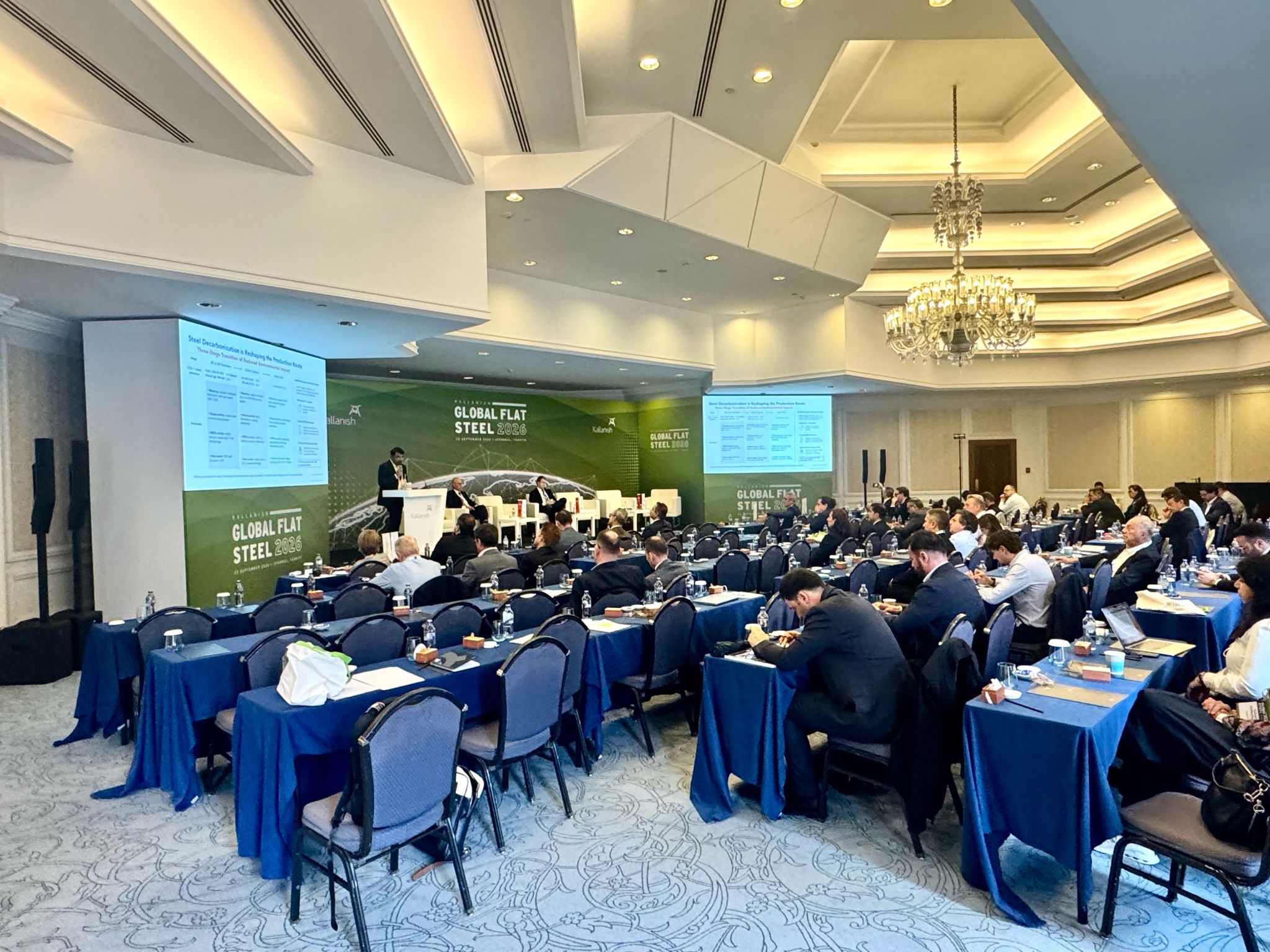
Overcapacity, protectionism and geopolitical disruption are reshaping global steel trade, panellists said during the opening keynote session of Kallanish Global Flat Steel 2026 in Istanbul on Wednesday.
Turkish Flat Steel Import, Export and Industry Association (Yisad) chairman and Colakoglu Metalurji board member Metin Tayfun Iseri said global overcapacity has left producers unable to protect margins. “The ship is sinking, and everybody is trying to protect their own market,” he said, adding that further capacity growth and investment need to stop.
Kallanish managing editor, Asia, and head of data Tomas Gutierrez said China’s steel sector has structurally peaked as Beijing redirects investment towards strategic technology sectors, while steel exports remain high despite thin margins. “If the demand in China is less than the supply, the steel will go somewhere, and that caps prices here and everywhere else,” he said. He put sustainable Chinese exports at around 130 million tonnes this year.
Yildiz Demir Celik general manager Selçuk Yilmaz argued that Turkey’s electric arc furnace-heavy production base should provide a CBAM advantage for supplying into the EU. But Turkish exporters remain exposed to quotas and the incoming “Made in Europe” restrictions.
He also pointed to the toll of regional conflict on trade flows. “Everyone’s talking about overcapacity, but geopolitical conflict matters too. The Israel-Iran war may not hit steel markets directly, but closing shipping routes changes everything – oil prices rise, freight goes higher than before the war. And since 2022 there’s the Russia-Ukraine war, and nobody knows how that resolves,” he said.
MAN Industries president – group procurement and strategy Manish Lunker, who sources pipeline-grade steel for infrastructure projects, said 2026 has been among the toughest years for securing material on time. “Ensuring the material is available at all times is the biggest challenge we as industry are facing today,” he said.
He pointed to Red Sea shipping disruption as a key driver: “The current disruptions in the Red Sea have led to a lot of uncertainty in the shipping industry,” he noted, citing vessel shortages and port congestion. He called for the industry to develop longer-term, 12-24-month pricing mechanisms to support project-based capacity booking, as well as for further investment in special grade steel supply.