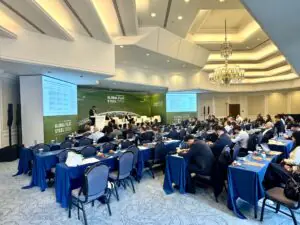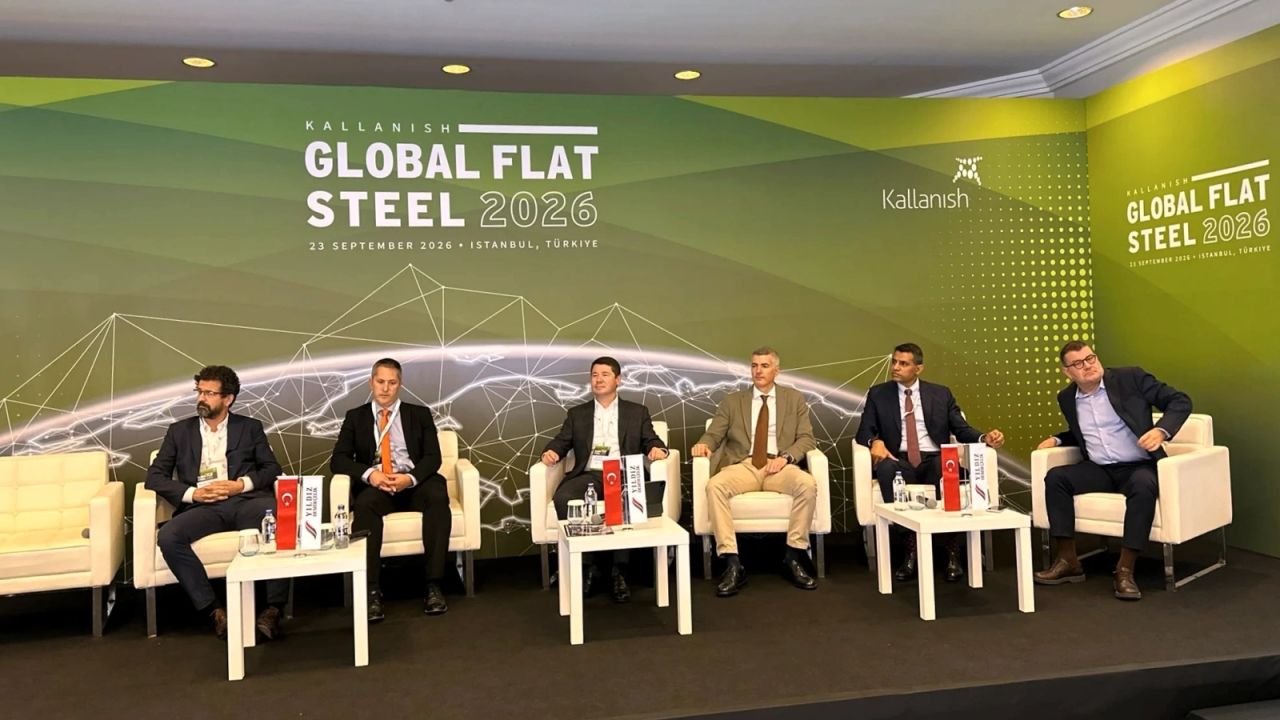
Carbon and quota compliance costs are becoming a permanent part of flat steel pricing and are testing traders, speakers said in the closing session of Kallanish Global Flat Steel 2026 in Istanbul on Wednesday.
Stanislav Zinchenko, chief executive of GMK Center, said CBAM default values and delayed verification would add around €10/tonne ($11.4/t) for Indian material and €20/t for Indonesian product coming into the EU. “We have a new cost factor that will support price – a regulation factor, a carbon factor,” he said.
Zack Newman, commercial director at M7 Metals, said traders must plan for the worst on quotas, CBAM and cash tied up in guarantees. “You have to make your assumptions based on the worst-case scenario,” he noted, adding that some traders would be caught out.
Kutay Ulku, trade manager at Tata International, said it is essential to post extra collateral with EU customs. “I’ll be very happy if the EC [European Commission] would just abolish all the quotas,” he said, and apply a flat 50% duty to every origin.
Ankur Mishra, trading lead for steel at Cargill Metals, said regulatory and financing costs would ultimately be passed to consumers. “At some point, there will be a pushback. There will be demand destruction,” he said.
Gorkem Bolaca, managing director of Galex Steel International, noted that buying decisions had changed. “It’s all about buying the material at a landed, risk-free, regulatory-free price,” he observed.
Guvenc Temizel, executive committee member at Borcelik, said Turkey’s economy was stagnating under high interest rates and inflation, but the steel sector was resilient. “We have had many crises, but we never stop,” he commented.
Asked where they would put $1 billion of investment, the panel was split, each with a different rationale. Mishra chose India. He said that while US prices look attractive, a plant would take three years to build, and India’s per-capita consumption remains well below the global average, giving a 20-year demand runway despite coking coal constraints.
Bolaca chose Africa, citing its young population, the AI-driven data-centre build-out and the need for an investment horizon beyond three years. Temizel would back US grain-oriented electrical steel, as data-centre construction is being slowed by transformer shortages and most transformer steel is imported.
Newman would avoid steelmaking, citing overcapacity, and favour low-carbon DRI and HBI spread across several countries, since cheap gas locations carry higher political risk. Ulku would split funds evenly: European electrical steel and tinplate for data centre and EV demand, and scrap collection in Europe and Africa rather than DRI. Zinchenko would avoid US steel assets over fears they could be lost to political or banking pressure. He said he would put half into North African metallics and half into European re-rolling, where he sees at least €200/t margins for five years.