ArcelorMittal to invest EUR1.3bn in single Dunkirk EAF
ArcelorMittal will invest EUR1.3bn in installing replacement electric-arc steelmaking capacities at its Dunkirk plant, scheduled for first operations in 2029, the company announced 10 February.
According to the steelmaker, the new 2 mt electric-arc furnace (EAF) will be capable of producing steel with “three times less CO2 than a blast furnace,” at 0.6t CO2e/t, and will operate on a mixture of scrap, direct-reduced iron/hot-briquetted iron (DRI/HBI), and pig iron. Half of the EUR1.3bn investment will be financed publicly with Energy Efficiency Certificates.
France’s President, Emmanuel Macron, was present for the announcement at the French site, accompanied by company leadership.
“I am delighted we are now able to launch this €1.3 billion investment in Dunkirk, which underscores our Group’s long-term commitment in France,” said CEO Aditya Mittal in a press statement. “I must thank President Macron and the French government who – very early on – understood the challenges the European steel industry was facing.”
Mittal’s comments reference steelmakers’ long-cited issues with the competitiveness of the European steel sector against global pressures, which the European Commission is attempting to remedy with new industrial support policies, and regulatory simplification. Policies initially proposed by the Commission in last year’s Steel and Metals Action Plan – such as new long-term steel trade protections, the implementation of the Carbon Border Adjustment Mechanism (CBAM), and the upcoming Industrial Accelerator Act (IAA) – are intended to better support the ‘investment case’ for industrial decarbonisation, which for European steelmaking, is largely characterized by the transition from blast-furnace to basic-oxygen furnace (BF-BOF), to EAF steelmaking fed by scrap and direct-reduced iron (DRI).
In its press release, ArcelorMittal states that it “appreciates the progress made by the European Commission to better protect the European steel industry,” and “expects [proposed measures] to restore fair and competitive conditions in the European steel market, thus securing a sustainable future for steel production within the European Union.”
ArcelorMittal has suspended the majority of its European decarbonisation projects, citing aforementioned burdens on competitiveness, as illustrated in McCloskey’s recent Global Green Steel Profile. Postponement to the renovations at Dunkirk specifically related to the high cost of gas and hydrogen in Europe, as stated by company leadership in the French Parliament last year.
The steelmaker’s latest announcement on its decarbonisation plan appears reduced from its initial scope, confirming the construction of only a single EAF, as opposed to previous commitments to construct two EAFs, and a 2.5 mt/y DRI plant. The two EAFs were originally scheduled for initial operations in 2027.
Secondary steelmaking sources have suggested that this indicates ArcelorMittal is abandoning its DRI investment plans and will instead import DRI/HBI to facilitate decoupled steelmaking.
McCloskey’s recent coverage of the leaked draft of the EU’s upcoming Industrial Accelerator Act (IAA) indicates that the European Commission is planning to introduce a ‘sliding scale’ into its new green steel definition, represented by a voluntary low-carbon label that gives a better ‘green classification’ the lower the share of constituent scrap. This could give DRI-EAF steel an advantage over the EU’s existing scrap-EAF production in achieving equivalent, or even improved classifications, despite the lower emissions profile of high-percentage scrap-fed steels.
The EU’s independent EAF steelmakers have largely opposed the inclusion of the sliding scale, fearing that it will give integrated steelmakers undue access to secondary steelmakers’ core construction sector demand as low-carbon markets become increasingly (and at times inconsistently) regulated by instruments such as the IAA.
Despite the fact that the thrust of the European Commission’s regulatory efforts in the steel sector are to protect the ‘investment case’ for decarbonisation without undermining industrial resilience, some market sources have argued that the current trajectory of steel policy across CBAM, the new permanent steel quotas, and green steel standardisation are instead facilitating the gradual decoupling of iron and steelmaking on the continent.
These sources allege that integrated steelmakers are lobbying for ‘sliding scale’ based green standards of universal scope in order to consolidate their access to future domestic low-carbon demand, supporting a limited transition to decoupled EAF steelmaking, while simultaneously closing the market to downstream imports but retaining access to low-cost DRI/HBI from abroad. If true, this would threaten to off-shore primary steel production, undermining the Commission’s push for industrial resilience, and potentially stimulating domestic steel price inflation beyond what consuming industries can tolerate.
The French Democratic Confederation of Labour (CFDT) – France’s largest trade union by membership – boycotted Macron’s visit to the Dunkirk site on similar factors, describing the announcement as “political staging.”
“This announcement is a smoke screen and will not suffice; we are very far from the initial plan […] while ArcelorMittal has obtained everything it wanted!” stated the union in an associated press release. “Behind the hollow words and the promises, there are thousands of jobs threatened and eliminated, weakened industrial basins, and shattered lives.”
ArcelorMittal released its full-year 2025 results this week, reporting $3.2bn net income, and foreseeing an improved outlook for European steel prices and demand in 2026.

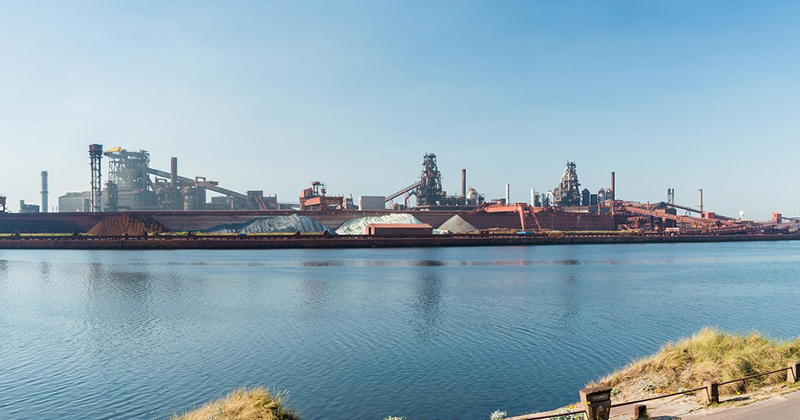
ArcelorMittal has confirmed a EUR 1.3 billion electric arc furnace investment in Dunkirk


ArcelorMittal to idle Dunkirk BF for three months for major overhaul
The company plans to invest more than €270 million ($293 million) in its two primary steel production plants in France, at Dunkirk and Fos-sur-Mer, the company said in a statement seen by Fastmarkets.
The lion’s share of this investment, €254 million, will be at ArcelorMittal’s Dunkirk site. Major works will be carried out in the second quarter of 2025 on an iron ore sintering line, on blast furnace (BF) No4 and at one of the steel mill’s converters. During this time, BF4 will be idled for 90 days, but BF3 will remain operational.
There are three BFs at the Dunkirk site with combined capacity for about 6.9 million tonnes per year of pig iron. Only BFs Nos 3 and 4 have been operational recently, however. BF2, with capacity for 1.4 million tpy of pig iron, has been idled since June 2022, Fastmarkets understands. The site can produce 4.6 million tpy of hot-rolled coil.
“Logistics and supplies have been anticipated in order to limit the effect on downstream production facilities and to ensure continuity of service for customers,” the company statement read.
At ArcelorMittal’s Fos-sur-Mer site, the first phase of work on BF1 was about to get under way, the company said. The cost was estimated at €18.3 million to extend the life of this production unit. BF1 was scheduled for a restart no earlier than the first half of 2026. In the meantime, BF2 will remain operational.
BF1 at Fos-sur-Mer has been idled since the third quarter of 2023.
ArcelorMittal Fos-sur-Mer has two BFs with total capacity for about 5 million tpy of pig iron, market sources said. The site produces hot-rolled and cold-rolled coil.
The company gave no comment at the time of publication on the potential production losses that would result from the idling of the Dunkirk BFs.
Industry sources said that this unexpected move by a market leader would give an additional boost to hot-rolled coil prices in Europe.
“The HRC price rebound we see now is mainly driven by the circumstances around [trade] safeguard [measures] and restocking, not by real demand. News of such a major interruption at ArcelorMittal will probably push [flat steel] prices higher,” a buyer source said.
“There is no [HRC] shortage yet,” the same source added, “but if HRC import quotas are cut significantly under new [European Union] safeguards, and if Arcelor[Mittal] idles one big furnace in France, I’m sure the market will feel the effects.”
Fastmarkets calculated its daily steel hot-rolled coil index, domestic, exw Northern Europe, at €631.88 per tonne on Monday, up by €0.50 per tonne from €631.38 per tonne on Friday.
The Northern European index was up by €3.96 per tonne week on week and by €33.13 per tonne month on month.