


EUROMETAL’s 75th Anniversary conference focuses on protectionism/autarky
The themes of trade protection and greater self-sufficiency dominated discussions at EUROMETAL’s 75th Anniversary conference in Luxembourg this week, where sentiment remained distinctly downbeat.
European mills are suffering from high import penetration and softening demand. Axel Eggert, director-general of European steel association Eurofer, said 128pc of traditional import flows can enter the market duty-free, while demand has fallen by 30mn t in recent years, giving imports an outsize share. In “normal” market environments, imports would decline alongside demand, rather than increase, Eggert added, suggesting domestic capacity utilisation was close to 65pc, a level at which it is difficult to turn a profit.
Illustrating the difficulties of the sector, Tata Steel is axing one in three white-collar jobs and one in five blue-collar jobs, as it looks to find a more sustainable footing. Tata’s Ijmuiden plant is the lowest cost slab plant in western Europe.

EUROMETAL itself is lobbying for import measures on steel intensive goods (steel derivatives), as demand for product sold by its members has been affected by cheaper imports of components and finished products from Asia. EUROMETAL represents steel distributors and importers. Its president, Alexander Julius, reiterated calls for evidence from members, and the wider supply chain, of difficulties caused by downstream imports.
On the sidelines of the conference, one automotive supplier said there was no chance for European businesses to compete with Asia. He cited Chinese electric vehicles being sold at around $20,000, much cheaper than western alternatives. China’s strong grip over the battery supply chain gives it an advantage that will be difficult to overcome, he said.
The European Commission understands the plight of the industry and is eager to act, but executional performance is the big key, speakers and attendees said; bureaucracy in the EU and its intention to remain WTO-compliant hampers speedy implementation of policies, delegates said.
Anthony de Carvalho, head of the OECD’s steel unit, said policymakers are much more aware of the situation facing the industry and have real ambition to take tangible actions — one-fifth of trade measures are being circumvented, according to WTO analysis.

Europe will remain less competitive than other geographies, according to Antonio Marcegaglia, head of Europe’s largest coil importer, Marcegaglia.
He supported the need for stricter safeguards and tariffs, but also said Europe needed to avoid isolationism, given its high energy costs and likely need to depend on imports of certain products, such as direct reduced iron. Marcegaglia said decarbonisation was an “ideological agenda” that had not fully considered the impact on industry, while also challenging the benefit such policies had on financial market participants, while leaving the actual industry hamstrung.
Marcegaglia also said there will likely be big cuts in Chinese production, as the country cannot rely on low-priced exports, given increased trade barriers.

Julian Verden, managing director of London trader Stemcor, remained outspoken in his support for imported product. In response to Eggert’s presentation, he said the safeguard was “designed to create an ideal market for the producer” and was much too punitive, especially without real-time quota tracking.
Another speaker told Argus that competitiveness at a local level is defined by the global market, and that tariffs can only be a temporary reprieve where companies should work on their own efficiency and competitiveness.

Source: argusmedia.com

EUROMETAL Presidency Meeting held in Luxembourg on the eve of 75th Anniversary
On Wednesday, 2 July 2025, the EUROMETAL Presidency met in Luxembourg, on the eve of the 75th Anniversary celebrations. The meeting gathered 13 participants in person and 2 online for strategic discussions on current and upcoming priorities.
The agenda included the presentation of the 2024 Annual Balance Sheet, updates on the 2025 Action Plan and final preparations for the 75th Anniversary Conference.
Additional points discussed:
- Planning of the next National Federations Meeting
- EUROMETAL’s input to the public consultation on new EU trade measures
- Progress from the Working Group on Steel Safety
- Activities of the Working Group on Low-Carbon Steel
A second face-to-face Presidency Meeting is planned to take place on the eve of the EUROMETAL Steel Trade Day, scheduled for early December 2025 to prepare for the upcoming General Assembly 2025 and to follow up on key action points.

EU HRC prices inch lower amid import pressure, mixed outlooks
European hot-rolled coil prices inched down July 3 as further pressure from imports and mixed outlooks dampened sentiment within the market.
Many participants reiterated the subdued market conditions at the outset of the European summer holidays as the industry converged at the EUROMETAL 75th Anniversary conference in Luxembourg.
A distributor source said a favorable euro/US dollar exchange rate was making raw materials slightly cheaper for mills, giving them some relief in times where prices have fallen around Eur100/mt since the end of April.
A mill offer was reported in Northern Europe at Eur550/mt ex-works Ruhr, with tradable values in a range of Eur540-560/mt on the day, as sources at the event reiterated the wider conditions, and referred to the potential for lower prices to be attained for high tonnage enquiries.
In Southern Europe, market participants said activity was limited. An offer was reported at Eur545/mt ex-works Italy, with a tradable value being reported at Eur540/mt.
On the import side, prices fell further in both Northern and Southern Europe as offers from Turkey and Indonesia continued to get more competitive.
In Southern Europe, offers for Turkish HRC were reported at Eur500-505/mt CIF Italy duty paid, and for Indonesian material at Eur470/mt CIF Italy.
Indonesian material in Northern Europe was offered at Eur470-480/mt CIF Antwerp.
“Most people are stocking up on imports now,” a trader source said. “Indonesia and Saudi Arabia seem to be alternatives for now – people are always trying to find different sources for material not subject to safeguards,” he added.
Platts assessed imported HRC in Northern Europe at Eur480/mt CIF Antwerp, down Eur10 day over day, and in Southern Europe at Eur475/mt, down Eur15 day over day. Both prices assessed are at their lowest levels since 2021.
Platts assessed domestic HRC in Northern Europe at Eur555/mt ex-works Ruhr, down Eur5 day over day, the lowest level since December 2024. In Southern Europe, HRC was assessed at Eur540/mt, stable day over day and the lowest level since October 2024.
Platts is part of S&P Global Commodity Insights.


EUROMETAL: The future of the European Steel Distribution industry in 75th anniversary year
EUROMETAL, one of the most established and influential organizations in the European steel distribution sector, launched its 75th Anniversary conference in Luxembourg today. The event brought together industry representatives, industry leaders and politicians from across Europe to shine a light on the present and future of the steel industry.
Alexander Julius, President of EUROMETAL, opened the conference and stated that the 1990s was a golden era for the sector in terms of economic relations between China and Europe. At that time, China was importing steel products and sub-industry products from Europe as an emerging market, whereas today China has become a powerful producer worldwide and Europe is increasingly importing steel and products from China and other Asian countries. Julius emphasized that this transformation is a major challenge for the European industry and that Europe now needs to develop new strategies to remain competitive in terms of production and technology.
In his speech, he also drew attention to production declines in the European steel sector, overcapacity in global markets and unfair competition. In order to meet these challenges, Europe needs to develop a stronger trade policy, innovative solutions in energy policies and policies centered on sustainability.
The role of digitalization and green transformation
Carlo Thelen, Director General of the Luxembourg Chamber of Commerce, stated that digitalization and artificial intelligence will play a critical role in the European steel distribution sector. Artificial intelligence technologies will accelerate the sector in areas such as carbon footprint tracking, demand forecasting, logistics optimization and improving production processes. However, it was emphasized that many systems are still not integrated in the sector today and that digital transformation needs to be expanded.
Thelen added that the steel distribution sector needs to move to more agile, flexible and hybrid business models in order for Europe to achieve its green transformation goals. He emphasized that information management, logistics and environmental excellence should be prioritized in the sector as the boundaries between production, transformation, distribution and service are blurring.
Education, talent and industrial sovereignty
At the conference, it was stated that the technical and digital talent gap in Europe poses a serious threat. It was emphasized that for the sustainable development of the sector, it is necessary not only to train the new generation, but also to improve the skills of existing employees, support career transitions and long-term career planning. It was stated that Luxembourg Chamber of Commerce adapts its training programs according to sectoral needs.
In addition, it was stated that industrial sovereignty must be protected in order for European industry to remain strong and resilient in the face of global uncertainties, supply chain issues and competitive pressures. Europe needs to develop strategies to strengthen its industrial base through national and regional coordination.
EUROMETAL’s contribution to the industry and future vision
EUROMETAL has been a unifying and guiding force in the European steel distribution sector for 75 years. Over the years, the organization has been active in a wide range of sectors covering iron and steel service centers, stocking, trading and distribution, providing its members with information flow, connections and intra-sectoral cooperation.
At the conference, EUROMETAL’s 75-year journey from the past to the present was explained and how it has developed in parallel with Europe’s economic and political changes. This journey, which began in the 1950s with the reconstruction of post-war Europe, is now evolving into a new era of digitalization and green transformation.
EUROMETAL and industry representatives will continue to work together to build a sustainable, competitive and technologically leading steel distribution sector in Europe. The 75th anniversary celebrations were seen as a symbol of this unity and determination in the industry.


Antonio Marcegaglia: Europe risks trade isolation, prices nearing rebound
Flat steel prices are expected to reach their lowest point this summer before starting to recover in the fourth quarter. This will be driven by the European Commission’s safeguard measures review, existing quota systems, and the incoming Carbon Border Adjustment Mechanism (CBAM), according to Antonio Marcegaglia.
“Demand is structurally declining in Europe – by at least 15 million tonnes over the past six to eight years – reaching just 130 million tonnes last year,” Marcegaglia told Kallanish during EUROMETAL’s 75th Anniversary conference held in Luxembourg this week. This decline, he added, is occurring amid a broader global economic slowdown. “We must not underestimate the need to support European demand before talking about decarbonisation and trade”.
While producers have highlighted overcapacity and called for stronger border protections, Marcegaglia questions the actual extent of excess capacity in the global market. “Talking with my Chinese commercial partners I do see and I do expect a cut of 300 million tonnes capacity in the next five to eight years or even sooner, and [their] export-oriented model is no longer working,” he observed.
Marcegaglia acknowledges the need for Europe to shield its industry from unfair competition but highlights that protectionism alone cannot be the solution. “We need to protect to a certain extent but I do believe the EU, because of its nature as a re-exporting economy, needs to remain in the global supply chain actively working and not isolated,” he noted.
Referring to the ongoing global trade tensions created by US President Donald Trump, Marcegaglia conceded that chaos can work as a negotiation tool, but even the United States cannot afford to turn its back on global trade.
Europe has a structural competitive gap with Asian countries, created by high energy costs, lack of raw materials, the highest labour costs linked with being a developed economy and more developed social welfare. This gap will remain.
However, the European supply chain has a growingly sophisticated market that needs to be developed. It possess the best technologies for steel, a culture of innovation, scrap availability that is not yet fully utilised, a resilient, capillary and well-organised distribution supply chain, and social and political stability, Marcegaglia continued. If well managed, the green transition could become an opportunity.
Europe also boasts a proximity to markets in need of steel in the near future, such as the Middle East and Africa.
Marcegaglia is implementing a partial upstream integration with the acquisition of a stainless steel mill in Sheffield, UK, and the new Fos-sur-Mer hot strip mill project in the south of France. The company aims in future to reach zero debt, becoming less reliant on financial institutions, and post €10 billion ($11bn) in turnover and €1 billion in Ebitda. In 2024, the company registered €6.8 billion in revenue and €430 million in Ebitda.
Natalia Capra France

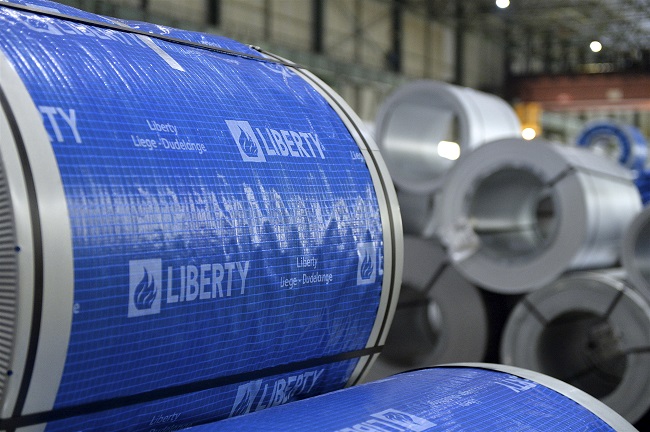
Unions call for emergency meeting as Liberty Dudelange sale collapses
Luxembourg trade unions OGBL and LCGB are demanding an emergency meeting with the economy and labour ministers after Tosyali withdrew from its proposed acquisition of Liberty Dudelange.
“It is imperative that all parties involved immediately come together to define clear, concrete, and immediate solutions for employees,” the unions say in a joint note seen by Kallanish.
The unions previously proposed the establishment of a sectoral redeployment unit, based on the “CDR” model used successfully within the tripartite framework of the steel and aviation industries.
“Beyond employees, the country’s industrial future is also at stake. Measures must be taken to preserve threatened production facilities, especially when their viability has been proven. Luxembourg cannot afford to lose its expertise or see its industrial capabilities erode amid indifference,” the unions add.
Tosyali could not be immediately reached for comment.
The Turkish steelmaking group emerged as a potential buyer for bankrupt Dudelange in February. The unit has approximately 140 employees following a reduction in staff. It has remained inactive for more than two years, with the exception of a production test conducted in July 2024.
Adam Smith Poland

75 Jahre EUROMETAL: Die Zukunft der Stahldistribution im Fokus
EUROMETAL, die führende Stimme der europäischen Stahldistribution, feiert in diesem Jahr ihr 75-jähriges Bestehen mit einer hochkarätigen Konferenz in Luxemburg.
Unter dem Motto „Driving the Future of European Steel Distribution“ bringt die Veranstaltung am 2. und 3. Juli 2025 Entscheidungsträger und Expert*innen aus ganz Europa zusammen, um über die Zukunft der Branche zu diskutieren.
Die Jubiläumskonferenz bietet eine einmalige Gelegenheit, mit führenden Vertreter*innen aus den Bereichen Flachstahl-Servicezentren, Stahlhandel und Stahlvertrieb in den Dialog zu treten. Im Fokus stehen aktuelle Markttrends, politische Rahmenbedingungen, Innovationen entlang der Lieferkette sowie die künftige Rolle Europas in der globalen Stahlindustrie.
Was bietet die Veranstaltung?
- Exklusive Einblicke: Hochkarätige Keynotes von Branchenführern und internationalen Organisationen
- Vernetzung: Treffen Sie zentrale Akteure der europäischen und globalen Stahlwirtschaft
- Wissenstransfer: Diskutieren Sie über nachhaltige Strategien und digitale Transformation
- Feierlicher Anlass: Seien Sie Teil des 75-jährigen Jubiläums von EUROMETAL – einem Meilenstein für die Branche
Bestätigte Speaker:
- Henrik Adam – Tata Steel
- Guido Kerkhoff – Klöckner & Co
- Antonio Marcegaglia – Marcegaglia
- Anthony de Carvalho – OECD
- Axel Eggert – EUROFER
- Edwin Basson – World Steel Association
- Julian Verden – Stemcor
- Cosmin Bakai – Autoliv
- Alexander Julius – EUROMETAL
Jetzt anmelden und dabei sein, wenn Europas Stahlbranche die nächsten 75 Jahre in den Blick nimmt.
Mehr Informationen und Registrierung sind hier zu finden.


ArcelorMittal’s Belval revamp approaches completion
ArcelorMittal’s SteelUp! project at Belval in Luxembourg is advancing to phase two and approaching completion. The brownfield project involves the modernisation of the site by relocating the production of semi-finished products fed to the Rodange sections mill – to reduce emissions and increase productivity.
New workstation installations will be operational, followed by a commissioning phase by year-end, Kallanish notes.
The project comprises a digitised “no man on the floor” electric arc furnace with increased safety, a 15% energy consumption reduction, and 15% heavy sections productivity hike. A new vacuum degassing system will reduce dissolved gas. The works include a continuous casting transformation system for new high-carbon steel grades and heavier beam blanks.
The scrap baskets will be enlarged to fill the furnace in one operation, boosting steel melting capacity each cycle. The company has completed the strengthening of the continuous casting.
“This reinforcement will enable the facility to produce a wide range of profiles, from 320 kg/m to 915 kg/m – a capability that typically requires two separate continuous casting lines at other steel plants. Additionally, the automation phase is now beginning, with the arrival of new extractors scheduled for September 2025,” the firm says. The new vacuum degasser will be commissioned by mid-2025.
The project also involves a new 150m² platform with a 100-tonne hot briquetted iron supply system. The HBI, used to make Rodange’s semi-finished products, is stored and distributed in a silo near the scrap yard. “This allows the creation of new metallurgical grades previously only achievable with blast furnaces.”
The modernisation will help to reach a certified low carbon footprint for steel of below 300kg per tonne, cutting CO2 by 200,000 t/year. The Belval site will obtain the XCarb label for rails produced from mill A.
The new Belval EAF costs about €67 million ($72.4m), including €15m from state subsidies.
ArcelorMittal Luxembourg produced 1.9 million tonnes of crude steel in 2023 and employs 3,368 workers. The new Belval EAF will increase ArcelorMittal Luxembourg production to 2.5m t/y of steel.
ArcelorMittal is investing in decarbonisation, product quality and increasing capacity at its Luxembourg long products facilities in Differdange and Belval.
Natalia Capra France

Tosyali emerges for Liberty Steel Dudelange facility
The bankrupt Liberty Steel Dudelange facility’s receiver has communicated to trade unions that a decision has been reached on the buyer for the plant, informed sources tell Kallanish.
The prospective buyer is a Turkish steelmaking group that shares the same objective as the Luxembourg government – a commitment to finalise the transaction promptly to facilitate the resumption of production, according to sources.
The buyer could be Tosyali, which was reported last month to be seeking to acquire a European steel producer, citing the challenges faced by EU-based mills reliant on coal-based production. The company’s strategy involves supplying semi-finished products to downstream manufacturers rather than competing directly with final products in the EU market.
Tosyali did not respond to request for comment before deadline on Friday.
The Luxembourg government aims to maximise financial recovery to address Liberty’s outstanding debt, with the government itself among the creditors due to various employee-related expenses incurred by the previous owner. The government maintains ownership of the land and is expected to grant new concession rights to the prospective owner.
The asset will be sold instead of being transferred without compensation. The facility is said to be in good condition, as some personnel have worked to ensure maintenance. The equipment remains up-to-date and production tests have been successfully executed.
Theoretically, after all paperwork is signed, the buyer will be able to quickly resume production thanks to minimal bureaucracy. The selection made by the receiver must undergo validation by the judge responsible for overseeing the sales process. A source indicates this process may require a few days to complete. Following the state’s approval of the judge’s and receiver’s ruling, the facility will be transferred.
Dudelange currently has approximately 140 employees following a reduction in staff. The facility has remained inactive for more than two years, with the exception of a production test conducted in July 2024.
The Luxembourg commerce tribunal declared the Dudelange facility bankrupt last December (see Kallanish 4 December 2024). In addition to Dudelange, Liberty plans to divest its Magona facility in Italy and its Belgium-based Liege plant. The three businesses combined possess rolling capacity exceeding 2.5 million tonnes/year.
The Magona facility is currently operational following the procurement of hot rolled coil feedstock, while Liege is said to be on the verge of bankruptcy.
Natalia Capra France , Elina Virchenko UAE

Navigation blocked on the Moselle: lock accident halts traffic until Spring
A cargo ship collided with a lock gate on the Moselle River, bringing river traffic to a standstill. Officials do not expect the situation to return to normal before spring.
The incident occurred at the Müden lock in Rhineland-Palatinate, Germany, when a cargo ship struck a lock gate that was not fully open. The collision caused extensive damage, ripping both leaves of the gate completely from their anchorage. The damaged gate and several associated components will need to be entirely replaced.
According to the Waterways and Shipping Authority (WSA) Moselle-Saar-Lahn, navigation on the Moselle will likely remain suspended until the end of March. Currently, about 70 vessels are stranded along the river and unable to proceed toward the Rhine.
While river traffic in Luxembourg remains unaffected, the blockade in Germany has imposed significant restrictions, forcing traffic into a single direction only.
The Moselle, a critical waterway traversing Saarland and Rhineland-Palatinate, serves as a vital artery for cargo transport. The prolonged closure is expected to have a significant impact on regional logistics and steel industries reliant on river shipping.
Authorities are working to assess and expedite the repairs, but the scale of the damage necessitates a lengthy process before operations can resume.
Source: lessentiel.lu