


Jindal Steel prepared to continue thyssenkrupp’s green transformation
Jindal Steel International would continue thyssenkrupp Steel’s transformation to low-emission direct reduced iron-based steelmaking if it were to acquire the German steel giant.
The Indian group submitted a non-binding offer for thyssenkrupp Steel Europe on Tuesday.
“We believe in the future of green steel production in Germany and Europe,” Narendra Misra, Jindal’s director of European operations, is quoted as saying by multiple press reports. Jindal’s goal is “to preserve and grow thyssenkrupp’s 200-year industrial legacy and help transform it into Europe’s largest integrated low-emission steelmaker.”
Jindal would invest €2 billion ($2.4 billion) in the transformation at the Duisburg production plants. According to a report by Reuters, it would also be prepared to take over the company’s pension liabilities.
If acquired by Jindal, thyssenkrupp Steel would benefit from low-emission metallics or slab supply from Jindal’s new plant in Oman, which is scheduled to start operations in 2027, as well as iron ore from its mines in Cameroon.
The offer from the Indian group has been welcomed in principle by parent thyssenkrup AG, which has tried for years to spin off its steel unit. Union IG Metall also welcomed the news, underlining the significance of the green transition and the importance of maintaining jobs.
Incidentally, the offer became public on the day that annual collective wage bargaining talks began between IG Metall and German mill employers. The union is keeping its claims modest this time around. In view of the difficult economic situation, it has not entered the talks with defined wage increase claims. Another meeting will follow at the end of this week.
In the name of thyssenkrupp Steel workers, IG Metall struck earlier this month an agreement with the company on lower wages and working hours, and a reduction of certain standard benefits.
Christian Koehl Germany

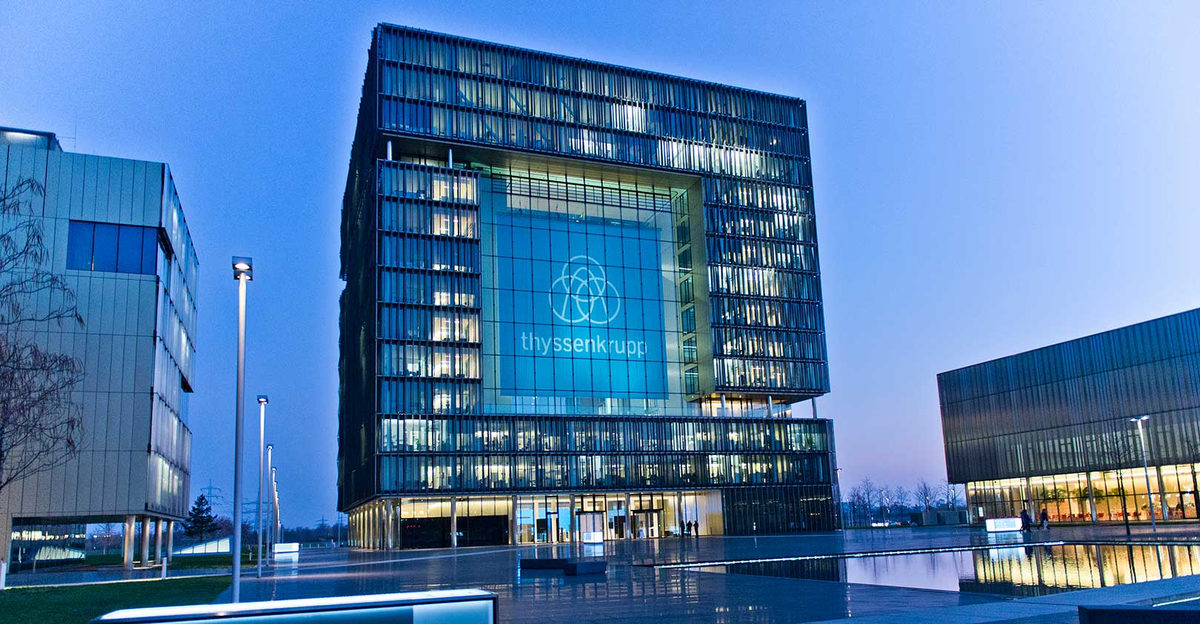
Thyssenkrupp Materials Trading signed a purchase agreement for green steel project in Australia
Thyssenkrupp Materials Trading has signed a 100% purchase agreement with Progressive Green Solutions (PGS) for the first large-scale green steel project to be implemented in Geraldton, in the Mid-West region of Western Australia.
The agreement highlights that Western Australia’s renewable energy potential can directly support Germany and the European Union’s decarbonization targets and potentially set a global standard for green hydrogen-based industrial projects. In this context, the region is expected to develop a new value-added manufacturing industry in the long term, while also strengthening German technology and expertise on a global scale.
The project will deepen trade relations between Australia, Germany, and the EU, while also increasing diversity in demand and supply chains. Supported by Western Australia’s Premier Roger Cook and his government, the initiative involves Thyssenkrupp, technology providers SMS Group, Midrex, Thyssenkrupp Nucera, and financial partner KfW IPEX Bank.
Western Australia’s Minister for Mines, Petroleum and Finance David Michael, Parliamentary Secretary David Scaife, and Geoff Baker, a member of the Friends of Clean Energy and Climate Action Group, welcomed the German delegation at the WA Parliament House and expressed their support.
As highlighted by European Union leaders, there is an emphasis that “the time is now not for talking, but for action” to achieve climate goals. The project aims to overcome “greenwashing” criticisms and mark a turning point in genuine green steel exports.


India’s Jindal bids for ThyssenKrupp Steel Europe
Indian steelmaker Jindal Steel will enter negotiations with German producer ThyssenKrupp for the acquisition of its European steel arm.
Jindal confirmed it has submitted a non-binding offer for ThyssenKrupp Steel Europe, with plans to transform it into ‘Europe’s largest integrated low-emission steelmaker’.
“The plan would secure steel production in Germany and create new business opportunities,” Jindal said.
ThyssenKrupp is currently in the process of downsizing its production capacity and staff, after it reached an agreement with workers’ union IG Metall in July.
The Indian steelmaker added that as part of its offer it pledges to complete the DRI project in Duisburg and establish additional electric arc furnace (EAF) capacity with a financial commitment of over €2bn.
This contrasts Luxembourg-based steelmaker ArcelorMittal’s position, after it said it would not proceed with previously announced direct-reduced iron (DRI) and EAF decarbonisation projects at Bremen and Eisenhuttenstadt due to concerns related to economic feasibility.
ThyssenKrupp ceded last year 20pc of its stake in its European steel arm to German infrastructure investor EP Corporate Group (EPCG). Talks continued as EPCG looked to acquire a further 30pc to form a 50:50 joint venture.
The steelmaker is also looking to sell its 50pc stake in the German producer Huttenwerke Krupp Mannesmann (HKM). ThyssenKrupp said this remains the preferred option after it announced the termination of its supply contact with HKM in April.
By Carlo Da Cas

Source: argusmedia.com

Carl Brockmeyer to head thyssenkrupp Materials Distribution & Trading
Carl Brockmeyer will become chief executive of the Distribution & Trading business unit at thyssenkrupp Materials Services on 1 December, the company informs Kallanish.
He will take over from Detlef Schotten, who will retire from tk Materials Services in March 2026 after more than 30 years with the company, following a transition and handover period.
Brockmeyer has been working at international industrial companies for around 20 years and has extensive experience in strategic business development as well as in the areas of service and digitalisation. He has held various positions at Oerlikon and Atlas Copco.
Ilse Henne, ceo of tk Material Services, emphasises Brockmeyer’s contacts with various customer industries that are important for the company. This and “his many years of international experience, particularly in North America, will help us continue our transformation from a pure materials distributor to a service provider,” she says.
Christian Koehl Germany

Thyssenkrupp chief demands European Steel Content tender quota
The head of thyssenkrupp Steel, Dennis Grimm, has called for a “European steel content” quota in public tenders.
His plea is linked to the €500 million ($583m) “Special Federal Budget for Infrastructure” launched by the German government. The spending only makes sense if the tenders require the use of steel made in the EU, which is not the case yet, he says. “It would be grotesque if the German special fund becomes a booster for imported steels that were subsidised in China,” he notes in a guest article for business weekly Wirtschaftswoche.
“Grotesque” is the word he also uses for the fact that the EU still allows the import of Russian slab into Europe. By doing so, Europe is helping finance Russia’s aggression, while domestic mills need to cut back their workforce, he argues. “I am lacking the imagination on how to bring this home to my employees,” he writes in the article seen by Kallanish.
Grimm identifies three main issues on which policymakers must act as soon as possible. Apart from a European content quota, he names the Carbon Border Adjustment Mechanism (CBAM) and trade protection against subsidised imports. Here he refers to the tangible proposal from the European Commission to halve the current import quota, and to impose a 50% duty on imports above the limit.
“Eleven countries are supporting this proposal, but not Germany, the number one steel producing country”, for concern of rising prices for consumers, Grimm points out. However, these costs would be manageable, with approximately €50 more for a passenger car, and €1 more for a washing machine.
“We can live with that, rather than with the demise of entire value chains, which would then be irreversible,” Grimm warns.
Christian Koehl Germany
Thyssenkrupp Steel calls for effective trade protection against cheap imports
The European steel industry faces a defining moment as global overcapacity and cheap imports threaten its future. In a guest article for German weekly business news magazine WirtschaftsWoche, Dennis Grimm, spokesperson of the Executive Board of German steelmaker thyssenkrupp Steel, issued a strong call for effective trade protection, a robust Carbon Border Adjustment Mechanism (CBAM), binding “European Content” quotas, and structural reforms to keep Germany and Europe competitive.
Mr. Grimm warned that blast furnaces across Europe are being shut down due to shrinking demand and fierce global competition. Transformation projects and new investments are being postponed, while jobs vanish at an alarming rate. The ripple effect extends beyond steel, hitting automotive, chemicals and mechanical engineering sectors. Grimm stressed the need for a clear strategy as China and India have shifted from partners to competitors, with China emerging as a systemic rival.
Global steel overcapacity is projected to reach 700 million mt – six times EU’s total demand. Much of this comes from China, where steel is subsidized up to 10 times more than the OECD average. Grimm argues that without protection, European producers stand no chance against such dumping practices.
Adding to the pressure, the EU-US tariff deal has fixed a 50 percent import tariff into the US, diverting even more global steel excess to Europe while closing export routes for EU producers. “Doing nothing in the face of overcapacity would have catastrophic consequences for Europe’s steel industry and its value chains,” Grimm warned.
The three urgent measures
- Effective Trade Protection
- Robust Carbon Border Adjustment (CBAM)
- “European Content” Quotas
Brussels has proposed halving duty-free import quotas and applying a 50 percent tariff on excess imports. Eleven EU states support the plan – but Germany has yet to follow.
Grimm criticized loopholes in current CBAM rules, which allow circumvention. He stressed extending CBAM to processed steel products and maintaining free EU ETS allocations until reforms take effect.
To avoid subsidizing foreign producers with domestic funds, Grimm urged binding quotas ensuring public procurement uses a fair share of EU-made steel.
Grimm revealed that thyssenkrupp is losing contracts to non-European competitors offering steel up to 50 percent cheaper.

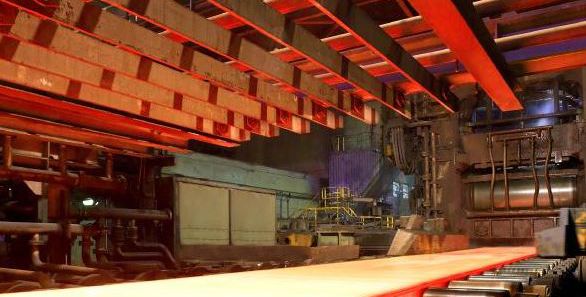
Thyssenkrupp Steel launches intelligent scheduling system
In partnership with German software company Smart Steel Technologies (SST), German steelmaker Thyssenkrupp has successfully launched an intelligent scheduling system designed to enhance automation, efficiency, and product quality in its modernized production network at Duisburg-Bruckhausen.
In partnership with German software company Smart Steel Technologies (SST), German steelmaker Thyssenkrupp has successfully launched an intelligent scheduling system designed to enhance automation, efficiency, and product quality in its modernized production network at Duisburg-Bruckhausen.
A new era in steel production
The new software solution automatically manages scheduling for one of Europe’s most advanced steel plant networks. This network includes:
- continuous casting line No. 4
- hot strip mill No. 4 (fully modernized)
- slab storage facilities
By integrating automation and fast-reactive scheduling, Thyssenkrupp Steel has significantly raised the level of production planning efficiency.
Collaboration with Smart Steel Technologies
The SST Scheduling System was developed and tested in close collaboration before being deployed into production. Project leaders highlighted the project as a “strong impetus for the digital future of the steel industry”.
Smart Steel Technologies will continue to handle both the maintenance and future development of the scheduling platform, ensuring long-term adaptability and technological upgrades.
Thyssenkrupp launches new continuous casting line
Germany’s Thyssenkrupp said it has started trial production of steel slabs at its new continuous casting line No. 4 at its Bruckhausen plant in Duisburg.
Further trial production runs will take place in the coming weeks, the steelmaker said.
The modernization also includes a new fully automated slab storage yard and completely modernized hot strip mill 4 with a new preliminary line and two new walking beam furnaces.
“The aim is to further expand production of high-quality steel grades with the highest standards of strength, dimensional accuracy, and surface quality – particularly for applications in electric mobility, lightweight construction, and the energy sector,” Thyssenkrupp said.
The Bruckhausen upgrade is one of the largest modernization projects in Thyssenkrupp’s history and the central investment package in its 20-30 Strategy. The aim of the project is to make the Duisburg production site more efficient and flexible, and focus on products with higher added value.
Maria Tanatar

Thyssenkrupp starts trial production at new continuous slab caster
Germany-based steelmaker thyssenkrupp has announced that it has reached a significant milestone at its Bruckhausen site in Duisburg, with the successful start of trial operation and casting of the first slabs on the new continuous casting line 4 (SGA 4), marking the largest single investment project in recent decades.
“The new SGA 4 will form part of one of the most modern production networks in the European steel industry. It is a central building block in our strategy to ensure there is a bright future for efficient and sustainable steel production at the Duisburg location. Equipped with high-tech automation and casting technology, the line enables high-precision, flexible and efficient slab production with significantly improved shape accuracy and surface quality. Advantages that will help our customers in their competitive environment,” said Dennis Grimm, thyssenkrupp Steel’s CEO.
The company pointed out that successful production of the first slabs is an important step on the way to taking the new plant complex fully into operation, which will be taking place step by step over the next few weeks. These include the new fully automated slab storage yard and the completely modernized hot strip mill 4 with a new preliminary line and two new walking beam furnaces.
According to thyssenkrupp, the SGA 4 replaces the previous casting rolling line and, together with the new hot strip mill 4, forms an integrated plant network. The aim is to further expand production of high-quality steel grades with the highest standards of strength, dimensional accuracy, and surface quality – particularly for applications in electric mobility, lightweight construction.
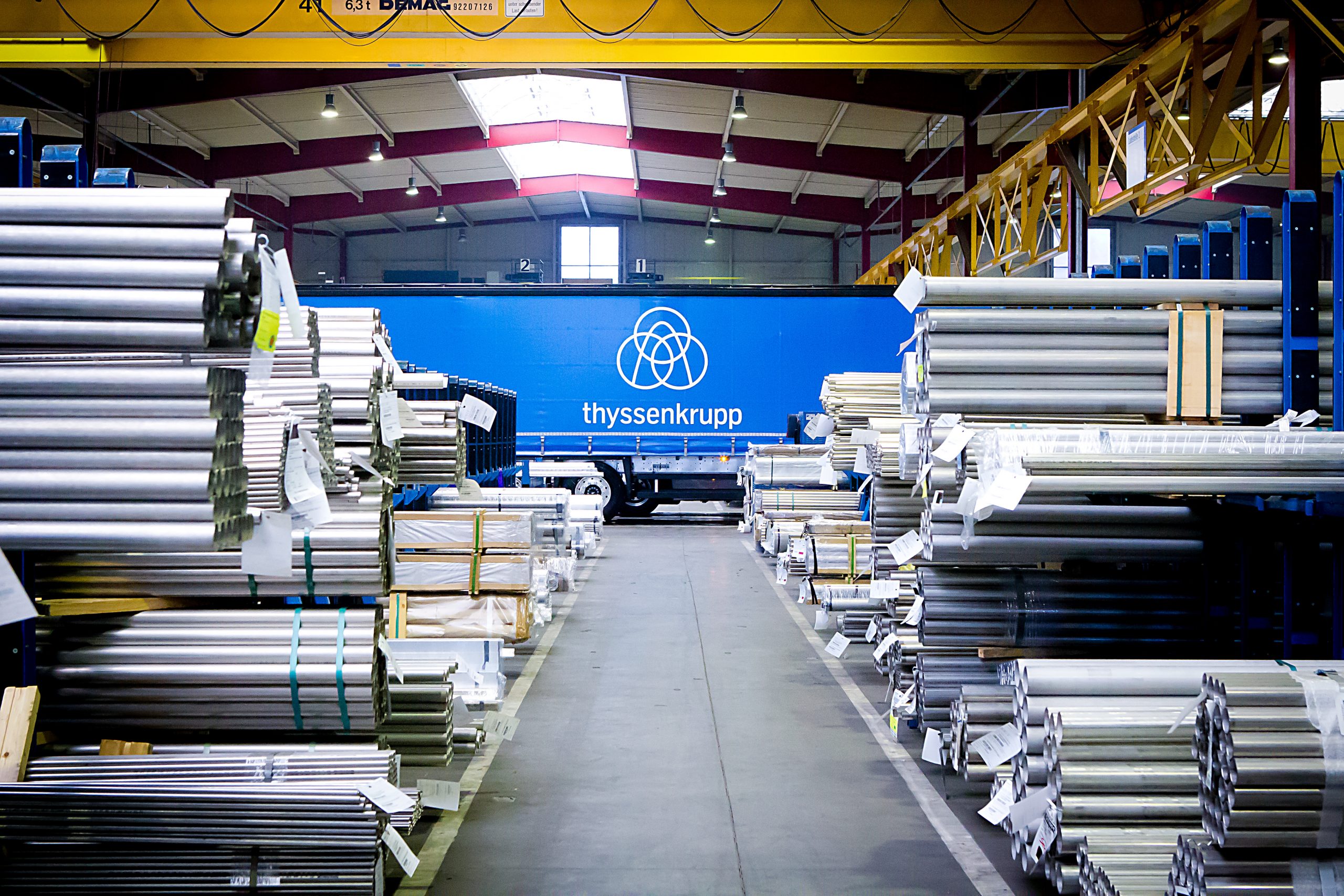
Thyssenkrupp opens Materials Services to investors
German conglomerate thyssenkrupp AG has decided to divest further shareholdings in various divisions. This will also affect thyssenkrupp Materials Services, the division for distribution and trading of steel and other materials, Kallanish notes.
The group’s plan, announced on Monday, is to gradually separate all its business segments and open them up for third-party investment. It has already taken this step by agreeing to turn thyssenkrupp Steel Europe into a 50-50 joint venture with Czech energy company EP Corporate Group (EPCG).
“In the coming years, the Materials Services and Automotive Technology segments are also to be prepared for the capital markets and become independent,” thyssenkrupp writes in an announcement.
Media reports over the weekend already suggested that tk Materials Services would be floated on the stock market, citing sources familiar with the plans. In that case, Germany’s largest steel distribution groups with international locations – the other being Klöckner & Co – would become publicly-listed companies.
This sweeping clean-up move does not come unexpectedly, although thyssenkrupp chief executive Miguel López called Materials Services a core activity just earlier this month. The group divested last year 20% in steelmaking division tk Steel to EPCG, with the intention of ultimately making it a 50-50 joint venture.
Regarding its other divisions, thyssenkrupp says it aims to retain controlling interests once they have been made ready for the capital market. This would basically make thyssenkrupp a holding of diverse stakes in independent companies.
The statement does not mention any potential layoffs. Media reports say that tk plans to cut 500 of 1,000 jobs at its Essen headquarters, plus 1,000 more in diverse administration roles. Policymakers from the North Rhine Westphalia state government were quoted as calling the plans “dramatic”.
Christian Koehl Germany