


EU Flat Steel Summary by Argus Media
Northwest European hot-rolled coil prices edged up over the past week, but there is much uncertainty over real consumption over the rest of the year.
Argus’ daily northwest European HRC index was €632.50/t on 23 August, up €3.25/t from 6 August. In Italy activity is only just restarting after the summer break, with many participants still out on holiday. Argus’ daily Italian HRC index slipped from €631.75/t on 16 August to €630.25/t on 23 August.
One Italian mill has still been offering September delivery coil at €640/t delivered base to some service centres in the past week. This has spooked some, given September is not far away. Shorter lead times make it harder to mills to remain firm on price.
One leading European producer has announced €700/t ex-works to some customers in the last few days, although it is not necessarily a unified offer just yet. Other steelmakers are expected to table higher quotes in response.
However, demand is the big concern.

Service centres in Germany and Italy report low appetite from end-users, with some buyers cutting their volume budgets by 20-30pc. As a result coil stocks are starting to increase with German service centres, despite their destocking attempts amid high financing costs. The stock-to-sales ratio for cold-rolled coil reached three months in July, the highest level since last December.
Even steelmakers concede there has, as of yet, been little sign of any September restock. But they hope the increase announcements spark some apparent demand, prompting a stronger buying cycle.


European mill gives higher HRC offers, others to follow
The producer has been offering October delivery coil at Eur700/mt ex-works Ruhr, making it about Eur50/mt above compared with the previous offers. Buyers, however, have been skeptical about such rise as the seasonal demand recovery in September is unlikely to be strong enough to support such domestic price rise.
“Demand extremely slow,” a German service center said. “Most buyers still wait, what to see what direction the market moves.”
“Demand from construction industry is bad, automotive is uncertain, some hope that demand will remain stable or increase, but there is also a risk that it would drop due to current economic environment,” a distributor said.
Another steelmaker has been reported to offer HRC at Eur640/mt ex-works Ruhr, but the offer might be revoked by the end of the week, sources said.
Market sources estimated tradable values at Eur640-650/mt ex-works Ruhr.
A Northwest European re-roller has been offering HRC at Eur620/mt delivered Benelux.
Platts assessed domestic prices for hot-rolled coil in Northwest Europe unchanged on the day at Eur645/mt ex-works Ruhr on Aug. 23.
Due to scheduled maintenances at some major mills, supply of wide coil had been limited with current offers available for January-rolling material, sources said. As a result, such material has been offered with a Eur25-30/mt premium to commodity coil.
New import offers have been uncompetitive due to high prices — limited offers have been heard at Eur630-640/mt CIF Antwerp. In addition, due to massive volumes of HRC originating from Asia have been either in the European ports or on the way to the EU border.
Market participants estimated that around 500,000 mt of HRC falling under “other countries” and from South Korea origin under safeguard measures will be custom cleared on Oct. 1, filling the fourth quarter quotas. As a result, the buyers have been only showing some interest in the overseas coil with delivery in January.
Author Maria Tanatar, maria.tanatar@
Platts is part of S&P Global Commodity Insights.

EC publishes definitive regulation for transitional CBAM phase
The European Commission published last week the definitive regulation for the implementation of the transitional phase of the new Carbon Border Adjustment Mechanism (CBAM).
The CBAM transitional phase is starting from the beginning of October 2023 and will run until the end of 2025. From 2026 the CBAM will be fully implemented.
The definitive regulation published last week clarified all aspects of the implementation during transition. A CBAM Transitional Registry is being established by the European Commission and further IT tools as well as material for support during the transition are also being developed.
“During the transitional period, importers or indirect customs representatives are to report on the quantity of imported goods, direct and indirect emissions embedded in them, and any carbon price due for those emissions, including carbon prices due for emissions embedded in relevant precursor materials,” the regulation seen by Kallanish explains. “The first report should be submitted by 31 January 2024 in respect of goods imported during the fourth quarter of 2023. The last report should be submitted by 31 January 2026 in respect of goods imported during the fourth quarter of 2025.”
Emanuele Norsa Italy


Thuringia sections mill connects to hydrogen grid
Stahlwerk Thüringen and pipeline network operator Ferngas Netzgesellschaft have announced plans to connect the mill to the regional hydrogen pipeline grid, probably as of 2027. For this purpose, both partners signed a memorandum of understanding, Kallanish hears from the EAF-based sections maker in Unterwellenborn in the German state of Thuringia.
Together with other German transmission system operators, Ferngas last month published a current planning status for a hydrogen core network, laying the basis for what it calls the “hydrogen highways in Germany”. The company is already working with its customers on how the connections to these “highways” can be realised. Regions and customers not directly adjacent to this core network are also taken into consideration, Ferngas emphasises.
Ferngas, based in Schwaig near Nuremberg and Erfurt, plans to create the necessary infrastructure to transport hydrogen to the steel plant. One of the plans is to convert an existing natural gas pipeline of around 70 kilometres from the Erfurt area to Unterwellenborn. In order to be able to carry out the conversion to hydrogen, Ferngas needs permits to be obtained, a feasibility study, and a regulatory framework provided by the government to operate hydrogen pipelines.
Christian Koehl Germany
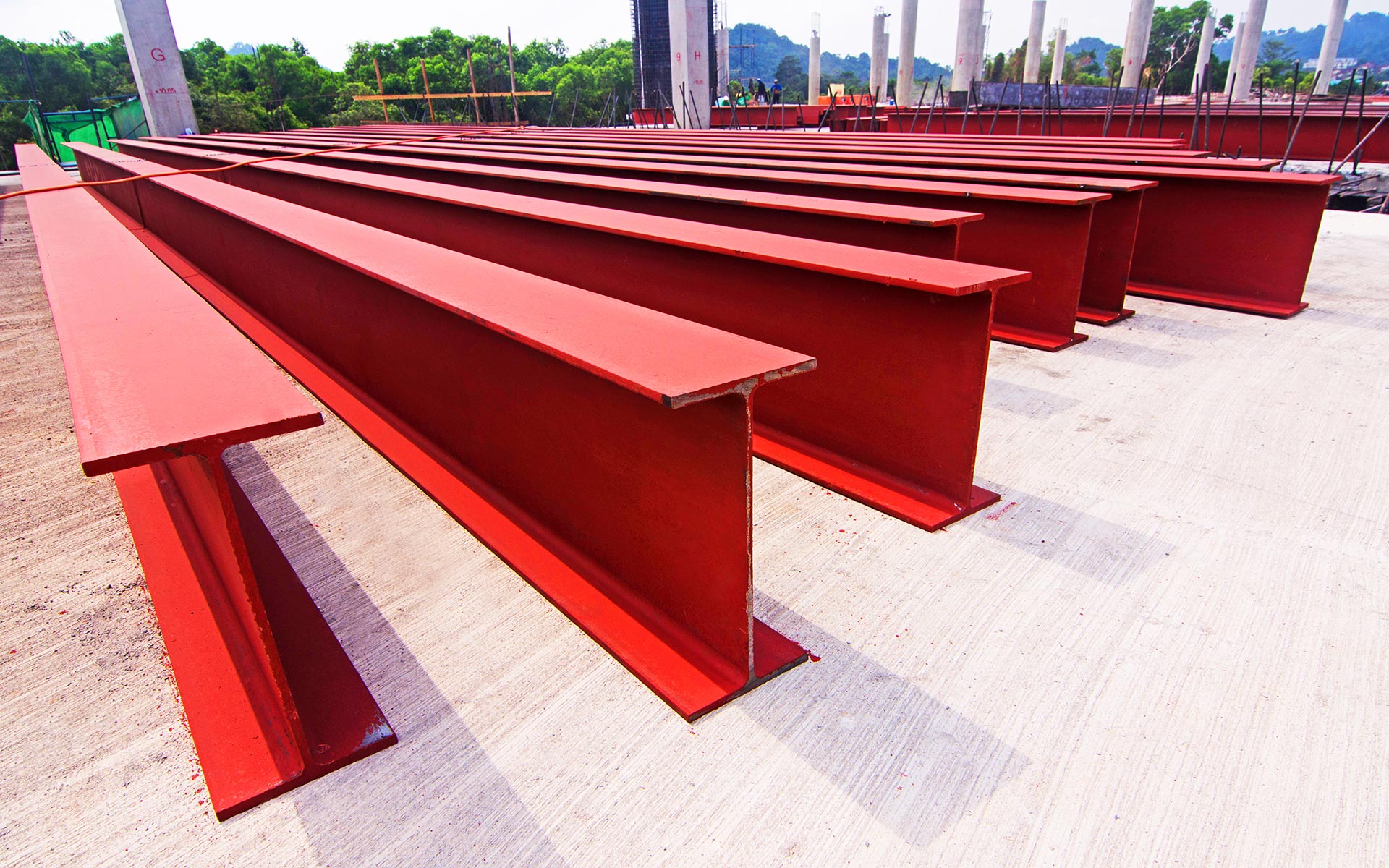
European steel beams market muted amid seasonally slow period
Fastmarkets’ weekly price assessment for steel beams, domestic, delivered Northern Europe, was €740-780 ($805-849) per tonne on Wednesday, unchanged since July 19.
Similarly, Fastmarkets’ weekly price assessment for steel beams, domestic, delivered Southern Europe, was €740-780 per tonne on Wednesday, also unchanged since July 19.
Meanwhile, scrap feedstock costs in Turkey’s bellwether market rose in the past seven days, but trading slowed due to limited steel demand in both the export and domestic markets.
Fastmarkets’ calculation of its daily index for steel scrap HMS 1&2 (80:20 mix) North Europe origin, cfr Turkey, was $365.78 per tonne on Wednesday, up by $4.52 per tonne from $361.26 per tonne on August 16.
Published by: Holly Chant


Steel heavy plate producers in Europe expected to increase offers in September
Italy
Italian steel plate market remained seasonally quiet, with trading close to nil.
“The Italian market is absolutely dead, stockholders as well as end users buy only minimal tonnages for months now. All key market participants are still on vacation. Market restart can only be expected in September,” a trading source in Europe said.
Local producers were expected to return during the week starting August 28 with new offers for October-delivery plate.
The price ideas from most re-rollers in the nation before summer closures was €800 ($870) per tonne EXW, compared with the most recent tradeable values at €750-780 per tonne EXW.
Producers expected demand from long-term projects in the wind industry and construction sector as well as restocking to support an increase.
As a result, Fastmarkets’ weekly price assessment for steel domestic plate, 8-40mm, exw Southern Europe remained at €750-780 ($816-849) per tonne on Wednesday, flat week on week.
Overseas heavy plate offers for October shipment from most Asian suppliers, including South Korea and India, were reported at around €690-700 per tonne CFR.
Northern Europe
The market for heavy plate was also seasonally slow in Northern Europe.
Fastmarkets’ weekly price assessment for steel domestic plate, 8-40mm, exw Northern Europe was €850-860 per tonne on Wednesday, narrowing downward from €850-870 per tonne seven days ago.
One integrated mill in Germany was reportedly active in the market with October rolling offers, with rare deals reported within the range.
Transactions for Italy-origin plate were reported at around €810-820 per tonne CPT — stable week on week.
A re-roller in Denmark was offering S355-grade plate to Germany at €810 per tonne CPT, sources said. The S275 grade plate from the same supplier was offered to Germany at €780 per tonne CPT, sources said.
In Central Europe, sources said a Czech re-roller and an integrated mill from Poland were both offering limited tonnages of commodity grade plate at around €750 per tonne EXW, which would net back to about €810-820 per tonne CPT to Germany.
Published by: Julia Bolotova

Some HRC producers in Europe start pushing offers up; buyers hold back
Several sources told Fastmarkets that a leading European steelmaker had increased its offer for October-rolling HRC to €700 ($762) per tonne ex-works.
According to buyers, this was about €20 per tonne above the previous official offers from the mill and substantially higher than the current workable price in the spot market.
In addition, trading sources pointed out that new offer price “might not be the same across all regions [in Europe].”
“Demand is still quite slow, [there are] few suppliers, buyers active. We will see a bit more clarity on price direction [from Monday August 28],” a distributor in the Benelux region said.
Market sources expected other steelmakers to follow the move and push offer prices to a similar level to €700 per tonne ex-works.
Buyers’ estimates of achievable prices for HRC in Northern Europe were around €630-650 per tonne ex-works, however.
Most buyers considered offer prices at €700 per tonne ex-works too high because of the slow consumption and the inability to pass higher costs downstream.
“We need to increase prices to end users first, but they are actually asking for discounts,” a trading source in Germany said. “And starting from October, the European market will be flooded by cheaper imports.”
One German mill was reported to be sold out for the rest of the year, but this was not widely confirmed by market sources.
Fastmarkets calculated its daily steel hot-rolled coil index domestic, exw Northern Europe at €642.71 ($699.20) per tonne on Wednesday, up by €7.71 per tonne from €635.00 per tonne the previous day.
The index was also up by €5.63 per tonne week on week but down by €13.54 per tonne month on month.
Fastmarkets’ calculation of its corresponding daily steel hot-rolled coil index domestic, exw Italy was €633.33 per tonne on Tuesday, up by €5.83 per tonne from €627.50 per tonne the previous day.
The Italy index was up by €0.83 per tonne week on week, but down by €5.00 per tonne month on month.
Italian producers were still out of the market for seasonal holidays, but they were also expected to push offers up to around €700 per tonne ex-works after their summer break, market participants said.
Sources also said that slow consumption would be the main obstacle to significant HRC price rises in Europe.
“We expect restocking activity to support some limited [HRC] price rises, but [any demand] rebound will not be strong enough to drive massive price rises,” a trading source in Italy said.
Meanwhile, Italian buyers’ estimates of achievable prices were around €630-650 per tonne ex-works.
Import HRC offers to Europe were limited.
The “other countries” quota allocation allowed by the European Union for imports in the third quarter was entirely taken up before the end of July, which meant that the high number of Asia-origin HRC cargoes coming into the EU in August-September would not be customs-cleared until October 1, when the new quarter will start.
South Korea has also fully used its individual third-quarter allocation for imports.
Vietnam, Japan, Taiwan and Egypt were the major HRC suppliers to the EU under the “other countries” category, with Asian suppliers offering the most competitive prices, according to EU market sources.
Currently, those suppliers are able to offer HRC with November-December delivery to Europe, which was not suitable for EU buyers, given the high safeguards-related risks.
Published by: Julia Bolotova

The Birth of Industry 4.0 & Smart Manufacturing: A New Industrial Revolution
Industry 4.0 is the fourth industrial revolution, blending cyber-physical systems, IoT (Internet of Things), cloud computing and AI. It shifts from traditional manufacturing to “smart factories,” enabling self-optimization and decision-making, revolutionizing production efficiency and flexibility.
Key Components of Industry 4.0:
- IoT and Connectivity: Interconnected devices enable real-time data sharing, enhancing control and decision-making.
- Big Data & Analytics: Analysing data from machines leads to predictive maintenance, optimized processes and improved quality.
- AI & Machine Learning: AI-driven decisions optimize production and uncover hidden patterns.
- Additive Manufacturing (3D Printing): 3D printing revolutionizes design and minimizes material waste.
- Robotics & Automation: Smart robots collaborate with humans, enhancing precision and efficiency.
- Cybersecurity: Secure measures protect critical systems from cyber threats in a connected environment.
Benefits of Smart Manufacturing:
- Enhanced Efficiency: Optimized production, reduced downtime, streamlined supply chains.
- Quality Improvement: Real-time monitoring, data analysis, consistent product quality.
- Cost Reduction: Optimized operations, minimized waste, long-term savings.
- Customization & Flexibility: Rapid product adaptation, market responsiveness.
- Sustainability: Improved resource management, energy efficiency, reduced waste.
Impact on the Workforce: Industry 4.0 demands new skills. Human workers need a balance of traditional expertise and digital literacy. Adapting to advanced machines, data interpretation, and dynamic environments is crucial.
Challenges & Future Outlook: Industry 4.0 poses challenges—costs, data privacy, upskilling—but offers enhanced productivity and innovation. It spans sectors, promising boundless innovation.
In conclusion, Industry 4.0 transforms industries for efficiency, innovation and sustainability. Embracing change and technology is key for a connected industrial future.

EU steel emissions to see higher penalties as free allowances get taken away
EU steel production emissions will be gradually penalized further from 2026 through to 2034, which will lead to higher costs for existing steel production and incentivize lower-emissions output.
The penalties based on carbon emissions emitted by key steel and raw materials production processes will increase under the EU’s Emissions Trading System and Carbon Border Adjustment Mechanism.
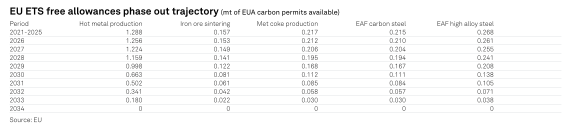
EU steel processes will see the quantity of allocated free emissions allowances reduce in a non-linear trajectory from existing levels to zero by 2034. This will lead to heavier emissions costs for producers forced to buy EU Allowance, or EUA, carbon permits for compliance. The ETS free allowances are to be replaced by the CBAM from 2026 and 2034.
The removal of free EUAs would lead to additional costs for steel producers exceeding benchmark levels. Based on reference values for blast furnace-based steel mills producing met coke and iron ore sinter, higher costs of around Eur144.72/mt of finished steel can be expected, with a reference cost for electric arc furnace carbon steel producers of Eur18.93/mt of steel, using July average EU carbon prices and analysis by S&P Global Commodity Insights.
Related podcast: How is Europe’s steel industry rising to the challenge of energy transition
Steel producers with higher operating emissions will be encouraged to adapt steel processes and raw materials usage, as well as invest, to transition more of the region’s production to steel with lower embedded emissions.
The alternative would be to pay to offset the difference, assuming risks on forward carbon pricing and using any banked EUAs available.
The dilemma may be how to manage the higher costs of alternative raw materials such as iron ore pellets and high-grade ferrous scrap, along with supporting the energy transition to use green hydrogen and renewable power and cut coal-based fuels.
Investment in new plants and processes to achieve low-emissions steelmaking have pushed steel companies such as Salzgitter and Thyssenkrupp to seek government subsidies and grants.
A move to certify emissions in steel production and mining, logistics and processing has allowed carbon-accounted steel markets to develop in the past few years.
Europe has led the interest in carbon-accounted steel and industry decarbonization, followed by Canada and the US and some markets in Asia.
The CBAM’s effect on global seaborne steel trade is anticipated to further deepen the interest in carbon-accounted steel production and marketing.
Steel end-users and steel processing and distribution groups are looking to adapt steel supplies for consumers, and to meet new procurement targets and standards. This is also pushing for more transparency around steel’s carbon intensities, with interest led by industry and government bodies.
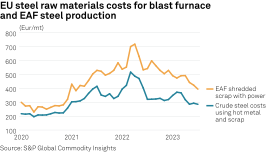
Steel producers are currently obliged by the EU to report and pay for emissions from installations in the region based on the defined categories of hot metal production, iron ore sintering, met coke production and two types of electric arc furnace steel production.
Scope 3 emissions for steelmakers, emitted from raw materials mining, processing and logistics, are not included under the ETS reporting scheme.
The incoming CBAM will be applied for steel, pig iron and direct-reduced iron product imports, among other markets such as for aluminum, cement, hydrogen and fertilizers.
The CBAM aims to require the same carbon emissions cost being paid for imports as relevant to EU steel and other products, ensuring a level playing field and complying with World Trade Organization rules. The mechanism will take into account EU ETS and free allowances levels for applicable markets as the frameworks converge, in relation to certified carbon emissions for import products.
CBAM will develop reference emissions values for product categories where reported carbon intensity data is not available prior to the mechanism’s launch on Jan. 1, 2026.
Importers to the EU will buy CBAM certificates to comply with any outstanding product emissions costs required. CBAM certificates will price based on weekly EU Allowance pricing.
The CBAM will enter into application in its transitional phase on Oct. 1, with the first reporting period for importers ending Jan. 31, 2024.
Reporting obligations and information sought from EU importers of CBAM goods, as well as a provisional methodology for calculating embedded emissions released during the production process of CBAM-related imports will be specified further in an Implementing Regulation. This legislation will be adopted by the European Commission after consulting the CBAM Committee.
The CBAM and ETS will apply charges with adjustments available for steel production processes through to 2034, which mean steel imports are expected initially to pay a similar carbon-based charge. CBAM is not expected to include upstream Scope 3 emissions, emitted from mining and processing, logistics and transportation of steel raw materials.
Imported flat and long steels produced with ferrous scrap and direct-reduced iron may compete with more emissions-intensive steel in certain grades and segments.
European steel markets and user groups are increasingly differentiating on pricing and demand between steel with carbon emissions data reported for Scope 1, 2 and 3, and whether direct emissions cuts or mass balance-based calculated emissions reductions are involved.
A variation between the ETS and steel production emissions compliance, and a new focus on product-level carbon intensity with upstream emissions is seen. This considers emissions in the entire production chain and any differences between steel imports and EU origin products.
EU safeguards already place quotas on steel imports by origin. CBAM is designed to help ensure imports are on a level playing field with EU products and emissions costs, and support investments in industry decarbonization.
The reduction in the steel sector’s free EUAs may lead to higher compliance costs for steel producers if they cannot decarbonize at the same rate, as companies fund high capital greenfield plants.

Chinese steel traders warned of bankruptcy risk
Chinese steel traders face greater operational challenges during the downturn of the steel market, and large fluctuations in the market may trigger business crises.
Kallanish has learned from public information on the National Enterprise Bankruptcy Information Disclosure Platform that more than 30 steel traders have entered bankruptcy proceedings since 1 June. Several provincial steel associations have issued warnings to their member companies to avoid cooperation with partners who are at risk of bankruptcy.
A Shanghai-based trader confirms to Kallanish that “the operating pressure of steel traders this year is indeed greater than in the past few years. In particular, under the influence of the real estate downturn, the sales of traders who mainly sell building materials have been affected and the competition in sales has become more intense.” However, he denies rumours of mass closures of steel trading companies.
The sharp fluctuations in the steel industry have caused some traders with low awareness of risk control to suffer unaffodable losses. For example, some traders maintained strong confidence in the market and took long stock positions when prices rose, but a sudden market turnaround forced them to sell at lower prices, leading to unexpected losses. In addition, some traders sold in advance without actually holding the products, but the sudden surge in prices made them unable to continue trading at the settled price, so they chose to default and to not deliver products. That leads to increased chaos in the steel trade market.
“As a service provider in the steel industry, traders need to provide more additional services to stand out from the fierce competition,” comments a person from a steel mill. “More reliable sources of steel supply, competitive prices and excellent financing capabilities are all important factors that can determine a trader’s business performance,” he adds.