


Günther + Schramm invests in tailor-made chamfering machine
Günther + Schramm has put a new beveling machine into operation in Königbronn.
The exclusive system offers the possibility of machining on both sides and thus enables a comprehensive manufacturing process.
The new chamfering machine in Günther + Schramm’s machine portfolio impresses the company with its efficiency. While the old machine could only machine certain lengths and only on one side, the machining process of the new machine is more comprehensive. It can machine materials from 50 to 3,100 millimeters in length and with a diameter of 10 to 130 millimeters from both sides at the same time.
The chamfering machine is not available in this form on the market. The Wenaroll company developed it specifically for and with Günther + Schramm. “Due to my previous successful collaboration with Wenaroll, I decided to make an inquiry about the chamfering machine for this project,” explains Volker Walz, operations manager at Günther + Schramm. Thanks to the “in-depth expertise in mechanical engineering,” Wenaroll was able to adapt the machine to the specific needs.
Read more: stahleisen.de


KASTO modern storage system for greater efficiency
KASTO UNITOWER offers significant advantages in terms of space, time and handling.
The system can be designed as a one- or two-sided warehouse, whereby the single tower can be subsequently expanded to a double tower.
UNITOWER is suitable for rod materials and profiles as well as sheets, plates or boxes. Island solutions or customer-specific designs are also possible.
Read more: kasto.com

Prices for Polish rebar inch lower amid poor trading
Fastmarkets’ weekly assessment for steel reinforcing bar (rebar), domestic, cpt Poland — which has been falling since July 19 — reached 2,600-2,640 zloty ($669-679) per tonne on Friday, down by 10-20 zloty per tonne from 2,610-2,660 zloty per tonne on September 6.
A local producer offered rebar to many Polish steel traders at 2,600 zloty per tonne CPT, sources told Fastmarkets. This urged other mills in the country to adjust their offers to similar price levels.
Buyers estimated the tradeable market level at 2,600-2,640 zloty per tonne CPT, depending on tonnages.
Lower scrap prices on the Polish market were also among the reasons for the decreasing rebar prices, Fastmarkets understands.
Scrap prices in September contracts decreased by 90-110 zloty per tonne, a distributor source said.
“Consumers in Poland are aware of these developments, and when the local mills try to offer higher prices, they do not accept these offers,” the source added. “No one is buying huge volumes now due to the decreasing rebar prices.”
Competitive imports also put additional pressure on domestic prices.
German material was heard offered to Poland at €610-615 ($673-679) per tonne CPT. For deliveries close to the border with Germany, the price could drop to €605 per tonne CPT, sources told Fastmarkets.
Offers for November-delivery rebar from Ukraine were heard recently at €570 per tonne DAP border for material with 10-32 mm diameter, which nets back to €600 per tonne CPT.
According to a second distributor source, slow demand, combined with strong competition from imports, will continue to put downward pressure on Polish rebar prices.


Northern Europe HRC prices hit lowest level since December 2020
The downtrend has persisted in the European HRC market since the beginning of September.
Trading remained very slow, with distributors and steel service centers having no need to restock due to continued weak end-user demand, Fastmarkets heard. Besides, sources said they were expecting prices to sink deeper and therefore preferred to hold back from bookings.
“Lead times from mills are very short; you can get [HRC] in under four weeks in some cases,” a buyer source in Germany said.
Offers in the country were reported at €570-580 ($629-640) per tonne ex-works, while in the Benelux area, one integrated mill was sticking to €600 per tonne ex-works.
Rare transactions were heard done at €560-570 per tonne ex-works in Northern Europe.
Some suppliers were undercutting that mark, but for large tonnages, Fastmarkets heard.
Notably, several sources reported transactions done at €530-540 per tonne ex-works from one integrated supplier for large volumes of HRC, but they pointed out that those were rather “special deals with special customers,” and that such low prices were not widely available in the spot market.
As a result, Fastmarkets calculated its daily steel hot-rolled coil index domestic, exw Northern Europe at €566.25 per tonne on Friday, down by €4.81 per tonne from €571.06 per tonne on Tuesday September 12.
This is the lowest mark since December 2020.
The index was down by €14.50 per tonne week on week and by €50.00 per tonne month on month.
Meanwhile, in Southern Europe, Fastmarkets calculated its corresponding daily steel hot-rolled coil index domestic, exw Italy at €570.00 per tonne on Friday, down by €0.63 per tonne from €570.63 per tonne on the previous day.
The Italian index was down by €10.24 per tonne week on week and by €45.00 per tonne month on month.
HRC offer prices from domestic suppliers were heard around €585-590 per tonne delivered, which nets back to about €575-580 per tonne ex-works.
Lead times were about four to six weeks, sources said.
Bids for such material were reported at €550-560 per tonne ex-works, but domestic suppliers were heard to be rejecting bids on the lower end of the range.
Trading was also quiet in Italy. Expectations have been bearish due to poor end-user demand, oversupply and the price downtrend in raw materials, Fastmarkets understands.
Meanwhile, the import HRC market was also slow because of a small gap between import and domestic prices, as well as trade defense measures in the European Union.
Turkish HRC was offered to Italy at €550 per tonne CFR, including the anti-dumping duty, sources said.
Asia-origin coil was reportedly on offer at €540-550 per tonne CFR.
HRC from India was heard offered to Italy at $600-620 per tonne CFR, depending on the supplier.
Most overseas suppliers were reportedly offering shipment on end-October to early November, which means January arrival.

Italian rebar producers seek increases
Italian rebar producers are looking to implement price increases of €20-30/tonne ($22.1-33.2) in an effort to halt the price decline and regain some lost margins. Increased costs of production, especially in terms of energy, have put significant pressure on their financials.
According to buyers who spoke to Kallanish, the outlook for the end of the year remains pessimistic, with ongoing low downstream orders and reduced consumption. Buyers have no confidence that the latest hike attempt will be sustained. The distribution sector is adopting a cautious approach. Sources indicate prices for domestic rebar have remained steady in comparison to last month, but a price decline is expected.
Transaction values in the domestic market last week ranged from €290-300/t base ex-works, or €550-560/t ex-works effective. This includes an average of €260/t for additional size extras. Domestic mesh is at around €400/t, excluding transportation costs.
There is an additional charge of €300/t for size extras. Mills are requesting €320-330/t ex-works for rebar. Some steelmakers temporarily halted sales last week due to uncertainty surrounding pricing decisions. The market continues to underperform, with buyers reporting an influx of much cheaper long products from Turkey.
Natalia Capra France


Stegra bets on Sines, Portugal
Swedish greenfield venture H2 Green Steel is changing its name to Stegra, Kallanish learns. The company also says its prospective project in Portugal has received power allocation.
H2 Green Steel was launched in 2021 to build the world’s first large-scale green steel plant, with start of production scheduled in 2026. “The team continues to prove that it is possible to do more and to change things fast, also in an industry that has for a long time been considered difficult to decarbonise. As we continue this journey, we leave our more descriptive project name behind, and take on the name Stegra, which reflects our long-term ambitions,” says company chief executive Henrik Henriksson.
“Stegra is a Swedish word which means ‘to elevate’,” Henriksson explains. “It is a constant reminder of the company’s purpose and honours our Swedish roots and where it all began in Boden (northern Sweden).”
Stegra also notes it has a “solid funnel of potential projects” outside of Sweden that are being explored as part of a longer-term outlook. It is looking at locations which offer abundant access to renewable electricity and strong grid connections. Locations under consideration include Portugal, Canada and Brazil.
“Presently, a project in Portugal, where the site selection has been made and land reserved near Sines, is the most advanced. Notification on substantial allocation of the power needed has been made to Stegra and our local value chain partnerships continue to evolve,” says Henriksson.
The firm said in June it was looking at Portugal as a viable location for HBI production (see Kallanish passim).
Christian Koehl Germany
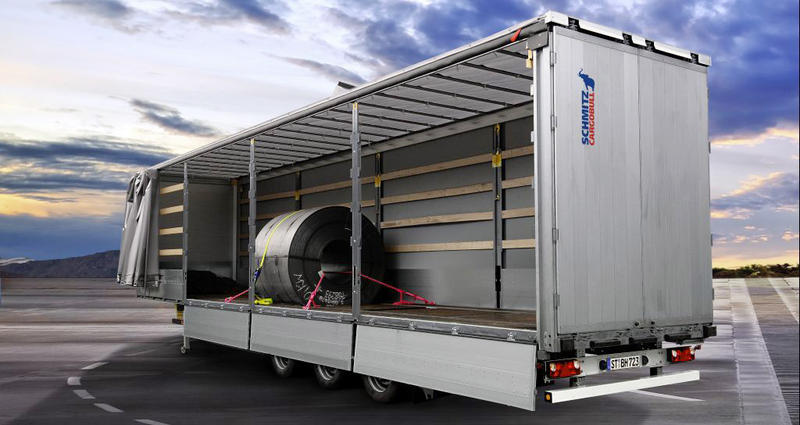
Western European steel truck transporters vie for orders
Haulage companies specialising in steel transportation in western European countries currently have ample capacities to offer, but are struggling to lower their prices to attract jobs, Kallanish learns from market participants.
“The situation is completely the other way round now than it was one year ago,” says a steel service centre manager in the Benelux. Back then, capacities and personnel, especially drivers, were hard to come by.
Things turned worse last December, when in Germany the road toll increased considerably by means of a CO₂-surcharge. Günther+Schramm (G+S), a distributor of special bar qualities, wrote to customers at the beginning of this year of an “unprecedented increase”, meaning a doubling of costs.
A truck with a permissible total weight of 18 tonnes paid €0.18 ($0.2) per km before the surcharge, which then increased the toll by €0.16 cents.
For a company with the portfolio of G+S, this meant an increase of transport costs per order by 5-10%, it says. It notes that small and medium-sized transport companies already had to bring up their fees over recent years to cover costs.
Capacities in recent years were short not because of a lack of trucks, but because of a lack of drivers. Many drivers came from Poland, and then went back there during the Covid period, partly also because Polish wages had risen to match German wages.
G+S noted that haulers specialising in steel would be particularly hard hit, and their customers with them. “If some of them [haulers] disappear from the market on account of the extra costs, the steel processing sector will be facing big problems,” it wrote.
Rebar bender group Atterer told customers over the summer that the increased toll means the standard price per load of €90 is now already exhausted after a distance 40km.
Despite those concerns, the shortage of capacities is no longer an issue, now that order activity all along the steel value chain is weak.
A manager at a Frankfurt-based rebar distributor agrees with the observation of the Benelux manager, and says that he recently received offers from that region. Not without humour, he states that Luxembourg is especially rich with steel transportation vehicles: “Sometimes you get the impression that every other farm has a trailer in its yard,” he quips.
However, he does not expect that prices for transport will drop much. “I cannot see the haulers’ prices are sinking; they need to cover pretty high costs themselves,” he concludes.
Christian Koehl Germany
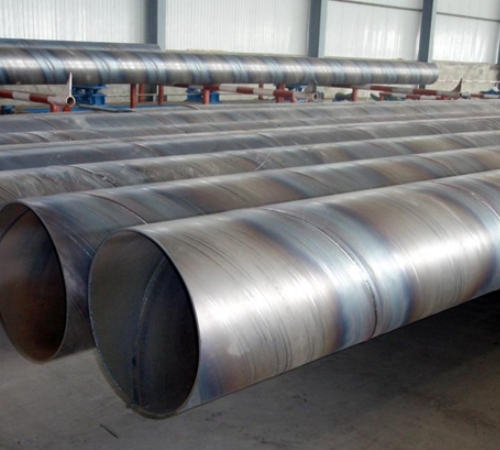
Turkey’s Borusan Pipe commissions Romania service centre
Borusan Pipe, a major Turkish steel pipe producer, has commissioned its second-largest investment in Europe, in Ploieşti, southern Romania.
At an investment of €15 million ($16.6m according to 13 September exchange rate), the facility, for which construction work began in March 2023, will carry out cutting and finishing operations of cylinder tubes, reserve tubes, and monotubes for special use in shock absorbers. The unit, which will produce using technologies such as short-cutting, brushing, and in-line washing, will serve shock absorber manufacturers in the automotive supply chain.
The Romanian government supported Borusan Pipe’s investment with state aid of €5.83m, notes Kallanish.
The Romania service centre is expected to contribute $8m to the company’s total turnover in the second half of the year as it gradually begins operations.
“Another significant step towards our goal of being a local player in international markets is the inauguration of our new service centre in Romania,” says Borusan Pipe executive vice present Ali Okyay. “Being a regional player in Europe, we will be near our clients and offer the required supply chain flexibility. Through this investment, we will get closer to our goal of becoming the continent’s pre-eminent integrative solution provider and producer of steel pipes, particularly in eastern Europe.”
Burcak Alpman Turkey

Interpipe tests rail deliveries via Poland
Ukraine’s Interpipe is testing a new logistics route for delivering products to EU countries using rail and road transport, in particular through a terminal in Poland, the company confirms to Kallanish.
“Interpipe is currently carrying out test shipments of pipes by rail cars to a terminal with a wide-gauge rail track in the polish city of Chelm,” the company’s procurement and logistics director, Oleksiy Yanovsky, tells Ukraine’s Centre for Transport Strategies (CFTS). “The products are then reloaded into trucks and delivered to their final destination in Europe.”
Interpipe has also very carefully studied the possibility of using the Danube for deliveries to EU countries. “However, unfortunately, the current level of service does not allow it to compete with direct road transport either from an economic point of view or from the point of view of transit time,” he adds.
“This method is relatively economically justified, given the current level of rates for cars, but has a number of disadvantages, in particular, the issue of combating rust on the surface of pipes arises,” Yanovsky claims. “However, it is unlikely this method of delivery will be acceptable for railway products due to the extreme sensitivity of these products in storage and transportation conditions. For railway wheels and wheel pairs, direct road transport will probably remain the most appropriate method of delivery to customers in Europe.”
Earlier, Interpipe said it was trying to reach pre-war production levels through the development of its Interpipe Niko Tube product range (see Kallanish passim). Pre-war output was some 70,000 tonnes/month compared to 50,000 t/m today.
Interpipe produced almost 43,500t of rail wheels in January-June, a significant on-year increase (see Kallanish passim).
In 2023, it supplied 387,000t of pipe and 95,000t of railway products.
Svetoslav Abrossimov Bulgaria