

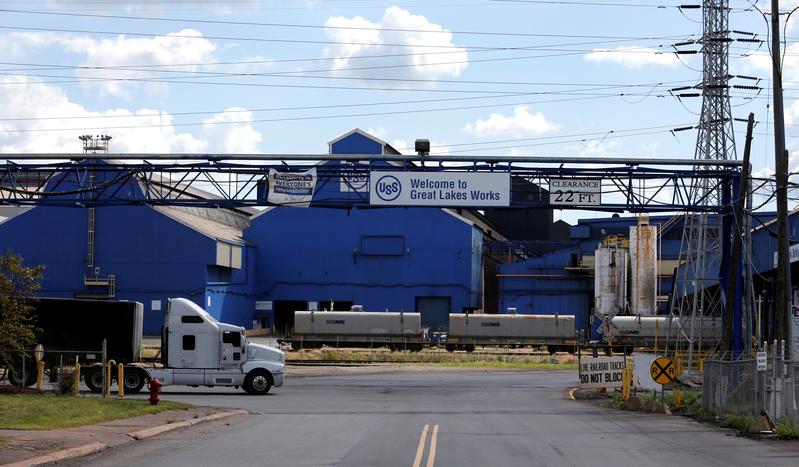
Nippon reapplies for US assessment of USS acquisition
Nippon Steel has reapplied to the US government for another review of its US Steel (USS) acquisition plan, Kallanish learns.
The move may push back the review deadline at the Committee on Foreign Investment in the United States (CFIUS) by 90 days, into December. Therefore, the decision would arrive after the 5 November presidential election.
Multiple US lawmakers, including President Joe Biden, former president Donald Trump and Democratic presidential nominee Kamala Harris, have voiced opposition to the deal (see Kallanish passim).
Last week, the Biden administration announced it would allow Nippon to refile with the CFIUS, in order to give the committee more time to scrutinise the specific details of the proposed deal (see Kallanish passim).
CFIUS issued a statement listing concerns for US national interests should the deal be allowed to transpire, prompting stronger reactions from Nippon, including in-person meetings and a written rebuttal to the CFIUS concerns (see Kallanish passim).
On 24 September, Nippon also announced that it is selling its entire portion of Posco Holdings, a South Korean steelmaker. The US has been very critical of Nippon’s role in contesting antidumping duties placed on foreign steel in the US.
Nippons’ move to break from its Posco involvement may bode well with the CFIUS given that the US has been actively pursuing action against multiple South Korean producers it finds guilty of selling steel in the US below market value (see Kallanish passim). Nippon says selling its shares of Posco allows it to “improve asset efficiency.”
Jake Sullivan, the US national security adviser, told reporters at an event on Saturday that Biden would allow the review process to run its course (see Kallanish passim).
Kristen DiLandro USA


European service centres bear energy transition burden: conference
The energy transition is not a challenge confined to mills but also an issue for steel service centre operation, says a representative of that sector.
Speaking at the MBI Infosource Stahltag event in Frankfurt on Wednesday, Sebastian Schulze of German distribution group Knauf Interfer gave an idea of new demands on service centres. “The old world of service centres was easy to oversee,” being confined to stockholding, cutting/slitting, and providing a mill’s product specification documentation, he said.
“We used to care about the grade of a product and its size measures. Now, we have to include its carbon footprint, and explain that to the customers. And, actually, we have to understand it ourselves,” Kallanish heard him say at the conference.
“The traditional product certificate from the mill is not sufficient any more, as customers increasingly ask for the content of CO2 emissions,” he noted. “Up to a year ago, we did not have that, and now the question for us is how we handle it in a systematic way.”
“The idea of service will change quite a bit, as we will have to explain a change in pricing to the customers,” Schulze continued. He cautioned that a new generation of products is coming, with surcharges that vary widely, based on a variety of methods used to calculate their carbon footprint.
Schulze said customers’ knowledge about footprints varies widely. It is relatively well-established among big customers, such as carmakers, that often have their own roadmap, but in other sectors it can be next to zero. This is a result of political guidelines for each sector, dictating whether customers have needed to worry about it so far or not, he explained. For construction, for example, carbon emission requirements will soon become more apparent, he noted.
He perceives awareness has increased relatively steeply from last year to now, and assesses the share of customers with an awareness of footprint at around 25%.
Christian Koehl Germany
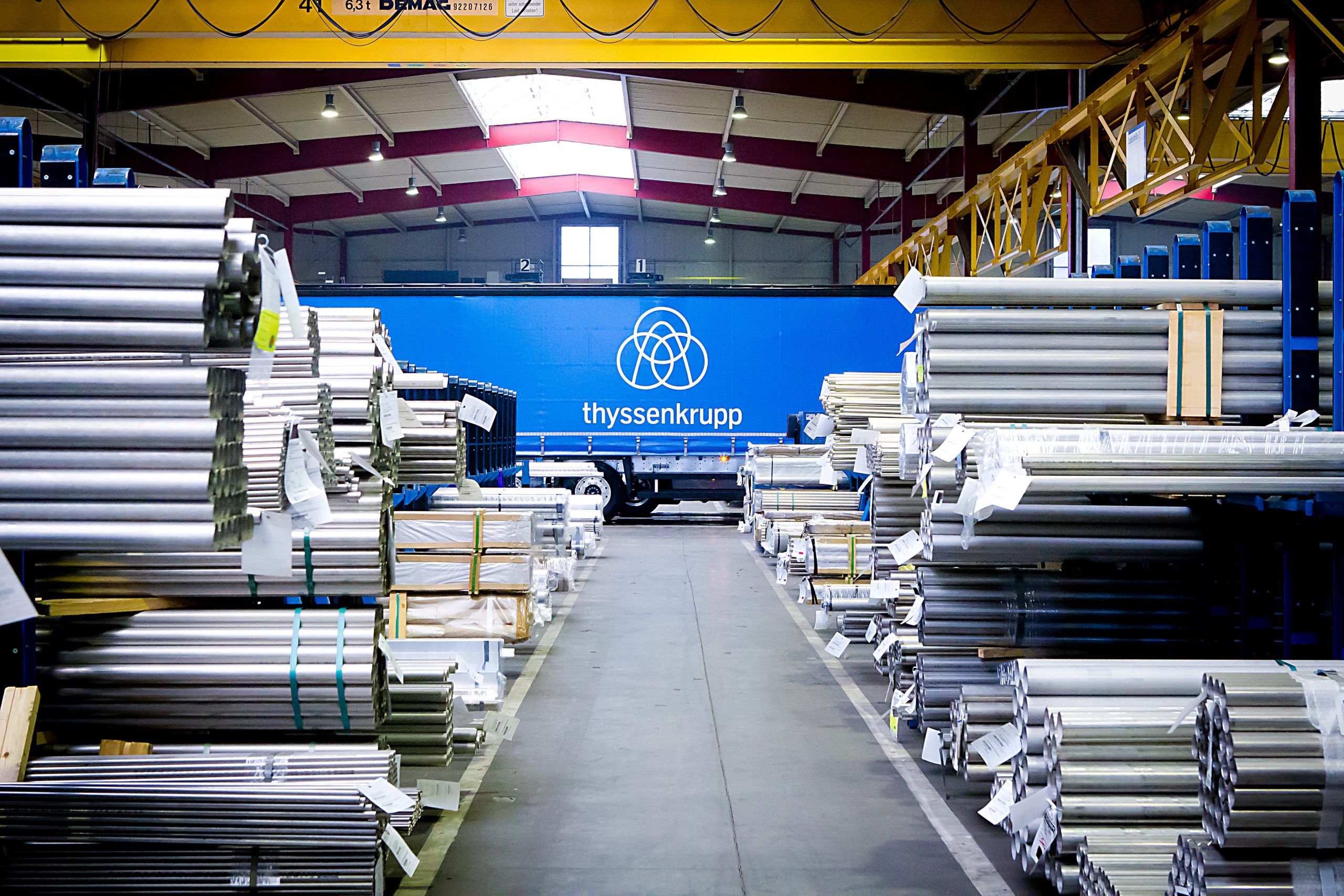
Network Steel mulls thyssenkrupp Galmed plant acquisition
ThyssenKrupp is in talks to sell its Galmed (FBA9) plant in Sagunto, Valencia, to Spanish coil processing company Network Steel (NS), Kallanish notes. The facility can produce 450,000 tonnes/year of hot-dip galvanized coil. The material is mainly supplied to the automotive sector.
Spanish government and trade union representatives have confirmed the negotiations.
Thyssenkrupp could not be reached for comment, while NS indicated in a brief note that it is considering multiple market possibilities for growing its business but did not comment on Galmed.
The mayor of Sagunto, Darío Moreno, says the negotiations are an initiative led by Spain’s secretary of state for industry, Rebeca Torró, and the Sagunto administration is supporting the process. “We must respect the deadlines of the companies in the negotiations while institutions try to provide as much certainty as possible,” Moreno comments.
The Valencian councillor for industry, Nuria Montes, confirmed on Tuesday that the continuity of the FBA9 plant is a priority. Local government has made itself available to the current management and the possible future buyer to facilitate the transaction and prolong business activity, he added.
“We have been informed of all operations and movements, and we have held meetings precisely to ensure that the sale of this factory can be done successfully,” Montes said in a statement.
According to sources, thyssenkrupp and NS are expected to reach an agreement over the FBA9 plant before the end of the year.
The German steelmaker closed the facility in November 2023 due to the significant worsening of the European automobile market and the consequent reduction in demand for galvanized steel products in Spain and southern Europe. Thyssenkrupp carried out a detailed analysis of the profitability of its ten lines and the result showed the closure of FBA9 was inevitable from an economic standpoint.
The consultation process is yet to begin for the application of the Employment Regulation File (ERE) in relation to the plant’s closure. Negotiations with unions were scheduled for 20 September.
The Spanish unit halted production and laid off 165 workers in 2013 due to low market demand. The plant reopened three years later after massive protests and political pressure.
Todor Kirkov Bulgaria

EU charges Spanish companies with steel duty evasion
Two Spanish companies and their managers have been charged with allegedly evading anti-dumping duties when importing steel sheet from China into the EU between 2017 and 2018.
The European Public Prosecutor’s Office (EPPO) in Madrid is seeking a prison sentence of more than eight years and fines of over €25 million in an indictment filed on 17 September, Kallanish notes. The names of the charged firms and five executives have not been disclosed.
“The imported steel sheets, being finished products, are subject to the payment of the extra customs duties introduced by the EU’s 2019 new anti-dumping regulation,” EPPO explains. “However, the defendants declared the imported material as slabs, which are intermediate or semi-finished iron or steel products with a lower level of processing and rolling than sheets. By doing so, they misled the customs authorities and evaded the payment of the corresponding duties.”
According to the Prosecutor’s Office, the damage caused to the EU as a result of the tax evasion is €9.93 million ($11.1m). To ensure the defendants can meet their financial liabilities, over 30 properties linked to them were seized as a precautionary measure.
The EPPO is the independent public prosecution office of the EU.
Todor Kirkov Bulgaria

European steel HRC prices keep slipping on poor market fundamentals
“[HRC] prices are deteriorating day by day because of low demand and high free capacity around the globe,” a buyer in Northern Europe said. “The automotive industry in Europe is in collapse, with very poor prospects for the near future.”
As a result, trading remained very poor across the European HRC market.
European producer sources claimed that they were already “in the red” – meaning that they were selling HRC at prices close to or even below the costs of production.
Transaction prices for HRC in Northern Europe were mainly reported at €540-550 ($602-613) per tonne ex-works, market sources said.
Official offers were rare, because suppliers preferred to work “case by case.”
One mill source reported offers at €570-580 per tonne ex-works, but buyer sources found that price no longer workable.
“[A price of] €540-550 [per tonne ex-works] is what we might accept now, unfortunately,” a supplier source in the region said.
“Steel mills have to learn the hard way: there is no chance to improve [HRC] prices because there is just no demand,” a German buyer said.
As a result, Fastmarkets’ steel hot-rolled coil index, domestic, exw Northern Europe, was €549.88 ($612.60) per tonne on September 25, down by €2.83 per tonne from €552.71 per tonne the previous day.
The index was down by €10.12 per tonne week on week and by €51.95 per tonne month on month.
Some market sources suggested that HRC prices might hit rock-bottom in October-November, and that, after closing their order books for 2024, European mills might try to increase prices for the first quarter of 2025.
No official announcements of such decisions have been made, however.
There were no signs of recovery in end-user demand, so market sources suggested that achieving any price increase would be difficult.
“The market is really very down, and there are no signs of improvement,” a buyer in the Benelux area said. “The Chinese National Bank has announced a number of actions to support that country’s economy and bring it back to a desired growth rate of 5%. Maybe it will help the global steel situation [if that is achieved] but it will take time.”
In Southern Europe, meanwhile, Fastmarkets’ daily steel hot-rolled coil index, domestic, exw Italy, was €544.38 per tonne on Wednesday, down by €8.12 per tonne from €552.50 per tonne on Tuesday.
The Italian index was also down by €15.62 per tonne week on week and by €55.62 per tonne month on month.
On Wednesday, sources reported offers of HRC from a domestic mill at €560 per tonne delivered, with lead times of late October to early November. This would be equivalent to €550 per tonne ex-works.
Estimates of tradeable values from buyer sources were heard at €530-550 per tonne ex-works.
Market sources said that, for large tonnages of 1,000 tonnes or more, estimates were reported at €530 per tonne delivered (€520 per tonne ex-works).
But trading in Italy was muted and bookings were rare, and mainly for small tonnages, because buyers were holding back and expecting prices to fall further.
“Lack of demand and the disturbing situation in the automotive industry are key concerns,” a buyer in Italy said.
In the secondary market, 3-6mm hot-rolled sheet was offered and traded at €650-660 per tonne CPT.
Meanwhile, import HRC offers from Asia were heard at €525-535 per tonne CFR to Italy, for shipment in end-October or November.
Bids for such material were reported at €480-510 per tonne CFR, but no offers at that level were reported to be available in the market.
Trade safeguard measures and a new European anti-dumping investigation into HRC from Vietnam, Taiwan, Japan and Egypt were limiting the interest in imports, especially considering the small gap to domestic prices.
On September 24, the European Commission announced that it will start to register all imports of products falling under anti-dumping or anti-subsidy investigations, including continuing investigations where provisional determinations have not yet been made.
“The registration will be carried out by Member-State customs authorities,” a note on the Commission’s website said, “as directed by the European Commission via individual Implementing Regulations.”
Published by: Julia Bolotova


EU introduces registration of all imports under investigation
The European Commission has decided to register all imports of products under anti-dumping or anti-subsidy investigations, including ongoing investigations. This will enable the retroactive collection of anti-dumping and countervailing duties if the legal conditions are met.
Reports suggest that the Commission may implement retroactive duties in its anti-dumping case, launched last month, against hot rolled coil imports from Egypt, India, Japan and Vietnam, Kallanish notes.
Retroactive collection is not automatic. That decision is taken only at the definitive stage of each investigation, the Commission points out.
The registration of imports is also designed to prevent sharp increases in imports of products under investigation ahead of the imposition of measures. It will simplify procedures and alleviate the burden placed on industry, while also providing the Commission with precise and accurate information about the source and quantities of imports of a product under investigation, as well as broader market developments, the Commission observes.
Until now, imports were usually registered only upon a justified request from EU industry. The latest decision is aimed at stepping up the use of trade defence instruments.
The registration will be carried out by Member-State customs authorities as directed by the European Commission via individual Implementing Regulations.
In an unprecedented move, the EU initiated the HRC AD case despite all four origins already being subject to EU safeguard quotas, with Egypt, Japan and Vietnam effectively having their quotas restricted only a month earlier. EU steel industry representatives are concerned about the survival of production in the bloc amid high import penetration and uncompetitive production costs.
Adam Smith Poland