


Italian steel output falls 8.4% in September
Italian crude steel production in September declined 8.4% on the year to 1.8 million mt, according to data released by Italian steel federation Federacciai Oct. 17.
The lower production was attributed to a decrease from Acciaierie d’Italia, the country’s second-largest steel producer, and weak demand due to economic turmoil in the region.
ADI recently restarted its 2 million mt/year BF1 unit as planned, increasing production with a target of 1.9 million-2 million mt of crude steel by the end of 2024.
Italian domestic mill production fell 5.6% year on year to 15.1 million mt in the first nine months of 2024.
Long products fell 5.4% to 1.1 million mt and flat products declined 9.1% to 755,000 mt in September. ADI’s largest decline in output was for flat steel products.
In January-September, long production rose 0.5% to 8.8 million mt and flat production dropped 10.3% to 6.4 million mt.
In 2023, the Italian steel industry produced 21.1 million mt of steel, a reduction of 2.5% on the year.
Antonio Gozzi, the head of Federacciai, previously told S&P Global Commodity Insights he expects 2024 production will be slightly less than in 2023.
Platts, part of Commodity Insights, assessed HRC Italy at Eur535/mt ex-works Sept. 30, down from Eur590/mt Sept. 2. Platts assessed HRC Italy at Eur550/mt ex-works Oct. 16, up Eur5/mt on the day.


EU HRC prices remain stable amid low market activity
Domestic European hot-rolled coil prices remained stable Oct. 17, as low market activity, driven by weak demand from the automotive and construction sectors, kept demand at low levels in the European coil market.
“There is no market” an Italy-based trader said when asked about sentiment in the European flat steel market. “The automotive and construction markets are dead.” This has led some buyers to speculate on how long higher European offer levels can last in an oversupplied market with low levels of real demand.
European mills face a challenging situation as buyers remain wary of price increases, making it difficult to sell material. Oversupply in the market continued pressuring prices, raising doubts about the sustainability of price increases. A Germany-based mill source said the market is “very quiet,” with many stockholders having already filled their inventories for this quarter.
Platts assessed Northwest European HRC at Eur550/mt ex-works Ruhr Oct. 17, stable on the day.
Tradable values were reported at Eur550-570/mt EXW Ruhr. No deals, bids or offers were reported.
Platts assessed domestic HRC in Southern Europe at Eur545/mt EXW Italy, down Eur5 on the day.
Tradable values were reported at Eur550-560/mt delivered Italy. Offers were reported at Eur570/mt EXW Italy.
The import market continued to be slow as quotas and anti-dumping investigations made buyers wary of purchasing from overseas.
Platts assessed imported HRC in Northwest Europe at Eur525/mt CIF Antwerp, stable on the day.
Platts assessed imported HRC in Southern Europe at Eur535/mt CIF Italy, stable on the day.
Platts is part of S&P Global Commodity Insights.

Steelmakers request EU support to face the crisis
The European steel industry is requesting that the European Union implement immediate measures to assist it in addressing the ongoing crisis, which is the most severe since 2009.
In a letter to the European Parliament obtained by Kallanish, a number of steelmakers, including Aperam, Riva, Arvedi, ArcelorMittal, and the producers’ association Eurofer, have expressed concern that the current crisis is the result of global steel overcapacity, high energy prices, and unfair trade, which are exacerbating low domestic steel demand.
The signatories are calling on the EU to enhance Trade Defence Instruments by replacing the current system with more robust tariffs, improve the Carbon Border Adjustment Mechanism (CBAM) to prevent circumvention, reduce energy costs, retain scrap within the union, and establish lead markets to drive the demand for green steel in Europe.
“A Steel Action Plan as part of the Clean Industrial Deal must include both emergency measures and a structural solution to the disastrous impact of global overcapacity and unfair trade on the EU steel market,” the letter explains.
Steel production within the European Union has experienced a decline of 30% since 2008, resulting in a total output of 126 million tonnes in 2023. The processes of restructuring and capacity reduction have resulted in a significant decline in employment, with nearly 100,000 jobs lost over the past 15 years. Capacity utilisation has recently decreased to critically low levels, approximately 60%, which raises concerns about viability. This trend is expected to persist into 2024.
“The Ministerial Meeting of the Global Forum on Steel Excess Capacity (GFSEC) has just confirmed that global steel excess capacity (551 million tonnes in 2023) continues to be a rapidly growing structural problem. According to the OECD, an additional 157 million tonnes of capacity are under construction by 2026, mainly using very carbon intensive conventional steelmaking technology… Further undermining the EU’s competitiveness as well as our resilience and strategic autonomy would be a toxic option.” The steelmakers warn.
They ask the European Council to consider these priorities during the meeting that started yesterday on 17 and 18 October 2024, Kallanish notes.
Natalia Capra France

Aperam agrees to acquire Universal Stainless
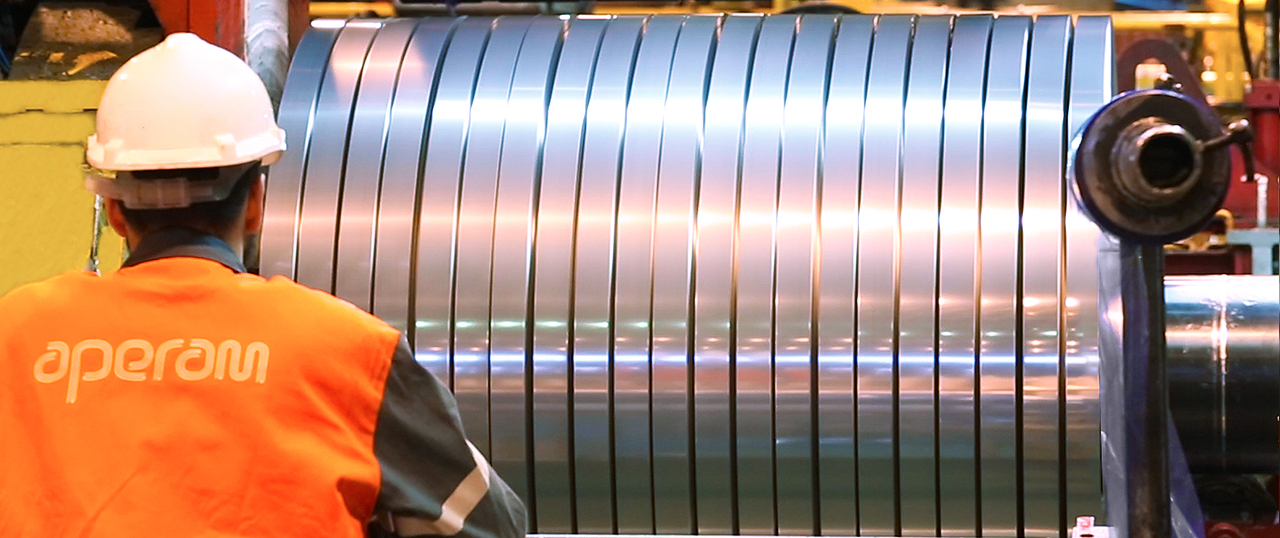
Stainless coil producer Aperam has agreed to acquire US specialty steel producer Universal Stainless & Alloy Products at $45.00/share, as part of its strategy to enhance its global presence in the alloys market, Kallanish notes.
Closing is expected in the first half of 2025. The transaction is valued at approximately $539 million, supported by five banks that will engage with the buyer in a bridge facility agreement.
This acquisition represents a significant step in Aperam’s strategic plan to enhance its market position, expand its geographic footprint, and diversify its product offerings by entering high-growth sectors, including aerospace and industrial applications. The transaction aligns with the Luxembourg-based company’s strategy to create a more differentiated and robust portfolio aimed at mitigating cyclicality and respond to market demand, especially within the US.
The merger is expected to facilitate access to new markets in both Europe and the US. The absence of overlap in the two companies’ commercial offerings and assets indicates that the merger is poised to generate synergies amounting to $30m annually. This will enhance the customer experience through a broader product portfolio, decreased lead times, mitigated supply risks, and expanded global customer service network.
“Our combined expertise and resources will allow us to deliver superior solutions that meet the growing demand for high-quality, sustainable solutions. This acquisition not only aligns with our long-term strategy but also strengthens our commitment to diversify into specialties in stainless steel and alloys and increasing exposure to more stable, high-margin industries.” Aperam chief executive Timoteo Di Maulo says.
Bridgeville, Pennsylvania-based Universal employs approximately 750 workers in the US. It produces semi-finished and finished specialty steels for the aerospace long-products market. In 2024 it is forecast to reach $330m revenue and approximately $70m adjusted Ebitda. The company achieved eleven consecutive quarters of year-on-year sales growth since Q4 2021, Aperam states.
Natalia Capra France
EU HRC points upward, production cuts expected
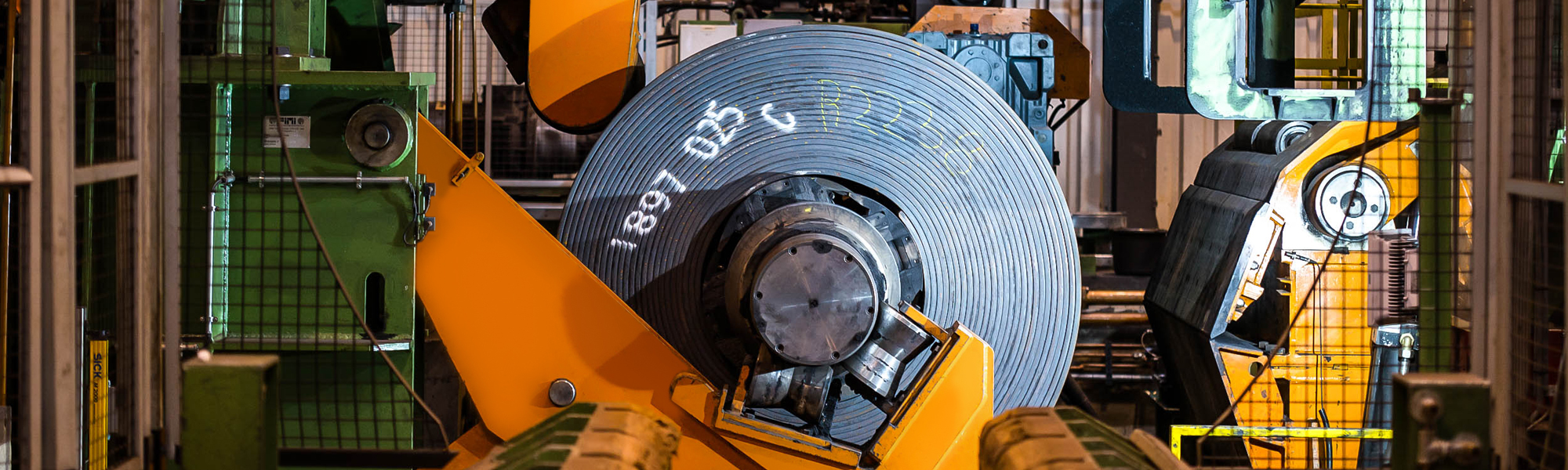
European hot rolled coil contracts are expected to experience a substantial increase until the end of the year. This is due to the European council’s ongoing discussions regarding the implementation of more stringent tariff measures to safeguard European steel.
The potential for a price increase throughout the value chain is a result of an increase in apparent demand since the first days of October, as well as the absence of a viable solution to purchase on the import market without duties and potential production cuts both upstream and downstream.
During the forthcoming EuroBLECH 2024 event next week, it is expected that HRC producers will announce production reductions for the first quarter of 2025, according to several market sources. The move is perceived as an essential measure to bolster the price increases that southern and northern European producers implemented in October. A major HRC buyer tells Kallanish that coil prices may increase by approximately €70-80/tonne until the end of the year. This will result in a price increase for coil derivatives, including welded tube and sheet, for which values are now below cost.
The price of welded tubes and sheets has been under pressure throughout the third quarter, and the low levels are persisting. Service centres and re-rollers are reporting negative financial results in Q3 due to the protracted situation of high costs and no margins.
“We are beginning to receive reports of financial difficulties from certain European re-rolling facilities.” a tube manufacturer in Italy says. “We are all reducing capacity as coil producers should, but we have heard that competitors are planning to close facilities in Europe.”
In Italy, tube producers have been able to recuperate approximately €20/t by reducing discounts over the past weeks. One reports better demand in October. However, in order to regain a degree of profitability, they will need to recover a total of €40-50/t and will continue to reduce discounting. Currently, the price of a commodity-grade tube is approximately €700/t ex-works or lower. According to an additional source, this does not include any profitability considering the cost of coils and other fixed costs re-rollers face.
HRC European contracts are ticking upward as a result of the price hikes implemented in October. Contracts are currently being executed at a base ex-works price of €540-550/t. The low point of the range of €530/t seems to have been lost. The majority of EU producers are presently offering a November lead time and are aligning their quotes with ArcelorMittal’s new HRC quotes, which are priced at €590/t base ex-works, or €600/t delivered.
However, transactions continue to be scarce in spite of the heightened interest in purchasing. Uncertainty and cautious behaviour are prevalent.
Cold rolled and hot dipped galvanised coil levels are stable whilst HRC prices are increasing in Europe. The CRC import contracts from Asia, which are priced at approximately €620-630/t cfr, are a source of resentment for local producers. The base ex-works pricing of CRC in southern and northern Europe is approximately €640-650/t. The base price for HDG is €650-660/t. Depending on the volume and the site of delivery, these prices may be ex-works but they are often delivered.
According to two sellers, the automotive sector is currently reviewing its purchasing plans, particularly for HDG. Some HDG and CRC producers provide a lead time of three to four weeks.
“Today, no one has a forecast. We all hope that consumption will resume in the first quarter. Today it is better to produce only what is strictly necessary in order to reduce costs,” a source comments. He mentions that numerous clients have lengthened their payments.
Natalia Capra France

Gradual rate cuts delay Turkish recovery: economist
Interest rates will come down further and the global economy will grow at around 3% in 2025. Turkey will cut rates by January and continue with a 250 basis point rate cut cycle, but rates will remain elevated and an economic revival is unlikely until at least the second half of 2025, according to Rota Portföy chief economist Özlem Bayraktar Gökşen.
Although not to a point of price stability in developed markets, the reduction in global inflation has been obvious.
The US economy has achieved its soft landing but inflation remains “a little bit sticky”, Gökşen noted at Kallanish Flat Steel 2024 in Istanbul on Thursday. The US could cut rates by 25bps in November and again in December – its reason for doing this is not because it needs to, but rather because the differential between nominal and real interest rates need to be narrowed.
In the eurozone, “the European Central Bank [ECB] needs to give some shock to the economy to see some revival – the motivation is different,” she continued. The ECB’s rate cutting cycle will therefore be longer than the US Federal Reserve’s. There is nevertheless more room for manoeuvre now since inflation has come down significantly.
China’s economic growth outlook is uncertain. “They have the tools to revive the economy. The main problem is we don’t know the timing of the Chinese government to come through with these measures,” she noted. The market has not been satisfied with the fiscal policy response so far, and there are likely to soon be further measures. It is unlikely China will pose a systematic financial risk to the global economy in 2025, she added.
Turkish economic expectations remain encouraging for 2025 thanks to the country’s return last year to orthodox policy. Gökşen expects Turkish inflation at 43-44% this year and 24-25% in 2025, above the central bank’s 2025 target of 14%. “This still means it’s coming down but we have a long way to go,” she observed.
“The main issue on rates is expectations,” she continued. Although the current rate has remained unchanged for months, inflation expectations have not come down. The central bank lost its credibility with its unorthodox policy in previous years. “Every day was a surprise for us,” Gökşen opined.
The bank will continue a 250bps rate cut cycle but rates will remain high as a “guarding effect” for the lira. Higher rates will however result in dampened economic activity. Growth could pick up in H2 amid lower interest rates and increased confidence over the credibility of measures taken so far. Turkish GDP should grow 2.6% in 2024, with growth slowing to 2% next year.
Despite the high rates, Turkey has seen loan growth in the last two months, which it needs to avoid given inflation. Domestic consumption is struggling to come down in the last three years due to Turkish consumer behaviour geared towards consumption, Gökşen concluded.
Adam Smith Poland

European HRC prices stable amid limited trading
Demand from final consumers remained low, with some mills in Northern Europe still offering end-November-delivery material, sources told Fastmarkets.
Buyers were very cautious and wanting to see the market situation after the international sheet metal exhibition in Hannover, Germany on October 22-25, according to sources.
Mills in Northern Europe were heard offering HRC at €580-590 ($631-642) per tonne ex-works, but were ready to be more flexible in negotiations, Fastmarkets understands.
“Demand is currently so low that mills are selling material at the old prices from before ArcelorMittal’s announcement of a price increase of €40 per tonne for all new bookings,” one buyer source told Fastmarkets.
Producers were initially pushing for offer prices of €40 per tonne higher, but would now be happy to get €10-15 per tonne more.
Buyer estimations of the workable market level were mainly at €540-560 per tonne ex-works.
Some producers shared a more optimistic view on the tradeable market level, saying that consumers who really need to book material for the beginning of next year were ready to pay slightly higher prices.
Fastmarkets calculated its daily steel HRC index domestic, exw Northern Europe at €555.29 ($604.03) per tonne on Thursday, up by €0.29 per tonne from €555.00 per tonne on Wednesday.
The index was up by €8.12 per tonne week on week, but down by €9.71 per tonne month on month.
In Southern Europe, Fastmarkets’ daily steel HRC index domestic, exw Italy was calculated at €551.88 per tonne on Thursday, up by just €0.21 per tonne from €551.67 per tonne on Wednesday.
The Italian index was up by €11.88 per tonne week on week, but down by €13.12 per tonne month on month.
Local suppliers were heard offering HRC at €580-590 per tonne delivered, which nets back to €570-580 per tonne ex-works.
Buyer estimations for the workable market level were lower at €540-555 per tonne ex-works.
Import offers remained uncompetitive, with European customers buying material mainly from the local market, Fastmarkets understands.
Offers from Taiwan, Japan and South Korea were heard at €580-590 per tonne CFR Italy, while Vietnamese HRC was on offer at €555-560 per tonne CFR Italy, according to sources.
Turkish HRC was on offer to Italy at €580-590 per tonne CFR, sources said.
But the workable level for imports was estimated at just €520 per tonne CFR, with some bids heard at that level but no deals confirmed.


Subdued consumption limits trading across Southern European steel longs markets
Fastmarkets’ price assessment for steel reinforcing bar (rebar) domestic, exw Italy was €570-590 ($620-642) per tonne, stable week on week.
Prices were stable across the Italian and Spanish rebar markets due to an uncertain outlook, Fastmarkets heard.
“Demand continues to be weak. Mills are trying to invert the price trend, but customers don’t believe in a price increase, so they prefer to stay in wait-and-see mode,” a buyer source said.
Prices could remain at these levels in the coming weeks, sources said.
Meanwhile, export offers from Italy were reported at $570 per tonne FOB to Switzerland and France.
Fastmarkets’ price assessment for steel reinforcing bar (rebar), domestic, delivered, Spain was €605-610 per tonne on Wednesday, stable week on week.
Sources reported unchanged market conditions in the Spanish rebar market.
“Prices are very stable, and there is no movement for the time being. Mills are trying to push for increased offers since last week. Customers did not accept these price rises; however, buyers need to restock and may need to accept these higher offers in the coming weeks,” a producer source said.
“Prices are more or less stable, but consumption is still weak,” a buyer source from the region said.
Southern European wire rod
Fastmarkets’ price assessment for steel wire rod (mesh quality), domestic, delivered Southern Europe was €600-620 per tonne on Wednesday, stable week on week.
Meanwhile, import offers continued to be reported at €580-590 per tonne CFR from Algeria, Turkey and Indonesia.
But import quotas for this quarter were reported to be full. As a result, the wire rod import market is expected to slow down until the new quota period begins on January 1, sources said.