


Cogne finalizes Mannesmann tubes acquisition to expand stainless footprint
Italian long stainless steel and nickel alloy producer Cogne Acciai Speciali has finalized the acquisition of Mannesmann Stainless Tubes from German steelmaker Salzgitter, it said Nov. 1.
The Eur135 million ($144.5 million) deal was first announced in February, with Cogne saying at the time that the acquisition would widen its footprint to encompass the market for seamless tubes and stainless steel nickel alloy pipes. The EC cleared the merger in June.
“With this new acquisition we realize a further step in our strategy, which brings us a historic player in the seamless tube market, whose upstream integration with Cogne will make it even more competitive,” Cogne CEO Massimiliano Burelli said.
Mannesmann Stainless Tubes produces seamless stainless steel and nickel-based tubes in Germany, France, Italy and the US.
Upon joining the group, the company will be renamed DMV. Cogne previously provided Mannesmann with semi-finished products.
Cogne manufactures long products in stainless steel and nickel-based alloys for the aerospace, automotive and energy industries, as well as supplying the medical technology, food, chemical and plant engineering, and mechanical engineering sectors.
Platts, part of S&P Commodity Insight, assessed European 18-8 stainless steel scrap solids at Eur1,1170/mt Nov.1 on a CIF Rotterdam basis, stable on the day and up Eur10 week over week.
The 18-8 stainless steel scrap clips and solids are a commonly used reference for the grade-304 stainless steel scrap. The scrap contains a minimum of 16% chrome content and minimum of 7% nickel content.


European stainless steel prices down on low demand, production cuts
Fastmarkets’ monthly price assessment for stainless steel cold-rolled sheet, 2mm, grade 304, transaction domestic, delivered North Europe, was €2,600-2,650 ($2,824-2,879) per tonne on Friday, narrowing downward from €2,600-2,780 on October 4.
Three major European stainless steel mills confirmed to Fastmarkets that they had revised their production volumes for the fourth quarter, with another market source saying that others had made similar decisions.
“Demand is virtually gone, but the reduced output has helped to keep prices stable,” a trader source told Fastmarkets.
“The mills are trying to keep prices alive, but in the long term it doesn’t seem viable, price-wise,” a second source told Fastmarkets. “I expect [there to be] a drop in prices as early as the first week of November, and it could continue through to the end of the year.”
Another factor that played a role in mills’ decisions to reduce output was the expectation of increased imports of Taiwanese and Indonesian material, which were possible due to the EU import quota being reset for the fourth quarter.
“Even with [anti-dumping and anti-circumvention] duties, Taiwanese prices are much lower. If the price difference is too big, it still makes sense for them to sell in Europe,” a third trader told Fastmarkets.
“I think the import quota reset has played a part when talking about the reduced output, for sure,” a fourth source told Fastmarkets.
The alloy surcharge for grade-304 material rose on Friday.
Fastmarkets’ monthly assessment of the stainless steel cold-rolled sheet, 2mm, grade 304 alloy surcharge, domestic, Europe, was €2,077-2,114 per tonne on November 1, up by €91-114 per tonne from €1,963-2,023 per tonne a month earlier.
The assessment on September 6 was €1,999-2,051 per tonne, down by €109-111 per tonne from €2,110-2,160 on August 2.
Another factor that affected the price of stainless steel flat products in October was the slower fall in the price for stainless scrap. Fastmarkets’ weekly assessment of the price for stainless steel scrap 18/8 solids, import, cif main European port, averaged €1,162.50 per tonne in October.
This continued the downward trend that started in May-when the average was €1,430 per tonne.
Zdravko Cherkezov Sofia contributed to this story.


European buyers remain reluctant to accept higher HRC offers
Friday, All Saints Day, was a public holiday in many European countries, such as Belgium, Italy and some German states. As a result, trading in Europe was very limited, Fastmarkets understands.
Fastmarkets calculated its daily steel HRC index domestic, exw Northern Europe at €557.50 ($605.61) per tonne on Friday, edging lower by €0.88 per tonne from €558.38 per tonne on Thursday.
The index was up by €7.50 per tonne week on week and by €20.51 per tonne month on month.
In Northern Europe, HRC for the first quarter of 2025 was on offer at €600-640 per tonne ex-works, according to industry sources.
Buyers were reluctant to purchase material at these levels however and the new offer prices have not been accepted in deals yet.
December-delivery HRC was available at lower prices, Fastmarkets understands.
Sources indicated the workable market level at €550-570 per tonne ex-works. Earlier this week, some transactions were reported at these levels.
In Southern Europe, Fastmarkets calculated its daily steel HRC index domestic, exw Italy at €557.50 per tonne on Friday, up by €0.50 per tonne from €557.50 per tonne on Thursday.
The Italian index was up by €11.25 per tonne week on week and by €24.50 per tonne month on month.
Italian suppliers offered HRC with lead times of five to six weeks at €570-580 per tonne delivered, which nets back to €560-570 per tonne ex-works, according to sources.
Buyer estimations were lower at €550-560 per tonne ex-works, Fastmarkets heard.
Expectations about future market developments in the short and mid-term remained mixed among market participants.
According to buyers, the European economy still faces a lot of challenges, with end-user demand remaining persistently low.
But producers expressed hope that limited imports and lower offered HRC volumes could support a price rebound in the first quarter of 2025.
European steel industry association Eurofer also expects apparent steel consumption in the EU in 2025 to increase by 3.8% to 132 million tonnes, but this is still below pre-pandemic volumes of 145 million tonnes in 2019.
Eurofer downgraded its outlook for 2024, predicting that demand would shrink by 1.8% to 127 million tonnes this year.
Meanwhile, import offers of Asian-origin HRC remained uncompetitive in the European market due to their high levels compared with domestic prices, and trade restrictions imposed in the EU.
In August, the European Commission started an anti-dumping investigation against HRC originating from Egypt, India, Japan and Vietnam.
On October 25, the commission started registering all HRC imports from these four countries.
Turkey was seen as the only “safe” source of imports, Fastmarkets understands. But offers of Turkish HRC were too close to the domestic prices to be competitive.
HRC from Turkey was on offer at €580-600 per tonne CFR to Italy, including the anti-dumping duty, while offers from Asia came in at €550-570 per tonne CFR.
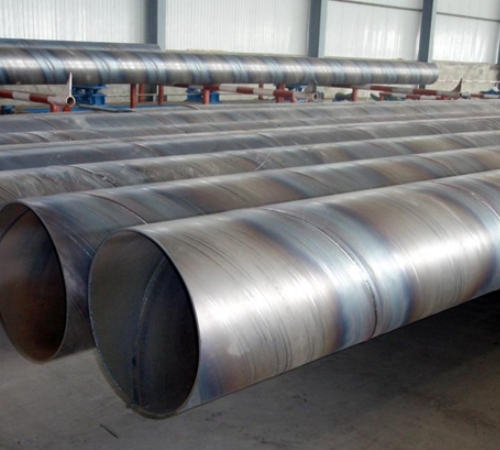
Interpipe focuses on new pipes for EU market
Ukrainian pipemaker Interpipe has produced more than 200 new types of pipe products for European consumers over the past two years, Kallanish notes.
“This is the result of the work of Ukrainian engineers, who are focused on the EU, where there are many niches and unique customer requests,” the company notes. “By expanding our product portfolio, Interpipe has found new customers in areas such as micropiles, fittings, bends and even mobile cranes.”
According to the company, one of the significant challenges was the development of pipes for the production of car axles. “Research work on this project began back in 2023, when 14 pilot projects were completed. Already this year, Interpipe has confidently established itself in a small circle of manufacturers of such products,” it adds.
“Currently, we supply two of the largest European manufacturers with pipes, which after cutting to measured lengths and shot blasting are assembled into axles for trailers and semi-trailers of trucks, and we are also developing the specification for a third client,” Interpipe said.
Interpipe increased crude steel production in the first half of the year to 428,000 tonnes, up 24.4% on-year (see Kallanish passim). Six-month output of pipe rose 23.4% to 258,000t and production of railway products increased 19% to 56,000t, including railway wheels to 42,000t, up by 20%.
In January-June, Interpipe increased sales of pipe products by 35.4% compared to the same period in 2023 to 264,000t. The bulk of pipes were sent to Europe, 112,000t or 37.4% more on-year, while the US took 45% more at 38,000t. Another 45,000t of pipes were shipped to the Ukrainian market, up 2.2% on-year.
Interpipe saw revenue increase in H1 by 3.3% on-year to $535.77 million, while net profit was up 5% to $128.74m (see Kallanish passim). Ebitda grew 26.7% to $130.27m.
Interpipe previously said it was trying to reach pre-war production levels of 70,000 tonnes/month compared to 50,000 t/m of production currently.
Exports account for 80-85% of the company’s production volumes, and for some product groups this figure exceeds 90%. The main markets are the EU, USA and the Middle East.
Svetoslav Abrossimov Bulgaria


Tuesday’s US elections to remove some steel-outlook opaqueness
After the US steel supply chain spent most of 2024 reluctant to commit to restocking and long-term investments due to uncertainty over federal policy shifts next year, Election Day finally arrives on Tuesday to lift the cloak.
Voters will choose either Vice President Kamala Harris or former President Donald Trump to lead the executive branch for 2025-2029. Together with Tuesday’s simultaneous congressional elections, the makeup of national governance should become clear within a few days.
The ultimate balance of power finally will shed light on the probable demand for steel in the public and private sectors. It could point to which steel items will be winners and losers. If a victorious Trump diverts federal funding from clean energy and other infrastructure in favour of support for oil and gas production, there may be less demand for plate, coated and other flat steel and structural goods and more consumption of OCTG and line pipe.
Many steel-related organisations and companies have declined to make formal endorsements. Some steel market participants predict that Trump would be more favourable in promoting manufacturing, stimulating domestic petroleum production and taking a less-aggressive stance on enforcing air-pollution laws at mill sites. They argue that the first Trump administration left them better off than before.
“We saved the steel industry in this country, and now we’re going to make it really powerful again,” Trump proclaimed during a rally in Pennsylvania last month.
Harris is credited with supporting on-going federal investments in public infrastructure, semiconductor manufacturing, data centres and the electric grid. The United Steelworkers and United Auto Workers labour unions have endorsed Harris.
“The infrastructure bill alone has made a huge difference in our plant,” says steelworker Bob Tribble, a member of USW Local 1014 at US Steel’s Gary Works. “We make structural steel, and that has kept us busy. It has meant that we are hiring, not pulling back, and it has meant steady employment.”
Harris’ proposals are far less inflationary than Trump’s, according to a large majority of US economists. An October survey by the Wall Street Journal found that 68% of economists think a new Trump administration would cause higher inflation than a Harris presidency, versus 12% who predict that Harris would be worse. High inflation already has hurt demand for steel in the US nonresidential construction industry, which has been particularly vocal about the need for lower interest rates.
Trump’s promises to cut corporate taxes, impose across-the-board tariffs and deport of millions of foreign-born workers heightens the risk of stagflation. US construction associations lament the persistent shortage of available workers and have called for more immigration as one solution to accelerate projects.
Trump proposes cutting corporate taxes to 15%, from the current 21% level set during his first term. Harris prefers an increase to 28%.
Both the Trump and Biden-Harris administrations have targeted Chinese steel by adding tariffs, and the current White House has kept Trump’s Section 232 orders mostly in place. Trump prefers to negotiate bilaterally with other countries, whilst Harris is likely to operate within existing international legal conventions. Trump recently threatened to punish companies who move manufacturing to Mexico under the terms of his own United States-Mexico-Canada Agreement.
An important member of the Senate Steel Caucus, Ohio Democrat and former caucus chairman Sherrod Brown, is considered vulnerable in a tight re-election race against Cleveland businessman Bernie Moreno.
Dom Yanchunas USA