

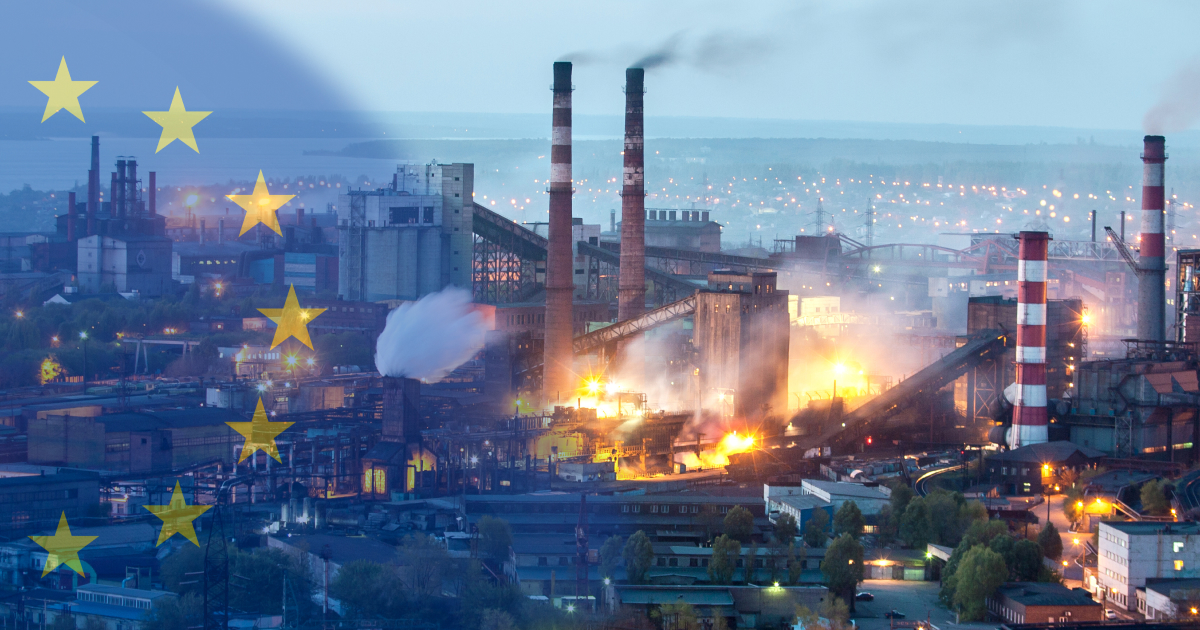
EU approves Ukraine’s steel safeguard measures exemption for 3 years
The regulation came into effect on Friday June 6 and will run until June 5, 2028.
The announcement marks the first time that the annual renewal of the exemption has been granted a three-year shelf life since it was first implemented in June 2022.
The latest extension, which removes restrictions and additional tariffs on steel imports from Ukraine, aims to “ease the challenges” faced by the country’s “producers and exporters as a result of the war [with Russia],” the Council said in the press release.
But the European Commission reserves the right to suspend the regulation for a period not exceeding 12 months, if steel imports from Ukraine increase to volumes that “contribute significantly to the serious injury or threat of serious injury to [European] Union producers,” the statement reads.
The extension follows US President Trump’s decision to raise tariffs on steel and aluminium imports from its trade partners to 50% on Wednesday June 4.
The US suspended its Section 232 import tariffs on steel from Ukraine in May 2022, under the administration of then-President Joe Biden, following the Russian invasion earlier in the year. But tariff exclusions expired on March 12, 2025.
Market brief
Europe remained Ukraine’s largest trading partner in 2024, with Poland, Bulgaria, Italy, Romania, Greece and Moldova being the major destinations for Ukrainian steel exports, Global Trade Tracker (GTT) data showed. In 2024, steel deliveries from Ukraine to these six countries amounted to 3.38 million tonnes, 58% of Ukraine’s total steel exports of 5.84 million tonnes.
The trend continued in 2025 with a total of over 1 million tonnes of Ukrainian iron and steel delivered to EU states in the first quarter of the year.


EU proposes further 3-year exemption from steel safeguard measures, anti-dumping duties for Ukraine
Ukraine’s exemption from EU safeguard measures, initially granted in June 2022 after the Russian invasion, has been renewed twice already – in June 2023 and June 2024.
Unlike previous extensions, the new exemption will apply for three more years and, if approved by the European Council and Parliament, will come into force on June 6.
The Commission said it is also “currently working on a longer-term solution [to] provide economic certainty and a stable framework for trade to both Ukraine and the EU.”
Europe is Ukraine’s largest trading partner, with significant steel exports to countries such as Poland, Bulgaria, Italy, Romania, Greece, and Moldova.
The news of the proposed extension comes amid an ongoing review of EU safeguard measures, which was announced on December 17, 2024 and is expected to conclude by March 31.

Metinvest ready to rebuild Ukraine as it restores steel capacity
As peace talks intensify three years after Russia’s invasion of Ukraine, Metinvest, the country’s largest steel producer, is ready to contribute to the nation’s reconstruction and welcomes partnerships while navigating a challenging international trade environment.
“If the war ends with good security arrangements for Ukraine, Metinvest would like to play a role in rebuilding,” Metinvest CEO Yuriy Ryzhenkov said Feb. 27 in an interview.
To facilitate this effort, Metinvest has initiated its Steel Dream project, which aims to quickly rebuild infrastructure using steel for over 200 ready-made projects based on three prefabricated steel solutions: frame, module and platform.
The company also plans to invest in restoring its facilities to full operational capacity. Currently, Metinvest operates two mills in Ukraine: Zaporizhstal (flat steel) and Kamet Steel (long steel). Zaporizhstal is running at about 75% capacity, while Kamet Steel is operating at 65%-70%.
Ryzhenkov said the company aims to restore full capacity for the blast furnaces — one at Zaporizhstal and one at Kamet Steel — within two years, a timeline critical for meeting market demands and supporting post-conflict rebuilding efforts.
Expecting a rebound
For 2025, Metinvest expects a slight decline in steel production due to scheduled maintenance, but Ryzhenkov is optimistic that production levels will rebound to 2024 figures, when crude steel production increased by 4% year over year to 2.09 million mt.
Iron ore production surged by 42% to 15.7 million mt, with the company planning to enhance product quality and increase output.
“At the iron ore facilities, we will invest to enhance mainly the quality of the products that we will be able to offer, specifically our ferrum content in our products,” Ryzhenkov said.
“But also, we will be able to increase the quantities that we produce at our iron ore facilities. In the steelmaking facilities, there are strategic investments that can be made for improving the product range.”
He underlined that these are medium-term projects while for the long term — as Ukraine still has the same obligations to decarbonize the steel industry as the rest of Europe – Metinvest had plans for decarbonizing its facilities, such as the construction of a direct iron reduction plant considered in the past while pursuing brownfield investments to upgrade its steelmaking and iron ore facilities.
Investments
Metinvest confirmed it was still interested in the Huta Czestochowa mill in Poland. However, the Polish government’s classification of the mill as a strategic enterprise has delayed the auction process.
However, Metinvest has made significant progress in Italy, signing a shareholder agreement with Italian steel producer Danieli. This collaboration aims to develop a 2.7 million mt/year flat steel producer, enhancing Metinvest’s production capabilities and product offerings.
The next steps involve finalizing the engineering plans and financing structure to pave the way for construction activities.
Impact of US policies
Metinvest, one of Ukraine’s largest taxpayers, emphasizes the importance of maintaining trade relations with the US.
Ryzhenkov said he supports the Ukrainian Steel Association’s call for exemptions from the anticipated 25% import tariffs proposed by US President Donald Trump.
Ryzhenkov explained that Ukrainian steel constitutes less than 0.5% of US imports and he warns that tariffs could harm both the Ukrainian economy and US interests. By allowing Ukrainian steel to continue to be in the US market, the US would be supporting a key ally while also reducing the need for foreign aid to Ukraine.
3 years of war: new headwinds arise for struggling Ukrainian steel sector amid mounting geopolitical tensions
Reinstatement of US tariffs under Trump
The US suspended its Section 232 import tariffs on steel from Ukraine in May 2022, under the administration of then-President Joe Biden, following the Russian invasion earlier in the year.
But on February 10, 2025, incumbent US President Donald Trump issued an executive order reinstating the 25% import tariffs on steel and aluminium products that he had begun during his first term in office, this time ending all exemptions.
Under the new order, tariff exclusions currently in place will expire on March 12, 2025.
But due to a number of anti-dumping measures, finished steel products from Ukraine were not currently supplied to the US, with pipe products being an exception. In 2026, pipe exports from Ukraine to the US will be under threat.
In 2024, Ukraine exported around 100,000 tonnes of tube and pipe products – under Chapter 73 of the harmonized tariff code, according to data from Global Trade Tracker.
Over the same period, Ukraine exported 943,941 tonnes of iron and steel products to the US under Chapter 72 of the harmonised tariff, GTT said. Almost all of this tonnage was pig iron, which is not covered by Section 232 tariffs.
And steel made in Ukraine but processed in the EU was also exempt from the 25% tariffs in the US.
Notably, European steel processors using Ukraine-origin feedstock to manufacture finished steel products (including tubes and sections) were able to ship those products to the US without facing import taxes.
Ukraine’s Metinvest Holding owns the Promet asset in Bulgaria, which is currently using billet from its parent company to produce rebar, with some of its output being sold to the US.
In 2024, Bulgaria shipped 131,857 tonnes of rebar to the US, according to GTT, versus 53,774 tonnes in 2023.
If the US should apply the tariff to Metinvest-origin products, this would result in a reduction of steel billet production at its Ukrainian asset Kamet Steel by a similar volume, while iron ore extraction would go down by 180,000 tonnes per year, railway shipments would drop by 400,000 tpy, and transhipments via ports would drop by 200,000 tpy, which in turn would result in a $58 million per year loss of foreign currency inflows, while tax deductions to the country’s budget would drop by 1 billion hryvnias ($23.9 million) per year, according to Ukrainian steel producers’ association Ukrmetallurgprom.
In total, Ukraine shipped 543,241 tonnes of semi-finished steel products to Bulgaria in 2024, versus 457,866 tonnes in 2023, according to GTT.
The total value of steel that was delivered to the US from Ukraine, directly and via processing in the EU, amounted to $258 million in 2024. This was only 0.81% of the total value of US steel imports ($31.7 billion) and therefore cannot be a threat to US industry, Ukrmetallurgprom said.
Ukrainian government officials were ready to negotiate with counterparts in Washington and hoped that an exemption for Ukraine could be granted until March 2026. But it remained to be seen whether the US would consider such a proposal.
EU remains key strategic partner, but what lies ahead?
Ukraine was also exempted from all anti-dumping duties and safeguard measures in the EU in June 2022, shortly after the Russian invasion.
This exemption was renewed on both June 6, 2023, and June 6, 2024. The current measures will remain in force until June 5 this year.
It remained to be seen whether the EU would extend the exemption for Ukraine for one more year, with other factors to be considered.
For example, on December 17, 2024, the European Commission announced a review of steel safeguard measures, which was expected to be concluded by March 31, with any adjustments to the current measures expected to come into force the following month.
Market sources familiar with the matter expected a World Trade Organization notification regarding the new measures to be published before the end of this month.
“There were rumors that steel slab and billet would both be included in new safeguards,” a source familiar with the matter said. “We also monitor the Ukraine situation, but it seems that, at this stage, trade liberalization measures would stay in place.”
Europe remained Ukraine’s largest trading partner in 2024, with Poland, Bulgaria, Italy, Romania, Greece and Moldova being the major destinations for Ukrainian steel exports, GTT data showed. In 2024, steel deliveries from Ukraine to these six countries amounted to 3.38 million tonnes, 58% of Ukraine’s total steel exports of 5.84 million tonnes.

At the same time, for the EU, carbon steel imports from Ukraine represented around 6% of the total volume in 2024. In that year, Ukraine delivered to the bloc 1.68 million tonnes of carbon steel products, up by 43% from 1.17 million tonnes in 2023, according to statistics from regional steel association Eurofer.
The volume was sharply down compared with pre-war steel deliveries from Ukraine to the EU of 2.54 million tonnes in 2021, Eurofer data showed.

What to expect from 2025?
Despite efforts by Ukrainian steelmakers, steel output and exports were likely to decrease in 2025, according to Ukrainian national commodities think tank GMK Center. The main reason for this conclusion was an expectation of weak performance in global steel markets and import restrictions in key outlets that Ukraine was likely to face.
Local steel consumption was also unlikely to increase. GMK expected steel production in Ukraine to go down by more than 9% to about 6.8 million tonnes in 2025, from 7.58 million tonnes in 2024.
Exports of steel products from Ukraine were expected to decrease by 600,000-700,000 tonnes in 2025, according to GMK.
Steel billet
Steel product exports from Ukraine reached a peak of 4.17 million tonnes in 2024, versus 2.99 million tonnes in 2023, according to the country’s customs service.
This was largely due to a surge in shipments of semi-finished products, particularly billet, to 1.92 million tonnes from 1.26 million tonnes in 2023. Bulgaria and other EU countries, as well as Egypt and Turkey, were the key destinations.
The re-opening of the sea corridor in late August 2023, which restored access to vital trade routes from the Black Sea basin, and higher prices for steel scrap versus billet, were the key reasons for the rise in export volumes.
The principal factor behind more competitive billet prices was a lower iron ore price in 2024.
Fastmarkets’ daily price index for iron ore 62% Fe fines, cfr Qingdao, averaged $109.46 per tonne in 2024, compared with $119.54 per tonne in 2023.
The average daily index for steel scrap, HMS 1&2 (80:20 mix), US origin, cfr Turkey, was $381.60 per tonne in 2024, while the corresponding average daily steel billet index, export, fob Black Sea, CIS, for the year was $487.75 per tonne.
The corresponding average figures in 2023 were $397.42 per tonne and $514.65 per tonne respectively. So the price gap between scrap and billet dropped to $106.15 per tonne in 2024 from $117.23 per tonne in 2023.
The decline in scrap prices that started at the end of 2024, amid an inflow of cheap Chinese semi-finished steel products, was expected to reduce billet exports from Ukraine in 2025.
According to Fastmarkets’ analysts, the index for US-origin steel scrap was expected to average $369.64 per tonne in 2025, while the steel billet index should average $492.45 per tonne.
If this proves to be correct, the gap between scrap and billet prices would rise to $122.81 per tonne, which would make billet less attractive to foreign customers.
Long steel
The countries neighboring Ukraine seemed to be the nation’s leading trade partners in terms of long steel products, GTT data showed.
Exports of bar and rod products to Eastern Europe reached 356,000 tonnes in 2024, with only minimal volumes being sold to Western Europe. This volume was close to the tonnage exported in 2021 (364,000 tonnes), just before the Russian invasion. In 2023, Ukraine’s exports of bar and rod to Eastern Europe totalled only 279,000 tonnes.
Ukrainian exports to Poland reached 130,000 tonnes of bar and rod in 2024, according to GTT, compared with 90,000 tonnes in 2023. This made Poland a leading trade partner of Ukraine, accounting for 36.31% of the total export of steel bar and rod to Europe.
With its competitive offer prices, Ukraine has become a more decisive factor in the Polish long steel market, industry sources told Fastmarkets.
The construction sector was struggling all across Europe, but the Polish market was performing slightly better compared with other European economies, even compared with Germany, Fastmarkets understands.
This also supported the importing of long steel products, including those from Ukraine.
Trade sources told Fastmarkets that Metinvest’s Kamet Steel even considered focusing its exports to Poland more on rebar than wire rod in the next few months, due to the better market conditions for rebar.
“This means we would expect increased supplies of rebar in the next few months, but there would be a lack of wire rod [to import from Ukraine],” a Polish trader source told Fastmarkets.
“We do continue to sell wire rod in the Polish market while also expanding our rebar sales,” a Metinvest spokesperson told Fastmarkets. “However, the availability of wire rod for export depends on the monthly production schedule for each specific product, and the volume of sales in the domestic Ukrainian market.”
Pig iron
In contrast to steel products, pig iron export volumes from Ukraine could increase, several market sources told Fastmarkets.
In 2024, Ukraine exported 1.29 million tonnes of pig iron, according to GTT. That was almost equal to the total for 2023, when exports were 1.25 million tonnes, and in 2022 at 1.33 million tonnes. The US was the key buyer.
The forecast increase will be mainly on higher demand in the EU, where buyers need to find replacement material for Russia-origin pig iron that is now affected by international trading sanctions.
Imports of pig iron from Russia will be completely banned from 2026 in the EU, if there is no change in the situation. Imports were restricted to a quota of 1.14 million tonnes between December 19, 2023 and December 31, 2024, and to a quota of 700,000 tonnes between January 1, 2025 and December 31, 2025.
This would leave a shortfall of 440,000 tonnes to be filled by alternative supply to the EU in 2025. Fastmarkets’ research team believed that Ukraine would struggle to fully replace the Russian volumes, however.
“I think the first choice [to substitute Russian pig iron in the EU] will be Ukraine,” one international trader based in Europe said. “However, when CBAM [the EU’s Carbon Border Adjustment Mechanism] is fully in place, it will need to compare costs. Ukrainian blast furnace pig iron might face a big CO2 duty disadvantage compared with Brazil [the other major global supplier, which uses charcoal in the making of pig iron], so Ukrainians still might want to follow the US import market.”
Another trader said that Ukraine could substitute the basic pig iron supply to the EU because it was preferable to material from Brazil, which “is usually at a $10 [per tonne] disadvantage to Ukraine in freight rates, and [because] Ukraine can offer much shorter lead times, so there is less price risk for EU mills.”
He added that the difference between the prices of import pig iron in the US and the EU should become very narrow, helping to attract suppliers.
In 2024, Fastmarkets’ weekly price assessment for pig iron, import, cfr Gulf of Mexico, US, averaged $476.39 per tonne, while the weekly price assessment for pig iron, import, cfr Italy, averaged $417.74 per tonne.
The US import pig iron market therefore showed a $58.65 per tonne premium over the price in Italy in 2024. In 2021, the price in Italy was at a premium over the US of $2.45 per tonne.
The US import pig iron market price became higher partly as a consequence of US pig iron importers refusing to accept Russia-origin material after the invasion of Ukraine, while the EU continued to import it.
According to Fastmarkets’ forecast, the average gap between the US and Italian import pig iron prices will be about $97 per tonne in the second quarter of 2025.
So the US market will remain more attractive for Ukrainian pig iron exporters.
“Potentially, yes, we can increase pig iron supply, because we have stopped some blast furnaces,” one supplier from Ukraine said. “However, a restart of blast furnaces will depend on the availability of human resources and cost effectiveness.”
Ukrainian pig iron supplier ArcelorMittal Kryvyi Rih (AMKR) has been operating with one blast furnace since early in the fourth quarter of 2024.
But it now intends to restart its second furnace in the second quarter of 2025, chief executive officer Mauro Longobardo told local press in late 2024. AMKR planned to increase steel output as well, once it has more pig iron.
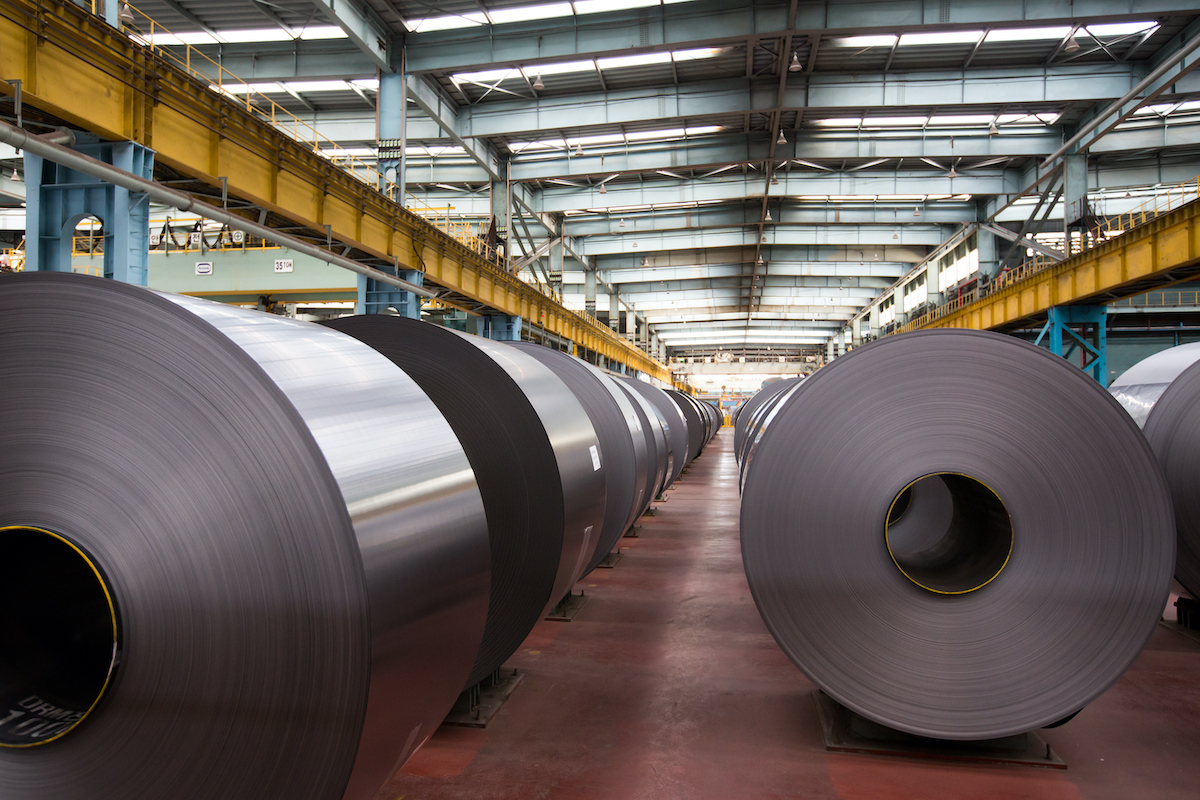
EU sees more steel HRC imports from Turkey, Ukraine in 2024 as Asian suppliers lose positions
Some suppliers, however, such as Turkey and Ukraine, managed to benefit from the situation by being the safest choices for HRC imports into the EU, while some Asian suppliers appeared to lose their positions in the European market, according to data from the Global Trade Tracker (GTT).
Hot-rolled coil is used mainly in the automotive industry and the construction sector. Total imports into the EU came to 8.43 million tonnes for the period January-November 2024, GTT data showed, with the statistics for the full year not yet complete.
Compared with the corresponding period of 2023, this represents a decrease of 6.77% from 9.04 million tonnes.
Imported volumes of HRC were 9.24 million tonnes for the full year of 2023, with the peak for the five years 2020-24 seen in 2021, when imports totaled 10.28 million tonnes.
Before the Russian invasion of Ukraine in February 2022, Russia was among the main suppliers of HRC to the EU, exporting 1.71 million tonnes of HRC in 2020 and 2.24 million tonnes in 2021. These volumes started to decrease after the invasion and were stopped completely after the EU imposed trading sanctions against Russia.
Consequently, Russia’s share of HRC imports into the EU was gradually taken up by other supplier sources, such as India, Taiwan, Japan, Vietnam, Egypt, South Korea and Indonesia, which have been offering competitive prices to the European market.

In 2022, some suppliers managed gradually to increase their deliveries to the bloc, with the difference between domestic HRC prices and imported prices having reached almost €100 ($103) per tonne.
For example, Fastmarkets daily steel HRC index, domestic, exw Northern Europe, averaged €907.20 ($933.66) per tonne in June 2022, while the corresponding assessment for steel hot-rolled coil, import, cfr main port Northern Europe, averaged €816.00 ($893.80) per tonne in the same month. The difference was €91.20 ($93.86) per tonne.
This trend continued in 2023, allowing some overseas suppliers to secure a bigger market share. For example, in 2023, HRC deliveries from Vietnam totaled 1.15 million tonnes, almost a threefold increase from 406,045 tonnes in 2022.
This tendency, however, has triggered a series of protectionist measures by the EU to safeguard its domestic steel sector. The European Commission started to impose tougher safeguard measures, launched an anti-dumping investigation into several HRC origins, and announced a new review of safeguards.
Stringent protectionist measures were also sought by the European steel industry.
As a result, in August 2024, the European Commission announced an anti-dumping investigation into HRC originating in Egypt, India, Japan and Vietnam.
Further, the Commission announced a new steel safeguard review in December 2024.
The latest review of the safeguard measures only came into force on July 1, 2024, with the introduced 15% cap per country over the tariff rate quota (TRQ) volume initially available in each quarter, for HRC and steel wire rod in particular.
With the implementation of the 15% cap per country over the TRQ, each nation under the category “other countries” is supposed to supply no more than 555,555 tonnes per year of HRC to the EU. This resulted in rapid exhaustion of some countries’ quotas in 2024, with the same trend now being seen in the first quarter of 2025.
If the total awaiting allocation (see table below) exceeds or even approaches the amount available for use under the TRQ, this should be taken as an indication that the quota will soon be exhausted, according to the European Commission.

Protectionist measures intended to support domestic prices
The year 2024 turned out to be a challenging period for the European steel industry, with low demand from the main steel-consuming sectors inhibiting the market.
In addition, some leading automotive companies in the region admitted that they were planning significant output cuts, which would inevitably affect the HRC market, Fastmarkets understands.
As a result, HRC prices in Europe have dropped to their lowest since 2020. Fastmarkets’ daily steel hot-rolled coil index domestic, exw Northern Europe, averaged €549.25 per tonne in October 2024.
During the period 2020-24, lower prices were seen only in 2020, when the Covid-19 crisis brought significant uncertainty to the market.
Despite the slight price improvement in the final two months of 2024, sluggish demand would probably hinder a more significant price rebound in the first months of this year, industry sources told Fastmarkets.
But all protectionist measures were expected to put a further limit on the availability of imported HRC in the EU this year, and in this way support the domestic prices.
Turkey, Ukraine still among safest options
With the EU safeguard measures suppressing the incentives to buy overseas-origin coil, Turkey and Ukraine turned out to be among the safest trading partners from which to buy HRC.
According to GTT, the HRC volumes imported from Turkey into the EU reached 1.21 million tonnes in 2024, a huge increase of 85.40% compared with 2023, when imports from Turkey came to 653,311 tonnes.
But 2023 could not be considered representative for Turkish HRC supplies to the EU, due to the two massive earthquakes in the Middle Eastern country in February of that year, which affected the south of the country. Some of Turkey’s leading flat steel manufacturers are located in this region and they were forced to stop production at the time.
Besides, the region affected by the earthquakes needed reconstruction and, after the Turkish mills resumed operations, they were less focused on exporting to the EU, and more on covering the domestic demand. Turkey even postponed some protectionist measures to facilitate the imports of flat steel products.
The disruption to steel supplies from Turkey as a result of the earthquakes led to more HRC supplies coming into the EU from Asian partners.
https://dashboard.fastmarkets.com/a/5117411/
GTT data also showed that, in 2022, exports of Turkey-origin coil to the EU reached 1.20 million tonnes, a volume close to that of 2024. But despite the fluctuations, Turkey has been gradually increasing its HRC supplies to the EU.
Ukraine also increased its exports of HRC to the EU last year, with the total volume reaching 997,985 tonnes. Compared with 722,653 tonnes in 2023, this was an increase by 38.10%.
In 2022, when Russia invaded Ukraine, the nation’s HRC exports to the EU amounted to 509.934 tonnes.
India stable, but other Asian partners lose positions
Despite the trade risks and safeguard measures, India remains Asia’s main importer of HRC into the EU, GTT data shows. From January to November 2024, the volumes imported from the nation reached 1.37 million tonnes, up by 16.96% year on year.
Other Asian trading partner nations, however, did not report such results. For example, the amount of HRC imported from Taiwan was 897,031 tonnes for the first 11 months of last year, down by 27.77% compared with the same months of 2023.
A similar trend could be observed for HRC imported from Japan, which totaled 837,169 tonnes for the period from January to December last year, a decline by 23.17% year on year.
The total volume of Vietnamese HRC imported in January-November 2024 was 701,461 tonnes, down by 39.09% compared with the previous year.
Imports of HRC from South Korea to the EU were also down over January to December last year, reaching 575,386 tonnes, a decline by 38.81% compared with 2023.

Russia struggles to find export destinations
With the implementation of the European sanctions against Russia, exporting HRC to Europe became impossible.
In addition to countries and companies rejecting Russian steel exports, the prices achievable in the few countries that were still willing to do business with Russia have continued to fall, industry sources told Fastmarkets.
Russia was also struggling with weak domestic consumption, they added, which put additional pressure on its steel sector.
Metinvest focuses on Finland, Sweden as new markets
Metinvest restructured its exports following the Russian invasion of Ukraine and has found new markets with the reopening of seaports, says chief operating officer Oleksandr Myronenko.
“First, we exported through Poland to the north, to the ports of Gdansk, Swinoujscie and others,” he told Ukrainian-based business magazine The Page. “There was also a logistics chain to the south, reaching the Romanian port of Constanta.”
“We primarily export iron ore to China and both iron ore and metal to Europe. Now we are even dealing to markets in northern Europe where we have never exported before – to Finland and a little bit to Sweden,” Myronenko said.
“They [Nordic customers] have posed a challenge as customers there are quite demanding and require very high-quality products. We have thus also started production of new types of products with increased iron content,” he added.
According to him, 2024 has been quite challenging since Metinvest did not anticipate such a drop in prices, which are currently 30-40% lower than forecast.
“In terms of steelmaking, the group managed to keep five blast furnaces operational – three at Zaporizhstal and two at Kametstal – along with the full range of rolled products. These plants have reached approximately 75% of their capacity compared with the pre-invasion situation. Considering the destruction of plants in Mariupol, Metinvest’s steel production now stands at around 35-40% of pre-war levels,” Myronenko noted.
Ukraine’s steelmakers are sustaining these production volumes thanks to the reopening of seaborne exports, Kallanish notes.
“We started the year with rather modest production expectations of around 1 million tonnes/month of iron ore,” Myronenko said. “However, the consistent operation of the ports ensured steady demand from Ukraine’s steelmakers, and by the end of the year we had reached 1.6-1.7m t/m. This represents 40-50% of capacity compared with 2021. Three of the group’s mining and processing plants are currently operating.”
The company was forced to suspend operations at Inghulets Iron Ore due to high tariffs for imported electricity during power outages. Given the specifics of the production chain and high energy costs, maintaining operations became inefficient, Myronenko continued.
“Central Iron Ore and Northern Iron Ore are operating quite well. Southern Iron Ore is severely impacted by power restrictions caused by missile attacks on Ukraine, forcing us to balance consumption,” he said. “We have simply suspended some of the equipment there.”
Svetoslav Abrossimov Bulgaria

Interpipe focuses on new pipes for EU market
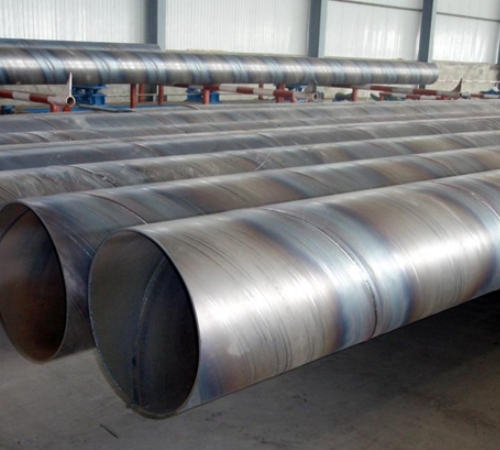
Ukrainian pipemaker Interpipe has produced more than 200 new types of pipe products for European consumers over the past two years, Kallanish notes.
“This is the result of the work of Ukrainian engineers, who are focused on the EU, where there are many niches and unique customer requests,” the company notes. “By expanding our product portfolio, Interpipe has found new customers in areas such as micropiles, fittings, bends and even mobile cranes.”
According to the company, one of the significant challenges was the development of pipes for the production of car axles. “Research work on this project began back in 2023, when 14 pilot projects were completed. Already this year, Interpipe has confidently established itself in a small circle of manufacturers of such products,” it adds.
“Currently, we supply two of the largest European manufacturers with pipes, which after cutting to measured lengths and shot blasting are assembled into axles for trailers and semi-trailers of trucks, and we are also developing the specification for a third client,” Interpipe said.
Interpipe increased crude steel production in the first half of the year to 428,000 tonnes, up 24.4% on-year (see Kallanish passim). Six-month output of pipe rose 23.4% to 258,000t and production of railway products increased 19% to 56,000t, including railway wheels to 42,000t, up by 20%.
In January-June, Interpipe increased sales of pipe products by 35.4% compared to the same period in 2023 to 264,000t. The bulk of pipes were sent to Europe, 112,000t or 37.4% more on-year, while the US took 45% more at 38,000t. Another 45,000t of pipes were shipped to the Ukrainian market, up 2.2% on-year.
Interpipe saw revenue increase in H1 by 3.3% on-year to $535.77 million, while net profit was up 5% to $128.74m (see Kallanish passim). Ebitda grew 26.7% to $130.27m.
Interpipe previously said it was trying to reach pre-war production levels of 70,000 tonnes/month compared to 50,000 t/m of production currently.
Exports account for 80-85% of the company’s production volumes, and for some product groups this figure exceeds 90%. The main markets are the EU, USA and the Middle East.
Svetoslav Abrossimov Bulgaria
Ukraine issues AD duties on China-origin coated steel
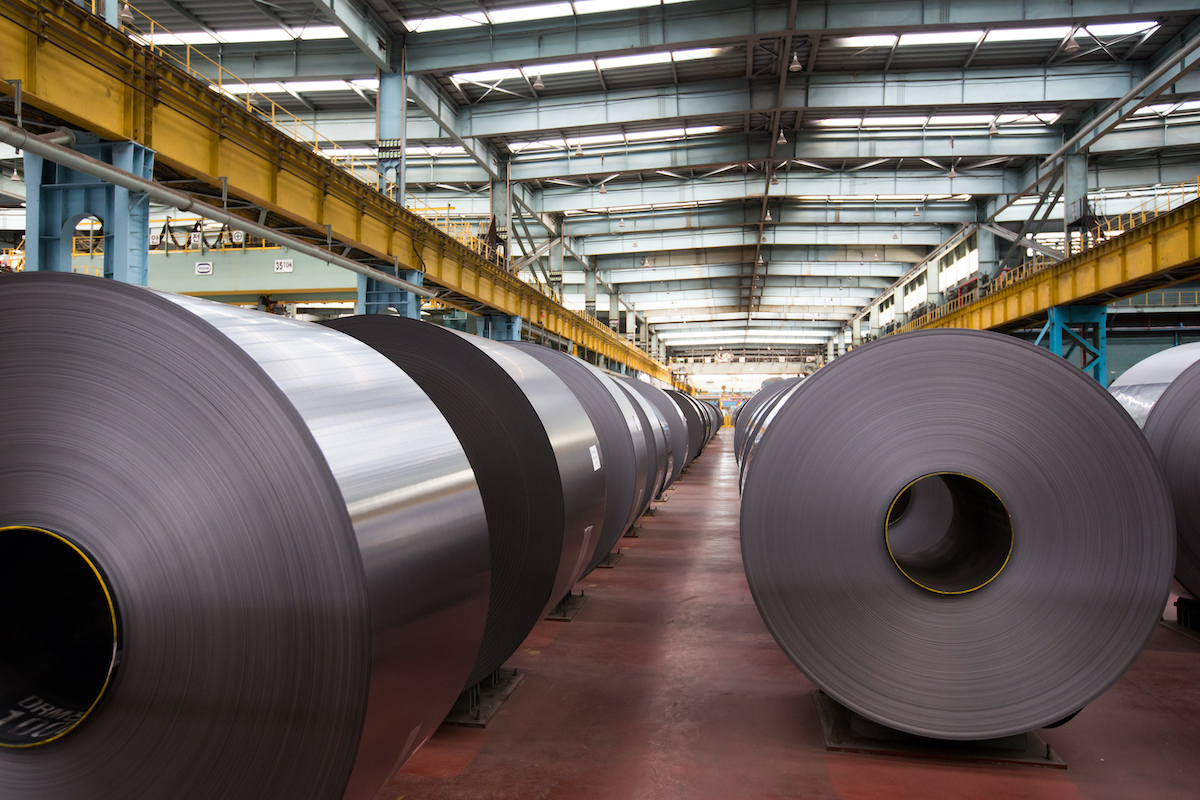
Ukraine has imposed final anti-dumping measures on imported rolled carbon steel with coatings originating from China. The duties are set to take effect on 12 August, Kallanish notes.
The decision followed an investigation initiated by the Ukraine’s Interdepartmental Commission on International Trade in response to a complaint from local producer Modul-Ukraine.
The measures are aimed at addressing the issue of dumped imports from China, protecting Modul-Ukraine and Heavy Metal. The two producers collectively account for over 50% of the nation’s overall production of similar goods.
A definitive anti-dumping duty imposed on China-origin flat rolled products of carbon steel, clad with galvanic or other coating, classified in product subheadings 7210 70, 7210 90 and 7212 40. The duty has been applied for a period of five years.
The final anti-dumping rates were assigned: Zhejiang Huada New Materials Co, 42.53%; Shandong Hwafone New Materials Co, 30.76%; Shandong Iron & Steel Group Jiangsu Trading Co (for export of goods from Shandong Hwafone New Materials Co), 30.76%; Shandong Huijing Color Steel Co, 48.14%; Ebic Supply Chain Management Co (for export of goods from Shandong Huijing Color Steel Co), 48.14%; Welfull Group Co, 40.53%; Shandong Lantian New Material Technology Co, 41.36%; Shandong Castle International Trade Co (for export of goods from Shandong Lantian New Material Technology Co), 41.36%; Fareast Steel International Limited, 38.70%; Qingdao Honesteel Metal Co, 38.70%; Qingdao Jobofone International Trade Co, 38.70%; Shandong Boxing Huaye Industry and Trade Co, 38.70%. Other producers and exporters of goods originating from China will receive a rate of 48.14%.
Elina Virchenko UAE