


Joint venture between Marcegaglia Steel and Manni Group is now operational
Marcegaglia Steel and Manni Group have officially finalized their joint venture, creating a new entity focused on insulated and sectional door panels.
Following European Commission approval, the venture is now the second-largest panel producer in Europe, with operations in over 70 countries, projected revenue of €500 million, and nearly 700 employees.
The agreement involves Marcegaglia contributing Italian and Polish production facilities to Isopan Spa, with both companies holding a 50% stake. Operating under the ISOPAN and MARCEGAGLIA RWD brands, the joint venture includes 16 production lines across Italy, Spain, Romania, Poland, and Mexico.
The partnership aims to drive innovation, sustainability, and decarbonization in construction, leveraging their combined expertise and global reach. Leaders from both companies emphasized the collaboration’s potential to deliver advanced, efficient, and sustainable building solutions, cementing their roles as key players in the international construction market.
Source: marcegaglia.com
EU HRC quotas exhausted by key Asian suppliers, while others remain untapped
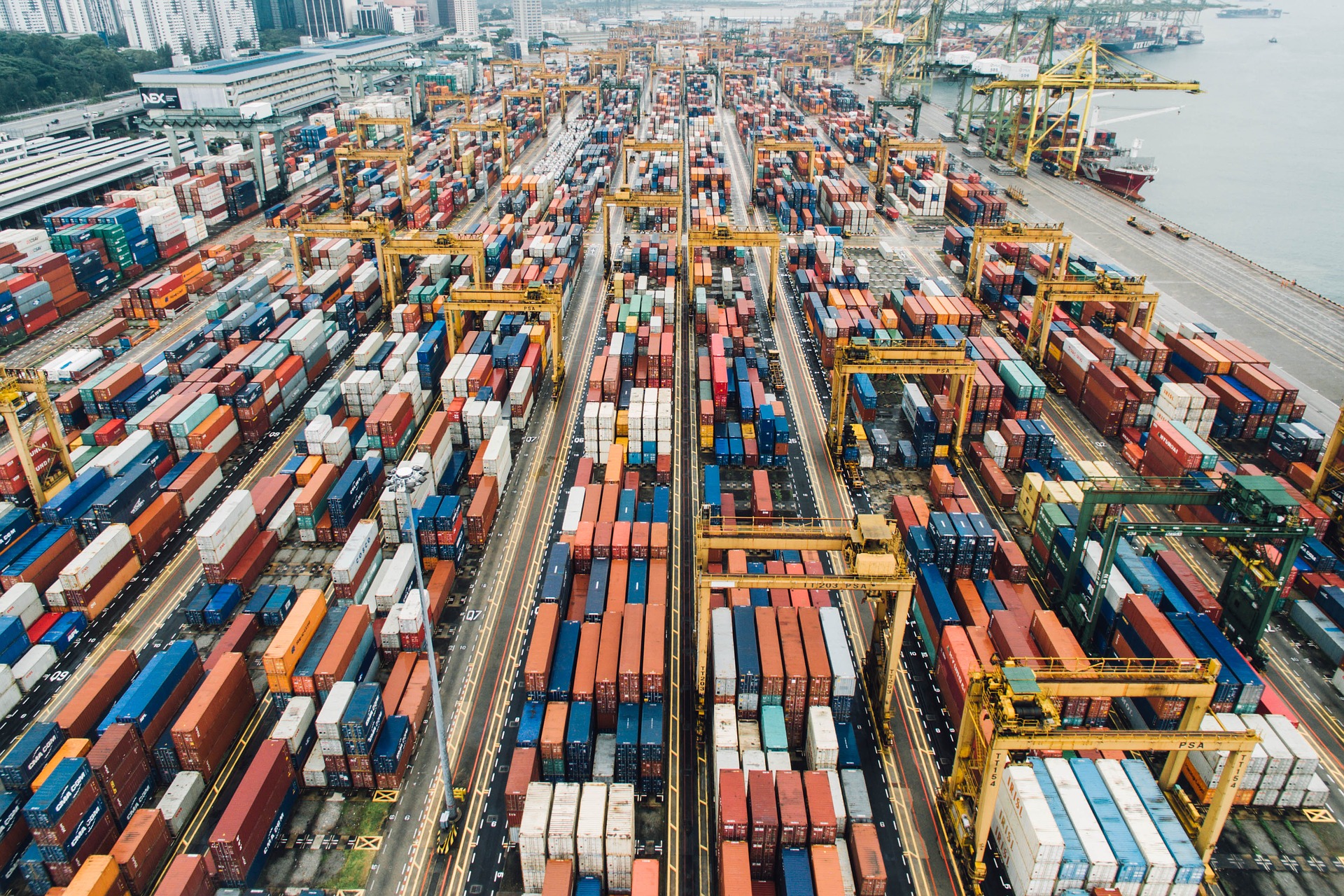
As of Jan. 10, the European Union’s tariff-rate quota (TRQ) system for hot-rolled coil (HRC) imports has been fully utilized by Vietnam, Japan, and Taiwan, according to the latest data from the European Commission. This rapid exhaustion of quotas highlights the strong demand for competitively priced HRC from these Asian countries, which have been key suppliers to the European market.
In stark contrast, 38% of Egypt’s quota remains available, and countries such as Australia, Switzerland, the United States, Canada, and Libya have not yet utilized any of their first quarter quotas, maintaining 100% availability.
Market participants have noted that the swift exhaustion of quotas by Vietnam, Japan, and Taiwan was anticipated, given the competitive pricing and strong demand for their HRC products. However, the availability of quotas from other countries presents an opportunity for European importers to explore alternative sources, particularly as domestic demand remains subdued. Some sources had previously shared expectations that the EU quotas would be filled quickly in Q1, anticipating high port-side stock levels awaiting clearance from Q4 2024.
Domestic European hot-rolled coil prices have remained largely stable since the start of the year, with no major changes in demand reported. Market participants are cautiously optimistic about potential positive developments in the coming days, although the overall sentiment remains one of wait-and-see.
Platts assessed both Northwest European and Southern Europe HRC prices at Eur570/mt ex-works, up Eur10 on the day.
Meanwhile, Platts assessed prices for imported hot-rolled coil in Northwest Europe at Eur535/mt CIF Antwerp, and in Southern Europe at Eur530/mt CIF Italy, both stable on the day.


EUROMETAL asks for clarifications on EU safeguard review
EUROMETAL, the federation of steel, tubes and metals distribution and trading, has formally requested that the European Commission reevaluate certain critical aspects of its review of EU safeguard measures on steel imports.
In a letter to the Commission obtained by Kallanish, the association urges the EC to extend the deadline of 10 January 2025 for the submission of questionnaires related to the review and harmonise customs rules across member states, among other considerations.
Given that the holiday season that occurs from late December to early January, the deadline of 10 January appears to be overly restrictive. A considerable number of EUROMETAL members encountered substantial difficulties in collecting the required data and organising their submissions within the timeline. In response, the European Commission has granted a three-day extension to 13 January. Although the extension is brief, the association contends that it gives businesses more time to better prepare their answers.
The review should also consider the need for standardised customs processes across the EU to make sure that the rules are applied fairly and consistently. This would create a level playing field.
“Divergences in customs rules across member states often result in inconsistent and incorrect declarations, creating unnecessary administrative burdens and an unequal treatment of European importers,” the letter states.
Clarification regarding the definition of “union users” in relation to the review of safeguard measures is urged.
“Specifically, does this definition include the distribution segment (such as service centres, stockholders and traders), which plays a pivotal role in supplying 60% of all steel products to end-users?” EUROMETAL inquires.
The organisation expresses its support for Eurofer’s proposal regarding the establishment of a steel summit by the European Commission. A summit of this nature would serve as a forum for stakeholders to deliberate on the prevailing challenges of the sector and represent an opportunity to work together in identifying solutions that benefit the overall steel value chain.
EUROMETAL represents 17 European national federations of steel distributors, 35 distributors and service centres as well as 25 trading companies.
The European distribution sector procures 70 million tonnes of steel annually and supplies more than a million small and medium-sized end users. It accounts for 60% of the supply of all steel products to end users in EU.
Natalia Capra France


European HRC buyers stay on sidelines in uncertain market
Uncertainty over the future price direction, economy, and political instability in Europe and globally continued to keep buyers on the sidelines.
“Mills are certain they can get higher prices [for HRC] because of reduced imports. But this [import shortage] alone is not enough – the core market fundamentals have not changed and demand is still slow,” a buyer in the Benelux area said.
First-tier mills in the region were largely sold out for February and even March-delivery HRC, according to sources. Although March lead times were still available at some suppliers.
“Before Christmas, a lot of customers bought [HRC tonnages] to secure lower prices,” a second buyer told Fastmarkets. “Some buyers are inquiring about April delivery already, but mills are holding back offers for the second quarter – [there is] too much uncertainty.”
Achievable prices were estimated by sellers at €580-590 ($598-608) per tonne ex-works and at €550-580 per tonne ex-works by buyers.
But producer sources confirmed that the lower end was no longer available. At the same time, offers at €610-630 per tonne ex-works, voiced by a few suppliers at the end of December, had not yet been sealed in deals.
“We don’t get orders at these levels [€610-630 per tonne],” a mill source said.
Italian coil with March delivery was offered to Germany at €610-630 per tonne delivered. A source pointed out that end-of-February delivery was still possible from a supplier, however.
Sources reported some minor-tonnage transactions for such material at no higher than €580-600 per tonne delivered during the week.
A reroller in Northern Europe was offering HRC with March lead times at €580 per tonne ex-works.
Fastmarkets calculated its daily steel HRC index domestic, exw Northern Europe at €565.42 per tonne on Friday, down marginally by €0.83 per tonne from €566.25 per tonne the previous day.
The index was up by €0.42 per tonne week on week and by €4.59 per tonne month on month.
Long-term contracts for the first half and full year of 2025 were sealed with a €60-80-per-tonne discount compared with 2024 levels, sources said, which was “a good outcome for the mills,” a trading source said.
“When negotiations started, automotive [original equipment manufacturers] were asking for a triple-digit discount, so mills can be happy with what they got,” a distributor in Norther Europe told Fastmarkets.
Some contracts for the first half of 2025 were heard done at €650-670 per tonne, compared with €730-750 per tonne from the second half of 2024, sources said.
Meanwhile, in Southern Europe, Fastmarkets calculated its daily steel HRC index domestic, exw Italy at €562.50 per tonne on Friday, unchanged from a day earlier.
The index was flat week on week, but up by €3.50 per tonne month on month.
Local integrated mills were offering HRC for delivery in the first quarter at €580-620 per tonne delivered, which nets back to €570-610 per tonne ex-works.
Buyer estimations of achievable levels were reported at €550-570 per tonne ex-works, depending on the supplier.
Sources expect more clarity on the market situation in the coming weeks, when more market participants come back from holidays.
The market for imported coil has been quiet in recent weeks due to numerous trade restrictions in place, long lead times and uncompetitive prices.
Offers of imported coil were limited in the week to Friday. Turkey was heard offering HRC to Italy at €560-570 per tonne CFR, including the anti-dumping duty.
Indian-origin coil was on offer to Italy at €540-550 per tonne CFR, industry sources told Fastmarkets.
An offer from Indonesia was reported at €550 per tonne CFR.
Most suppliers were offering March shipment.
Buyers estimated workable levels for imports at no higher than €520-540 per tonne CFR.


Polish rebar prices inch up on limited availability
Fastmarkets’ weekly price assessment for steel reinforcing bar (rebar), domestic, cpt Poland, was 2,600-2,610 zloty per tonne ($627-630) on Friday, narrowing upward by 20 zloty per tonne from 2,580-2,610 zloty per tonne a week earlier.
Polish mills were heard offering rebar at 2,610-2,650 zloty per tonne CPT, but buyers did not consider the upper end of that price range to be workable, Fastmarkets heard.
According to industry sources, Polish mills were not willing to give significant discounts, with the workable market price estimated at 2,600-2,610 zloty per tonne CPT.
The Polish rebar market has not fully restarted after the winter holiday break, and no major deals were heard in the assessment week.
Some deals for large volumes exceeding 1,000 tonnes were heard at the end of December at 2,550-2,570 zloty per tonne CPT. But these prices were not included in the assessment because they were not in line with Fastmarkets’ methodology.
A trader source told Fastmarkets that such prices could not be considered indicative of the market because, due to the tonnages, individual prices were negotiated.
According to industry sources, the slight price increase for Polish rebar was due to the limited availability of material during the assessment week.
“Demand is not great. The only reason prices have not started to fall is the restricted quantities available from mills,” a distributor source told Fastmarkets.
The source added that one Polish mill was trying to produce less rebar than normal. “They are inventing stoppages and trying to transition from three to two working shifts,” the distributor said.
According to the same source, prices will start to fall again by the end of January, when more competitive imports were expected to begin arriving at the country’s warehouses.
The trader source also confirmed that limited imports recently had supported the domestic rebar prices.
“In December, there were not [many import] offers from Italy and Germany,” the trader source said, adding that the good weather conditions were also favorable for the construction sector – the main consumer of rebar. All these factors supported domestic prices.
In terms of imports, Germany has been heard offering rebar to Poland at €605 ($623) per tonne delivered since the beginning of 2025.
Offers from Ukraine were heard at €530-550 per tonne delivered at the border.
Long steel consumption ‘below historic levels’
Long steel consumption in Europe has been substantially below historic levels, steel manufacturer CMC, which is present in Poland, said in its report for the fiscal first quarter of 2025 (September-November 2024) on January 6.
“The beneficial effects of improving Polish demand in certain end-market applications, and regional supply discipline, have been largely offset by increased import flows from neighboring nations that have sought an outlet for product not consumed within their home markets,” CMC said.
Last year, Germany significantly increased its rebar exports to neighboring countries to compensate for the lack of activity in its domestic construction sector.
Europe Steel Group, representing CMC’s operations in Europe, recorded net sales of $209.4 million during its fiscal first quarter. This was a decrease of 5.7% compared with the previous quarter’s $222.1 million.
Its earnings before interest, taxes, depreciation, and amortization (EBITDA) were $25.8 million for the first fiscal quarter. But the positive financial result was due to an annual CO2 credit associated with a government program, CMC said.
“Excluding this credit,” the company added, “financial results deteriorated modestly compared with the prior two quarters (EBITDA losses of $3.6 million and $4.2 million respectively) due to metal margin compression driven by high import volumes.”

EU HRC prices rise despite low demand
Domestic European hot-rolled coil prices rose Jan. 10, with no major changes in demand reported since the start of the year. Market participants are cautiously optimistic about potential positive developments in the coming days, although the overall sentiment remains of wait-and-see.
A Germany based service center source noted that while there have been no significant changes in demand, there is expectation of positive developments over the next few days.
Similarly, a German buyer pointed towards steel producers continuing to attempt to increase price levels but noted minimal interest from the wider market.
An Italy based mill source echoed this sentiment, stating that the market remains stable with no big changes.
Tradable values for HRC were reported at Eur570-590/mt ex-works, with larger tonnages trading at Eur560-570/mt and smaller tonnages at plus Eur580/mt.
A South European distributor source mentioned workable prices for February delivery remaining similar to January’s closing levels at Eur570/mt for HRC and Eur670/mt for CRC base ex-works.
Platts assessed North European HRC prices at Eur570/mt ex-works Ruhr, up Eur10 on the day. Similarly, Platts assessed Southern European domestic HRC prices at Eur570/mt ex-works Italy, up Eur10 on the day.
“There are few import offers and they are not appealing due to the [minimal] price gap with domestic levels, alongside long delivery times, and potential risks of duties,” the South European distributor said.
The source also referred to continued foreign exchange rates adding additional pressure to the market.
Market participants are closely monitoring developments, with the hope that demand will pick up and provide clearer direction for pricing in the coming weeks.
Imported HRC prices in Northwest Europe increased to Eur535/mt CIF Antwerp Jan. 10, while prices in Southern Europe remained stable on the day at Eur530/mt CIF Italy.
“At the moment, it seems as if the hype surrounding green steel has died down,” the German buyer said, discussing carbon accounted steel.
Sources confirmed a continued premium offer level of Eur200/mt for for CO2e content below 1mt, under scopes 1-3, but buying interest remained thin.
Platts assessed Northwest European hot-rolled coil carbon-accounted at Eur630/mt ex-works Ruhr Jan. 10, up Eur10 on the day.