


EU announces funding for steel, coal innovation
The European Commission has announced a €175 million ($182m) budget for the 2025 Research Fund for Coal and Steel (RFCS), aiming to advance innovation and facilitate the transition in these sectors.
The funding includes two major calls, or “big tickets,” set to launch in February. The steel sector will receive €100m for projects focused on breakthrough technologies, such as carbon capture, storage, and usage, process intensification, and CO2-neutral iron ore reduction.
Meanwhile, €35m will support coal sector initiatives, including the re-purposing of closed mines, waste treatment, methane monitoring, and the recycling of critical raw materials.
An additional €40m annual call covering both sectors will open in June. Beneficiaries of the funding will include universities, research centres, and private companies.
The RFCS programme aligns with the European Green Deal’s goal of achieving EU climate neutrality by 2050, emphasising clean technologies and just transition in coal mining regions, Kallanish notes.
Elina Virchenko UAE


Moselle river lock to be repaired by February
The repair work on the lock on Germany’s Moselle river has proceeded faster than anticipated, so that ship traffic can return to normal as of 1 February, according to the local waterways authority WSA.
On 8 December, a vessel carrying steel scrap collided with the lock’s gate at point Müden, and damaged both wings to the degree that they needed to be exchanged. Ship traffic has since been interrupted, which affected scrap transports to nearby mills Dillinger, Saarland and ArcelorMittal Luxembourg, but also outgoing transports of mainly Dillinger’s plate and ArcelorMittal’s sections.
WSA originally expected that the waterway would not be back to regular traffic operation before March, but repair work has proceeded faster than planned, Kallanish understands. According to the authority, the concrete works at the lock will be completed this week. The new gate wings have been completed by a regional fabricator, and their installation will take approximately one week, so that test transits can be carried out by 31 January.
In a statement earlier in January, Dillinger said that its supplies of raw materials by rail and road were secured, so that production continued at a normal level. The driving ban for trucks on Sundays and public holidays has been suspended by the state governments of Saarland and Rhineland-Palatinate, thus ensuring a permanent flow of transport, the steelmaker wrote.
Christian Koehl Germany

European buyers still reluctant to accept higher HRC offers
In general, offers from other integrated mills in the region were heard in the range of €620-630 ($642-652) per tonne ex-works or delivered. Most producers heard to be offering April lead times already, however, several buyer sources said that some producers still could do March deliveries.
Market participants pointed out that domestic HRC prices have recovered from the lower levels observed in the fourth quarter of 2024, but mills target offers were “unrealistic” considering subdued demand.
Most sources estimated the tradable market level to be at €570-590 per tonne ex-works on Tuesday.
“Demand is still not strong enough to back up €600 + [HRC] prices. The mills have to reduce output to make [a price increase] work,” a buyer source told Fastmarkets.
Market sources told Fastmarkets that the price rise mills were pushing for was not demand-driven, adding that mills were hoping that the EU’s trade policies will support domestic markets.
“We have safeguards in review right now, we have [an] anti-dumping probe, we have Trump in the US [presidential] office and [we are] bracing for even more protectionism globally. Importing steel gets increasingly inconvenient – you don’t know what the cost will be,” a second buyer said.
Fastmarkets calculated its daily steel hot-rolled coil index domestic, exw Northern Europe at €577.50 per tonne on Tuesday, up by €2.50 per tonne from €575.00 per tonne on Monday.
The index was up by €4.17 per tonne week on week and by €12.50 per tonne month on month.
At the same time, Fastmarkets calculated its corresponding daily steel hot-rolled coil index domestic, exw Italy at €573.75 per tonne on Tuesday, up by €3.75 per tonne from €570.00 per tonne on Monday.
The index was up by €3.75 per tonne week on week and by €13.75 per tonne month on month.
Offers in Italy were heard at €610-620 per tonne delivered, which nets back to around €600-610 per tonne ex-works.
But these offers have not been accepted by buyers so far.
Market participants estimated the tradable market levels for HRC in Italy in the range of €570-580 per tonne ex-works.
Import offers of HRC to both Northern Europe and Italy remained limited on Tuesday. According to sources, this was due to the pending safeguard measures review.
From Turkey, one supplier was heard offering €580-590 per tonne CFR. But for tonnages of 10,000 tonnes and higher, it was possible to get €560-570 per tonne CFR, several sources said.
From Asia, offers were heard at €560-570 per tonne CFR for HRC arriving in April.


Italian plate market stagnates
Italian heavy plate prices are currently stagnating, due to weak demand and a sluggish beginning to the year, sources tell Kallanish.
Transactions are occurring for smaller volumes, while larger clients have yet to resume their buying activities. Both the mill and distributors agree that activity is lacklustre in January.
A mill source suggests that when evaluating 2024, there was a notable slowdown in the second half. However, the results for the full year remain satisfactory as the company has not incurred any losses.
Currently, contracts for the Italian domestic market show a level of stability when compared to the end of the previous month. S275 grade transactions are currently taking place within the range of €630-640/t ex-works, with S355 trading at a premium of €20/t above that range.
Mills are attempting to uphold the price point of €650/t ex-works for S275.Booking prices for Asian-origin slab are approximately $530-540/t cfr.
The primary challenge for domestic plate producers remains the availability of Asian material at competitive prices. Monthly imports of plates from Asia into Europe have remained stable at approximately 180,000t/month last year.
A mill source indicates that domestic demand is being met by Asian producers who have established an efficient distribution network in Europe, facilitating the sale of vessels containing both small and large orders of material.
Asian producers have effectively shifted the quotas they lost on coils to plates, subsequently boosting their plate exports to Europe at competitive pricing, according to the source.
“We are unable to compete with their low pricing structure. Our processing costs are at a minimum three times greater than those of Asian steelmakers” he states and anticipates that developments will occur this year, as the European Union is expected to announce a safeguard review by the conclusion of the first quarter.
Natalia Capra France
Another German mill pauses due to power-cost spike
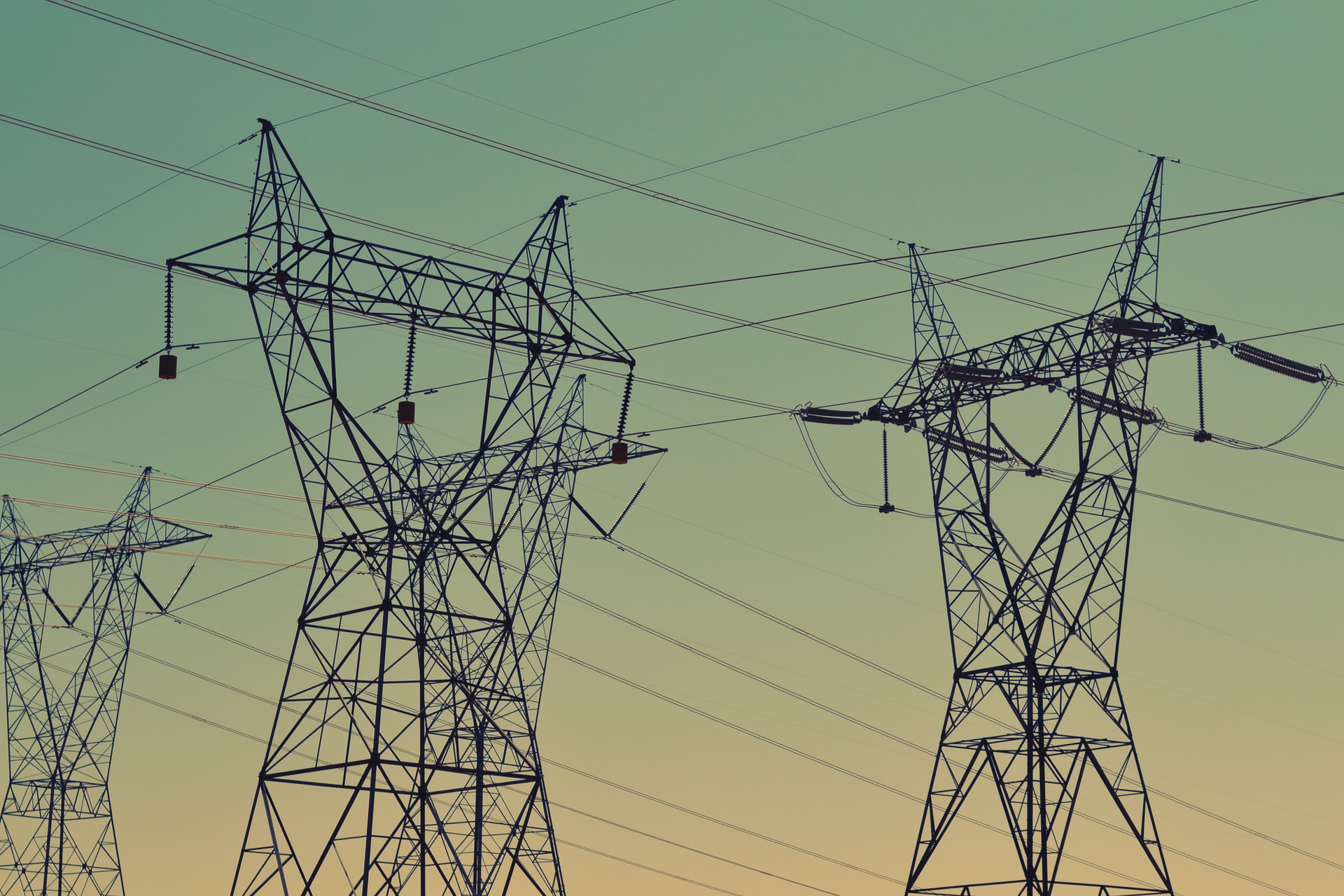
A sudden surge of power prices in Germany has caused special bar quality mill Georgsmarienhütte to suspend production, Kallanish understands.
In a post on LinkedIn, managing director Anne-Marie Grossmann writes that production had to be stopped Monday morning. The day-ahead electricity price that morning had reached €432/MWh ($449). By comparison, sudden peaks prior to 2019 would never go beyond €130/MWh, Grossmann notes. She expresses outrage about “a failure of energy policy in Germany – the land of engineers and innovators” and how it falls behind other countries that have lower energy costs.
GMH is not the first steelmaker that stopped production this winter because of power price peaks. In December, Feralpi’s rebar mill in Riesa suspended output for two days amid a sudden surge in power prices that compounded the difficult market situation (see Kallanish 16 December). Back then, the power prices on the spot exchange climbed as high as €900/MWh.
The surges are attributable to a low in wind and solar power production after a long period of overcast skies with little wind. Such occasional “dark lulls” (“Dunkelflaute”) are becoming symptomatic in Germany, which is trying to change its energy supply towards renewables, mainly wind and solar energy.
Hence, Grossmann especially attacked the political trend of abolishing nuclear and fossil power generation too quickly before a stable supply from renewables can be relied on. According to Berliner Zeitung, GMH already adjusted its production rhythm of its electric-arc furnace to shorter shifts in early January. The newspaper cites company sources as saying that the mill is nevertheless maintaining its capacity to guarantee deliveries to customers.
Christian Koehl Germany

British Steel opens new steel profile service centre
British Steel has announced the opening of a £26 million ($31.6m) service centre at its special profiles business in Skinningrove, UK, Kallanish learns.
The site specialises in manufacturing steel profiles for the earth moving, forklift, construction, shipbuilding and mining markets. The investment will establish it as one of the leading suppliers to the forklift truck mast industry.
Its milling capability will primarily service the demanding high-reach forklift truck market. The company adds that the investment will enable the company to explore growth opportunities across the globe for its standard and bespoke forklift mast profiles, with the new warehousing and processing facility forecast to significantly increase throughput within the next two years.
“This is the largest single investment in our special profiles business for more than 30 years, demonstrating our owner’s commitment to strengthening British Steel’s position at the heart of UK manufacturing,” states Richard Napier, British Steel’s sales director for special profiles.
“The new facility also firmly establishes us as one of the world’s leading manufacturers and processors of value-added profiles for the forklift industry. Our extended range of products are designed and manufactured to exact customer requirements, with the new milling capability offering profiles with tolerances of just 0.1mm – precision few global competitors can match,” he adds.
The facility includes four new CNC lathes for turning mill rolls, three automated bandsaws for cutting stock to exact lengths, a laser measurement system for process control of every bar rolled, and a warehousing system for storing and processing material from the rolling mill. It also incorporates a 14-metre bed, milling machines.
Steel for the rolling mill at Skinningrove, including the new service centre, is manufactured in Scunthorpe.
Late last year the company also opened a £10m rail stocking facility in Scunthorpe.
Carrie Bone UK

European People’s Party calls for two-year CBAM freeze
The European People’s Party (EPP) has called for a two-year delay on the implementation of the Carbon Border Adjustment Mechanism (CBAM) in a statement seen by Kallanish, following its recent leadership summit.
It also called for the introduction of the Corporate Sustainability Reporting Directive and the Corporate Sustainability Due Diligence Directive to be paused for the same length of time.
They argue these measures impose excessive burdens on SMEs, hinder competitiveness, and risk deindustrialisation.
“The EU has decided on ambitious climate targets and policies to achieve them. When implementing them, we must make sure that they do not lead to deindustrialization,” it said.
“If climate policy becomes an obstacle for competitiveness and growth, it will not only fail to have the support of European citizens, but it will also risk increasing global emissions because products will be produced in other regions of the world with higher emissions,” it added.
The EPP proposes limiting such regulations to large companies (1,000+ employees), reducing overlap, and cutting reporting obligations by 50%.
They also call for measures to protect the European automotive industry and allocate more ETS revenues to energy-intensive sectors.
“We ask the European Commission to put forward a proposal regarding measures to maintain the competitiveness of the European Automotive industry, especially relief measures to avoid potential fines for failing to reach the 2025 emissions targets. In response to the high energy prices a larger share of ETS revenues should be earmarked to energy intensive industries, for example for supporting green hydrogen or carbon capture and storage solutions,” it said.
Elina Virchenko UAE