


Swiss government offers subsidies to steelmakers
Steel and aluminium companies in Switzerland are eligible for state aid from the start of this year retroactively until the end of 2028, Kallanish notes.
The companies will benefit from a rebate on electricity grid usage charges. Fees will be reduced by 50% in the first year, 37.5% in the second, 25% in the third and 12.5% in the fourth. The costs for the government amount to some CHF37 million ($42m), according to Swiss public information portal swissinfo.ch.
High electricity costs and grid fees in recent years have been the main cause of concern of the country’s to steelmakers, Swiss Steel and Stahl Gerlafingen, to keep up in international competition. Production cutbacks and job cuts have been an issue at both companies.
National union Syna claims that the government’s offer has been made possible by worker protests over jobs since last autumn. Only in February, workers in one rally urged Swiss Steel to seize the government’s offer. This is not as understood as it appears at first.
The companies must comply with a number of requirements. They will have to submit a plan for the sustained preservation of production sites and jobs, and pledge investments. Swissinfo also notes that, in particular, they are prohibited from paying variable remuneration to members of management and the supervisory board.
Despite the dire state of Switzerland’s steelmakers, the government’s offer has not created major media waves, and might not be welcomed with open arms by the supposed beneficiary companies. Upon request from Kallanish, Swiss Steel confined itself to a brief statement saying: ”We have taken note of the decree, and will carefully examine if we will apply for it.”
Christian Koehl Germany


EU steel action plan to introduce melt and pour clause
The European Commission will introduce a “melted and poured” rule as part of its steel and metals action plan, to underpin the effectiveness of its trade defence measures.
The rule will mean the origin of goods is determined by the location at which the metal is originally melted, regardless of where it was further processed. This will prevent minimal transformation to evade dumping and other duties and provide greater clarity over the origin of the product, a draft of the plan suggests.
The move will clearly have big ramifications for steel, where material produced in countries with duties, such as China, is further processed — for example, from hot-rolled into hot-dip galvanised — before being sent to the EU without paying duties.
The commission said it will “remain vigilant, as overcapacities generated under non-market conditions may also have the effect of driving unrelated market-based producers in other third countries to export quantities to the EU that are displaced from their domestic or other traditional non-European markets”.
And the rule will have major implications for the EU’s imports of cold-rolled and hot-dip galvanised, among other products, with one trading firm saying it would be a “game changer”. European steel association Eurofer requested a melt and pour on Chinese steel as part of its request for a functional review of the steel safeguard.
The commission also will “proactively” open duty investigations based on a “threat of injury” without waiting for material injury to occur.
The carbon border adjustment mechanism will be extended to certain downstream products to prevent a shift to downstream goods that then avoid paying the carbon taxes required on upstream products, such as steel. European service centres and distributors have been requesting this move to protect themselves and their customers, which could face greater import penetration without an extension of the measures.

Source: argusmedia.com

European HRC prices largely stable, buyers expect more clarity on future market trends
At the same time, mills were heard to still be bullish, pushing for slightly higher prices for HRC with delivery in the second quarter of the year, Fastmarkets understands.
Last week, the European Commission notified the World Trade Organization (WTO) of adjustments to the region’s steel safeguard measures, affecting annual liberalization, introducing caps and changing residual tariff rate quota (TRQ) access for a number of steel products, including HRC, Fastmarkets reported.
The proposed amendments are expected to enter into force on April 1.
In addition, the European Commission announced provisional anti-dumping (AD) duties for HRC imports originating from Egypt, Vietnam and Japan, with the new measures set to be imposed as of April 7.
Both moves were expected to influence the market of imported HRC to Europe, and in turn the domestic prices. But sentiment among industry sources remained mixed, with some participants hoping for additional information on the announced measures.
A trader source told Fastmarkets that import access was clearer now, but the steel sector should wait for additional clarification from the European Commission to fully understand the retroactive applicability of the proposed anti-dumping duties.
The source added that there would not be an immediate effect on the domestic HRC prices.
“Real demand is still weak and the European mills’ price policies, meant to reflect the new safeguard measures, would probably take some time,” the trader added.
A second trader source told Fastmarkets there was no ground for further price increases.
“The [announced] safeguard measures for HRC are not as harsh as expected, and real demand is still low,” the second trader said.
But the source added that mills might still try to increase June delivery HRC prices, speculating on limited supply, because of ArcelorMittal’s plans to idle its Dunkirk blast furnace for three months and the force majeure circumstances with Salzgitter.
A distributor source from the Benelux region confirmed that mills would try to rise HRC prices for June delivery by about €10-20 ($10.90-21.81) per tonne.
A leading European producer was rumored to offer such material at €670-680 per tonne delivered, which would net back to €660-670 per tonne ex-works.
But most offers of May-June delivery HRC were heard at €640-660 per tonne ex-works in Germany and the Benelux area, Fastmarkets understands.
Buyers’ estimations for the tradeable market level in Northern Europe were at €630-640 per tonne ex-works.
Fastmarkets calculated its daily steel hot-rolled coil index, domestic, exw Northern Europe at €636.67 per tonne on Monday, up by €0.67 per tonne from €636.00 per tonne on March 14.
The Northern European index was up by €4.79 per tonne week on week and by €31.67 per tonne month on month.
In Southern Europe, meanwhile, Fastmarkets’ daily steel hot-rolled coil index, domestic, exw Italy was calculated at €620 per tonne on Monday, unchanged from March 14
The index was stable week on week but up by €25.00 per tonne month on month.
Offers of domestic HRC with delivery in the second quarter of the year were heard at €640 per tonne delivered, which would net back to €630 per tonne ex-works, Fastmarkets understands.
But buyers’ estimations for the tradeable market level were at €610-620 per tonne ex-works.
A third trader source based in Italy told Fastmarkets that domestic HRC prices were largely flat in the past two or three weeks. But according to the source, local suppliers would start pushing for higher prices soon.
The market for imported HRC to Europe remained largely quiet on Monday.
South Korea, Taiwan, and India refrained from making fresh offers to the European market, sources told Fastmarkets.
Indonesia was heard offering HRC to Italy at €540 per tonne CFR, and slightly higher to Northern Europe at €550-560 per tonne CFR.
Saudi Arabia was also heard offering HRC to Northern Europe at €600-605 per tonne CFR.
Julia Bolotova in Brussels contributed to this report.


ArcelorMittal and Siemens Energy partner on decarbonization
ArcelorMittal Europe – Flat Products, a subsidiary of Luxembourg-headquartered steelmaker ArcelorMittal, has announced that it is partnering with Germany-based Siemens Energy for high-grade steel solutions for energy transition infrastructure.
According to the statement, power demand is being driven by economic growth in Asia and the global south, and the explosion in data and AI is ramping up energy needs around the world.
“The steel characteristics we require are excellent magnetic permeability, strong thermal conductivity, very low energy losses, together with the availability of a wide range of coatings. ArcelorMittal is able to supply all the grades and coatings we need, and we know their R&D teams are constantly working on new solutions to make their electrical steels even more efficient.
The coming onstream of ArcelorMittal’s additional electrical steels production of 300,000 mt per annum, at Mardyck in France, will deliver the capacity and surety of supply to support Siemens Energy in its ongoing growth and development opportunities out of Erfurt,” Andreas Konschak, general manager at Siemens Energy, said.


ArcelorMittal steel removed from stranded ship
A chartered ship carrying steel for ArcelorMittal has now made it to its destination after running aground in the Humber Estuary at the start of the month, with the steel removed as part of a rescue operation, Kallanish learns.
H&S Wisdom become stuck en route to Gunness Wharf Port, near Scunthorpe on 2 March, with rescue crews at the time suggesting the ship may need to await until the next high tide at the end of the month to be refloated.
In recent days, ArcelorMittal has worked to remove the steel from the ship with cranes and pontoons. Following this, the ship refloated with the tide.
Ship tracking shows that the vessel has now been successfully docked at its intended destination as of late Saturday evening. It had departed from the Netherlands on 1 March.
Carrie Bone UK

Rheinmetall may use Volkswagen plant to produce tanks
German military giant Rheinmetall is considering taking over one of Volkswagen’s soon-to-be-unused plants, as the arms maker seeks additional production capacity in Germany while domestic carmakers struggle, Kallanish notes.
According to the company’s chief executive, Armin Paperge, VW’s Osnabrück plant is “suitable” for Rheinmetall’s operations, but stressed that any decision to acquire unused car plants would depend on securing more tank orders. “It is much more complicated to build something than to use something that is already there. We are in constant conversation with VW over the automaker’s military truck joint venture with MAN Truck & Bus,” he said during his company’s annual press conference last week.
“An era of rearmament has begun in Europe and for Rheinmetall it brings growth prospects in the coming years that we have never had before,” Paperge noted.
The Düsseldorf-based company reported a 30% on-year increase in its defence business last year, driving total sales to $10.6 billion.
Rheinmetall said that about 30% of its sales went to Germany’s armed forces – a figure likely to rise if incoming Chancellor Friedrich Merz succeeds in his plan to bypass the country’s strict debt rules to allow unlimited borrowing for defence spending.
The company expects sales to increase by up to 30% this year, adding that this would also “improve operating profit”.
Rheinmetall has been one of the biggest beneficiaries of Russia’s invasion of Ukraine as investors put aside ethical concerns about arms stockpiles. The company’s share price has risen more than ten-fold since the war began in 2022.
VW’s Osnabrück plant is one of three that will remain unused for the next two years after the automaker decided last December to halve its production capacity in the country due to slowing car sales in Europe.
Svetoslav Abrossimov Bulgaria
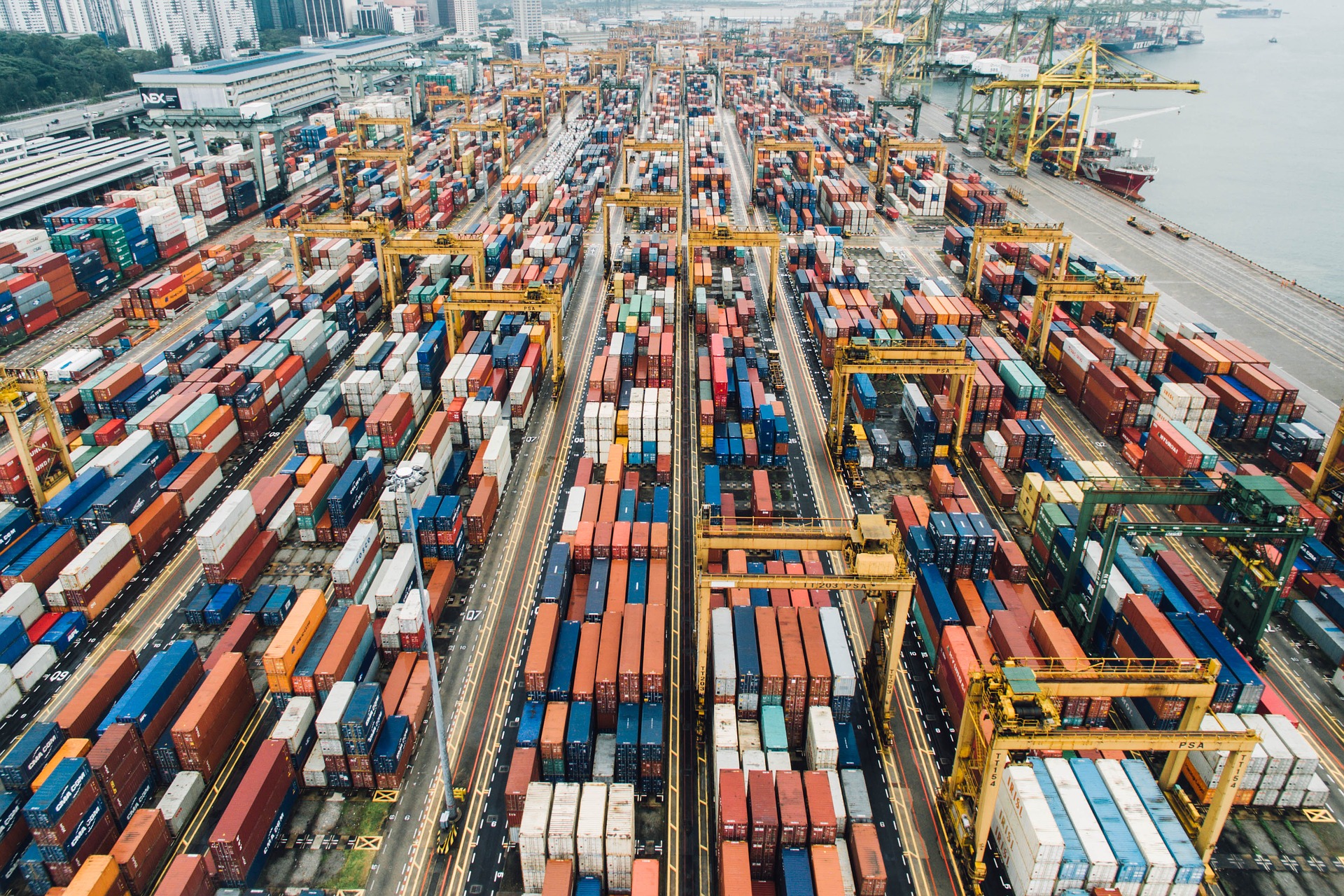
OECD: Tariffs threaten global economic growth
Geopolitical and policy uncertainty, plus further trade fragmentation, could harm global growth, the Organisation for Economic Co-operation and Development (OECD) warns.
The Paris-based institution says US President Donald Trump’s trade wars are “clouding the outlook” for worldwide economic growth.
“The global economy has shown some real resilience, with growth remaining steady and inflation moving downwards. However, some signs of weakness have emerged, driven by heightened policy uncertainty,” explains OECD secretary general Mathias Cormann. “Increasing trade restrictions will contribute to higher costs both for production and consumption. It remains essential to ensure a well-functioning, rules-based international trading system and to keep markets open.”
In its Interim Economic Outlook, the OECD estimates that global GDP growth should lower from 3.2% in 2024 to 3.1% in 2025 and 3% in 2026. The previous projection was for a 3.3% global GDP growth over the next two years.
With more trade barriers and higher-than-anticipated inflation, annual real GDP growth in the US is projected to “slow from its very strong recent pace” to 2.2% in 2025 and 1.6% in 2026. GDP growth will also slow in the eurozone to 1% in 2025 and 1.2% in 2026. Prospects in China will also soften in 2026 to 4.4% from 4.8% this year, Kallanish learns.
India, however, is set to continue growing, by 6.4% this year and 6.6% in 2026. Indonesia will see the second-largest GDP growth rate at 4.9% and 5%, respectively. Argentina and Germany, meanwhile, will see their GDP shrink by 0.2% and 1.8%, respectively in 2025.
Among several identified risks, the outlook highlights the escalation of trade restrictive measures. If bilateral tariffs were raised further on all non-commodity US imports, and countries retaliated with their tariffs, global output could fall by around 0.3% by the third year, and global inflation could rise by 0.4 percentage points per year on average in the first three years.
“The impact of these shocks would be magnified if policy uncertainty were to increase further or there was widespread risk repricing in financial markets. These would add to the downward pressures on corporate and household spending around the world,” the OECD adds.
To reduce output weakening in advanced and emerging economies, the institution recommends “ambitious structural reforms”. It says governments must enact reforms to improve productivity and enhance the adoption of new technologies by boosting market competition and eliminating excessive regulatory burdens on firms.
“Enhancing education and skills development and reducing constraints in labour and product markets that impede investment and labour mobility will be key. Artificial intelligence (AI) presents a unique opportunity to revive productivity,” it adds.