


ArcelorMittal to invest EUR1.3bn in single Dunkirk EAF
ArcelorMittal will invest EUR1.3bn in installing replacement electric-arc steelmaking capacities at its Dunkirk plant, scheduled for first operations in 2029, the company announced 10 February.
According to the steelmaker, the new 2 mt electric-arc furnace (EAF) will be capable of producing steel with “three times less CO2 than a blast furnace,” at 0.6t CO2e/t, and will operate on a mixture of scrap, direct-reduced iron/hot-briquetted iron (DRI/HBI), and pig iron. Half of the EUR1.3bn investment will be financed publicly with Energy Efficiency Certificates.
France’s President, Emmanuel Macron, was present for the announcement at the French site, accompanied by company leadership.
“I am delighted we are now able to launch this €1.3 billion investment in Dunkirk, which underscores our Group’s long-term commitment in France,” said CEO Aditya Mittal in a press statement. “I must thank President Macron and the French government who – very early on – understood the challenges the European steel industry was facing.”
Mittal’s comments reference steelmakers’ long-cited issues with the competitiveness of the European steel sector against global pressures, which the European Commission is attempting to remedy with new industrial support policies, and regulatory simplification. Policies initially proposed by the Commission in last year’s Steel and Metals Action Plan – such as new long-term steel trade protections, the implementation of the Carbon Border Adjustment Mechanism (CBAM), and the upcoming Industrial Accelerator Act (IAA) – are intended to better support the ‘investment case’ for industrial decarbonisation, which for European steelmaking, is largely characterized by the transition from blast-furnace to basic-oxygen furnace (BF-BOF), to EAF steelmaking fed by scrap and direct-reduced iron (DRI).
In its press release, ArcelorMittal states that it “appreciates the progress made by the European Commission to better protect the European steel industry,” and “expects [proposed measures] to restore fair and competitive conditions in the European steel market, thus securing a sustainable future for steel production within the European Union.”
ArcelorMittal has suspended the majority of its European decarbonisation projects, citing aforementioned burdens on competitiveness, as illustrated in McCloskey’s recent Global Green Steel Profile. Postponement to the renovations at Dunkirk specifically related to the high cost of gas and hydrogen in Europe, as stated by company leadership in the French Parliament last year.
The steelmaker’s latest announcement on its decarbonisation plan appears reduced from its initial scope, confirming the construction of only a single EAF, as opposed to previous commitments to construct two EAFs, and a 2.5 mt/y DRI plant. The two EAFs were originally scheduled for initial operations in 2027.
Secondary steelmaking sources have suggested that this indicates ArcelorMittal is abandoning its DRI investment plans and will instead import DRI/HBI to facilitate decoupled steelmaking.
McCloskey’s recent coverage of the leaked draft of the EU’s upcoming Industrial Accelerator Act (IAA) indicates that the European Commission is planning to introduce a ‘sliding scale’ into its new green steel definition, represented by a voluntary low-carbon label that gives a better ‘green classification’ the lower the share of constituent scrap. This could give DRI-EAF steel an advantage over the EU’s existing scrap-EAF production in achieving equivalent, or even improved classifications, despite the lower emissions profile of high-percentage scrap-fed steels.
The EU’s independent EAF steelmakers have largely opposed the inclusion of the sliding scale, fearing that it will give integrated steelmakers undue access to secondary steelmakers’ core construction sector demand as low-carbon markets become increasingly (and at times inconsistently) regulated by instruments such as the IAA.
Despite the fact that the thrust of the European Commission’s regulatory efforts in the steel sector are to protect the ‘investment case’ for decarbonisation without undermining industrial resilience, some market sources have argued that the current trajectory of steel policy across CBAM, the new permanent steel quotas, and green steel standardisation are instead facilitating the gradual decoupling of iron and steelmaking on the continent.
These sources allege that integrated steelmakers are lobbying for ‘sliding scale’ based green standards of universal scope in order to consolidate their access to future domestic low-carbon demand, supporting a limited transition to decoupled EAF steelmaking, while simultaneously closing the market to downstream imports but retaining access to low-cost DRI/HBI from abroad. If true, this would threaten to off-shore primary steel production, undermining the Commission’s push for industrial resilience, and potentially stimulating domestic steel price inflation beyond what consuming industries can tolerate.
The French Democratic Confederation of Labour (CFDT) – France’s largest trade union by membership – boycotted Macron’s visit to the Dunkirk site on similar factors, describing the announcement as “political staging.”
“This announcement is a smoke screen and will not suffice; we are very far from the initial plan […] while ArcelorMittal has obtained everything it wanted!” stated the union in an associated press release. “Behind the hollow words and the promises, there are thousands of jobs threatened and eliminated, weakened industrial basins, and shattered lives.”
ArcelorMittal released its full-year 2025 results this week, reporting $3.2bn net income, and foreseeing an improved outlook for European steel prices and demand in 2026.


Salzgitter to take over HKM steel joint venture
German steelmaker Salzgitter said it will be the sole owner of the Hüttenwerke Krupp Mannesmann (HKM) joint venture from 1 June 2026 after agreeing to buy out the co-owners of the company, according to a joint statement from Salzgitter and thyssenkrupp Steel.
Under the plan, thyssenkrupp Steel will sell its shares in HKM to Salzgitter, effective 1 June 2026, for an undisclosed sum, providing the latter sole responsibility in a reduced scope.
Thyssenkrupp owns 50% of HKM, while Salzgitter and Vallourec control 30% and 20% of the company, respectively.
Implementation of the plan is subject to the approval of Salzgitter’s governing bodies and a positive assessment of a going concern report, which Salzgitter has already commissioned. The agreement is also conditional on the third owner, Vallourec, also agreeing to sell its shares to Salzgitter.
HKM will continue to supply slab to thyssenkrupp Steel until the end of 2028, instead of previously planned 2032.
Thyssenkrupp closed its heavy plate mill, which used HKM’s slabs as feedstock, in 2021. In addition, under the restructuring proposal, thyssenkrupp planned to cut production from 11.5 mt/y to 8.7-9.0 mt/y and to separate from HKM – either by selling the asset or shutting the plant if no buyer was found.
“This agreement is an important milestone and brings us a good step closer to establishing a sound industrial future for HKM. It creates clarity for everyone involved in this process, while offering HKM’s workforce a positive perspective. HKM will thus become part of the process of transforming to low-CO2 steel production in the Salzgitter Group,” Gunnar Groebler, CEO Salzgitter, said.
To learn more about decarbonisation projects in Europe and globally – check Global Green Steel Profile.
HKM has a capacity of around 6 mt/y of crude steel, with semi-finished products manufactured via the blast furnace-basic oxygen furnace (BF-BOF) route.
Salzgitter’s announcement confirmed rumours that one of HKM’s shareholders was planning to continue production despite earlier plans to divest the asset as the mill can supply slab to the spot market to substitute imports.
European re-rollers, mainly producing heavy plate, rely heavily on imported slab, though the introduction of the Carbon Border Adjustment Mechanism (CBAM) on steel imports to the EU from January 2026 has resulted in a significant increase in costs. European re-rollers estimated CBAM duties for import slab at EUR40-80/t, but those numbers could be higher if the exporting steelmaker does not get emissions verification in time in which case the buyers would have to pay the duty based on default emission values.
A few market sources have reported revived domestic slab market activity in Europe with HKM offering slab on the spot market.

ADI EUR390m loan approved by EU; plans BF restart
The European Commission approved a rescue loan of up to EUR390 million to flat steel producer Acciaierie d’Italia (ADI) under EU state aid rules, the Commission said on 10 February.
The funds were allocated to ensure that the steelmaker can cover operating costs until the new owner is selected in the ongoing tender.
“Italy expects to complete the sale process soon and transfer the operation to the selected bidder. Until then, ADI faces serious liquidity needs to cover operating costs such as paying suppliers and wages. The rescue loan authorised by the Commission aims to cover these operating costs for the months ahead,” the Commission said.
Late last year Flacks Group, a United States-based investment firm focused on the turnaround of distressed businesses, emerged as the preferred bidder for ADI. The company plans to double steel output at ADI to 4 mt within one year. As part of its decarbonisation initiative Flacks Group plans to replace existing blast furnaces (BFs) with two electric-arc furnaces (EAFs) and keep only one BF running.
ADI has annual production capacity capped at 6 mt of crude steel. But it currently operates only BF No. 4.
The steelmaker plans to restart BF No. 2 around 20 February, according to Italian press reports. ADI did not reply to McCloskey’s request for confirmation of this information.
Earlier this year, the extraordinary administration of ADI sued ArcelorMittal seeking approximately EUR7bn in damages alleging that ArcelorMittal mismanaged the assets when it was in control. ArcelorMittal categorically rejected all allegations.

Hasan Akbulut: Türkiye’s steel industry has a competitive advantage with its low emission production structure
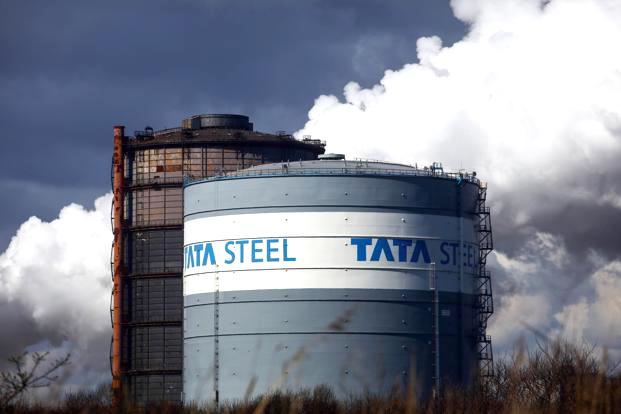
Tata Steel warns government as UK steel sector faces critical risk
Author: SteelRadar Editorial Team

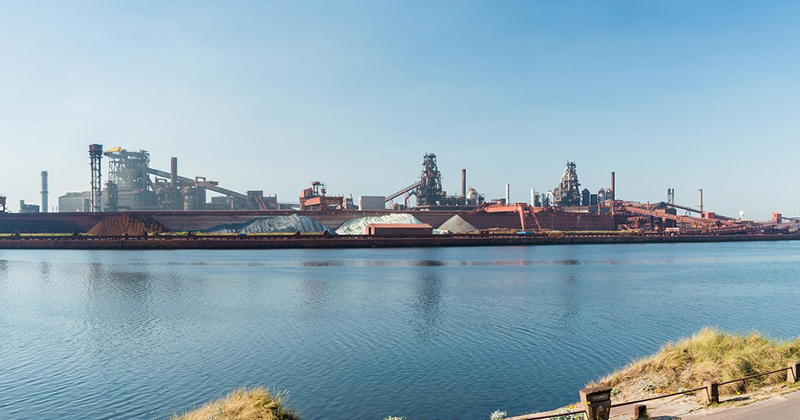
ArcelorMittal has confirmed a EUR 1.3 billion electric arc furnace investment in Dunkirk

Saarstahl rebrands processing companies
The processing companies of Saarstahl group located in Saarland state are to operate under new names tailored to its products, Kallanish learns from the German maker of special bar.
Drahtwerk St. Ingbert will operate as Saarstahl Precision Wire and Saar-Blankstahl will be known as Saarstahl Precision Bright Steel.
Additionally, Schweissdraht Luisenthal and Saar-Bandstahl will in future offer their products under the names Saarstahl Precision Welding and Saarstahl Precision Strip.
“We are using the names and the new corporate design now to also show the outside world what is inside our products,” says Daniël van der Hout, chief sales officer at Saarstahl.
He adds the new identify will help it to continue expanding its position in the international market.
In their new design, the processing companies are adopting the elements and colour scheme of Saarstahl as well as the shared slogan “We are Pure Steel+” as part of its decarbonisation efforts.

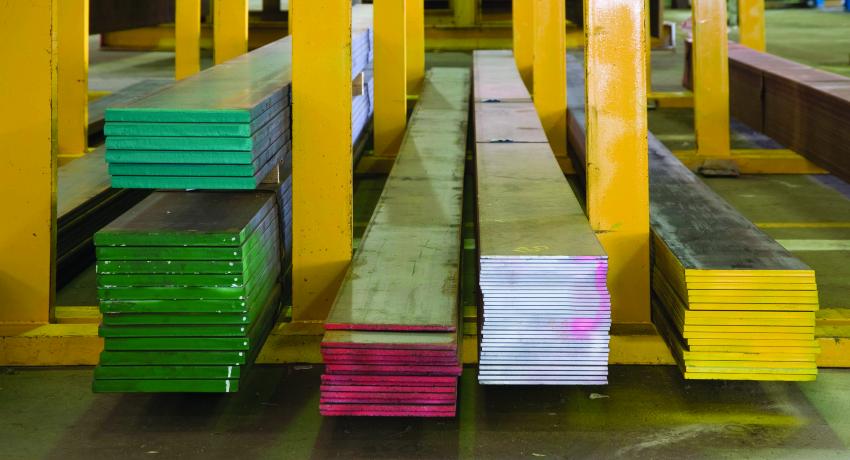
German stockholder sales remain largely stable during 2025
Germany’s stockholding distributors sold a slightly higher tonnage of steel products in 2025 than a year earlier, according to figures from industry federation, BDS.
At 9.472 million tonnes, the volume was roughly 0.4% up on the 9.435t sold in in 2024, which itself had seen a more minimal increase over 2023.
Sales of long products rose by 5% to 2.973mt, after they had suffered a steeper drop from 2023 to 2024, by 15%. Sales of flat product totalled 5.610mt, which was another drop by 3%, which occurred the previous year as well.
BDS has not provided any interpretation alongside its statistics.
The relative recovery of long products may be an adjustment from the preceding drop that was caused by halted construction activities and higher power prices for EAF production since 2022.
Flat products, which can be more impacted by imports, may have gone directly to users from the ports, bypassing distributors. However, it is likely distributors have been involved in these transactions also.
This compares to the large production drop of German mills by 9% year-on-year in 2025, and by some 11% at oxygen-route mills, which are largely makers of flat products.
Kallanish also observes the notable increase in the “other products” category which totalled 890,000t, an increase of 50,000t, after an even larger increase of 140,00 the year earlier. The category includes wire rod but is otherwise little defined.
Salzgitter, Volvo closed-loop recycling partnership starts
The first train load of scrap from Volvo Cars has arrived at Salzgitter as part of the closed-loop recycling cooperation between the two companies, Kallanish hears.
Salzgitter is already supplying the Volvo Cars body parts plant in Olofström in southern Sweden with flat steels. It is now taking in considerable quantities of the steel scrap that accrues at the Swedish plant, which will be delivered directly to Salzgitter Flachstahl.
In Volvo’s production process, steel and aluminium off-cuts from the stamping process are separated into different material streams and segregated. Then they are tightly compressed into cubes to reduce volume during transport, Salzgitter explains.
Rather than returning an empty train back to Salzgitter, a train is loaded with scrap metal, to be melted down and processed back into steel. The first train with 25 scrap wagons and a length of 545 metres arrived at a Salzgitter station last week.
The train covered the 700km route between the two locations, in one and a half days. This has been made possible by the use of powerful, interoperable locomotives that allow for a high towing load and the use of 100% carbon-neutral electricity for traction, Salzgitter notes.
The two companies first announced the establishment of the closed loop scheme, which has been named ScanLoop, last year.
Besides Salzgitter Flachstahl, the cooperation involves group units Salzgitter Mannesmann Scandinavia, scrap collecting division DEUMU, and railway operator VPS Verkehrsbetriebe Peine-Salzgitter.

Italian distributors struggle to pass on longs hikes
Italy’s distribution sector is reporting very weak demand over the past two weeks, following improved activity and order intake during January, sources tell Kallanish.
“Demand is at minimal levels,” one large distributor says. He expects tube and sheet prices to continue rising, supported by CBAM and other protectionist measures, but is more pessimistic about the sustainability of price increases in long products.
The source adds that the private residential construction sector has almost come to a standstill. Most customers, mainly construction companies, are currently active thanks to PNRR-funded infrastructure projects, but payments are often delayed or temporarily blocked, further slowing the market. The PNRR projects are financed through the EU’s post-pandemic recovery fund.
Other distributors in both northern and southern Italy confirm the ongoing uncertainty. They say the unsustainable price increases are prompting buyers to limit purchases strictly to immediate needs. Customers are buying small volumes and mixed grades of tube and long products.
“As distributors, this is a service we can provide, whereas producers typically require larger volumes of a single grade. That is why we still have some activity,” one company says, adding that overall demand has been close to zero over the past two weeks. The source also reports several cases of delayed payments and defaults, warning that liquidity in the market is beginning to tighten.
Another distributor agrees with this view, saying companies are being extremely cautious in managing customer credit risk, although the threat of payment defaults remains. Given the downstream situation, the source believes further price increases for long products are unlikely to be sustained, while demand for coil-derived products is also seen as unreliable.
In Italy, long steel producers are currently seeking price increases of around €20-30/tonne ($23.69-35.53/t) for wire rod, merchant bar, beams, rebar and mesh, depending on the product. Some prices have ticked up by around €10-15/t compared with early January, while others remain unchanged.
Italian merchant bar prices are reported at around €670-680/t ex-works, including size extras, slightly higher on-month. First-category section prices are flat month-on-month at around €735-740/t delivered. Rebar is assessed at €560–570/t ex-works, also showing a modest uptick, while drawing-quality wire rod remains unchanged from January at around €620/t delivered.
Meanwhile, some producers in northern Europe confirm they have temporarily halted sales in order to assess the impact of recent rises in energy and raw material costs before issuing new price lists.
Sections mills in northwestern Europe have seen some success with increases at the start of the year. One market observer tells Kallanish that mills sought increases of €30/t, but distributors cannot hand that down to their buyers. Buyers confirm this and see the increases limited to €20/t. Prices are around €750/t for category 1 sections (see Kallanish passim).