


Automotive suppliers urge EU to preserve production capacity
European Association of Automotive Suppliers (CLEPA) is calling on the European Union to implement targeted measures to preserve production capacity, address structural cost disadvantages, and support investment in domestic manufacturing.
Without decisive action, thousands of jobs will be lost, and European companies will face the relocation of production outside the region, Kallanish learns from the association.
According to CLEPA, for decades, the European automotive supply industry has sustained a robust trade surplus, being an undisputed engine of global value creation, but today the engine is stalling.
“The most striking shift is in production value after China has expanded its capacity at such a pace that it now produces roughly twice as much in value-added terms as the EU. This surge, alongside rising imports from lower-cost hubs is actively cutting the trade surplus that once underpinned Europe’s industrial strength. Simultaneously, exports to key, traditional markets like the United Kingdom and the United States have begun to decline,” it adds.
Taken together, these trends point to a rapid erosion of Europe’s role as a global powerhouse in traditional automotive components, the suppliers say.
“China’s automotive supply industry is growing faster than ever, increasingly challenging Europe’s suppliers,” says CLEPA’s general secretary Benjamin Krieger.
“If Europe wants to remain a major manufacturing hub, we need policies that strengthen our competitiveness and ensure that suppliers can compete on a true level playing field. Balancing the protection of European industrial strengths with the promotion of employment and investment must be the core goal of the Industrial Accelerator Act,” he adds.
The association note that imports from China continue to dominate the EU market for traditional automotive components, growing in 2025 by 12% year-on-year. Chinese imports now exceed €8 billion ($9.2 billion), representing around 30% of total EU imports in this category.
At the same time, imports from Turkey have doubled over the past five years, now reaching approximately €5 billion. Imports from the United Kingdom, Japan and South Korea remain broadly similar in scale, each supplying around €2.5 billion worth of components to the EU market in 2025.


Kirchoff signs MoU for Arvedi’s Arvzero steel
Italian steelmaker Arvedi is joining forces with German component maker Kirchoff automotive to boost the presence of carbon-neutral steel in the automotive sector’s supply chain, Kallanish learns from a statement.
The Memorandum of Understanding, signed by the two firms in Cremona, will see Kirchoff integrate Arvedi ‘s sustainably produced steel brand, Arvzero, into its portfolio with the aim of reducing Scope 3 emissions across its value chain.
Kirchoff’s ceo J. Wolfgang Kirchhoff and global EVP of procurement, Michael Rank, recently visited Arvedi’s electric arc furnace (EAF) steelmaking plant in Cremona, observing the full production cycle from liquid steel to rolled coil within less than 200 metres.
According to Kirchoff, the setup highlights the efficiency of Arvedi’s integrated process. The company says the visit underlines what the partnership stands for: a clear roadmap for CO2‑reduced and ZeroCO2 steel and a strong partnership with a decarbonisation pioneer.
In 2023, Arvedi’s Cremona plant obtained its carbon neutrality certificate after drastically reducing Scope 1 and 2 emissions by investing in a new EAF supplied by Tenova and cutting the use of pig iron and other polluting raw materials. The first carbon neutral certificate for Arvedi’s coils, Arvzero, was issued for a large contract supply with Mercedes Benz during the same year. (see Kallanish passim).

Europe too slow supporting its industries: conference
EU steel industry representatives bemoaned slow bureaucracy in the bloc delaying critical industrial projects during the Handelsblatt “Zukunft Stahl” conference in Essen this week.
SSAB chief executive Johnny Sjöström, who previously worked in the USA as well as in China, remarked that in those countries, it takes only six months to lay a new power line, “whereas in Öxelesund we needed nine years to get it approved”. This involved decisions, reversals and appellations at various instances in the political approval process. “This is a bureaucracy we need to overcome,” Kallanish heard him demand at the event.
Former Salzgitter ceo Hansjörg Fuhrmann, who participated at the conference as an attendee, pointed at the “very different timeline they have in India”, compared with “man-made regulations” slowing down decisions in Europe.
This was confirmed by voestalpine Steel Division head Hubert Zajicek, who told of impressions he has gained of different countries from his experience as worldsteel executive committee member. “It is nonsense to believe that we Europeans can detach our economic ecosystem [with its numerous regulations] from the rest of the world,” he said.
To a lesser extent, Europe also lags behind on pace of business processes such as consolidation, said Guido Kerkhoff, ceo of Klöckner & Co, which has expanded vastly in the USA. Stateside, the process for making acquisitions and expansions entails one third to one half the effort required in Europe. “After all, you are considered the good guy when you come investing,” he stated.
Sjöström also pointed out a particularly uneasy case in which speed can be crucial. European armed forces standardising and approving the construction of tanks is a lengthy process, meaning Europe’s total production of tanks does not exceed 50 units per year – versus 500 made in Russia in the same time.

French longs prices continue to rise
French longs transaction prices have moved higher since early March as mills implement increases following the escalation of the US-Iran conflict, Kallanish notes.
After an initial pause, with buyers adopting a wait-and-see stance, order intake increased soon after the conflict and price rises have been at least partially accepted.
Buyers and distributors report average increases of €20-30/tonne ($23.02-34.53/t) compared to pre-conflict levels. Activity has improved across the value chain, though without signs of panic buying. Apparent demand has returned modestly, with buyers securing volumes and expecting further increases.
A large buyer and a distributor in both northern and southern France, as well as a large European steelmaker, expect further increases, potentially in April, depending on how the conflict evolves.
However, one source notes that real demand has not improved and warns that excessive price hikes could stall activity.
Demand picked up sharply in the days following the outbreak of the war but appears to be easing again this week.
Across the value chain, logistics costs are rising due to higher fuel prices, while energy costs and modest scrap increases in March are also supporting increased prices.
Scrap merchants expect material values to rise again in April, as suppliers in France, Belgium and Germany face the same cost pressures, although it remains too early to confirm. One source adds that the recent uptick in apparent demand is increasing scrap requirements by mills, which could lead to price increases for the raw material.
For the first time, European producers seem to be putting up a united front on price increases. Spanish longs producers active in France, along with Italian rebar suppliers present in the south, are also pushing up prices. Lower-priced import offers from either origin are not currently available. ArcelorMittal is also implementing significant increases across rebar and other long products.
First-category section prices are now moving towards €780/t delivered, with European suppliers, including Spanish mills, targeting around €800/t delivered into France. Rebar is rising to approximately €640-650/t delivered with more orders throughout the value chain. Merchant bar prices are also increasing, up from €240–250/t last month to €260–270/t delivered, with other European producers maintaining firm positions on further hikes.
NW European coil prices reach target levels
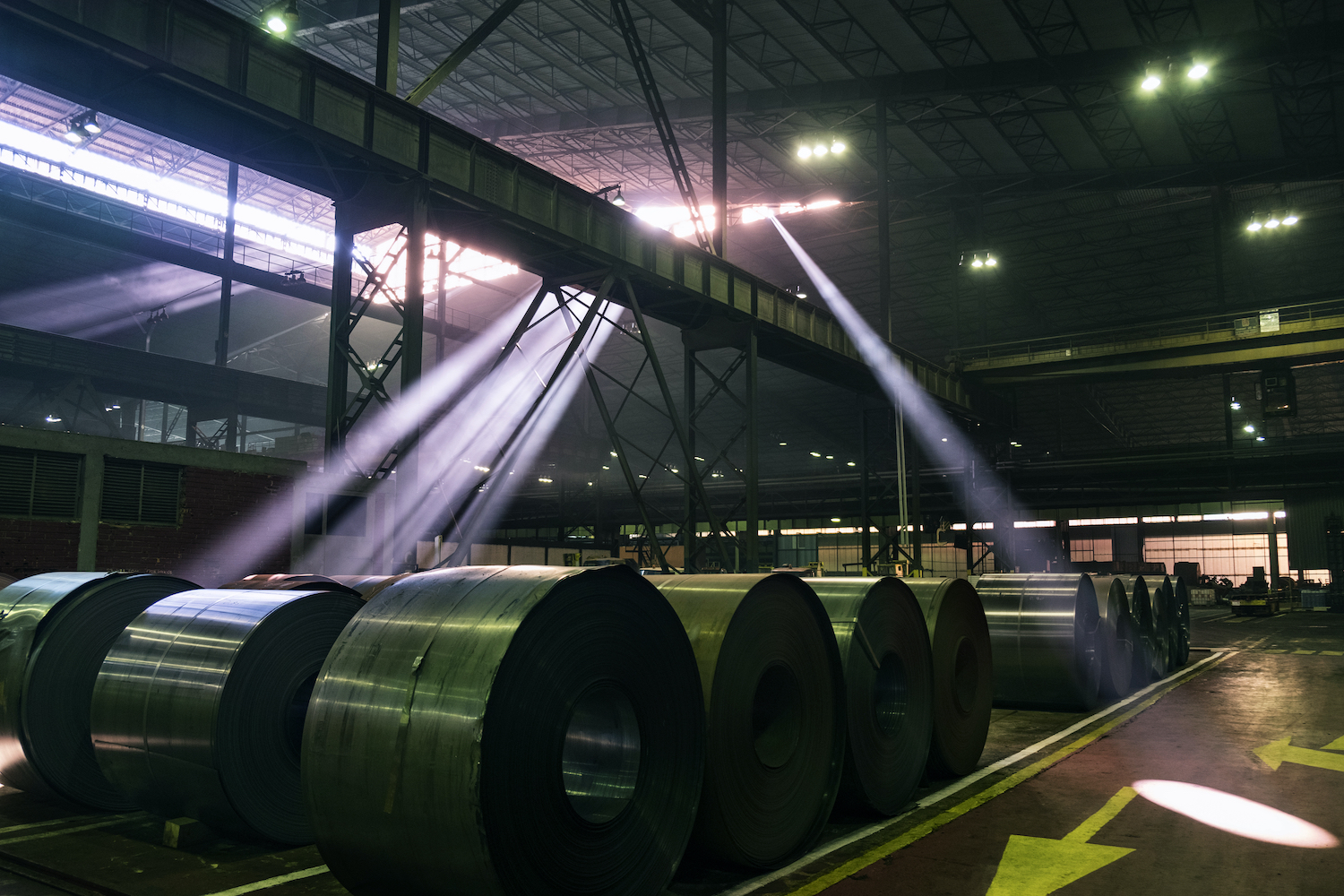
The price target set by the market leading mill of €720/tonne ($829/t) delivered for hot-rolled coil appears to be largely accepted now, despite demand from steel users not significantly reviving from its ongoing lull.
“You won’t get any HRC from European integrated mills below €700/t ex-works anymore,” one observer tells Kallanish. He concedes that €690/t is possible at one re-roller mill, which could still be an option, mainly in Benelux.
Lower levels could be available from traders with inventories of Asian material bought earlier at prices around $500/t, with CBAM fees considered, on a ddp-basis to the buyer’s warehouse.
A Nordic source notes that there could be other existing stocks, at mills or distributors, where offers could still be under €720/t.
One mill source confirms that price level for continental Europe, and notes offers can be higher rather than lower, especially in Scandinavia. He cites a recent spot deal concluded with a large European distributor last week for May delivery with a price that is €200/t higher than in November 2025.
This gap is wide compared to Kallanish’s published price series, which on 1 November saw HRC at €600/t after three months of increases, a rise of €105/t.
In another comparison, one manager points out that currently the price is now at its highest in two years since March 2024, when it had come down from a brief peak to €720/t.
Further hikes have not been announced and could be difficult to assert if material is still available from stocks. Many sources point out that inventories are quite high downstream at warehouses and fabricators, with little appetite to go for more than light replenishment.
“Customers have enough in stock and they do not see their order books improving,” a Swiss buyer says. While a Dutch service centre manager adds that he has reason to believe that “stock levels remain relatively high compared to historic averages”.
UK announces new Steel Strategy, welcomed as game-changer by industry body
The UK government presented its new Steel Strategy on March 19 setting an ambition for up to 50% of steel used in the UK to be made in the country, boosting production from its current 30% market share.
The new strategy was welcomed by trade body UK Steel, which said the government had been “incredibly bold in its approach to trade”, but it added that the sector still needs more competitive energy prices, an effective carbon border policy and stronger public procurement rules.
With its landmark strategy, the UK is introducing trade measures to preserve domestic steel production for critical national energy security, defense and transport infrastructure. From July 1, overall quota levels for steel imports will be reduced by 60% compared to current arrangements, and steel coming into the UK above these levels will be subject to a 50% tariff.
The government is considering a transitional arrangement under which the new tariff would not apply to goods under contracts agreed before March 14 and imported between July 1 and Sept. 30, 2026.
The government will also be raising the UK’s maximum Most Favoured Nation steel tariffs at the WTO to 50% to protect the domestic industry from global overcapacity in the long run. For the same reason, it will consider introducing requirements to identify where steel imports are melted and poured.
The new strategy also commits to electric arc furnaces as the future of British steelmaking, continuing the shift from blast furnaces to EAF-based production, and enabling offshore wind developers to include steel manufacturers in the next round of Clean Industry Bonus applications launching this year to maximize UK steel use in renewables.
The National Wealth Fund will be the government’s main mechanism for providing up to GBP2.5 billion ($3.3 billion) for investment in the steel sector, which already includes a deal backed by UK Export Finance worth GBP70 million, for British Steel to supply the refurbishment of Nigerian ports.
“With this strategy we are closing the decades-long chapter of destructive de-industrialization and committing instead to strengthening and sustaining Britain as a steel-making nation,” said UK Business and Trade Secretary Peter Kyle.
The strategy builds on the support the government has already put in place for the steel industry since taking office, including cutting electricity costs for producers via the “Supercharger”, reforming procurement rules to ensure more UK-made steel is considered for public projects, and speeding up grid access for new investment projects.
Since the government’s intervention at Scunthorpe last year, British Steel has made further progress, including hiring new apprentices and signing significant contracts, such as a contract to supply a Turkish rail project worth tens of millions.
Other government support for the UK’s steel sector since taking office has included GBP500 million for the construction of a new EAF at Port Talbot, and the funding to run a sales process for Speciality Steel UK.
Game changer
UK Steel welcomed the Steel Strategy, calling it a game-changer.
“The government’s bravery in taking the required measures represents a real shift in the culture of Westminster from protecting the ideology of free trade at any cost, to defending critical industries and national security,” the trade body’s director general Gareth Stace said in a March 19 statement.
The association praised the headline cuts to import quotas, saying they go even further than similar measures taken in the US, Canada and EU, and make clear that the government recognizes the distortions that overcapacity and extreme subsidy have created in global steel markets, and that the UK must domesticate more of its steel supply, especially in areas such as defense, grid infrastructure and civil nuclear.
Domestic steelmakers have seen their share of UK steel demand slump to just 30% as a result of continuous subsidized steel flows into international markets, according to UK Steel.
However, while the progress made to support the sector is encouraging, significant challenges remain, it warned, pointing to unresolved carbon border policy, still uncompetitive industrial energy prices, and somewhat loose public procurement policy.
According to the association, UK steelmakers face industrial electricity prices 14% higher than in Germany and 25% higher than in France. While the government increased compensation for electricity network charges in its Industrial Strategy, the Steel Strategy does not contain any new initiatives to deliver competitive industrial power prices.
“Despite this government’s progress on shielding steelmakers from network costs in electricity bills, the strategy fails to address the need for action on wholesale power prices,” said Frank Aaskov, director of energy and climate change policy for UK Steel. “That omission leaves the final piece of the competitiveness jigsaw firmly missing.”
UK Steel also warned that the UK CBAM risks making importing Chinese steel cheaper than producing lower-emission steel locally. The policy also covers a narrow range of products, so importers can avoid the UK CBAM by switching to finished or semi-finished steel-containing goods not included in its scope.
Finally, the increased carbon costs will make UK steelmakers uncompetitive in non-EU markets, without an export solution. Instead of creating a fair market, the policy, due to the remaining loopholes, risks favoring imports over domestic production.
“Without a change in direction… the policy risks achieving precisely the opposite of its stated aim,” Aaskov said, adding that the steel industry is ready to work with the government to address both CBAM and industrial energy pricing issues.


Brazil, China should collaborate on green steel: study
Researchers at the London School of Economics (LSE) Green Finance unit suggest that Brazil and China will have better chances to commercialise green steel if they integrate their value chains.
The new study evaluating the prospects of low-carbon steel production in Brazil, China and Mexico finds that the three markets have specific advantages, but closing the profitability gap remains a structural problem for all of them. It identifies a gap of $95/tonne in China and a global average of $140/t, when comparing production via the traditional blast furnace-based route with the promising hydrogen-based route with electric furnaces.
“The gap between BF-BOF and H2-DRI-EAF is material, recurring, and reinforced by multiple layers of the system itself. Energy pricing, capital intensity, underdeveloped scrap systems and fragmented demand work together to sustain the cost advantage of traditional production,” the researchers say. “Even when technology improves, the economics often do not.”
Policy intervention is critical to narrowing the gap to a level that the private sector would feel comfortable to engage, “where producers can scale new technologies without absorbing all the risk themselves”, they continue. “Fiscal tools can cut capex and opex burdens; regulatory tools can reshape market incentives; market-based tools can embed climate costs into production decisions. None works in isolation.”
Highlighting the challenges in each market, the LSE study indicates that “the most plausible outcome” towards global leadership would be based on collaboration, rather than a single dominant player, Kallanish reports.
“China’s strengths, combined with Brazil’s comparative advantage centred on low-cost renewable energy and proximity to raw materials, point toward a spatial division of production,” says LSE. “A collaborative model, where Brazil develops as a major green iron production hub while China coordinates downstream processing and technological innovation, could prove more effective.”
Without such an approach, China would present the strongest case for green steel production leadership, but it would be a slow, gradual process. The country would still face a challenging environment, considering its high carbon-intensive energy mix; technology bottleneck on DRI shaft reactor, which is currently dominated by US-based Midrex and Italy-based Tenova/Danieli; limited scrap supply chain; high blast furnace capacity; and low demand prospects.
Brazil has high-quality iron ore, an abundant renewable energy supply, a highly skilled workforce and emerging supportive policies. However, the country’s steel market is still characterised by low growth, intense import competition, margin pressure and low investment commitment, which threaten industry competitiveness.
According to the study, just over half of Brazilian blast furnace capacity is due for relining by 2030, presenting a “key opportunity” for a low-carbon technology pivot.
EU tube sector growth relying on construction: Eurofer
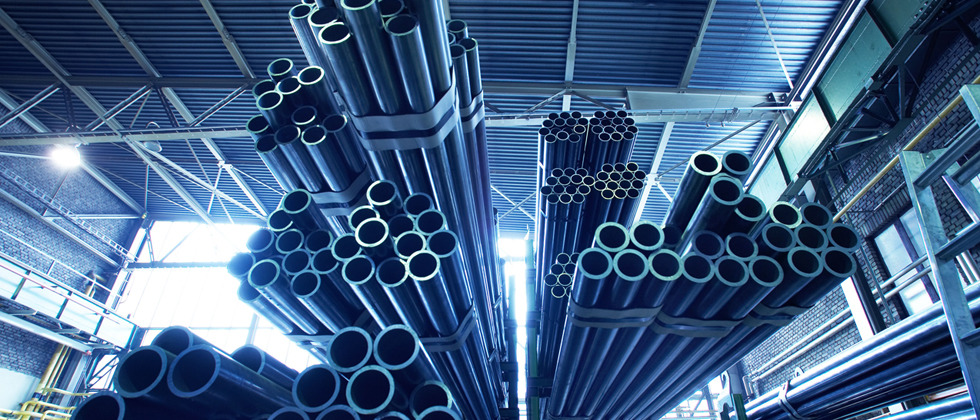
The EU steel tube industry is expected to recover only gradually in the coming years, with output forecast to rise by 0.2% in 2025, followed by 0.8% growth in 2026 and 1.5% in 2027.
In the third quarter of 2025, EU tube industry output increased by 3.8% year-on-year, marking the first expansion after six consecutive quarterly declines, Kallanish learns from the Eurofer 2026 outlook.
However, the industry’s outlook remains constrained by structural shifts in energy markets. Demand from the oil and gas sector is not expected to improve substantially as the EU continues shifting from pipeline gas to liquefied natural gas imports, reducing the need for new pipeline infrastructure.
As a result, future growth in tube demand is expected to rely increasingly on the construction sector, while demand from automotive and mechanical engineering is forecast to remain relatively subdued.
Meanwhile, the tubes and pipes sector has struggled in recent years. Steel tube output declined by 1.4% in 2023 and fell further by 2.4% in 2024 amid weak industrial demand, supply chain disruptions and war-related impacts following Russia’s invasion of Ukraine.

Polish President seeks ETS abolition
Polish President Karol Nawrocki has conveyed his position to Prime Minister Donald Tusk that the EU should abolish the Emissions Trading System (ETS) to reduce costs and prevent an exodus of industry from the bloc. Tusk is due to meet other EU leaders to discuss ETS in Brussels on Thursday, Kallanish notes.
The current Polish heads of state and government come from different political parties and rarely see eye to eye. Although Tusk is under no obligation to follow Nawrocki’s lead, the President has the power to propose and veto legislation.
The EU has reduced CO2 emissions by nearly 35% in 20 years to approximately 2.4 billion tonnes, but emissions on a global scale have increased, driven by China, Undersecretary of State in the Chancellery of the President Karol Rabenda said during a press conference earlier this week.
The EU’s share in industrial production has declined to 17%, while China’s has surged to 28%, indicating that ETS “does not reduce industrial production, but pushes it to other regions of the world”, he added.
If the majority vote required to abolish ETS cannot be obtained, the Polish President proposes alternative solutions, including the payment of a so-called substitution fee to the budgets of individual member states. The Market Stability Reserve should meanwhile be adapted to enable the release of additional ETS allowances when their price exceeds €10/tonne.
Financial institutions “that in no way contribute to decarbonisation” should also be excluded from trading allowances, presidential advisor Wanda Buk explained. Finally, free allowances should be retained because “CBAM doesn’t work – it doesn’t cover the entire supply chain, and it can be easily circumvented”, she added.
According to press reports, European Commission President Ursula von der Leyen wrote to EU government heads this week proposing that ETS prices could be capped and subsidies channelled towards less wealthy members. This would include using the Market Stability Reserve to keep prices in check.
Various steelmaking representatives have recently called for ETS free allowances to be retained for longer, including Italian steel association Federacciai, voestalpine and Moravia Steel (see separate story). The situation is receiving even greater scrutiny since the escalation of the Middle East conflict has elevated energy prices.

EU needs its fossil fuels, ETS revision: Popelar
The EU must consider using its indigenous fossil fuel resources to ensure economic resilience during geopolitical instability, while the focus on building out nuclear energy, although correct, will not benefit steelmakers in the near term. Emissions Trading System (ETS) prices should be kept at lower levels and the system made able to react to prevent costs during crises.
So said Moravia Steel chairman Petr Popelar in an exclusive interview with Kallanish this week.
ETS needs revision to ensure industry continuity
ETS has been in the spotlight in recent months, with the phaseout of free allowances beginning from 1 January, together with the phase-in of CBAM. The scrutiny has been tightened further by the escalating conflict in the Middle East putting pressure on fuel prices. EU government leaders are expected to discuss potentially weakening ETS during their summit planned for Thursday and Friday.
For Moravia Steel, which owns Czech steelmaker Trinecke Zelezarny, free ETS allowances will fall significantly short of its emissions in 2026. At an EU allowance (EUA) price of around €80/tonne of CO2, this would mean around €100 million in additional costs for the steelmaker, making it harder to invest in decarbonisation projects at the pace required, Popelar notes.
The outlook is not helped by financial speculators being allowed to trade allowances and create EUA price volatility and unpredictable costs for industry. “The Market Stability Reserve should keep ETS prices more stable and closer to the levels originally expected by the European Commission, around €25-45/tonne for 2026,” he said. “In times of geopolitical shocks or energy crises, the system should be able to react and avoid additional costs.”
Nuclear a ‘lost opportunity’, EU fossil reserves need utilising
Given the current climate of high energy costs and supply uncertainty, the reluctance of some EU states to deploy nuclear energy has “led to higher costs and lost opportunities”, Popelar observed. However, EU sentiment has shifted in favour. “While the recognition of this strategic mistake is correct, time and investment constraints mean that energy-intensive industries will not benefit from new nuclear capacity in the near term. New reactors and SMRs [small modular reactors] will come online only after the current transition period,” he added.
This mistake is being repeated with fossil fuels, he continued. “Fossil reserves located in Europe, especially in the Czech Republic … could provide important geopolitical and economic resilience for the EU,” he added.
He considers the Czech government’s decision to close coking and thermal coal miner OKD this year as a mistake. “The current crisis in the Middle East shows the consequences. The Czech Republic has already lost its domestic fuel sources and is now fully dependent on imports,” he said. Instead, policymakers should consider the use of often overlooked technologies to reduce fossil-based emissions, such as efficient coal-based power generation.
Uneven energy costs across Europe amid varying wholesale electricity prices, network charges, surcharges, levies and taxes also present a problem as they create competition between member states. “EU energy prices therefore need to be both more uniform and globally competitive,” Popelar noted.
EU policy support welcome but must go further
Although EU policymakers have become aware of the need to support industry in recent years, “rhetorical recognition and the correct diagnosis of issues is not sufficient to save the EU steel industry,” he warned. “The real test is whether this new pragmatism produces more decarbonisation funding, faster permitting, lower energy costs, stronger trade defence, effective CBAM anticircumvention and actual demand for EU produced low-carbon steel.”
“For us, the key question is not whether the Czech industry can decarbonise. It is whether the European regulatory framework allows primary steel production to remain economically viable during the transition,” he continued.
Scrap-EAF transitioning will be necessary but some steel-using sectors still depend on iron ore-based production for high value-added products. There is a risk the EU will become dependent on imports of these products produced under different regulatory and carbon cost regimes. In Trinecke Zelezarny’s mainstay long steel segment, this relates mainly to the wire rod ecosystem, including automotive springs, tire cords, chains, bearings and welding electrodes.
The Czech steelmaker said last year it was delaying its EAF transition to at least 2030 due to uncertain policy support. Some EU steelmakers have since indicated that following the CBAM implementation and new steel trade regime announcement, the policy environment is more conducive now to decarbonisation investments. However, hurdles remain.
CBAM requires a further downstream extension and implementation of the melt-and-pour rule, with the new trade regime also requiring downstream coverage and melt-and-pour. Only this will ensure a level playing field and prevent circumvention, thereby enabling transition investments, Popelar pointed out.
Smaller member states, like the Czech Republic, also require stronger EU funding support as their fiscal resources are more limited.
Popelar gave the example of Moravia Steel subsidiary Bohemia Rings, which produces steel rings for wind turbines. The feedstock needed for production is covered by CBAM, but imports of finished wind‑energy rings under CN 8482 and 8483 remain unprotected. EU wind ring production thus faces an existential threat from Asia-origin imports, mainly from China, he said.
EU domestic demand outlook subdued, threatened by circumvention
In terms of the EU’s demand outlook, this remains subdued amid structural shifts in the bloc’s manufacturing sectors, with Europe’s competitiveness gap still not addressed. “The effectiveness of CBAM and the new steel trade regime will be tested this year and may need adjustment if necessary. In the case of CBAM, we already see a clear risk of downstream circumvention. Importers may shift towards higher value-added products to avoid carbon costs and other European standards,” Popelar concluded.